📷 HOW A CAMERA SEES
YOUR CAMERA KIT
Grab a phone or camera and a simple subject. This lesson explores how light becomes a photograph.
- 📱 Phone or camera: any device that takes pictures
- 🧸 Simple subject: a toy, fruit, or stuffed animal
- 💡 Window or lamp: steady light to see shadows clearly
- 🧽 Lens cloth: wipe smudges so light passes cleanly
- 📓 Notebook: sketch what you notice about light and focus
Time: about 10 minutes · Shoot near a window · Wipe the lens first
PAGE 1 OF 5, LIGHT ENTERS
FIRST STEP
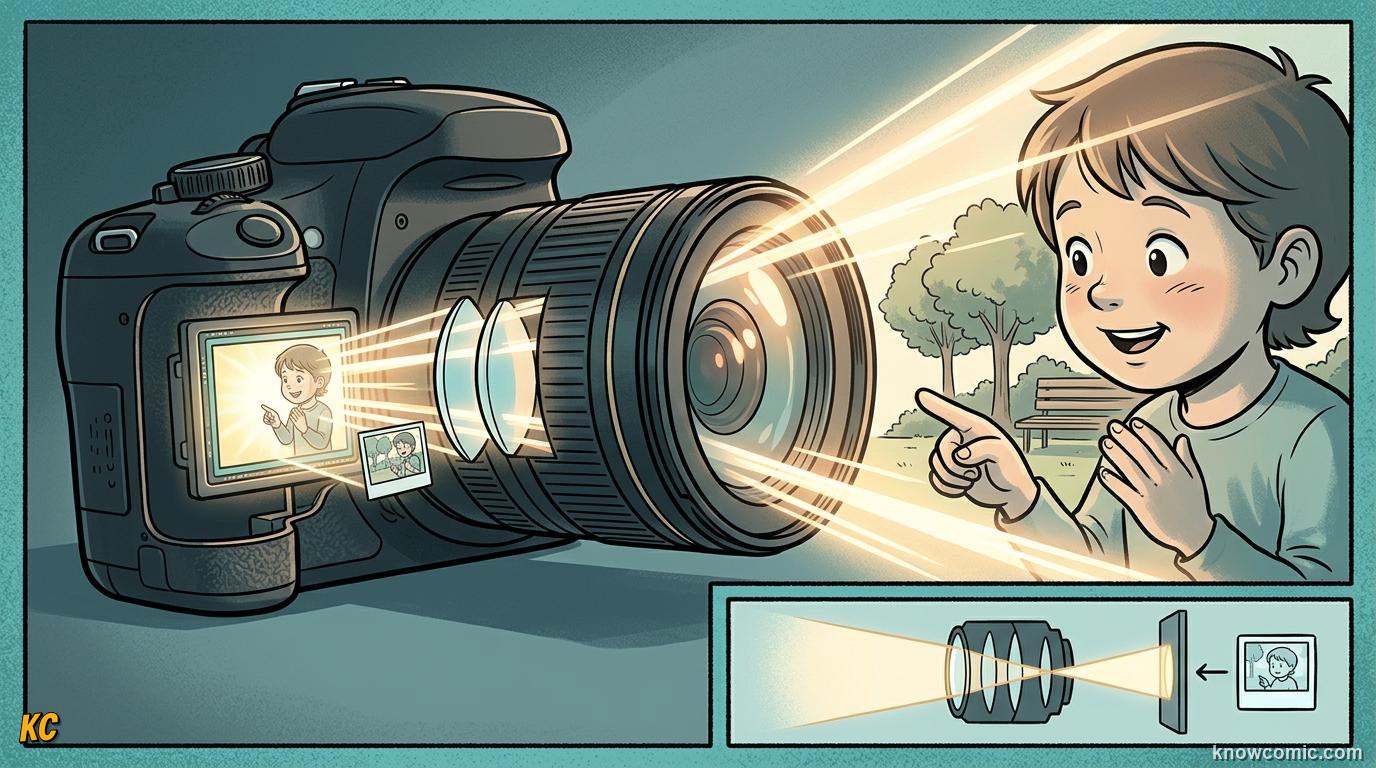
LIGHT HITS THE LENS
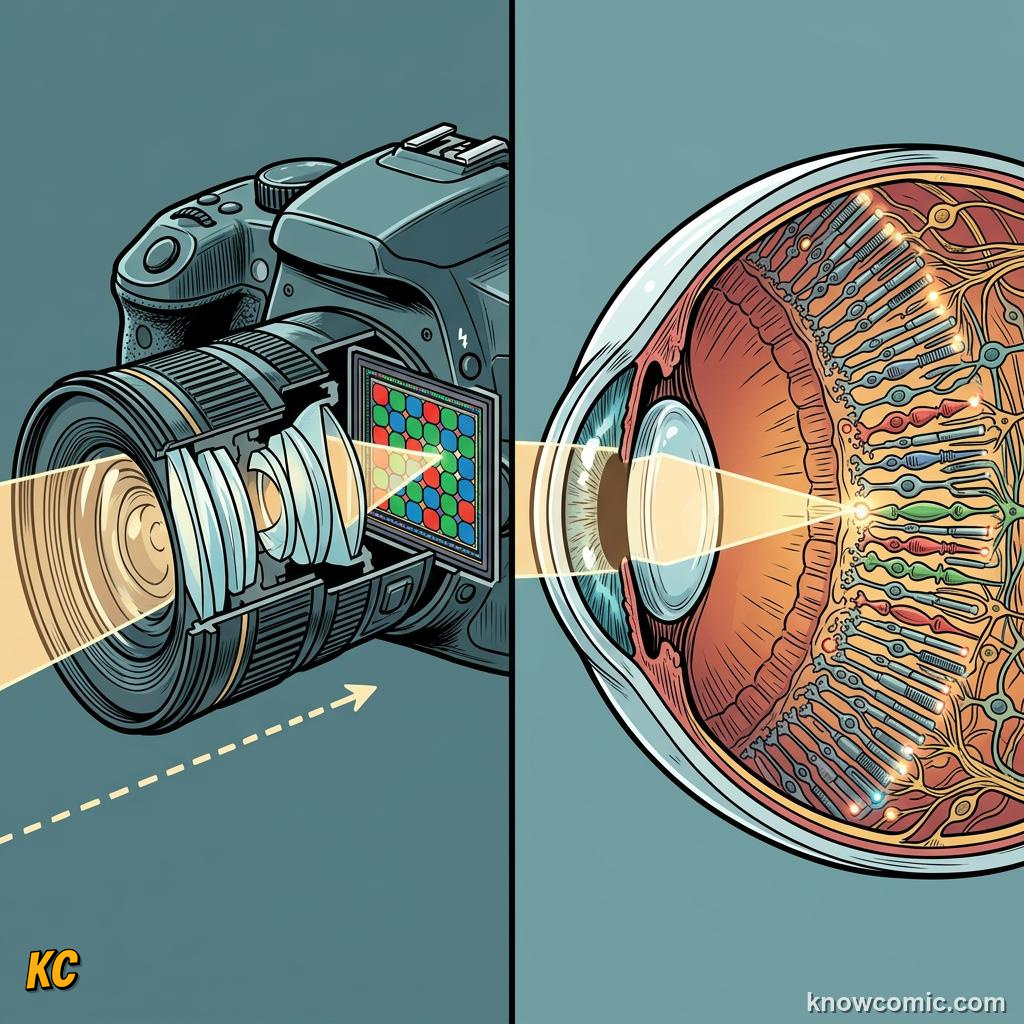
A camera is a light catcher. Sunlight or lamplight bounces off your subject and travels toward the camera in straight lines. The glass lens at the front bends those rays so they meet at one sharp point inside the camera body. Without a lens, the picture would be a blurry bright blob. Think of the lens like a funnel that guides light to exactly the right spot. Every clear photo starts with light traveling through that curved glass.
💡 RAYS
Light travels in straight lines until a lens bends it to a focus point on the sensor.
LIGHT!
LENS
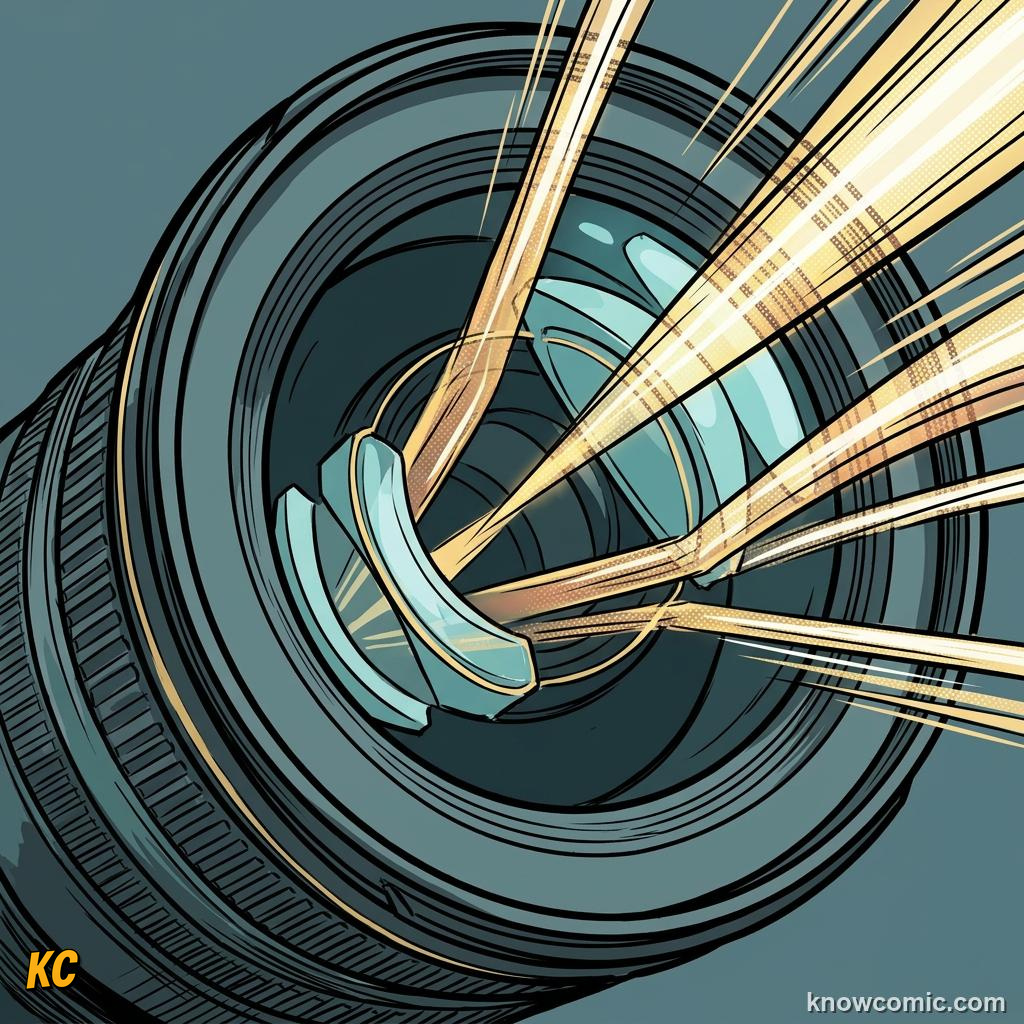
🔍 Glass bends light rays
☀️ Light bounces off subjects
☀️ Light bounces off subjects
STRAIGHT
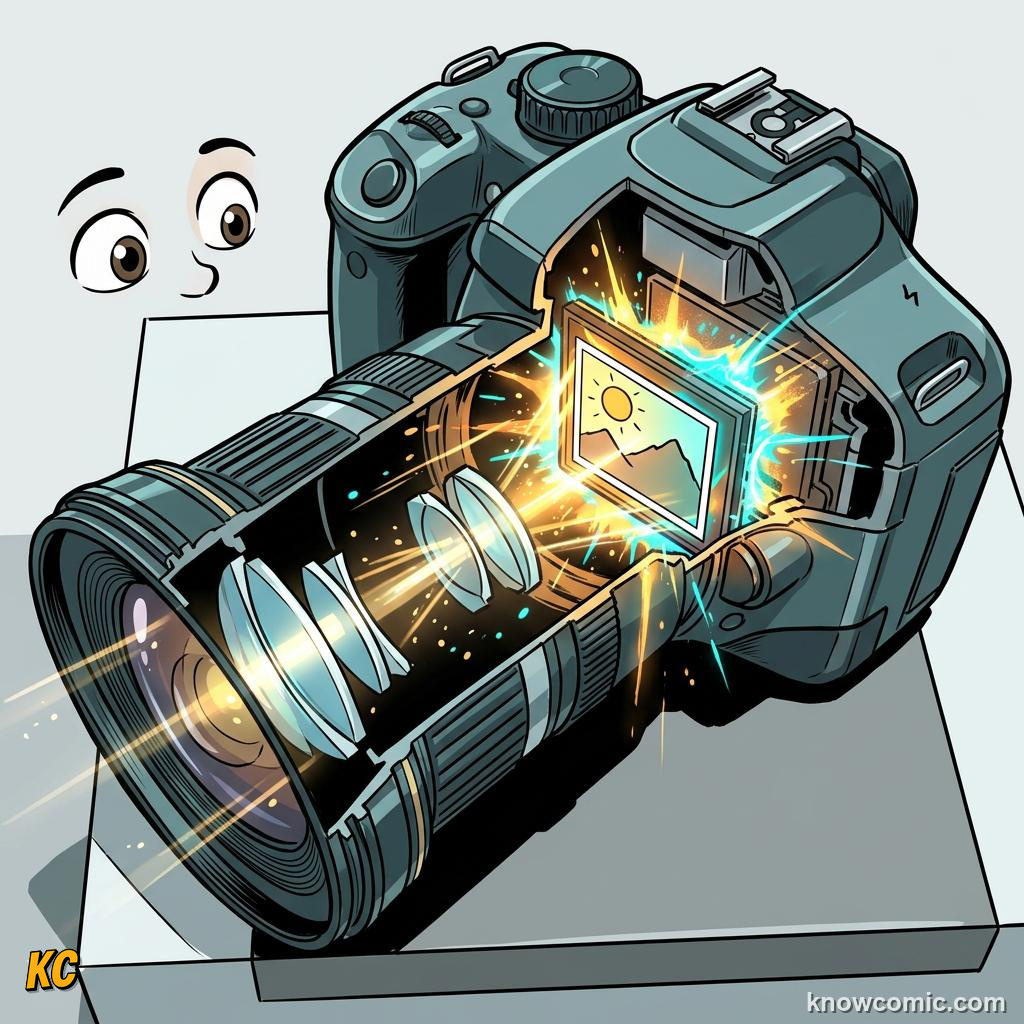
➡️ Rays travel in lines
🎯 Lens gathers them inward
🎯 Lens gathers them inward
PAGE 2 OF 5, FOCUS POINT
SHARP SPOT
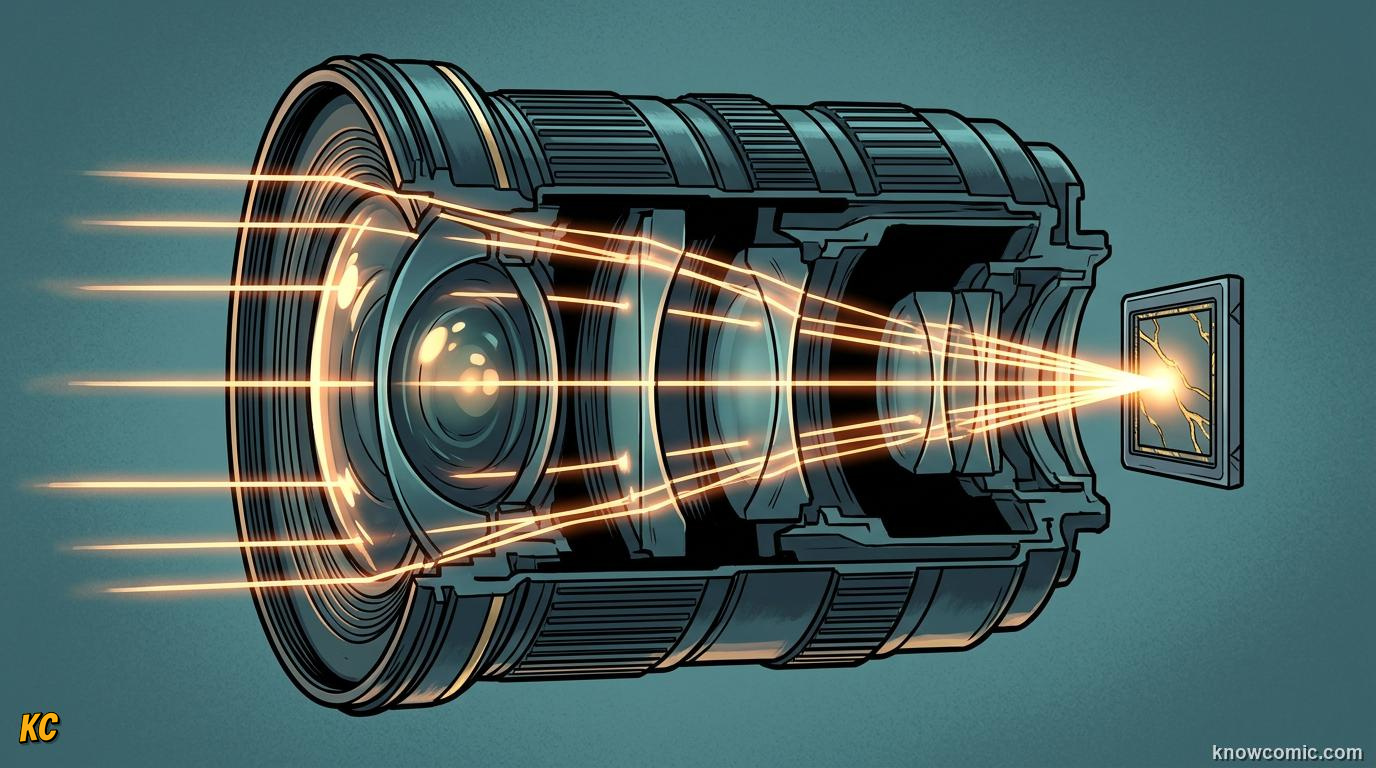
LIGHT LANDS ON THE SENSOR
Inside a digital camera, a flat electronic chip called a sensor sits where film used to be. When focused light hits the sensor, millions of tiny light detectors record brightness and color. Each detector is like a miniature bucket catching photons, the particles of light. Old film cameras used chemical coating instead of a chip, but the idea is the same. Focused light makes a sharp image. Unfocused light makes a fuzzy one.
📱 SENSOR
A digital sensor has millions of tiny sites that each record how bright one spot of light is.
FOCUS!
CHIP
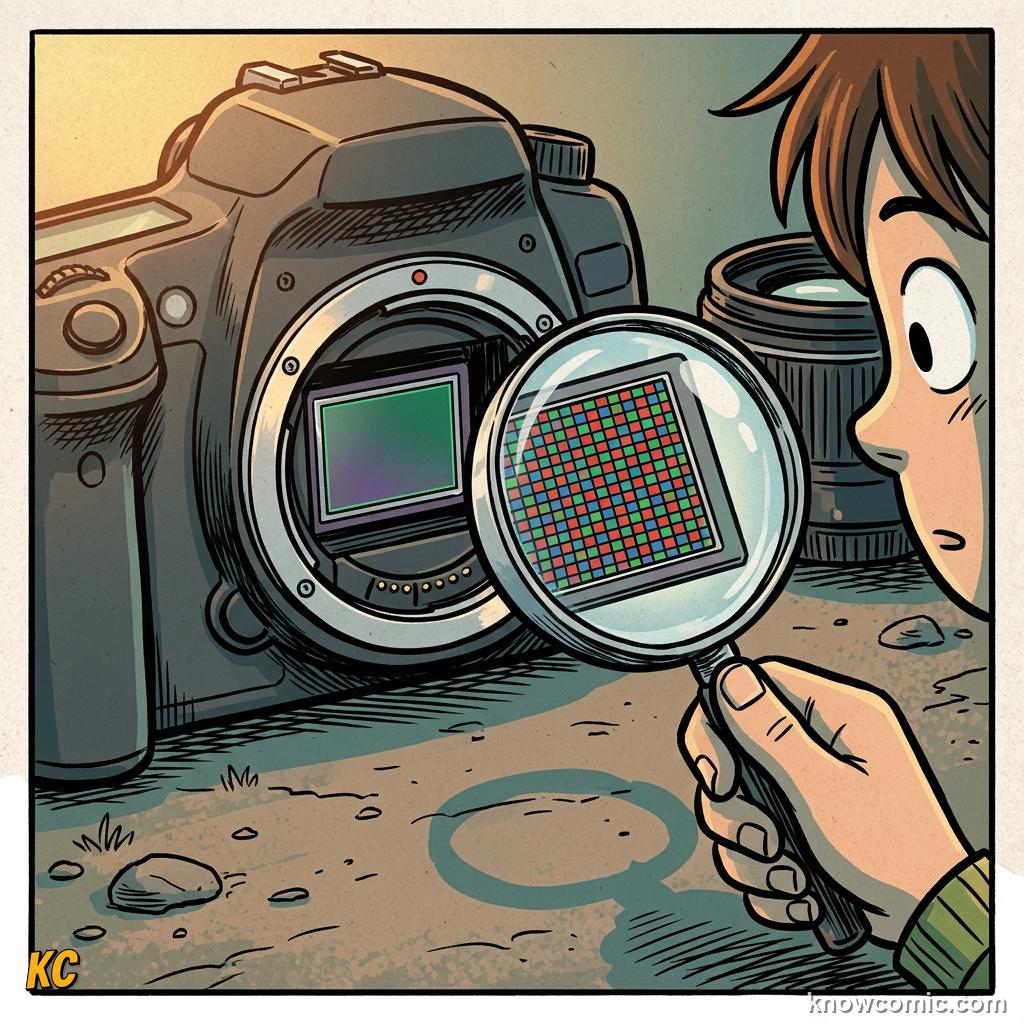
📱 Sensor replaces film
🔬 Millions of light detectors
🔬 Millions of light detectors
FILM
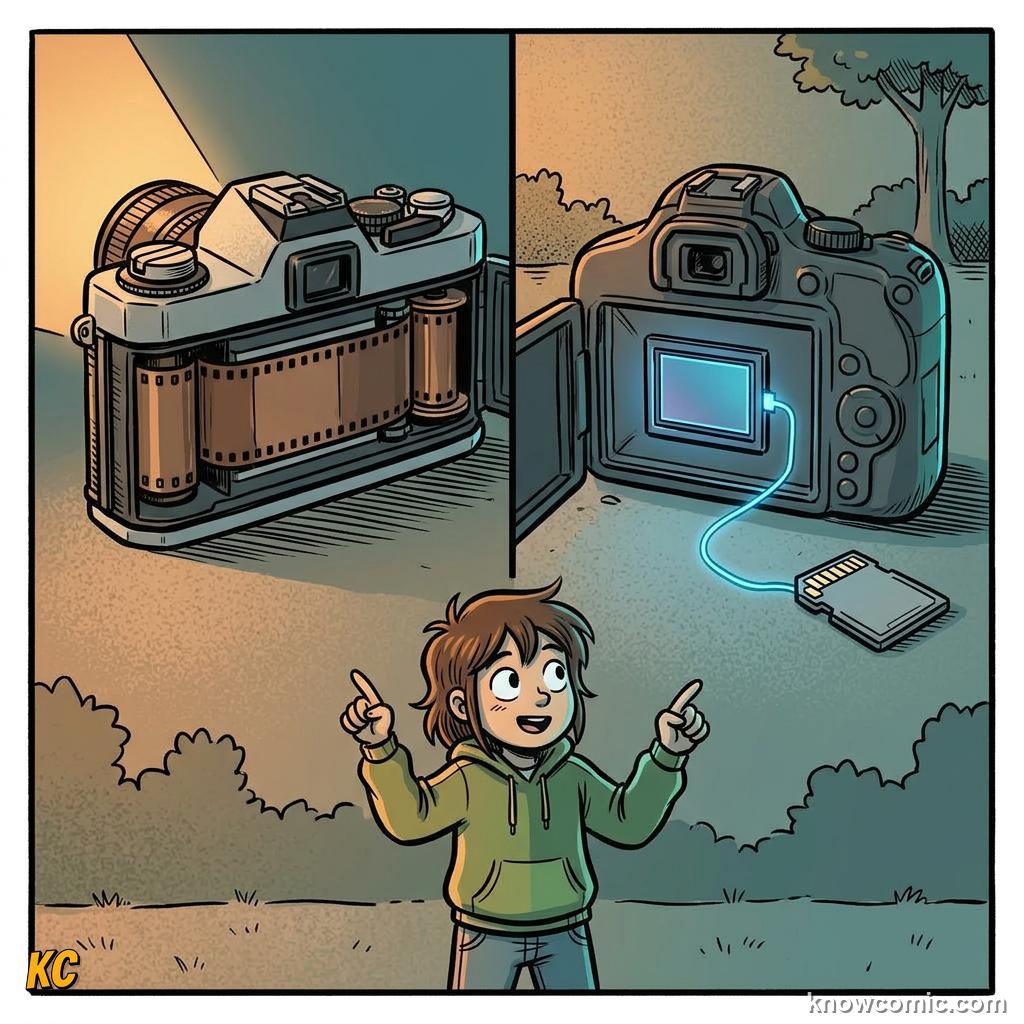
🎞️ Film caught light chemically
📷 Digital chips read it electronically
📷 Digital chips read it electronically
SHARP
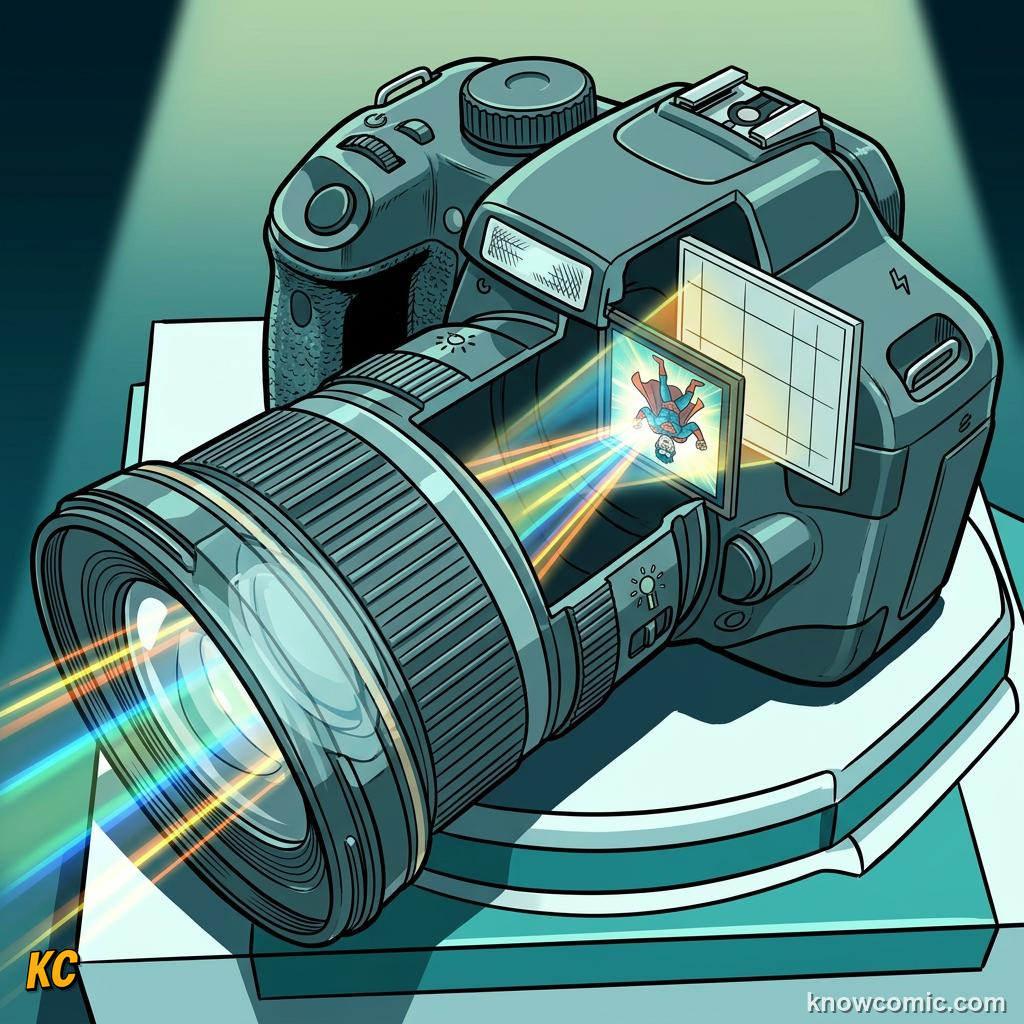
🎯 Focused rays = clear photo
🌫️ Blurry rays = soft photo
🌫️ Blurry rays = soft photo
PAGE 3 OF 5, SHUTTER TIME
OPEN
👁️ Shutter opens briefly
💧 Light pours onto sensor
💧 Light pours onto sensor
CLOSE
🚪 Shutter shuts to end capture
📸 One moment saved forever
📸 One moment saved forever
FROZEN MOMENT
THE SHUTTER CONTROLS TIME
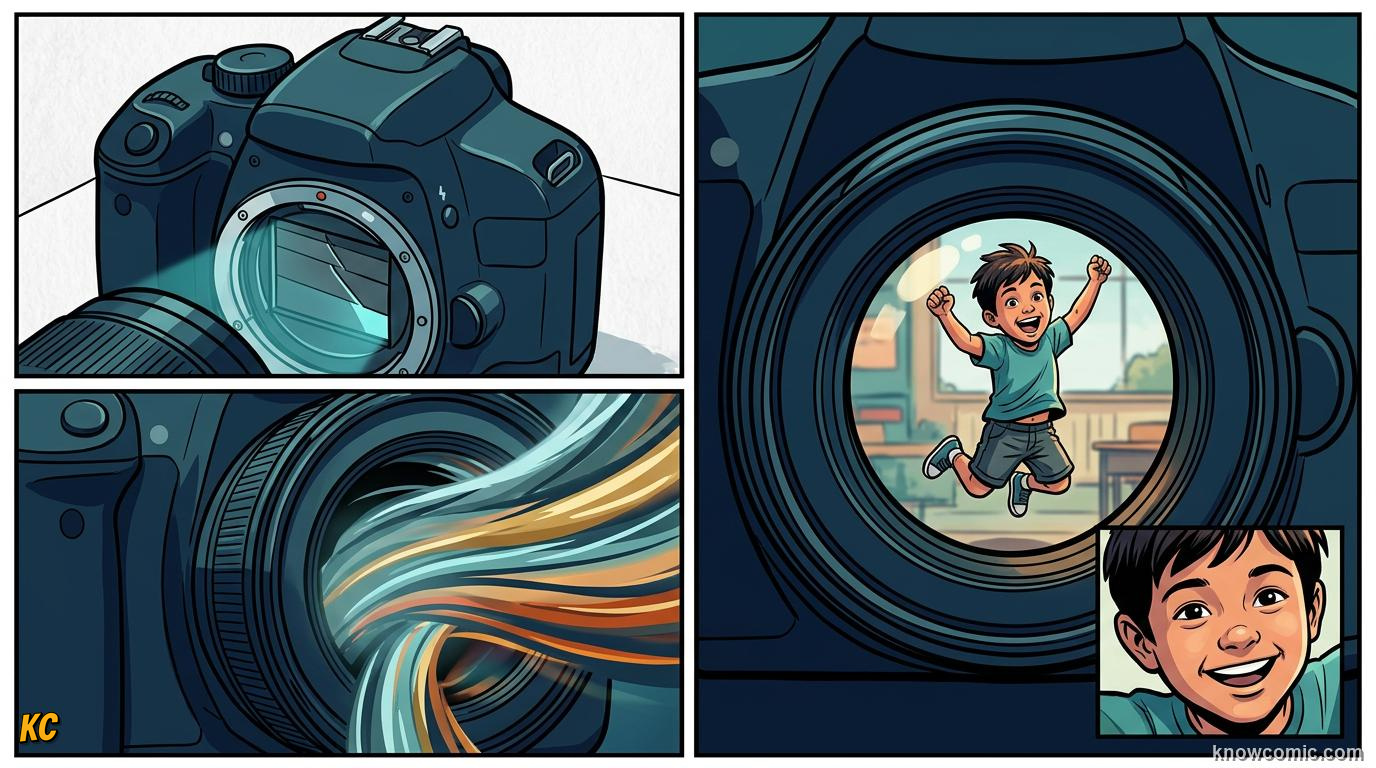
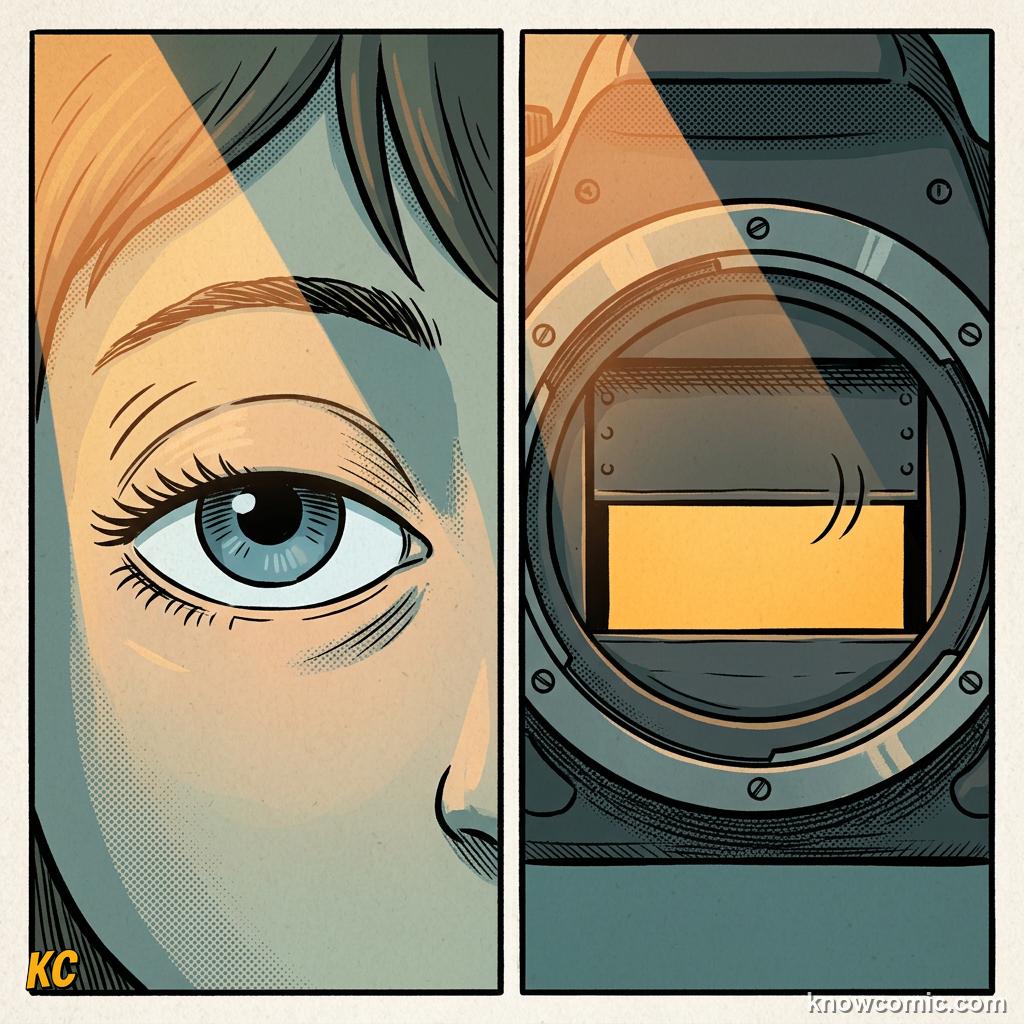
Between the lens and sensor, a shutter opens and closes like a fast eyelid. While it stays open, light keeps landing on the sensor. A quick snap freezes a jumping dog mid-air. A longer open time lets more light in, which helps in dim rooms but can blur moving things. The shutter is why photos are slices of time, not endless video. You are choosing how long the camera drinks in light.
⏱️ SLICE
The shutter decides how many milliseconds of light get recorded in one photo.
FREEZE!
PAGE 4 OF 5, LIKE YOUR EYE
BODY CAM
CAMERA VS HUMAN EYE
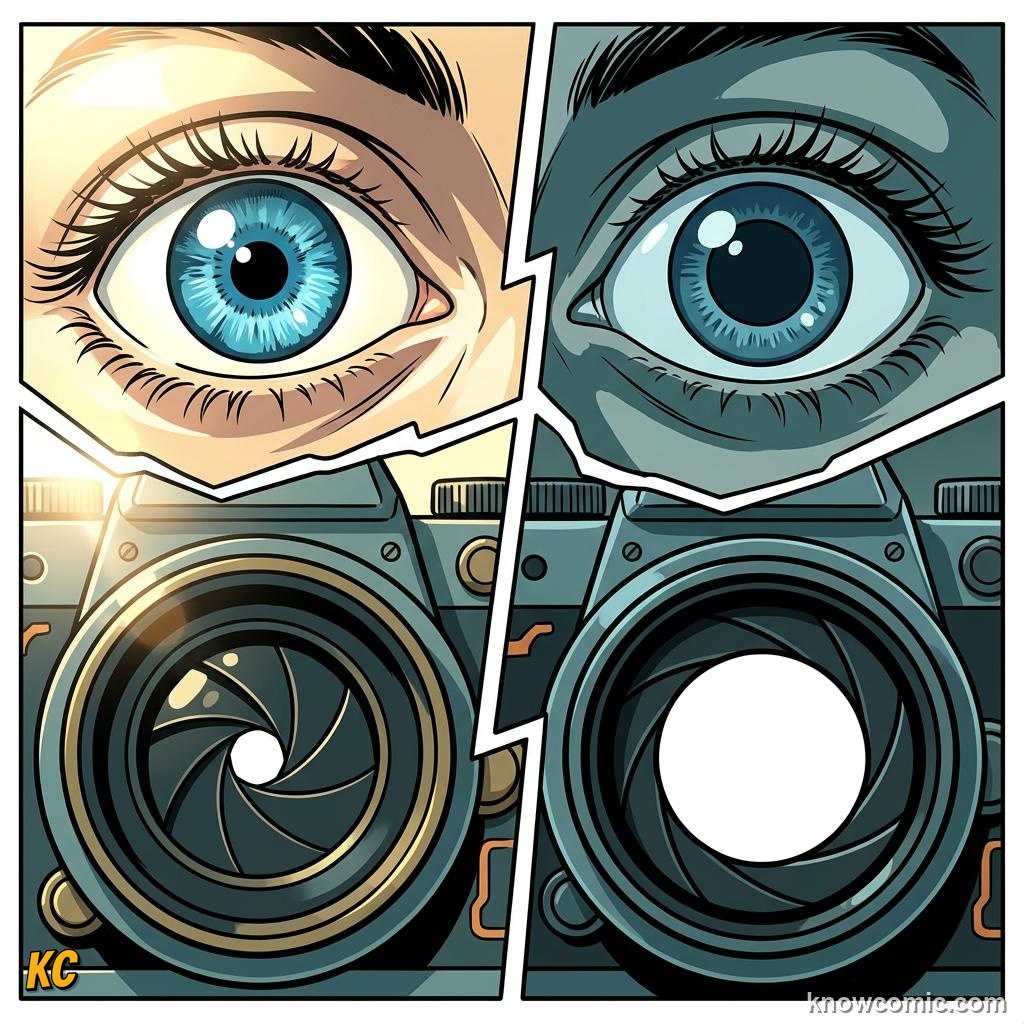
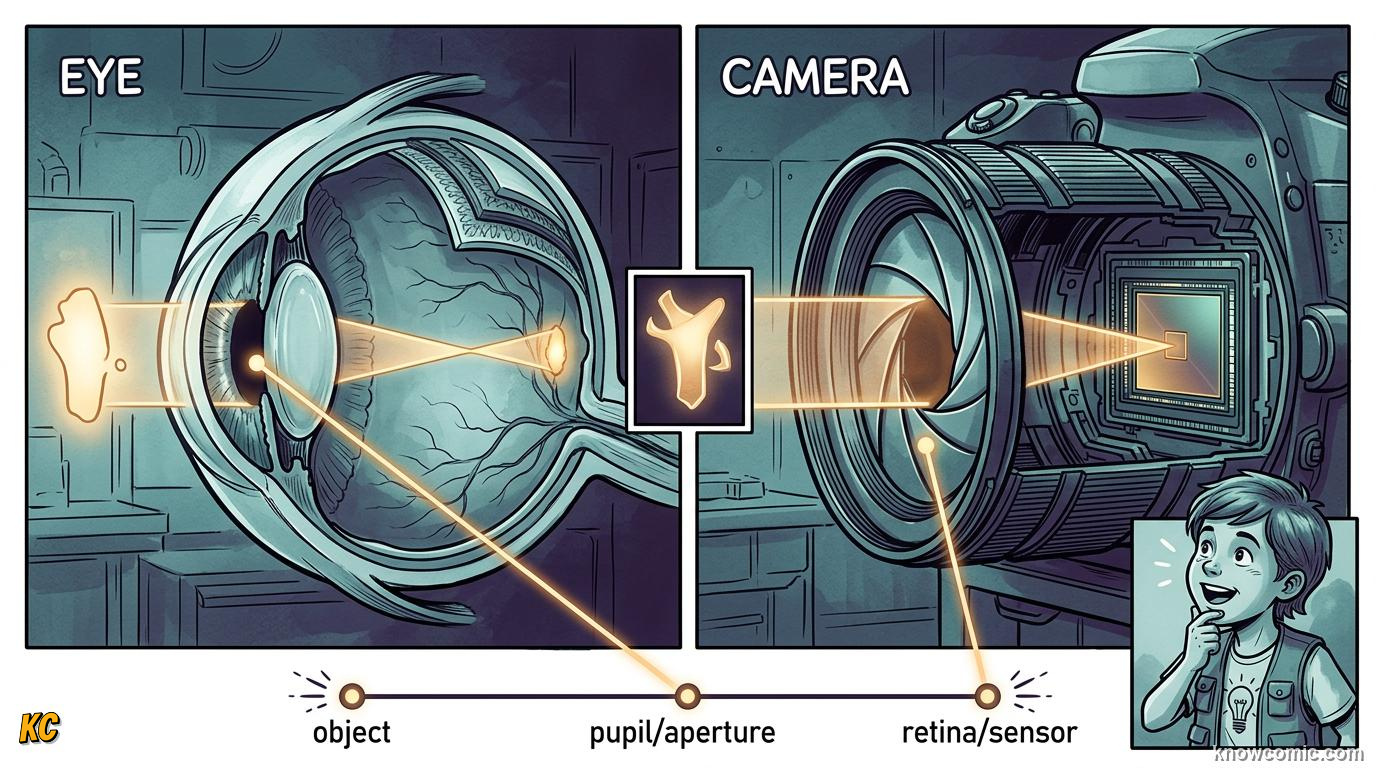
Your eye works like a tiny camera. The pupil is the aperture, the hole that grows bigger in the dark and smaller in bright sun. The lens in your eye bends light onto the retina, which is your biological sensor. Your eyelid blinks like a shutter. Scientists compare cameras and eyes because they work in such similar ways. Next time you look at a photo, remember you are seeing stored light that once bounced off the real world.
👁️ MATCH
The pupil works like aperture, the retina like a sensor, and blinking like a shutter.
EYE!
PUPIL
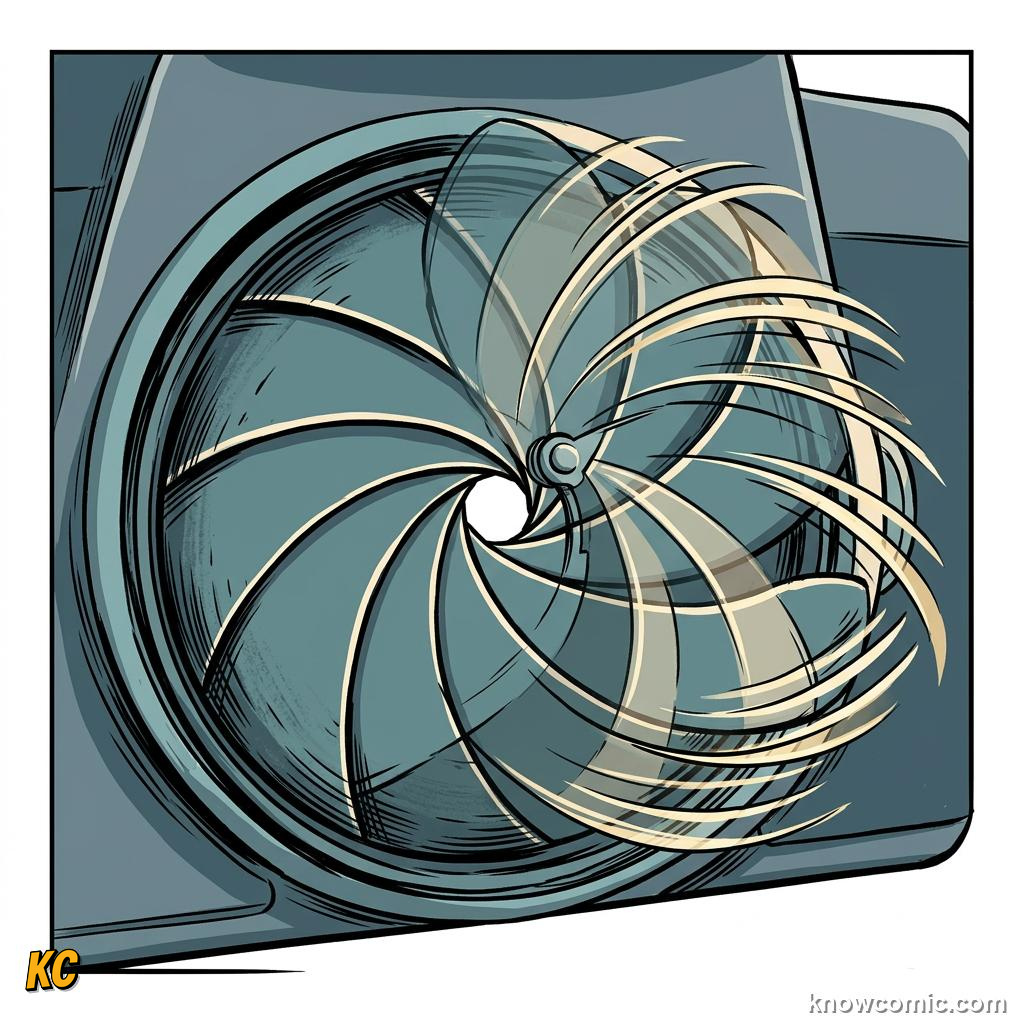
⭕ Pupil = aperture hole
🧠 Retina = sensor surface
🧠 Retina = sensor surface
BLINK
👁️ Eyelid = shutter
📷 Both shut to block light
📷 Both shut to block light
STORED

🖼️ Photos hold captured light
🌍 From real scenes
🌍 From real scenes
PAGE 5 OF 5, CAPTURED LIGHT
THE BIG IDEA
A PHOTO IS LIGHT
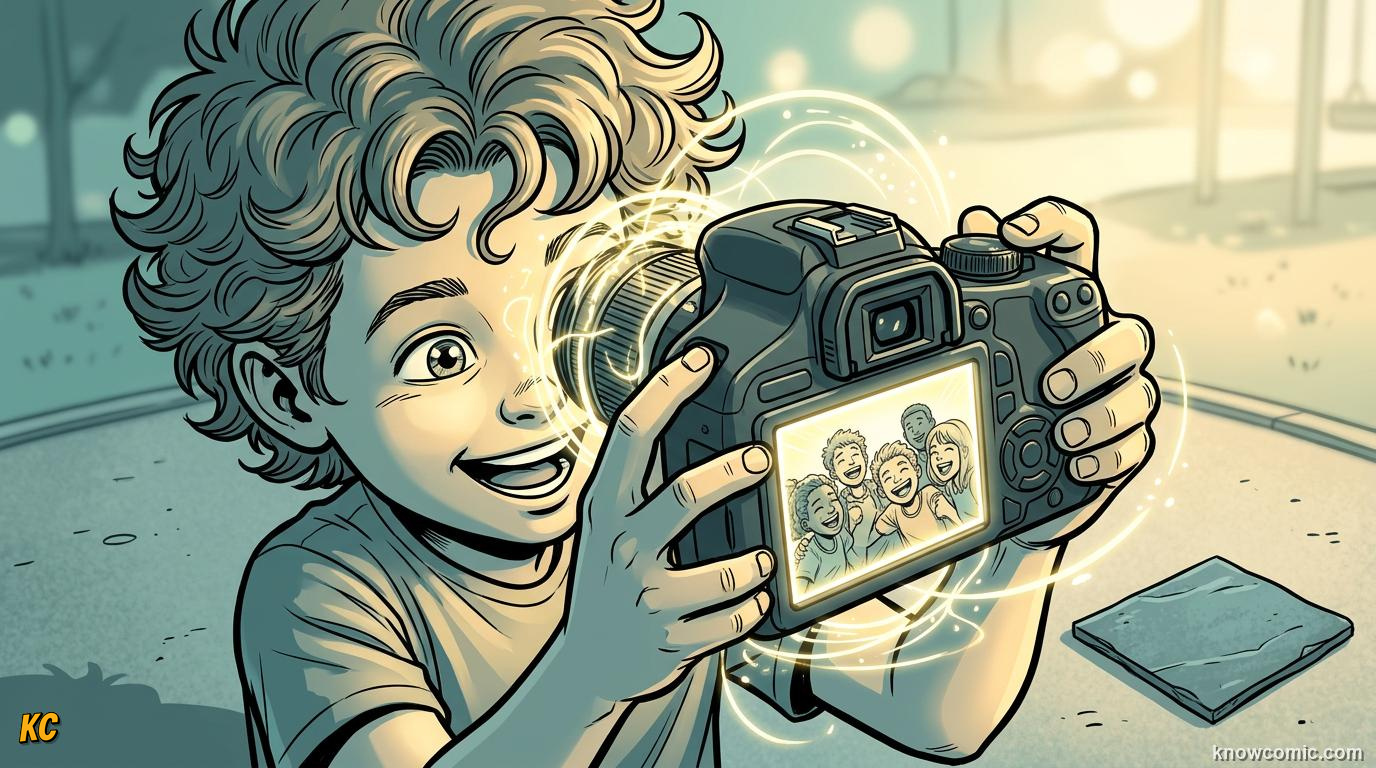
When you tap the shutter button, you are not grabbing the object itself. You are recording patterns of light that bounced off it a split second ago. That is why wiping a smudgy lens matters, why focus matters, and why bright rooms need less time than dark ones. Photography is the art and science of catching light. Now you know the path: light, lens, shutter, sensor, picture.
CAPTURE!
PATH
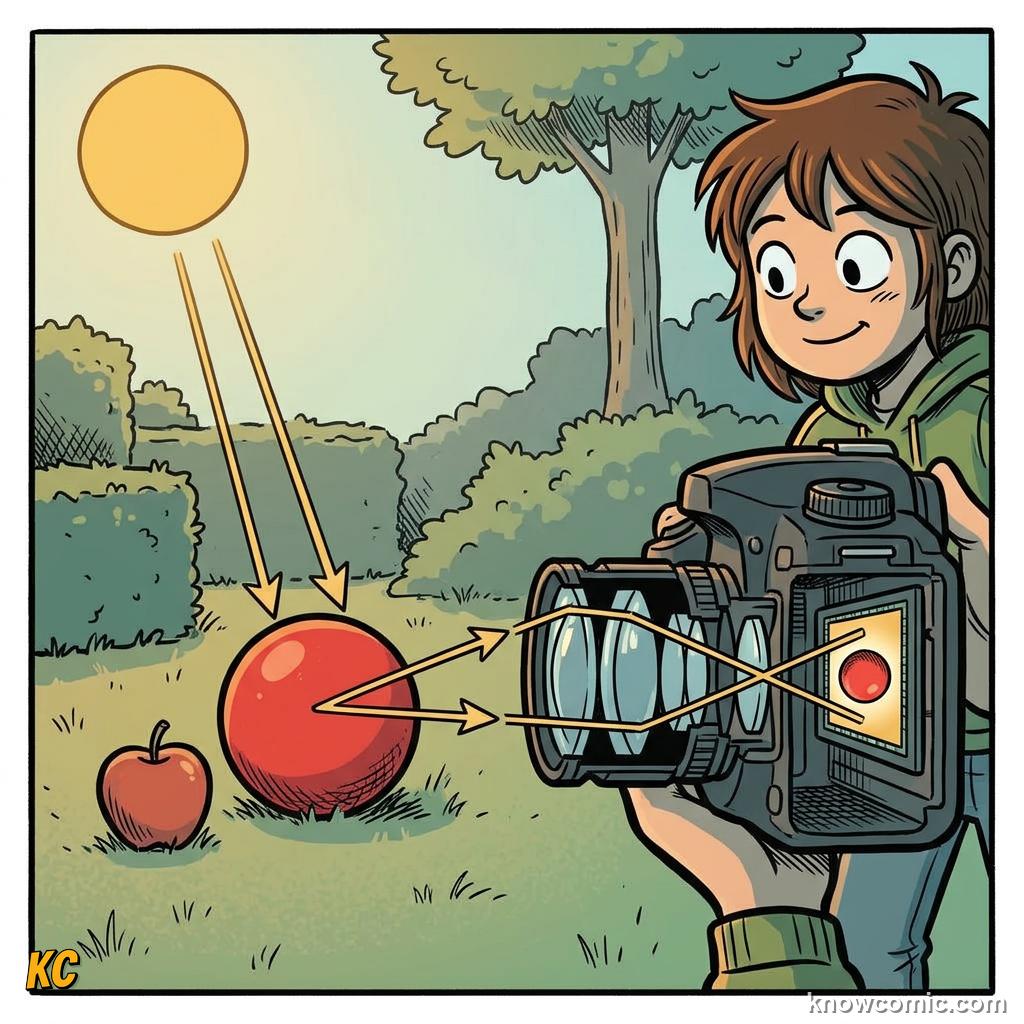
☀️ Light bounces off subject
🔍 Lens focuses it inward
🔍 Lens focuses it inward
REMEMBER
📷 KEY FACTS
Light enters through the lens, the shutter times the exposure, and the sensor records the image. A photo is literally captured light.
🔍 Lens bends rays to a focus point
⏱️ Shutter freezes a slice of time
👁️ Works like your eye
⏱️ Shutter freezes a slice of time
👁️ Works like your eye
No comments yet, be the first!