📦
🏷️
🚚
🧬 KNOW PRIMARY · AGES 6–11

BIOLOGY

🔬 Tiny Rooms, Giant Life, The Microscopic World of Cells!

📖 350 Topics 🆓 FREE + PRO ⏱️ 5 min per comic 🧠 Quiz included
🔬
1898
Golgi Discovered
📚
1950s
Stack Structure Seen
🫧
1970s
Vesicle Traffic Mapped
🏆
2013
Shipping Nobel Prize
📦
TODAY
Cell Mailroom
📦 GOLGI: THE MAILROOM
TOPIC 12 · BIOLOGY · PACKAGE · SORT · SHIP
PAGE 1 OF 5 — THE CELLULAR MAILROOM
THE HOOK
Comic panel about golgi: the mailroom: The Hook, educational kids illustration
STACKED MEMBRANES, BIG DELIVERIES
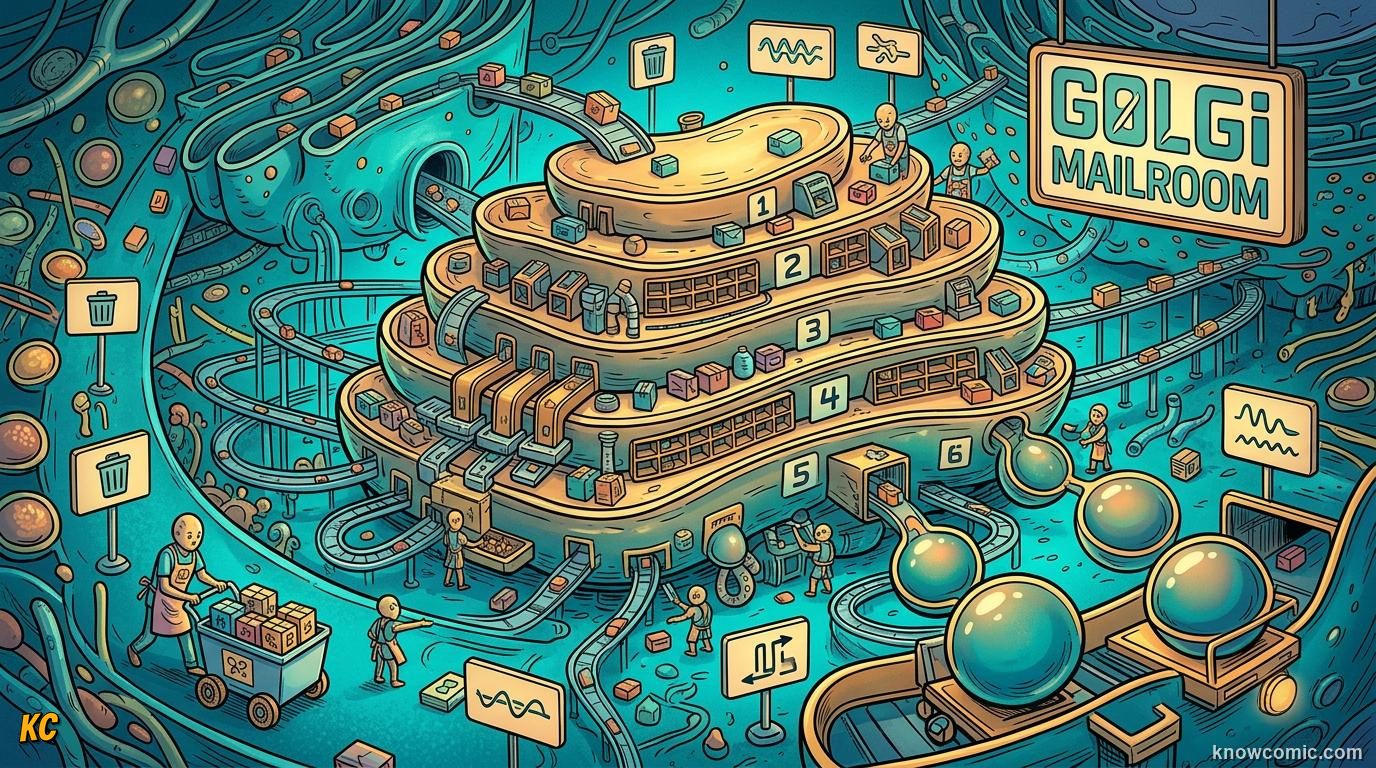
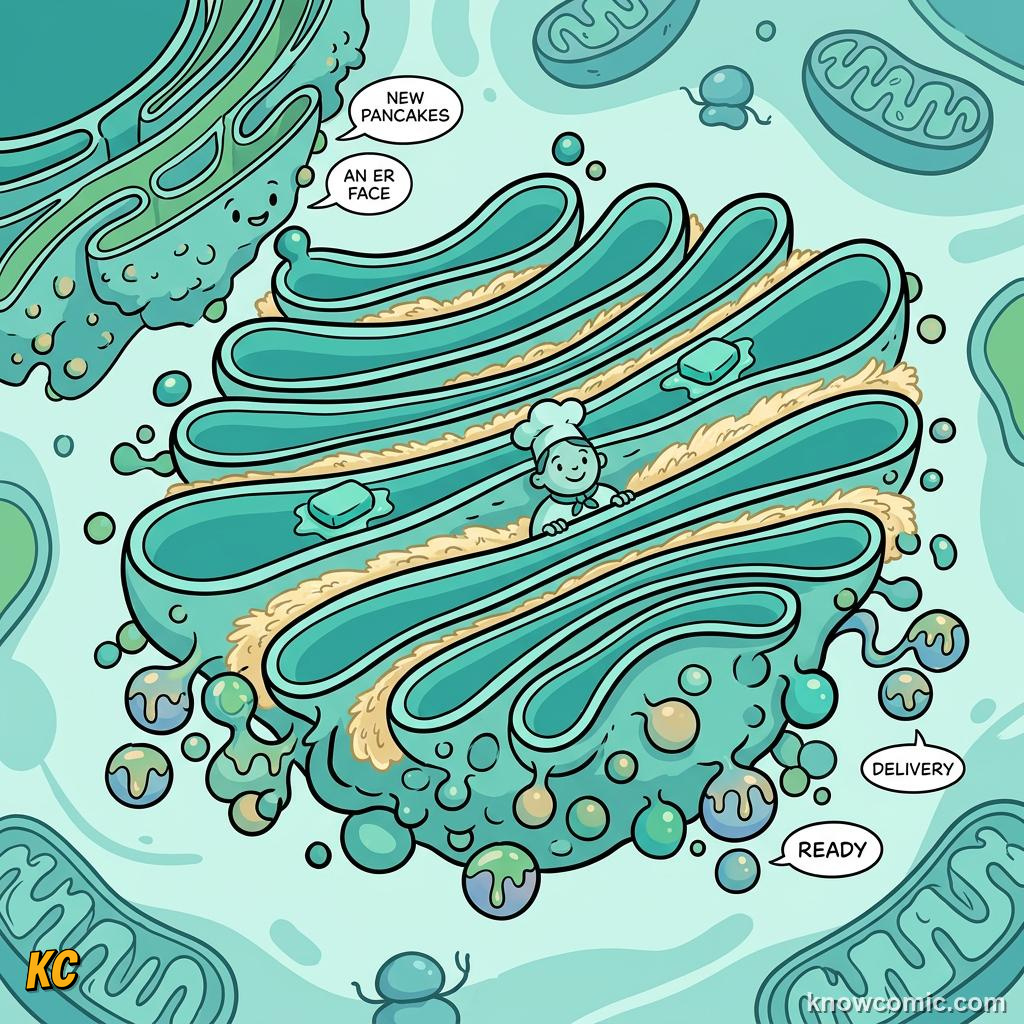
After proteins are built and folded in the rough ER, they still need a final stop before reaching their destination. The Golgi apparatus is that stop: a stack of flattened membrane sacs called cisternae that looks like a pile of pita bread. Italian scientist Camillo Golgi first spotted this structure in 1898 using special stains. Today we know it as the cell's mailroom, where products get modified, labeled, and shipped in tiny membrane bubbles called vesicles.
⚡ DID YOU KNOW?
When Golgi first described this organelle, many scientists did not believe it was real. They thought it was a staining artifact. Later microscopes proved the Golgi stack is a genuine, busy shipping hub in almost every animal and plant cell.
MAILROOM!
STACK
Comic panel about golgi: the mailroom: Stacked Membranes, Big Deliveries, educational kids illustration
🥞 Flattened cisternae stack like pancakes
📦 Usually 4 to 6 layers in one Golgi body
VESICLES
Comic panel about golgi: the mailroom: Vesicles, educational kids illustration
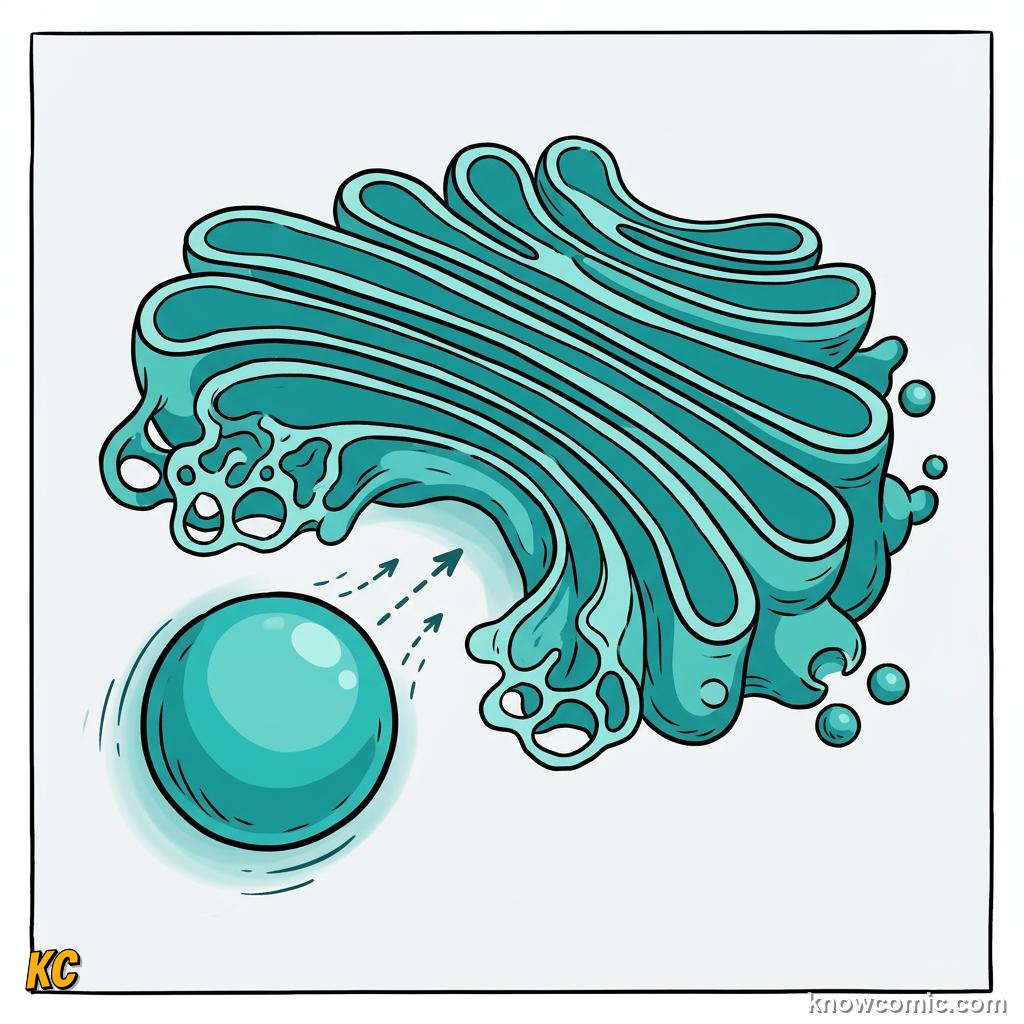
🫧 Vesicles are tiny membrane shipping bubbles
🚚 They carry proteins to the right address
PAGE 2 OF 5 — CIS & TRANS FACES
TWO SIDES
Comic panel about golgi: the mailroom: Two Sides, educational kids illustration
RECEIVE HERE, SHIP THERE
The Golgi stack has two distinct ends. The cis face sits nearest the rough ER and acts as the receiving dock. Transport vesicles from the ER fuse with this side and unload freshly made proteins into the Golgi interior. As cargo moves upward through the stack, enzymes modify it step by step. At the trans face on the far side, finished products bud off in new vesicles headed for the cell membrane, lysosomes, or outside the cell entirely.
🏷️ DIRECTION MARKERS
Scientists name the faces by direction, not by compass. Cis means "same side" as the ER. Trans means "far side" where packages leave. Cargo always travels cis to trans, like mail moving from the loading dock to the outbound truck.
SORT!
CIS FACE
Comic panel about golgi: the mailroom: Receive Here, Ship There, Cis Face, educational kids illustration
📥 Receiving side closest to rough ER
🫧 ER vesicles fuse and unload here
MIDDLE
Comic panel about golgi: the mailroom: Middle, educational kids illustration
🔧 Enzymes modify proteins in each layer
🏷️ Sugar tags and labels get added here
TRANS FACE
Comic panel about golgi: the mailroom: Trans Face, educational kids illustration
📤 Shipping side farthest from ER
🚚 New vesicles bud off with finished cargo
PAGE 3 OF 5 — FROM ER TO GOLGI
ER VESICLES
Comic panel about golgi: the mailroom: Er Vesicles, educational kids illustration
🏭 Rough ER builds and folds new proteins
🫧 Vesicles bud off carrying the cargo
FUSION
Comic panel about golgi: the mailroom: Fusion, educational kids illustration
🔗 Vesicles fuse with the cis Golgi membrane
📦 Proteins enter the stack for processing
SUPPLY LINE
Comic panel about golgi: the mailroom: Supply Line, educational kids illustration
ROUGH ER FEEDS THE GOLGI
The Golgi never works alone. It depends on a steady stream of cargo from the rough ER, the organelle where ribosomes build protein chains and fold them inside membrane tunnels. Once a protein passes quality checks, it gets packed into a COPII-coated vesicle that travels through the cytoplasm to the Golgi cis face. This ER-to-Golgi highway is one of the busiest routes in the cell, moving thousands of different proteins every minute in a living human body.
🛤️ PARTNERS IN PRODUCTION
Cells that secrete lots of protein, like pancreas cells making insulin, have huge rough ER networks and large Golgi stacks side by side. More production means a bigger mailroom to handle the volume.
RECEIVE!
PAGE 4 OF 5 — MODIFY & LABEL
FINISHING TOUCHES
Comic panel about golgi: the mailroom: Rough Er Feeds The Golgi, Finishing Touches, educational kids illustration
ADD TAGS, CHANGE SHAPE
Raw proteins from the ER are not always ready for their final job. Inside the Golgi, enzymes attach carbohydrate chains in a process called glycosylation, like sticking address labels on packages. Some proteins get trimmed or linked together. These modifications help the cell recognize where each molecule belongs: the outer membrane, a lysosome, or secretion outside the cell. Without Golgi labeling, proteins would arrive at the wrong place or fail to work at all.
🏷️ MOLECULAR ADDRESSES
Golgi enzymes add specific sugar patterns that act like zip codes. Sorting machinery reads these tags and loads each protein into the correct vesicle, so insulin heads out of the cell while lysosome enzymes stay inside.
LABEL!
GLYCOSYLATION
Comic panel about golgi: the mailroom: Add Tags, Change Shape, Glycosylation, educational kids illustration
🍬 Sugar groups attach to many proteins
🏷️ These tags guide sorting decisions
ENZYMES
Comic panel about golgi: the mailroom: Enzymes, educational kids illustration
✂️ Some proteins get trimmed or reshaped
🔗 Others link together into bigger units
SORTING
Comic panel about golgi: the mailroom: Sorting, educational kids illustration
🎯 Each cargo gets routed to its destination
📬 Membrane, lysosome, or outside the cell
PAGE 5 OF 5 — SHIP TO DESTINATION
DELIVERY DAY
Comic panel about golgi: the mailroom: Delivery Day, educational kids illustration
VESICLES CARRY THE FINAL PACKAGE
At the trans face, the Golgi pinches off vesicles loaded with finished proteins. Secretory vesicles travel to the cell surface and release cargo by exocytosis, the process that lets a cell export hormones, mucus, or digestive enzymes. Other vesicles fuse with lysosomes to deliver acid-digesting enzymes, or embed new membrane proteins in the cell surface. This precise shipping network is why proteins end up exactly where they are needed most, from your bloodstream to the tip of a nerve cell.
🌍 BIG PICTURE
Scientists James Rothman, Randy Schekman, and Thomas Südhof shared the 2013 Nobel Prize for uncovering how vesicles find the right target and fuse on schedule. Their work revealed the secret behind Golgi shipping.
SHIP!
EXOCYTOSIS
Comic panel about golgi: the mailroom: Vesicles Carry The Final Package, Exocytosis, educational kids illustration
🌍 Secretory vesicles fuse with the cell membrane
💉 Hormones and mucus exit by this route
REMEMBER
📦 KEY FACTS
The Golgi receives proteins from rough ER at the cis face, modifies and labels them in stacked cisternae, and ships finished products in vesicles from the trans face to lysosomes, membranes, or outside the cell.
📥 Cis face receives from ER
🏷️ Middle layers modify and tag proteins
📤 Trans face ships vesicles out
🧠 QUIZ TIME!
GOLGI: THE MAILROOM · 5 QUESTIONS
QUESTION 01
Which face of the Golgi receives proteins from the rough ER?
QUESTION 02
What are vesicles?
QUESTION 03
What kind of modification does the Golgi often add to proteins?
QUESTION 04
Where do proteins come from before they enter the Golgi?
QUESTION 05
What happens at the trans face of the Golgi?
0/5
LOADING...
💬 REACTIONS & COMMENTS
No comments yet, be the first!
← TOPIC 11 📋 ALL TOPICS TOPIC 13 →