🧹
♻️
🦠
🧬 KNOW PRIMARY · AGES 6–11

BIOLOGY

🔬 Tiny Rooms, Giant Life, The Microscopic World of Cells!

📖 350 Topics 🆓 FREE + PRO ⏱️ 5 min per comic 🧠 Quiz included
🔬
1955
Lysosomes Found
🧪
1960s
Acid Enzymes Proven
🏆
1974
de Duve Nobel Prize
♻️
2016
Autophagy Nobel
🧹
TODAY
Cell Recycler
♻️ LYSOSOMES: RECYCLER
TOPIC 13 · BIOLOGY · ENZYME · CLEAN · WASTE
PAGE 1 OF 5 — THE CLEANUP CREW
THE HOOK
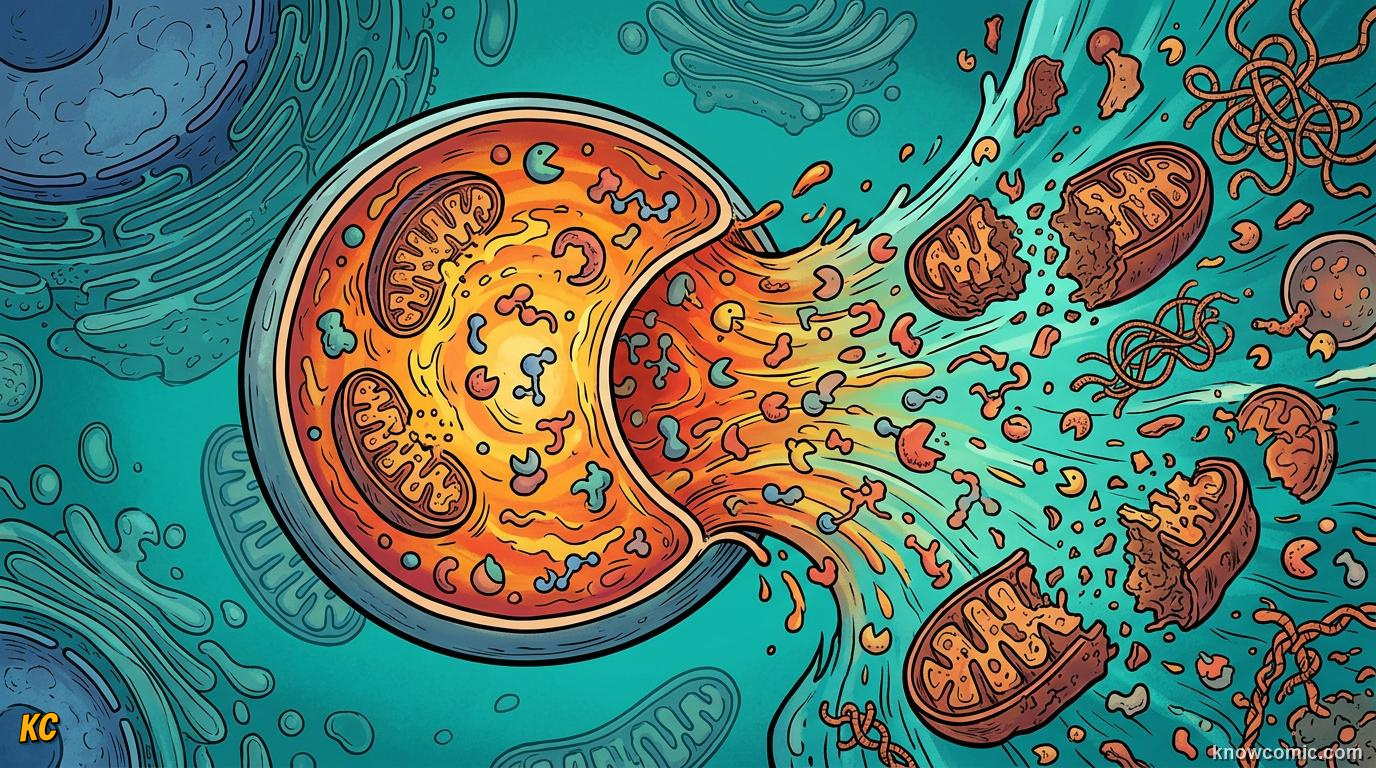
Comic panel about lysosomes: recycler: The Hook, educational kids illustration
THE CELL'S DIGESTIVE STOMACH
Cells make messes: worn-out parts, broken molecules, and sometimes invaders like bacteria. Lysosomes are small, membrane-bound organelles packed with powerful digestive enzymes that break all of that down. Belgian scientist Christian de Duve discovered lysosomes in 1955 and later won a Nobel Prize for the work. Think of each lysosome as a tiny recycling plant with acid inside, ready to dissolve waste and return useful building blocks to the cell.
⚡ DID YOU KNOW?
The name "lysosome" comes from Greek words meaning "break" and "body." de Duve chose it because these organelles break down other material inside the cell. A single cell can contain hundreds of lysosomes.
RECYCLE!
MEMBRANE
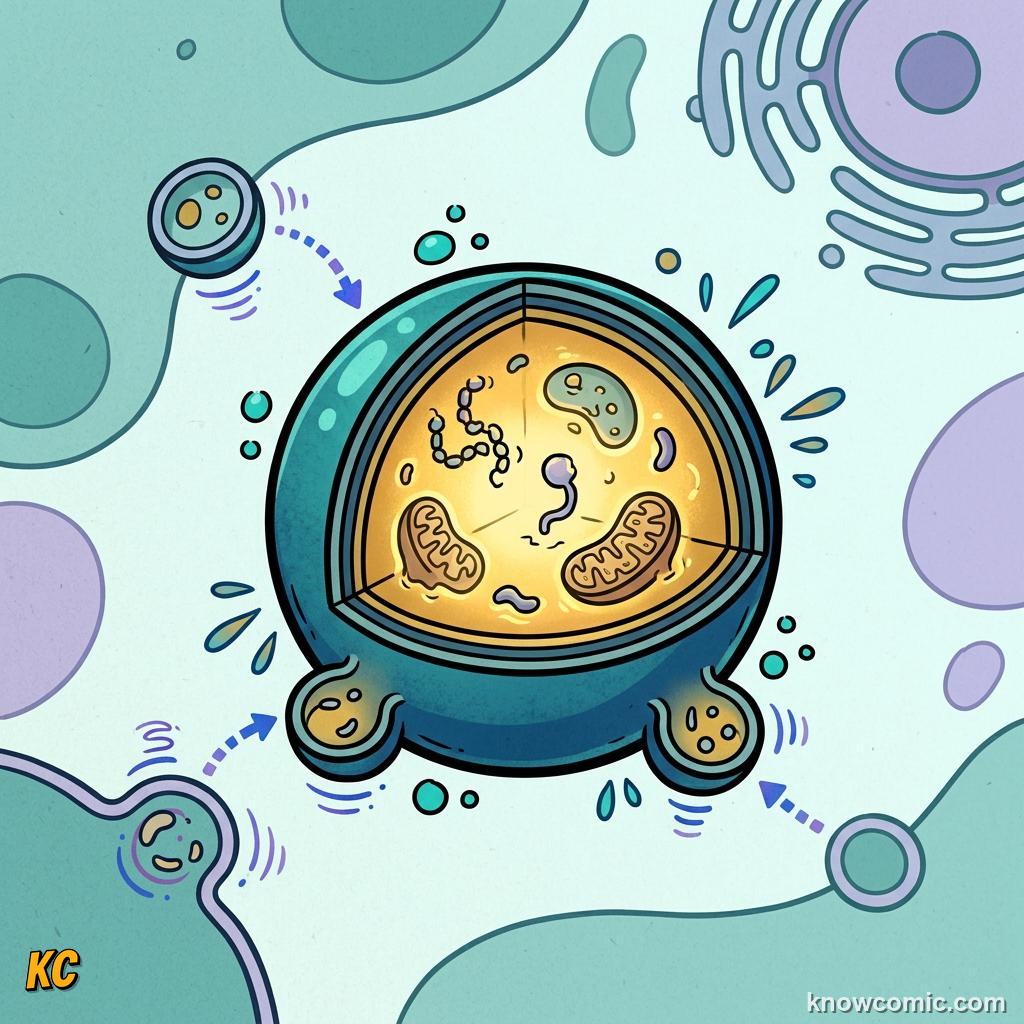
Comic panel about lysosomes: recycler: The Cell'S Digestive Stomach, Membrane, educational kids illustration
🫧 Each lysosome is a membrane-bound sac
🔒 The membrane keeps enzymes safely inside
ENZYMES
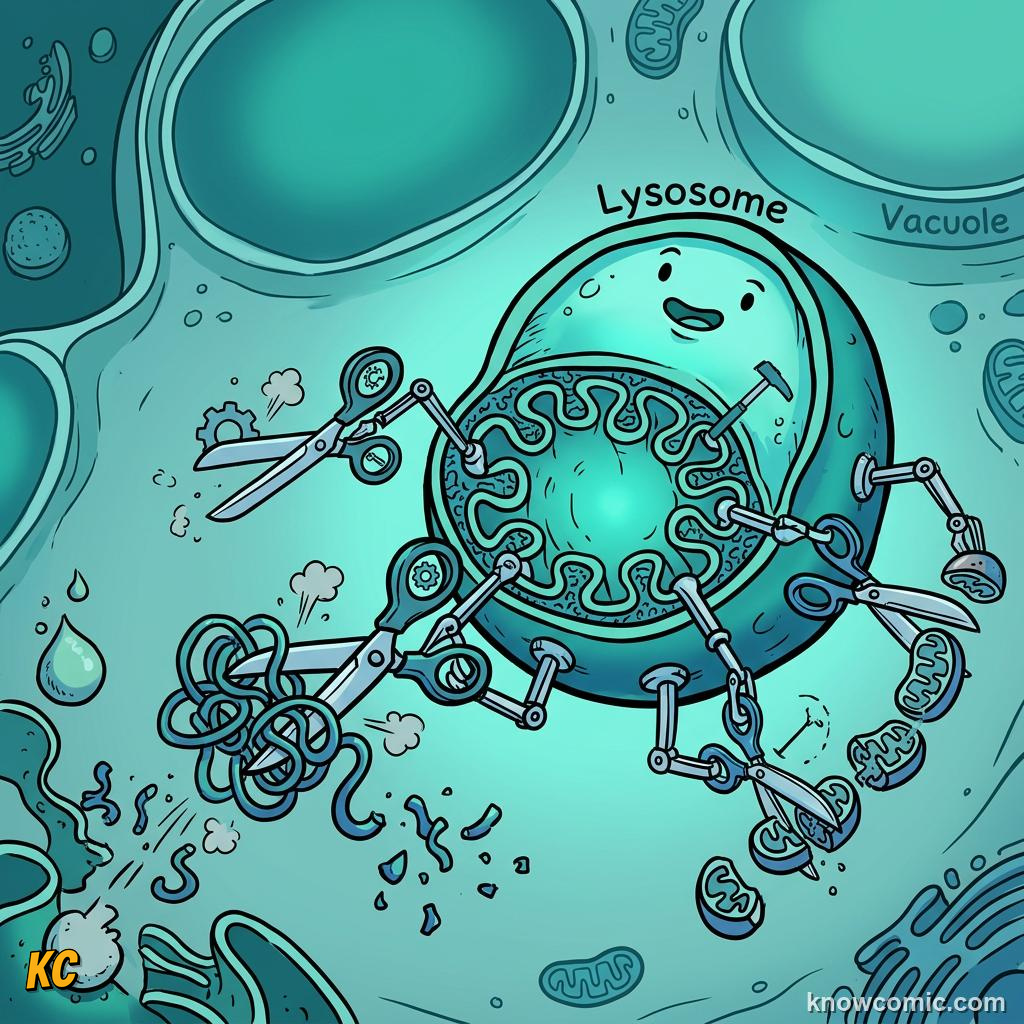
Comic panel about lysosomes: recycler: Enzymes, educational kids illustration
🧪 Packed with hydrolytic digestive enzymes
✂️ They chop proteins, fats, and other molecules
PAGE 2 OF 5 — ACID INSIDE
LOW pH POWER
Comic panel about lysosomes: recycler: Low Ph Power, educational kids illustration
ACID MAKES ENZYMES WORK
Lysosomes are acidic inside, with a pH around 4.5 to 5.0, much lower than the neutral cytoplasm around them. Special proton pumps in the lysosome membrane push hydrogen ions inward to maintain this acidity. The acidic environment activates hydrolytic enzymes that use water to split chemical bonds. If a lysosome ruptures, those same enzymes could damage the rest of the cell, which is why the membrane barrier is so important.
🧪 ACID ZONE
Lysosome acid is strong enough to digest food particles and worn organelles, but the membrane protects the rest of the cell. White blood cells use extra lysosomes to destroy bacteria they swallow during an infection.
DIGEST!
pH 4.5
Comic panel about lysosomes: recycler: Acid Makes Enzymes Work, Ph 4.5, educational kids illustration
🔋 Proton pumps keep the inside acidic
⚗️ pH around 4.5 to 5.0, not neutral
HYDROLYSIS
Comic panel about lysosomes: recycler: Hydrolysis, educational kids illustration
💧 Hydrolytic enzymes use water to break bonds
🧬 Proteins, lipids, and carbs all get split
SAFETY
Comic panel about lysosomes: recycler: Safety, educational kids illustration
🛡️ The membrane traps enzymes inside
⚠️ A leak would harm the rest of the cell
PAGE 3 OF 5 — PHAGOCYTOSIS
ENGULF
Comic panel about lysosomes: recycler: Engulf, educational kids illustration
🦠 Cell membrane wraps around invaders
🫧 A food vacuole forms around the particle
FUSE
Comic panel about lysosomes: recycler: Fuse, educational kids illustration
🔗 Lysosomes fuse with the food vacuole
🧪 Enzymes pour in and digest the contents
DEFENSE CREW
Comic panel about lysosomes: recycler: Defense Crew, educational kids illustration
PHAGOCYTOSIS: EAT THE INVADER
Some cells, especially white blood cells called macrophages and neutrophils, swallow bacteria and debris through phagocytosis. The cell membrane extends around the particle and pinches off a vesicle called a phagosome. Lysosomes then merge with the phagosome, dumping acid and enzymes inside to destroy the invader. This process is a front-line defense in your immune system, turning dangerous microbes into harmless fragments the cell can recycle or discard.
🦠 IMMUNE HEROES
Macrophages can engulf several bacteria at once. Their lysosomes work overtime during an infection, which is one reason your white blood cell count rises when you are sick.
CLEAN!
PAGE 4 OF 5 — AUTOPHAGY
SELF-RECYCLING
Comic panel about lysosomes: recycler: Phagocytosis: Eat The Invader, Self-Recycling, educational kids illustration
AUTOPHAGY: EAT YOUR OWN WASTE
Cells also recycle their own worn-out parts through autophagy, a Greek word meaning "self-eating." Damaged mitochondria, old proteins, and other clutter get wrapped in a double membrane to form an autophagosome. Lysosomes fuse with it and digest the contents, releasing amino acids and other raw materials back into the cytoplasm. Japanese scientist Yoshinori Ohsumi won the 2016 Nobel Prize for revealing how autophagy works. It keeps cells tidy, saves energy, and helps them survive stress or starvation.
♻️ SUSTAINABLE CELL
Autophagy is like the cell taking out its own trash and reusing the parts. Without it, damaged organelles pile up and the cell cannot function properly. It happens constantly in healthy cells.
REUSE!
WRAP UP
Comic panel about lysosomes: recycler: Autophagy: Eat Your Own Waste, Wrap Up, educational kids illustration
📦 Worn parts get wrapped in a new membrane
🔄 An autophagosome forms around the junk
FUSE & DIGEST
Comic panel about lysosomes: recycler: Fuse &Amp; Digest, educational kids illustration
🔗 Lysosomes merge with the autophagosome
🧪 Enzymes break old parts into raw materials
REBUILD
Comic panel about lysosomes: recycler: Rebuild, educational kids illustration
🧱 Amino acids return to build new proteins
♻️ Nothing useful goes to waste
PAGE 5 OF 5 — FROM GOLGI TO LYSOSOME
FULL CYCLE
Comic panel about lysosomes: recycler: Full Cycle, educational kids illustration
LYSOSOMES KEEP THE CELL EFFICIENT
Lysosomal enzymes are made in the rough ER and tagged in the Golgi apparatus before delivery in vesicles. Once inside a lysosome, they stay active in acid until needed. Together, phagocytosis and autophagy give lysosomes two big jobs: destroy outside threats and recycle inside waste. This sustainable system keeps the cellular environment clean, supplies fresh building blocks, and prevents damaged parts from causing disease. When lysosomes fail, harmful material builds up and serious illnesses can result.
🌍 BIG PICTURE
Over 50 human diseases, called lysosomal storage disorders, happen when a lysosome lacks one enzyme and waste piles up. Scientists study lysosomes to find treatments for these conditions and to understand aging.
EFFICIENT!
GOLGI DELIVERY
Comic panel about lysosomes: recycler: Lysosomes Keep The Cell Efficient, Golgi Delivery, educational kids illustration
📦 Golgi ships acid enzymes to lysosomes
🏷️ Tags ensure enzymes reach the right address
REMEMBER
♻️ KEY FACTS
Lysosomes are acidic sacs filled with hydrolytic enzymes. They digest invaders through phagocytosis and recycle worn parts through autophagy, keeping the cell clean and efficient.
⚗️ Acid pH around 4.5 to 5.0 inside
🦠 Phagocytosis destroys bacteria
♻️ Autophagy recycles old organelles
🧠 QUIZ TIME!
LYSOSOMES: RECYCLER · 5 QUESTIONS
QUESTION 01
What is the pH inside a lysosome?
QUESTION 02
What type of enzymes fill lysosomes?
QUESTION 03
What is phagocytosis?
QUESTION 04
What does autophagy mean?
QUESTION 05
Who discovered lysosomes and won a Nobel Prize for related work?
0/5
LOADING...
💬 REACTIONS & COMMENTS
No comments yet, be the first!
← TOPIC 12 📋 ALL TOPICS TOPIC 14 →