🔬 Tiny Rooms, Giant Life, The Microscopic World of Cells!
📖 350 Topics🆓 FREE + PRO⏱️ 5 min per comic🧠 Quiz included
🔬
1885
Vacuole Named
→
🌱
1900s
Plant Tank Found
→
💧
1920s
Turgor Explained
→
🏺
1960s
Many Roles Revealed
→
🧬
TODAY
Cellular Storage Vaults
🏺 VACUOLES: THE VAULT
TOPIC 14 · BIOLOGY · STORE · WATER · SUPPORT
PAGE 1 OF 5 — THE CELLULAR STORAGE TANK
THE HOOK
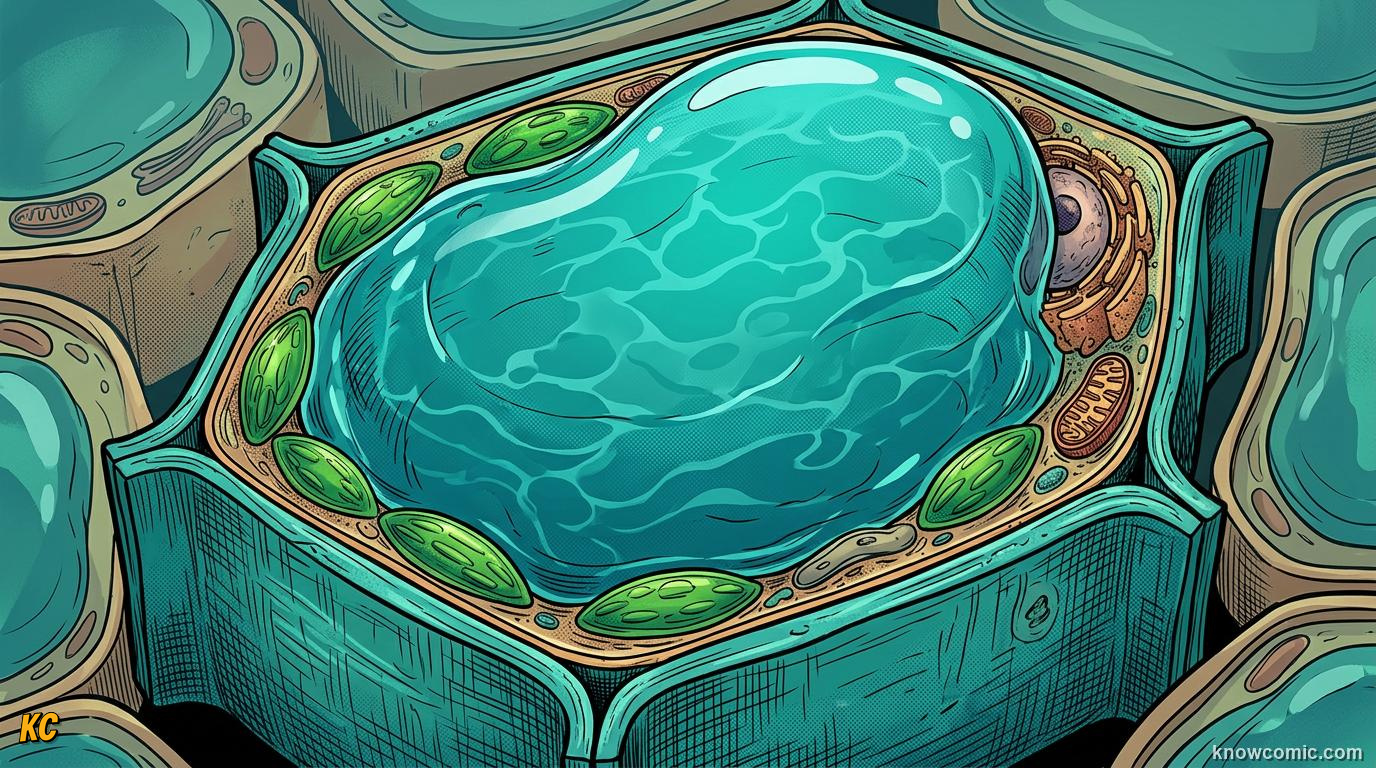
MEMBRANE BUBBLES THAT STORE
Vacuoles are membrane-bound sacs inside cells that work like storage vaults. In plant cells, one giant central vacuole can take up most of the cell's interior space. It holds water, sugars, ions, pigments, and even waste products the cell needs to set aside. Animal cells also have vacuoles, but they are usually much smaller and more numerous. Whether huge or tiny, vacuoles keep supplies organized until the cell is ready to use them or send them elsewhere.
⚡ DID YOU KNOW?
The word vacuole comes from the Latin word for "empty space." Early microscopists saw clear bubbles in plant cells and named them before scientists fully understood how packed with water and dissolved materials they really are.
VAULT!
MEMBRANE
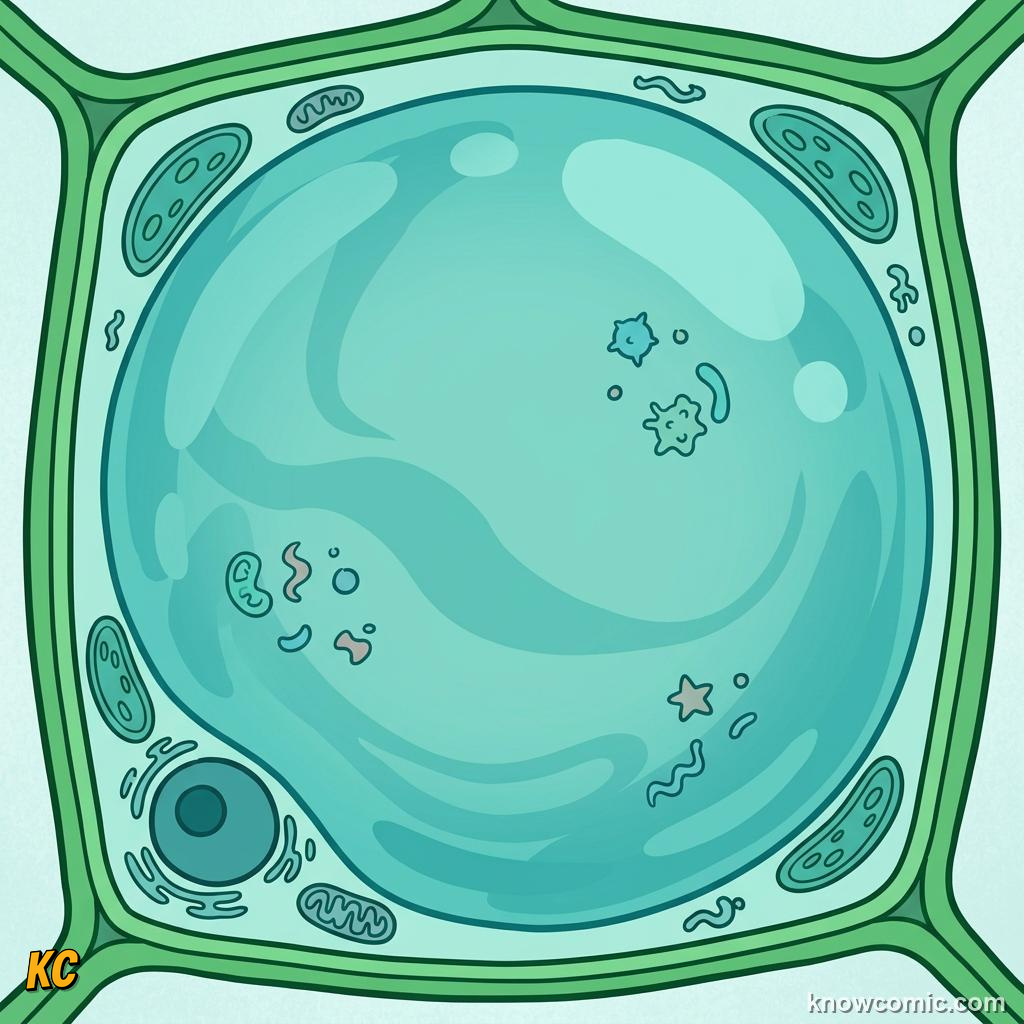
🫧 Each vacuole is wrapped in its own membrane
🔒 That membrane keeps stored contents separate
STORE
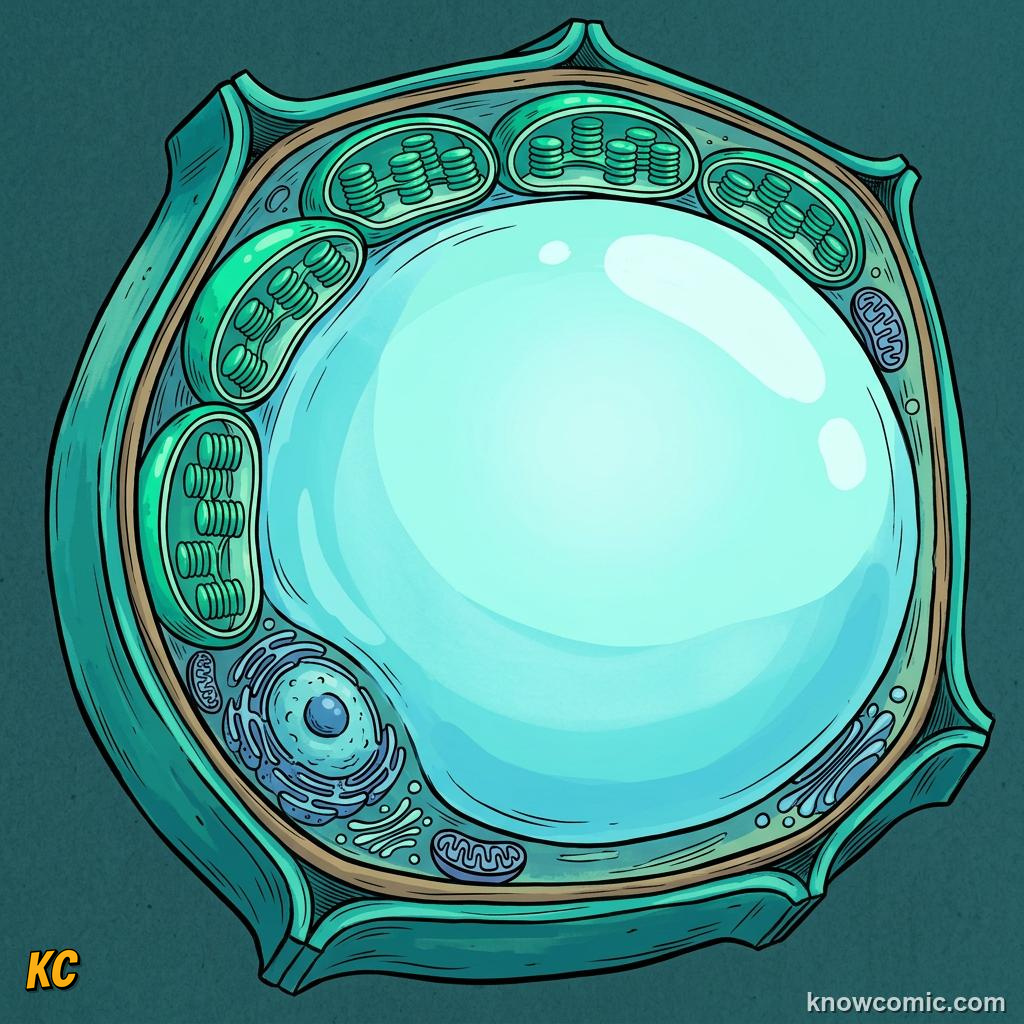
💧 Water, sugars, and ions sit inside
🎨 Some vacuoles hold pigments that color flowers
PAGE 2 OF 5 — THE PLANT CENTRAL VACUOLE
GIANT TANK
ONE BIG VAULT DOMINATES
Mature plant cells usually contain one large central vacuole that can occupy a huge share of the cell volume, sometimes well over half. This central vacuole is filled with cell sap, a watery mix of salts, sugars, and other dissolved substances. It pushes the cytoplasm and nucleus toward the edges, giving plant cells their characteristic boxy look under a microscope. The central vacuole is far more than empty space. It is the main warehouse of the plant cell.
🌱 PLANT POWER
Young plant cells often start with many small vacuoles. As the cell matures, those smaller sacs merge into one large central vacuole. That fusion is a sign the cell is growing up and getting ready for serious storage and support jobs.
CENTRAL!
CELL SAP
💧 Cell sap is mostly water plus dissolved ions
🍬 Sugars and minerals ride along inside
TONOPLAST
🧱 The vacuole membrane is called the tonoplast
🚪 It controls what enters and leaves the vault
PIGMENTS
🌸 Anthocyanin pigments color petals from vacuoles
🍇 Berry and grape hues come from stored pigments too
PAGE 3 OF 5 — TURGOR & PLANT SUPPORT
WATER IN
💧 Roots absorb water from the soil
📈 Water flows into vacuoles by osmosis
PRESSURE
🎈 Full vacuoles push outward on the cell wall
🌿 That inward push from water is turgor pressure
STAND TALL
TURGOR KEEPS PLANTS UPRIGHT
When a plant cell's central vacuole fills with water, the swollen vacuole presses the cytoplasm against the rigid cell wall. That outward force is called turgor pressure, and it makes stems and leaves firm and upright. Without enough turgor, plants wilt and droop because their cells lose the internal push that keeps them stiff. Turgor is why a freshly watered houseplant stands perky, and why a forgotten one goes limp until you add water again.
🥀 WILT ALERT
Wilting happens when vacuoles lose water faster than roots can replace it. The cell wall stays in place, but the vacuole shrinks and turgor pressure drops. Give the plant a drink and vacuoles refill, restoring firmness.
TURGOR!
PAGE 4 OF 5 — ANIMAL VACUOLES & PROTISTS
SMALLER VAULTS
ANIMAL CELLS USE TINY VAULTS
Animal cells do not have one giant central vacuole. Instead they use smaller vacuoles scattered through the cytoplasm. Some store nutrients the cell will need later. Others hold waste or damaged material until lysosomes can break it down. Food vacuoles in certain cells swallow bits of food from outside. Secretory vacuoles carry packaged molecules toward the cell membrane for release. Animal vacuoles are modest in size, but they still handle vital storage and transport jobs every day.
🦠 PROTIST PUMP
Some single-celled protists living in fresh water have contractile vacuoles. These special sacs fill with excess water, then squeeze it back out through the cell membrane so the cell does not burst from too much internal pressure.
STORE!
NUTRIENTS
🍎 Animal vacuoles stash fats and other supplies
⏳ Contents wait until the cell needs them
WASTE
🗑️ Some vacuoles hold waste until cleanup crews arrive
♻️ Lysosomes often finish the recycling job
CONTRACTILE
💦 Contractile vacuoles pump excess water out
🦠 Freshwater protists rely on them to survive
PAGE 5 OF 5 — THE VAULT RECAP
EVERY CELL STORES
VACUOLES KEEP LIFE ORGANIZED
From towering trees to tiny protists, vacuoles solve storage problems inside cells. Plant central vacuoles hoard water and dissolved materials while turgor pressure keeps tissues firm. Animal cells use smaller vacuoles for nutrients, waste, and secretions. Contractile vacuoles in freshwater protists act like emergency pumps. Every type shares the same basic idea: a membrane-lined vault that holds what the cell needs until the right moment arrives.
🌍 BIG PICTURE
Vacuoles also help plants survive dry spells by releasing stored water when soil moisture drops. That backup supply can keep a plant alive long enough for the next rain to arrive.
SECURE!
COMPARE
🌱 Plants: one huge central vacuole
🐾 Animals: many smaller vacuoles instead
REMEMBER
🏺 KEY FACTS
Vacuoles are membrane-bound storage sacs. Plant central vacuoles hold water and create turgor pressure for support. Animal vacuoles are smaller and store nutrients or waste. Contractile vacuoles in protists pump out excess water.
💧 Water-filled vacuoles = turgor and stiffness
🏺 Plants store pigments and sugars inside
💦 Protists use contractile vacuoles as pumps
🧠 QUIZ TIME!
VACUOLES: THE VAULT · 5 QUESTIONS
QUESTION 01
What is the main job of the central vacuole in a mature plant cell?
QUESTION 02
What is turgor pressure?
QUESTION 03
How do vacuoles in animal cells usually compare to the central vacuole in plants?
QUESTION 04
What does a contractile vacuole do in some freshwater protists?
QUESTION 05
What happens to a plant when its vacuoles lose too much water?