🦠
🔥
❄️
🧬 KNOW PRIMARY · AGES 6–11

BIOLOGY

🦠 Ancient Cells, Extreme Survivors, Meet the Prokaryotes!

📖 350 Topics 🆓 FREE + PRO ⏱️ 5 min per comic 🧠 Quiz included
🌋
3.5 BYA
First Prokaryotes
☀️
2.7 BYA
Photosynthesis Starts
💨
2.4 BYA
Oxygen Fills Air
🧬
1.9 BYA
Eukaryotes Appear
🦠
TODAY
Billions Everywhere
🦠 PROKARYOTIC PIONEERS
TOPIC 02 · BIOLOGY · BACTERIA · SIMPLE · ANCIENT
PAGE 1 OF 5 — THE ORIGINAL SURVIVORS
THE HOOK
Comic panel about prokaryotic pioneers: The Hook, educational kids illustration
LIFE STARTED WITH THE SIMPLEST CELLS
Long before dinosaurs, trees, or humans walked the Earth, tiny prokaryotic cells were already thriving. Fossil evidence suggests these microscopic pioneers appeared about 3.5 billion years ago, making them among the oldest known forms of life. They have no nucleus and no fancy organelles, yet their stripped-down design is incredibly tough. Prokaryotes still outnumber every other living thing on the planet today.
⚡ DID YOU KNOW?
A single teaspoon of soil can hold more bacteria than there are people on Earth. These invisible pioneers were here first, and they never left.
ANCIENT!
NO NUCLEUS
Comic panel about prokaryotic pioneers: Life Started With The Simplest Cells, No Nucleus, educational kids illustration
🚫 Pro means "before," karyon means "nucleus"
🧬 Their DNA floats free inside the cell
TINY BUT TOUGH
Comic panel about prokaryotic pioneers: Tiny But Tough, educational kids illustration
🔬 Most are far smaller than eukaryotic cells
⚡ Fewer parts means faster copying and growth
PAGE 2 OF 5 — INSIDE A PROKARYOTE
SIMPLE DESIGN
Comic panel about prokaryotic pioneers: Simple Design, educational kids illustration
WHAT MAKES A PROKARYOTE DIFFERENT?
Unlike the cells in your body, a prokaryote has no nucleus. Its DNA sits in a tangled region called the nucleoid, not wrapped inside a membrane. A stiff cell wall and outer membrane protect the cell, while ribosomes build proteins and flagella can help some bacteria swim. This simple toolkit has worked for billions of years because it is fast, cheap, and hard to break.
🧬 DNA ZONE
The nucleoid is not a true organelle. It is just the area where the cell keeps its circular DNA loop, ready to be copied whenever the cell divides.
SIMPLE!
CELL WALL
Comic panel about prokaryotic pioneers: What Makes A Prokaryote Different?, Cell Wall, educational kids illustration
🛡️ A rigid wall gives shape and protection
💊 Antibiotics often target this wall
RIBOSOMES
Comic panel about prokaryotic pioneers: Ribosomes, educational kids illustration
🏭 Tiny factories that build proteins
📋 They follow instructions from the DNA
FLAGELLA
Comic panel about prokaryotic pioneers: Flagella, educational kids illustration
🏊 Whip-like tails help some bacteria move
🎯 They swim toward food or away from danger
PAGE 3 OF 5 — BACTERIA VS ARCHAEA
BACTERIA
Comic panel about prokaryotic pioneers: Bacteria, educational kids illustration
🦠 Found in soil, water, and inside your gut
💊 Some cause disease, many others help you
ARCHAEA
Comic panel about prokaryotic pioneers: Archaea, educational kids illustration
🌋 Often love extreme hot or salty places
🧬 Their chemistry differs from true bacteria
TWO PROKARYOTE TEAMS
Comic panel about prokaryotic pioneers: Two Prokaryote Teams, educational kids illustration
NOT ALL PROKARYOTES ARE BACTERIA
Scientists divide prokaryotes into two major groups: bacteria and archaea. Both lack a nucleus, but their cell membranes, walls, and ribosomes are built differently. Archaea were once grouped with bacteria, yet DNA studies showed they are a separate ancient branch of life. Some archaea live beside bacteria in everyday habitats, while others thrive where almost nothing else can survive.
🔬 THREE DOMAINS
Modern biology sorts all life into three domains: Bacteria, Archaea, and Eukarya. You belong to Eukarya. Prokaryotes fill the other two domains.
TWO!
PAGE 4 OF 5 — EXTREME SURVIVORS
EXTREMOPHILES
Comic panel about prokaryotic pioneers: Not All Prokaryotes Are Bacteria, Extremophiles, educational kids illustration
PROKARYOTES LOVE THE EXTREMES
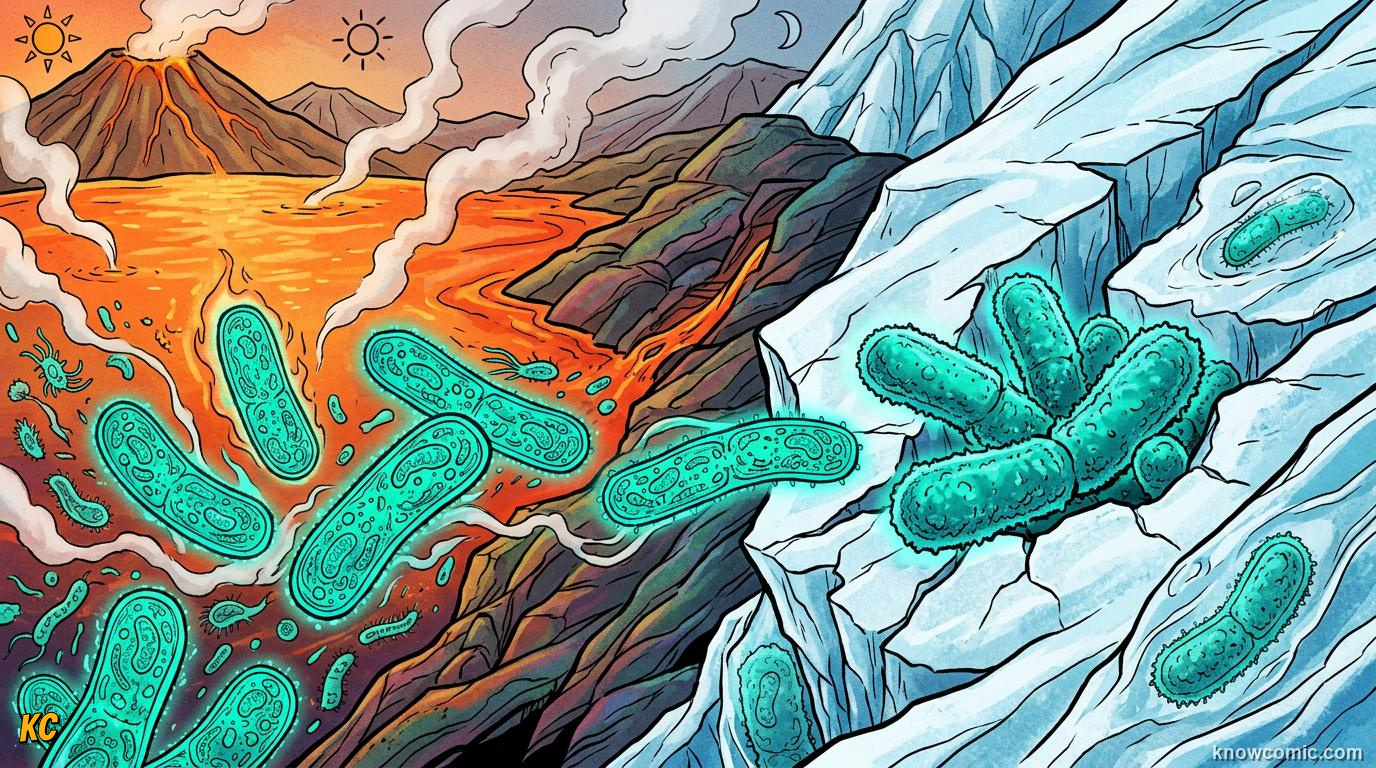
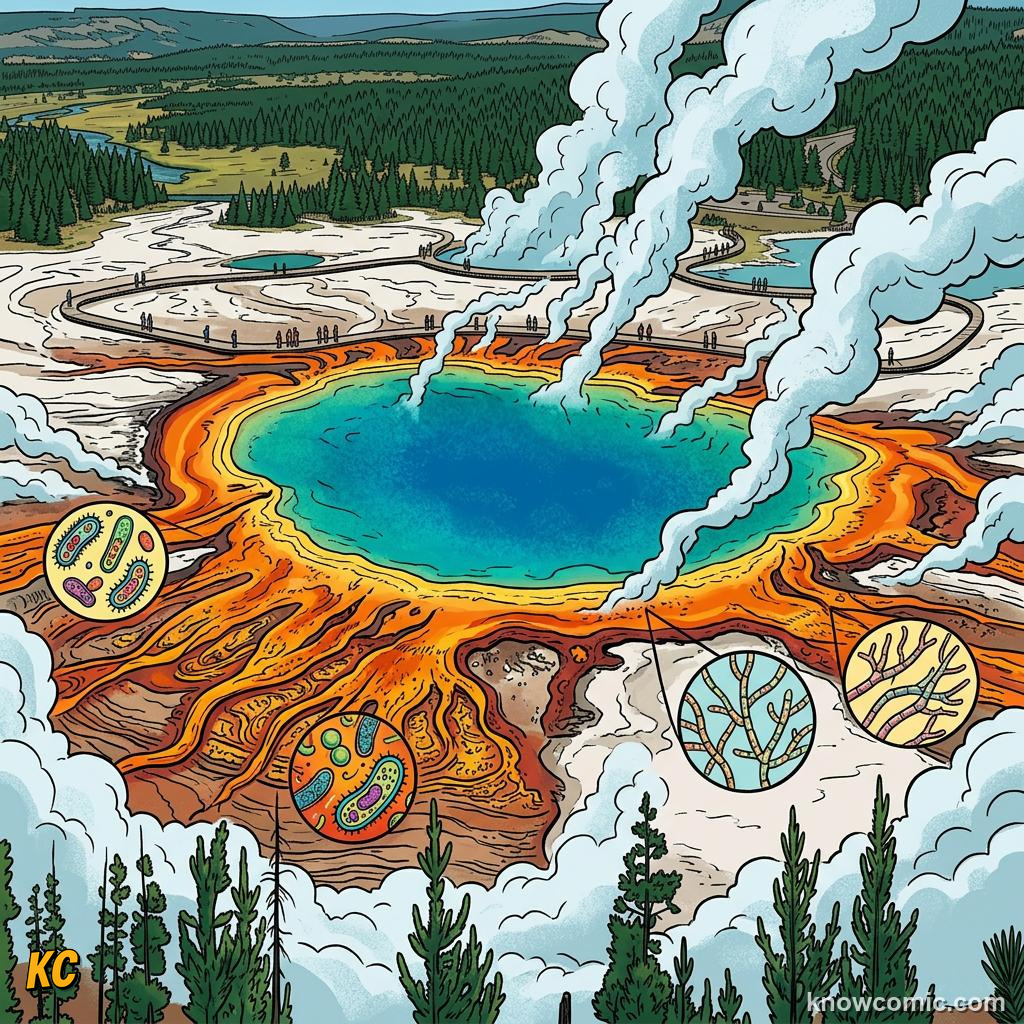
Extremophiles are prokaryotes that flourish in conditions that would kill most other life. Thermophiles thrive in boiling hot springs and volcanic vents. Psychrophiles keep growing in freezing arctic ice and deep cold oceans. Halophiles live in super-salty lakes, and acidophiles handle corrosive, low-pH environments. Their special proteins and membranes let them stay active where eukaryotic cells would fall apart.
🔥 FREEZE PROOF
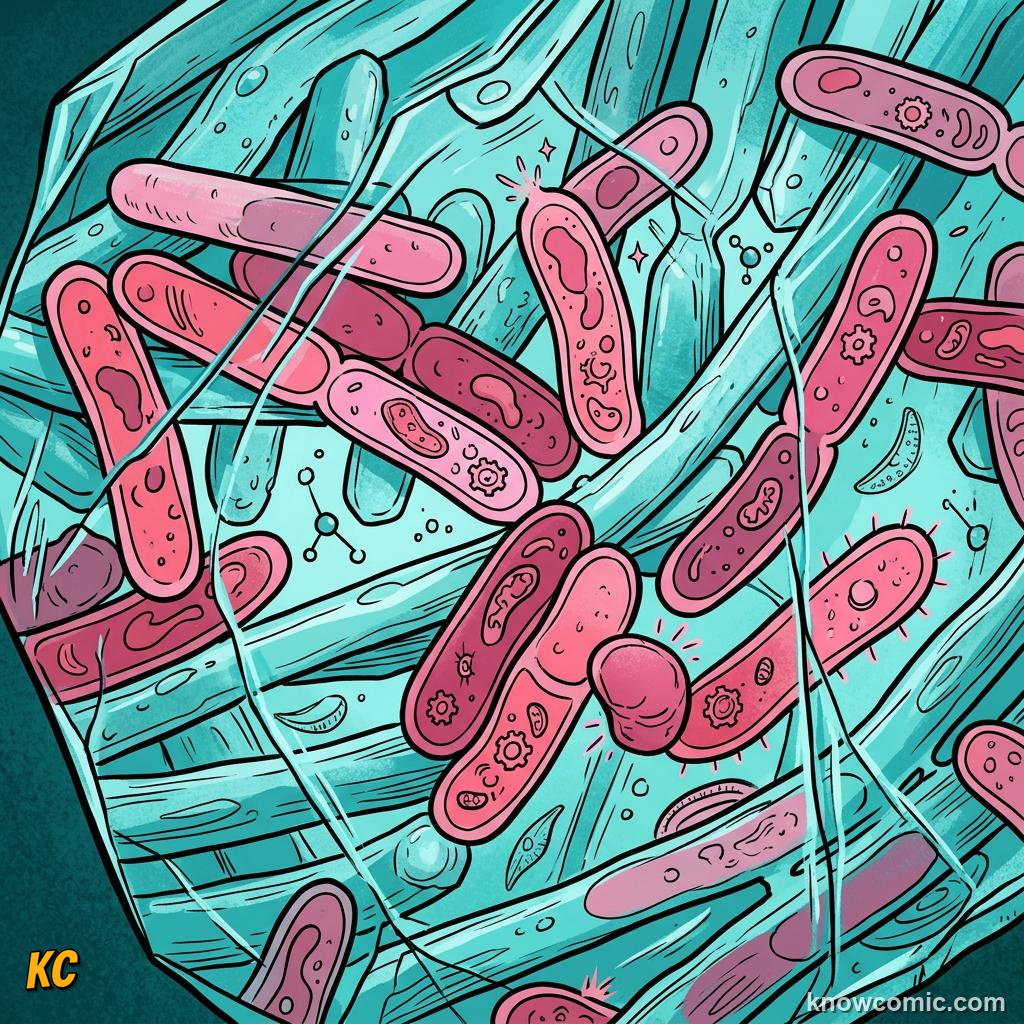
Some bacteria survive embedded in Antarctic ice for thousands of years. When the ice melts, they wake up and start dividing again as if nothing happened.
TOUGH!
HOT SPRINGS
Comic panel about prokaryotic pioneers: Prokaryotes Love The Extremes, Hot Springs, educational kids illustration
🌋 Thermophiles live in near-boiling water
🎨 They create colourful mats in Yellowstone pools
ARCTIC ICE
Comic panel about prokaryotic pioneers: Arctic Ice, educational kids illustration
❄️ Psychrophiles grow in frigid polar ice
🧊 Cold slows them down but does not stop them
EVERYWHERE
Comic panel about prokaryotic pioneers: Everywhere, educational kids illustration
🌍 From deep ocean vents to mountain soil
🦠 Prokaryotes colonize almost every habitat
PAGE 5 OF 5 — PIONEERS TODAY
STILL RUNNING THE SHOW
Comic panel about prokaryotic pioneers: Still Running The Show, educational kids illustration
PROKARYOTES SHAPE LIFE ON EARTH
Those ancient pioneers never retired. Cyanobacteria pumped oxygen into the atmosphere billions of years ago, making our air breathable. Today, bacteria break down dead matter, fix nitrogen for plants, and help digest food in your gut. Scientists study extremophiles to find new medicines and to learn how life might survive on other planets. The simplest cells remain some of the most important.
🌍 OXYGEN LEGACY
Photosynthetic cyanobacteria changed Earth forever. Their oxygen release roughly 2.4 billion years ago helped pave the way for larger, more complex life forms.
PIONEERS!
HELPERS
Comic panel about prokaryotic pioneers: Prokaryotes Shape Life On Earth, Helpers, educational kids illustration
🥛 Bacteria help make yogurt and cheese
🌱 Soil bacteria give plants usable nitrogen
REMEMBER
🦠 KEY FACTS
Prokaryotes appeared about 3.5 billion years ago. They have no nucleus: DNA sits in a nucleoid region. Bacteria and archaea are the two prokaryote domains. Extremophiles thrive in boiling hot springs and freezing arctic ice.
🦠 No nucleus, DNA in the nucleoid
🧬 Bacteria and archaea: two prokaryote domains
🔥 Extremophiles survive heat, cold, and salt
🧠 QUIZ TIME!
PROKARYOTIC PIONEERS · 5 QUESTIONS
QUESTION 01
About how long ago did prokaryotes first appear on Earth?
QUESTION 02
What is the main feature that makes a cell prokaryotic?
QUESTION 03
Where is DNA stored inside a prokaryotic cell?
QUESTION 04
What are the two domains of prokaryotic life?
QUESTION 05
Where can extremophile prokaryotes survive?
0/5
LOADING...
💬 REACTIONS & COMMENTS
No comments yet, be the first!
← TOPIC 01 📋 ALL TOPICS TOPIC 03 →