🧬
🔬
🌿
🧬 KNOW PRIMARY · AGES 6–11

BIOLOGY

🔬 Tiny Rooms, Giant Life, The Microscopic World of Cells!

📖 350 Topics 🆓 FREE + PRO ⏱️ 5 min per comic 🧠 Quiz included
🦠
EARLY EARTH
Simple Cells First
🧬
~2 BILLION YEARS
First Eukaryotes
INSIDE STORY
Mitochondria Join
🌿
PLANT POWER
Chloroplasts Arrive
🌍
TODAY
Complex Life Rules
🧬 THE EUKARYOTIC UPGRADE
TOPIC 03 · BIOLOGY · NUCLEUS · COMPLEX · ORGANELLES
PAGE 1 OF 5 — THE BIG UPGRADE
THE HOOK
Comic panel about the eukaryotic upgrade: The Hook, educational kids illustration
WELCOME TO THE EUKARYOTIC WORLD
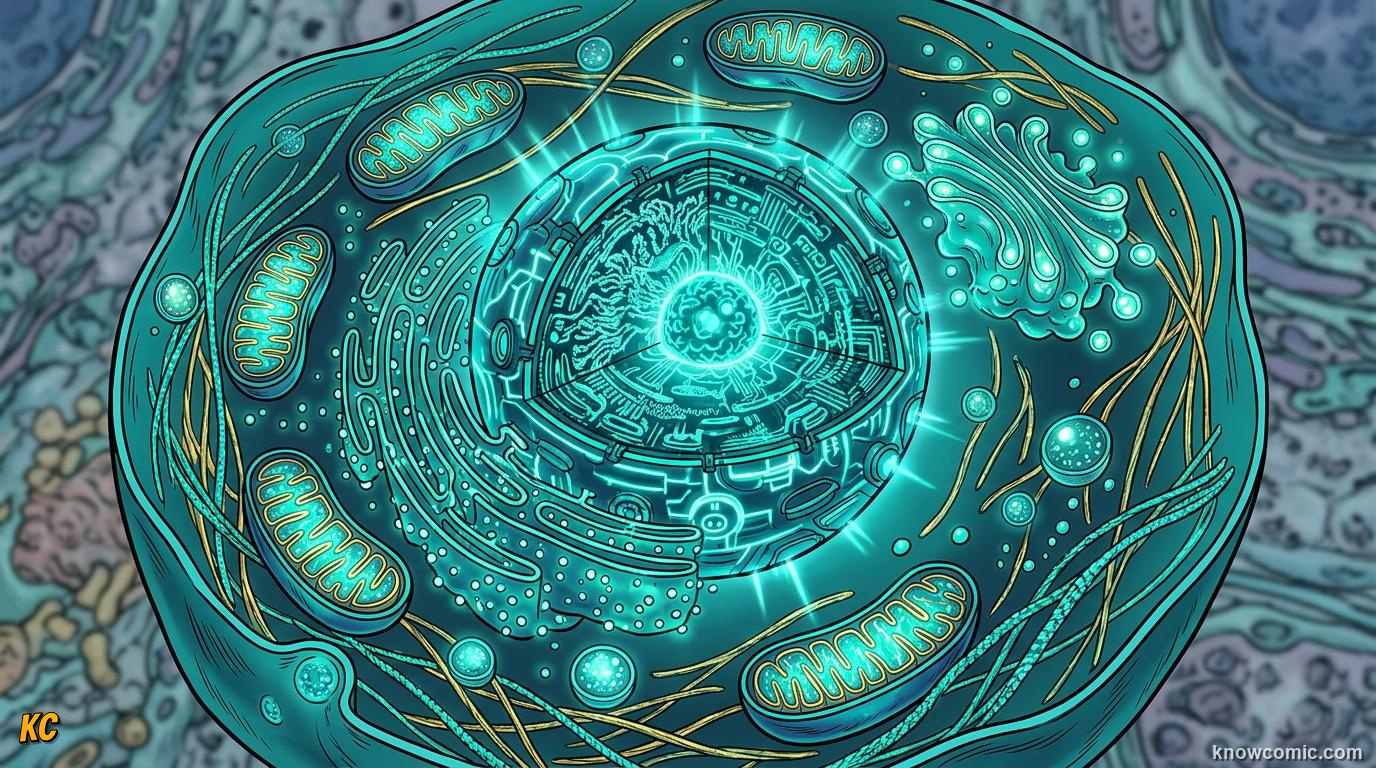
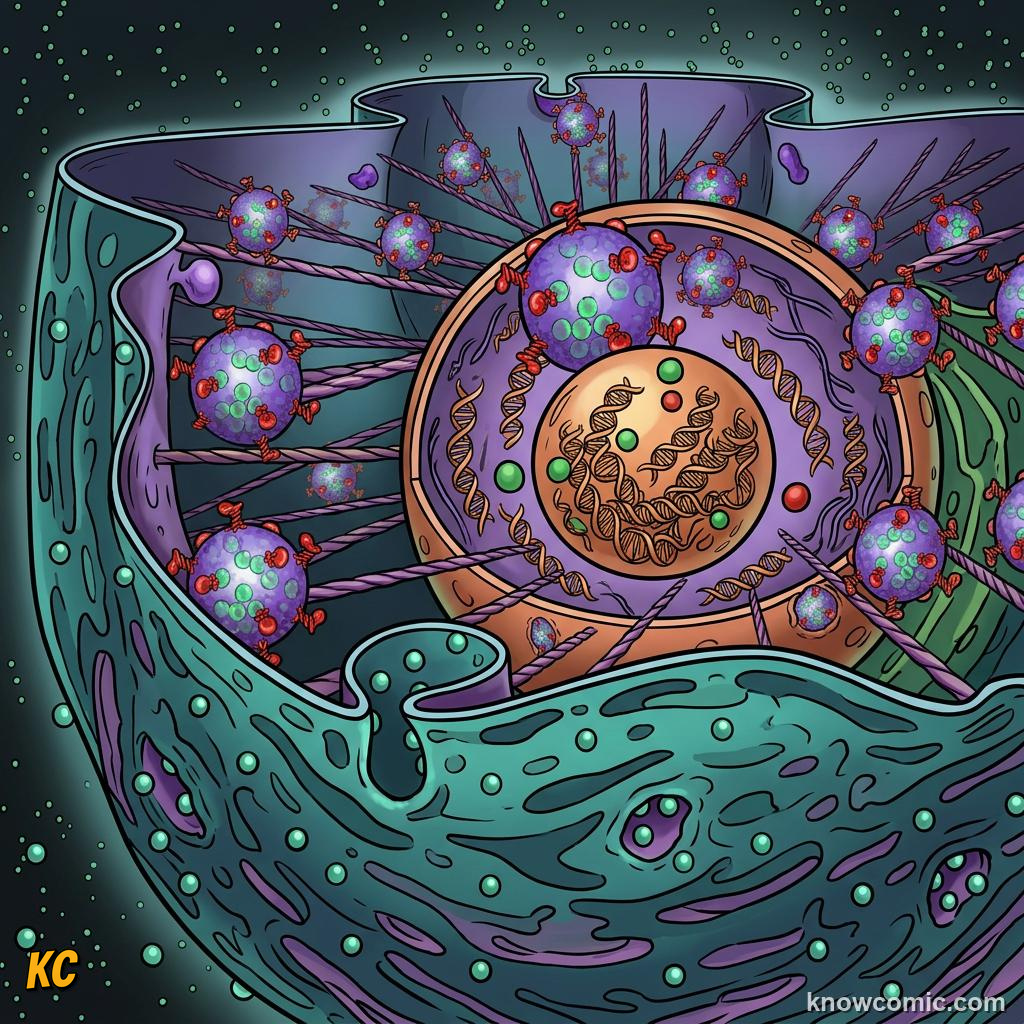
Not all cells are simple. Eukaryotic cells are the advanced builders behind plants, animals, fungi, and many tiny protists. The word eukaryote means "true nucleus," and that sealed control center is their signature upgrade. Inside a eukaryotic cell, DNA sits safely wrapped in a nucleus, while dozens of membrane-bound organelles run specialized jobs all at once.
⚡ DID YOU KNOW?
Your body, a towering oak tree, and a mushroom on the forest floor all share the same basic cell design. Every one of them is built from eukaryotic cells with a nucleus and organelles.
UPGRADE!
VS PROKARYOTES
Comic panel about the eukaryotic upgrade: Welcome To The Eukaryotic World, Vs Prokaryotes, educational kids illustration
🦠 Bacteria lack a nucleus, DNA floats free
🧬 Eukaryotes lock DNA inside a nucleus
SIZE MATTERS
Comic panel about the eukaryotic upgrade: Size Matters, educational kids illustration
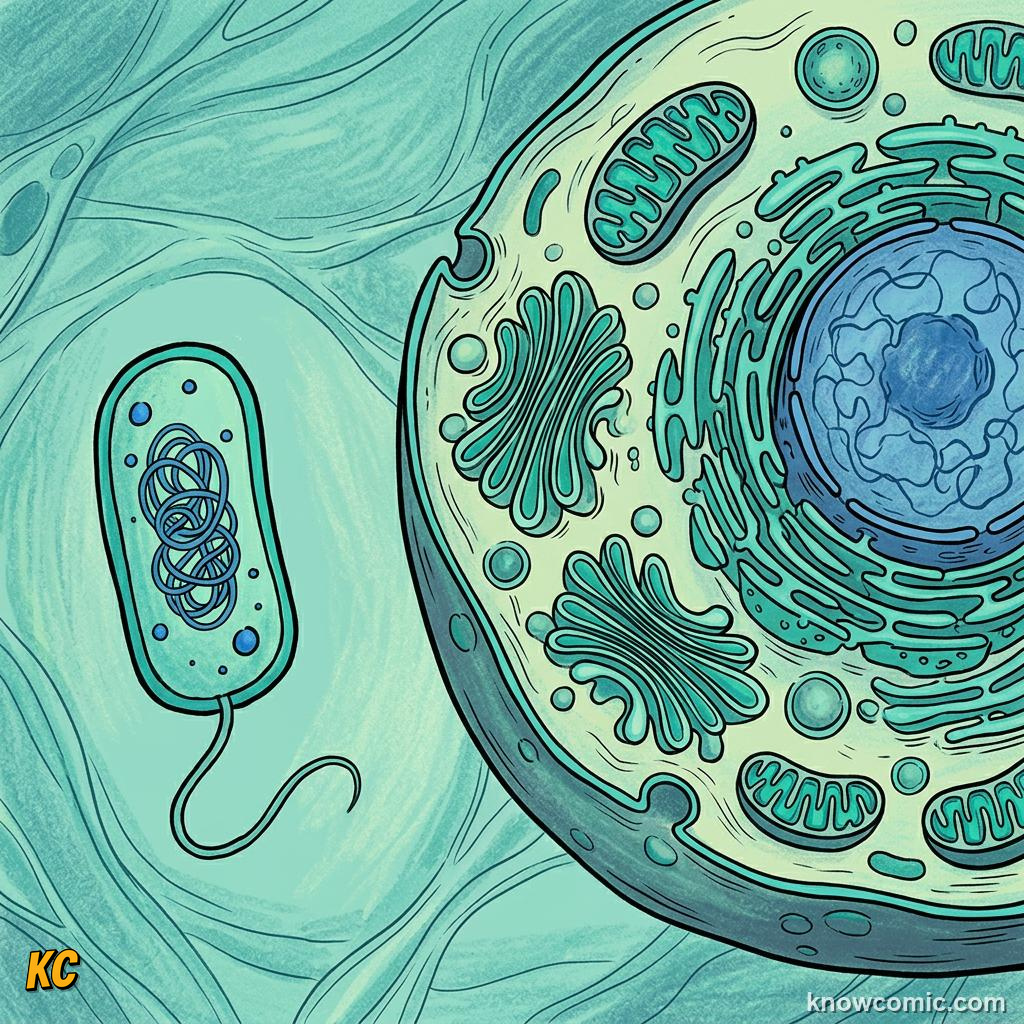
📏 Eukaryotic cells are usually much larger
🏗️ Extra space lets organelles work in teams
PAGE 2 OF 5 — THE NUCLEUS
CONTROL CENTER
Comic panel about the eukaryotic upgrade: Control Center, educational kids illustration
THE NUCLEUS PROTECTS THE DNA CODE
The nucleus is the brain of a eukaryotic cell. It holds the cell's precious DNA, the instruction book for building and running the whole organism. A double membrane called the nuclear envelope wraps around the nucleus like a security wall, keeping DNA safe while still letting messages pass through. When the cell needs to grow or repair itself, the nucleus sends out copies of those instructions to the rest of the cell.
🧠 BRAIN OF THE CELL
Inside the nucleus, DNA is packed with proteins into chromatin. A dense spot called the nucleolus builds ribosomes, the tiny machines that read DNA messages and build proteins.
NUCLEUS!
DNA VAULT
Comic panel about the eukaryotic upgrade: The Nucleus Protects The Dna Code, Dna Vault, educational kids illustration
🔒 DNA stays protected inside the nucleus
📋 Instructions copied before proteins are built
DOUBLE WALL
Comic panel about the eukaryotic upgrade: Double Wall, educational kids illustration
🚪 Nuclear pores are controlled gateways
✅ Only approved messages leave the nucleus
NUCLEOLUS
Comic panel about the eukaryotic upgrade: Nucleolus, educational kids illustration
🏭 The nucleolus builds ribosome parts
🔧 Ribosomes then assemble proteins in the cytoplasm
PAGE 3 OF 5 — ORGANELLE TEAM
POWER PACKS
Comic panel about the eukaryotic upgrade: Power Packs, educational kids illustration
⚡ Mitochondria turn food into usable energy
🏃 They power muscle, brain, and every move you make
SUN CATCHERS
Comic panel about the eukaryotic upgrade: Sun Catchers, educational kids illustration
🌿 Chloroplasts capture sunlight in plant cells
☀️ They make sugar through photosynthesis
MEMBRANE-BOUND
Comic panel about the eukaryotic upgrade: Membrane-Bound, educational kids illustration
ORGANELLES ARE SPECIALIZED MINI FACTORIES
Eukaryotic cells are like busy cities divided into districts. Each organelle has its own membrane and its own job. The endoplasmic reticulum builds and ships proteins. The Golgi apparatus packages them for delivery. Lysosomes act as cleanup crews, breaking down waste. Vacuoles store water, food, or waste. Because each task happens in its own compartment, the cell can run many jobs at the same time without chaos.
🏙️ CELL CITY
Membrane-bound organelles let eukaryotic cells divide work like a city with separate factories, power plants, and recycling centers. That teamwork is a huge reason complex life can exist.
TEAMWORK!
PAGE 4 OF 5 — ENDOSYMBIOSIS
ANCIENT MERGER
Comic panel about the eukaryotic upgrade: Organelles Are Specialized Mini Factories, Ancient Merger, educational kids illustration
HOW EUKARYOTES GOT THEIR POWER ORGANELLES
Scientists think eukaryotic cells gained some organelles through endosymbiosis, a fancy word for "living together inside." Long ago, a larger cell may have swallowed a tiny bacterium without digesting it. That guest bacterium became the mitochondria, the energy factories found in almost every eukaryotic cell today. Later, a similar partnership gave plant cells their chloroplasts, letting them harvest sunlight. These ancient mergers were one of evolution's greatest team-ups.
🔗 EVIDENCE INSIDE
Mitochondria and chloroplasts have their own DNA and double membranes, clues that they were once free-living bacteria. They still reproduce inside cells much like tiny guests with their own instruction books.
MERGER!
MITOCHONDRIA
Comic panel about the eukaryotic upgrade: How Eukaryotes Got Their Power Organelles, Mitochondria, educational kids illustration
🦠 Likely began as ancient oxygen-using bacteria
⚡ Now they fuel animals, plants, and fungi alike
CHLOROPLASTS
Comic panel about the eukaryotic upgrade: Chloroplasts, educational kids illustration
🌱 Plant cells gained chloroplasts the same way
🌿 Green algae share this ancient partnership too
MORE ORGANELLES
Comic panel about the eukaryotic upgrade: More Organelles, educational kids illustration
📦 Golgi packages proteins for delivery
🧹 Lysosomes break down worn-out cell parts
PAGE 5 OF 5 — EUKARYOTES EVERYWHERE
LIFE'S BUILDERS
Comic panel about the eukaryotic upgrade: Life'S Builders, educational kids illustration
FOUR GREAT GROUPS OF EUKARYOTES
Eukaryotic cells built the living world you see every day. Plants grow from eukaryotic cells with cell walls and chloroplasts. Animals, from butterflies to humans, are made of eukaryotic cells without chloroplasts. Fungi, including mushrooms and yeasts, are eukaryotes that absorb food from their surroundings. Protists are a diverse grab bag of mostly single-celled eukaryotes, from amoebas to algae. Together these four groups show how one cell upgrade opened the door to almost every complex organism on Earth.
🌍 DOMINANT DESIGN
Most of the living things you can easily see are eukaryotes. Bacteria and archaea are prokaryotes, but the towering trees, buzzing bees, and you reading this comic all belong to the eukaryotic family.
LIFE!
DIVERSITY
Comic panel about the eukaryotic upgrade: Four Great Groups Of Eukaryotes, Diversity, educational kids illustration
🐾 Animals: muscles, nerves, and speedy movement
🍄 Fungi: decomposers that recycle dead matter
REMEMBER
🧬 KEY FACTS
Eukaryotic cells have a nucleus and membrane-bound organelles. Mitochondria and chloroplasts likely arrived through endosymbiosis. Plants, animals, fungi, and protists are all eukaryotes, and that shared design powers complex life across the planet.
🧬 Nucleus protects the DNA code
⚡ Organelles divide work like a cell city
🌍 Eukaryotes built plants, animals, fungi, and protists
🧠 QUIZ TIME!
THE EUKARYOTIC UPGRADE · 5 QUESTIONS
QUESTION 01
What is the main feature that defines a eukaryotic cell?
QUESTION 02
Which groups of living things are made of eukaryotic cells?
QUESTION 03
What is the job of the nucleus in a eukaryotic cell?
QUESTION 04
According to endosymbiosis theory, where did mitochondria likely come from?
QUESTION 05
Which organelle captures sunlight to make sugar in plant cells?
0/5
LOADING...
💬 REACTIONS & COMMENTS
No comments yet, be the first!
← TOPIC 02 📋 ALL TOPICS TOPIC 04 →