🛡️
💧
🚪
🧬 KNOW PRIMARY · AGES 6–11

BIOLOGY

🛡️ The Cell's Security Wall: Who Gets In and Who Stays Out!

📖 350 Topics 🆓 FREE + PRO ⏱️ 5 min per comic 🧠 Quiz included
🦠
ANCIENT
First Membranes Form
🔬
1925
Bilayer Discovered
🧪
1950s
Proteins Found Inside
🧩
1972
Fluid Mosaic Model
🛡️
TODAY
Nano-Thin Guard
🛡️ MEMBRANE: THE GUARD
TOPIC 04 · BIOLOGY · PLASMA · CONTROL · ENTRY
PAGE 1 OF 5 — THE SECURITY WALL
THE HOOK
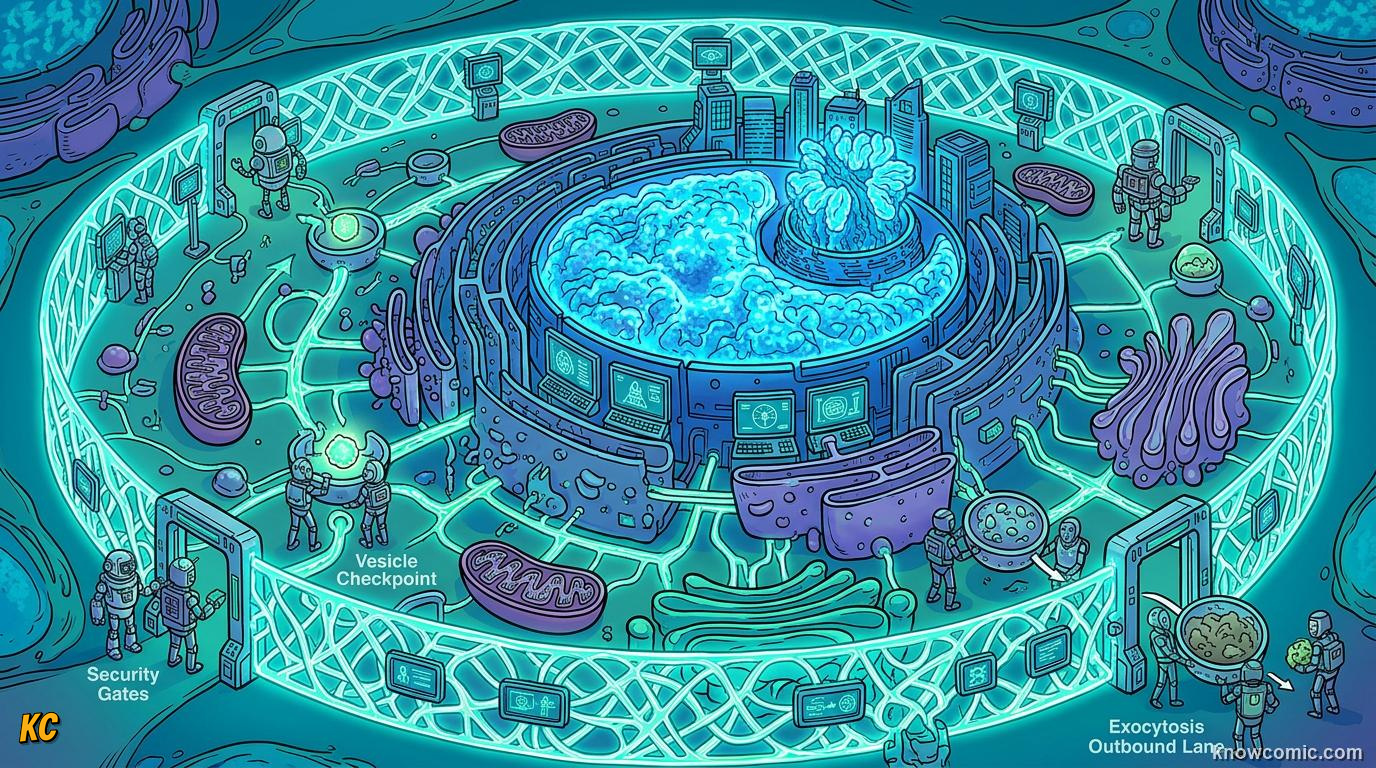
Comic panel about membrane: the guard: The Hook, educational kids illustration
EVERY CELL HAS A GUARD ON DUTY
Imagine a castle with a strict gatekeeper. Every living cell has something just like that: the plasma membrane, also called the cell membrane. This thin, flexible wall wraps the whole cell and decides what may enter and what must leave. It lets in food, water, and oxygen while blocking germs, poisons, and harmful waste. Without this guard, the cell would lose control and fall apart.
⚡ DID YOU KNOW?
The plasma membrane is incredibly thin, far thinner than a human hair. Yet this tiny barrier protects every cell in your body, from your skin to your brain.
GUARD!
THE WALL
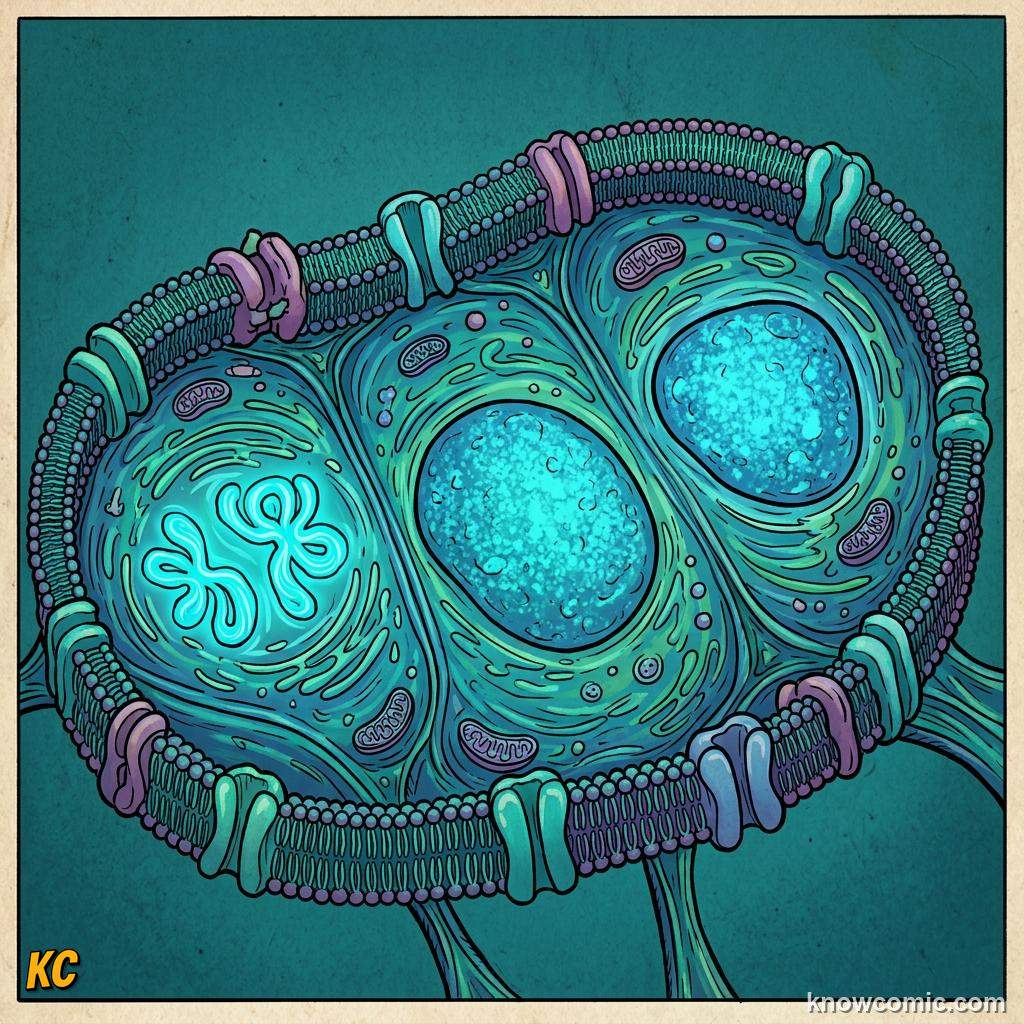
Comic panel about membrane: the guard: Every Cell Has A Guard On Duty, The Wall, educational kids illustration
🛡️ A flexible barrier surrounds every cell
🧱 It separates inside from outside worlds
THE BOUNCER
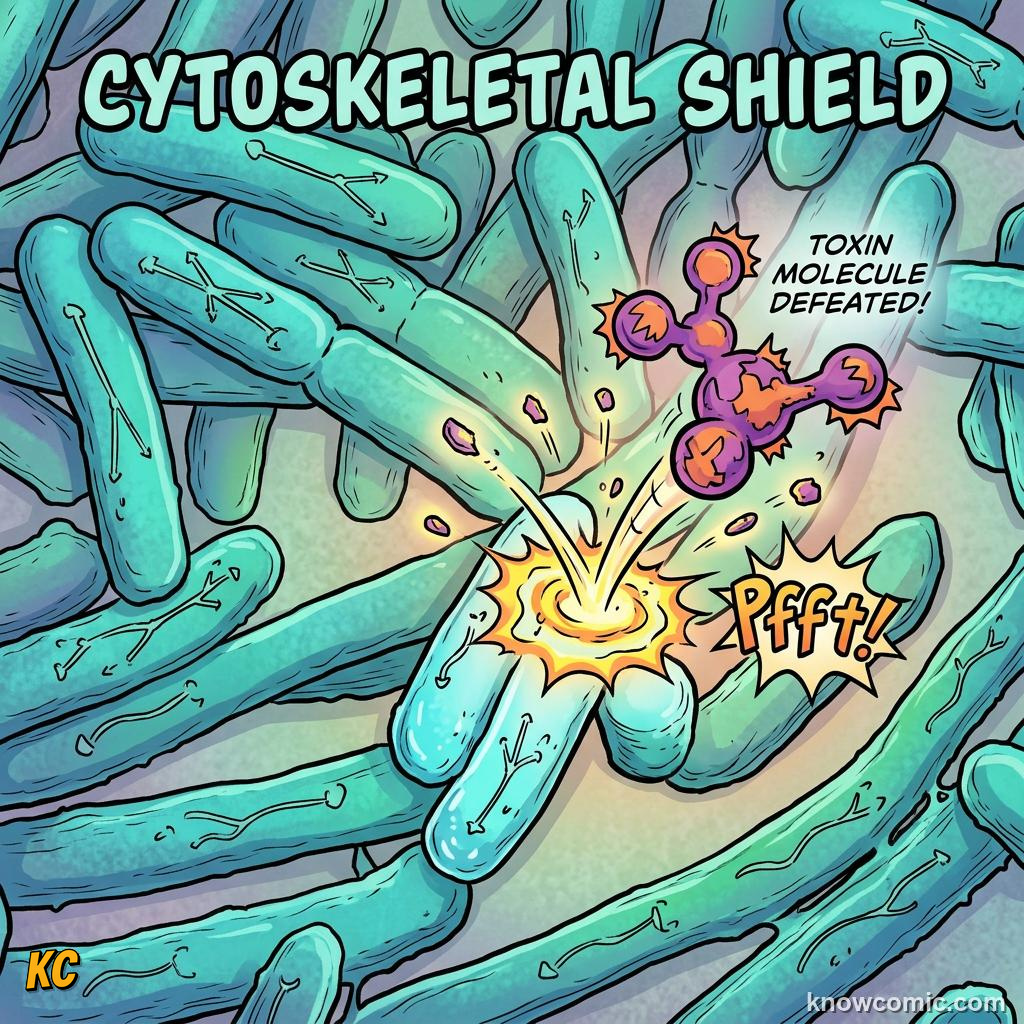
Comic panel about membrane: the guard: The Bouncer, educational kids illustration
🚪 Helpful molecules get waved through
☠️ Dangerous intruders get turned away
PAGE 2 OF 5 — THE PHOSPHOLIPID BILAYER
DOUBLE LAYER
Comic panel about membrane: the guard: Double Layer, educational kids illustration
TWO LAYERS OF PHOSPHOLIPIDS
The membrane is built from special fat molecules called phospholipids. Each one has a round head and two stringy tails. Millions of them line up in two rows, forming a phospholipid bilayer. The heads point outward toward the watery fluid on both sides of the membrane. The tails point inward, packed together in the middle. This double-layer design makes a strong yet bendy wall that every cell depends on.
🔬 SCIENCE MOMENT
In 1925, scientists Evert Gorter and Francois Grendel studied red blood cells and showed the membrane is a double layer of lipids. Their work helped reveal the bilayer shape we teach today.
BILAYER!
HEADS OUT
Comic panel about membrane: the guard: Two Layers Of Phospholipids, Heads Out, educational kids illustration
💧 Hydrophilic heads love water
🌊 They face the fluid inside and outside
TAILS IN
Comic panel about membrane: the guard: Tails In, educational kids illustration
🛢️ Hydrophobic tails fear water
🔒 They hide together in the middle
FLEXIBLE
Comic panel about membrane: the guard: Flexible, educational kids illustration
🫧 The bilayer bends and flows like oil
🤸 Cells move and stretch without tearing
PAGE 3 OF 5 — SELECTIVE PERMEABILITY
WATER LOVERS
Comic panel about membrane: the guard: Water Lovers, educational kids illustration
💧 Hydrophilic means water-loving
🎯 Heads reach toward fluid on both sides
WATER FEARERS
Comic panel about membrane: the guard: Water Fearers, educational kids illustration
🛢️ Hydrophobic means water-fearing
🚫 Tails block most large molecules
THE CHOOSY WALL
Comic panel about membrane: the guard: The Choosy Wall, educational kids illustration
SELECTIVE PERMEABILITY
The membrane is not a solid brick wall. It has selective permeability, which means it carefully chooses what passes through. Small molecules like oxygen and carbon dioxide can slip across on their own. Big or charged molecules usually need help from special membrane proteins. This picky system keeps the cell's inside balanced and safe, like a bouncer with a guest list who only lets the right visitors in at the right time.
⚖️ BALANCE
Selective permeability helps the cell keep the right mix of nutrients, salts, and water inside. If the membrane let everything through, the cell would swell, shrink, or get poisoned.
PICKY!
PAGE 4 OF 5 — OSMOSIS & CHANNELS
WATER ON THE MOVE
Comic panel about membrane: the guard: Selective Permeability, Water On The Move, educational kids illustration
OSMOSIS: WATER FINDS ITS BALANCE
Osmosis is the movement of water across the membrane. Water drifts from where there is more water to where there is less, trying to even things out. If a cell sits in salty water, water leaves the cell and it shrivels. If water floods in too fast, the cell can swell. The membrane and its proteins work together to control this flow so the cell stays at the perfect size and strength for its job.
🌊 SIMPLE RULE
Think of osmosis as water balancing itself. It moves through the membrane to where it is needed most, helping cells stay plump and healthy without bursting or drying out.
OSMOSIS!
CHANNELS
Comic panel about membrane: the guard: Osmosis: Water Finds Its Balance, Channels, educational kids illustration
🚇 Channel proteins are like tunnels
⚡ They let specific ions pass through
CARRIERS
Comic panel about membrane: the guard: Carriers, educational kids illustration
🎒 Carrier proteins grab and deliver molecules
🍬 They help move sugar and other supplies
RECOGNITION
Comic panel about membrane: the guard: Recognition, educational kids illustration
🔑 Some proteins spot friend or foe signals
🛡️ They help the cell defend against germs
PAGE 5 OF 5 — FLUID MOSAIC MODEL
MODERN VIEW
Comic panel about membrane: the guard: Modern View, educational kids illustration
THE FLUID MOSAIC MODEL
In 1972, scientists Jonathan Singer and Garth Nicolson described the fluid mosaic model. It says the membrane acts like a fluid sea of phospholipids, with proteins floating in it like tiles in a mosaic pattern. The lipids drift and spin, while proteins move around doing their jobs. This lively, shifting design lets the membrane repair tiny tears, fuse with other membranes, and respond quickly to what the cell needs.
🧩 MOSAIC MEANS MIXED
Different proteins sit at different spots in the membrane. Some cross all the way through, some sit on the surface, and others form groups. Together they create a living, changing guard system.
FLUID!
PROTEIN TILES
Comic panel about membrane: the guard: The Fluid Mosaic Model, Protein Tiles, educational kids illustration
🧩 Proteins embed in the lipid bilayer
🔄 They shift position as the cell works
REMEMBER
🛡️ KEY FACTS
The plasma membrane is a phospholipid bilayer with hydrophilic heads facing out and hydrophobic tails facing in. It has selective permeability, moves water by osmosis, uses channel and carrier proteins, and follows the fluid mosaic model: a flowing lipid sea with protein tiles doing the real work.
🛡️ Bilayer heads out, tails in
💧 Osmosis balances water inside cells
🧩 Fluid mosaic: lipids flow, proteins work
🧠 QUIZ TIME!
MEMBRANE: THE GUARD · 5 QUESTIONS
QUESTION 01
What is the main building material of the cell membrane?
QUESTION 02
Which part of a phospholipid faces outward toward the watery fluid?
QUESTION 03
What does selective permeability mean?
QUESTION 04
What is osmosis?
QUESTION 05
What does the fluid mosaic model describe?
0/5
LOADING...
💬 REACTIONS & COMMENTS
No comments yet, be the first!
← TOPIC 03 📋 ALL TOPICS TOPIC 05 →