🔬 Tiny Rooms, Giant Life, The Microscopic World of Cells!
📖 350 Topics🆓 FREE + PRO⏱️ 5 min per comic🧠 Quiz included
🔬
1850s
Seen in Cells
→
⚡
1898
Named Mitochondria
→
🦠
~2 BYA
Ancient Symbiosis
→
🧬
1960s
Endosymbiosis Theory
→
🔋
TODAY
ATP Power Plants
⚡ MITOCHONDRIA: POWER
TOPIC 07 · BIOLOGY · ATP · ENERGY · BREATH
PAGE 1 OF 5 — THE CELLULAR BATTERY
THE HOOK
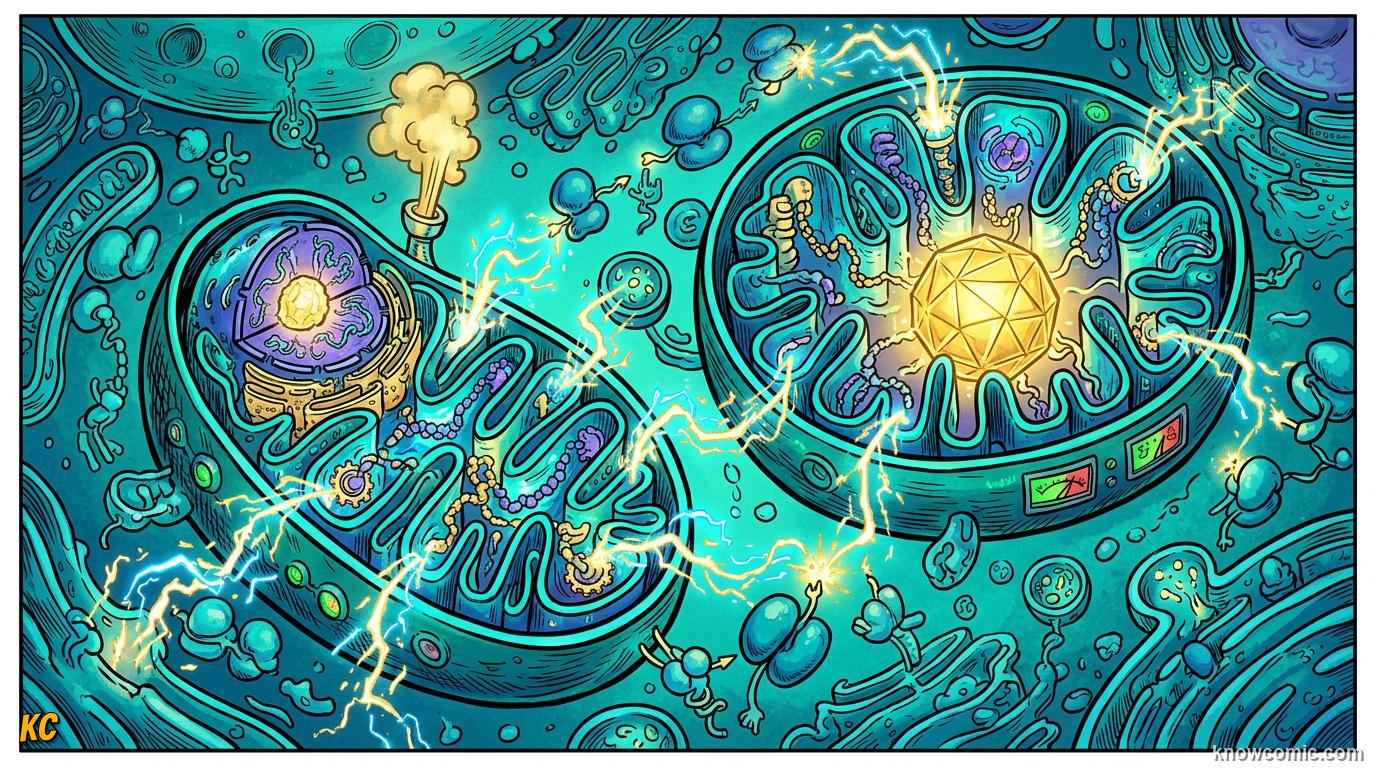
MEET THE MIGHTY MITOCHONDRION
Every jump, sprint, and heartbeat needs energy. Inside your cells, tiny organelles called mitochondria act like rechargeable batteries. They take the food you eat and, with help from the oxygen you breathe, convert it into usable energy. Without these power plants, your muscles could not move and your brain could not think. They are among the most important structures in the entire animal kingdom.
⚡ DID YOU KNOW?
The word mitochondrion comes from Greek words meaning "thread" and "granule." Under a microscope, early scientists saw them as tiny threads and dots scattered through the cell.
POWER!
INSIDE CELLS
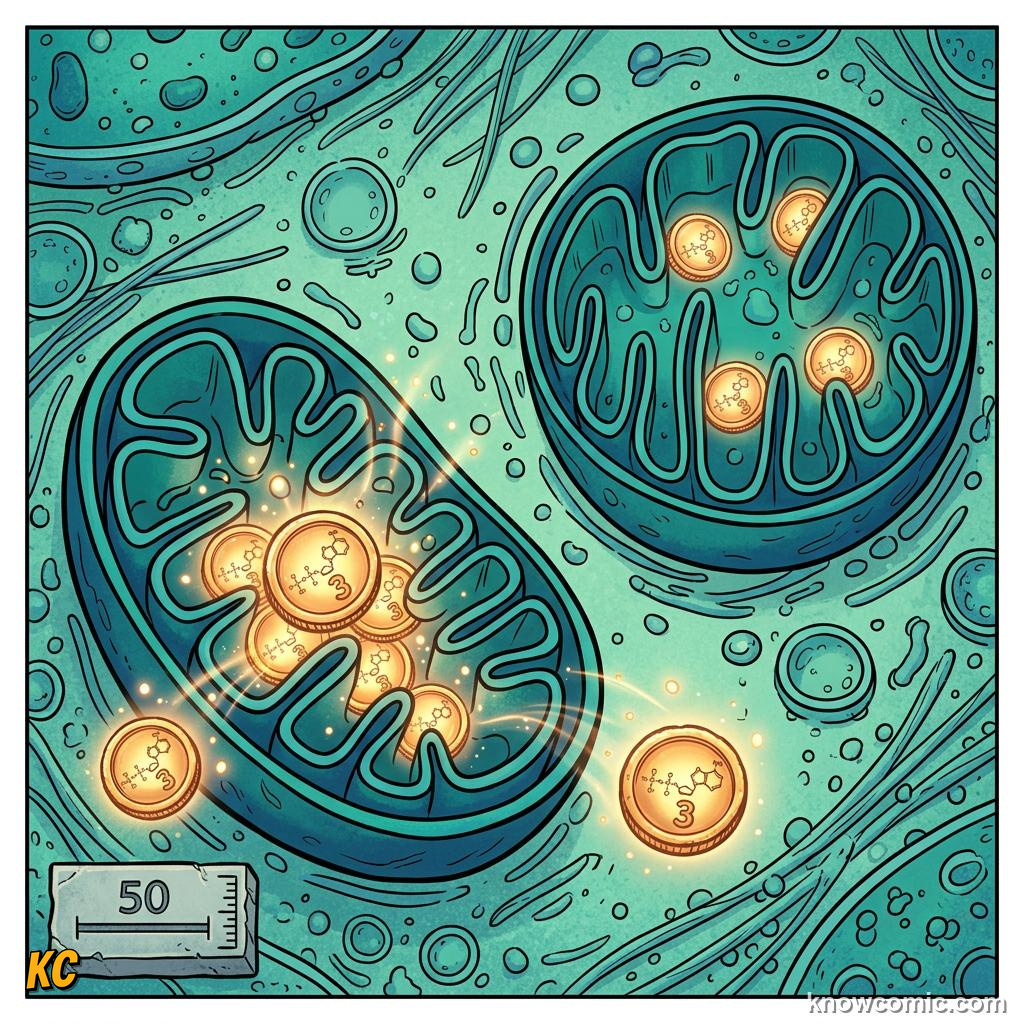
🔋 Mitochondria float in the cytoplasm
🧬 Most animal and plant cells have them
FOOD + AIR
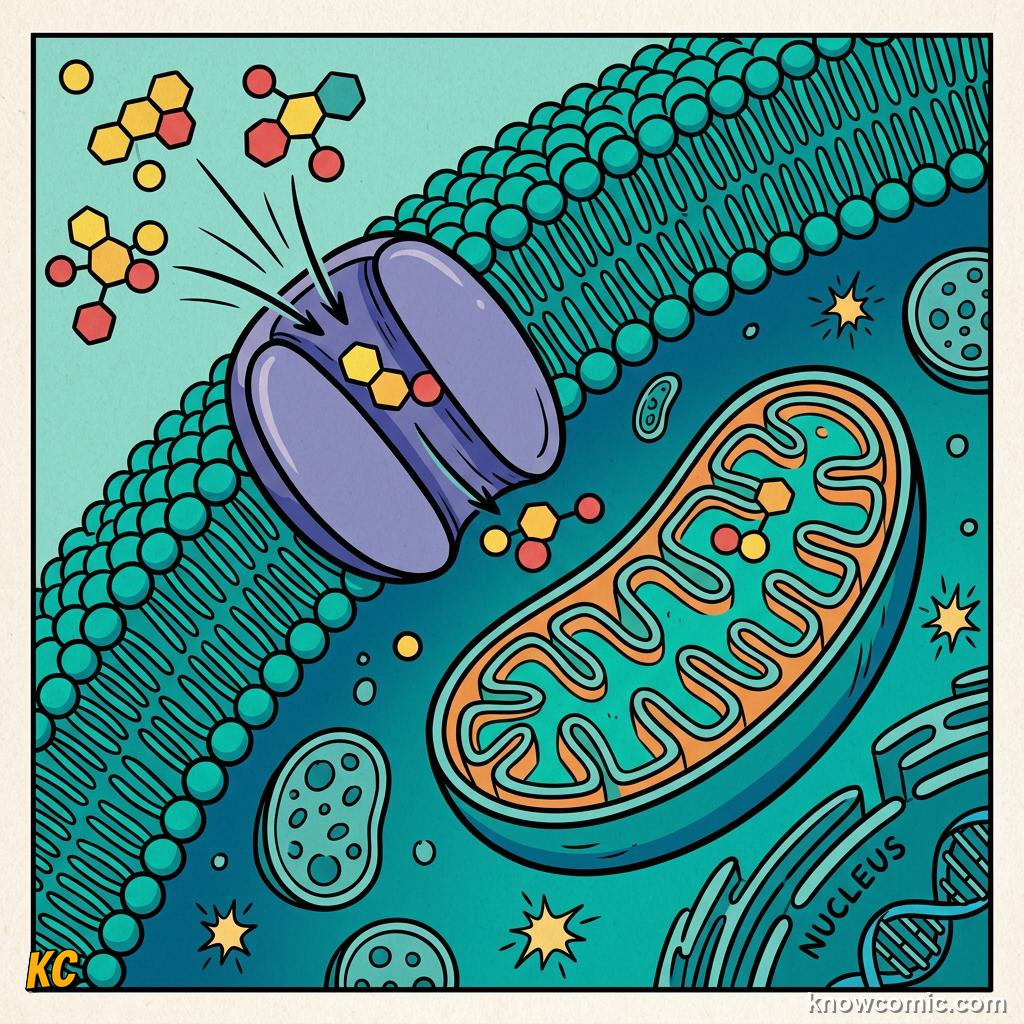
🍎 Sugar from food enters the cell
🫁 Oxygen from your breath joins the job
PAGE 2 OF 5 — ATP ENERGY
ENERGY CURRENCY
ATP: THE CELL'S SPENDABLE ENERGY
Mitochondria produce ATP, which stands for adenosine triphosphate. Think of ATP as tiny energy coins the cell can spend right away. When a muscle contracts or a nerve sends a signal, ATP gets broken down and releases the energy needed for the job. Mitochondria build ATP through a process called cellular respiration. They break down glucose from food using oxygen, and most of that ATP-making work happens inside the mitochondria themselves.
🔋 ATP FACT
A single cell may use and rebuild its entire supply of ATP molecules many times every second. That is how fast your body burns through energy, even when you are sitting still.
ATP!
GLUCOSE IN
🍞 Food breaks into sugar molecules
🚚 Sugar travels into the mitochondria
OXYGEN IN
🫁 You breathe in oxygen from the air
💨 It diffuses into cells to fuel respiration
ATP OUT
⚡ ATP molecules rush out ready to use
💪 Muscles and nerves spend them instantly
PAGE 3 OF 5 — DOUBLE MEMBRANE
OUTER WALL
🛡️ Smooth outer membrane protects inside
🚪 Small molecules pass through its pores
CRISTAE
🌊 Inner membrane folds into cristae
📐 Folds pack in more ATP-making surface
TWO MEMBRANES
A FACTORY WITH FOLDED WALLS
A mitochondrion is wrapped in a double membrane, two layers instead of one. The outer membrane is smooth and acts like a protective shell. The inner membrane is folded into shelf-like ridges called cristae. Those folds are not just for looks. They dramatically increase the surface area where ATP can be built. More folds mean more room for the enzymes and proteins that carry out cellular respiration. It is like adding extra floors to a power station.
🏭 SURFACE AREA
Cristae can multiply the inner membrane surface area many times over. Cells that need huge bursts of energy, like heart muscle cells, often have mitochondria packed with dense, well-developed cristae.
CRISTAE!
PAGE 4 OF 5 — ANCIENT ORIGINS
ENDOSYMBIOSIS
ONCE A FREE-LIVING BACTERIUM
Scientists believe mitochondria were not always part of our cells. The endosymbiosis theory says that billions of years ago, an ancient bacterium was swallowed by a larger cell but was not digested. Instead, the two formed a partnership. The bacterium supplied energy, and the host cell gave it a safe home. Over time it became the mitochondrion we know today. A big clue is that mitochondria still carry their own small circle of DNA, separate from the DNA in the nucleus.
🧬 OWN DNA
Mitochondrial DNA is much smaller than nuclear DNA and is passed down mostly from the mother. It holds genes needed for some parts of the respiration machinery, another sign mitochondria were once independent organisms.
ANCIENT!
PARTNERSHIP
🤝 Host cell and bacterium teamed up
🌍 Event happened around 2 billion years ago
MARGULIS
🔬 Lynn Margulis championed the theory
📚 Scientists now widely accept endosymbiosis
RELATIVES
🦠 Modern bacteria share similar genes
🧬 Double membranes match bacterial style
PAGE 5 OF 5 — POWER EVERY MOVE
MORE WHERE NEEDED
BUSY CELLS PACK MORE MITOCHONDRIA
Not every cell has the same number of mitochondria. Cells that work hardest need the most energy, so they stock up. A muscle cell in your leg may contain thousands of mitochondria, while a skin cell might have far fewer. Brain cells, which fire signals nonstop, are also packed with them. When you exercise, your body can even build more mitochondria in muscle cells to handle the extra demand. Every breath you take delivers the oxygen these organelles need to keep the animal kingdom running.
🌍 BIG PICTURE
From insects to elephants, every animal cell that needs oxygen-based energy relies on mitochondria. They link the food on your plate and the air in your lungs to every living movement you make.
BREATH!
MUSCLE CELLS
💪 Athletes' muscles hold extra mitochondria
🏃 Training can boost their numbers over time
REMEMBER
🔋 KEY FACTS
Mitochondria make ATP through cellular respiration using food and oxygen. They have a double membrane with inner folds called cristae, carry their own small DNA, and likely evolved from an ancient bacterium through endosymbiosis. Hard-working cells contain many more of them.
⚡ ATP is the cell's energy coin
🌊 Cristae increase ATP-making surface area
🦠 Endosymbiosis explains their bacterial past
🧠 QUIZ TIME!
MITOCHONDRIA: POWER · 5 QUESTIONS
QUESTION 01
What energy molecule do mitochondria mainly produce?
QUESTION 02
What are the folded ridges of the inner mitochondrial membrane called?
QUESTION 03
According to endosymbiosis theory, what were mitochondria originally?
QUESTION 04
Do hard-working cells like muscle cells have more or fewer mitochondria?
QUESTION 05
Where does most cellular respiration happen in a cell?