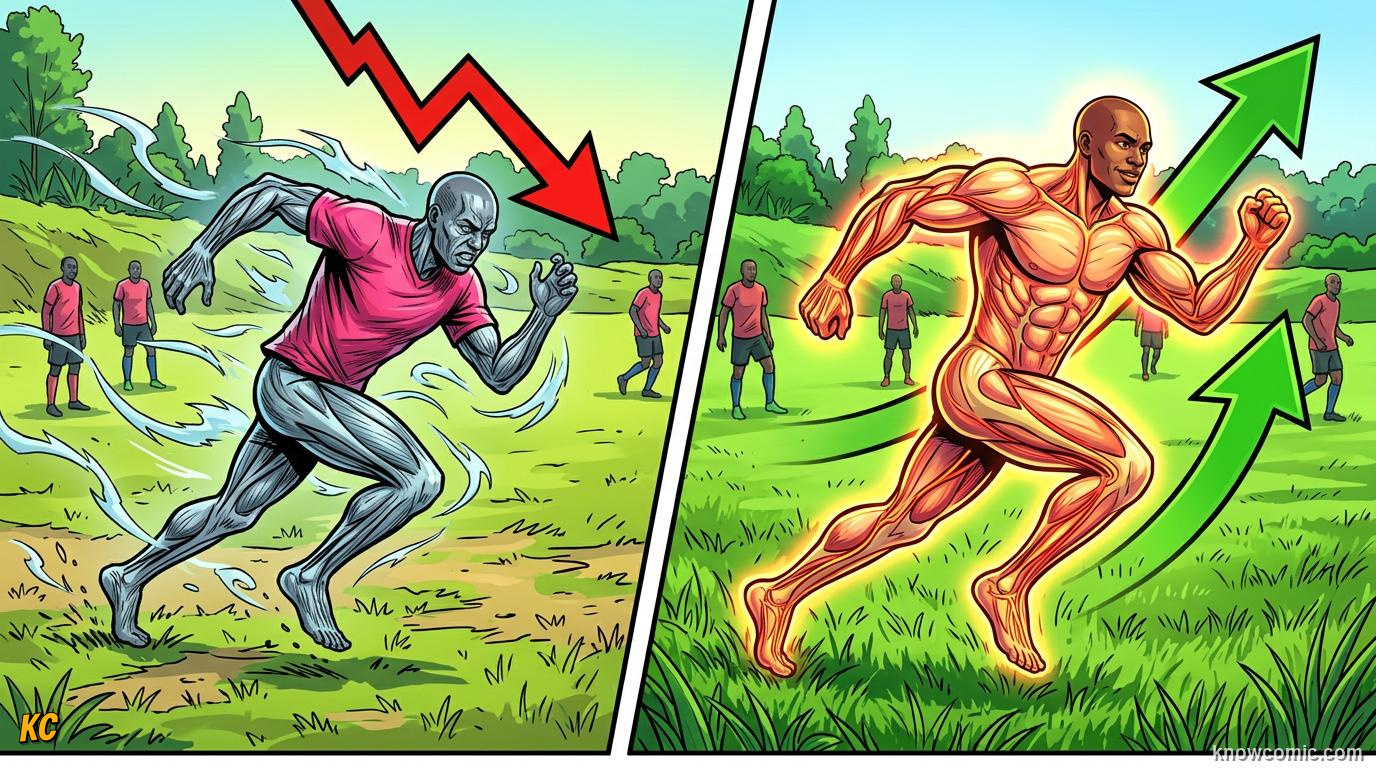
Imagine a rubber band pulled from the freezer. Snap it fast and it might crack. Muscles and tendons behave a bit like that when you sprint or stretch hard without warming up. At rest, blood flow to muscles is lower and tissues are less elastic. Sudden sprints, splits, or heavy lifts can strain muscles or tweak joints. A warm-up is the bridge between sitting still and full-speed play. Every coach and physio agrees: skipping it raises injury risk.
🧊 STIFF
Cold muscles and tendons are less flexible, so sudden loads can cause strains.
RISK!
COLD MUSCLES

🧊 Less stretchy at rest ⚠️ Sudden sprint can strain
WARM UP
🦴 Joints need gradual movement 📋 Never skip prep before hard play
PAGE 2 OF 5 — HEART RATE UP
PUMP IT
YOUR ENGINE STARTS
A good warm-up gently raises your heart rate and breathing. Blood vessels widen and more oxygen-rich blood reaches your muscles. Muscle temperature rises a degree or two, which helps enzymes work faster. You might start with brisk walking, easy jogging, or marching in place for five to ten minutes. You should feel warmer and slightly out of breath, not exhausted. This phase tells your cardiovascular system that work is coming.
❤️ PULSE
Heart rate climbing during warm-up prepares your circulatory system for harder effort.
PUMP!
BLOOD FLOW
🩸 More oxygen to muscle fibres 🌡️ Tissues warm slightly
EASY CARDIO
🚶 Jog or skip lightly ⏱️ Five to ten minutes works
BREATH
🌬️ Deeper breathing starts ⚡ Energy systems switch on
PAGE 3 OF 5 — NERVES ON STANDBY
REHEARSE
🦵 Slow kicks before fast ones 🤸 Groove the movement path
COORDINATION
⚡ Nerves fire more smoothly ⚽ Mimic your sport at easy speed
BRAIN TO BODY
WAKE THE MOVEMENT MAP
Your nervous system controls coordination. During a warm-up, nerve signals to muscles fire more efficiently. Practice movements at low speed, like half-speed kicks, arm circles, or lunges with control. This rehearses the patterns you will use in sport. Reaction time improves when your brain and muscles have already talked before the match starts. That is why footballers pass lightly and dancers mark steps before going full out.
🧠 NERVES
Dynamic warm-up drills improve coordination by practising movement patterns at low intensity.
WAKE!
PAGE 4 OF 5 — MOBILITY MATTERS
LOOSEN UP
JOINTS THROUGH FULL RANGE
After raising heart rate, add dynamic stretches: leg swings, torso twists, walking lunges, and arm windmills. Move joints through range without holding one stretch too long. Static stretching, where you hold still, is better after exercise. Dynamic moves lubricate joints and lengthen muscles while you move. Avoid bouncing violently into deep stretches when cold. Smooth, controlled motion is the goal.
🤸 DYNAMIC
Dynamic stretching means moving through range, not holding one pose for ages before sport.
MOVE!
LEG SWINGS
🦵 Front and side swings 🛢️ Synovial fluid greases joints
TORSO
🔄 Twists wake your core 🚶 Walking lunges open hips
TIMING
⏰ Dynamic before, static after ✅ Controlled, not bouncy
PAGE 5 OF 5 — THE WARM-UP RULE
EVERY TIME
MAKE IT A HABIT
The warm-up rule is simple: before hard exercise, spend five to fifteen minutes raising heart rate, moving joints, and rehearsing skills at easy intensity. Your muscles get blood, your nerves get practice, and injury risk drops. Treat warm-up like tying your shoes. Professionals never skip it. Neither should you.
READY!
TEMPLATE
🚶 Five minutes easy cardio 🤸 Dynamic moves plus sport drills
REMEMBER
💪 KEY FACTS
Warm-up raises heart rate and sends blood to muscles. It wakes nerves and loosens joints. Skipping it raises injury risk. Do it every session.
🔥 Never sprint cold ❤️ Raise heart rate gently first 🤸 Dynamic moves before hard play