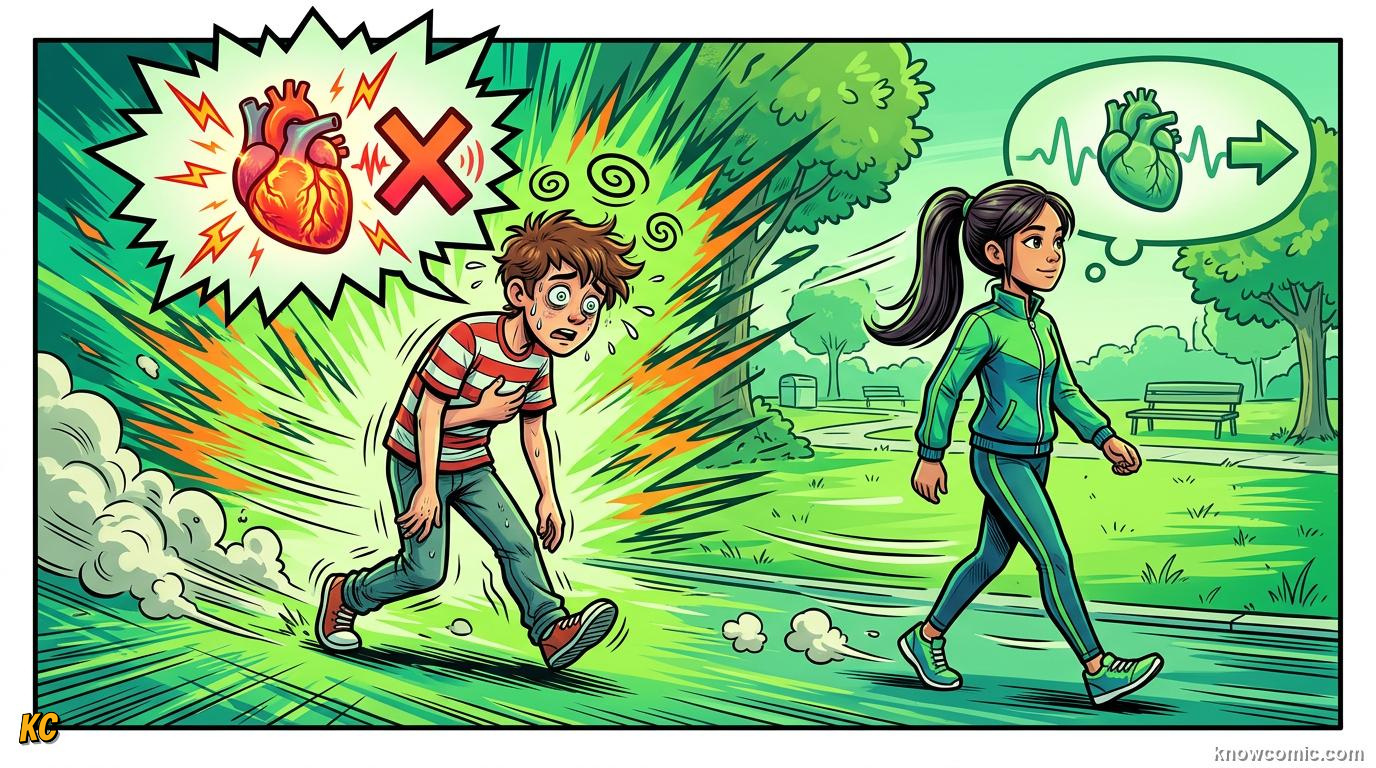
Picture finishing a sprint and flopping on the grass instantly. Your legs feel wobbly and your head might spin. During hard exercise, your heart pumps fast and blood vessels in your legs widen to feed working muscles. Stop abruptly and blood can pool in your legs instead of returning to your brain. That drop in blood flow can cause dizziness or even fainting. A cool-down is the gentle landing after your workout flight.
😵 DIZZY
Blood pooling in leg muscles after a sudden stop can reduce blood flow to the brain briefly.
STOP!
FAST HEART
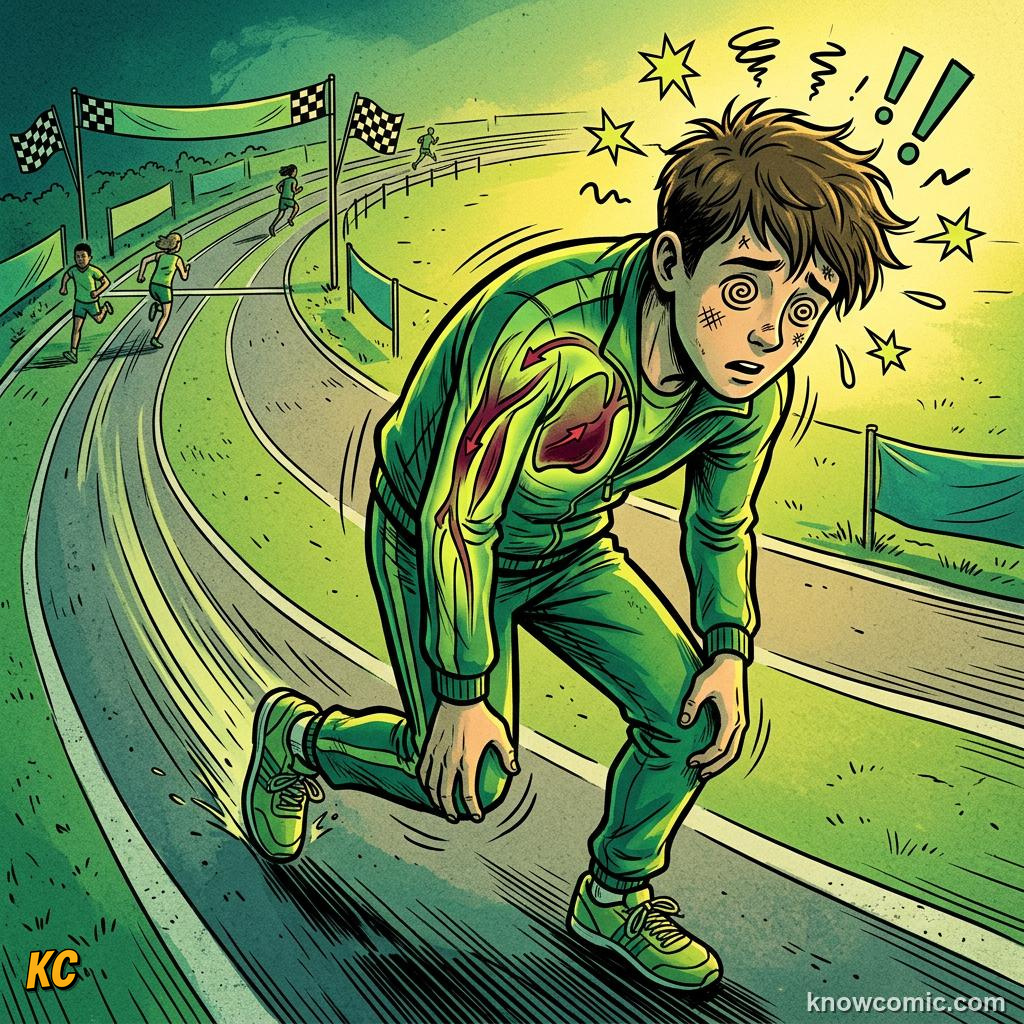
❤️ Still pumping hard 🦵 Leg vessels wide open
POOL
🩸 Blood sits in legs 🧠 Brain gets less flow briefly
PAGE 2 OF 5 — GRADUAL SLOWDOWN
LAND SOFT
BRING HEART RATE DOWN SLOWLY
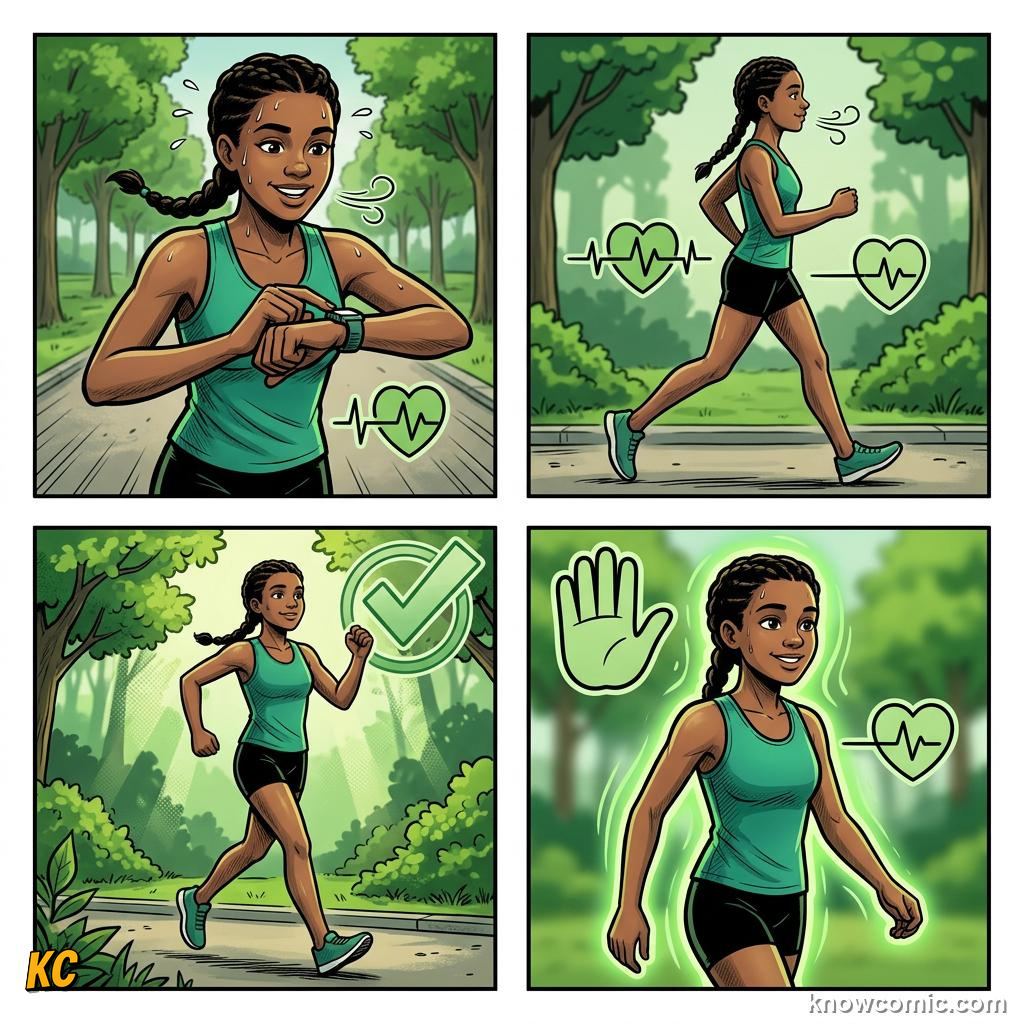
Cool-down means easing activity down over five to ten minutes. Jog lightly, walk fast, then stroll. Your heart rate and breathing should drift lower, not crash. This gradual shift helps blood keep moving back to your core and brain. Coaches often add easy laps or walking the field after practice. You should end feeling warm but calm, not gasping or collapsed.
📉 GRADUAL
Step down intensity in stages: hard to moderate to easy to still.
⏱️ Five to ten minutes works ✅ End calm, not collapsed
PAGE 3 OF 5 — CLEAR THE WASTE
BLOOD FLOW
🩸 Keeps moving through muscles 🧹 Carries waste away
RECOVER
💨 Fresh blood brings oxygen in 🚶 Walk after play, do not flop
RECYCLE CREW
HELP MUSCLES CLEAN UP
Hard exercise produces metabolic by-products in muscles, including substances once linked to the burn you feel during effort. Gentle movement during cool-down keeps blood circulating. That blood carries oxygen and nutrients in while washing waste products out. Faster clearance may reduce next-day stiffness and help you feel fresher sooner. Sitting completely still right after a hard session slows that cleanup.
♻️ FLUSH
Light activity after exercise helps circulation clear metabolic waste from tired muscles.
FLUSH!
PAGE 4 OF 5 — STRETCH AND SETTLE
LENGTHEN
STATIC STRETCH AFTER COOL-DOWN
After your heart rate is down, static stretching can help. Hold gentle stretches for twenty to thirty seconds for calves, hamstrings, quads, and shoulders. Muscles are warm and more willing to lengthen. Breathe slowly and never bounce into pain. Stretching is not a magic injury shield, but it can reduce tightness and feels relaxing. Pair it with sipping water and catching your breath.
🧘 STATIC
Static stretches held after cool-down can ease muscle tightness when tissues are still warm.
STRETCH!
CALVES
🦵 Gentle hold, no bouncing 🌬️ Slow breaths relax tissue
HAMSTRINGS
🤸 Forward fold with care ⏱️ Twenty to thirty seconds
HYDRATE
🥤 Sip water while stretching 😌 Mind and body settle
PAGE 5 OF 5 — RECOVER FASTER
FULL LANDING
COOL-DOWN IS RESPECT
Cooling down right prevents dizziness, guides your heart rate down, and helps muscles clear waste for faster recovery. Walk or jog easy, stretch gently, drink water, and let your body shift from work mode to rest mode. It is the polite goodbye your body deserves after giving its all.
CALM!
ROUTINE
🚶 Five to ten minutes easy movement 🧘 Stretch plus water plus breath
REMEMBER
💪 KEY FACTS
Sudden stops can cause dizziness. Gradual cool-down lowers heart rate and improves waste clearance. Stretch and hydrate after. You recover faster and feel better.
🌬️ Ease down, do not stop cold ❤️ Protect blood flow to your brain ♻️ Light movement speeds recovery
🧠 QUIZ TIME!
COOLING DOWN RIGHT · 5 QUESTIONS
QUESTION 01
Why can stopping exercise suddenly cause dizziness?