🕰️ Can We Rebuild Words From the Deep, Distant Past?
📖 250 Topics🆓 FREE + PRO⏱️ 5 min per comic🧠 Quiz included
🗣️
MANY WORDS
In Many Languages
→
🔍
COMPARE
Line Them Up
→
🧩
PATTERNS
Spot the Rules
→
🛠️
REBUILD
Make the Old Word
→
🕰️
THE PAST
Hear an Echo
🕰️ THE WORLD'S FIRST WORDS
TOPIC 05 · LANGUAGES · ORIGINS OF LANGUAGE
PAGE 1 OF 5 — A WORD TIME MACHINE
THE BIG QUESTION
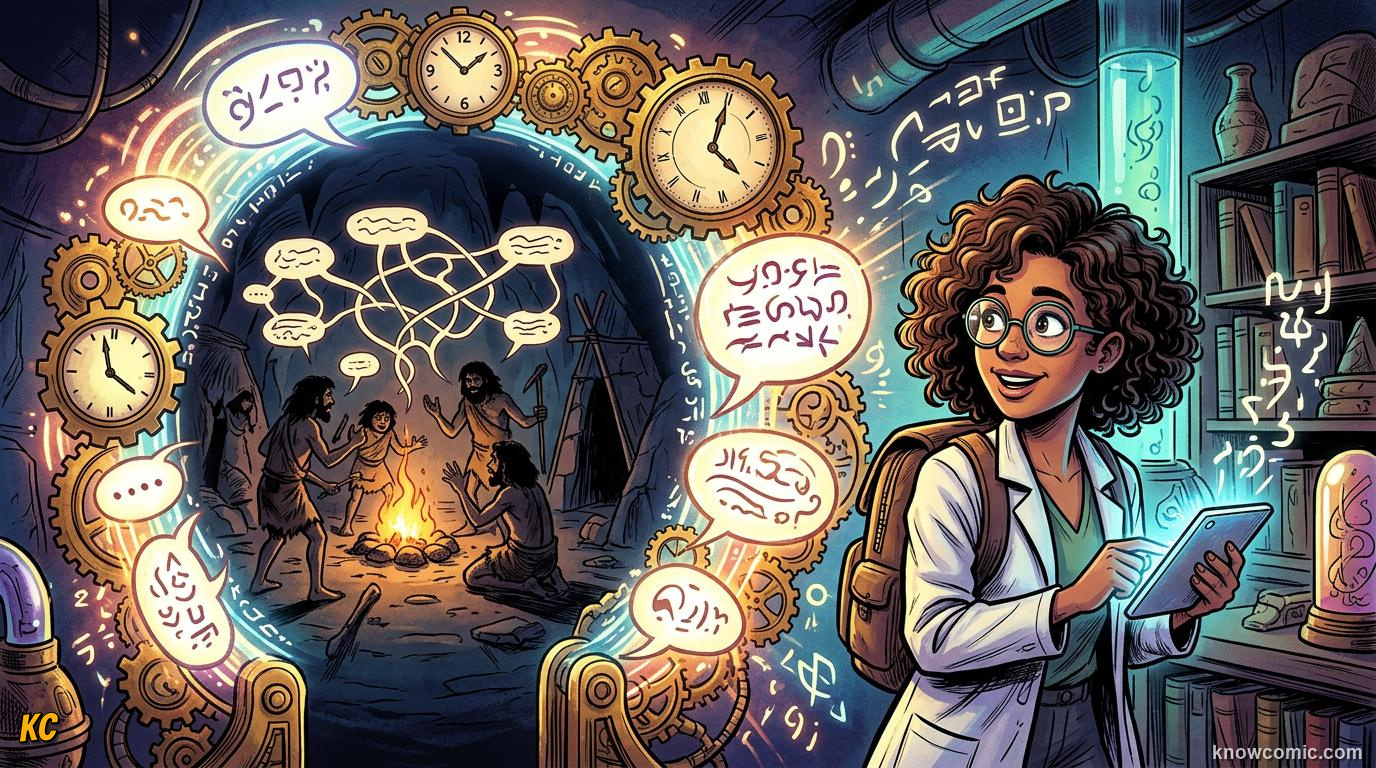
CAN WE HEAR ANCIENT WORDS?
Nobody recorded sound thousands of years ago, so we can never truly hear what people said back then. Yet clever scientists called linguists have found a way to rebuild some very old words, like building a dinosaur from a few fossil bones. They cannot make perfect words, but they can make very good guesses about words spoken long before any writing existed. It is almost like having a time machine made of language.
⚡ DID YOU KNOW?
Rebuilt ancient words are written with a little star in front, like an asterisk, to show that no one ever wrote them down. They are smart guesses.
REWIND!
NO RECORDINGS
🎙️ No microphones long ago
🤫 The sounds are all gone
CLEVER GUESSES
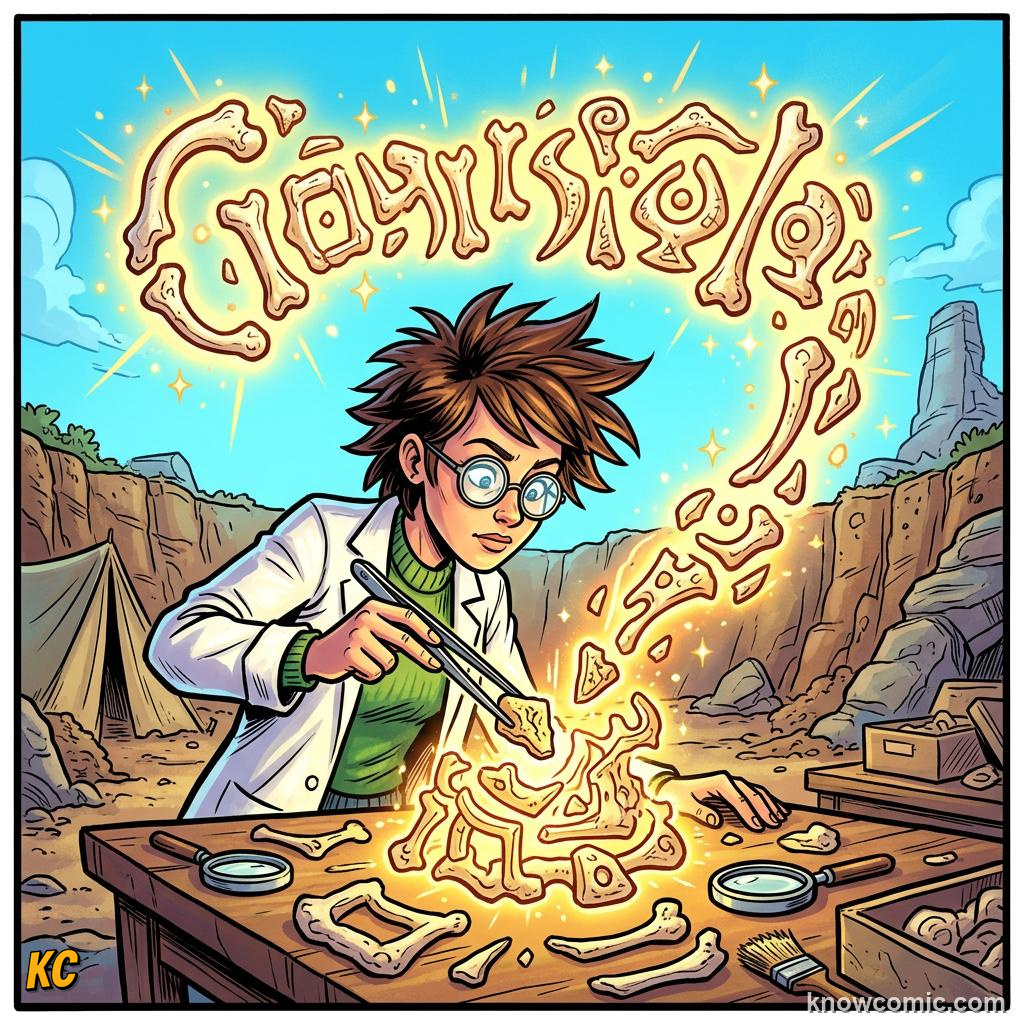
🦴 Like rebuilding from fossils
🧠 Good guesses, not perfect
PAGE 2 OF 5 — THE DETECTIVE METHOD
HOW THEY DO IT
COMPARE, SPOT, REBUILD
Linguists work like detectives. First they take one idea, like the word for night, and line up how lots of related languages say it. Then they hunt for patterns in how the sounds match up, because languages change in regular, tidy ways. Using those patterns, they work backwards to rebuild the older word that all the modern ones probably grew from. Comparing many languages at once gives the best clue to the lost original word.
CLUES!
LINE THEM UP
📋 Same word in many tongues
👀 Placed side by side
FIND PATTERNS
🔗 Sounds shift in tidy ways
🧩 A p here is an f there
WORK BACKWARDS
⏪ Rewind the sound changes
🛠️ Rebuild the older word
PAGE 3 OF 5 — WORDS THAT REFUSE TO DIE
TOUGH WORDS
👩 Words like mother last ages
🔥 So do fire and water
EVERYDAY WINS
🗣️ Said again and again
🛡️ Common words change slowest
ANCIENT ROOTS
A FEW WORDS LAST AND LAST
Most words change a lot over time, but a few special ones are amazingly tough. Some scientists think a handful of simple, everyday words, like mother, fire, and hand, have barely changed for many thousands of years. These words pop up looking similar in language families all over the world. Why? Because we say them so often that they get passed down very carefully. They are like ancient roots that almost refuse to disappear.
⚡ DID YOU KNOW?
A few researchers believe some words may be over 10,000 years old, making them some of the oldest things humans still use every day.
ANCIENT!
PAGE 4 OF 5 — WHY SOME WORDS SURVIVE
THE SECRET
COMMON WORDS CHANGE SLOWLY
Here is the secret to a long-lasting word: use it a lot. Words we say every single day, like numbers, body parts, and family names, are held in everyone's memory firmly, so they change very slowly. Rare words that we hardly ever use can shift or vanish much faster. Sound changes also follow neat rules, almost like a code, so linguists can predict how a word probably sounded in the past. That makes ordinary words our best clues to ancient speech.
SLOW & STEADY!
USED A LOT
🔢 Numbers and body parts
🛡️ Used daily, so they stay
SOUND RULES
🔐 Sounds shift like a code
🔮 Linguists can predict them
RARE WORDS GO
🍂 Rarely used words fade
💨 They change or vanish fast
PAGE 5 OF 5 — ECHOES OF LONG AGO
THE BIG IDEA
EVERY WORD IS A TIME TRAVELLER
Even though we cannot truly hear the world's first words, the detective work of linguists lets us peek thousands of years into the past. By comparing languages and following sound patterns, they rebuild words that may echo speech older than any city or pyramid. The next time you say a simple word like mother or fire, remember it might be one of the oldest sounds humans have ever made, passed mouth to mouth across countless generations all the way to you.
ECHO!
WORD POWER
🗣️ Old words live in your mouth
🔗 They link you to the past
REMEMBER
🕰️ KEY FACTS
By comparing related languages and their sound patterns, linguists rebuild ancient words, and a few everyday roots have lasted thousands of years.
🔍 Linguists compare many languages
🧩 Sound changes follow tidy rules
🛡️ Common words change the slowest
🧠 QUIZ TIME!
THE WORLD'S FIRST WORDS · 5 QUESTIONS
QUESTION 01
Why can we never truly hear the world's first words?
QUESTION 02
How do linguists rebuild old words?
QUESTION 03
What kind of words tend to last the longest?
QUESTION 04
Why do common words change so slowly?
QUESTION 05
What helps linguists guess how a word sounded long ago?