💥
🦵
👀
⚽ FOR KIDS & EVERYONE · NO EXPERIENCE NEEDED

WORLD CUP
2026

🌎 Learn Football from Zero to Expert, One Comic at a Time!

📖 100 Topics 🆓 ALL FREE ⏱️ 5 min per comic 🧠 Quiz included
👀
EYES UP
Track the Ball
🦵
JUMP
Time Your Leap
💥
FOREHEAD
Meet the Ball
🛡️
ATTACK OR CLEAR
Score or Save
🏆
WORLD CUP 2026
Win It in the Air
💥 HEADING THE BALL
TOPIC 20 · WORLD CUP 2026 · LEVEL 2 · SKILLS & TACTICS
PAGE 1 OF 5 · MEET THE BALL IN THE AIR
USE YOUR HEAD
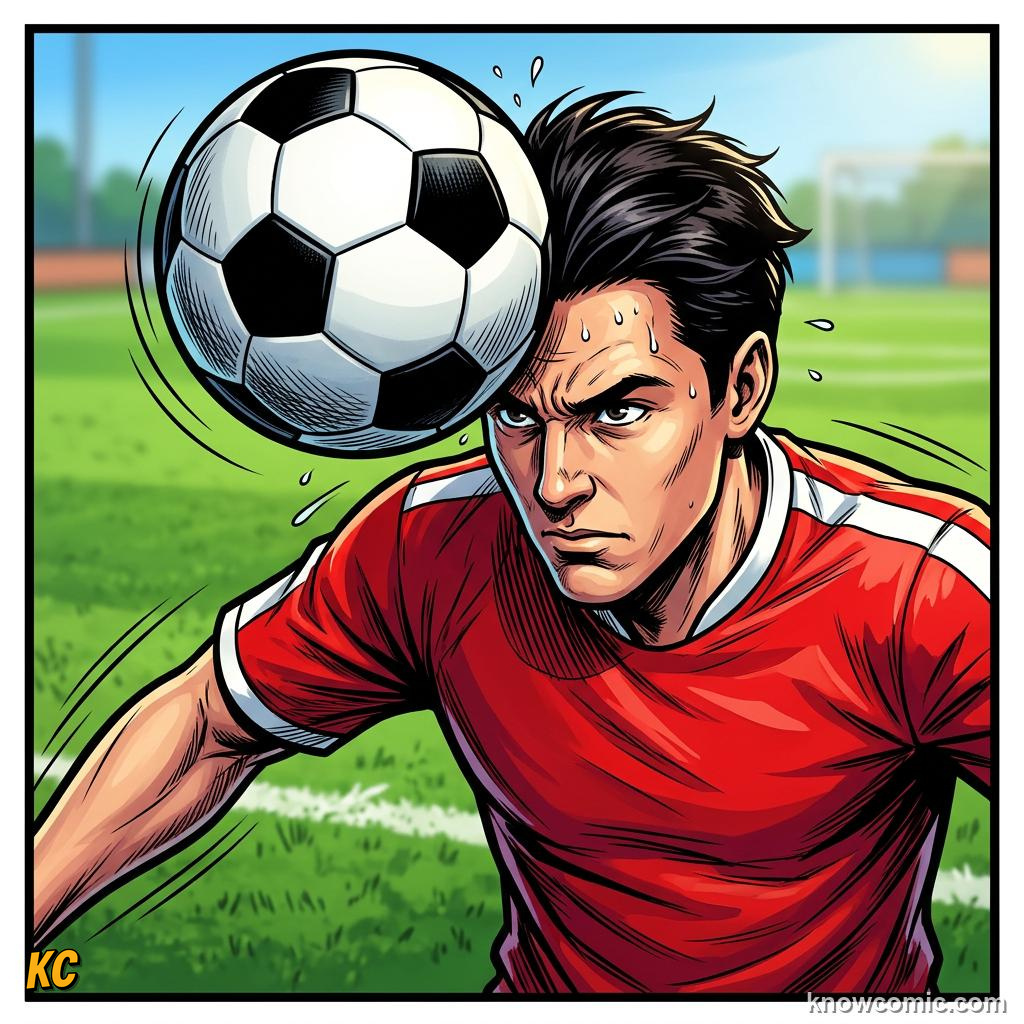
Comic panel titled what is heading, labelled use your head, from the KnowComic World Cup 2026 lesson on heading the ball
WHAT IS HEADING?
Heading means meeting the ball with your forehead instead of your foot. When a cross or long pass flies through the air, players jump and strike the ball with the front of their head to pass, shoot, or clear it. It takes real courage because the ball moves fast and other players jump beside you. It also takes timing: you must watch the flight, judge the bounce, and jump at exactly the right moment. World Cup goals from headers are among the most thrilling moments in football. Defenders use headers to boot danger away. Strikers use them to smash the ball into the net. Learning to head safely and correctly is one of the most important aerial skills in the game.
⚡ DID YOU KNOW?
The forehead is the safest and strongest part of the head for heading. Contact should happen on the flat front of the forehead, not the top or side of the skull.
HEADER!
WATCH IT

Comic panel titled how to head properly, labelled watch it, from the KnowComic World Cup 2026 lesson on heading the ball
👀 Eyes track the cross
🧠 Read the flight early
CONTACT POINT
Comic panel titled how to head properly, labelled contact point, from the KnowComic World Cup 2026 lesson on heading the ball
✅ Forehead meets the ball
❌ Not the top of your head
PAGE 2 OF 5 · TIMING AND TECHNIQUE
JUMP AND STRIKE
Comic panel titled how to head properly, labelled jump and strike, from the KnowComic World Cup 2026 lesson on heading the ball
HOW TO HEAD PROPERLY
A good header starts on the ground. Bend your knees, then spring upward to meet the ball at the highest point you can reach. Keep your eyes open and watch the ball all the way onto your forehead. Your neck should be firm, not loose, so you strike through the ball with purpose instead of letting it bounce off weakly. Use your arms for balance, spreading them slightly like wings. Attack the ball. Do not wait for it to hit you. World Cup centre-backs and strikers practise this thousands of times so their timing becomes automatic. When the cross arrives, they know exactly when to leave the ground and where their forehead will meet the ball.
⚡ ATTACK THE BALL
Move your head toward the ball on contact. Players who lean back and let the ball hit them lose power and accuracy. Meet it with a firm, forward snap of the neck.
TIMING!
BEND AND SPRING
Comic panel titled score or clear, labelled bend and spring, from the KnowComic World Cup 2026 lesson on heading the ball
🦵 Knees bend, then explode up
⏱️ Jump to the ball's peak
ARMS OUT
Comic panel titled score or clear, labelled arms out, from the KnowComic World Cup 2026 lesson on heading the ball
🪽 Arms wide for balance
👀 Eyes open on contact
FAIR CHALLENGE
Comic panel titled score or clear, labelled fair challenge, from the KnowComic World Cup 2026 lesson on heading the ball
⚽ Eyes on the ball, not the player
🤝 Jump together, play fair
PAGE 3 OF 5 · ATTACK OR DEFEND
ATTACKING HEADER
Comic panel titled score or clear, labelled attacking header, from the KnowComic World Cup 2026 lesson on heading the ball
⚽ Dive forward toward goal
💥 Power through the ball
DEFENSIVE HEADER
Comic panel titled score or clear, labelled defensive header, from the KnowComic World Cup 2026 lesson on heading the ball
🛡️ Jump straight up
⬆️ Head it high and wide
TWO WAYS TO WIN
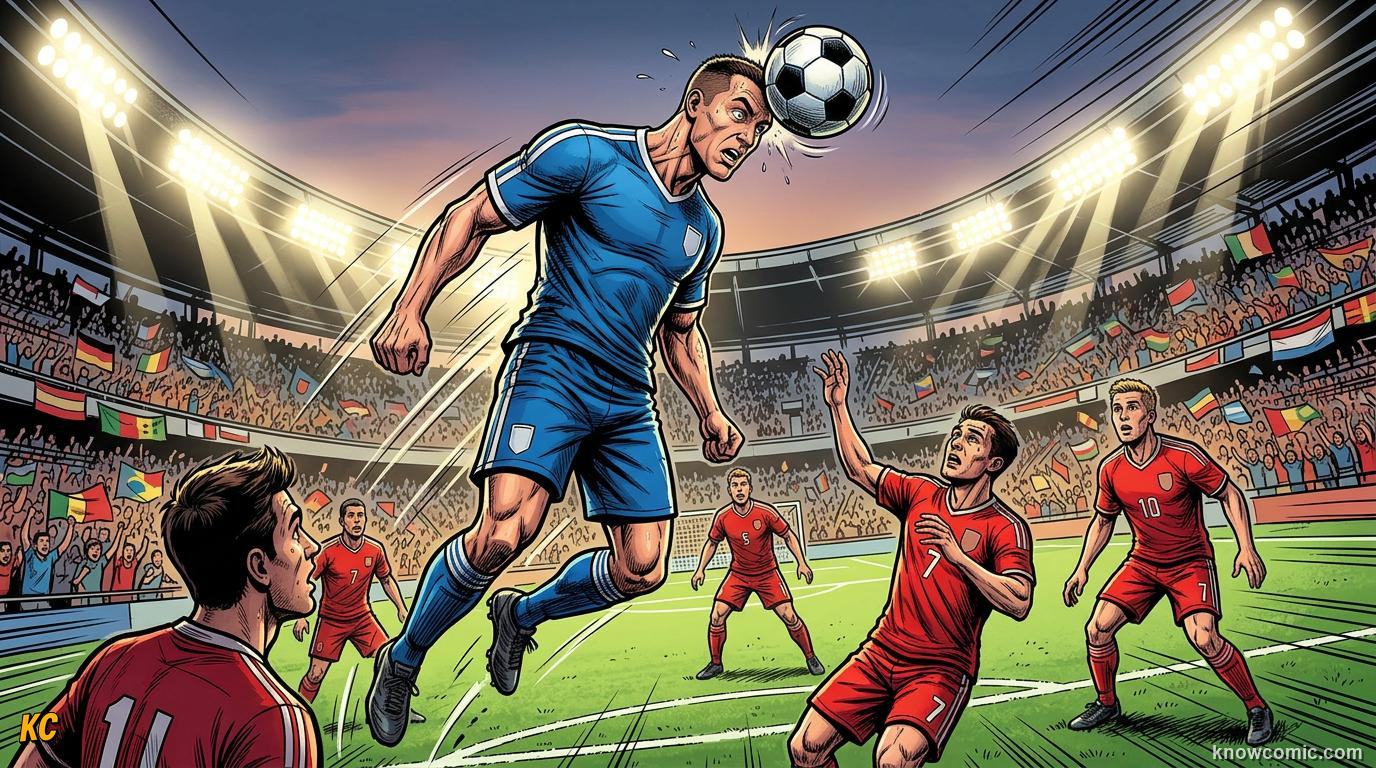
Comic panel titled score or clear, labelled two ways to win, from the KnowComic World Cup 2026 lesson on heading the ball
SCORE OR CLEAR
There are two main types of header in a match. An attacking header aims at goal. The striker jumps early, arches the body forward, and drives the forehead through the ball toward the net. A diving header is the most spectacular version: the player launches horizontally through the air to reach a cross before a defender. A defensive header clears danger. The defender jumps vertically, keeps the body tall, and heads the ball high and wide away from goal. Both need courage and timing, but the direction changes everything. At World Cup 2026, knockout matches are often decided by one perfect header in a crowded penalty box. Knowing which type to play is as important as the technique itself.
⚡ DIRECT IT
Attacking headers go down toward goal. Defensive headers go up and away from danger. Your neck angle decides where the ball travels after contact.
SCORE!
PAGE 4 OF 5 · SAFETY FIRST
PROTECT YOUR BRAIN
Comic panel titled special rules for young players, labelled protect your brain, from the KnowComic World Cup 2026 lesson on heading the ball
SPECIAL RULES FOR YOUNG PLAYERS
Heading is a skill for older, trained players. Because young brains are still developing, many countries limit or ban heading in youth football. Kids should learn with soft, lightweight balls under coach supervision, not hard match balls in crowded games. Some leagues only allow heading above a certain age. Coaches teach neck strength, proper technique, and when not to head at all. If a player feels dizzy or sore after a header, they must tell an adult immediately and rest. World Cup stars learned heading gradually over years, not in one reckless afternoon. Safety always comes before spectacular goals. The best header is the one you walk away from safely.
⚡ COACH SUPERVISION
Never practise heading alone with a hard ball. Start with gentle tosses from a partner or coach. Build confidence and technique slowly before trying match-speed crosses.
SAFE!
SOFT BALLS
Comic panel titled how to build heading skill, labelled soft balls, from the KnowComic World Cup 2026 lesson on heading the ball
🧒 Kids use foam or soft balls
👨‍🏫 Coach watches every rep
AGE RULES
Comic panel titled how to build heading skill, labelled age rules, from the KnowComic World Cup 2026 lesson on heading the ball
📋 Many leagues limit youth heading
🛡️ Protection when training
MATCH WINNER
Comic panel titled how to build heading skill, labelled match winner, from the KnowComic World Cup 2026 lesson on heading the ball
🏆 Pro headers decide big games
💪 Years of safe practice
PAGE 5 OF 5 · PRACTICE AND RECAP
TRAIN THE AIR
Comic panel titled how to build heading skill, labelled train the air, from the KnowComic World Cup 2026 lesson on heading the ball
HOW TO BUILD HEADING SKILL
Heading is built through repetition with proper supervision. Partner drills work best: one player gently tosses the ball, the other heads it back softly. Progress from waist-height throws to higher arcs as confidence grows. Crossing and finishing drills teach attackers to time their runs and meet the ball at the near or far post. Defenders practise clearing long balls launched by a coach. Neck and core strength exercises help too, because a stable body produces a cleaner header. The World Cup players who rise above everyone else did these drills for years. Aerial skill is not luck. It is courage, timing, and technique trained one header at a time.
⚡ PARTNER DRILL
Stand five metres apart. Gently throw the ball to your partner's forehead and they head it back. Keep throws soft and controlled. Ten reps, then swap roles.
PRACTICE!
PARTNER TOSS
Comic panel labelled partner toss, illustrating heading the ball in KnowComic's World Cup 2026 series
🤝 Soft throws, firm contact
🔁 Repeat until timing feels natural
REMEMBER
📋 KEY FACTS
Heading uses the forehead, not the top of the skull. Bend your knees, jump to the ball, and strike with a firm neck. Attack headers go toward goal. Defensive headers go up and away. Young players need special safety rules and coach supervision.
💥 Forehead meets the ball
⏱️ Time your jump
🛡️ Safety first for young players
🧠 QUIZ TIME!
HEADING THE BALL · 5 QUESTIONS
QUESTION 01
Which part of the head should meet the ball?
QUESTION 02
What should you do just before heading the ball?
QUESTION 03
What is a defensive header meant to do?
QUESTION 04
Why do many youth leagues limit heading?
QUESTION 05
What does "attack the ball" mean when heading?
0/5
LOADING...
← TOPIC 19 📋 ALL TOPICS TOPIC 21 →