🧠 THE GROWING BRAIN
PAGE 1 OF 4 — THE WONDER MACHINE INSIDE YOUR SKULL
THE BEGINNING
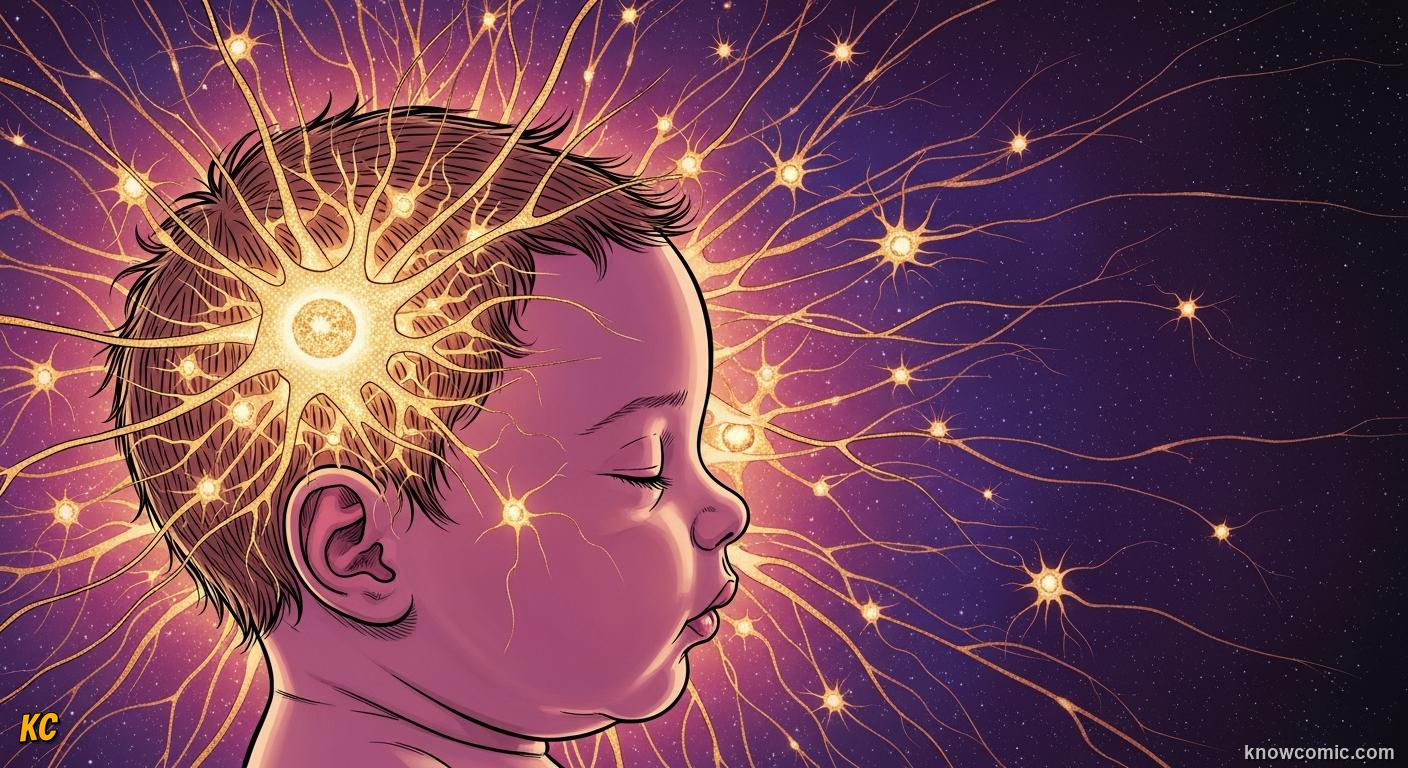
THE MOST POWERFUL MACHINE EVER BUILT
At the moment of birth, a human baby arrives with roughly 100 billion neurons already wired into their brain.
That is more cells than there are stars in the Milky Way. But here is the astonishing part: almost none of them
are connected to each other yet. The brain at birth is a city full of people who have never met.
⚡ HARVARD RESEARCH
"In the first years of life, more than 1 million new neural connections form every single second."
Harvard Center on the Developing Child (2016). This rate of growth never happens again in a human lifetime.
SPARK!
HEBB'S RULE, 1949
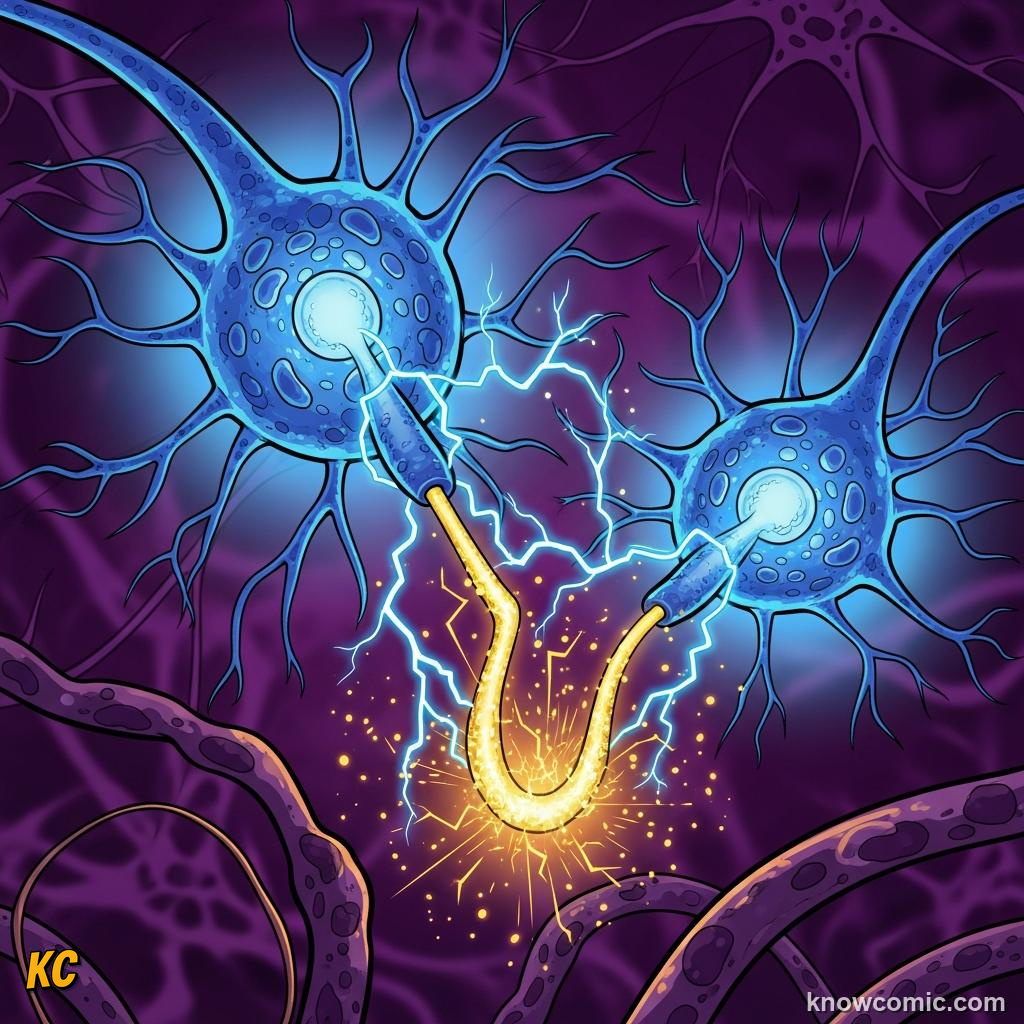
🔗 "Neurons that fire together, wire together"
⚡ Repeated experiences create permanent neural pathways
🧪 First described by Donald Hebb, 1949
⚡ Repeated experiences create permanent neural pathways
🧪 First described by Donald Hebb, 1949
SYNAPTOGENESIS
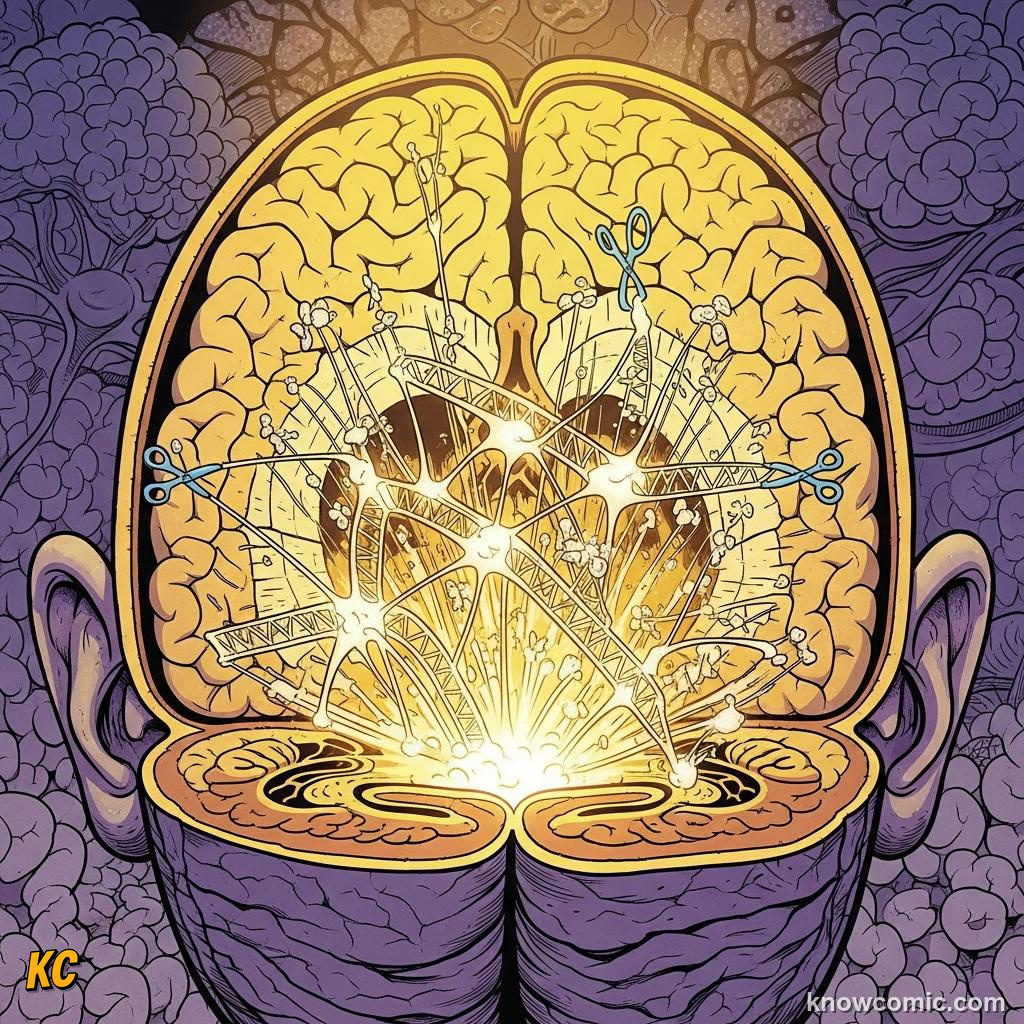
🌱 By age 6: twice as many synapses as an adult
✂️ Unused connections get pruned away
💪 Used connections grow stronger and faster
✂️ Unused connections get pruned away
💪 Used connections grow stronger and faster
PAGE 2 OF 4 — THE WINDOWS OF OPPORTUNITY
NEUROPLASTICITY
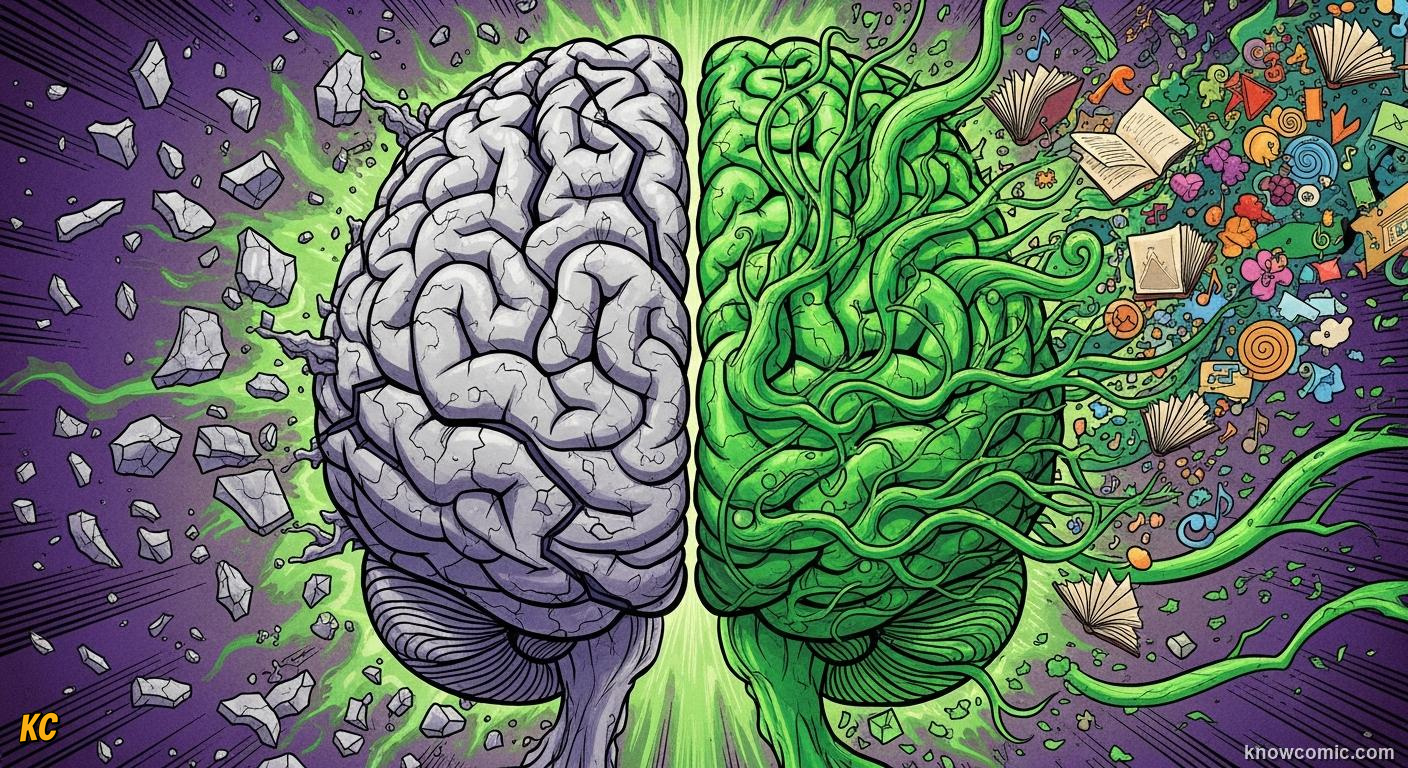
THE BRAIN IS NOT HARDWIRED. IT IS BUILT BY EXPERIENCE.
For most of history, scientists believed the brain was fixed at birth, like hardware you could never upgrade.
Then came the discovery that changed everything: neuroplasticity. The brain does not simply respond to experience.
It physically reorganizes itself. Learning a new skill actually creates new structures. Forgetting something removes them.
Every book a child reads, every problem they solve, every story they hear is literally building their brain.
📖 PEER-REVIEWED EVIDENCE
Draganski et al. (2004, Nature): MRI scans showed measurable structural changes in the brains of medical students after only 3 months of study. The grey matter in memory regions physically grew, then partially shrank after exams ended.
REWIRE!
LANGUAGE WINDOW
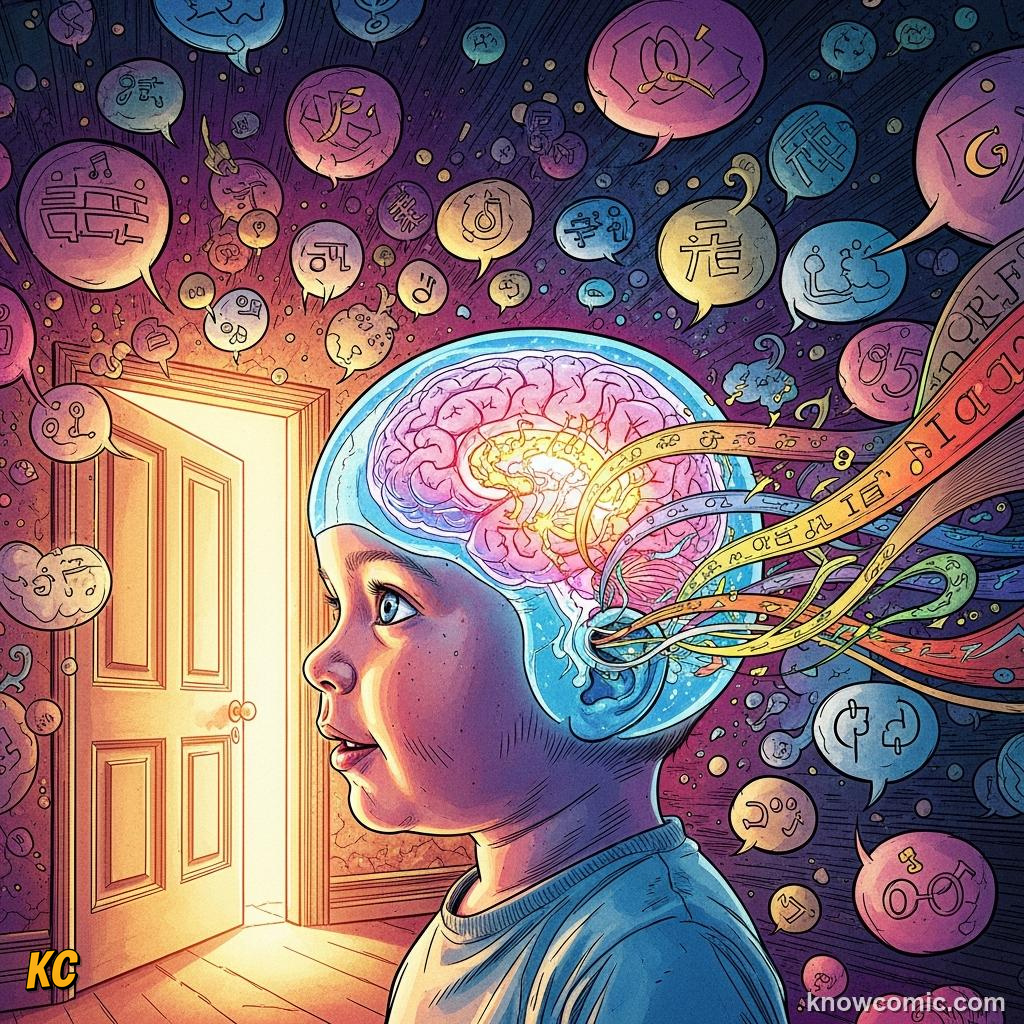
🗣️ Peak window: birth to age 7
📚 Lenneberg (1967): critical period for native-level fluency
🌍 Children in bilingual homes wire two language systems simultaneously
📚 Lenneberg (1967): critical period for native-level fluency
🌍 Children in bilingual homes wire two language systems simultaneously
EMOTIONAL WINDOW
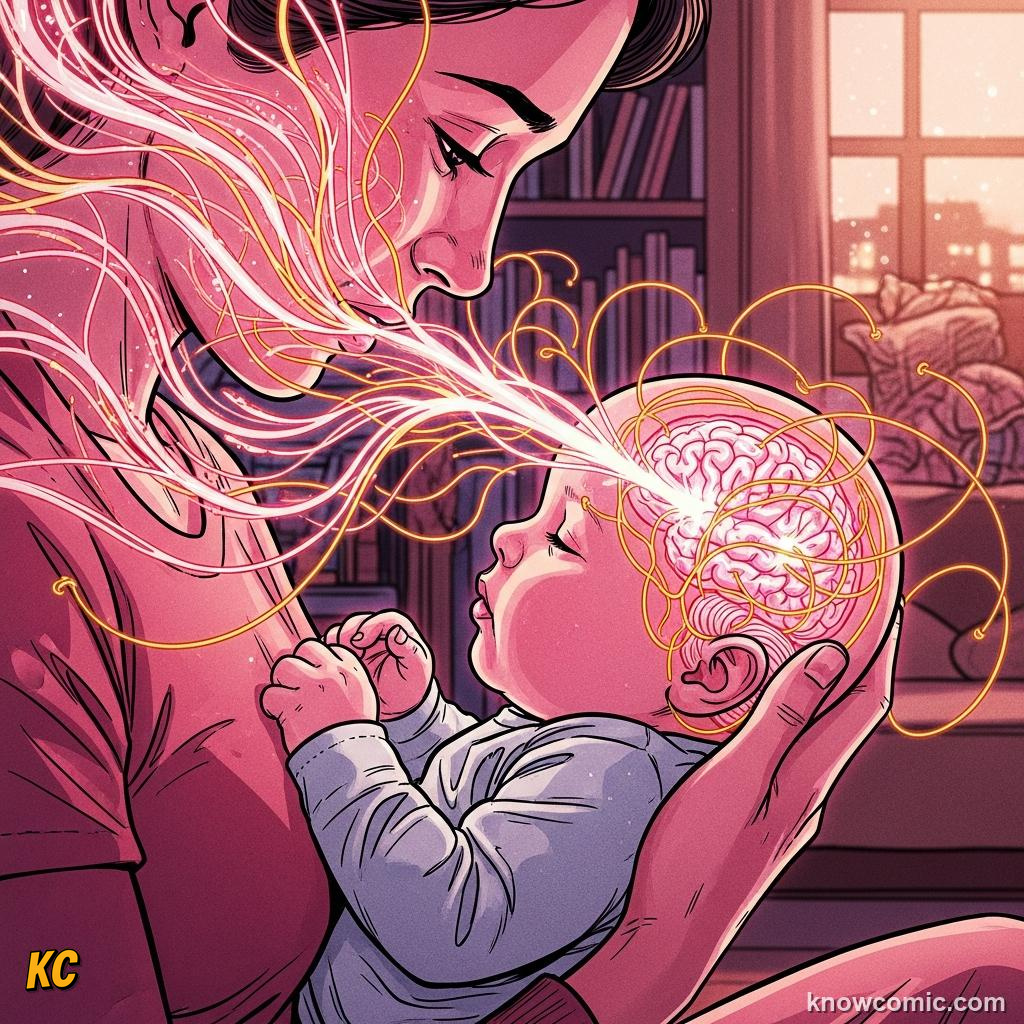
❤️ Ages 0–3: attachment and emotional regulation wiring
🔬 Secure early bonding thickens the prefrontal cortex
🧠 Emotional safety is not separate from learning. It IS learning.
🔬 Secure early bonding thickens the prefrontal cortex
🧠 Emotional safety is not separate from learning. It IS learning.
SENSORY WINDOW
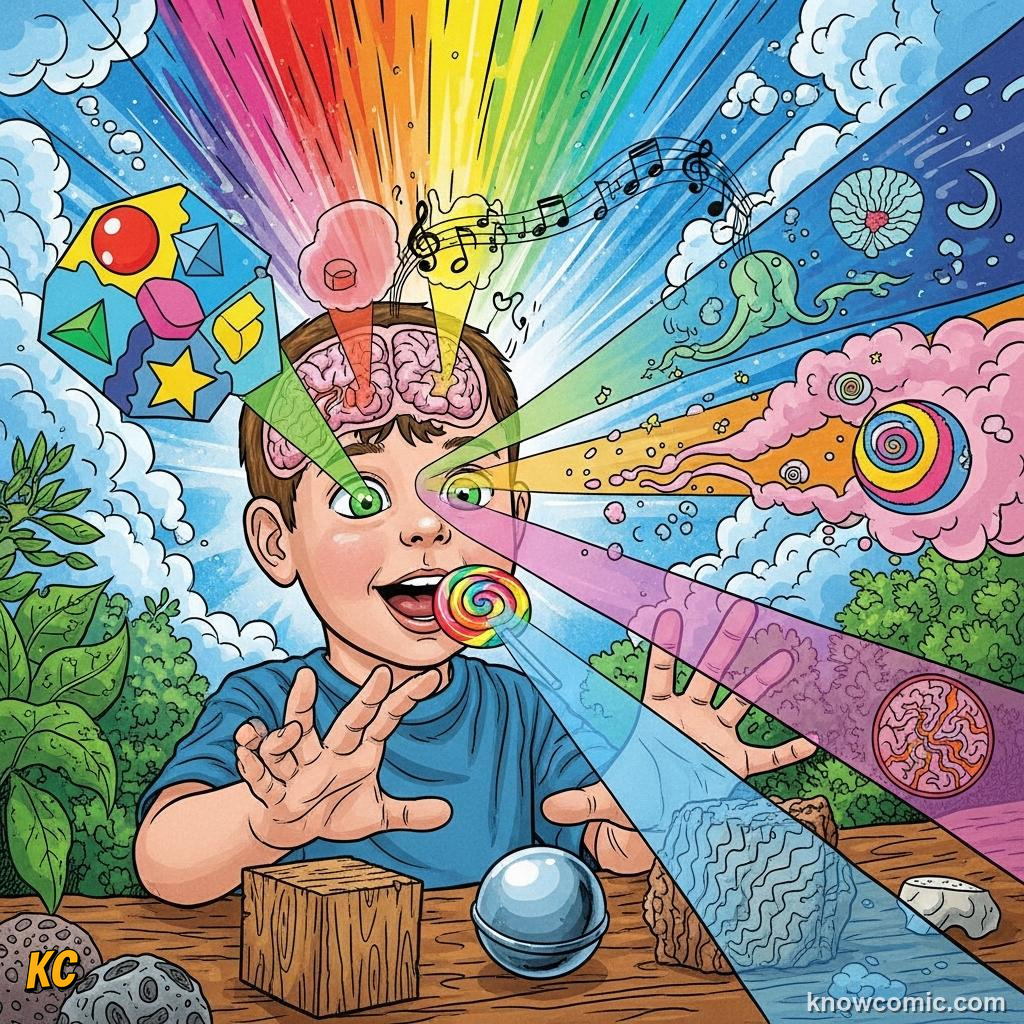
👁️ Visual cortex: peak development ages 0–5
🎵 Musical pitch window: ages 3–12
🖐️ Fine motor skills: ages 2–7 most receptive
🎵 Musical pitch window: ages 3–12
🖐️ Fine motor skills: ages 2–7 most receptive
PAGE 3 OF 4 — WHY COMICS REWIRE THE BRAIN DIFFERENTLY
PIAGET'S STAGES
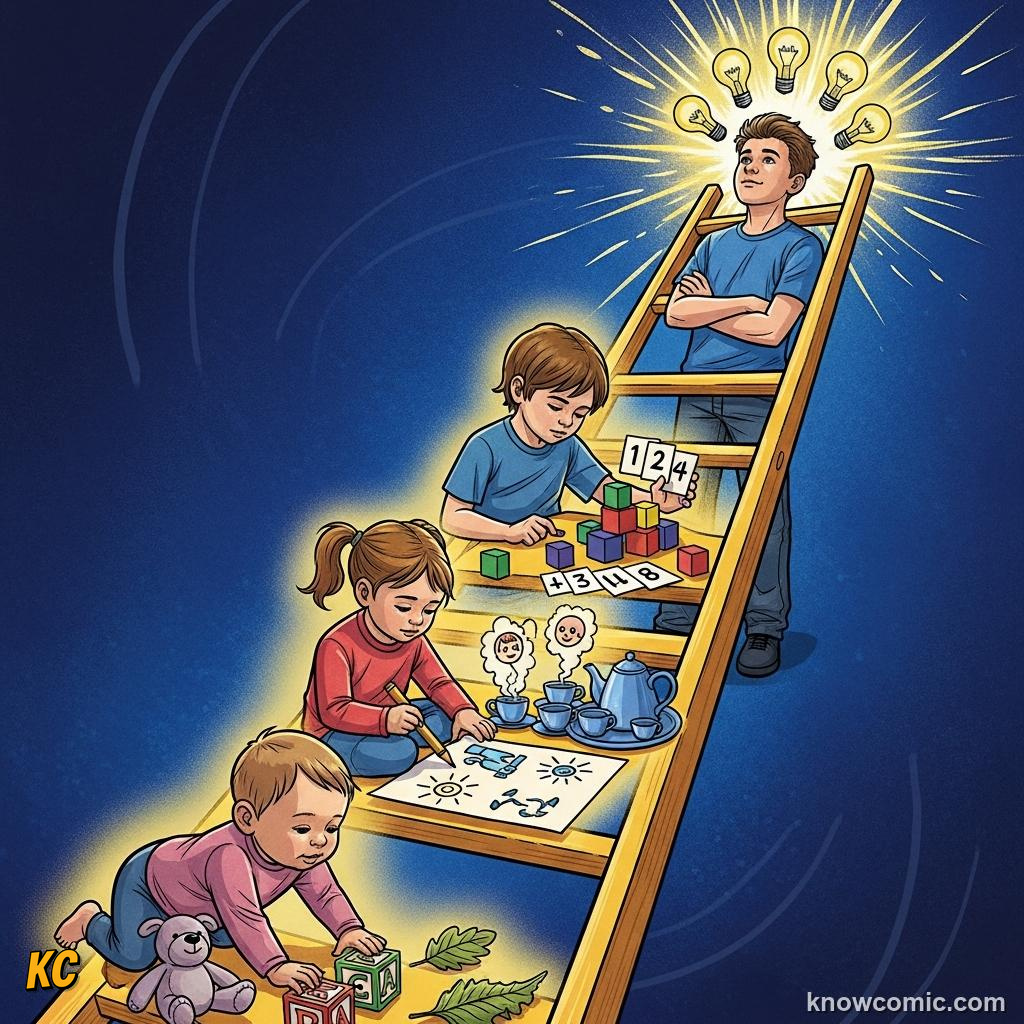
🍼 Ages 0–2: Sensorimotor (learning by touching)
🎨 Ages 2–7: Preoperational (symbol-based thinking begins)
🔢 Ages 7–11: Concrete operations (logic and rules)
💭 Ages 12+: Formal operations (abstract reasoning)
🎨 Ages 2–7: Preoperational (symbol-based thinking begins)
🔢 Ages 7–11: Concrete operations (logic and rules)
💭 Ages 12+: Formal operations (abstract reasoning)
VYGOTSKY'S ZPD
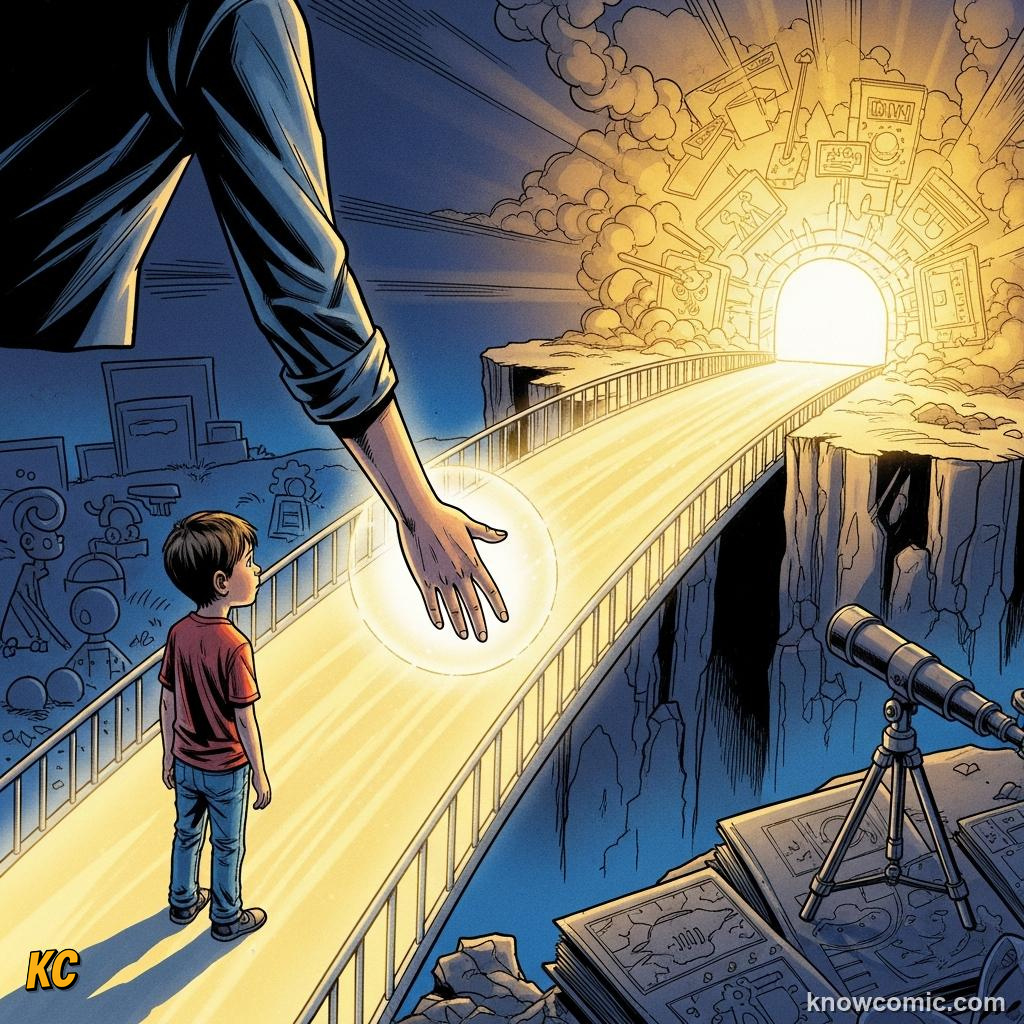
📍 Zone of Proximal Development (Vygotsky, 1978)
🎯 Best learning happens just BEYOND current ability, with guidance
🤝 A good story, teacher, or comic scaffolds the gap
🎯 Best learning happens just BEYOND current ability, with guidance
🤝 A good story, teacher, or comic scaffolds the gap
DUAL CODING THEORY
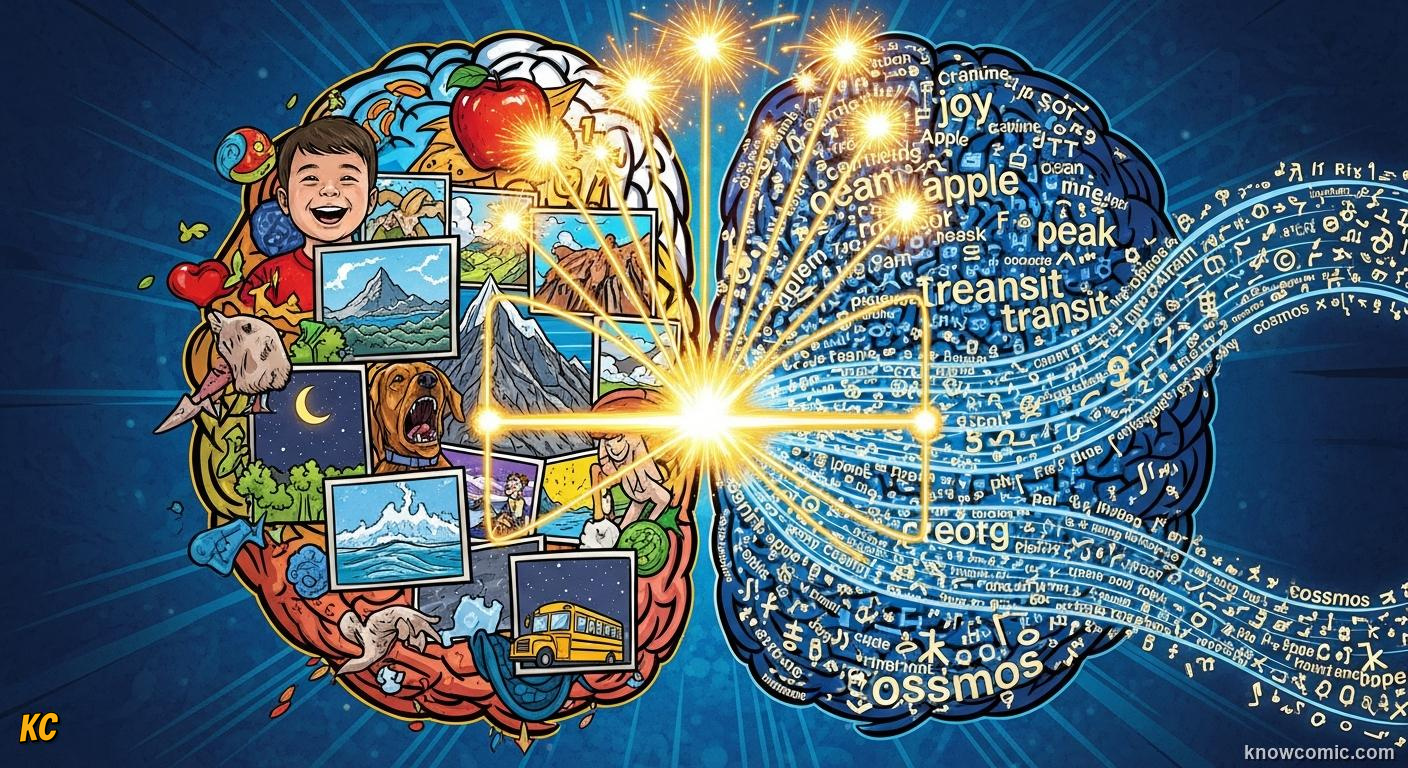
PICTURES PLUS WORDS = DOUBLE THE MEMORY
In 1971, cognitive psychologist Allan Paivio published a discovery that changed education science forever.
He proved that when the brain processes an image AND a word for the same concept simultaneously, it stores them
in two separate memory channels. Visual cortex AND language areas both activate. The result: recall after
3 days is 65% higher for image-plus-text than for text alone. This is called Dual Coding Theory,
and it is the scientific reason why comics are not just fun. They are neurologically superior to text.
📖 PEER-REVIEWED EVIDENCE
Mayer (2009, Cambridge University Press): "Multimedia Learning", students who learned from words AND pictures performed up to 89% better on transfer tests than those who learned from words alone. Confirmed across 100+ studies.
WIRED!
PAGE 4 OF 4 — HOW TO ACTUALLY FEED A GROWING BRAIN
SLEEP IS NOT OPTIONAL
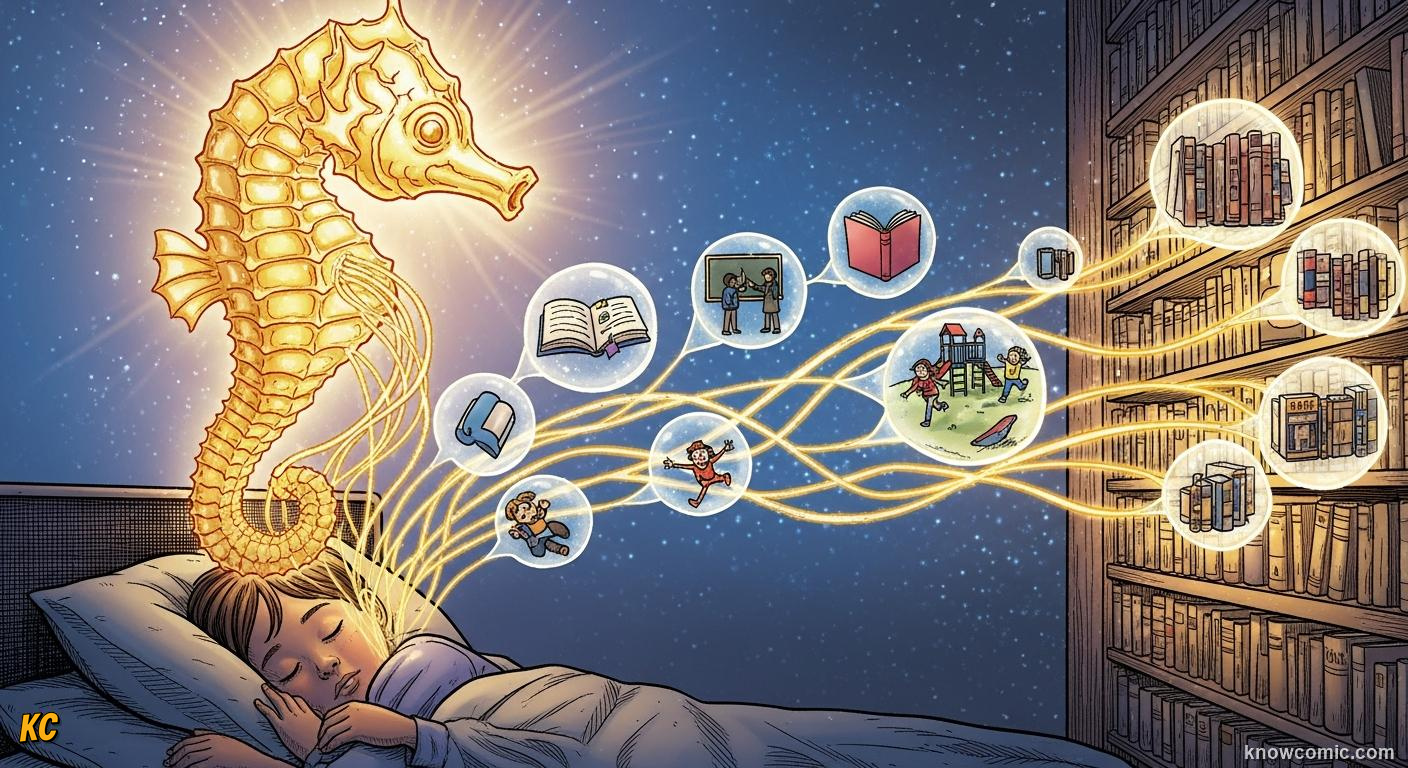
SLEEP IS WHEN THE BRAIN SAVES WHAT IT LEARNED
Everything a child learns during the day is held in short-term storage in the hippocampus.
It is unstable, fragile, easily lost. During deep sleep, the hippocampus replays the day's experiences
and transfers the important ones to the cortex for long-term storage. This process is called
memory consolidation, and no other mechanism can replace it. A child who skips sleep
after learning effectively deletes most of what they studied, which is why every
KnowComic
lesson is designed to be memorable enough to survive the night.
📖 PEER-REVIEWED EVIDENCE
Walker & Stickgold (2006, Annual Review of Psychology): Sleep-dependent memory consolidation is most powerful in children. REM sleep specifically strengthens emotional and associative memories, while slow-wave sleep consolidates factual and procedural knowledge.
SAVE!
CURIOSITY CHEMICALS
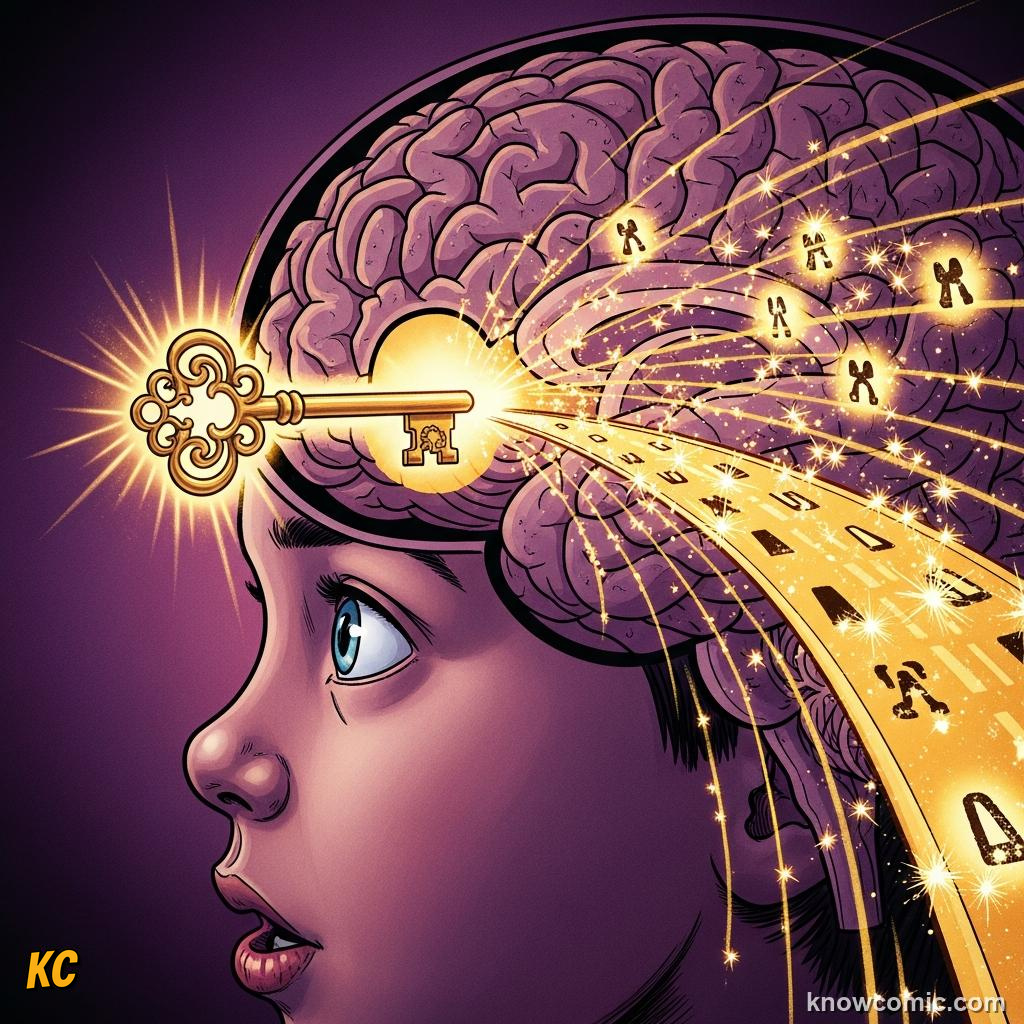
🧪 Curiosity activates the dopamine reward circuit
💊 Dopamine floods the hippocampus and boosts memory formation by 30%
📖 Gruber et al. (2014, Neuron): curious states enhance learning of ALL information, not just the thing you're curious about
💊 Dopamine floods the hippocampus and boosts memory formation by 30%
📖 Gruber et al. (2014, Neuron): curious states enhance learning of ALL information, not just the thing you're curious about
STORY STRUCTURE
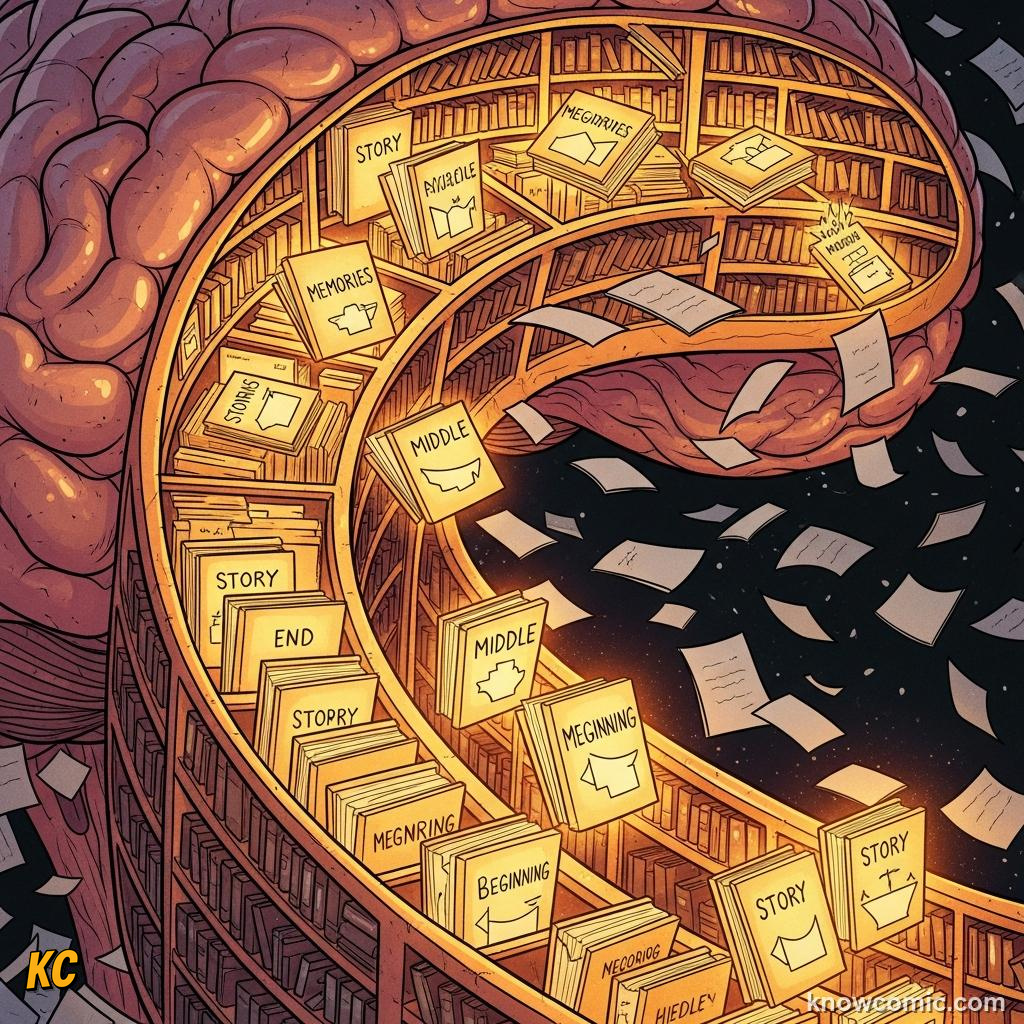
📖 Narratives are the brain's native data format
🗺️ The hippocampus organizes memories as story sequences
🎭 Facts embedded in stories are 22x more memorable than bare facts (Zak, 2013)
🗺️ The hippocampus organizes memories as story sequences
🎭 Facts embedded in stories are 22x more memorable than bare facts (Zak, 2013)
PLAY IS LEARNING
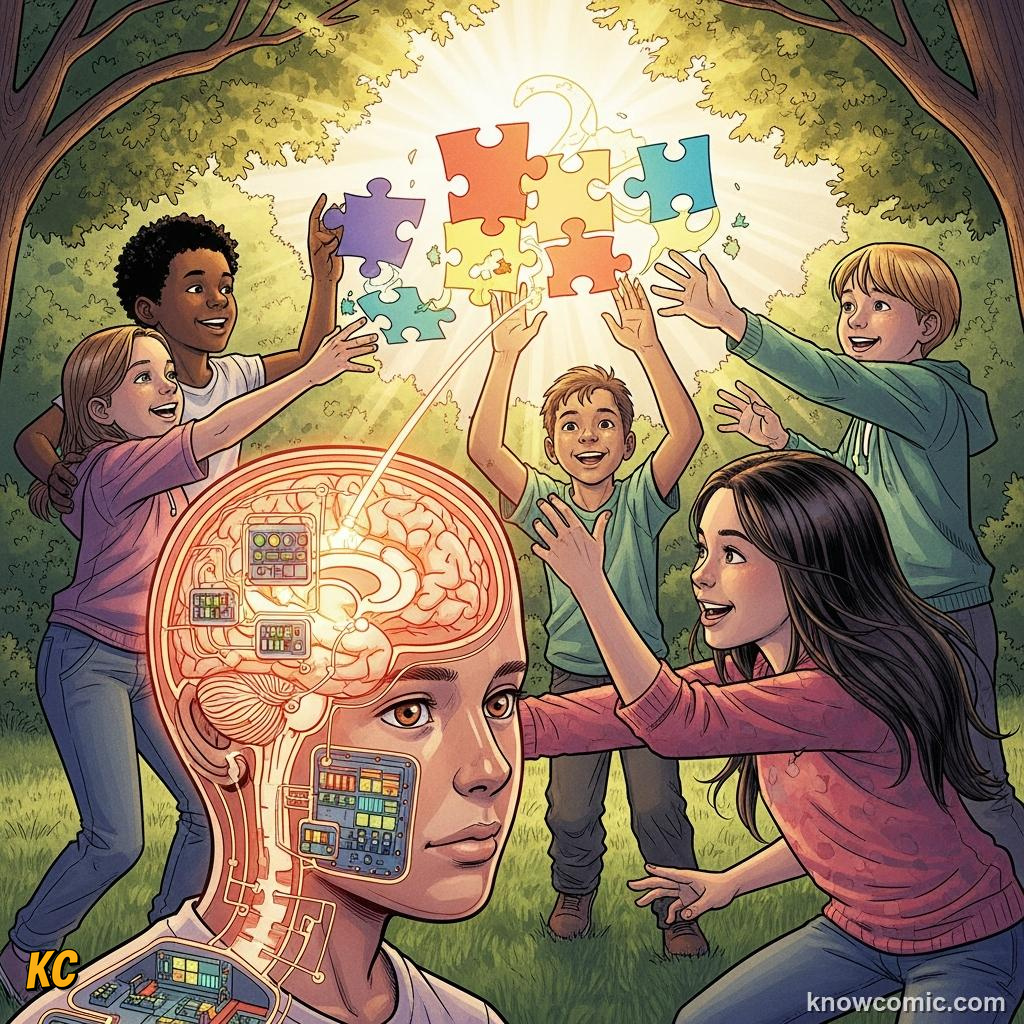
🎮 Unstructured play activates the prefrontal cortex
🤝 Collaborative play builds theory of mind (understanding others' perspectives)
🧩 Problem-solving in play creates executive function pathways
🤝 Collaborative play builds theory of mind (understanding others' perspectives)
🧩 Problem-solving in play creates executive function pathways
🧠
EXPLORE KNOWCOMIC →
GIVE THEIR GROWING BRAIN THE RIGHT FUEL
KnowComic turns real science into comics kids actually remember, built around how young brains truly learn.
🧠 QUIZ TIME!
THE GROWING BRAIN · 5 QUESTIONS
QUESTION 01
In the first year of life, how many new neural connections does a baby's brain form every second?
QUESTION 02
Who discovered that "neurons that fire together, wire together", the rule describing how learning creates permanent brain pathways?
QUESTION 03
Allan Paivio's Dual Coding Theory (1971) shows that combining images with text leads to what improvement in recall after 3 days?
QUESTION 04
According to Vygotsky's theory, where does the most powerful learning take place?
QUESTION 05
What does the brain actually do with new learning during sleep, according to Walker and Stickgold (2006)?
0/5
LOADING...
No comments yet, be the first!