💥 WHY COMICS WORK
PAGE 1 OF 4 — REASON ONE: TWO CHANNELS ARE BETTER THAN ONE
DUAL CODING THEORY
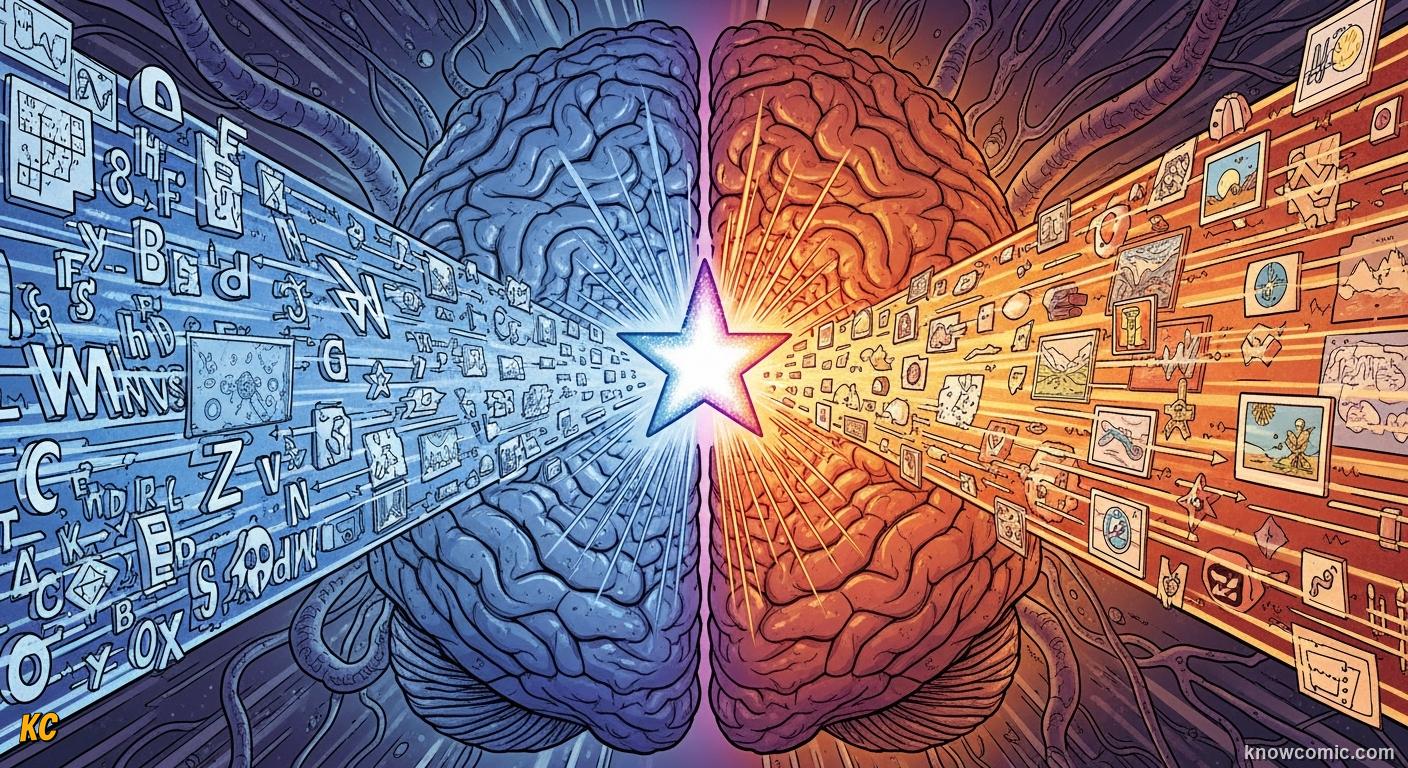
YOUR BRAIN HAS TWO MEMORY HIGHWAYS
In 1971, cognitive psychologist Allan Paivio proposed something radical: the mind stores information in
two completely separate systems. One handles language, words, and sounds. The other handles images,
space, and pictures. When you read plain text, only the verbal channel lights up. But when you see a picture AND a word
for the same idea, both channels fire at once and build two memory traces instead of one.
Comics are dual coding machines: every panel pairs an image with words, by design.
📖 PEER-REVIEWED EVIDENCE
Paivio (1971, 1986): Dual Coding Theory. Information encoded in both verbal and visual systems is recalled far more reliably than information encoded in only one, because there are two independent routes back to the memory.
DECODE!
VERBAL CHANNEL
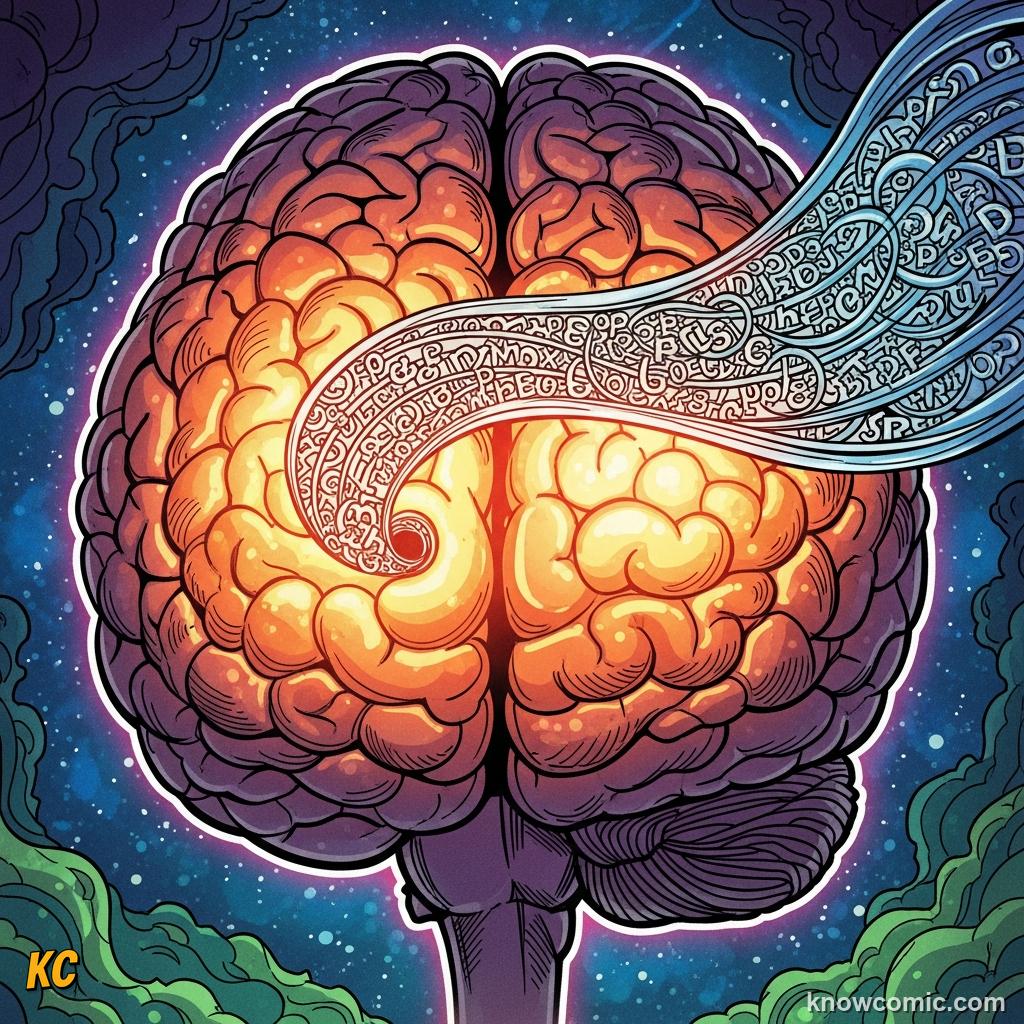
🗣️ Handles words, text, and speech
📖 Processes information step by step
⏳ Slower and easily overloaded
📖 Processes information step by step
⏳ Slower and easily overloaded
VISUAL CHANNEL
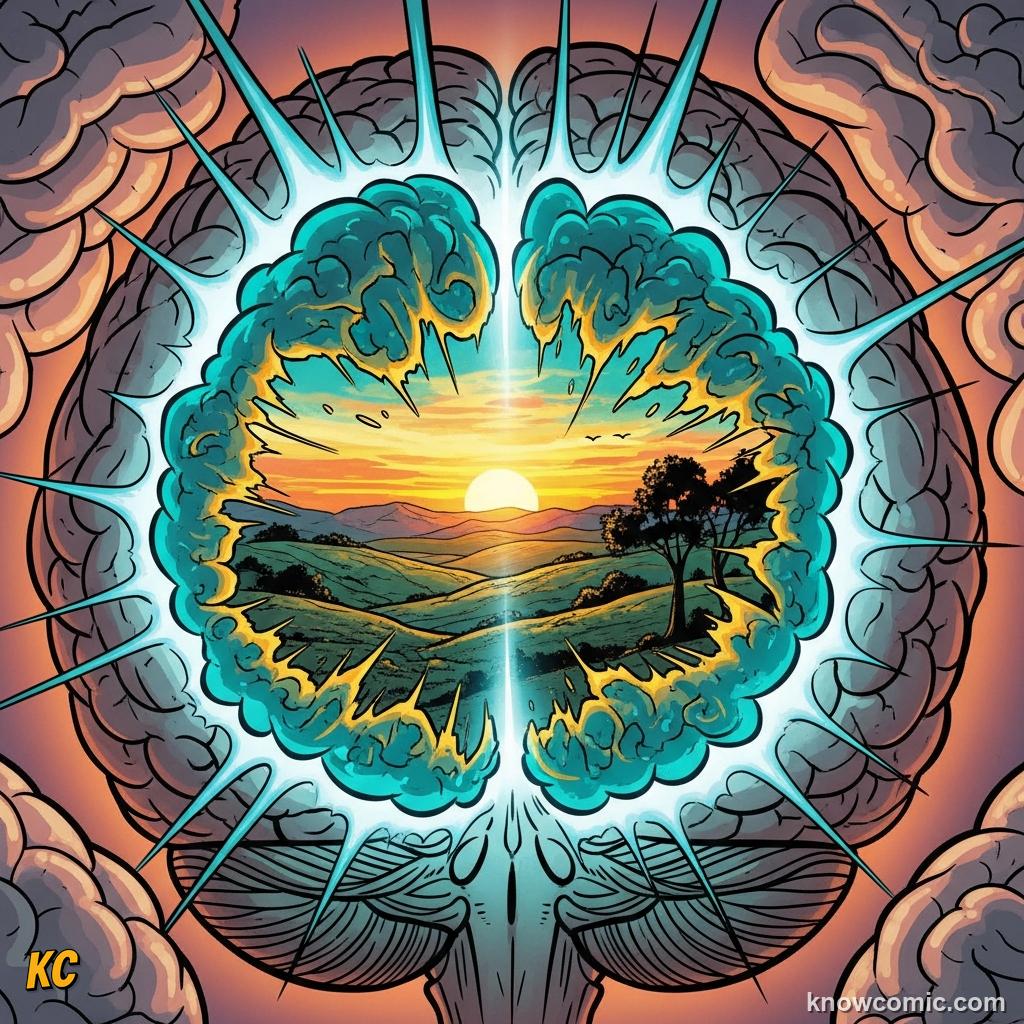
🖼️ Handles images, color, and space
⚡ Processes a whole scene instantly
🧲 Stores vivid, long-lasting memories
⚡ Processes a whole scene instantly
🧲 Stores vivid, long-lasting memories
PAGE 2 OF 4 — REASON TWO: THE PICTURE SUPERIORITY EFFECT
PICTURE SUPERIORITY EFFECT
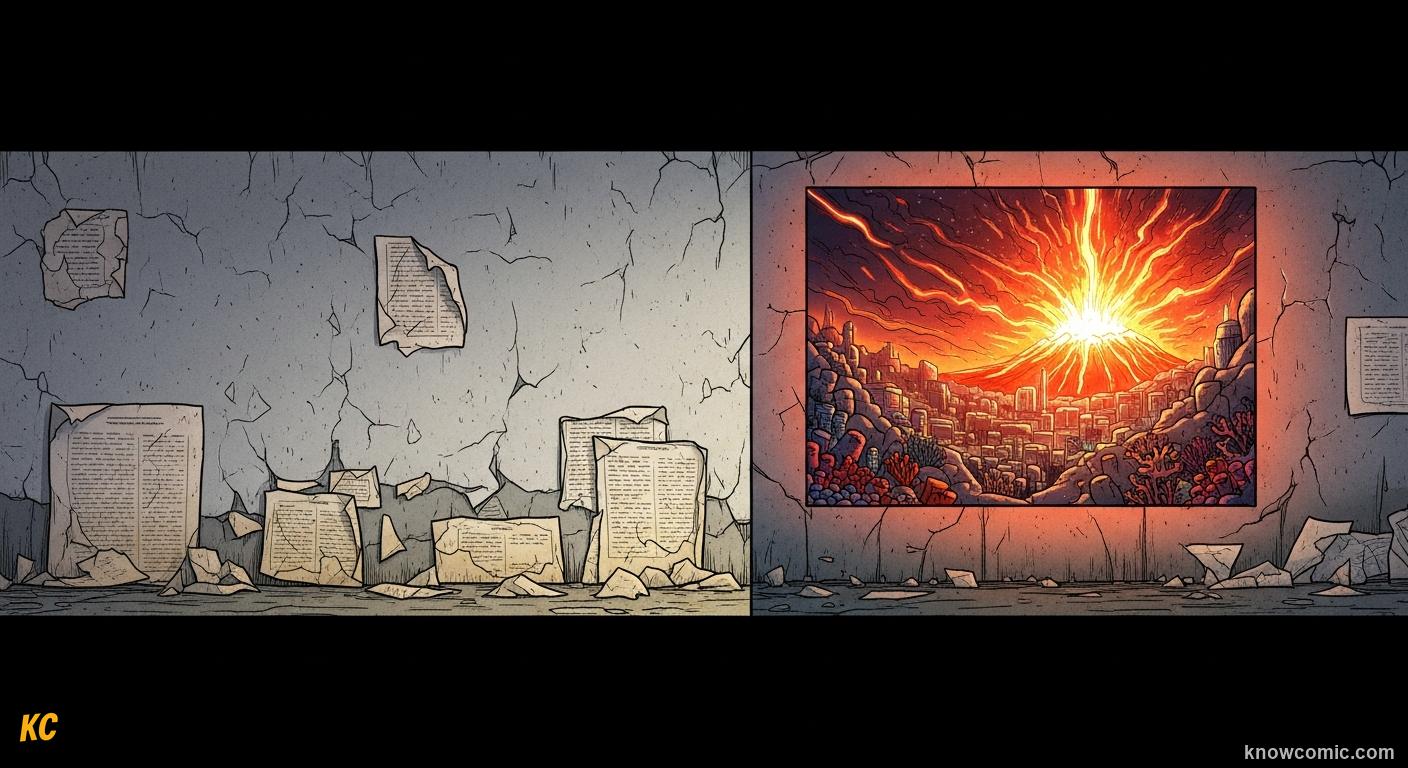
WE REMEMBER PICTURES. WE FORGET WORDS.
Here is one of the most reliable findings in all of memory science: pictures are remembered far better than words.
Hear a list of facts and three days later you will recall about 10%. Pair those same facts with pictures and recall jumps to
around 65%. The effect is so strong it has its own name, the Picture Superiority Effect, and it has been
confirmed for over fifty years. Our brains evolved to navigate a visual world long before writing existed,
so images get a deep, automatic priority that text simply cannot match.
📖 PEER-REVIEWED EVIDENCE
Standing (1973, Quarterly Journal of Experimental Psychology): people shown 10,000 pictures recognized them with around 83% accuracy days later. Nelson, Reed & Walling (1976) named and mapped the Picture Superiority Effect.
RECALL!
10% VS 65%
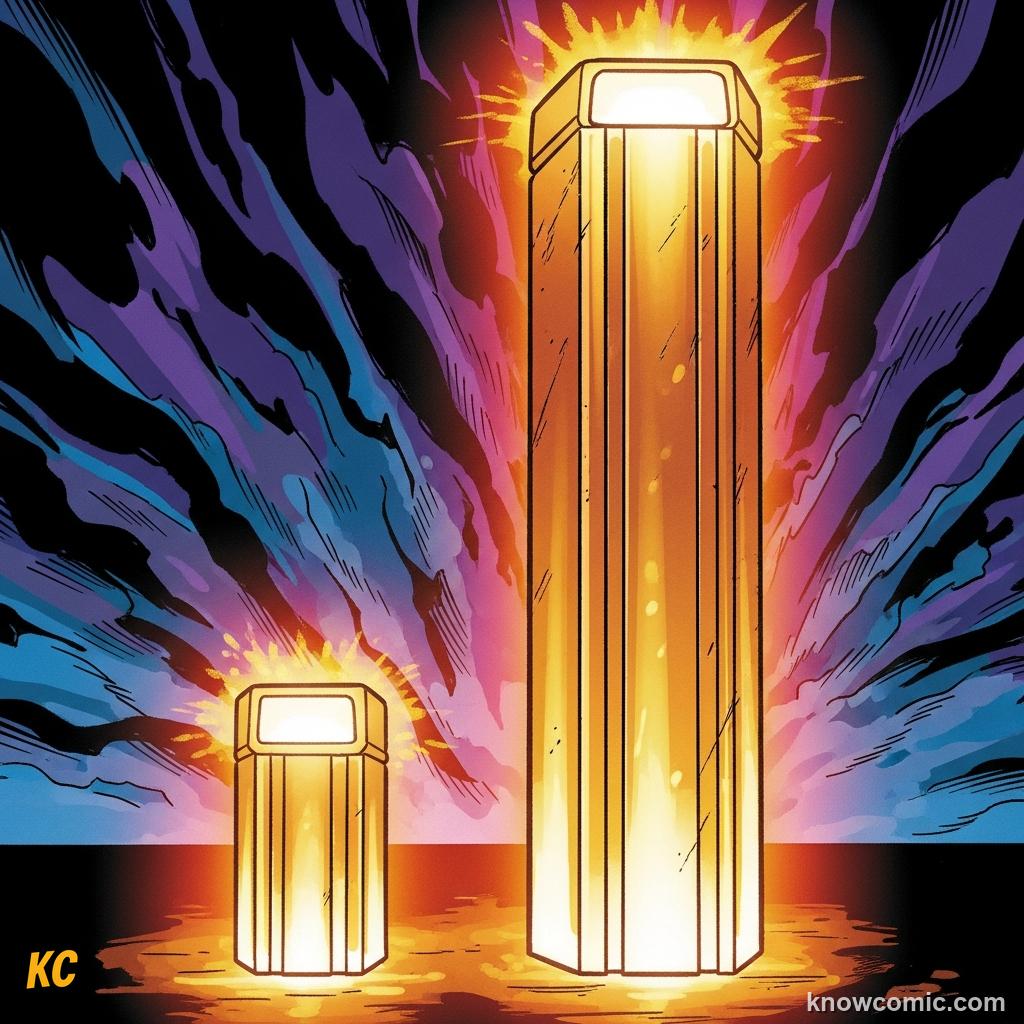
🗣️ Text alone: ~10% recalled after 3 days
🖼️ Text plus picture: ~65% recalled
📈 More than 6x stronger memory
🖼️ Text plus picture: ~65% recalled
📈 More than 6x stronger memory
10,000 IMAGES
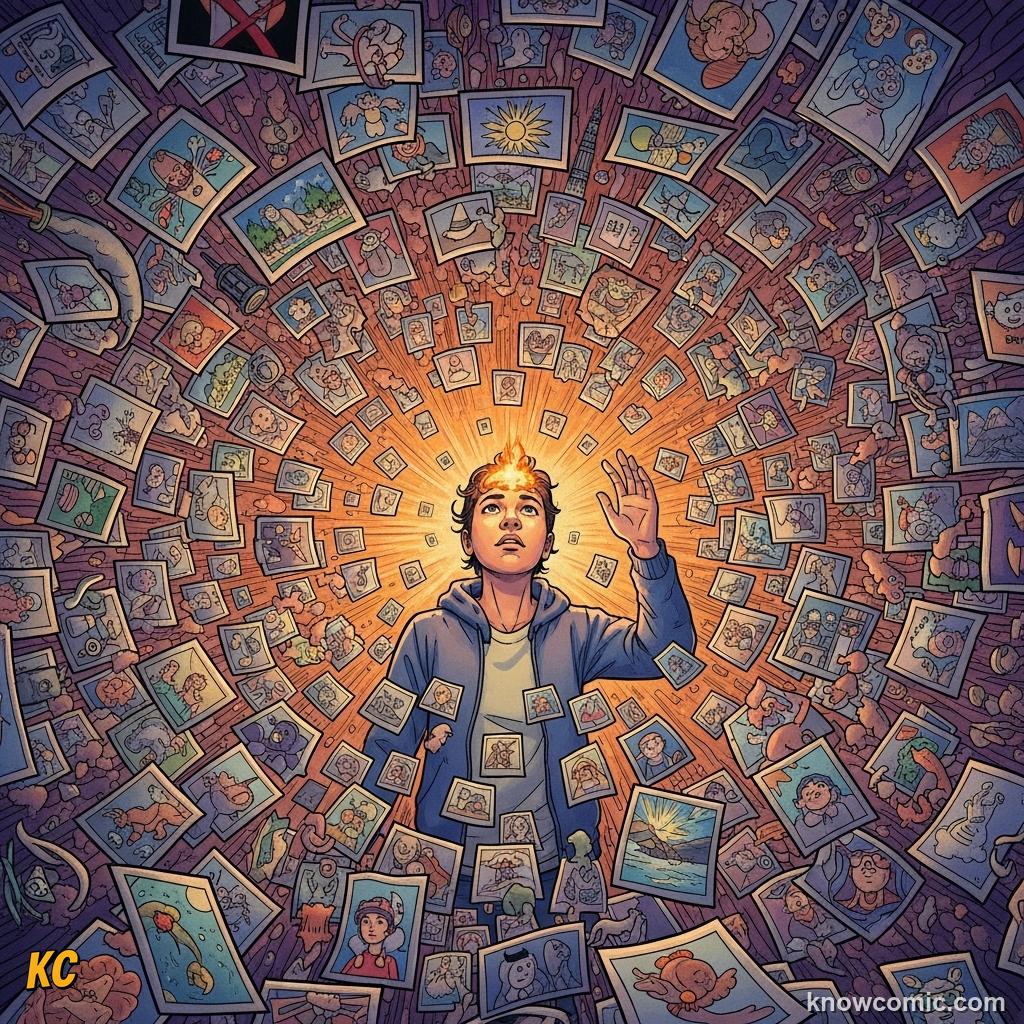
🧪 Standing showed people 10,000 pictures
✅ ~83% recognized days later
🧠 Visual memory is almost limitless
✅ ~83% recognized days later
🧠 Visual memory is almost limitless
WHY IT HAPPENS
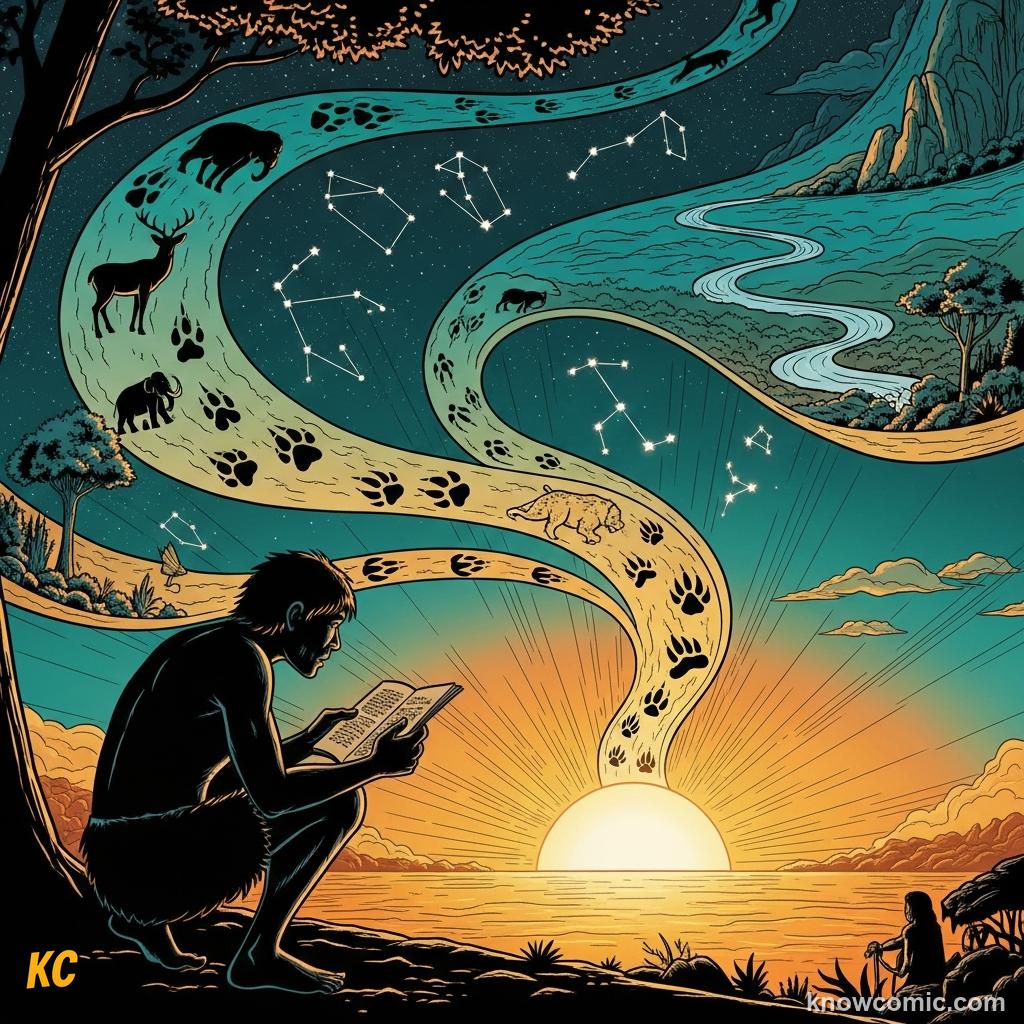
🌍 Brains evolved for a visual world
✍️ Writing is only ~5,000 years old
⚡ Images get automatic priority
✍️ Writing is only ~5,000 years old
⚡ Images get automatic priority
PAGE 3 OF 4 — REASON THREE: THE HIDDEN POWER OF SEQUENTIAL ART
PANEL TO PANEL
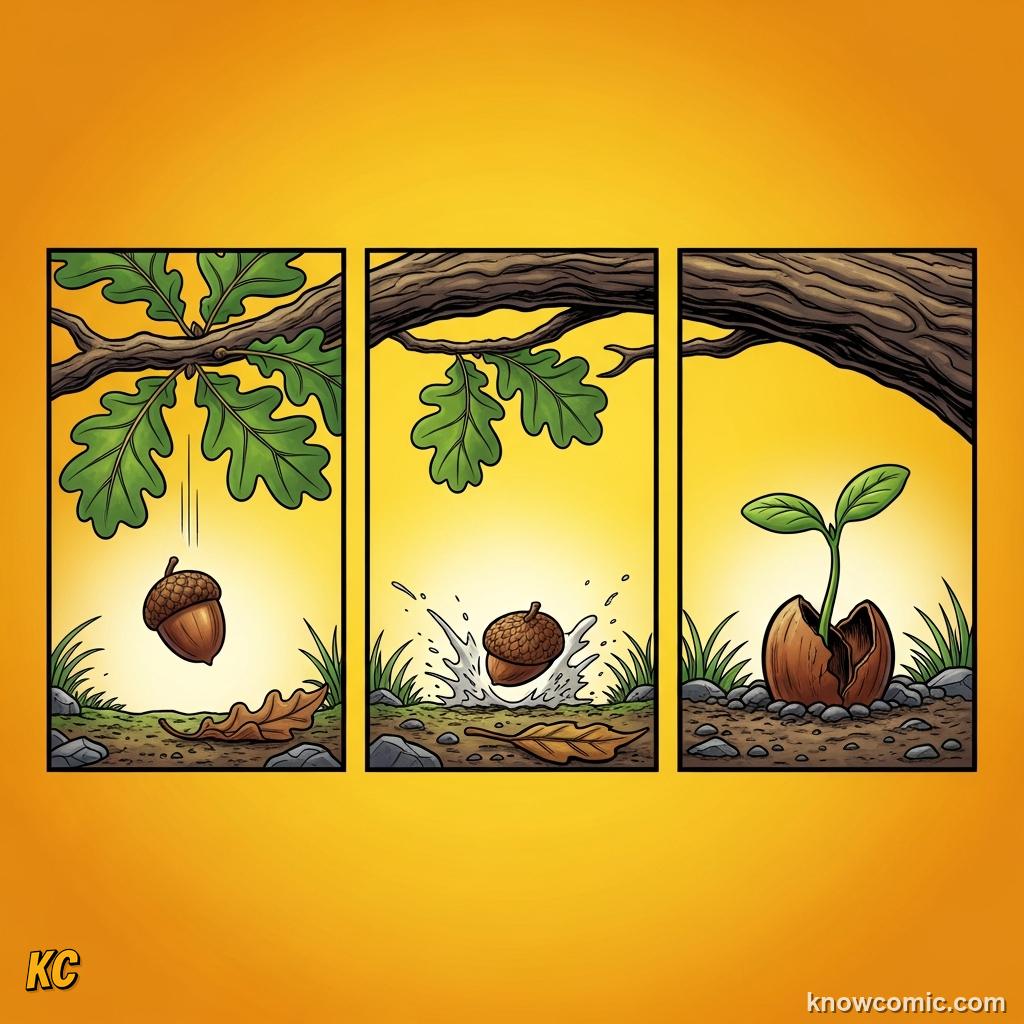
🎬 Panels break ideas into clear steps
➡️ Each panel is one bite-sized chunk
🧩 The order itself carries meaning
➡️ Each panel is one bite-sized chunk
🧩 The order itself carries meaning
CLOSURE
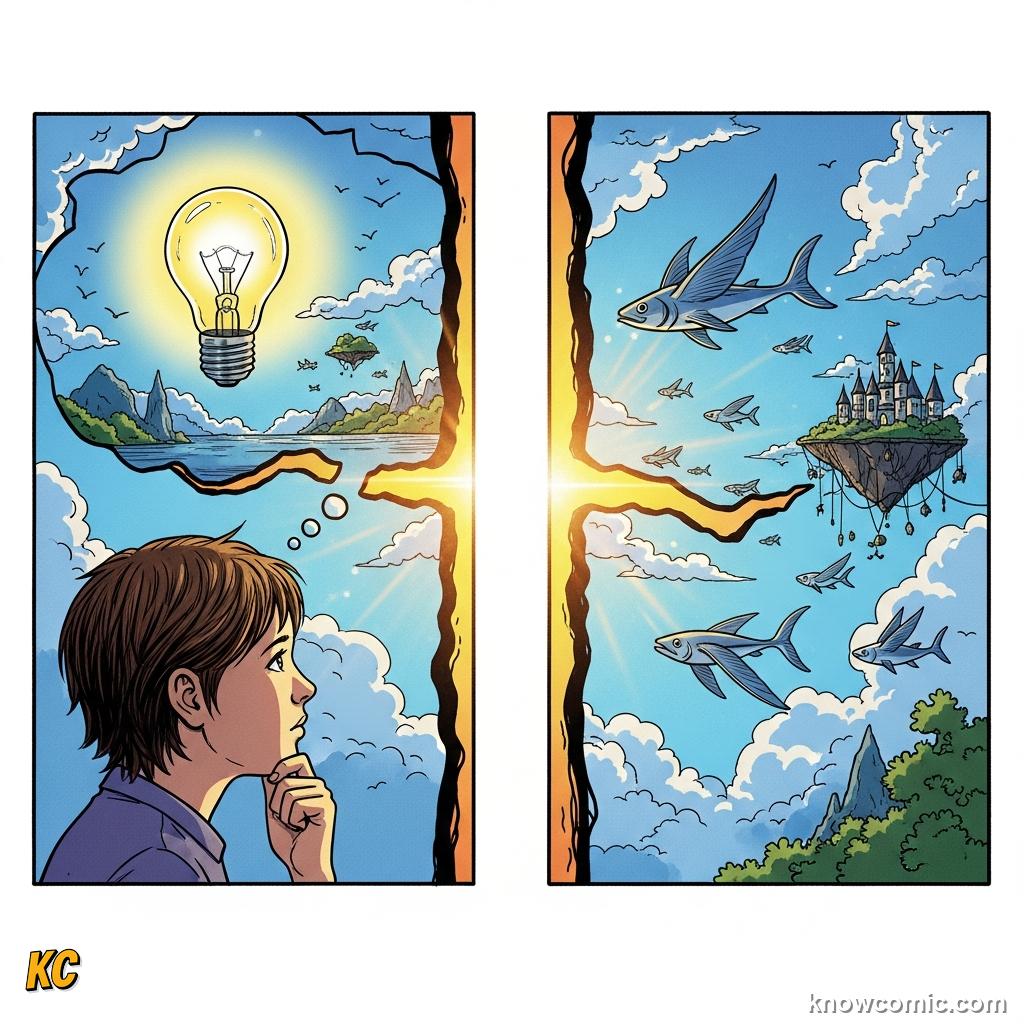
🌉 The gap between panels is the "gutter"
🧠 Your mind fills it in, this is closure
🙌 Active brains remember far more
🧠 Your mind fills it in, this is closure
🙌 Active brains remember far more
SEQUENTIAL ART
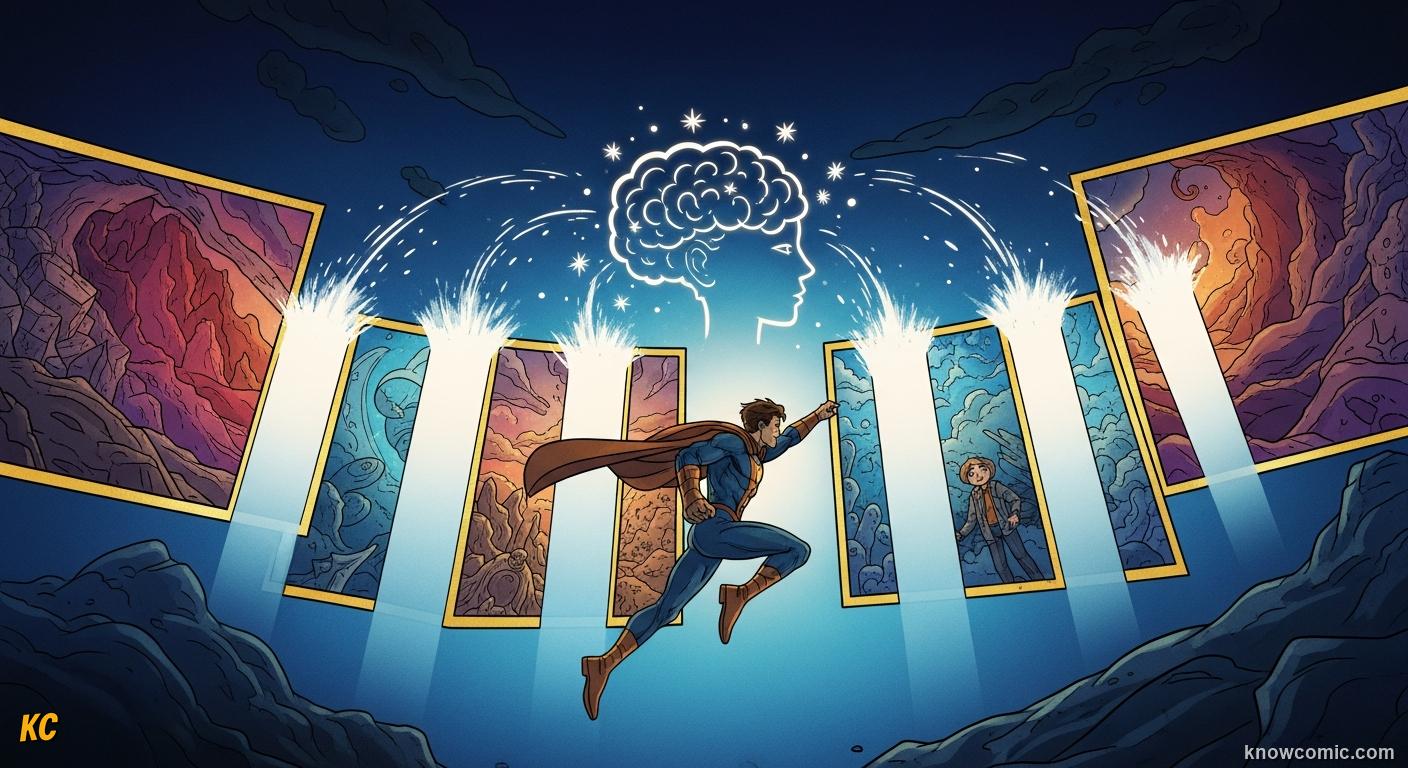
COMICS MAKE THE READER DO THE THINKING
In his classic book Understanding Comics (1993), Scott McCloud defined comics as
"sequential art" and revealed their secret weapon: the gap between panels, called the gutter.
The page never shows every moment. Instead, your brain leaps across each gap and fills in what happened,
a process McCloud called closure. That tiny act of mental participation turns reading into doing.
And the brain remembers what it actively builds far better than what it passively receives.
📖 THE SCIENCE OF ACTIVE LEARNING
Chi & Wylie (2014): the more actively learners engage with material, the deeper they understand it. Comics force "generative" processing, the reader constructs meaning between panels rather than just absorbing it.
CONNECT!
PAGE 4 OF 4 — WHY IT ALL ADDS UP TO BETTER LEARNING
COGNITIVE LOAD
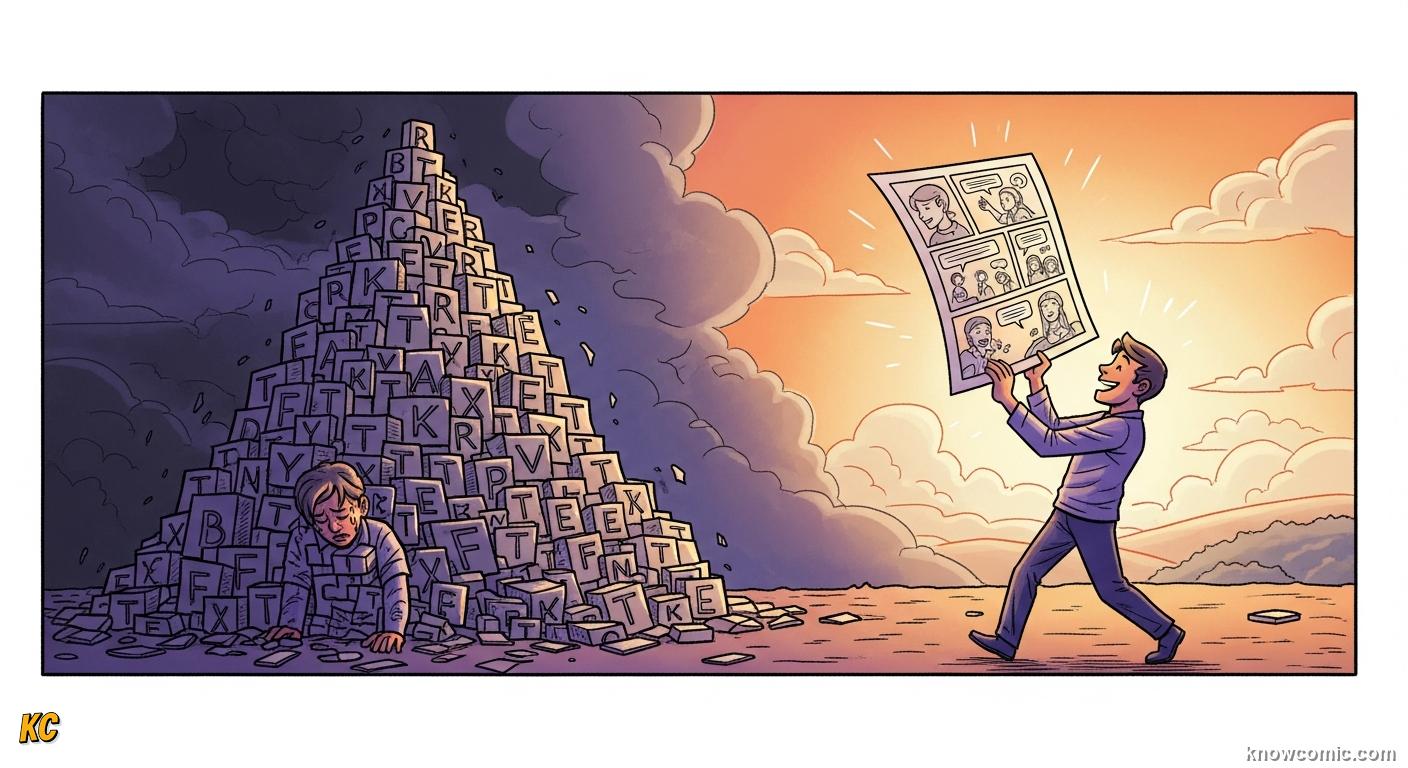
THREE FORCES, ONE UNFORGETTABLE RESULT
Put the three reasons together and you understand why comics are not just fun, they are
neurologically efficient. Dual coding builds two memory traces. The Picture Superiority Effect makes the
visual trace incredibly strong. Sequential art keeps the reader actively thinking. On top of that, comics lower
cognitive load: the picture carries information the words would otherwise have to spell out, so the brain
spends less effort decoding and more effort understanding. That is the real reason a child finishes a comic
and actually remembers it, and it is exactly the principle every
KnowComic
lesson is built on.
📖 PEER-REVIEWED EVIDENCE
Sweller (1988) Cognitive Load Theory + Mayer (2009) Multimedia Learning: well-designed words-plus-pictures reduce wasted mental effort and improve transfer test scores by up to 89% versus text alone.
STICK!
CHUNKING
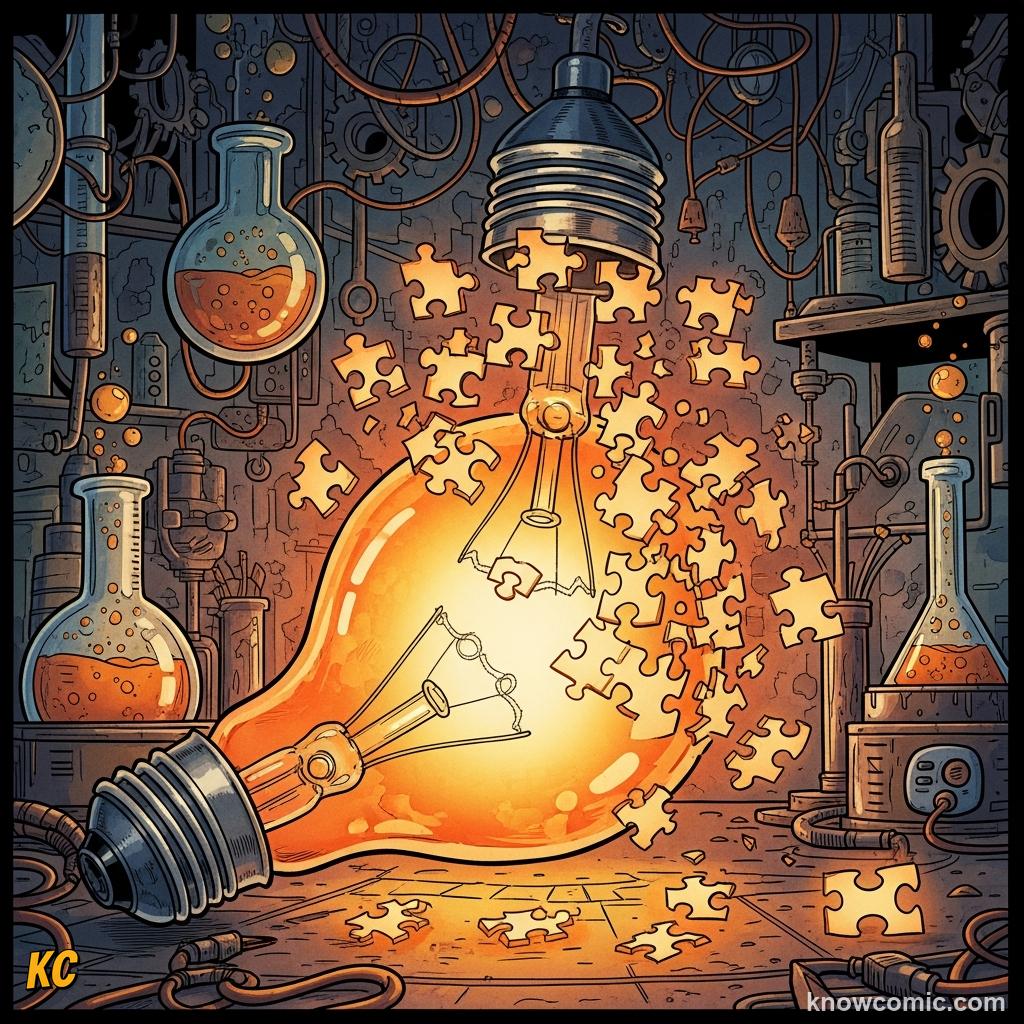
🧩 Panels chunk big ideas into pieces
🪜 One concept per panel, no overload
✅ Easier to follow, easier to keep
🪜 One concept per panel, no overload
✅ Easier to follow, easier to keep
EMOTION
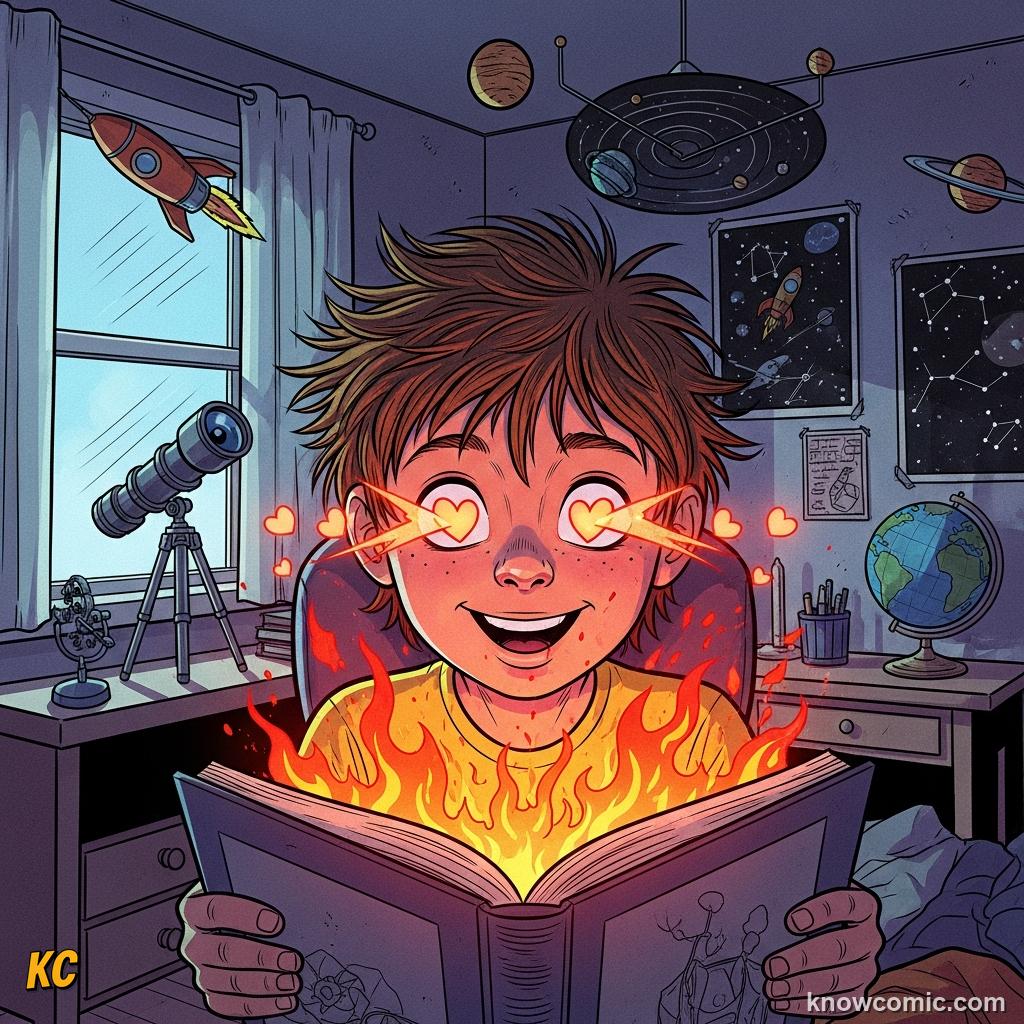
❤️ Characters create emotional hooks
⚡ Emotion tags memories as important
🧠 Tagged memories last much longer
⚡ Emotion tags memories as important
🧠 Tagged memories last much longer
THE PAYOFF
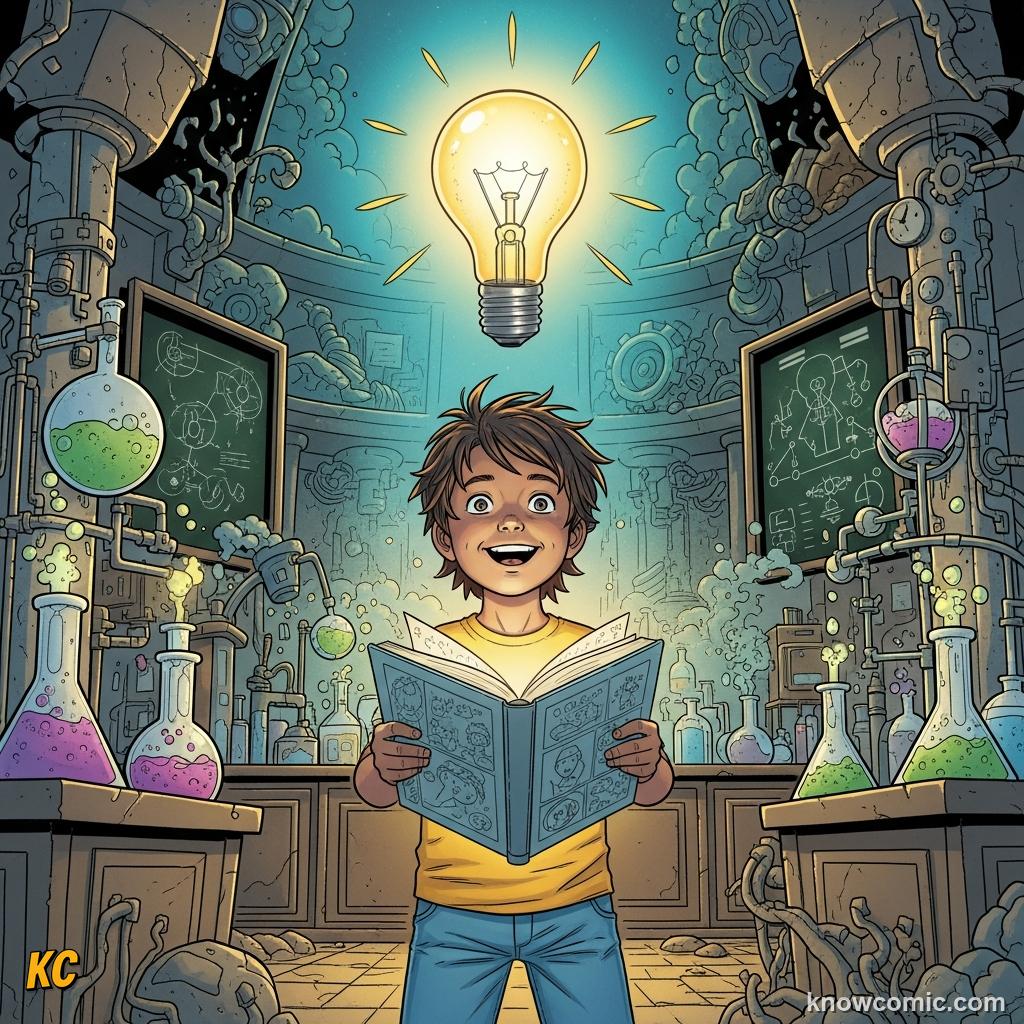
📚 Two channels + strong visuals + active reading
🪶 Lower mental effort, deeper understanding
🏆 Knowledge that actually sticks
🪶 Lower mental effort, deeper understanding
🏆 Knowledge that actually sticks
💥
EXPLORE KNOWCOMIC →
SEE THE SCIENCE IN ACTION
KnowComic turns real science into comics kids actually remember, dual coding, pictures and sequential art, on every page.
🧠 QUIZ TIME!
WHY COMICS WORK · 5 QUESTIONS
QUESTION 01
According to Allan Paivio's Dual Coding Theory, how does the mind store information?
QUESTION 02
What does the Picture Superiority Effect describe?
QUESTION 03
In Standing's 1973 study, roughly how accurately did people recognize 10,000 pictures they had seen days earlier?
QUESTION 04
In Scott McCloud's terms, what is "closure" in a comic?
QUESTION 05
How do comics help with "cognitive load" when learning?
0/5
LOADING...
No comments yet, be the first!