📖 100 Topics🆓 ALL FREE⏱️ 5 min per comic🧠 Quiz included
👟
BOOTS
Stud Engineering
→
⚙️
STUDS
Grip Science
→
📡
GPS
Track Every Step
→
🦶
INSOLE
Smart Sensors
→
🏆
WORLD CUP 2026
Tech Training
👟 BOOTS & WEARABLE TECH
TOPIC 53 · WORLD CUP 2026 · LEVEL 4 · SCIENCE & TECH
PAGE 1 OF 5 · ENGINEERED BOOTS
RACE CAR FEET

BOOTS BUILT LIKE MACHINES
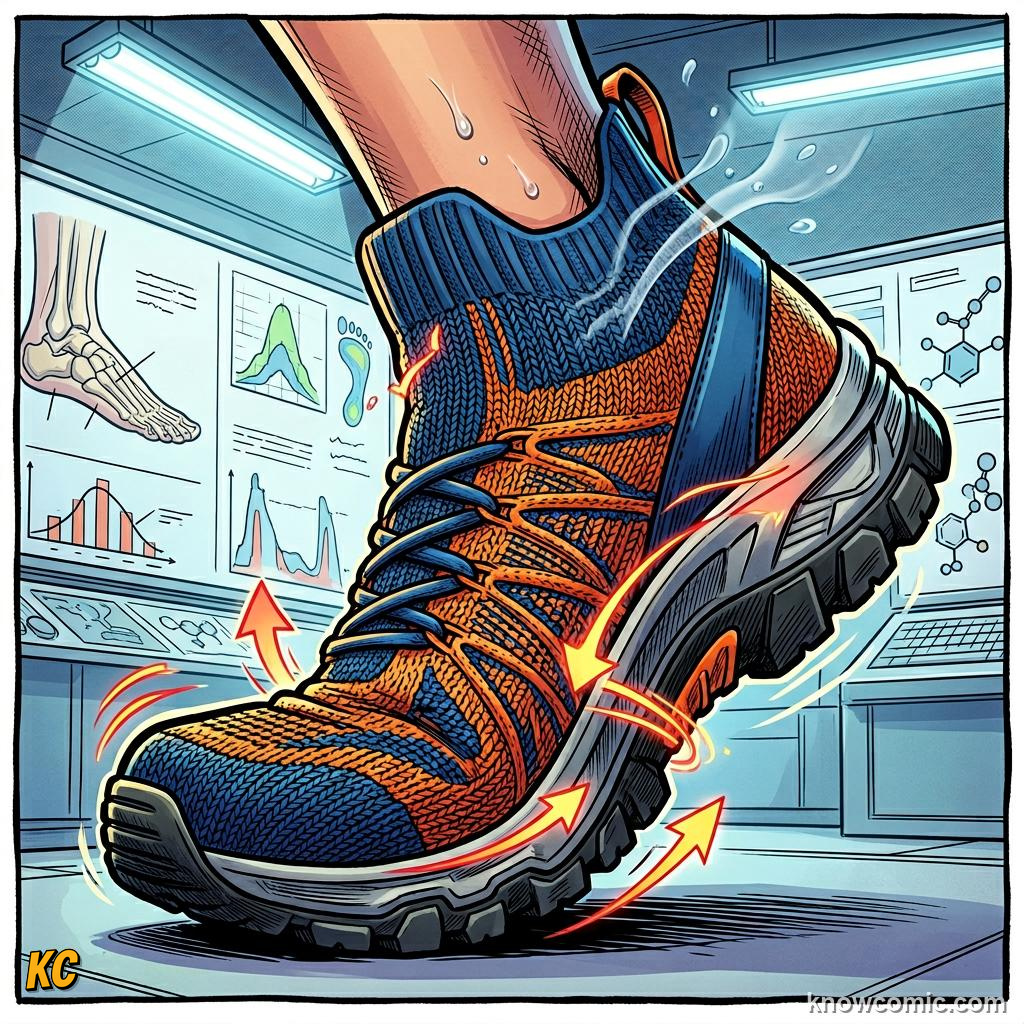
A World Cup boot is not just leather anymore. Engineers test materials in wind tunnels and biomechanics labs. The upper might use knitted fabric that wraps the foot like a sock. The sole plate could be carbon fibre, the same stuff in racing bikes, to snap energy back into every stride. Weight matters enormously. Shaving 20 grams off a boot lets a winger accelerate a fraction faster. That fraction wins races to the byline. Brands scan players' feet in 3D to build custom fits. Kangaroo leather was once king for softness. Now synthetic microfibres offer waterproof strength at half the weight. Stud patterns are mapped to pressure points. The forefoot needs grip for shooting. The heel needs stability for landing after headers. World Cup players receive prototype boots months before the tournament. They test them in training and send feedback to designers who tweak the next version. By kickoff, their boots are precision tools tuned to one pair of feet.
⚡ DID YOU KNOW?
Modern elite boots weigh about 180 to 220 grams each. That is lighter than a smartphone and engineered to survive ninety minutes of brutal punishment.
KICK!
WEIGHT
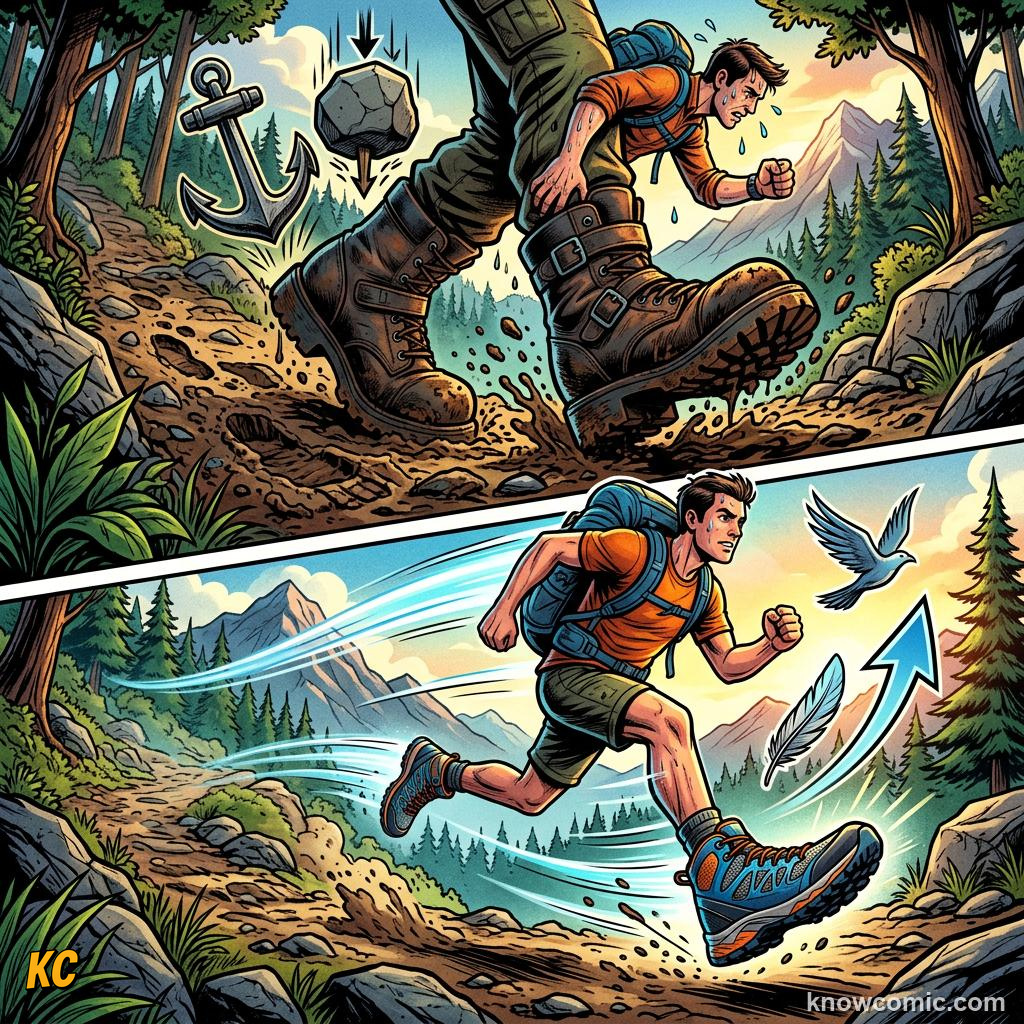
⚖️ Every gram affects speed
🪶 Lighter means faster feet
MATERIALS
🧵 Knit uppers hug the foot
🏎️ Carbon plates return energy
PAGE 2 OF 5 · STUD SCIENCE
GRIP LAB
STUDS THAT GRAB THE EARTH
Studs are the teeth of a football boot. Screw-in metal studs were once standard for muddy pitches. Modern boots use moulded plastic or TPU studs shaped by computer models. Firm-ground boots have shorter studs for dry summer grass. Soft-ground boots have longer studs for wet soil. Artificial turf needs dozens of tiny rubber studs to grip synthetic fibres without catching knees. Get it wrong and you slide into tackles or twist an ankle. Boot labs test stud layouts on force plates that measure grip and rotation. Hexagonal studs rotate smoothly. Chevron shapes dig in on acceleration. Bladed studs cut into firm ground for explosive starts. World Cup squads pack multiple boot types because venues vary from Texas heat to rainy coastlines. Groundsmen report pitch conditions daily. Equipment managers swap studs before warm-up. A striker heading for a volley needs the forefoot planted firm. A defender backpedalling needs heel grip. Stud science turns millimetres of plastic into the difference between a goal and a slip.
⚡ STUD TYPES
Firm-ground boots use 10 to 14 studs about 10 to 13 mm long. Soft-ground boots can have 6 longer studs up to 18 mm for muddy World Cup pitches.
GRIP!
FIRM GROUND
☀️ Short studs for dry grass
🏟️ Default for summer World Cups
🏟️ Many tiny studs on artificial turf
🛡️ Protects knees from grip burns
PAGE 3 OF 5 · GPS VESTS
DISTANCE
📏 Kilometres covered per session
🗺️ Heat maps show positioning
SPEED
⚡ Top speed on every sprint
📈 Acceleration measured in seconds
UNDER THE SHIRT
THE GPS VEST REVOLUTION
Hidden under the training bib, a GPS vest the size of a matchbox tracks everything. It uses satellites and local beacons around the pitch to log position ten times per second. Coaches see live dashboards showing who is working hardest and who is coasting. Total distance, sprint count, top speed, and deceleration forces all stream to a tablet. Heart-rate straps add another layer. If a player's heart rate stays high but sprint count drops, fatigue or illness may be brewing. World Cup camps run on this data. Managers rotate squads based on numbers, not gut feeling. A midfielder who covered 12 km yesterday might rest today. A winger who hit only 80 percent of usual top speed gets a lighter session. The technology started in elite clubs and now reaches national teams at every level. Players joke about Big Brother watching, but the data keeps them healthy. It is the difference between pushing too hard and peaking at the right moment in July 2026.
⚡ GPS ACCURACY
Modern GPS vests are accurate to about 10 centimetres on the pitch. They can tell whether a player drifted wide or held the centre channel.
TRACK!
PAGE 4 OF 5 · SMART INSOLES
SENSORS IN SHOES
TECH INSIDE THE BOOT
The next frontier is inside the boot itself. Smart insoles slip under the foot and measure pressure with every step. They reveal if a player favours one leg after a knock. They count touches, passes, and shot power from the force of impact. Some prototypes track balance and centre of gravity during headers. Wearable chips in shin guards monitor kick velocity. All this data feeds machine-learning software that spots injury risk before pain arrives. If a player's landing force shifts 5 percent to the left knee for three sessions, physios investigate. World Cup squads experiment with these tools in closed training. FIFA rules ban electronic devices during official matches for now, but training data still shapes selections. A player who looks sharp on video might show declining sprint power in the numbers. Coaches trust the sensors when choosing who starts a knockout game. Boot brands partner with tech companies to merge footwear and analytics into one package. Your feet become data points on the road to the World Cup.
⚡ PRESSURE MAPS
Smart insoles create colour maps of foot pressure. Hot spots show where studs push hardest and where fatigue changes a player's stride pattern.
SENSE!
INSOLES
🦶 Pressure sensors in every step
⚖️ Spots uneven weight distribution
LOAD
📊 Training load tracked daily
🚨 Early warning before injury
AI
🤖 Software spots fatigue patterns
📅 Plans rest before World Cup games
PAGE 5 OF 5 · TRAINING OF THE FUTURE
WORLD CUP 2026
BODY TECH MEETS THE BEAUTIFUL GAME
World Cup 2026 squads will arrive with boots tuned to North American pitches and vests full of training data from months of preparation. The fusion of footwear engineering and wearable sensors has changed football forever. Players are no longer trained on feel alone. Every sprint, every pivot, every kilometre is logged and analysed. Boots deliver speed and grip. Vests deliver workload truth. Insoles deliver injury warnings. Together they form a digital twin of the athlete. Managers pick starting elevens with spreadsheets beside tactics boards. The romantic idea of a coach spotting talent in the park still exists, but the elite game runs on numbers too. Fans see the magic on screen. Behind the scenes, engineers and data scientists built that magic one stud and one sensor at a time. The future might bring GPS in match kits and smart balls that measure spin. For now, the revolution lives in training grounds where the next generation learns that boots and vests are as important as ball control. Technology on the body is here to stay.
⚡ WORLD CUP 2026
National teams now employ performance analysts who translate boot and GPS data into daily training plans. Tech literacy is part of every modern squad.
TECH!
DATA
📱 Coaches read live dashboards
🎯 Training tailored to each player
REMEMBER
👟 KEY FACTS
Modern boots use carbon plates, knit uppers, and stud layouts tuned to each pitch. GPS vests and smart insoles track distance, speed, and pressure. World Cup 2026 training runs on body tech data.
⚙️ Studs match the ground type
📡 GPS logs every training step
🏆 Tech builds World Cup winners
🧠 QUIZ TIME!
BOOTS & WEARABLE TECH · 5 QUESTIONS
QUESTION 01
What material is sometimes used in boot sole plates for energy return?
QUESTION 02
Why do players choose different stud lengths for different pitches?
QUESTION 03
Where do players wear GPS tracking devices during training?
QUESTION 04
What do smart insoles measure inside a boot?
QUESTION 05
How do coaches use GPS training data at a World Cup?