📖 100 Topics🆓 ALL FREE⏱️ 5 min per comic🧠 Quiz included
☀️
HEAT
Summer Sun
→
💧
HYDRATE
Water Breaks
→
🌧️
RAIN
Slick Pitch
→
💨
WIND
Ball Flight
→
🏆
WORLD CUP 2026
Weather Tactics
☀️ WEATHER & THE GAME
TOPIC 52 · WORLD CUP 2026 · LEVEL 4 · SCIENCE & TECH
PAGE 1 OF 5 · SUMMER HEAT
BURNING PITCH
THE SUN AS OPPONENT
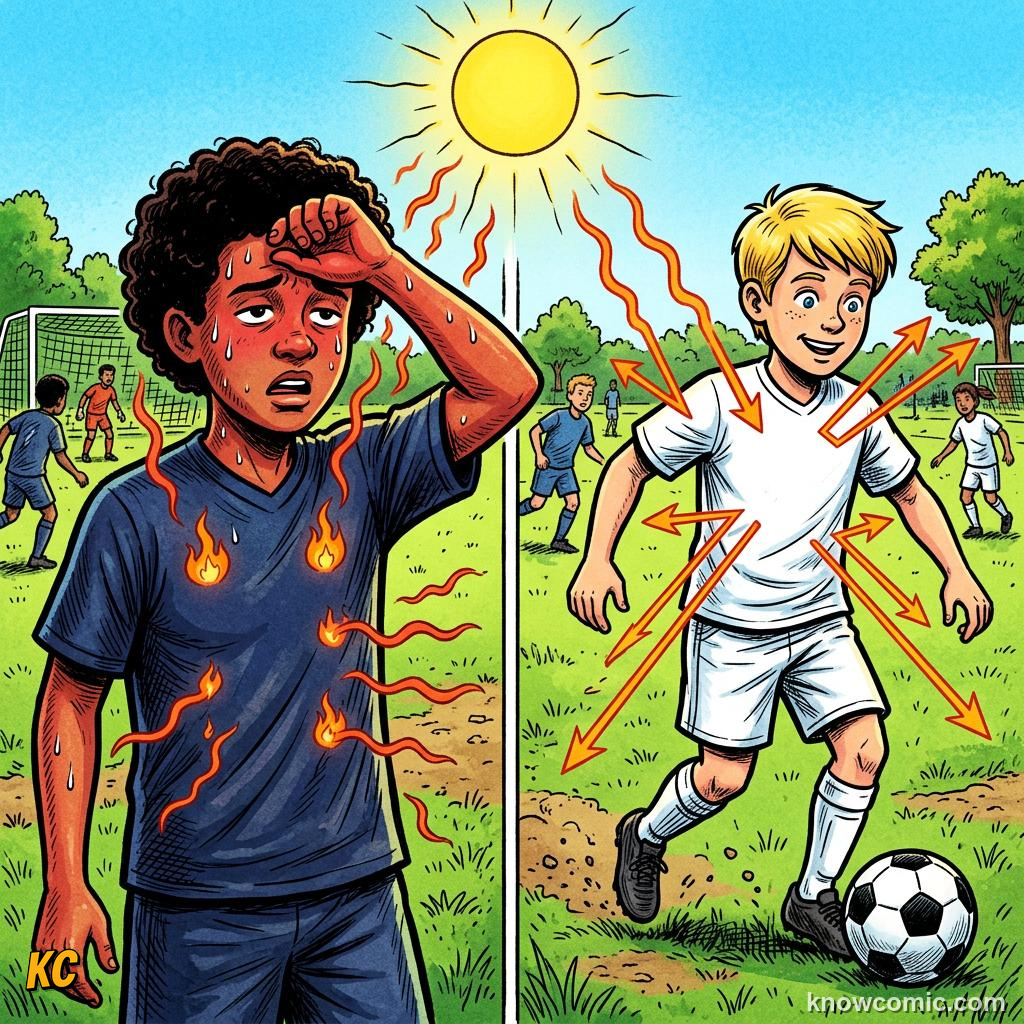
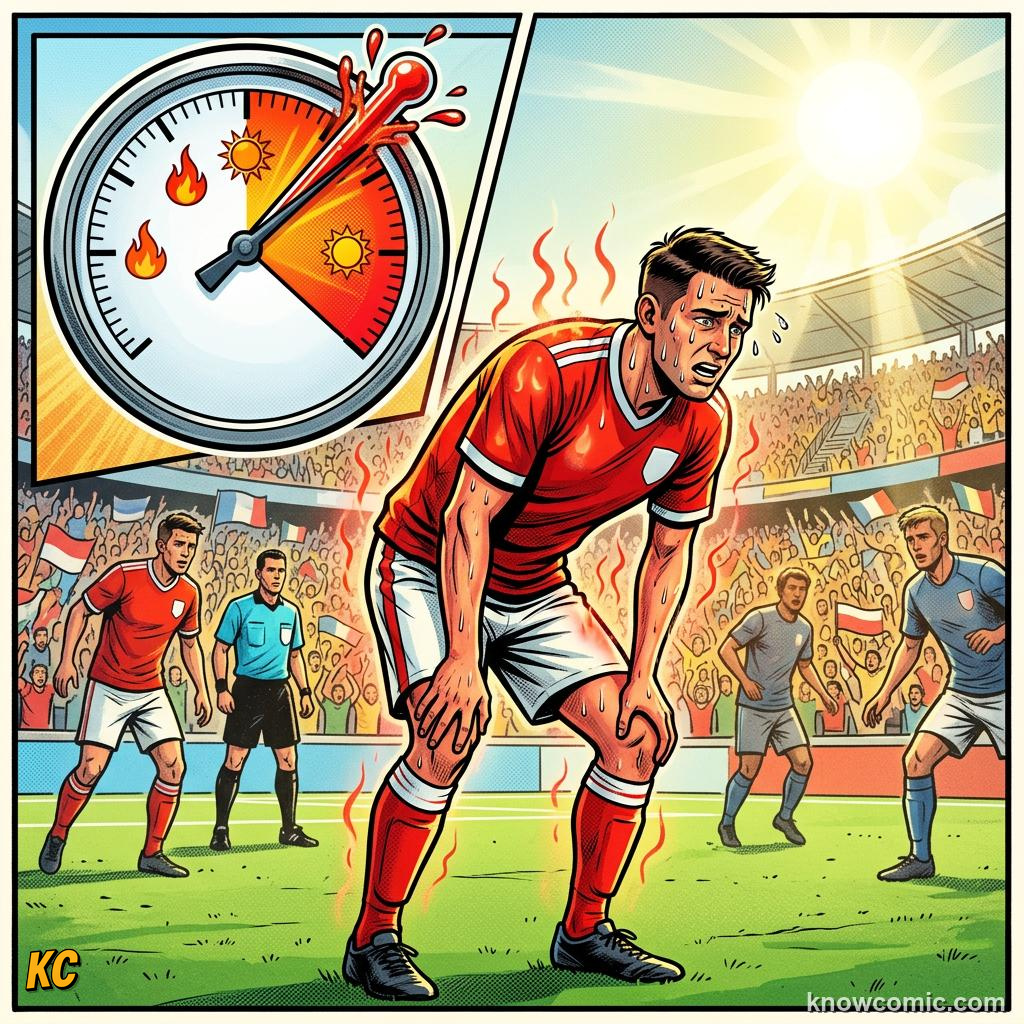
World Cup 2026 kicks off in June across the United States, Mexico, and Canada. Stadium temperatures in Texas, California, and Mexico City can climb past 35 degrees Celsius. On the pitch it feels even hotter. Dark jerseys absorb heat. Artificial turf radiates warmth back at players' feet. The human body cools itself by sweating, but in extreme heat sweat cannot evaporate fast enough. Heart rate climbs. Reaction time slows. Sprints feel like running through soup. Coaches notice it first in the second half when pressing drops and mistakes rise. Heat does not just tire players. It changes the entire match. Teams from cooler climates struggle while squads used to tropical conditions thrive. Sports scientists measure core body temperature with ingestible pills or ear sensors. When a player hits danger zones, they must cool down or risk heat exhaustion. At a summer World Cup, the weather is not background noise. It is a tactical factor as real as the opposing striker.
⚡ DID YOU KNOW?
A footballer can lose two to three litres of sweat in a hot match. That is more than a large bottle of soda poured out of the body in ninety minutes.
HOT!
TEMPERATURE
🌡️ Pitch temps exceed 35°C
☀️ Sun drains sprint power
SWEAT
💦 Litres lost per match
🧂 Electrolytes must be replaced
PAGE 2 OF 5 · COOLING BREAKS
HYDRATION STOPS
WATER ON THE WHISTLE
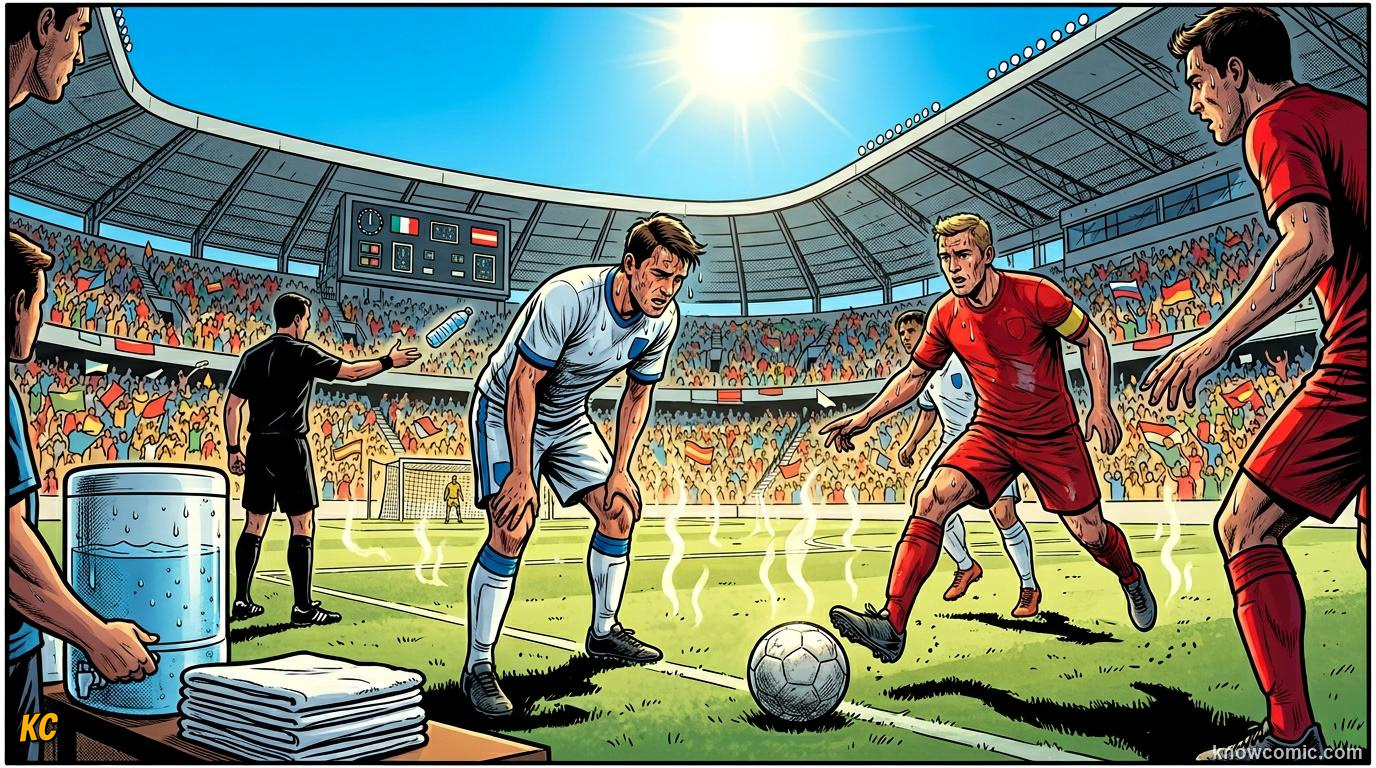
FIFA introduced cooling breaks at the 2014 Brazil World Cup when players battled jungle humidity. If the temperature hits 32 degrees Celsius and humidity is high, the referee can stop play around the 30th and 75th minutes for a three-minute break. Players rush to sideline stations stocked with ice towels, cold drinks, and misting fans. It is not a full timeout like basketball, but it saves lives. Heat stroke can be fatal if untreated. Cooling breaks also shift tactics. Managers use the pause to deliver instructions while players gulp electrolyte drinks. Teams that prepare hydration plans gain an edge. Sports drinks contain sodium and potassium to replace what sweat steals. Plain water alone can dilute blood salts and cause cramps. Some squads pre-cool with ice vests before kickoff. Others schedule lighter training on heatwave days. World Cup 2026 will likely see more cooling breaks than any tournament before it. The schedule spans cities from cool Vancouver to scorching Dallas. Smart teams treat hydration like a weapon.
⚡ COOLING RULE
Cooling breaks trigger when the Wet Bulb Globe Temperature exceeds 32°C. That index combines heat, humidity, wind, and sun radiation into one safety number.
COOL!
ICE TOWELS
🧊 Wrapped around neck and wrists
❄️ Cools blood near the skin
ELECTROLYTES
🧂 Sodium stops muscle cramps
🍌 Potassium from fruit helps too
PRE-COOL
🧥 Ice vests before kickoff
🌡️ Lowers core temperature early
PAGE 3 OF 5 · RAIN AND THE PITCH
SLICK SURFACE
💧 Water reduces friction
⚽ Ball skids faster on wet grass
SLIDE TACKLES
🛝 Players glide extra metres
⚠️ Timing tackles gets harder
WET CONDITIONS
WHEN RAIN CHANGES EVERYTHING
Rain transforms football physics. Water sits on grass blades and creates a thin film between boot studs and soil. The ball rolls faster and farther because friction drops. Long passes skid like hockey pucks. Goalkeepers struggle with diving because wet gloves lose grip. Shots that bounce before the keeper can skip unpredictably. Players adjust instantly or pay the price. Short passing becomes safer than lofted balls that accelerate on landing. First touch must be softer or the ball races away. Slide tackles travel further, which looks spectacular but risks missing the ball entirely. Ground staff work miracles at World Cups. Drainage systems under the pitch suck water away within minutes. Covers protect the centre circle before kickoff. Still, sudden summer storms in North America can drench a stadium in minutes. Teams that practise in rain gain confidence. Others panic when the sky opens. Some of football's greatest upsets happened in mud and rain when the favourite's technical game fell apart.
⚡ WET BALL
A soaked match ball weighs about 20 percent more than a dry one. Heavier balls fly differently and sting bare heads on rainy headers.
WET!
PAGE 4 OF 5 · WIND AND TACTICS
INVISIBLE FORCE
PLAYING INTO THE GALE
Wind is the weather factor coaches study most before kickoff. A strong headwind kills long shots and forces keepers to adjust goal kicks. Crosses balloon and drift off target. Teams switch ends at halftime, so the manager plans two different game plans. Attack the wind in the first half by keeping the ball on the ground. Save aerial play for the second half when you shoot with the wind at your back. Corner kicks become chess moves. Inward-swerving corners need less power with a helping breeze. Outfield players mark tighter because loose balls travel farther. Stadium design matters too. Open-roof venues like Dallas create swirling gusts. Closed roofs block wind but trap heat. Altitude adds another layer. Mexico City sits 2,240 metres above sea level where the air is thinner and balls fly faster. Players gasp for oxygen they are used to at sea level. World Cup 2026 mixes coastal humidity, desert dryness, mountain altitude, and prairie wind. The smartest managers build weather into every team talk. Football is not played in a vacuum. It is played under whatever sky the calendar delivers.
⚡ ALTITUDE
At Mexico City altitude, the ball travels about 5 percent farther through thinner air. Players also fatigue faster because each breath carries less oxygen.
WIND!
HEADWIND
🌬️ Long balls fall short
🎯 Keep passes low and sharp
TAILWIND
🚀 Shots carry extra distance
⏰ Save set pieces for second half
TACTICS
📋 Two plans for each half
🧠 Weather shapes every decision
PAGE 5 OF 5 · WEATHER WINNERS
WORLD CUP 2026
MASTER THE ELEMENTS
The 2026 World Cup will test squads like no tournament before. Heat in southern cities demands rotation and hydration discipline. Rain in coastal venues rewards quick passing and brave goalkeepers. Wind across open stadiums forces managers to rethink set pieces. Altitude in Mexico punishes teams that fly in the day before kickoff. Acclimatisation camps become secret weapons. Some nations will train in hot climates for weeks before arrival. Others bring their own nutritionists and meteorologists to read forecasts hour by hour. Kit choices matter too. Light-coloured shirts reflect sun. Breathable fabric wicks sweat faster. Extra studs grip wet turf. Fans watching on television might not notice, but players feel every degree and every gust. History shows weather shapes champions. Brazil mastered humidity at home in 2014. Italy defended brilliantly in rain-soaked battles. The team that adapts fastest in 2026 gains a silent advantage. The ball is the same. The rules are the same. But the sky above changes everything.
⚡ WORLD CUP 2026
Matches span 16 host cities from sea level to 2,240 metres altitude. No team can prepare for every condition, so flexibility wins.
Summer heat drains players and triggers cooling breaks. Rain makes the ball skid faster on slick grass. Wind and altitude change passing, shooting, and tactics. World Cup 2026 teams must adapt to every sky.
💧 Hydration breaks save players
🌧️ Wet pitches speed the ball
🏆 Weather picks silent winners
🧠 QUIZ TIME!
WEATHER & THE GAME · 5 QUESTIONS
QUESTION 01
When can a referee call a cooling break during a match?
QUESTION 02
How does rain affect the ball on a grass pitch?
QUESTION 03
Why do electrolyte drinks help players in hot matches?
QUESTION 04
How should teams use wind advantage across two halves?
QUESTION 05
Why is altitude a challenge at venues like Mexico City?