🎤 PRESS CONFERENCES & MEDIA
PAGE 1 OF 5 · THE MEDIA ROOM
UNDER THE LIGHTS
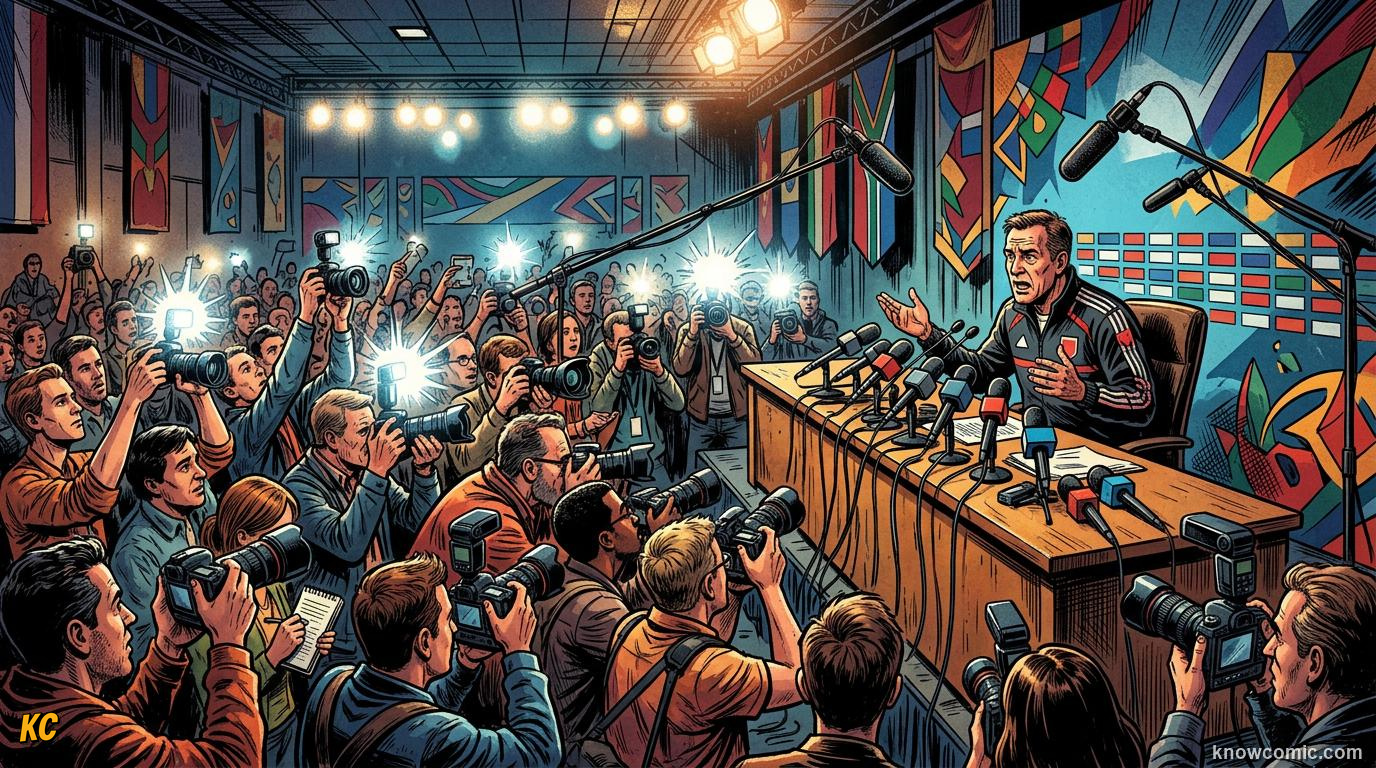
WHAT IS A PRESS CONFERENCE?
A World Cup press conference is where coaches and players speak to journalists before and after matches. FIFA sets strict rules about timing and who must attend. The room buzzes with cameras, microphones, and reporters from every continent typing fast on laptops. A coach sits behind a table covered in sponsor logos, water bottles, and a team badge. Journalists raise hands and ask questions in many languages, often through interpreters. Answers travel around the world in seconds. A calm sentence about team spirit becomes a newspaper headline. A frustrated sigh becomes a viral clip. Press conferences are part of the show, but they are also part of the job. Players learn media training to stay polite under pressure. Coaches rehearse messages with press officers sitting beside them. Some questions are about tactics. Others probe injuries, locker-room mood, or controversial referee decisions. Every word is recorded. At World Cup 2026, with more teams and more stories, the media circus grows louder. Speaking well can unite a nation. Speaking badly can start a storm before kickoff.
⚡ DID YOU KNOW?
FIFA requires the losing coach and captain to attend a post-match press conference within 30 minutes of the final whistle. No hiding after defeat.
SPEAK!
JOURNALISTS
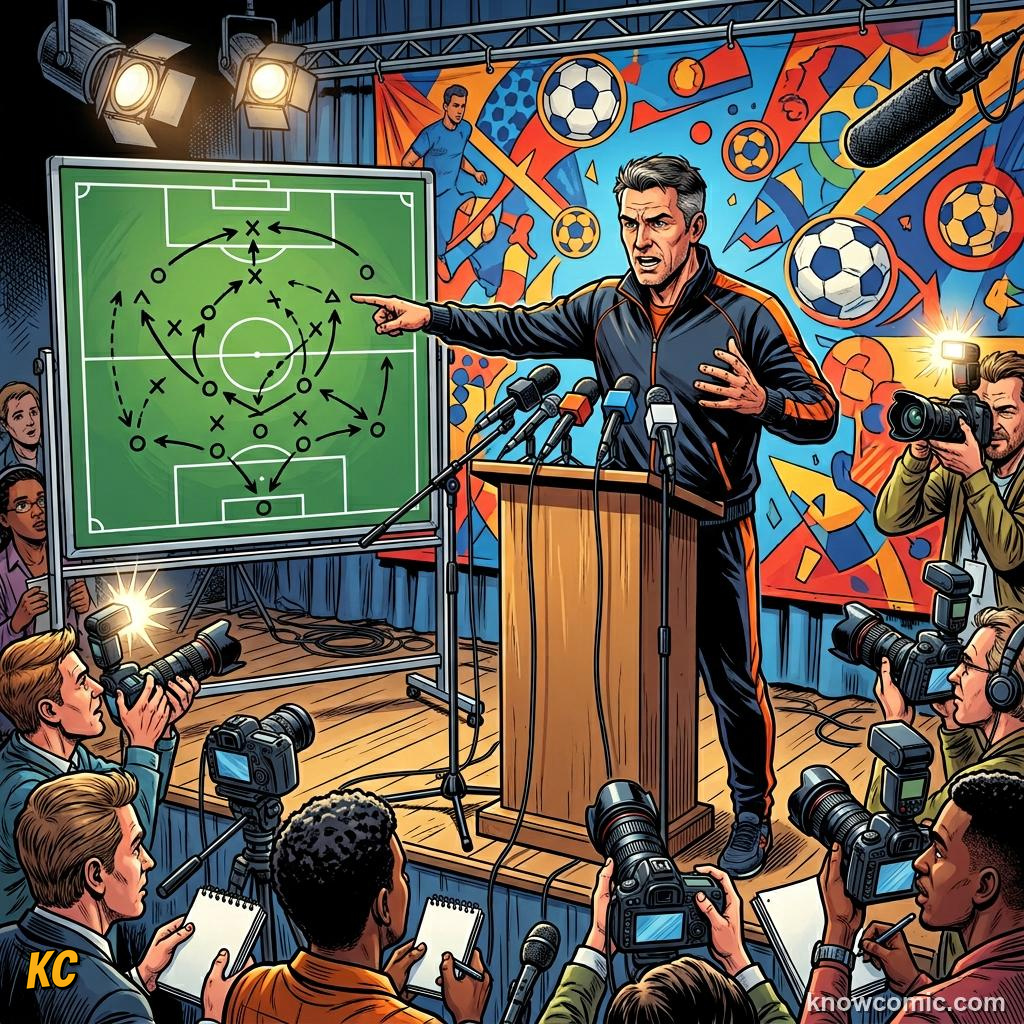
📝 Hundreds of reporters attend
🌐 Questions in many languages
🌐 Questions in many languages
RULES
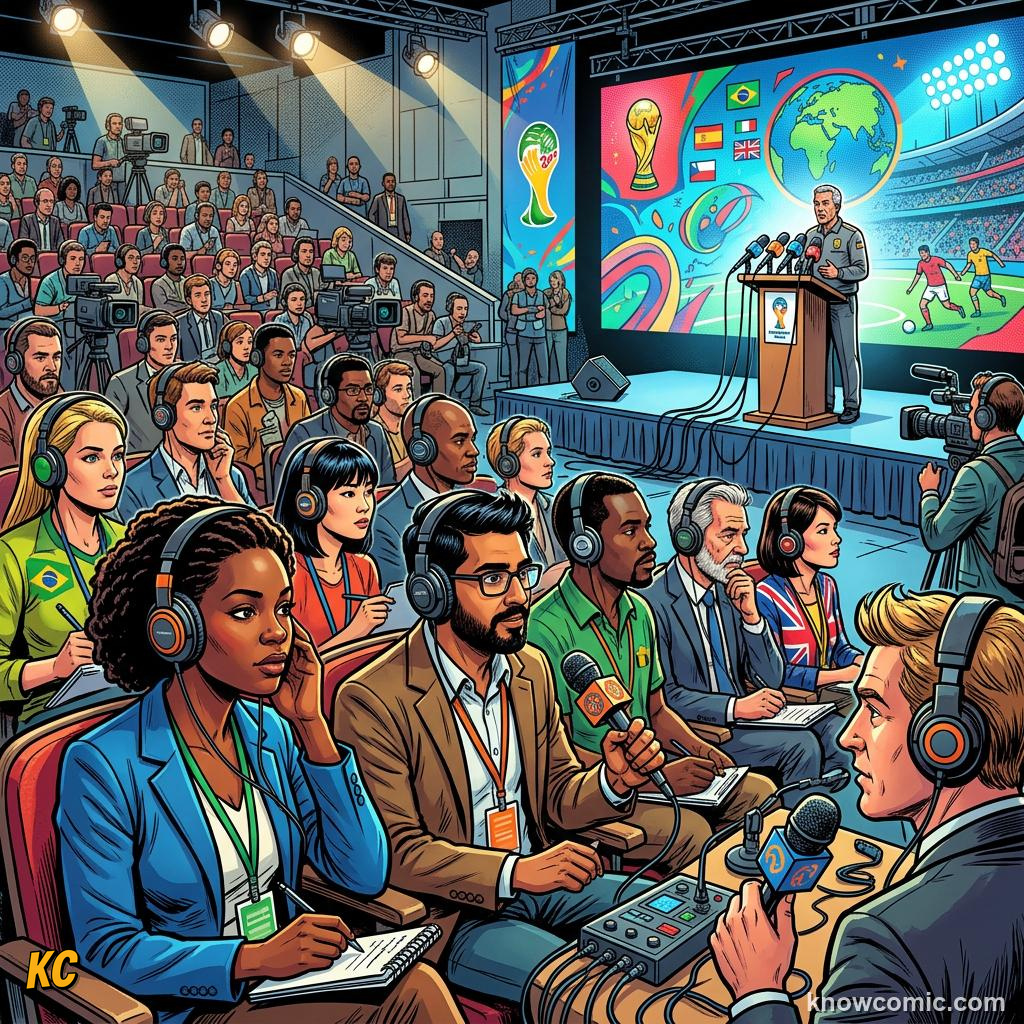
⏰ FIFA sets strict timing
👔 Press officers sit beside coaches
👔 Press officers sit beside coaches