🟨 FOULS, CARDS & FREE KICKS
PAGE 1 OF 5, THE WHISTLE BLOWS
STOP THE PLAY
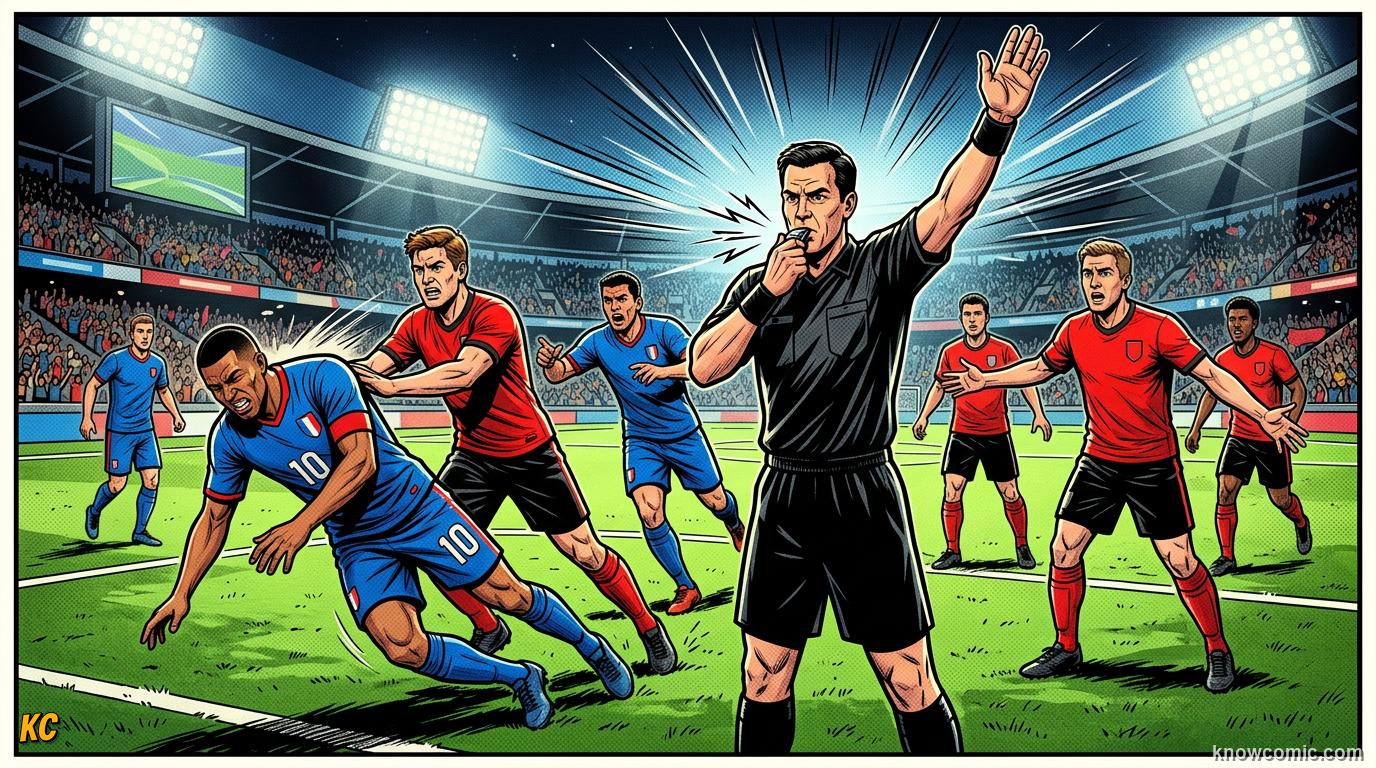
WHAT IS A FOUL?
A foul happens when a player breaks the rules in a way that is careless, reckless, or uses too much force. Pushing, tripping, holding someone's shirt, or sliding in dangerously from behind are all common fouls you will see at the World Cup. The referee is the boss on the pitch and blows the whistle to stop play the moment they spot illegal contact. The other team then gets a free kick from the spot where the foul happened. Fouls keep the game safe and fair so skill matters more than brute force.
⚡ DID YOU KNOW?
Not every whistle means a foul! The referee also stops play for the ball going out, an injury, or offside. But when players collide unfairly, that sharp blast always means someone broke the rules.
FOUL!
THE WHISTLE
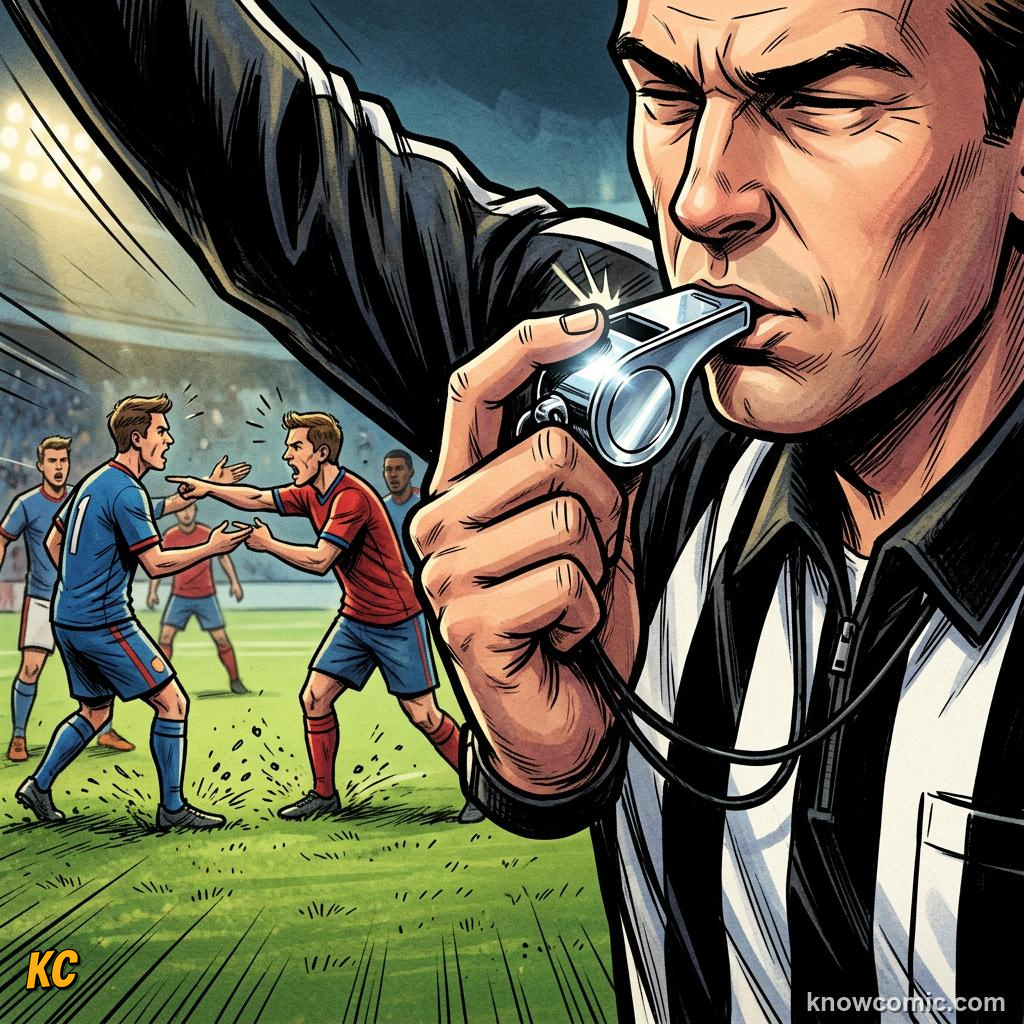
📣 Referee blows to stop play
🛑 Everyone freezes instantly
🛑 Everyone freezes instantly
ILLEGAL CONTACT
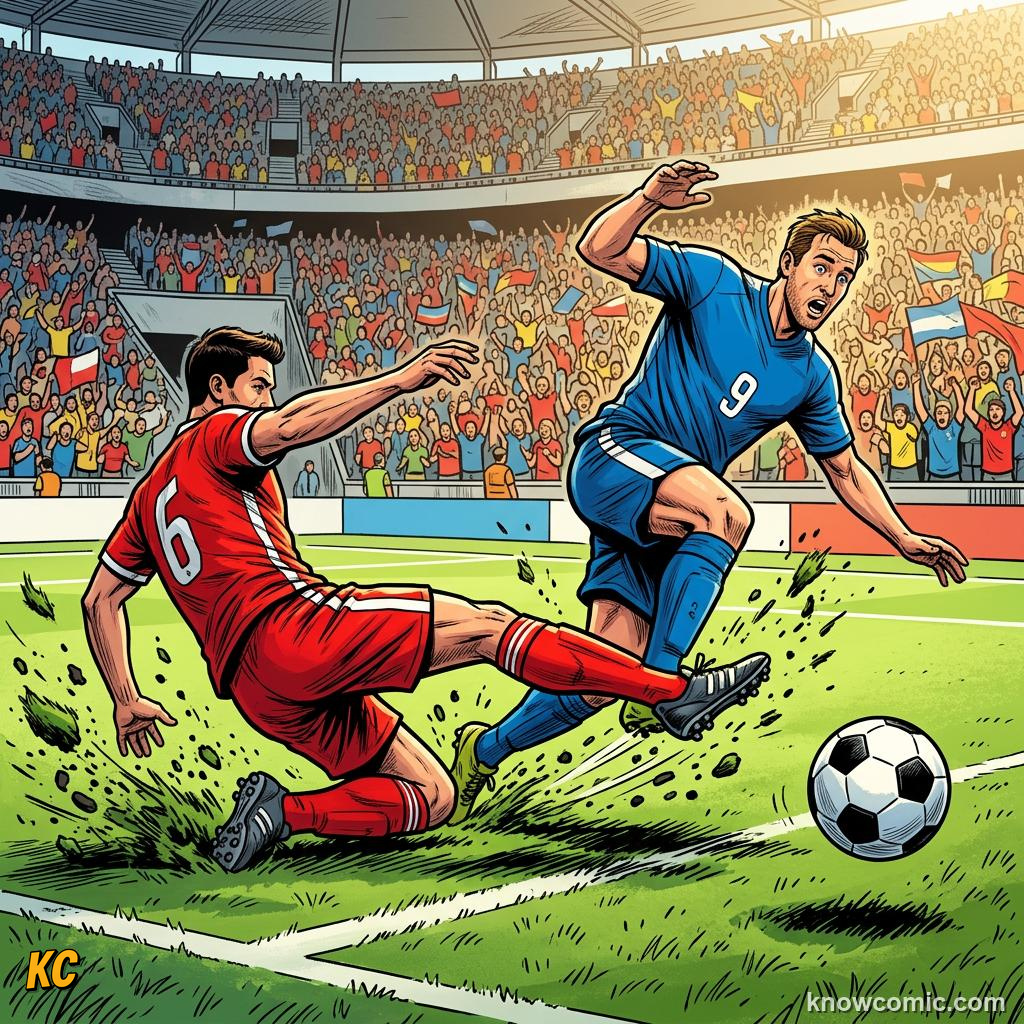
👟 Trips and pushes count
🚫 Holding shirts is a foul too
🚫 Holding shirts is a foul too
PAGE 2 OF 5, THE YELLOW CARD
OFFICIAL WARNING
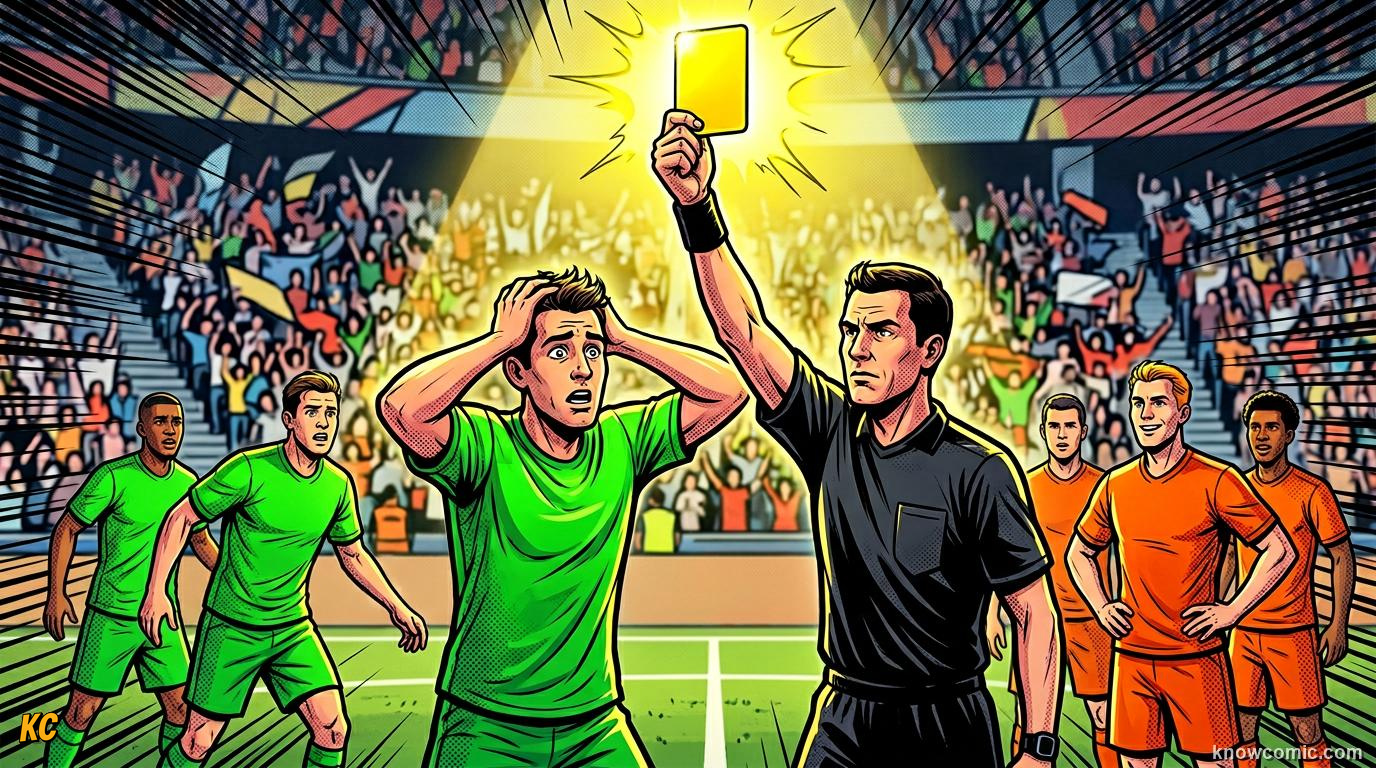
YELLOW MEANS BE CAREFUL
A yellow card is the referee's way of saying "slow down, that was too rough." It is a formal warning, not an instant send-off, but it goes on the player's record for the rest of the match. Players get yellow cards for reckless tackles, arguing aggressively, wasting time, or pulling shirts when the referee has already told them to stop. At the 1970 World Cup in Mexico, yellow and red cards appeared for the first time so every country understood the same warning system. If a player collects two yellow cards in one match, the second one becomes a red and they must leave the pitch.
⚡ TWO YELLOWS
Two yellow cards in the same match equal a red card. The player walks off and the team plays with one fewer player for the rest of the game. That is why smart players back off after their first warning.
WARNING!
FIRST YELLOW
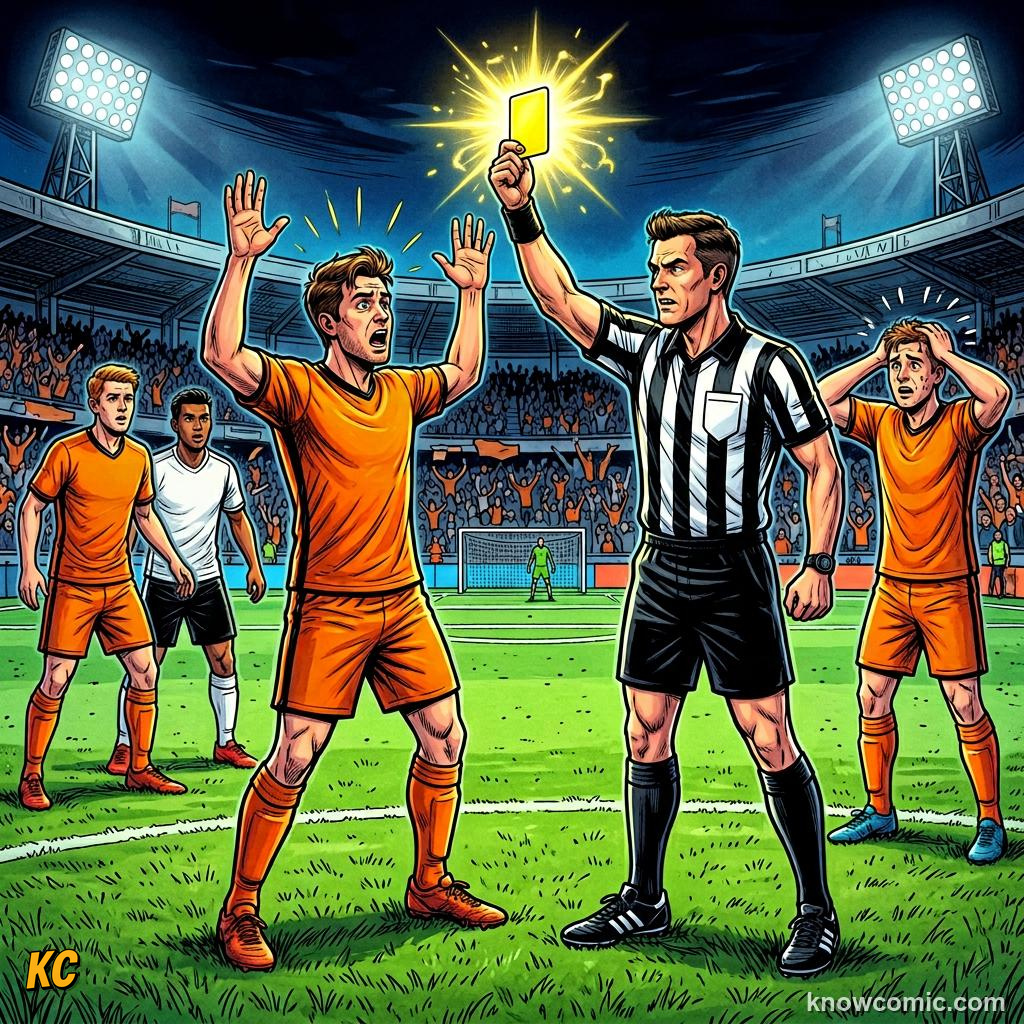
🟨 Card raised high in the air
⚠️ Official warning recorded
⚠️ Official warning recorded
SECOND YELLOW
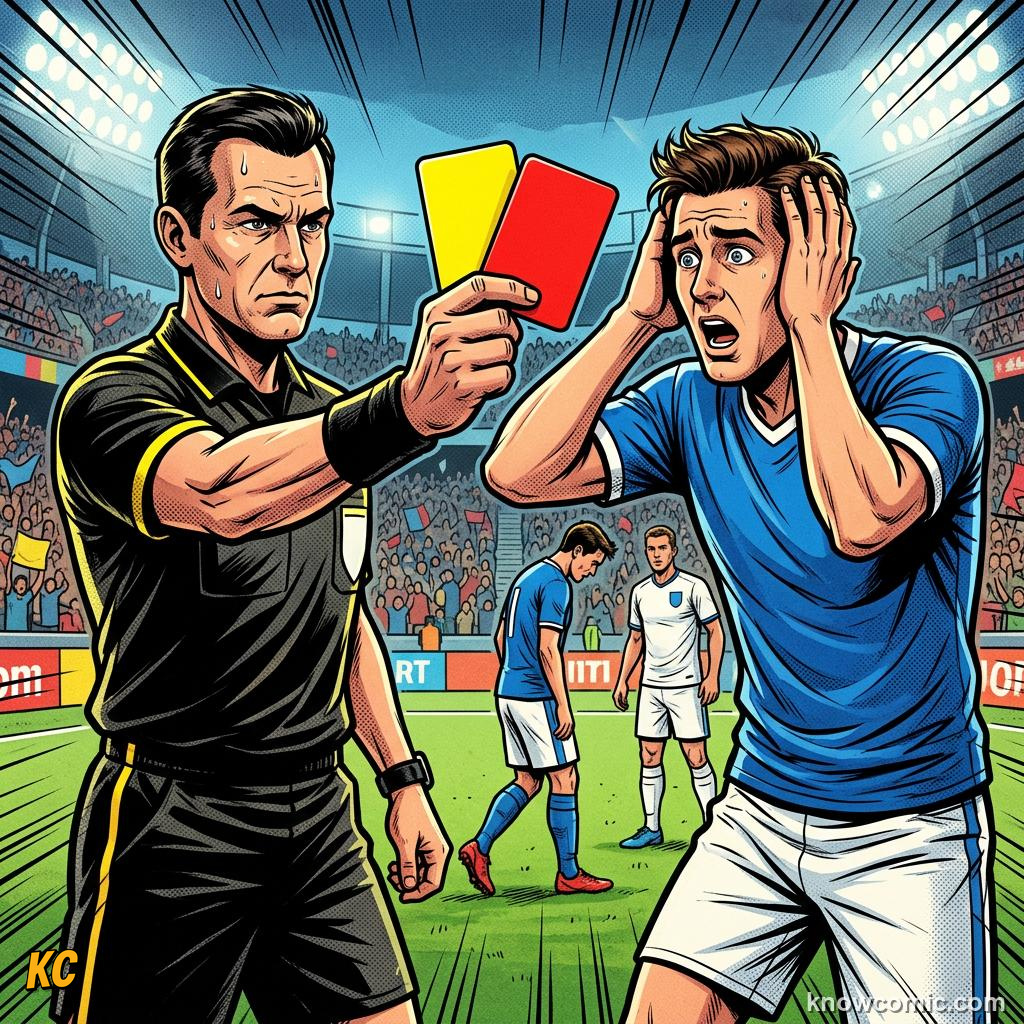
🟨🟨 Two warnings in one game
🟥 Automatically becomes a red
🟥 Automatically becomes a red
1970 DEBUT
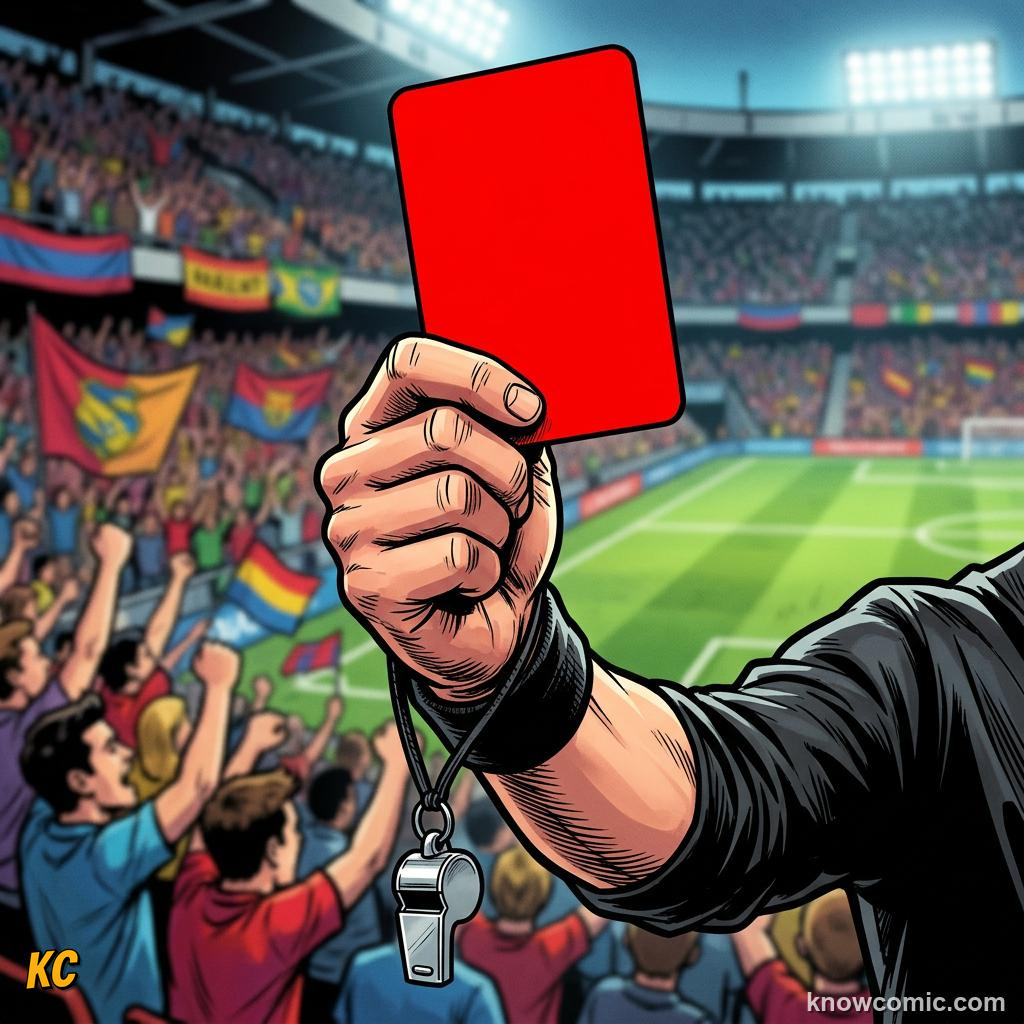
🏆 Cards born at World Cup 1970
🌍 Same signals in every country
🌍 Same signals in every country
PAGE 3 OF 5, THE RED CARD
SENT OFF
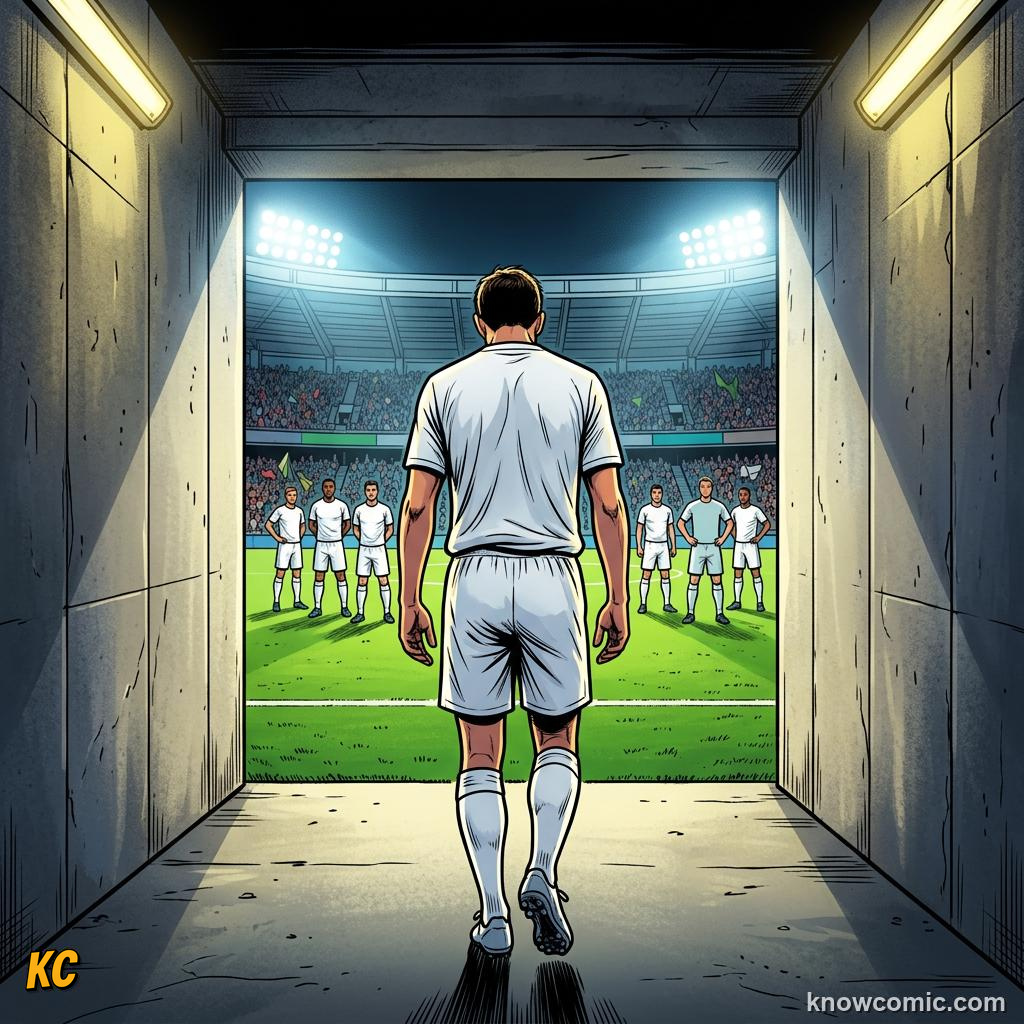
🚶 Player walks to the tunnel
👥 Team plays one man short
👥 Team plays one man short
DANGEROUS PLAY
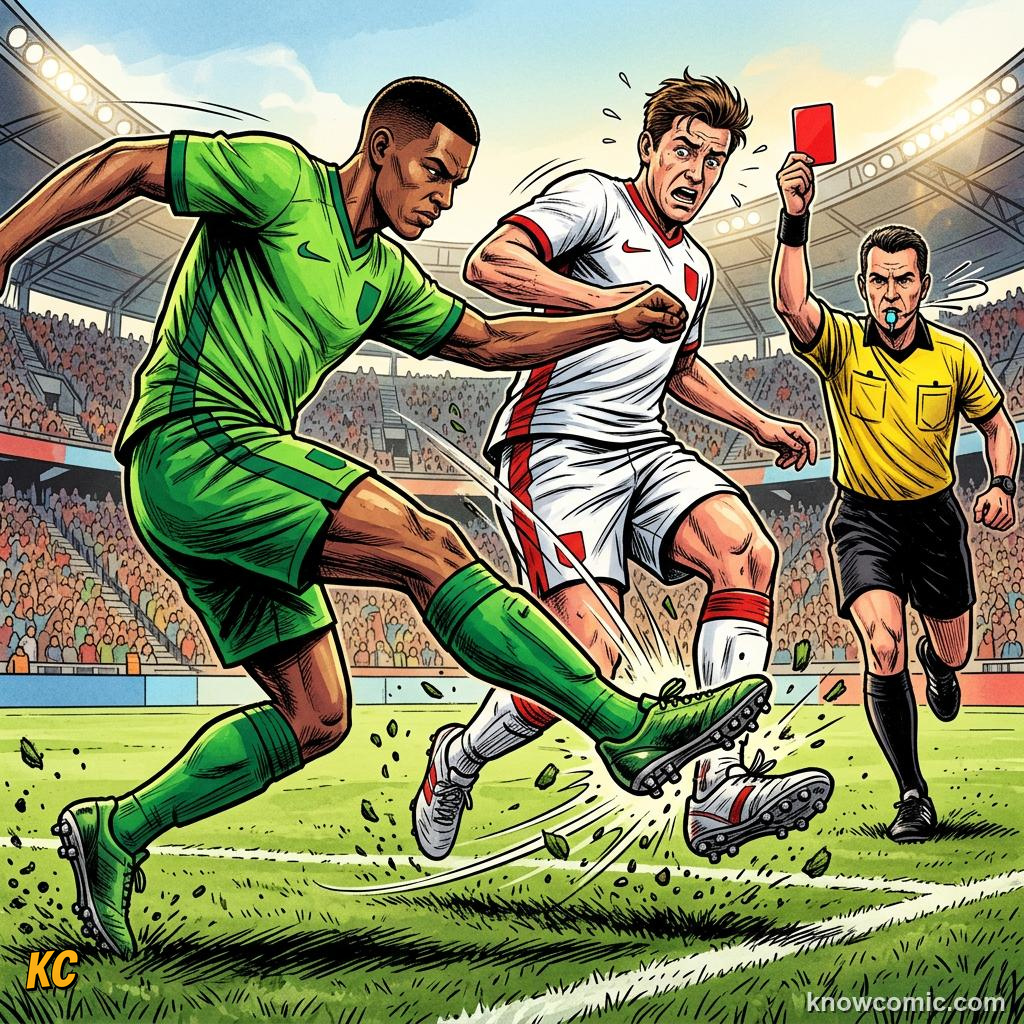
💥 Studs-up tackles get red
🚫 Violence ends the match
🚫 Violence ends the match
GAME OVER FOR YOU
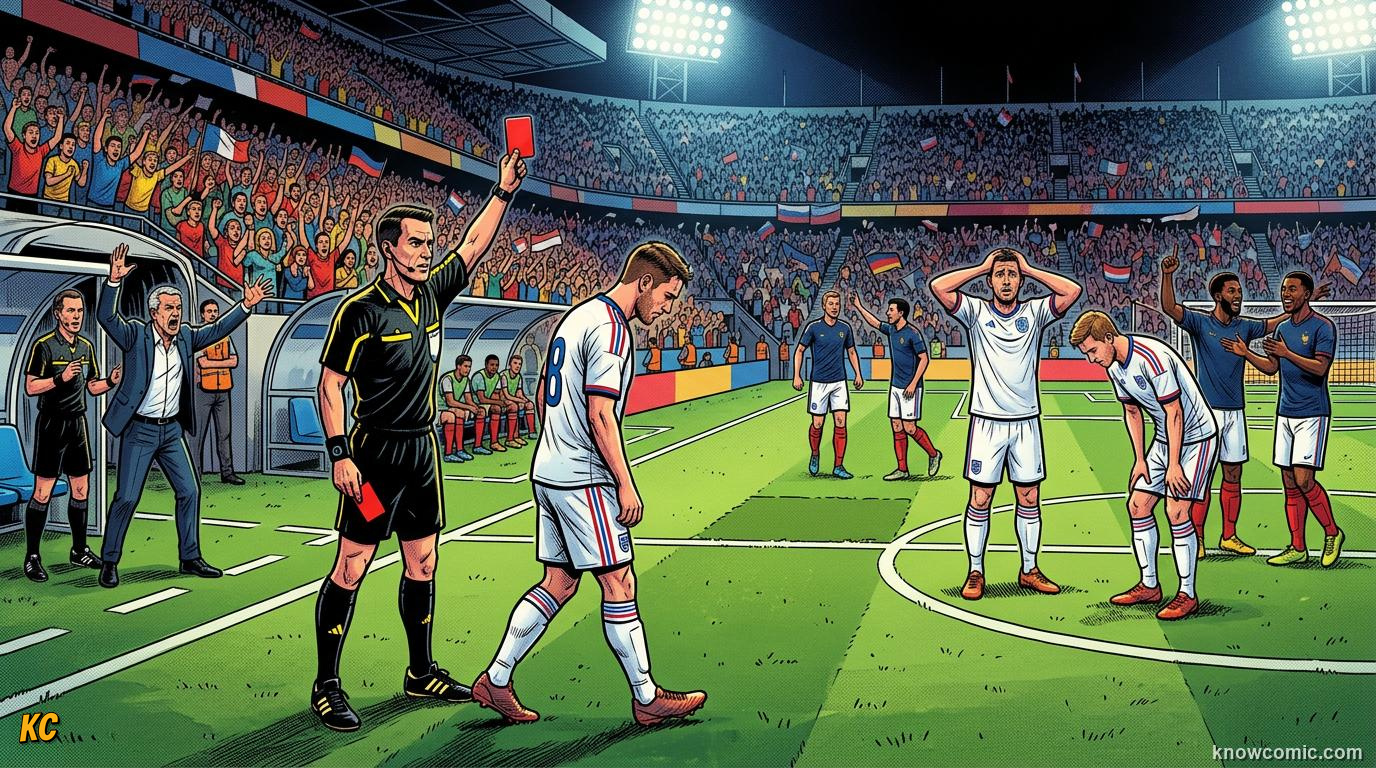
RED MEANS LEAVE THE PITCH
A red card is the harshest punishment in football. The guilty player must walk off immediately and cannot be replaced, so their team finishes the match with only ten players. Straight red cards go to violent tackles, serious foul play, punching an opponent, or stopping a clear goal-scoring chance with a deliberate foul. A red card can also come from two yellow cards in the same match. Losing a player changes everything: the team must defend harder, run more, and often reshape their whole plan. World Cup history is full of matches turned upside down by a single red card.
⚡ LAST MAN FOUL
If you are the last defender and you foul an attacker who was running clean through on goal, the referee often shows a straight red. Stopping a certain goal with a foul is one of the fastest ways to get sent off.
SENT OFF!
PAGE 4 OF 5, FREE KICKS
PUNISHMENT KICK
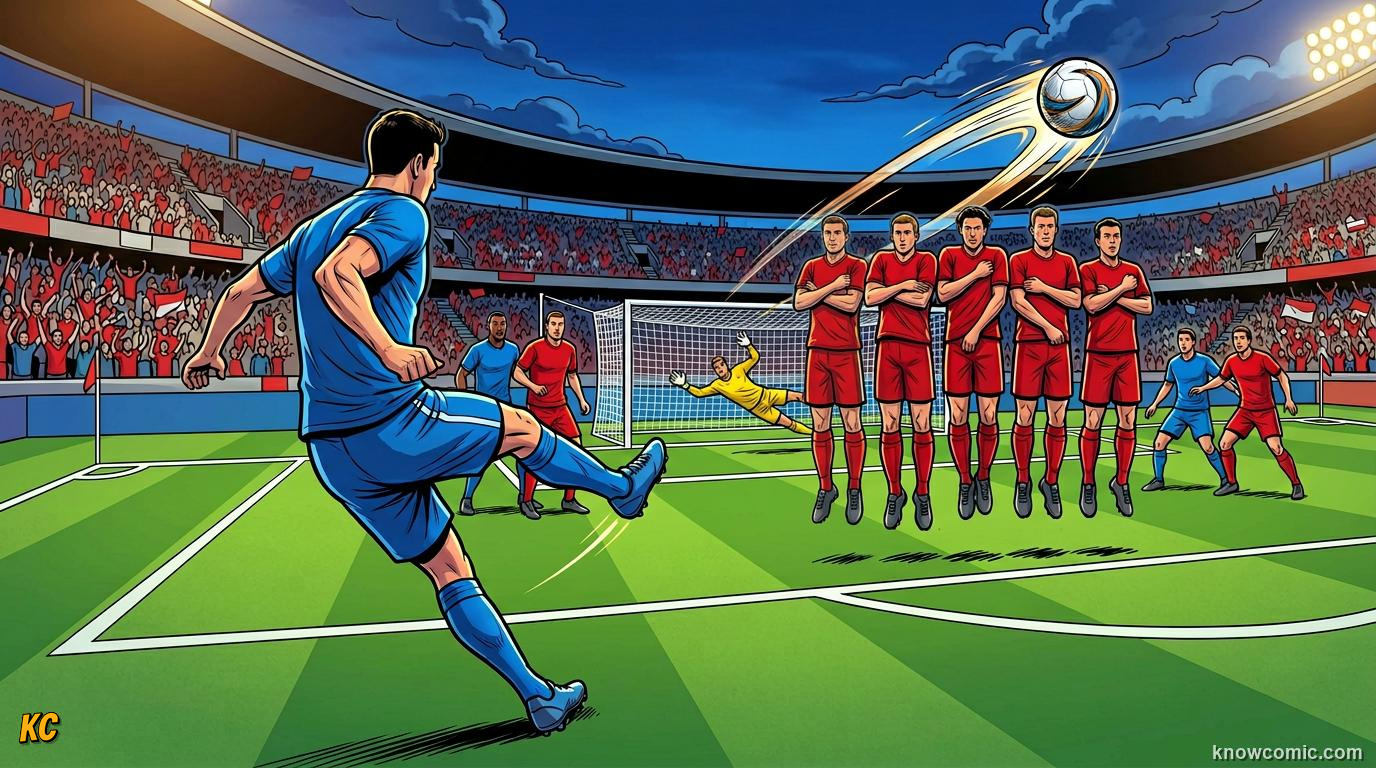
ONE KICK CAN CHANGE EVERYTHING
After most fouls, the offended team gets a free kick from the exact spot where the foul happened. In a direct free kick, the taker can shoot straight at goal without anyone else touching the ball first. That is why you see walls of defenders lining up ten yards away, arms linked, trying to block a curling shot into the top corner. An indirect free kick is rarer: the ball must touch a second player before a goal counts, so you often see a gentle tap to a teammate who shoots. Set-piece specialists train for years to bend free kicks around walls. At World Cup 2026, watch who steps up when the whistle blows near the box.
⚡ THE WALL
Defenders must stand at least ten yards (about nine metres) from the ball. They jump together to block the shot, which is why free kick takers aim for the gap above the wall or curl the ball around it.
BEND IT!
DIRECT KICK
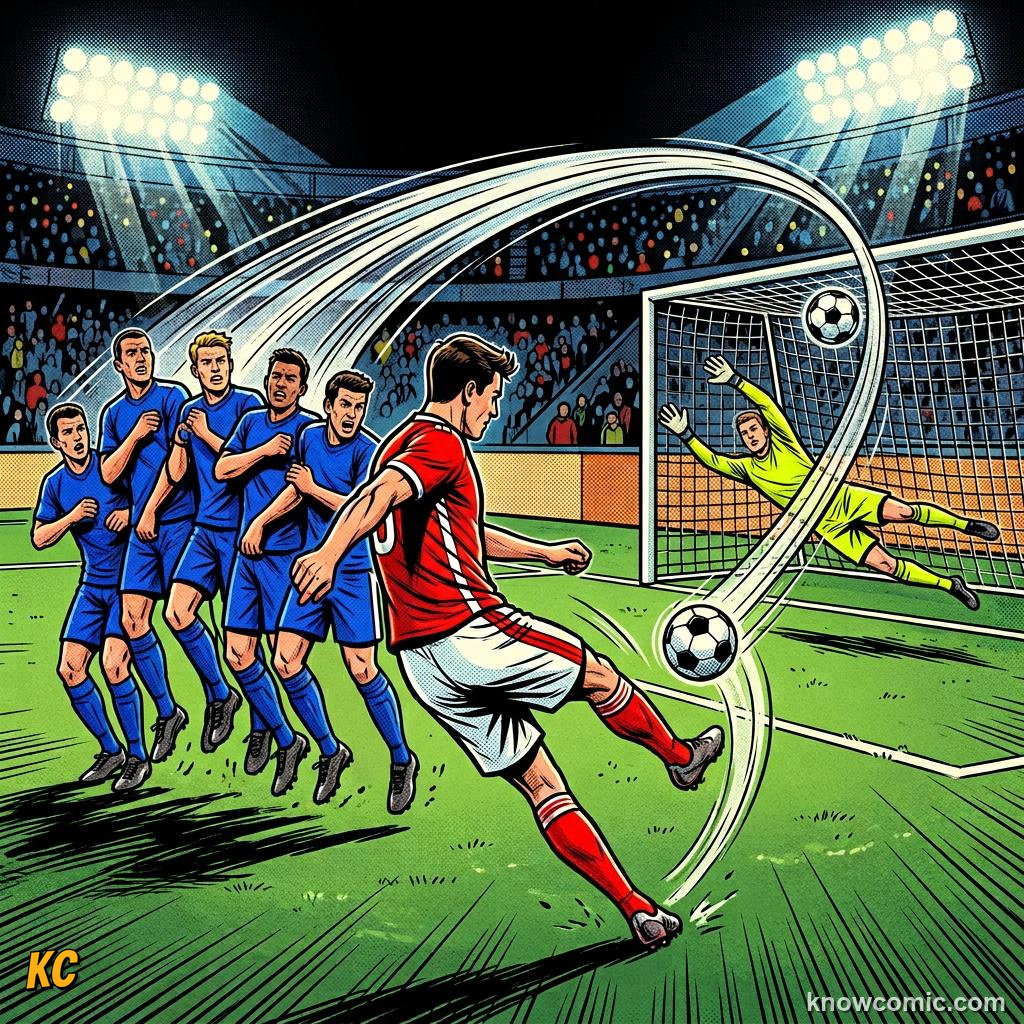
🎯 Shoot straight at goal
🌀 Curl it over the wall
🌀 Curl it over the wall
INDIRECT KICK
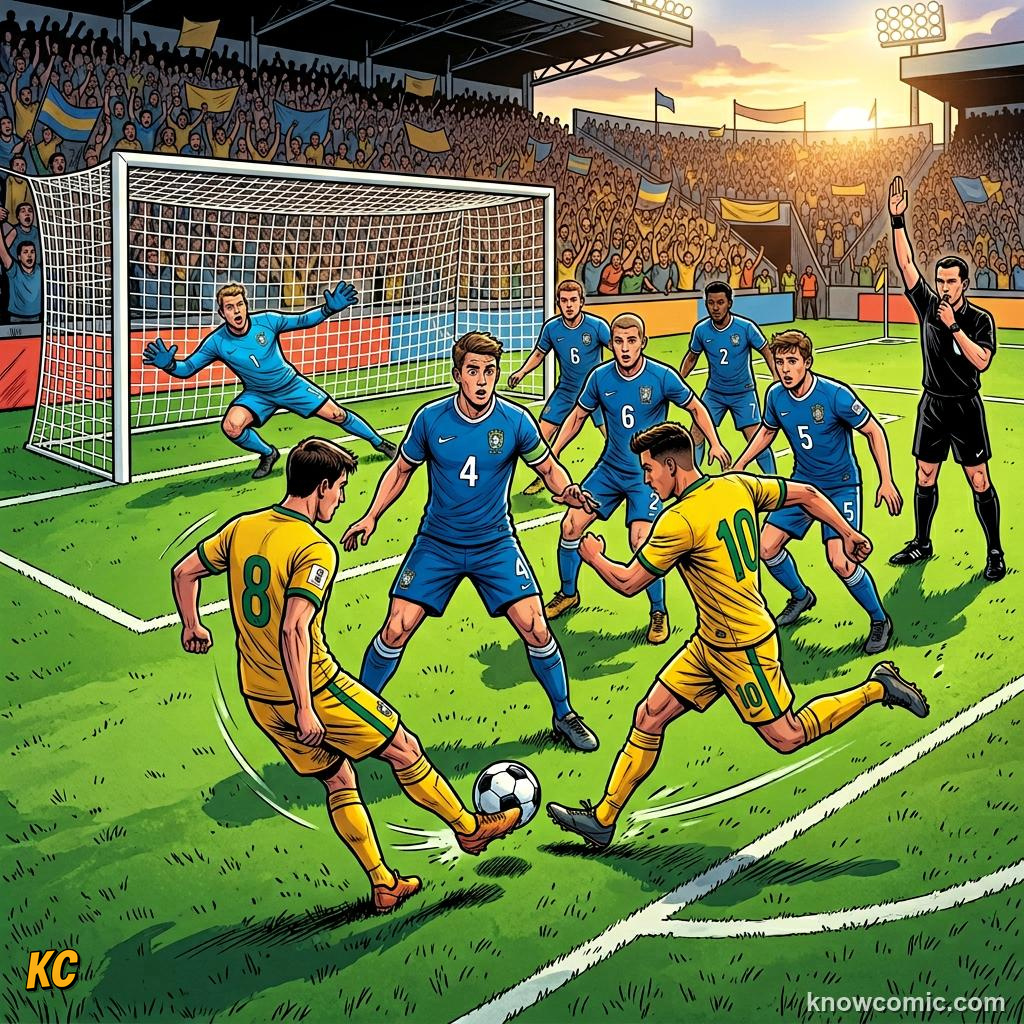
👟 Ball must touch two players
🤝 Tap to a teammate first
🤝 Tap to a teammate first
THE WALL
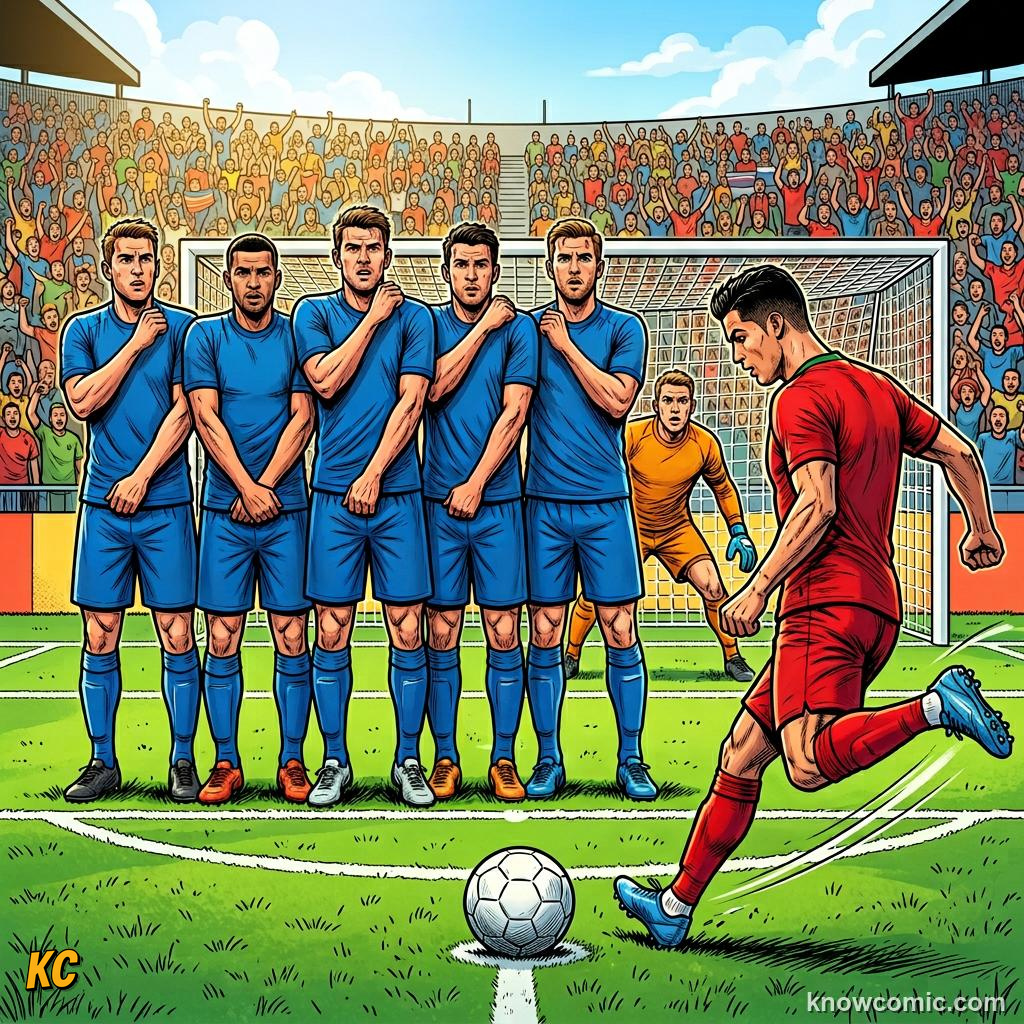
🧱 Defenders stand shoulder to shoulder
📏 Ten yards back from the ball
📏 Ten yards back from the ball
PAGE 5 OF 5, PENALTIES AND RECAP
FOUL IN THE BOX
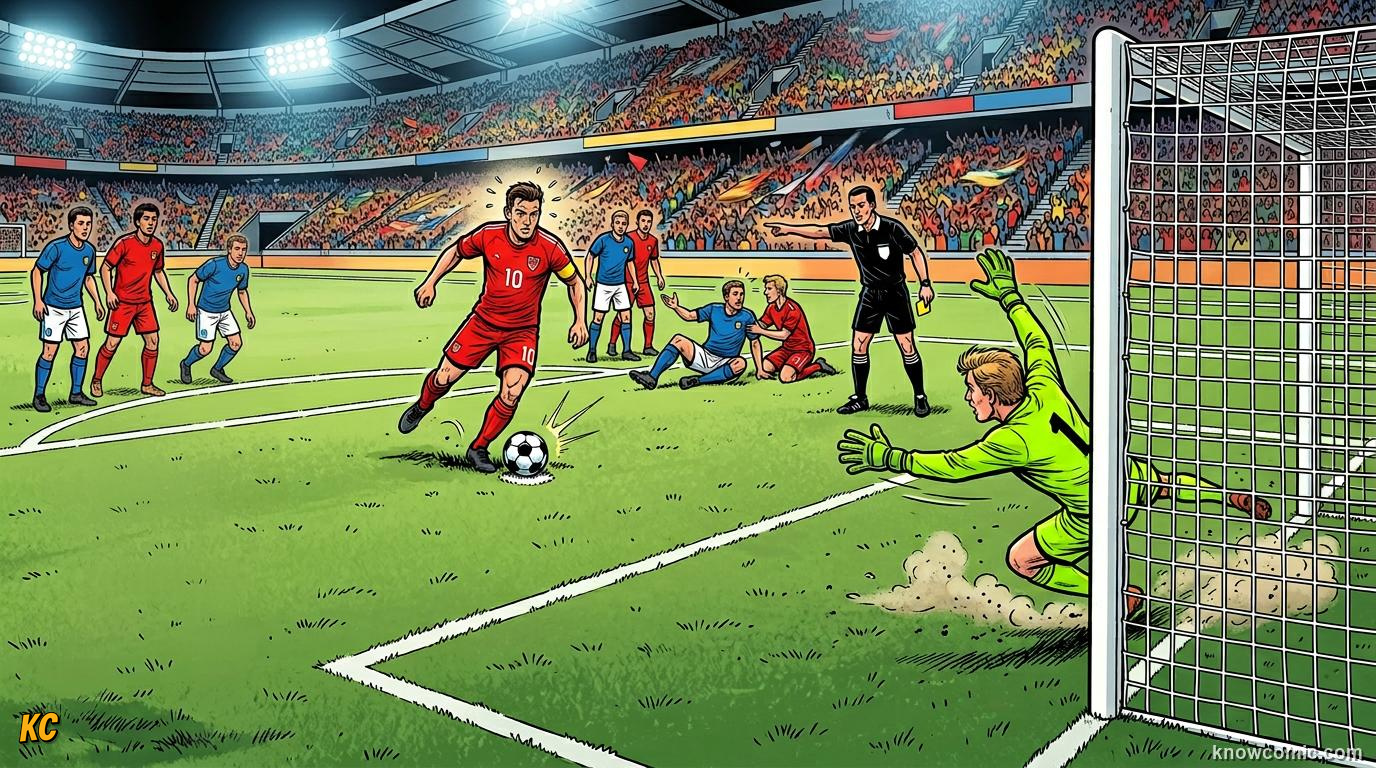
WHEN A FOUL BECOMES A PENALTY
Location matters enormously. A push or trip anywhere on the pitch usually gives a free kick, but the same foul inside the penalty area becomes a penalty kick. That means one attacker faces the goalkeeper from twelve yards out with only a run-up and a single shot. The rest of the players wait outside the box until the ball is struck. Penalties are high-drama moments that can decide World Cup matches in seconds. Referees and VAR cameras study every tackle in the box frame by frame because one mistimed slide can hand the other team this golden chance. Understanding fouls helps you predict when the stadium will erupt.
⚡ WORLD CUP DRAMA
Penalty shootouts in knockout games are not the same as in-match penalties. A foul penalty happens during play. A shootout decides a tied match after extra time. Both can make legends or break hearts.
PENALTY!
IN THE BOX
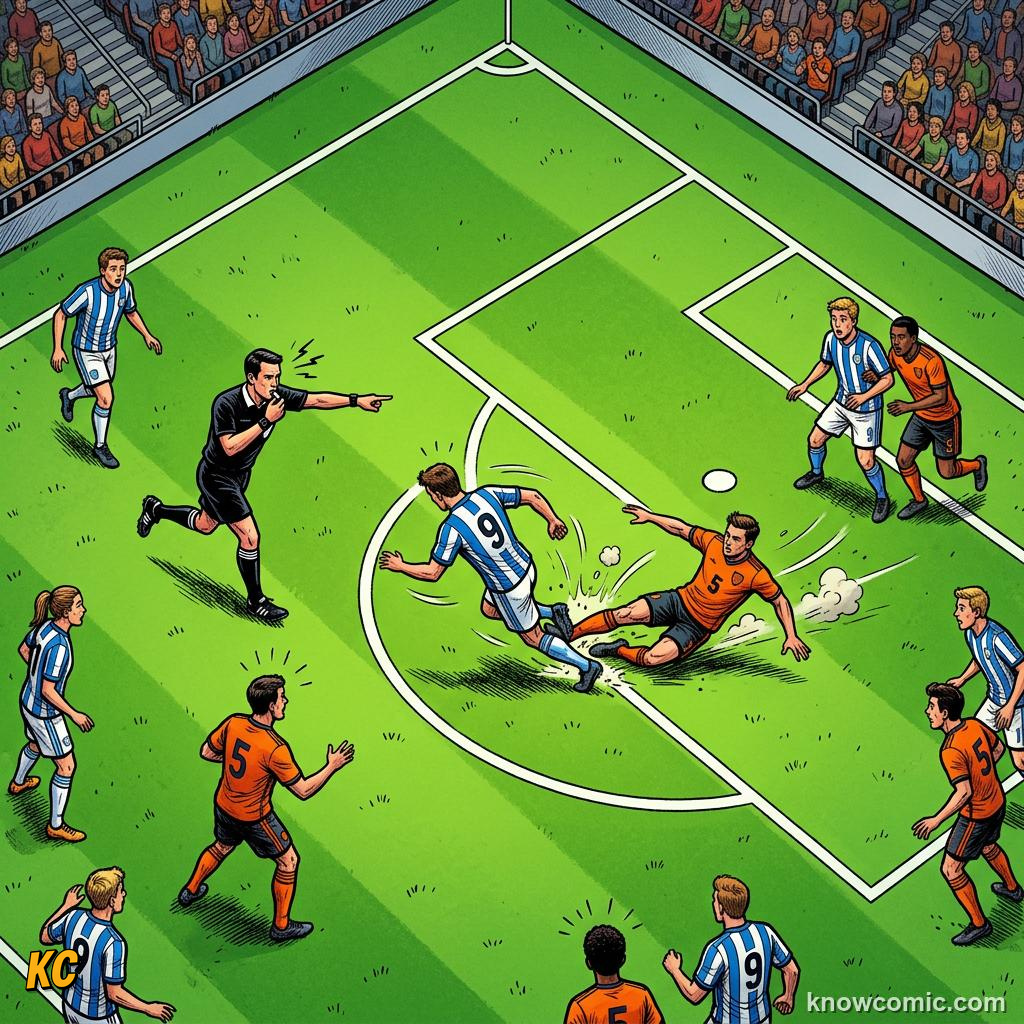
📐 Foul inside the white box
⚽ Referee points to the spot
⚽ Referee points to the spot
REMEMBER
📋 KEY FACTS
A foul is illegal contact stopped by the referee's whistle. Yellow is a warning; two yellows or serious foul play means red and a send-off. Free kicks restart play from the foul spot. A foul inside the penalty area becomes a penalty kick.
🟨 Yellow = warning
🟥 Red = sent off
📣 Free kick from foul spot
🟥 Red = sent off
📣 Free kick from foul spot
🧠 QUIZ TIME!
FOULS, CARDS & FREE KICKS · 5 QUESTIONS
QUESTION 01
What does the referee usually blow the whistle for after a push or trip?
QUESTION 02
What does a yellow card mean?
QUESTION 03
What happens when a player gets two yellow cards in one match?
QUESTION 04
When does a foul become a penalty kick?
QUESTION 05
In a direct free kick, what can the taker do?
0/5
LOADING...