📋 FORMATIONS: 4-3-3 DECODED
PAGE 1 OF 5, CRACK THE CODE
THE NUMBER CODE
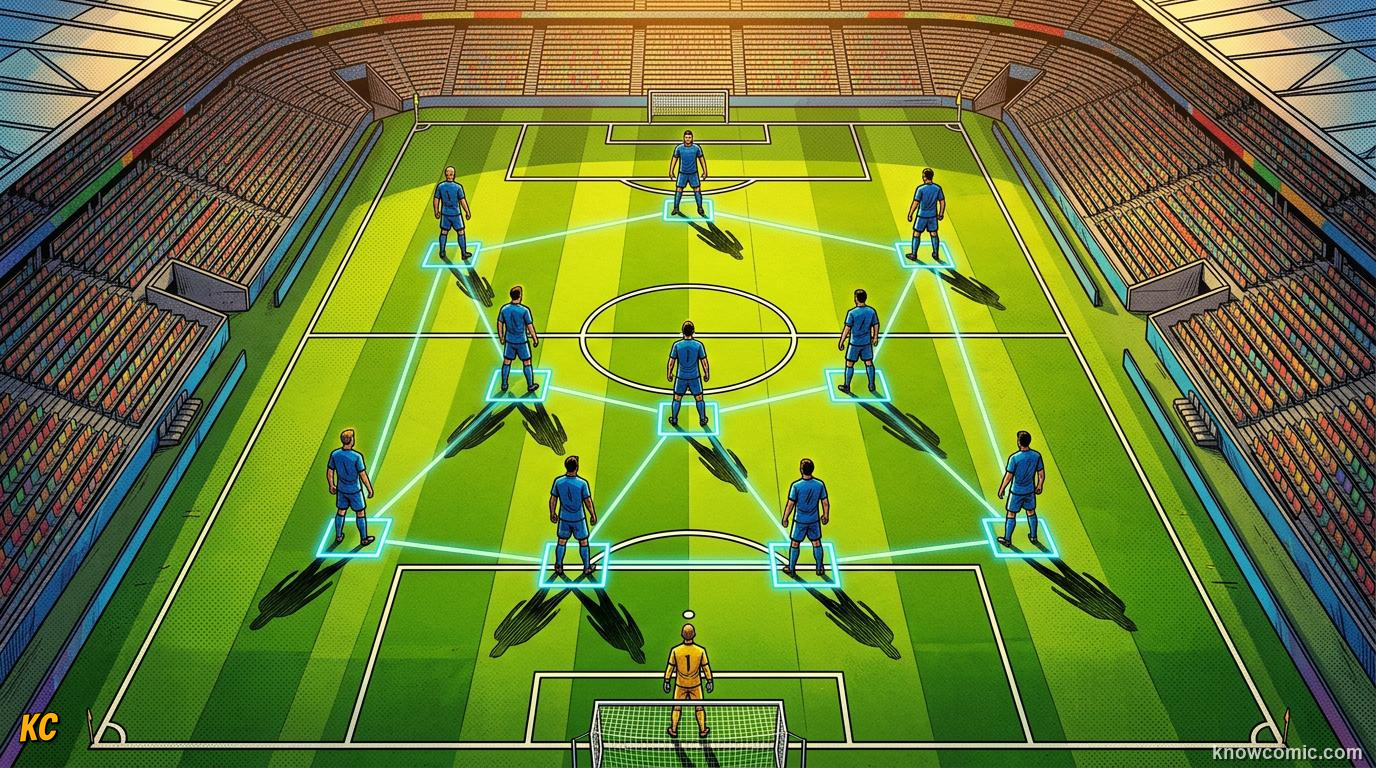
WHAT DO THE NUMBERS MEAN?
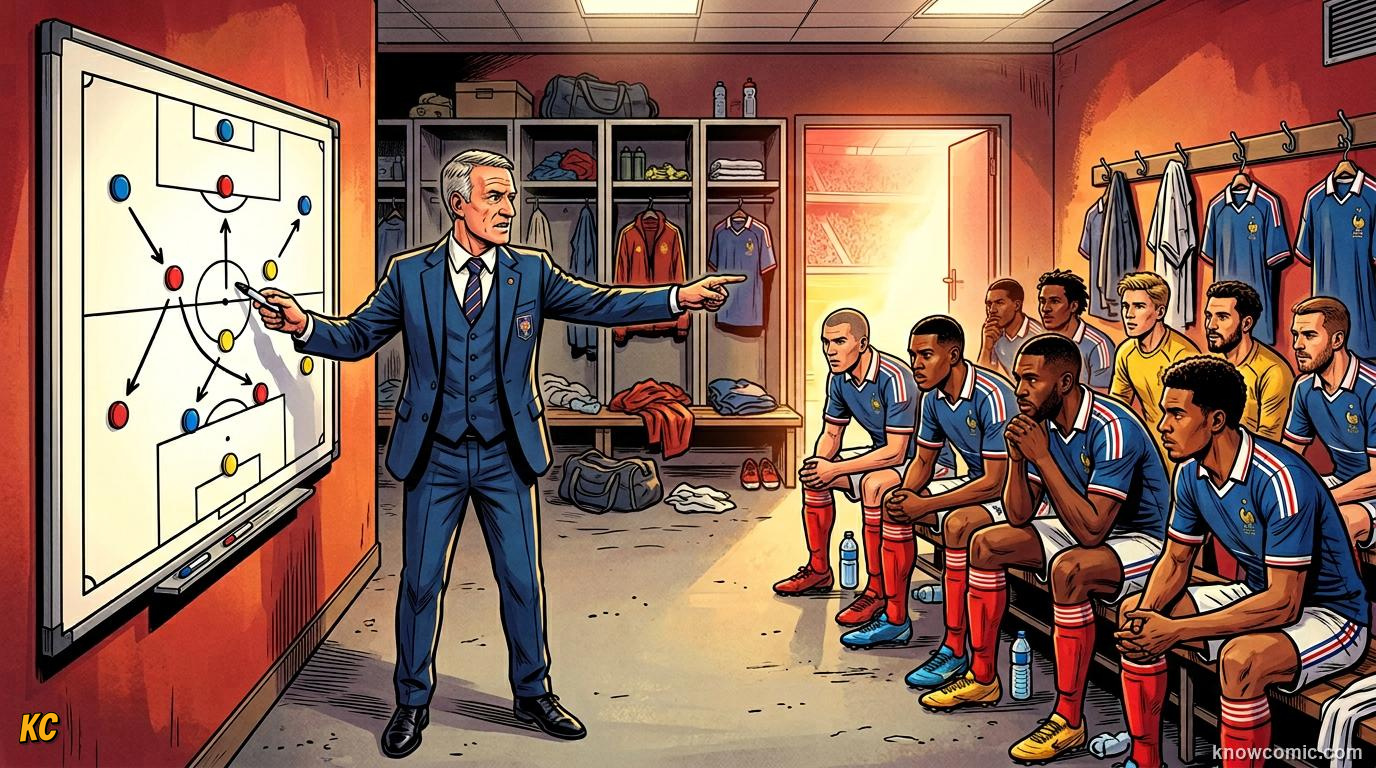
Before kick-off, commentators always mention formations like 4-3-3 or 4-4-2, and those numbers are simply a head count of outfield players in each zone. You always read them from back to front: defenders first, midfielders second, attackers last. The goalkeeper is never counted because every team has exactly one. So 4-3-3 means four defenders, three midfielders, and three attackers, adding up to ten outfield players plus the keeper. Coaches pick these shapes like battle plans, deciding who holds the line, who controls the middle, and who threatens the goal.
⚡ DID YOU KNOW?
Formations are starting points, not prison cells! Players drift and swap roles during a match, but the numbers tell you the coach's basic plan before the whistle blows.
DECODE!
BACK LINE
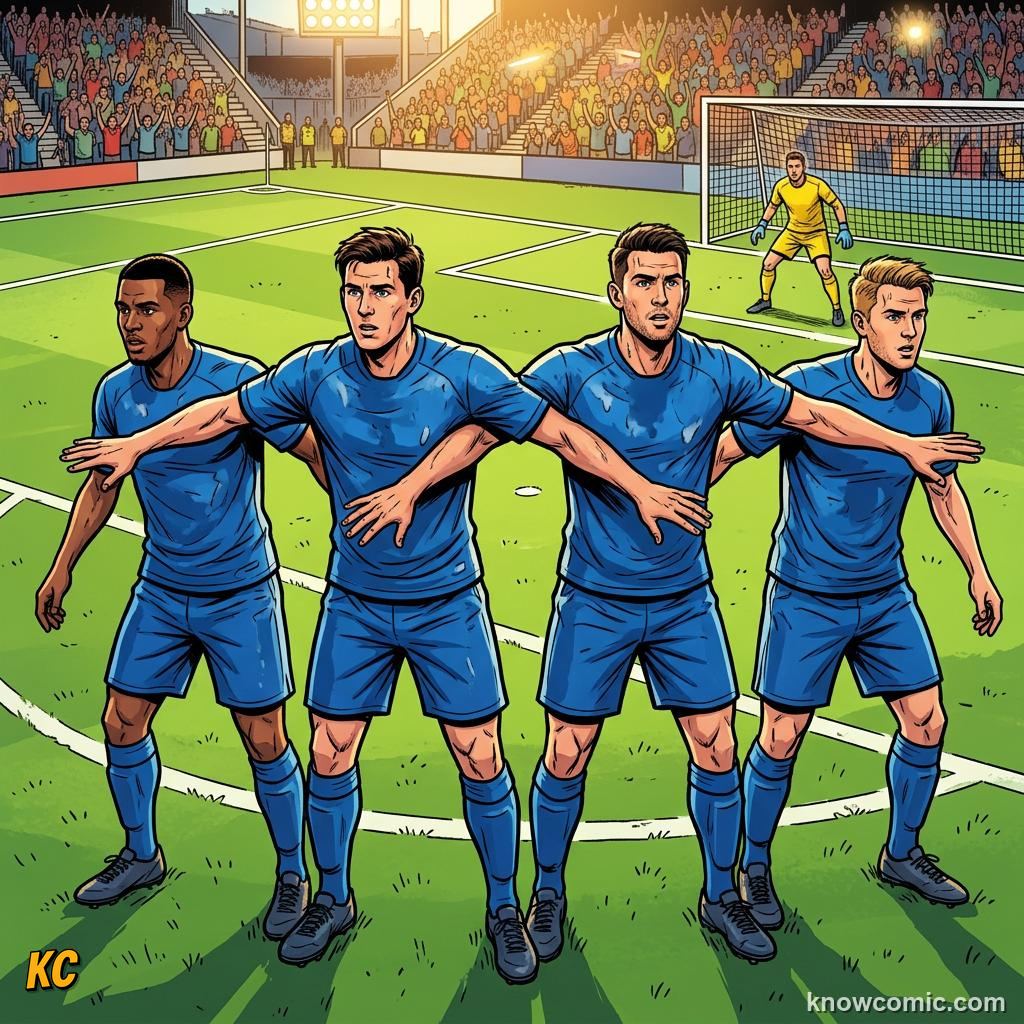
🛡️ First number = defenders
📏 Usually a flat line of four
📏 Usually a flat line of four
FRONT LINE
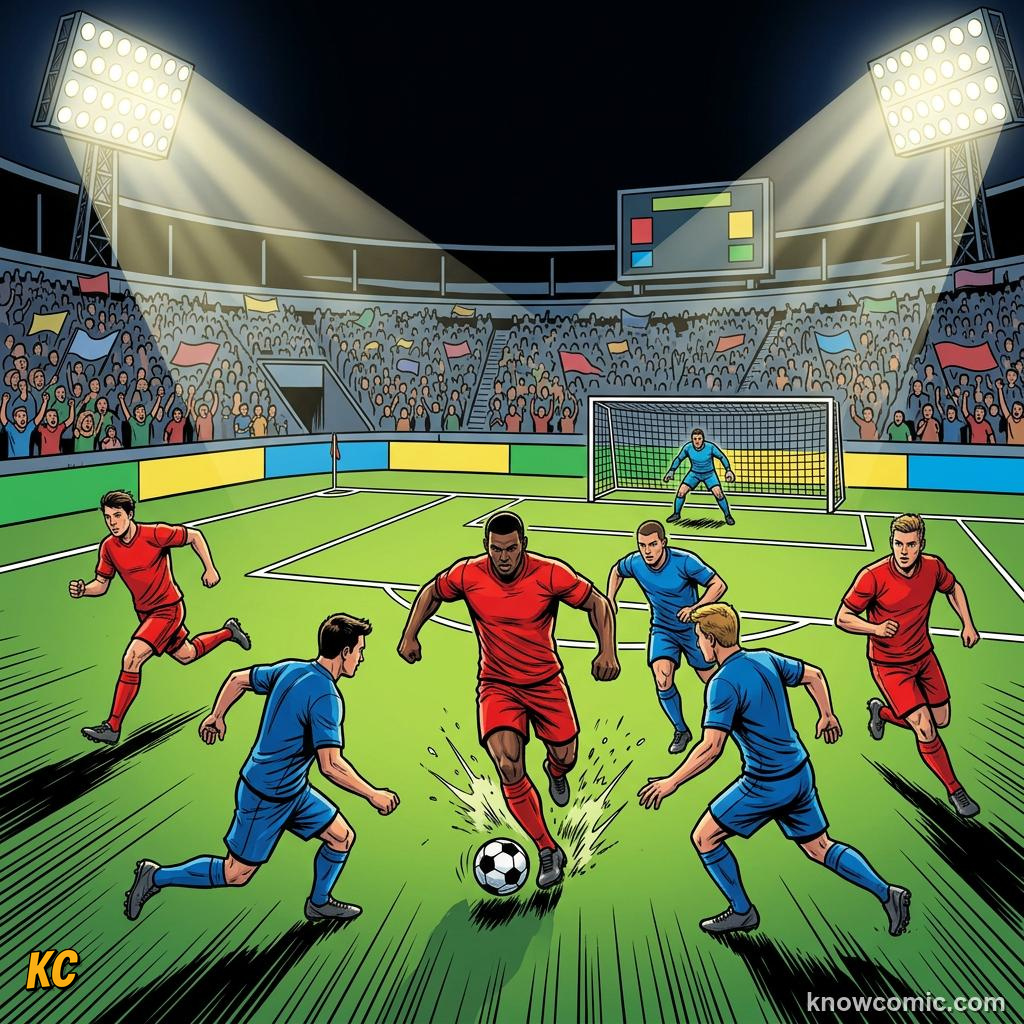
⚔️ Last number = attackers
🎯 Striker plus wingers up top
🎯 Striker plus wingers up top
PAGE 2 OF 5, THE 4-3-3 ATTACK
WIDE AND BRAVE
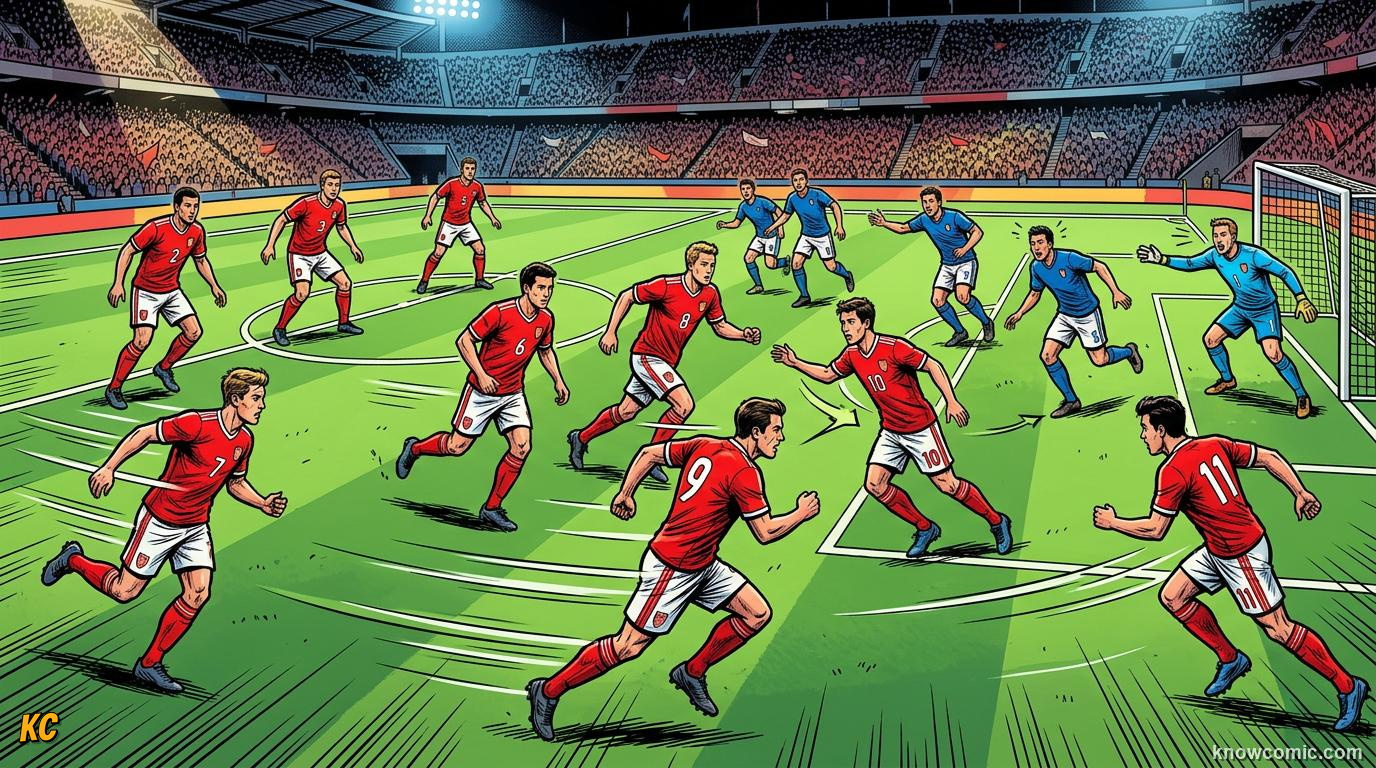
WHY TEAMS LOVE 4-3-3
The 4-3-3 is one of the most popular shapes in modern football because it balances defence with serious firepower. Four defenders give a solid back line, while three midfielders can form a triangle: one deep pivot who shields the defence and two more advanced who link attack and defence. Up front, three attackers spread across the pitch with wingers hugging the touchlines and a central striker leading the line. That width stretches opponents apart, opening gaps for through balls and crosses. Many World Cup favourites use 4-3-3 because it encourages pressing high and winning the ball back quickly.
4-3-3!
WINGERS

↔️ Stay wide on the touchlines
🏃 Stretch the defence apart
🏃 Stretch the defence apart
MIDFIELD 3
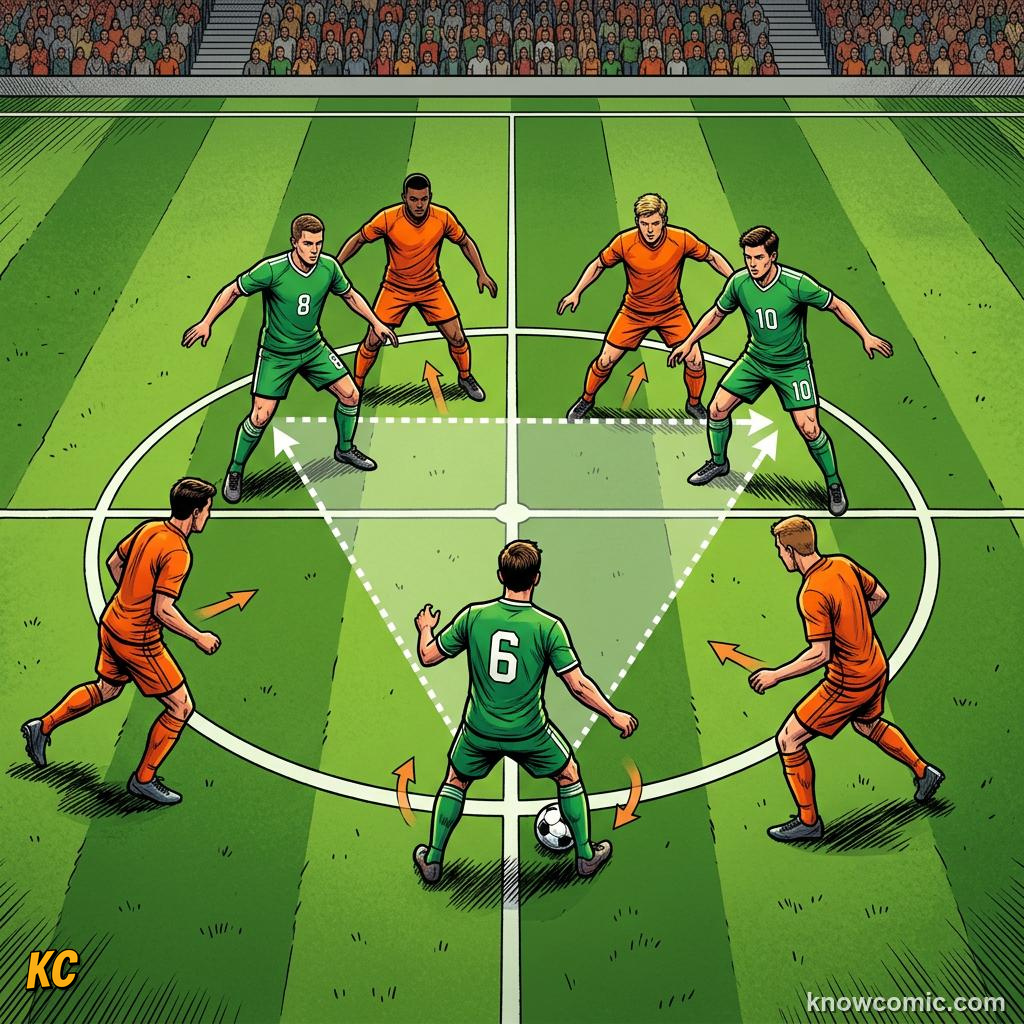
🔺 Triangle in the middle
🧠 One sits deep, two push up
🧠 One sits deep, two push up
FULLBACKS
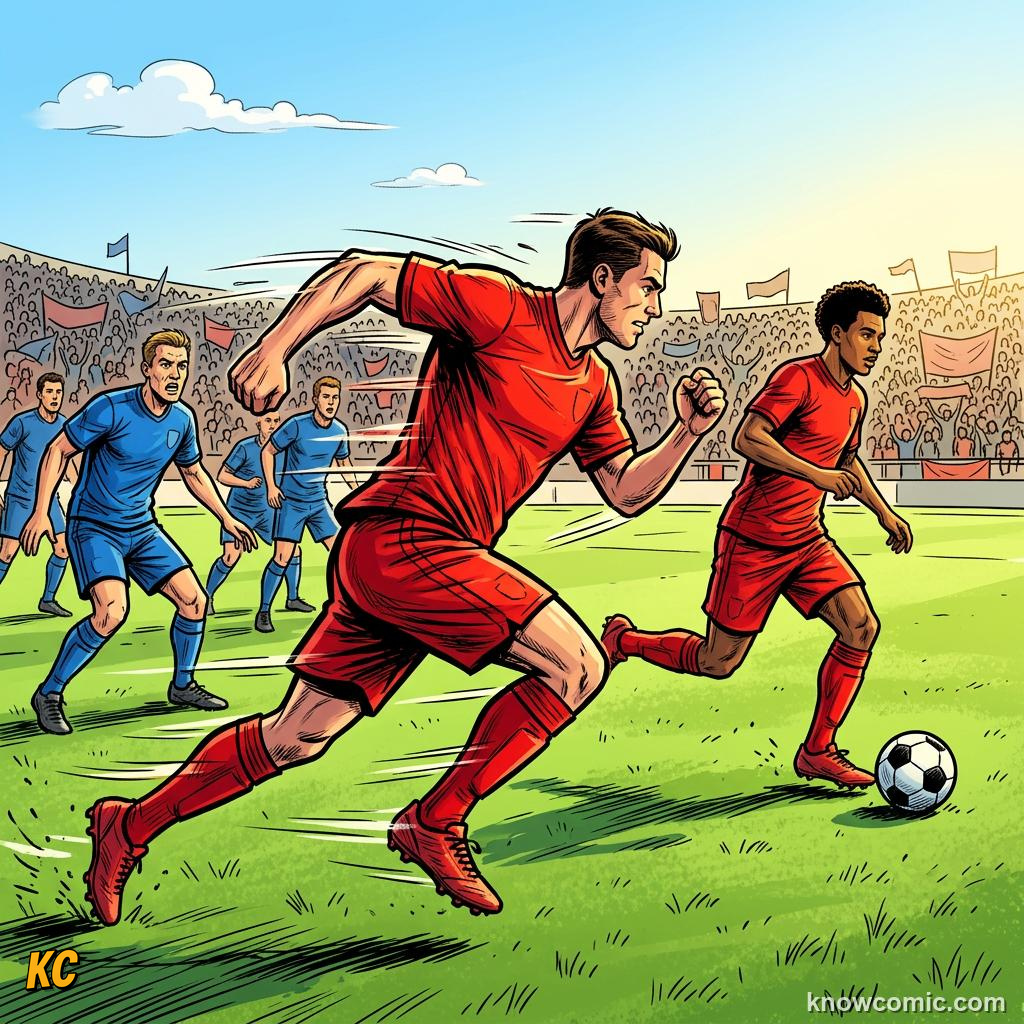
🚀 Overlap wingers on the flanks
📐 Add extra width in attack
📐 Add extra width in attack
PAGE 3 OF 5, THE 4-4-2 CLASSIC
TWO STRIKERS
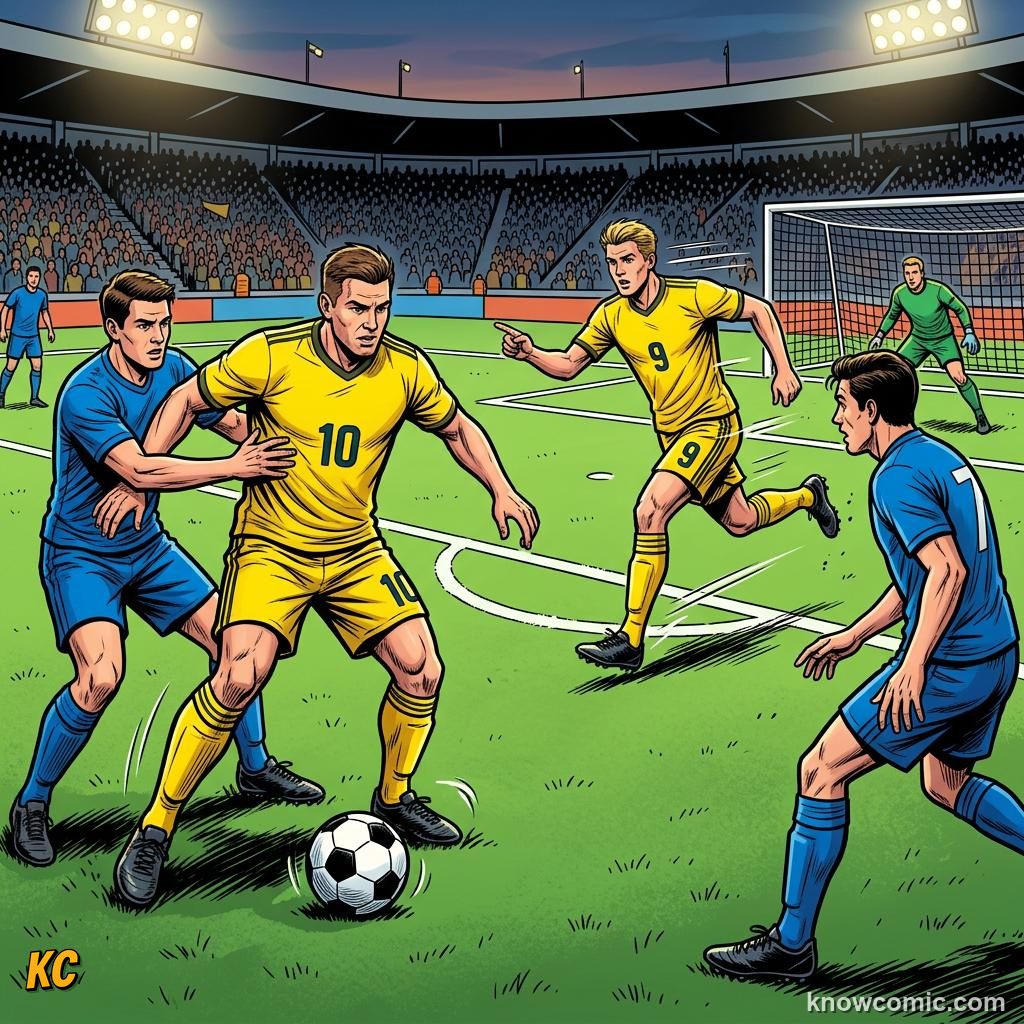
👥 Two up front as a pair
🔄 One drops, one runs behind
🔄 One drops, one runs behind
FLAT FOUR
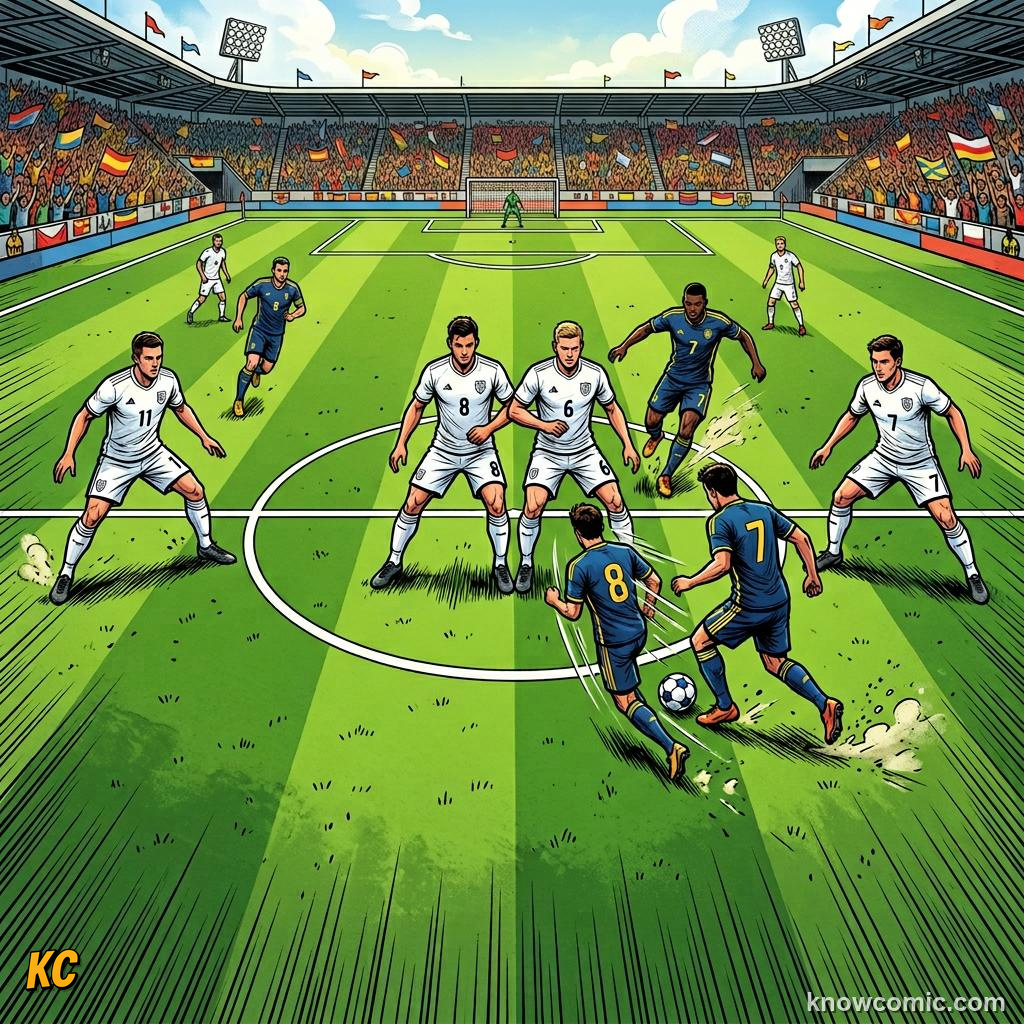
↔️ Four midfielders in a line
🛡️ Two wide, two central
🛡️ Two wide, two central
OLD FAITHFUL
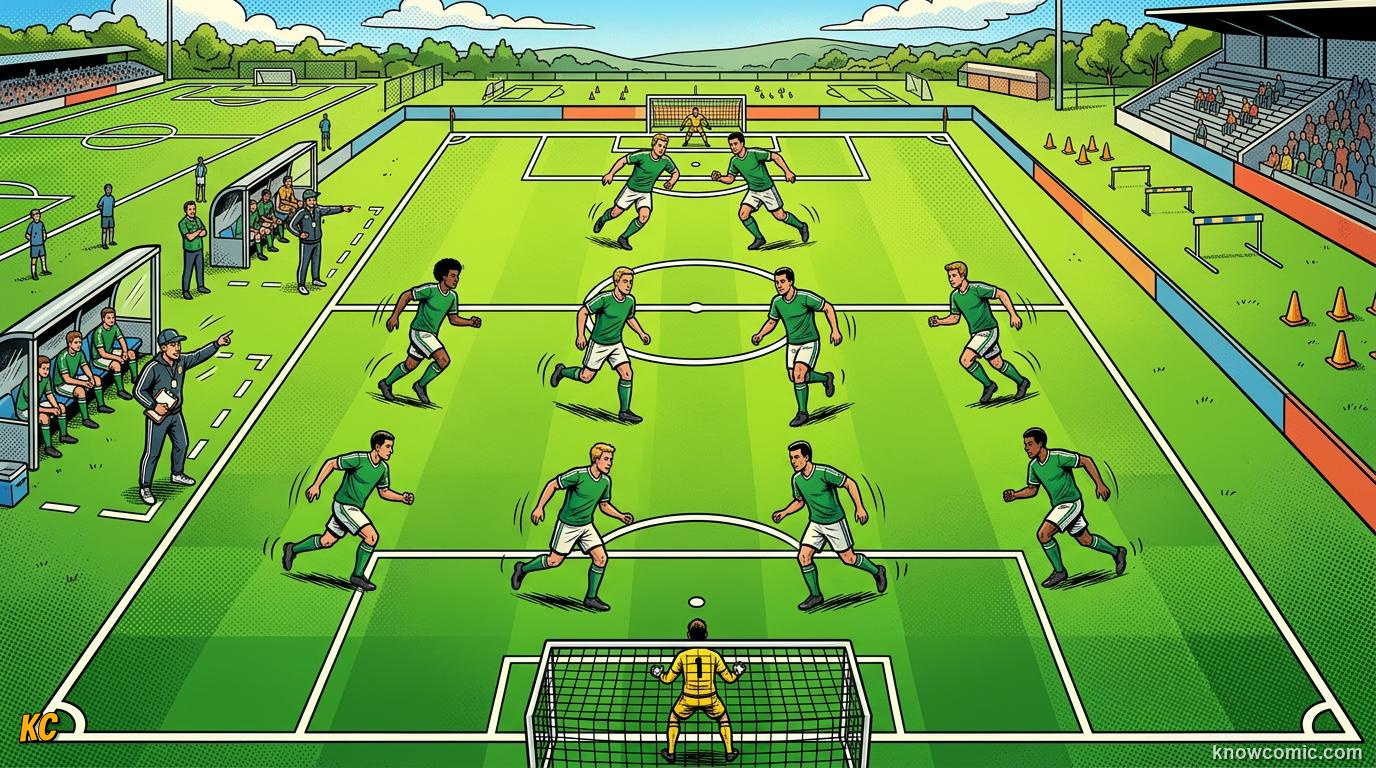
THE TRUSTY 4-4-2
For decades, 4-4-2 was the most common formation on planet Earth. It looks like two straight lines of four: defenders across the back and midfielders across the middle, with two strikers paired up front. That symmetry makes it easy to understand and hard to break down. The two strikers can work as a duo, one dropping deep to link play while the other runs in behind. The flat midfield four covers width and clogs the centre. Teams that sit deep and counter-attack quickly often choose 4-4-2 because the shape stays compact and organised without the ball.
⚡ 4-3-3 VS 4-4-2
4-3-3 usually means more attacking width and one extra midfielder. 4-4-2 means two strikers and a simpler, more balanced block. Neither is "better"; coaches pick based on their players and the opponent.
4-4-2!
PAGE 4 OF 5, SHAPES THAT SHIFT
LIVING BATTLE PLAN
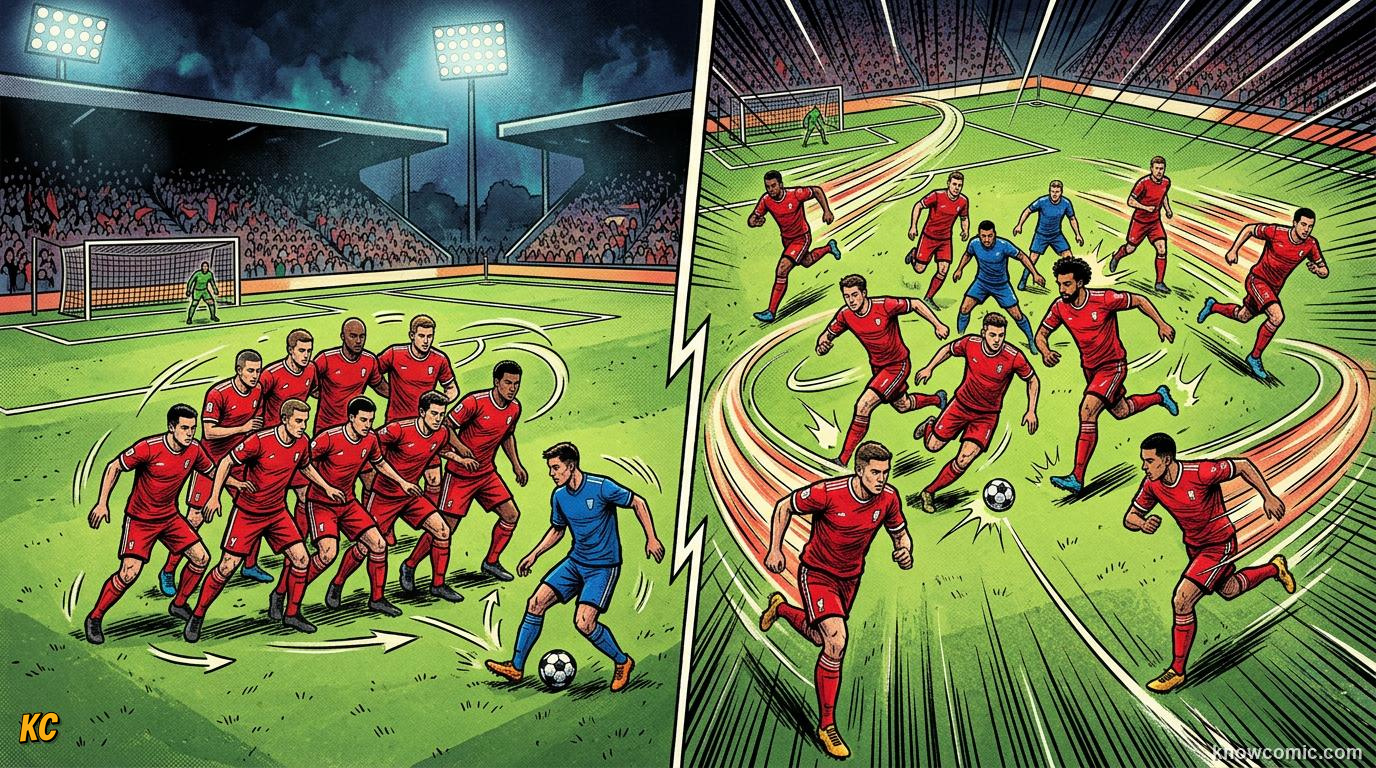
FORMATIONS ARE NOT FROZEN
Here is the secret TV pundits love to explain: a formation on paper is only the starting shape. When your team has the ball, fullbacks sprint forward, midfielders push up, and the shape morphs into something that looks like 2-3-5 or 3-4-3 in attack. When you lose the ball, everyone sprints back and the team collapses into a tight defensive block that might look like 4-5-1. Coaches train these shifts so players know exactly where to run. Watching a World Cup match, try pausing when possession changes: the same eleven players rearrange like a flock of birds turning together.
SHIFT!
LOW BLOCK
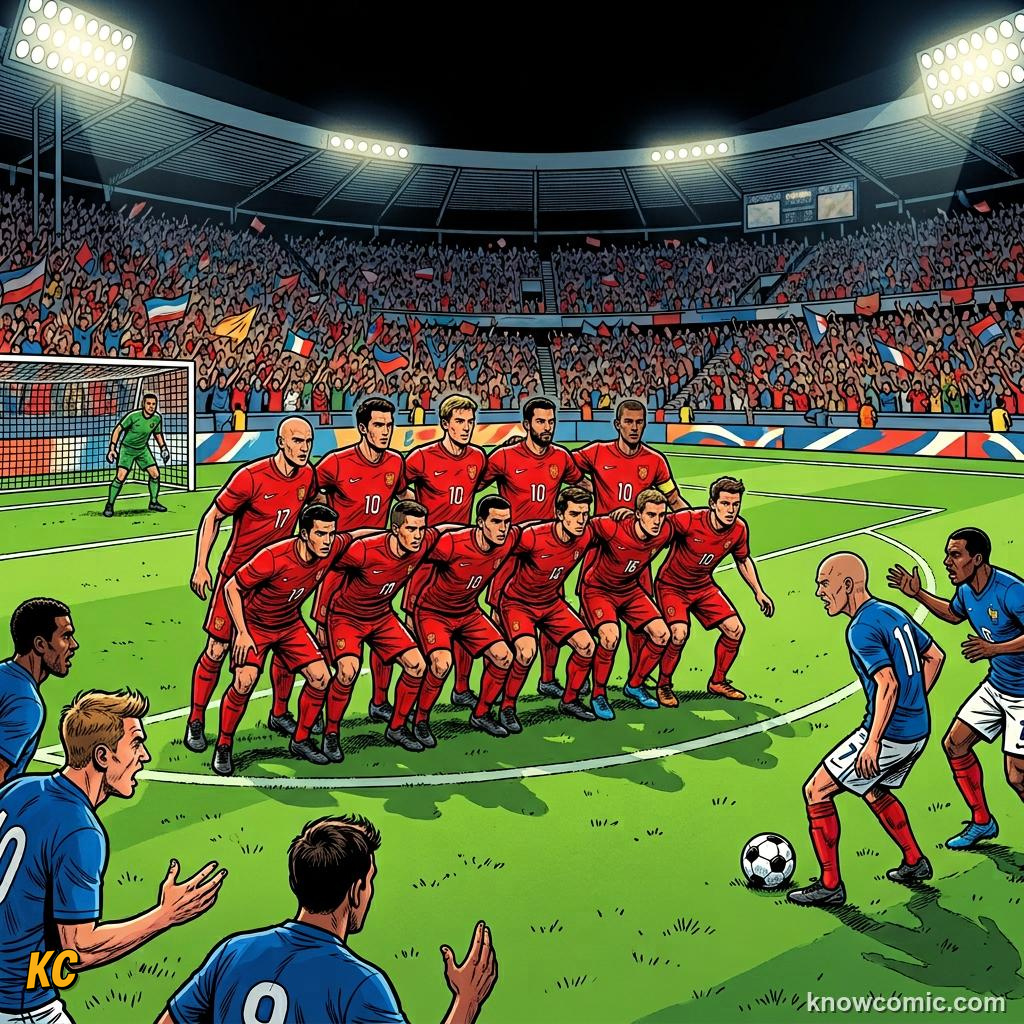
🧱 Everyone behind the ball
🛡️ Protect a slim lead
🛡️ Protect a slim lead
OVERLOAD
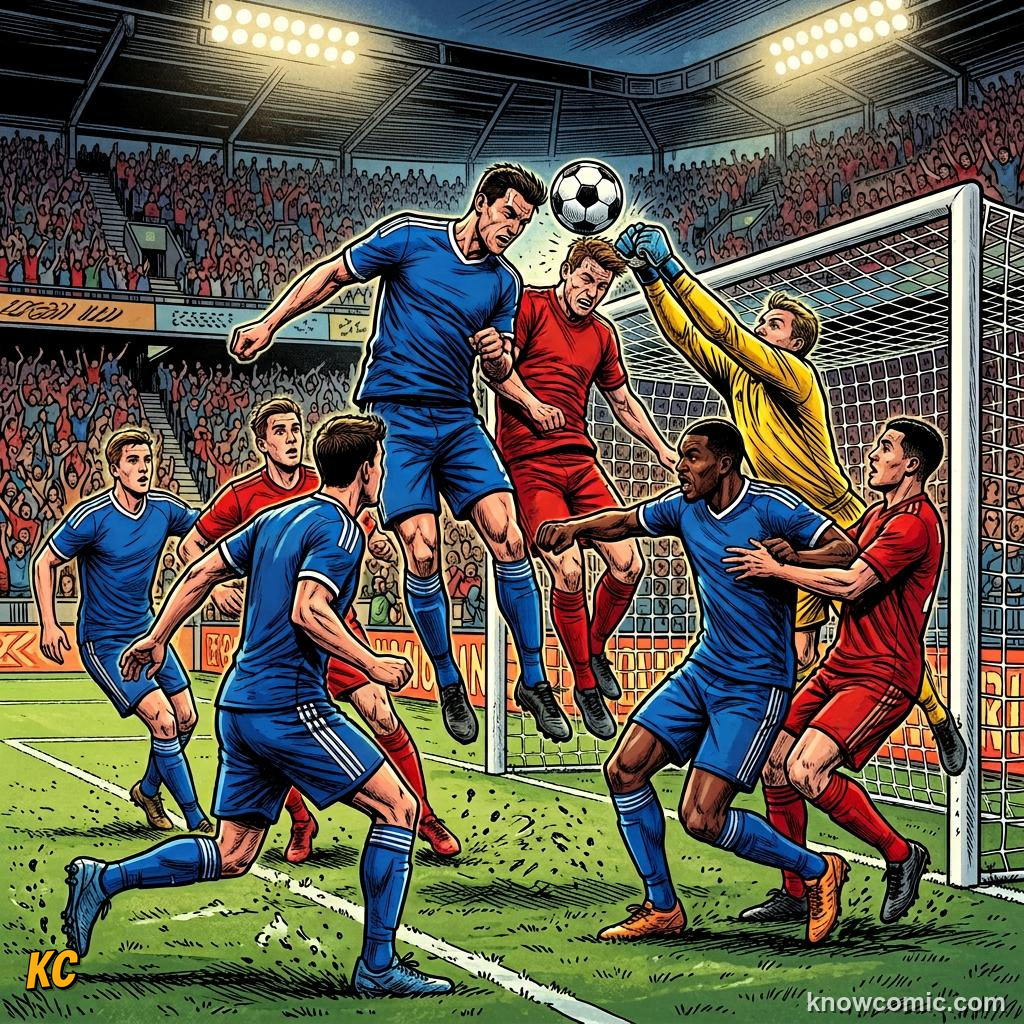
➕ Extra players flood forward
🎯 Outnumber defenders in the box
🎯 Outnumber defenders in the box
COACH PLAN

📋 Tactics board before kick-off
🔄 Substitutions change the shape
🔄 Substitutions change the shape
PAGE 5 OF 5, WORLD CUP BATTLE PLANS
READ THE GAME
SPOT FORMATIONS ON TV
During World Cup 2026, listen for formation names in the first five minutes of every match. Count the defenders when the camera shows a wide shot: four in a line usually means a back four. Look at the front line: three spread attackers suggests 4-3-3, while two strikers side by side points to 4-4-2. Notice when a team switches shape after a substitution or when chasing a goal. Understanding formations turns you from a casual viewer into someone who sees the chess match happening on grass. The numbers are not mysterious anymore. They are the coach's opening move.
⚡ WORLD CUP TACTICS
Knockout matches often see cautious shapes early and wild attacking shifts late. A team leading 1-0 might drop into a 4-5-1 block, while a team trailing might push wingers forward into an all-out 3-4-3 chase!
PLAN IT!
KICK-OFF SHAPE
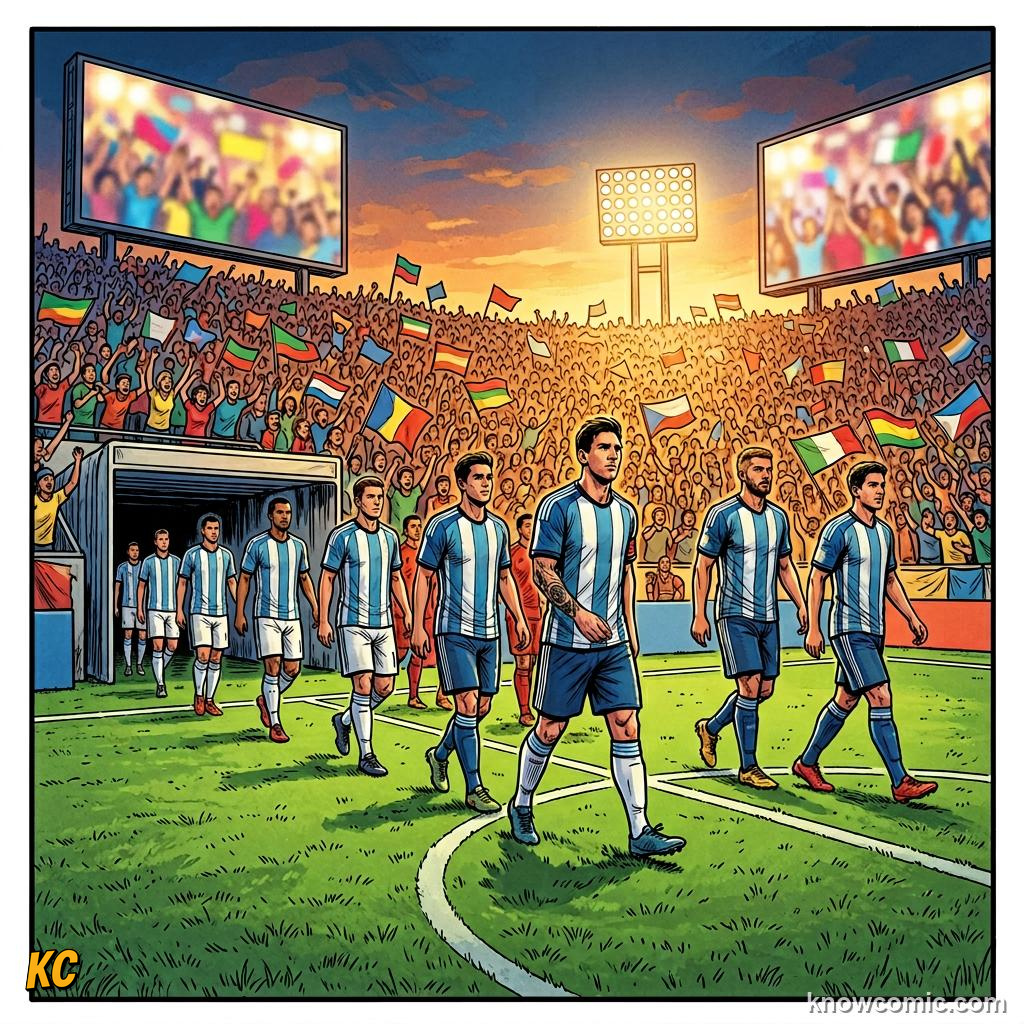
🏟️ Starting shape at kick-off
📺 Count players in each line
📺 Count players in each line
REMEMBER
📋 KEY FACTS
Formation numbers count outfield players from back to front: defenders, midfielders, attackers. 4-3-3 gives width and pressing power. 4-4-2 gives two strikers and a compact block. Shapes shift constantly during play.
🔢 4-3-3 = 4 back, 3 mid, 3 up
🔢 4-4-2 = 4 back, 4 mid, 2 up
🧠 Shapes change with the ball
🔢 4-4-2 = 4 back, 4 mid, 2 up
🧠 Shapes change with the ball
🧠 QUIZ TIME!
FORMATIONS · 5 QUESTIONS
QUESTION 01
In formation numbers, what does the first digit represent?
QUESTION 02
How many midfielders does a 4-4-2 formation have?
QUESTION 03
What is a key strength of the 4-3-3 formation?
QUESTION 04
Which formation typically uses two strikers up front?
QUESTION 05
Why do formations change during a match?
0/5
LOADING...