📋
🟥
🎯
⚽ FOR KIDS & EVERYONE · NO EXPERIENCE NEEDED

WORLD CUP
2026

📋 Rules That Shaped Football · 🟥 Red Cards · 🎯 Penalties

📖 100 Topics 🆓 ALL FREE ⏱️ 5 min per comic 🧠 Quiz included
🔄
1970
Subs + Red Cards
🥅
1978
Penalty Shootout
👟
1994
Backpass Rule
📺
2018
VAR Arrives
TODAY
Rules Still Evolving
📋 WORLD CUPS THAT CHANGED THE GAME
TOPIC 96 · WORLD CUP 2026 · LEVEL 8 · RULES & HISTORY
PAGE 1 OF 5 — 1970: SUBSTITUTES AND RED CARDS ARRIVE
MEXICO 1970
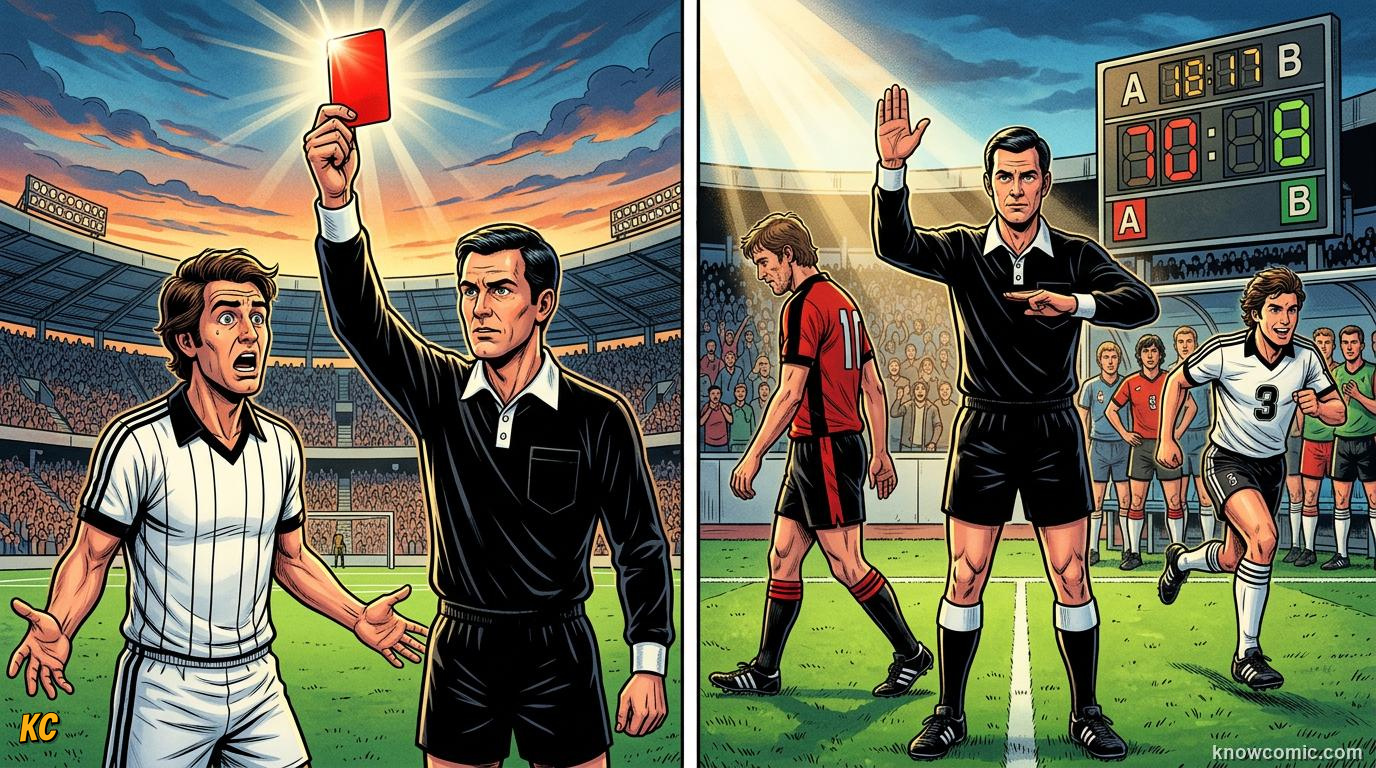
Comic panel titled the year football got its rulebook, labelled mexico 1970, from the KnowComic World Cup 2026 lesson on world cups that changed the game
THE YEAR FOOTBALL GOT ITS RULEBOOK
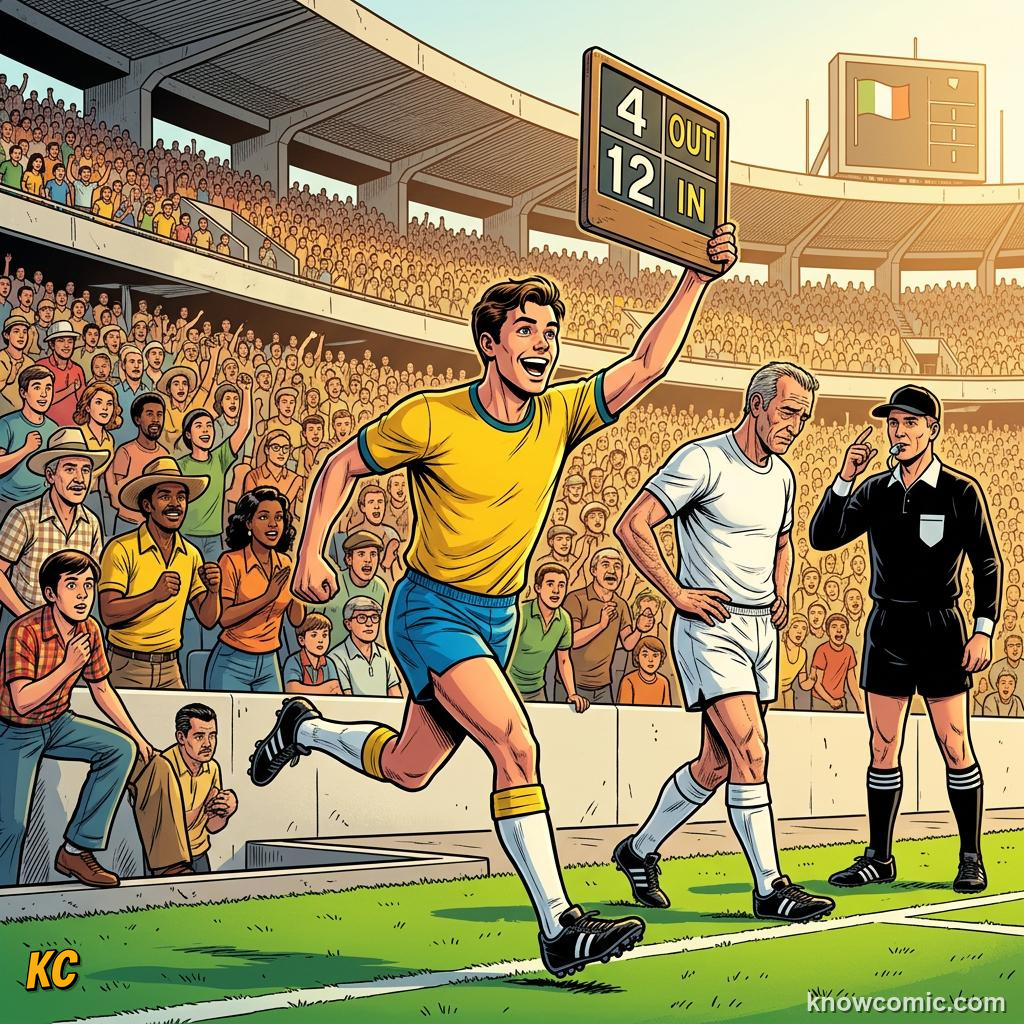
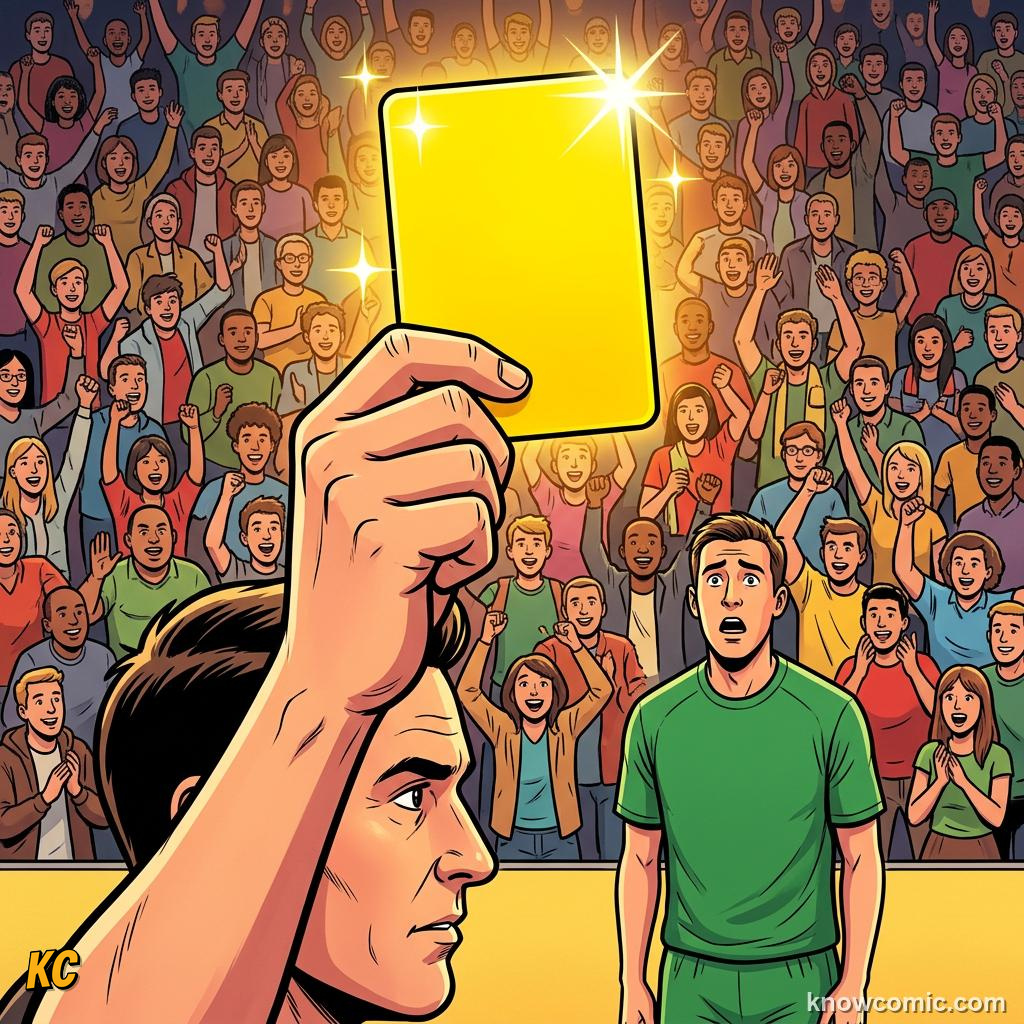
Before the 1970 World Cup in Mexico, football was played under rules that seem almost medieval compared to what we watch today. If a player was injured during a match, tough luck: no substitutes were allowed, and the injured player either limped through the rest of the game or their team played with ten men for as long as they had to. The 1970 tournament changed this forever when substitutes were permitted for the first time in World Cup history, each team being allowed to make two changes per game. It was a radical idea that coaches were not even sure how to use, and many were conservative with their replacements at first. The 1970 tournament also introduced the red and yellow card system that is now one of the most recognisable features of the game worldwide. Before 1970, referees would send off players verbally, and in different languages this sometimes caused confusion and arguments about whether a player had truly been dismissed. The card system, invented by English referee Ken Aston, gave a clear visual signal that crossed every language barrier. These two changes, substitutes and coloured cards, together transformed how the game was managed and protected players in a way that shaped every decade of football since.
⚡ DID YOU KNOW?
The red and yellow card system was invented by English referee Ken Aston. He got the idea while sitting at a red traffic light, thinking about how to make sending-off decisions clear across language barriers at international matches.
CHANGE!
SUBSTITUTES
Comic panel titled five kicks, one goalkeeper, endless drama, labelled substitutes, from the KnowComic World Cup 2026 lesson on world cups that changed the game
🔄 First time subs were allowed at a WC
👥 Each team could make 2 per match
💡 Coaches didn't know how to use them at first
CARDS
Comic panel titled five kicks, one goalkeeper, endless drama, labelled cards, from the KnowComic World Cup 2026 lesson on world cups that changed the game
🟡 Yellow card: warning
🟥 Red card: player must leave the pitch
🚦 Idea came from a traffic light
PAGE 2 OF 5 — 1978 AND 1982: THE PENALTY SHOOTOUT
THE LOTTERY ARRIVES
Comic panel titled five kicks, one goalkeeper, endless drama, labelled the lottery arrives, from the KnowComic World Cup 2026 lesson on world cups that changed the game
FIVE KICKS, ONE GOALKEEPER, ENDLESS DRAMA
Before the penalty shootout existed, tied knockout matches at the World Cup were decided in ways that seem almost random to modern fans. In 1970, some matches went to a coin toss. Others were replayed on a different day. The pressure on players and coaches to find a fairer, faster solution was enormous. The penalty shootout was first used at the 1978 World Cup in Argentina and made its full dramatic debut at the 1982 tournament in Spain, where West Germany played France in a semifinal that many regard as the greatest match in World Cup history. The match finished two all after extra time, setting up the first ever World Cup penalty shootout. West Germany won five to four in an electrifying sequence of spot kicks that had everyone around the world gripping their seats. Goalkeeper Harald Schumacher, who had controversially injured a French player during normal time, saved two penalties to send his team through. The shootout introduced a format where the whole enormous skill set of a two-hour match could come down to a single kick by a single player against a single goalkeeper, a moment of pure nerve, power, and psychology. Critics call it a lottery. Supporters call it the ultimate test of character. Everyone agrees it is absolutely unbearable to watch and impossible to look away from.
⚡ DID YOU KNOW?
Before penalty shootouts, some World Cup ties were settled by a coin toss. The first World Cup penalty shootout happened in 1982 between West Germany and France, in a semifinal widely called the greatest World Cup match ever played.
PENALTY!
THE FORMAT
Comic panel titled the backpass rule transformed how football is played, labelled the format, from the KnowComic World Cup 2026 lesson on world cups that changed the game
🎯 5 kicks each, then sudden death
🧤 Goalkeeper vs. kicker, twelve yards
🎰 Critics call it a lottery of nerve
1982 CLASSIC
Comic panel titled the backpass rule transformed how football is played, labelled 1982 classic, from the KnowComic World Cup 2026 lesson on world cups that changed the game
🇩🇪 West Germany beat France 5-4 on penalties
🥅 First ever World Cup shootout
🌟 Called the greatest WC match ever
COIN TOSS
Comic panel titled the backpass rule transformed how football is played, labelled coin toss, from the KnowComic World Cup 2026 lesson on world cups that changed the game
🪙 Before 1978 some ties ended with a coin toss
😱 Whole match decided by a coin flip
✅ Shootout replaced this from 1978 onwards
PAGE 3 OF 5 — 1994: THE BACKPASS RULE AND GOLDEN GOAL
BACKPASS BAN
Comic panel titled the backpass rule transformed how football is played, labelled backpass ban, from the KnowComic World Cup 2026 lesson on world cups that changed the game
🚫 Keeper can no longer pick up a backpass
⚡ Game became faster and more attacking
😤 Introduced to stop time-wasting tactics
GOLDEN GOAL
Comic panel titled the backpass rule transformed how football is played, labelled golden goal, from the KnowComic World Cup 2026 lesson on world cups that changed the game
⭐ Golden goal: first goal in extra time wins
🏆 Used at 1998 and 2002 World Cups
❌ Abolished in 2004, too defensive
TACTICAL CHANGES
Comic panel titled the backpass rule transformed how football is played, labelled tactical changes, from the KnowComic World Cup 2026 lesson on world cups that changed the game
THE BACKPASS RULE TRANSFORMED HOW FOOTBALL IS PLAYED
Before 1992, a common tactic in football was for a defending player to pass the ball back to their own goalkeeper, who would then pick it up in their hands, bounce it around, and waste significant amounts of time. This was perfectly legal and teams used it constantly to protect a lead, frustrating opponents and audiences alike. Some matches were almost unplayable to watch because of how often teams retreated into this defensive pattern. The backpass rule, which came into effect in time for the 1994 World Cup qualification and the tournament itself, banned goalkeepers from handling deliberate backpasses played with the feet. If a keeper tried to pick up such a pass, the other team was awarded an indirect free kick inside the penalty area. This single rule change dramatically increased the pace and excitement of football by forcing defenders to play out under pressure rather than simply retreating to their goalkeeper. That same era also saw the introduction of the three points for a win rule, replacing two points. Teams had previously been happy to settle for a draw, earning one point each. With three points suddenly available for a win, the incentive to attack and go for victory increased enormously, transforming the tactical approach of nearly every team in the world.
⚡ DID YOU KNOW?
Before 1994, teams got 2 points for a win and 1 for a draw. Changing this to 3 points for a win massively increased the number of teams going all-out to score rather than settling for a boring draw.
FASTER!
PAGE 4 OF 5 — 2018: VAR CHANGES FOOTBALL FOREVER
THE VIDEO REFEREE
Comic panel titled var the most controversial rule in football history, labelled the video referee, from the KnowComic World Cup 2026 lesson on world cups that changed the game
VAR: THE MOST CONTROVERSIAL RULE IN FOOTBALL HISTORY
The Video Assistant Referee, universally known as VAR, arrived at the 2018 World Cup in Russia as the most significant technological change to football in decades. For the first time ever, a team of video officials watching multiple camera feeds in an operations room could flag potential errors to the on-pitch referee: goals that should be disallowed for handball or offside, penalty decisions that were missed or incorrectly awarded, cases of mistaken identity in discipline. The idea was simple: use technology to correct clear and obvious errors. The reality proved far more complicated and controversial. At Russia 2018, VAR intervened in several crucial moments including awarding penalties that were not visible to the naked eye in real time and disallowing goals for offside by millimetres, moments that would have been impossible to judge accurately before the technology existed. Supporters argue VAR makes the game more fair and accurate. Critics argue the delays break the rhythm of the match, the human element of refereeing is part of football's drama, and some VAR decisions take so long that the emotional spontaneity of a goal celebration is destroyed before the goal is confirmed. The debate rages on, but VAR is now a permanent fixture of World Cup football and is being refined with every tournament.
⚡ DID YOU KNOW?
VAR first appeared at a World Cup in Russia 2018. In that tournament it was used 335 times across 64 matches, overturning 20 on-field decisions. It has been used at every World Cup since.
CHECK!
HOW VAR WORKS
Comic panel titled every world cup teaches football something new, labelled how var works, from the KnowComic World Cup 2026 lesson on world cups that changed the game
📺 Video officials watch multiple camera feeds
📞 Can radio the on-pitch referee to check
🔍 Ref then views replay on a pitchside screen
FOR AND AGAINST
Comic panel titled every world cup teaches football something new, labelled for and against, from the KnowComic World Cup 2026 lesson on world cups that changed the game
✅ For: catches clear referee errors
❌ Against: kills spontaneous goal celebrations
🤔 Debate continues at every tournament
WHAT IT COVERS
Comic panel titled every world cup teaches football something new, labelled what it covers, from the KnowComic World Cup 2026 lesson on world cups that changed the game
🥅 Goals: offside and handball checks
🟥 Red cards: violent conduct reviews
🎯 Penalties: foul inside the box checks
PAGE 5 OF 5 — HOW RULES KEEP IMPROVING THE GAME
ALWAYS EVOLVING
Comic panel titled every world cup teaches football something new, labelled always evolving, from the KnowComic World Cup 2026 lesson on world cups that changed the game
EVERY WORLD CUP TEACHES FOOTBALL SOMETHING NEW
The history of football rules is really a history of the sport listening to what the game needs and responding. Substitutes arrived because injured players suffered needlessly. Coloured cards arrived because communication was failing across language barriers. Penalty shootouts arrived because coin tosses were absurd. The backpass ban arrived because time-wasting was making matches unwatchable. VAR arrived because technology could prevent injustice. Each change has been resisted at first by people who loved the old way and accepted eventually because it made the game better and fairer. At the 2026 World Cup, the ongoing improvement of VAR technology, including semi-automated offside systems that can compute offside lines in under a second, will further reduce decision delays. Some people are already discussing whether artificial intelligence should play a greater role in officiating. The answer the football world always finds is the same: technology should serve the human drama of the game, not replace it. Football is fundamentally a human story, eleven people trying to solve a problem against eleven other people trying to stop them. The rules exist not to make that story more complicated, but to make it more fair, more exciting, and more beautiful.
EVOLVE!
RULES TIMELINE
Comic panel labelled rules timeline, illustrating world cups that changed the game in KnowComic's World Cup 2026 series
🔄 1970: Subs + Red and yellow cards
🥅 1982: Penalty shootouts debut
🚫 1994: Backpass ban speeds game up
📺 2018: VAR technology arrives
REMEMBER
📋 KEY FACTS
Substitutes and cards arrived in 1970. Penalty shootouts began in 1982. The backpass ban and 3-points-for-a-win transformed play from 1994. VAR, the video referee, arrived in 2018 and is used at every World Cup since.
🚦 Cards invented at a red traffic light
🪙 Coin toss replaced by penalty shootout
🤖 Semi-auto offside arrives at 2026
🧠 QUIZ TIME!
WORLD CUPS THAT CHANGED THE GAME · 5 QUESTIONS
QUESTION 01
Who invented the red and yellow card system used in football?
QUESTION 02
Before penalty shootouts existed, how were some tied World Cup matches decided?
QUESTION 03
What did the backpass rule introduced in the early 1990s actually ban?
QUESTION 04
At which World Cup did VAR (Video Assistant Referee) first appear?
QUESTION 05
Changing from 2 points to 3 points for a win at the World Cup had what effect?
0/5
LOADING...
No comments yet, be the first!
← TOPIC 95 📋 ALL TOPICS TOPIC 97 →