THE UNIVERSE & COSMOLOGY
13.8 billion years ago, all of space, time, matter and energy exploded into existence from a point smaller than an atom. How do we know? The cosmic microwave background — the afterglow of creation itself — is still detectable today, and it perfectly matches Big Bang predictions.
95% of the universe is invisible. Dark matter holds galaxies together against their own rotation. Dark energy is accelerating the expansion of space itself. Both are detectable only by their effects — and neither has ever been directly observed. The greatest unsolved mystery in physics.
In 1929, Edwin Hubble discovered that every galaxy is moving away from us — and the farther it is, the faster it recedes. Space itself is expanding, like dots on an inflating balloon. Running the expansion backwards leads to a single origin: the Big Bang.
The CMB is thermal radiation filling the entire universe — released 380,000 years after the Big Bang when the universe cooled enough for atoms to form. Its temperature map (2.7K, with tiny fluctuations of 1 part in 100,000) encodes the seeds of every galaxy that ever formed.
A fraction of a second after the Big Bang, the universe expanded faster than the speed of light. Inflation solves three problems: why the CMB is uniform in all directions, why space is flat, and why we don't see magnetic monopoles. Evidence is in the CMB's polarisation patterns.
The observable universe spans 93 billion light-years — but the full universe may be infinite. The edge of the observable universe is a horizon: beyond it, light hasn't had time to reach us since the Big Bang. This isn't the edge of space — it's the edge of our information horizon.
Dark energy is accelerating cosmic expansion. If it stays constant (cosmological constant), the universe ends in heat death — maximum entropy, zero useful energy. If dark energy grows stronger, the Big Rip tears apart galaxies, then atoms. If it reverses, the Big Crunch collapses everything.
Eternal inflation predicts an infinite sea of 'bubble universes' — each with different physical constants. String theory's landscape predicts 10⁵⁰⁰ possible universes. The many-worlds interpretation of quantum mechanics implies every quantum event spawns a branch. Are any of these testable?
For every particle, there's an antiparticle. Matter and antimatter annihilate on contact. The Big Bang should have created equal amounts — yet the universe is made of matter. This asymmetry (baryogenesis) is one of the deepest unsolved problems in cosmology. CP violation in particle physics is a clue.
Einstein predicted in 1916 that accelerating masses ripple spacetime like a stone in water. In 2015, LIGO detected these waves for the first time — from two black holes merging 1.3 billion light-years away. Gravitational wave astronomy is now a new way of sensing the universe.
Two independent methods of measuring cosmic expansion give different answers: 67 km/s/Mpc from the CMB, 73 km/s/Mpc from distance ladders. This Hubble Tension has now reached 5-sigma significance. It may signal new physics — a fifth fundamental force, extra neutrinos, or dark energy evolution.
Einstein's general relativity describes gravity not as a force but as the curvature of four-dimensional spacetime. Mass tells spacetime how to curve; spacetime tells mass how to move. Every GPS satellite corrects for relativistic time dilation — or navigation would drift 11 km per day.
Hydrogen and most helium formed in the first 3 minutes after the Big Bang (Big Bang nucleosynthesis). All heavier elements were forged in stellar cores and supernova explosions. Every carbon atom in your body was made inside a long-dead star. You are made of stellar ash.
Physics equations work equally backwards and forwards in time — yet time has a clear direction. The arrow of time emerges from entropy (disorder always increases, per the second law of thermodynamics). This traces back to the extraordinarily low entropy of the Big Bang — a deep cosmological puzzle.
Cosmic rays are subatomic particles (mostly protons) accelerated to nearly the speed of light by supernova remnants and other extreme sources. Billions pass through your body every minute. Ultra-high-energy cosmic rays exceed 10²⁰ eV — more energy than anything our particle accelerators can produce.
On the largest scales, the universe forms a cosmic web: galaxy filaments (hundreds of millions of light-years long) surrounding vast empty voids. This pattern, predicted by cold dark matter models, is reproduced by the IllustrisTNG supercomputer simulation starting from CMB fluctuations alone.
Neutrinos interact so weakly with matter that 65 billion solar neutrinos pass through every square centimetre of your body every second. They carry information from stellar cores and supernovae inaccessible any other way. The 1987 supernova SN 1987A was detected in neutrinos 3 hours before visible light.
Quantum mechanics predicts empty space seethes with virtual particles — creating vacuum energy. Einstein's cosmological constant accounts for this as an energy of empty space. But the theoretical prediction exceeds the measured value by 120 orders of magnitude: the worst discrepancy between theory and experiment in all of physics.
In the first 380,000 years, the universe was a hot plasma ringing with sound waves. When the CMB released, these waves froze into the large-scale structure of the universe — a preferred galaxy separation of 490 million light-years. BAO measurements provide an independent cosmic ruler for mapping dark energy.
Lambda-CDM (Λ-CDM) is the standard model of cosmology: a universe containing ordinary matter (5%), cold dark matter (27%) and dark energy (68%), expanding from a Big Bang 13.8 billion years ago. It successfully predicts the CMB, galaxy distributions, and light element abundances to extraordinary precision.
Dark matter candidates span 90 orders of magnitude in mass: ultralight axions (10⁻²² eV) to primordial black holes (solar masses). WIMPs were the leading candidate for decades but direct detection experiments have repeatedly come up empty. The nature of dark matter remains the central question of modern cosmology.
Cosmological redshift isn't Doppler shift — it's the expansion of space itself stretching light to longer wavelengths. Redshift z=1 means the universe was half its current size when that light was emitted. The highest redshift objects observed (z~13) are seen as they were just 300 million years after the Big Bang.
If the universe were infinite, static, and eternal, every line of sight would end on a star surface — and the night sky would blaze as bright as the Sun. The resolution: the universe has a finite age, so we can only see a finite volume. Beyond our horizon, there are stars whose light hasn't reached us yet.
Different wavelengths reveal different aspects of the universe. Radio: gas clouds and pulsars. Infrared: dust-shrouded star formation. Visible: most stars and galaxies. UV and X-ray: hot gas and black hole accretion. Gamma-ray: the most violent explosions. Multi-wavelength astronomy sees the full cosmic story.
Before 10⁻⁴³ seconds (the Planck time), quantum gravity effects dominate and our current physics breaks down. Spacetime itself may be quantised at this scale. Understanding the Planck epoch requires a theory of quantum gravity — something string theory and loop quantum gravity both attempt, with limited success.
In 1996, Hubble stared at a patch of 'empty' sky for 10 days and revealed 3,000 galaxies. The Ultra Deep Field (2004) exposed 10,000 galaxies in a field 1/13,000,000 of the sky. Each one a galaxy of billions of stars. This image, more than any other, redefined humanity's sense of cosmic scale.
The Big Bang produced equal matter and antimatter. They should have annihilated, leaving nothing. Instead, for every billion antiparticles, there were a billion-and-one particles of matter. That one-in-a-billion excess is everything: you, Earth, the Milky Way, all galaxies. The mechanism that caused this asymmetry is unknown.
Before the Big Bang model was accepted, Fred Hoyle proposed the Steady State theory: the universe has always looked as it does now, with matter continuously created to maintain constant density as it expands. The CMB (a clear prediction of the Big Bang but not Steady State) definitively falsified it in 1965.
Astronomers measure distance in steps: parallax (nearby stars) → Cepheid variables (nearby galaxies) → Type Ia supernovae (distant galaxies). Each rung calibrates the next. The tension between different rungs giving different Hubble constants is the Hubble Tension — potentially the most exciting discrepancy in modern cosmology.
Every telescope is a time machine. The Sun's light is 8 minutes old. Andromeda's light: 2.5 million years. The most distant JWST galaxies are seen at z>13, as they were fewer than 400 million years after the Big Bang. Looking farther into space means looking further back in time — the universe's own fossil record.
STARS & STELLAR EVOLUTION
Stars form when gravitational collapse within a molecular cloud exceeds thermal pressure. The Jeans mass sets the minimum mass for collapse. As the protostar contracts, temperature rises until hydrogen fusion ignites — the birth of a star. The process takes 50 million years for a Sun-like star.
The H-R diagram plots stellar luminosity against temperature, revealing the life stages of stars. 90% of stars lie on the main sequence (hydrogen fusion). Red giants, white dwarfs, and supergiants are the outliers. The diagram remains the single most useful tool for understanding stellar populations.
Stars fuse hydrogen to helium via the proton-proton chain (low-mass stars) or the CNO cycle (high-mass stars). The energy released is E=mc² — the mass deficit between reactants and products. The Sun converts 600 million tonnes of hydrogen to helium every second, releasing 3.8×10²⁶ watts continuously.
A 1 solar mass star spends 10 billion years on the main sequence, then expands to a red giant (luminosity 1,000x), thermally pulses on the asymptotic giant branch, sheds its envelope as a planetary nebula, and leaves behind a white dwarf — slowly cooling for trillions of years.
Stars above 8 solar masses burn through hydrogen in tens of millions of years, then sequentially fuse helium, carbon, neon, oxygen, and silicon — each stage faster than the last. The final stage (silicon to iron) can last just one day. Iron fusion would cost energy rather than release it — so the core collapses instantly.
Type Ia supernovae occur when a white dwarf accretes mass past the Chandrasekhar limit (1.4 solar masses) and thermonuclear fusion destroys it. Core-collapse supernovae result from massive star deaths. Type Ia have consistent peak luminosity — making them 'standard candles' that revealed the accelerating expansion of the universe.
Hydrogen forms in the Big Bang. Helium in the Big Bang and stellar cores. Carbon and oxygen in helium-fusing cores. Elements up to iron in successive stellar burning stages. Iron-group elements in supernova cores. Elements heavier than iron: r-process (rapid neutron capture) in neutron star mergers. Every element has a cosmic origin story.
A white dwarf is supported not by fusion but by electron degeneracy pressure — a quantum mechanical effect. The Chandrasekhar limit (1.4 solar masses) is the maximum mass a white dwarf can sustain. Above this, degeneracy pressure fails and the white dwarf either collapses to a neutron star or detonates as a Type Ia supernova.
A neutron star packs 1.4+ solar masses into a 20 km sphere. Its density exceeds that of an atomic nucleus. Supported by neutron degeneracy pressure, it has a crystalline crust, a superfluid interior, and a surface gravity 200 billion times Earth's. A teaspoon of neutron star matter weighs 10 million tonnes.
Pulsars are rotating neutron stars emitting beams of radio waves from their magnetic poles. As they spin, these beams sweep across the sky like lighthouse beams — creating pulses detectable across the galaxy. The most precise pulsars rival atomic clocks in accuracy and are used as gravitational wave detectors.
In a binary system, the more massive star evolves faster. When it expands to a red giant, its outer layers may spill onto the companion via the L1 Lagrange point — a process called mass transfer. This can spin up the companion, trigger novae, and eventually produce Type Ia supernovae or X-ray binaries.
Cepheid variables pulsate with a period proportional to their luminosity — allowing astronomers to calculate their true brightness, compare it to apparent brightness, and measure distance. Henrietta Leavitt discovered this in 1912. Hubble used it to prove galaxies exist beyond our own — perhaps the most consequential astronomical measurement ever made.
The Sun's 11-year magnetic cycle drives sunspot activity, solar flares, and coronal mass ejections (CMEs). Its differential rotation (faster at equator than poles) generates its magnetic field via a dynamo mechanism. Solar interior zones: radiation (energy transport by photons) and convection (energy transport by bulk fluid motion).
Each element absorbs specific wavelengths — creating dark absorption lines in stellar spectra (Fraunhofer lines). Spectroscopy reveals stellar composition, temperature, pressure, radial velocity, rotation, and magnetic field strength. Cecilia Payne used it in 1925 to discover that stars are primarily hydrogen — overturning established consensus.
The Harvard classification (O B A F G K M) orders stars by surface temperature: O (>30,000 K, blue) to M (<3,500 K, red). Our Sun is G2V (G class, luminosity class V = main sequence). The mnemonic 'Oh Be A Fine Girl/Guy, Kiss Me' has been used since the 1920s. Morgan-Keenan added luminosity classes I–V.
Before reaching the main sequence, solar-mass stars pass through a T Tauri phase: high luminosity variability, strong solar winds, and a surrounding protoplanetary disc from which planets may form. The disc can be photoevaporated by the protostar's own UV radiation — limiting the window for planet formation.
Magnetars are neutron stars with magnetic fields 1,000 trillion times Earth's. On 27 December 2004, a magnetar flare from SGR 1806-20 (50,000 light-years away) measurably ionised Earth's upper atmosphere — the strongest cosmic event ever recorded affecting Earth. Their field decay powers X-ray emission.
Population I (metal-rich, like the Sun) formed from enriched gas. Population II (metal-poor) are old stars formed early in galaxy history. Population III are the hypothetical first stars — metal-free, possibly hundreds of solar masses, formed from primordial hydrogen and helium. None have been directly observed — yet.
For decades, neutrino detectors observed only 1/3 of the neutrinos predicted by solar models. The resolution: neutrinos oscillate between three 'flavours' — electron, muon, tau — during flight. Early detectors only detected electron neutrinos. This discovery (2001 Nobel Prize) also proved neutrinos have a tiny but non-zero mass.
Brown dwarfs (13–80 Jupiter masses) are too massive to be planets but too low-mass to sustain steady hydrogen fusion. They fuse deuterium briefly, then slowly cool for billions of years. The first confirmed brown dwarf was found in 1995 (Gliese 229B). Some isolated brown dwarfs are colder than Earth's surface.
When a Sun-like star sheds its outer layers at the end of its red giant phase, the ionised gas forms a planetary nebula — glowing in the UV from the central white dwarf. The name is an 18th-century misnomer (they look like planetary discs in small telescopes). They're among the most visually spectacular objects in astronomy.
Stars lose angular momentum via their magnetised stellar wind, slowing down over time. Gyrochronology uses this relationship (spin rate ∝ age⁻½) to estimate stellar ages from rotation periods — complementing harder-to-measure isochrone ages. Our Sun rotates differentially (25 days at equator, 35 days at poles).
In dense star clusters, stars occasionally merge directly. The result — a 'blue straggler' — appears younger and more massive than surrounding stars, seemingly defying the cluster's age. Their existence in globular clusters was a puzzle for decades until stellar collision and mass transfer were confirmed as mechanisms.
The most massive known star, R136a1, has a mass of ~200–300 solar masses and luminosity 8.7 million times the Sun's. Such stars have lifespans of just 1–2 million years before dying as hypernovae or pair-instability supernovae. Their existence challenges models of how massive a star can theoretically become.
Open clusters (hundreds of young stars, loosely bound, in galactic disc) vs globular clusters (100,000+ old stars, tightly gravitationally bound, in galactic halo). All stars in a cluster form simultaneously from the same molecular cloud — making them natural experiments for testing stellar evolution theory.
The Orion Nebula (M42, 1,344 light-years) is the closest major star-forming region. Hubble and JWST images resolved over 1,000 young stars and protoplanetary discs (proplyds) at various stages of formation. It's the most studied stellar nursery, providing a real-time view of planet formation in progress.
The Sun continuously emits a stream of charged particles (solar wind) at 400–700 km/s, filling the heliosphere — a bubble extending past Pluto. The boundary (heliopause) is where solar wind pressure equals the interstellar medium pressure. Voyager 1 crossed the heliopause in 2012, becoming the first human-made interstellar object.
When two neutron stars merge, the collision creates conditions for rapid neutron capture (r-process) — building elements heavier than iron. Gold, platinum, and all lanthanides are primarily r-process products. The 2017 neutron star merger GW170817 (LIGO + Fermi + telescope observations) directly confirmed this: kilonovae make gold.
The Sun's corona (2 million K) is far hotter than its surface (5,778 K) — a mystery called the coronal heating problem. X-ray and EUV observations reveal coronal loops, active regions, and hot plasma structures invisible in optical light. Proposed heating mechanisms include wave heating and magnetic reconnection.
The cosmic distance ladder: stellar parallax (within 10,000 ly) → spectroscopic parallax (using spectral type) → Cepheid variables (within 100 Mpc) → Type Ia supernovae (across the observable universe). Each method builds on the previous. GAIA satellite has measured parallax for 1 billion stars with unprecedented precision.
BLACK HOLES & EXTREME PHYSICS
Karl Schwarzschild derived the first black hole solution from Einstein's equations in 1916 — while serving at the Russian Front in WWI. The Schwarzschild radius defines the event horizon: the point of no return. Einstein himself doubted such objects could exist in nature — he was wrong.
Black holes of 5–50 solar masses form from core-collapse supernovae. In X-ray binaries, they accreting material from a companion star, producing X-rays that allow detection. Cygnus X-1 (first confirmed black hole, 1972) has a mass of ~21 solar masses and is 7,200 light-years away.
Every large galaxy has a supermassive black hole (SMBH) at its centre, ranging from millions to tens of billions of solar masses. M-sigma relation: SMBH mass correlates with bulge velocity dispersion — suggesting black holes co-evolve with their host galaxies via feedback processes.
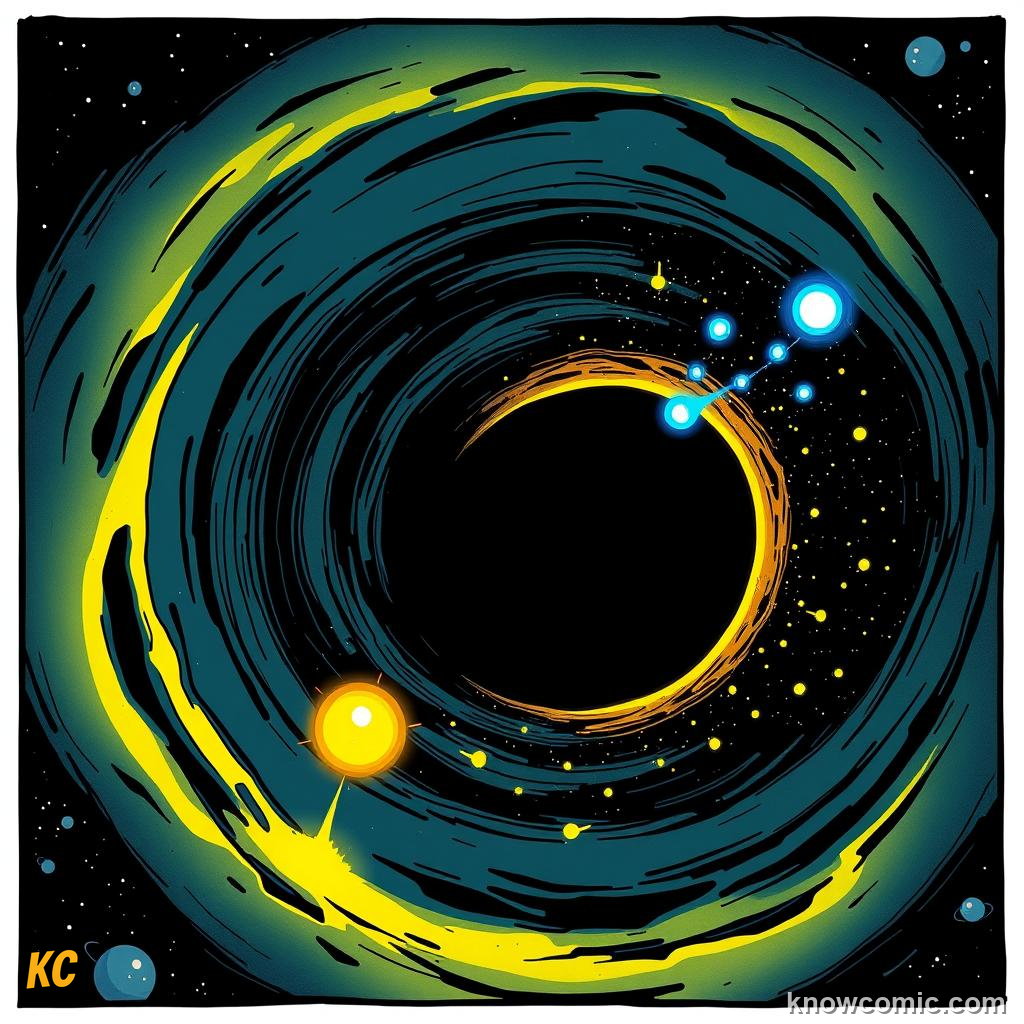
The event horizon is not a surface but a mathematical boundary — the radius at which escape velocity equals the speed of light. An infalling astronaut crosses it without noticing anything special (for large black holes). But once crossed, all future worldlines lead to the singularity. There is no escape.
Stephen Hawking (1974) showed quantum effects near the event horizon cause black holes to emit thermal radiation — slowly losing mass. A stellar-mass black hole takes 10⁶⁷ years to evaporate (longer than the universe's age). But the principle raises the information paradox: is information destroyed when black holes evaporate?
Quantum mechanics demands information is conserved. But Hawking radiation appears thermal — carrying no information about what fell in. If the black hole evaporates completely, this information is lost — violating quantum mechanics. Stephen Hawking conceded in 2004. The resolution remains debated: firewalls, fuzzballs, islands, or holographic unitarity.
Near a black hole, tidal forces (differential gravity) stretch objects radially and compress them transversely — 'spaghettification'. For a stellar black hole, this happens outside the event horizon (painfully). For a supermassive black hole, tidal forces at the horizon are gentle enough to cross without noticing.
Real black holes rotate — carrying angular momentum from their progenitor star. A Kerr black hole has an ergosphere outside the event horizon where spacetime rotates faster than light. The Penrose process extracts energy from the ergosphere. Frame dragging (Lense-Thirring effect) has been measured around Earth using LAGEOS satellites and Gravity Probe B.
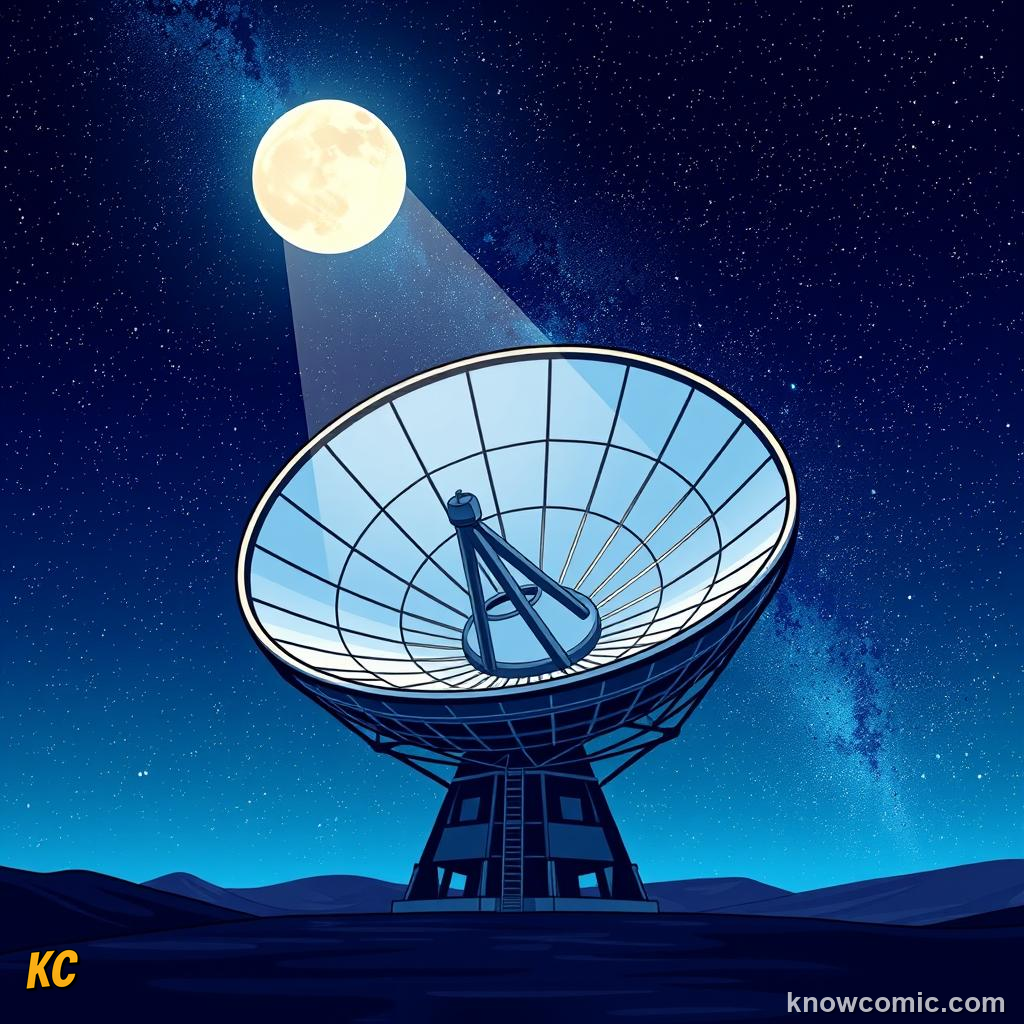
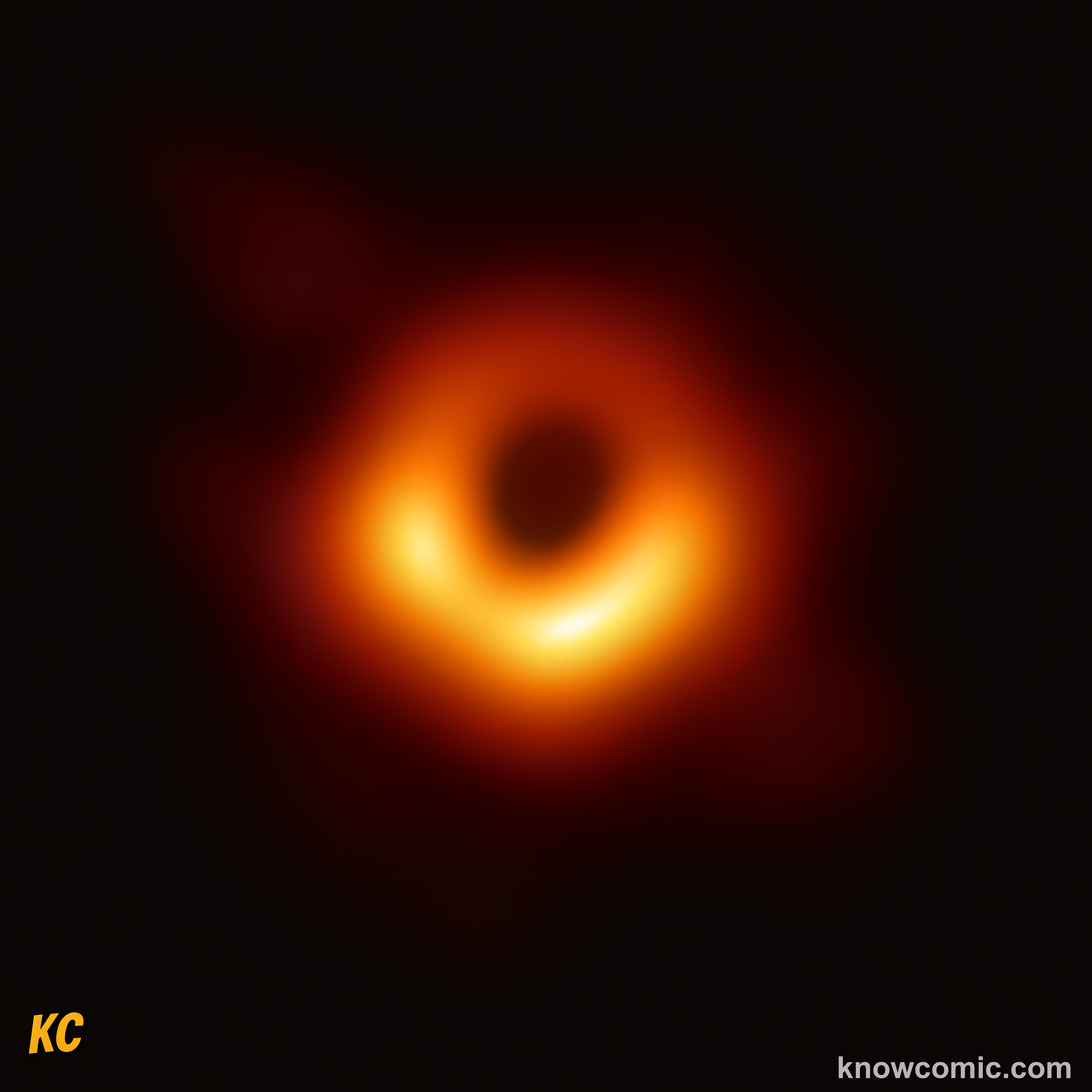
The Event Horizon Telescope is a planet-sized array of radio dishes using VLBI. In 2019, it published the first image of a black hole: M87's central black hole, 6.5 billion solar masses, 100 million light-years wide, 55 million light-years away — a ring of glowing accretion plasma with a dark shadow.
Sagittarius A* (4 million solar masses) lies 26,000 light-years away. Its existence was confirmed by tracking stars orbiting the galactic centre at extreme speeds — S2 reached 2.7% of light speed at closest approach. The 2020 Nobel Prize in Physics was awarded for this discovery. The EHT imaged it in 2022.
Material falling into a black hole spirals inward as an accretion disc, heated to millions of degrees by viscosity and magnetic turbulence (MRI: magneto-rotational instability), radiating X-rays more luminously than entire galaxies. The innermost stable circular orbit (ISCO) defines the disc's inner edge.
Quasars are active galactic nuclei powered by supermassive black holes accreting at near-Eddington rates — radiating more than 1,000 times a galaxy's stellar luminosity from a region the size of our solar system. Discovered in the 1960s, they're seen at cosmological distances — meaning they were more active in the early universe.
Many accreting black holes launch collimated jets of plasma moving at >99% the speed of light, extending thousands of light-years. The launch mechanism involves magnetic field extraction from the spinning black hole (Blandford-Znajek mechanism). Blazars are jets pointed directly at us — making them extraordinarily luminous.
When a star passes within the tidal radius of a supermassive black hole, tidal forces exceed the star's self-gravity, shredding it. About half the stellar debris accretes, creating a luminous transient lasting months. TDEs are now detected several times per year — probing otherwise quiet, 'sleeping' supermassive black holes.
Black holes obey four thermodynamic laws: zeroth (temperature = Hawking temperature), first (energy conservation), second (area/entropy never decreases), third (can't reach absolute zero). Bekenstein-Hawking entropy is proportional to horizon AREA — proportional to the square of the radius — suggesting information is encoded on a 2D surface.
Density fluctuations in the early universe could have formed black holes before any stars existed. Primordial black holes (PBHs) in the mass range 10¹⁷–10²³ g would not have evaporated yet and are a viable dark matter candidate. LIGO's detection of unexpectedly massive black hole mergers has renewed interest in the PBH hypothesis.
Strong gravitational fields bend light paths. A black hole acts as a gravitational lens — producing multiple images, arcs, and Einstein rings of background objects. The photon sphere (1.5× Schwarzschild radius) is where photons orbit. The shadow in the EHT image is the photon sphere silhouetted against the glowing accretion disc.
Gamma-ray bursts (GRBs) release more energy in seconds than the Sun will emit in 10 billion years. Long GRBs (>2s): core-collapse supernovae of very massive stars. Short GRBs (<2s): neutron star mergers. GW170817 (2017) was the first GRB with confirmed gravitational wave counterpart — revolutionising multi-messenger astronomy.
The 2017 neutron star merger detected simultaneously by LIGO (gravitational waves), Fermi (gamma-ray burst), and over 70 optical observatories was the most observed astronomical event ever. The kilonova afterglow confirmed r-process nucleosynthesis — proving neutron star mergers produce gold, platinum, and all heavy r-process elements.
The Tolman-Oppenheimer-Volkoff limit is the maximum mass a neutron star can sustain before degeneracy pressure fails and it collapses to a black hole. Estimated at 2–3 solar masses, it depends on the unknown neutron star equation of state. LIGO detections and massive pulsars (2 solar masses) are constraining it.
Between stellar-mass (5–50 M☉) and supermassive (10⁶–10¹⁰ M☉) black holes lies a mysterious gap: intermediate-mass black holes (IMBHs, 10²–10⁵ M☉). They may exist in globular cluster centres and dwarf galaxy nuclei. LIGO has detected black hole mergers whose products fall in this range. Evidence for IMBHs remains tentative.
The no-hair theorem states a black hole is fully characterised by just three quantities: mass, angular momentum (spin), and electric charge. All information about the infalling matter is lost from the external universe — apart from these three numbers. This is the root of the information paradox.
Penrose (conformal) diagrams compress all of spacetime — including infinity — into a finite diagram by a conformal transformation. They reveal causal structure: the black hole interior, the singularity, future and past infinity. Wormholes (Einstein-Rosen bridges) appear as connections between two external regions — but are not traversable in general relativity.
The Fermi Space Telescope discovered two enormous gamma-ray structures above and below the galactic centre — the Fermi Bubbles — each 25,000 light-years tall. They likely result from a past period of intense accretion onto Sagittarius A* several million years ago, when our galaxy's black hole was briefly a quasar.
LIGO's interferometers detect changes in arm length smaller than 1/10,000 the diameter of a proton — caused by gravitational waves from merging black holes and neutron stars billions of light-years away. Since 2015, over 90 mergers have been detected, opening a completely new channel through which to observe the universe.
GALAXIES & THE COSMIC WEB
Galaxies form inside dark matter halos — regions where dark matter concentrated first, providing gravitational wells for gas to accumulate and form stars. The mass of the halo determines the galaxy's eventual size. The direct connection between dark matter structure and galaxy properties is the cornerstone of galaxy formation theory.
Hubble's tuning fork classifies galaxies morphologically. Spirals (Sa–Sc, SBa–SBc) have discs with arms. Ellipticals (E0–E7) are smooth, spheroidal, star-formation complete. Lenticulars (S0) are disc galaxies without arms. Irregulars lack clear structure. Morphology correlates with environment: ellipticals dominate dense clusters.
The Milky Way is a barred spiral galaxy (SBbc): a central bar, four major arms, a thin disc (1,000 ly thick), a bulge, and a dark matter halo 10x the visible disc. The Sun sits in the Orion Arm, ~26,000 ly from the centre. Recent Gaia data revealed a warped, twisted disc — not the flat pancake of textbooks.
The Milky Way's centre is hidden in visible light by 25 magnitudes of dust — but infrared and radio observations reveal S-stars orbiting the Galactic Centre at speeds up to 7,650 km/s. Stellar orbit monitoring by Genzel and Ghez (2020 Nobel Prize) proved the presence of a 4-million-solar-mass black hole.
The Local Group contains ~54 galaxies dominated by the Milky Way and Andromeda (M31). Andromeda (2.5 Mly, >1 trillion stars) is approaching at 110 km/s. In 4.5 billion years they begin merging. The result will likely be an elliptical galaxy ('Milkomeda') — but the actual star-star collision probability is negligible.
The largest gravitationally bound structures in the universe, galaxy clusters contain hundreds to thousands of galaxies embedded in hot gas (10⁷–10⁸ K) — the intracluster medium. This ICM outweighs the stars by 5-to-1. It's only visible in X-rays and holds most of the cluster's baryonic mass.
In 2014, Nature published a new definition of our supercluster: Laniakea ('immeasurable heaven' in Hawaiian) — 520 Mly across, containing 100,000 galaxies. Defined not by overdensity but by the watershed of peculiar velocities: all galaxies flowing inward toward the Great Attractor belong to Laniakea. Our address in the universe, redefined.
When galaxies collide, stars almost never actually collide — but gas clouds do, triggering massive starbursts. The Antennae Galaxies (NGC 4038/4039) are mid-merger. The Bullet Cluster (1E 0657-558) — two clusters post-collision — has gas (X-rays) separated from dark matter (lensing maps), one of the strongest pieces of evidence for dark matter.
The Milky Way has ~60 known dwarf satellite galaxies. The 'Missing Satellite Problem': Lambda-CDM predicts thousands of dark matter sub-halos — but only ~60 luminous satellites are observed. Explanations include reionisation suppressing star formation in small halos and tidal stripping making satellites invisible. Solved? Partially.
In 2004, the Hubble Ultra Deep Field (HUDF) revealed ~10,000 galaxies in a patch of sky 1/13,000,000 of the full sky — equivalent to viewing through an 8-metre pipe. The faintest galaxies are seen at z~6, less than 1 billion years after the Big Bang. JWST has now seen past z>13 in the same type of extreme field.
Active galactic nuclei are powered by accretion onto supermassive black holes. Type 1 Seyferts (broad emission lines — we see the accretion disc), Type 2 (narrow lines — disc obscured by a torus). Blazars: the jet points at us, creating extreme variability and apparent superluminal motion (not really faster than light — a geometric illusion).
Massive galaxy clusters act as gravitational lenses, bending and magnifying light from background objects. Einstein rings form when alignment is perfect. Lensing magnification by up to 50x allows study of galaxies otherwise too faint — JWST used the Abell 2744 cluster as a gravitational telescope to observe the most distant known galaxies.
As the Milky Way absorbs dwarf galaxies, their stars are stretched into stellar streams following the original orbit. The Sagittarius Stream wraps around the Milky Way multiple times. Gaia has revealed dozens of streams. Their kinematics and chemistry reconstruct the Milky Way's merger history — galactic archaeology decoded from stellar DNA.
After the CMB, the universe entered the cosmic dark ages — no stars, no light. First stars ignited ~180 million years after the Big Bang and began ionising surrounding hydrogen (reionisation). By z~6 (~1 billion years post-Big Bang), reionisation was complete. JWST is detecting the earliest galaxies responsible for this cosmic dawn.
Simulations predict the Milky Way–Andromeda merger will be a prolonged affair: first close approach in 4.5 billion years, final coalescence ~6 billion years from now. Our solar system will likely survive intact but may be flung into the extended halo of the resulting elliptical galaxy — a distant observer in a transformed cosmos.
JWST has observed galaxies at z>13 — seen as they were fewer than 300 million years after the Big Bang — that are unexpectedly large, bright, and chemically evolved. These 'impossibly early' galaxies challenge Lambda-CDM predictions and may require either more efficient early star formation or new physics.
Radio galaxies are ellipticals with powerful radio jets extending hundreds of kiloparsecs. FR I (Fanaroff-Riley class I): jets that fade towards the edges, less powerful. FR II: jets that brighten at the edges (hotspots), more powerful. The jet power correlates with black hole spin and accretion rate.
The Tully-Fisher relation (spiral galaxy luminosity ∝ rotation velocity to the fourth power) and the Fundamental Plane (elliptical galaxy effective radius, surface brightness, velocity dispersion) are tight empirical relations reflecting deeper physics: the connection between mass, angular momentum, and stellar populations.
Weak gravitational lensing — the subtle distortion of background galaxy shapes by foreground mass — provides direct maps of dark matter distribution. The Hubble Frontier Fields and future surveys (Euclid, Rubin Observatory) will map dark matter density across the observable universe, tracing the cosmic web on the largest scales.
Star formation in galaxies is eventually 'quenched' — turned off. Mechanisms include AGN feedback (jets heating and expelling gas), supernova feedback, and ram-pressure stripping (gas blown out as galaxies orbit through cluster medium). Understanding quenching is the central unsolved problem in galaxy evolution.
The universe's star formation rate peaked around z~2 (3 billion years after the Big Bang) — the 'cosmic noon'. Since then it has declined by a factor of ~30. Mapping this history using surveys from radio to UV wavelengths reveals how dark matter assembly, gas accretion, and feedback shaped the universe we see today.
Elliptical galaxies dominate dense environments (clusters); spirals survive in less dense regions. This morphology-density relation shows environment shapes galaxy evolution via ram-pressure stripping, mergers, and strangulation (cutting off gas supply). But galaxies also affect their environment — a cosmic interplay.
2dF, SDSS, BOSS, and now DESI have mapped millions of galaxy positions in 3D — revealing the cosmic web of filaments, sheets, and voids. DESI (launched 2021) will map 35 million galaxies and measure the BAO scale at multiple redshifts — the most precise dark energy measurement to date.
IllustrisTNG is a suite of cosmological simulations that include dark matter, gas dynamics, star formation, supernova feedback, and AGN feedback — run on some of the world's most powerful supercomputers. When started from CMB conditions, they reproduce the galaxy properties we observe — validating our cosmological model.
The Milky Way has a coherent magnetic field (microgauss strength) pervading the disc, detectable via synchrotron emission and Faraday rotation. This field confines cosmic rays, scatters them, and affects star formation by providing non-thermal pressure support. Galactic magnetic fields are generated by a large-scale dynamo mechanism.
OUR SOLAR SYSTEM — ADVANCED
The Nice model explains how early gravitational interactions between Jupiter and Saturn caused them to migrate outward, destabilising the orbits of all outer planets. This triggered the Late Heavy Bombardment (~4 billion years ago) — a period of intense inner solar system impacts that may have delivered water to Earth.
The Sun's core (15 million K) fuses hydrogen. A photon created there takes ~170,000 years to random-walk through the radiative zone. The convective zone transports energy by convective turnover. The photosphere (visible surface, 5,778 K) emits sunlight. Above it: the chromosphere and corona (mysteriously, 2 million K).
Solar flares accelerate particles in minutes. Coronal mass ejections (CMEs) hurl billions of tonnes of plasma at Earth in 1–3 days. If Earth is in the path, a geomagnetic storm disrupts communications, satellites, and power grids. The Carrington Event (1859) caused global telegraph failures. A similar event today could cost trillions.
Earth's magnetosphere deflects the solar wind — protecting the atmosphere from erosion that would otherwise strip it away (as happened to Mars). Jupiter's magnetosphere is the largest structure in the solar system, extending past Saturn's orbit. Ganymede is the only moon with its own magnetosphere.
Jupiter's interior: metallic hydrogen layer (where hydrogen conducts like metal under pressure) generating the magnetic field. The Great Red Spot is an anticyclone 1.5× Earth's size with winds of 620 km/h. Juno (in orbit since 2016) measures deep atmospheric composition via microwave radiometry.
Europa's surface is cracked ice over a liquid ocean 100 km deep, heated by tidal flexing from Jupiter. Ocean floor hydrothermal vents may exist — similar to deep-sea environments on Earth where life thrives independently of sunlight. Europa Clipper (launched 2024) will characterise the ocean using gravity, magnetic, and spectral measurements.
Saturn's rings (mostly water ice, 10–100 m thick, 282,000 km wide) are surprisingly young: 100 million–1 billion years old. They likely formed from a tidally disrupted moon or comet. Ring material is 'raining' into Saturn at a rate suggesting the rings will completely disappear in ~100 million years. Future civilisations won't see them.
Titan has a thick nitrogen atmosphere (1.5× Earth's surface pressure), methane rain, rivers, and seas of liquid methane. It's the most Earth-like surface in the solar system — though at -179°C. Dragonfly (NASA, launch ~2027) will land a nuclear-powered rotorcraft on Titan to study prebiotic chemistry at multiple landing sites.
Cassini flew through Enceladus's water plumes and found sodium, silica nanoparticles, hydrogen, CO₂, and organic compounds — all together suggesting active hydrothermal vents on the sea floor. Hydrogen and CO₂ together are an energy source (methanogenesis) used by life on Earth. Enceladus is arguably our best life-detection target.
Mars had liquid water 3.5+ billion years ago (river deltas, ancient lake beds). Its atmosphere was stripped when the core cooled and the magnetic field died ~4 billion years ago. Perseverance (Jezero Crater, former delta) is drilling sediment cores for return to Earth — the highest-value sample acquisition in planetary science history.
Venus had liquid oceans for up to 2 billion years. A climate tipping point — possibly triggered by massive volcanism — led to a runaway greenhouse: CO₂ accumulated, trapping heat, evaporating oceans (more water vapour = more greenhouse), until the surface reached 465°C. Venus is Earth's climate cautionary tale written in planetary history.
Mercury has a surprisingly strong magnetic field (1% of Earth's) despite near-absence of plate tectonics and slow rotation. Its magnetic field is generated by a partially liquid iron core. Mercury is actively shrinking as its core solidifies — scarps (cliffs) up to 3 km high cross-cutting craters are direct evidence of global contraction.
Asteroids are classified by spectral type: C-type (carbonaceous, primitive, outer belt), S-type (silicaceous, stony, inner belt), M-type (metallic), and others. The Kirkwood gaps in the belt are orbital resonances with Jupiter that clear out asteroids. Ceres (the only dwarf planet in the inner solar system) has briny water ice subsurface.
The Kuiper Belt (30–50 AU) contains short-period comet sources and icy bodies including Pluto, Eris, Haumea, and Makemake. The classical cold Kuiper Belt has a sharp outer edge at ~48 AU — suggesting truncation by a passing star or the proposed Planet 9. Nearly 3,000 KBOs have been catalogued; billions are estimated to exist.
Six extreme trans-Neptunian objects have clustered orbital alignments that would be a 1-in-7,000 coincidence by chance. This suggests a ~5–10 Earth-mass planet in a highly eccentric orbit at ~400–800 AU — 'Planet 9'. No direct detection yet. New surveys using LSST (Vera Rubin Observatory) should either find or rule it out this decade.
The Chicxulub impactor (10-15 km, 66 Mya) released 10⁸ megatons — triggering wildfires, ejecta, an impact winter, and the K-Pg mass extinction. DART mission (2022) successfully deflected asteroid Dimorphos — the first planetary defence demonstration. ESA's Hera mission will study the deflection's aftermath.
Orbital resonances occur when orbital periods of two bodies have a simple integer ratio. Jupiter-Saturn (5:2 near-resonance) drove the Nice model migration. Europa-Ganymede-Io are locked in a 1:2:4 Laplace resonance — maintaining tidal heating of Io. Orbital resonances can stabilise or destabilise entire solar system regions.
4.5 billion years ago, a Mars-sized protoplanet (Theia) struck the proto-Earth at a glancing angle. The collision vaporised both mantles; the debris coalesced into the Moon. Evidence: Moon's composition nearly identical to Earth's mantle, tiny core (iron differentiated in the impact), and ancient lunar rocks matching Earth's isotope ratios.
Earth (78% N₂, 21% O₂), Venus (96% CO₂), Mars (96% CO₂ at 1% pressure), Titan (96% N₂ at 1.5 bars). Atmospheric evolution depends on stellar UV flux, magnetosphere, volcanic outgassing, chemical reactions, and biology. Why Earth maintained temperate conditions while Venus overheated and Mars froze is the core question of planetary climatology.
Chondrite meteorites (the most primitive) contain chondrules (rapidly cooled silicate droplets), CAIs (calcium-aluminium-rich inclusions — the oldest solid material in the solar system, 4.567 billion years), and pre-solar grains older than our solar system. They're time capsules of the solar nebula, unchanged since formation.
Io is the most volcanically active body in the solar system — 400+ active volcanoes (Loki Patera alone is a lava lake larger than Lake Michigan). It's kept hot by tidal flexing from Jupiter's massive gravity, aided by the Laplace resonance with Europa and Ganymede. Standing on Io's surface would be incompatible with life.
The Oort Cloud is a vast spherical shell of cometary nuclei extending from 2,000 to 100,000 AU — 1/4 of the way to Alpha Centauri. Long-period comets originate here when stellar passages or galactic tides perturb orbits inward. The Oort Cloud itself has never been directly observed — it's inferred from comet statistics.
Upcoming missions: Europa Clipper (ocean characterisation), JUICE (Jupiter Icy Moons Explorer), Dragonfly (Titan rotorcraft), Mars Sample Return, Artemis (lunar south pole), and eventually the Uranus orbiter and probe (prioritised in the 2023-2032 planetary decadal survey). The next decade will transform outer solar system understanding.
To avoid contaminating other bodies with Earth life (forward contamination) or Earth with extraterrestrial life (backward contamination), COSPAR planetary protection guidelines classify missions and require decontamination procedures. Mars sample return will be the most stringent backward contamination challenge ever faced.
The Sun provides unique opportunities for plasma physics at scales impossible in Earth labs: magnetic reconnection, plasma waves, coronal heating, particle acceleration. Parker Solar Probe (launched 2018) flew through the corona — the first spacecraft to touch the Sun — measuring plasma and magnetic fields in situ at closest approach ~6 million km.
EXOPLANETS & ASTROBIOLOGY
When a planet transits its host star, the star's brightness dips by (Rp/R★)². For Earth-Sun: 0.008%. Kepler measured this for 150,000 stars simultaneously over 9 years, finding 2,600+ planets. False positives (eclipsing binaries) require radial velocity confirmation. TESS is extending the survey to brighter, nearer stars.
A planet gravitationally pulls its host star, causing a measurable Doppler shift in stellar spectral lines. The amplitude gives (Mp sin i) — the minimum planetary mass (true mass unknown without inclination). State-of-the-art spectrographs (ESPRESSO) achieve 10 cm/s precision — capable of detecting Earth-mass planets in the habitable zone.
Blocking stellar glare using coronagraphs or starshades, direct imaging has resolved young, large, widely-separated planets (HR 8799 b,c,d,e; Beta Pictoris b). Angular resolution limits current detectors to systems >10 AU separation. Nancy Grace Roman Space Telescope's coronagraph aims at 1 billion times starlight contrast ratios.
Kepler (2009-2018) confirmed 2,662 planets and showed that: planets are ubiquitous (>1 per star on average), super-Earths/mini-Neptunes are the most common planet type, multiple-planet systems are common, and the occurrence rate of Earth-size planets in habitable zones is uncertain but plausibly high. It transformed exoplanet science.
TESS (Transiting Exoplanet Survey Satellite, launched 2018) surveys the entire sky in 26 sectors, targeting bright, nearby stars — the best targets for atmospheric characterisation. TESS planets are close enough for detailed JWST spectroscopy follow-up. Over 400 confirmed planets and 6,000+ candidates so far.
The most common planet type (absent from our solar system) spans 1–4 Earth radii. The radius gap at 1.5–1.8 R⊕ (Fulton gap) separates rocky super-Earths from volatile-rich mini-Neptunes. This gap is explained by atmospheric photoevaporation: XUV radiation strips lighter atmospheres from lower-mass planets.
Hot Jupiters (gas giants orbiting <0.1 AU) were the first exoplanets discovered around Sun-like stars (51 Pegasi b, 1995). They can't form that close to their star — they must have migrated inward via disc-planet interactions or high-eccentricity migration (Kozai-Lidov + tidal circularisation), disrupting other planets en route.
The classical habitable zone (liquid water on surface) depends on stellar luminosity, planetary atmosphere, and albedo. The optimistic HZ extends from recent Venus to early Mars. Subsurface ocean habitability (Europa, Enceladus) requires a completely different framework. The 'habitable zone' is a starting point, not a guarantee.
TRAPPIST-1 (39 ly, ultracool M-dwarf) has 7 Earth-sized planets — 3 in the optimistic habitable zone — in compact, resonant orbits. They are almost certainly tidally locked. JWST spectroscopy of TRAPPIST-1b and 1c (2023) found no evidence of thick CO₂ atmosphere — raising questions about atmospheric retention in M-dwarf planetary systems.
JWST's transmission spectroscopy (scanning stellar spectra as the planet transits) detects atmospheric absorption. First results: WASP-39b has water, CO₂, SO₂ (from photochemistry), and CO. K2-18b may have dimethyl sulphide — a potential biosignature, though abiotic sources exist. JWST is beginning to characterise rocky planet atmospheres.
Individual gases can be produced abiotically. The biosignature case strengthens with disequilibrium combinations. O₂ + CH₄ is thermodynamically unstable (they react) — only biology can maintain both simultaneously. Adding N₂O (biological denitrification) and CO₂ creates a 'biosignature triplet'. JWST spectroscopy precision may be sufficient within a decade.
Red dwarfs (M-dwarfs) are 75% of all stars, live >100 billion years, and their habitable zones are close enough for tidal locking. But young M-dwarfs are magnetically active — producing UV/X-ray flares that strip planetary atmospheres and damage DNA. Whether habitable zone planets around M-dwarfs retain atmospheres long-term is the central open question.
Tidally locked planets have a permanent day side and a permanent night side. Climate simulations suggest thick atmospheres can redistribute heat sufficiently to allow liquid water near the day-night terminator. Below the permanent cloud deck on the night side, and at the terminator ring, surface conditions may be habitable.
The Fulton gap (1.5–1.8 R⊕) divides rocky super-Earths from volatile-rich sub-Neptunes. This gap results from atmospheric photoevaporation removing hydrogen-helium envelopes from lower-mass planets. Above ~1.8 R⊕, planets retain volatile envelopes. This transition defines the boundary between 'rocky' and 'gaseous' planets.
Some exoplanets may be covered entirely by deep water oceans (no land). Deep water world oceans have exotic high-pressure ice phases (Ice VII, Ice X) at the seafloor — preventing rock-water interface chemistry thought necessary for carbon cycling and sustained habitability. Water worlds may be common but less suitable for complex life.
With 300 billion stars in the galaxy, billions of Earth-like planets, and 10 billion years of head-start, intelligent life should have colonised the galaxy many times over by now. Yet we see no evidence whatsoever. This contradiction defines the Fermi Paradox — and its resolution may be the most consequential question in science.
N = R★ × fp × ne × fl × fi × fc × L estimates the number of communicating civilisations in the Milky Way. Terms we know (R★, fp): well constrained. Terms we know nothing about (fl, fi, fc, L): wildly uncertain. Optimistic estimates: millions. Pessimistic (Rare Earth): N~1. The equation's value is framing, not calculation.
If the Fermi Paradox implies intelligence is rare, a Great Filter must exist somewhere in the chain from chemistry to civilisation. If the filter is behind us (abiogenesis or intelligence is incredibly rare), we might be alone but safe. If the filter is ahead of us (civilisations routinely destroy themselves), the implications are existential.
Breakthrough Listen uses the Green Bank Telescope and Parkes Observatory to analyse radio frequencies for artificial signals — 1,000x more sky than all previous SETI combined. No confirmed artificial signal has ever been detected. The Wow! signal (1977, 72 seconds, never repeated) remains unexplained. BL also searches optical laser pulses.
Beyond radio signals: Dyson spheres (waste heat infrared excess), atmospheric industrial pollutants (CFCs, NO₂), planet-scale engineering (megastructures blocking starlight), or directed panspermia (life seeded artificially). Tabby's Star (KIC 8462852) showed anomalous dimming interpreted initially as a megastructure — later dust was preferred.
Organisms thrive at -20°C (Antarctic ice), pH 0 (acid mine drainage), 300°C (deep-sea vents), 500+ Gy radiation (Deinococcus radiodurans), 1,200 bar pressure, and anhydrous conditions (Atacama). Each extreme tolerated on Earth expands the theoretical range of habitable environments on other worlds.
Abiogenesis — the origin of life from chemistry — remains unsolved. Leading proposals: RNA World (self-replicating RNA before DNA/proteins), hydrothermal vent chemistry (alkaline vents providing proton gradients), and meteoritic delivery of organic molecules. The Miller-Urey experiment (1953) showed amino acids form spontaneously from early Earth chemistry.
Rocky ejecta from major impacts can escape a planet's gravity and be deposited on other planets after millions of years in space. Spores of some organisms survive the radiation and vacuum of space travel in laboratory simulations. Martian meteorites have reached Earth. Whether living microbes could survive transfer remains unconfirmed but possible.
Europa Clipper (launched October 2024) will make 49 flybys of Europa, mapping the ice shell thickness, ocean depth, chemistry, and search for active plumes. Its context is broader: if life exists in Europa's ocean, it likely exists in thousands of ice-covered ocean worlds across the galaxy — ocean worlds may be the universe's most common habitats.
Ward and Brownlee (2000) argued complex life requires improbable conditions: a large stabilising moon, a Jupiter shield (deflecting comets), plate tectonics (carbon thermostat), a galactic habitable zone, the right stellar type, and correct timing. If so, simple microbial life may be common but complex animal-equivalent life extraordinarily rare.
Should humanity deliberately transmit messages to potential extraterrestrial civilisations? Stephen Hawking warned it could be dangerous (revealing our position to potentially hostile civilisations). The METI (Messaging ETI) debate involves information ethics, risk assessment, and who has the right to speak for Earth. No international consensus exists.
Not all regions of galaxies provide equal conditions for life. The galactic habitable zone avoids the galactic centre (supernova frequency, radiation) and outer disc (too metal-poor for rocky planets). It also requires the right epoch: before 8 billion years ago, metallicity was insufficient for rocky planets. Earth may sit in a rare galactic sweet spot.
Proxima b (1.07 Earth masses) orbits in Proxima Centauri's habitable zone at 0.049 AU — completing an orbit every 11.2 days. It is almost certainly tidally locked. Proxima Centauri is a flare star producing UV flares orders of magnitude stronger than the Sun. Whether Proxima b has retained an atmosphere is the central open question.
NASA's astrobiology priority targets: Mars (ancient habitability, preserved biosignatures), Europa (present-day ocean habitability), Enceladus (active plumes with hydrothermal chemistry), and Titan (prebiotic chemistry, different solvent). Each represents a different mechanism by which life might arise — and a different detection strategy.
Detecting life remotely requires: (1) identifying biosignatures (chemical, morphological, spectral), (2) ruling out abiotic explanations, (3) quantifying confidence. The 'life detection ladder' concept (confidence levels 1–9) provides a framework for communicating findings — critical for avoiding both premature announcements and missed discoveries.
SPACE EXPLORATION & THE FUTURE
The Space Race (1957-1969) was driven by Cold War rivalry — but its scientific legacy was universal. Sputnik proved orbital mechanics. Vostok demonstrated human space survival. Apollo required developing materials science, computing, and systems engineering that transformed civilian technology. Geopolitics created the conditions; science and engineering delivered the results.
Apollo required solving problems that had no engineering precedent: a rocket (Saturn V, 36-storey tall) that had never flown an ascent before crewed mission; rendezvous in lunar orbit; a guidance computer with 4 KB RAM. JFK's 1961 challenge was achieved in 8 years. It remains the most ambitious engineering programme in history.
Voyager 1 and 2 (launched 1977) exploited a rare planetary alignment to slingshot through the outer solar system. Between them, they returned the first close images of Jupiter, Saturn (with the first discovery of its ring detail), Uranus, and Neptune. Voyager 1 crossed the heliopause in 2012 — the first human-made object to enter interstellar space.
Cassini orbited Saturn from 2004-2017, conducting 294 orbits and 162 targeted flybys. Key discoveries: Enceladus water plumes (2005), Titan's methane lakes (2006), six new moons, ring dynamics, and magnetic field mapping. The two-hour Huygens probe descent through Titan's atmosphere returned the most distant landing in solar system exploration history.
Perseverance is caching rock samples for return to Earth. Mars Sample Return (NASA/ESA collaboration) will launch a Sample Retrieval Lander, a Mars Ascent Vehicle, and an Earth Return Orbiter — the most complex interplanetary mission ever attempted, aiming to return samples by the early 2030s. Analysis will directly test for ancient Martian life.
The ISS has hosted 280+ astronauts from 22 countries and 3,000+ experiments since 2000. Microgravity research advances: fluid dynamics, combustion science, protein crystallisation, bone/muscle physiology, plant biology, and materials science. It has also served as a geopolitical symbol of international scientific cooperation during periods of political tension.
Hubble has produced 1.5 million observations since 1990, contributing to over 20,000 scientific papers. Key contributions: measuring the Hubble constant (H₀), discovering dark energy in Type Ia supernovae, characterising the first exoplanet atmospheres, imaging galaxy evolution across cosmic time, and demonstrating supermassive black holes are universal.
JWST required 18 years of development, unfolding a 6.5 m segmented mirror and five-layer sunshield (passively cooled to 40 K) at L2, 1.5 million km from Earth — beyond any servicing mission capability. Its MIRI mid-infrared instrument reaches 7 K using an active cooler. The alignment from 18 individual mirror segments achieved nanometre precision.
Artemis aims to establish a sustained human presence on the Moon — beginning with Artemis III (first crewed South Pole landing). The Lunar Gateway (small cislunar space station) will serve as a staging post. South polar craters contain water ice usable as propellant. The ultimate goal: Mars — using the Moon as a proving ground.
A 7-month transit exposes crew to ~650 mSv radiation (3x ISS career limit). Surface operations on Mars: -60°C average, 95% CO₂ atmosphere at 1% pressure, perchlorate soil, and no established supply chain. Psychological isolation for 2.5 years (Earth-Mars round trip) with communication delays of up to 24 minutes each way. None insurmountable — but all unsolved.
Nuclear thermal propulsion (NTP) heats propellant using a nuclear reactor, achieving Isp ~900s (vs 450s for chemical). Nuclear electric propulsion (NEP) uses nuclear power for ion drives, achieving Isp ~10,000s. DARPA's DRACO programme is developing a NTP demonstration mission. NASA estimates NTP could reduce Mars transit time from 6-9 months to 3-4 months.
SpaceX's Falcon 9 introduced routine first-stage landing and reuse (reducing launch cost from $54,000/kg to ~$2,700/kg). The transition from government monopoly to competitive commercial launch market has accelerated access to space. SpaceX has launched more mass to orbit than all other entities combined in recent years.
Starship (Super Heavy + Starship, 121 m tall, 9 million lbs thrust) targets $100/kg to orbit through full reusability. Its architecture requires on-orbit propellant transfer (depot) and in-situ resource utilisation (ISRU) on Mars — manufacturing methane fuel from Martian CO₂ and water. If it works, it's the enabling technology for Mars colonisation.
SpaceX Starlink, OneWeb, and Amazon Kuiper are deploying thousands of LEO satellites for global broadband. The brightness of constellation satellites has contaminated optical astronomical images globally. The IAU and ITU are developing mitigation guidelines — but regulatory frameworks have not kept pace with deployment rates.
640,000+ fragments >1 cm orbit Earth at up to 28,000 km/h. Donald Kessler (1978) predicted a cascade: one collision creates enough debris to cause more collisions — potentially rendering certain orbital bands unusable. The 2021 Russian ASAT test created 1,500+ trackable fragments in densely populated LEO. Active debris removal has yet to be demonstrated operationally.
The 1967 Outer Space Treaty prohibits national appropriation of celestial bodies but says nothing about resources extracted from them. The US Commercial Space Launch Competitiveness Act (2015) allows US companies to own extracted resources. The Artemis Accords (2020, 40+ signatories) establish US-preferred norms for lunar operations — outside the existing UN framework.
Asteroids contain trillions of dollars of platinum-group metals, iron-nickel, silicates, and water ice. Near-Earth asteroid water could be electrolysed for propellant — enabling deep space operations without Earth launches. AstroForge (2022) is pursuing commercial platinum-group metal extraction. The regulatory and economic framework remains unsettled.
Long-duration spaceflight effects: bone density loss (1-2%/month without exercise countermeasures), muscle atrophy, fluid shift causing intracranial pressure (VIIP syndrome impairs vision), immune dysregulation, microbiome changes, cardiovascular deconditioning, and psychological effects of isolation. Each must be understood and mitigated before Mars missions are viable.
Spacecraft gain kinetic energy (without using propellant) by passing close to a planet — stealing from the planet's orbital energy (an imperceptibly small amount). Voyager 2 used 4 gravitational assists (Jupiter, Saturn, Uranus, Neptune) to reach speeds unachievable by its rockets alone. The Rosetta mission used 4 gravity assists (Earth x3, Mars x1) to reach Comet 67P.
NASA's DSN (3 antenna complexes: California, Spain, Australia, 120° apart for continuous coverage) communicates with all active deep space missions. New Horizons' signal from Pluto — 5 billion km away — arrives at 4,000 bits/second (slower than 1990s dial-up internet). DSN supports 40+ spacecraft simultaneously, running 24/7 since 1963.
ESO's ELT (39-metre primary mirror, 798 hexagonal segments, Cerro Armazones, Chile) is under construction and expected first light ~2028. Its light-collecting area exceeds all existing 8-10m class telescopes combined. Primary goals: direct imaging of Earth-like exoplanets, characterising their atmospheres, observing first galaxies, and measuring variation in fundamental constants.
Chandra X-ray Observatory (launched 1999) resolves X-ray sources with Hubble-like resolution — revealing accretion discs, supernova remnants, and hot ICM. eROSITA (2019) mapped the full sky in X-rays, cataloguing 900,000 sources. Fermi Gamma-ray Space Telescope mapped the high-energy sky, detecting thousands of blazars, pulsars, and diffuse galactic emission.
VLBI links radio telescopes on different continents — creating a virtual dish the size of Earth. The Event Horizon Telescope used VLBI to image black hole shadows at 20 microarcsecond resolution (equivalent to reading a newspaper in New York from London). Space-VLBI (RadioAstron) extended baselines to 350,000 km — exceeding Earth's diameter.
Earth's atmosphere introduces wavefront distortions that blur stellar images. Adaptive optics systems measure distortions using a natural star or artificial laser guide star, then correct them using a deformable mirror at 1,000 Hz. Modern AO-equipped 8-10 m telescopes achieve angular resolution sharper than Hubble in infrared — from the ground.
Roman (launch ~2026) has Hubble's resolution but 100x the field of view — enabling wide-field surveys impossible for Hubble. Its coronagraph will directly image giant planets around nearby stars. Its primary science: weak lensing dark energy survey, microlensing exoplanet census, and time-domain astrophysics (supernovae, variable stars).
Modern astronomical surveys generate petabytes of data per night — far beyond manual analysis capacity. Machine learning classifies galaxy morphologies, detects transient events, finds exoplanet transit signals, separates signal from instrument noise, accelerates N-body simulations, and identifies rare objects. Astronomy is becoming as much a data science as an observational one.
Galaxy Zoo (2007) enlisted 300,000 volunteers to classify galaxy morphologies — completing in months what would have taken professional astronomers decades. Planet Hunters found confirmed exoplanets from Kepler data. The Vera Rubin Observatory will generate 20 TB/night — requiring both algorithmic processing and citizen scientists for full exploitation.
The Lunar Gateway is a small crewed space station in NRHO (Near-Rectilinear Halo Orbit) around the Moon — serving as a staging post for lunar surface missions and deep space operations. Commercial lunar payload services (CLPS) aim to create a sustained commercial presence. Cislunar space is becoming the next major domain of space commerce.
Breakthrough Starshot proposes accelerating gram-scale light sails to 20% c using a ground-based 100 GW laser array — reaching Alpha Centauri in 20 years. Engineering challenges: surviving acceleration (10,000 g), maintaining laser alignment over 4 light-years, and surviving interstellar dust impacts at 0.2c. A feasibility study, not yet a funded mission.
Theoretical Mars terraforming requires: raising atmospheric pressure (releasing CO₂ from ice caps via warming), warming the planet (greenhouse gases, orbital mirrors), and maintaining the atmosphere long-term (magnetic field?). Timescales: centuries to millennia minimum. Ethical questions (planetary protection, indigenous life) and practical energy requirements make terraforming a distant concept.
Astronauts report a profound shift in perspective — 'the Overview Effect' — when seeing Earth from space: the absence of borders, the fragility of the atmosphere, the unity of the planet. Apollo 14 astronaut Edgar Mitchell founded the Institute of Noetic Sciences based on his experience. Space psychology is now a NASA research priority for long-duration missions.
The ISS will deorbit ~2030. Commercial replacements (Axiom Space, Sierra Space Orbital Reef, Vast Space) are under development — with NASA commercial LEO destinations (CLD) contracts providing anchor customers. The transition from government-owned to commercially-owned LEO stations represents a fundamental shift in how humanity occupies near-Earth space.
Physics constraints on interstellar flight: accelerating 10,000 tonnes to 10% c requires ≈10²⁶ J (100 years of Earth's total energy consumption). Humans aboard would require 100+ generations (at realistic speeds to nearby stars). Generation ships require self-sufficient ecosystems, genetic diversity maintenance, and governance over centuries — profound unsolved challenges.
The 2017 neutron star merger was observed simultaneously in gravitational waves (LIGO), gamma-rays (Fermi), X-rays (Chandra), visible light (dozens of telescopes), and radio (VLA) — inaugurating the era of multi-messenger astronomy. Different messengers provide complementary information: GWs for mass/spin, EM for composition, neutrinos for core physics.
Coming decades: Rubin Observatory (10-year sky survey from 2025), Roman (2026), ELT (2028), Artemis Moon base (2030s), Mars sample return (early 2030s), Europa Clipper results, human Mars landing (2040s?), Uranus orbiter (2040s), direct imaging of Earth-analogues by 2030s. The prospect of detecting life elsewhere — microbial at minimum — within 50 years is plausible.