☀️ SUNLIGHT MAPPING
☀️ YOUR SUN MAP GARDEN CHECKLIST
Before you plant anything, find out where the sun actually lands on your balcony or yard. This comic teaches you to track light and match each plant to its perfect sunny or shady spot.
- 📄 Grid paper or large sheet: sketch a bird's-eye view of your garden beds, pots, or railing
- ✏️ Colored pencils or markers: yellow for full sun, light green for partial shade, blue for shade
- ⏱️ Watch or phone timer: check the same spots every hour on a clear day
- 🧭 Compass app: note which direction is east (morning sun) and west (afternoon sun)
- 📍 Small stakes or tape: mark corners of beds so your map matches real life
- 🌤️ Pick a sunny day: clouds hide shadows and make mapping harder
Time: one full sunny day of hourly checks · 15 minutes to draw the final map · Re-check each season as trees leaf out
PAGE 1 OF 5, PLANTS ARE SOLAR POWERED
LIGHT = FOOD
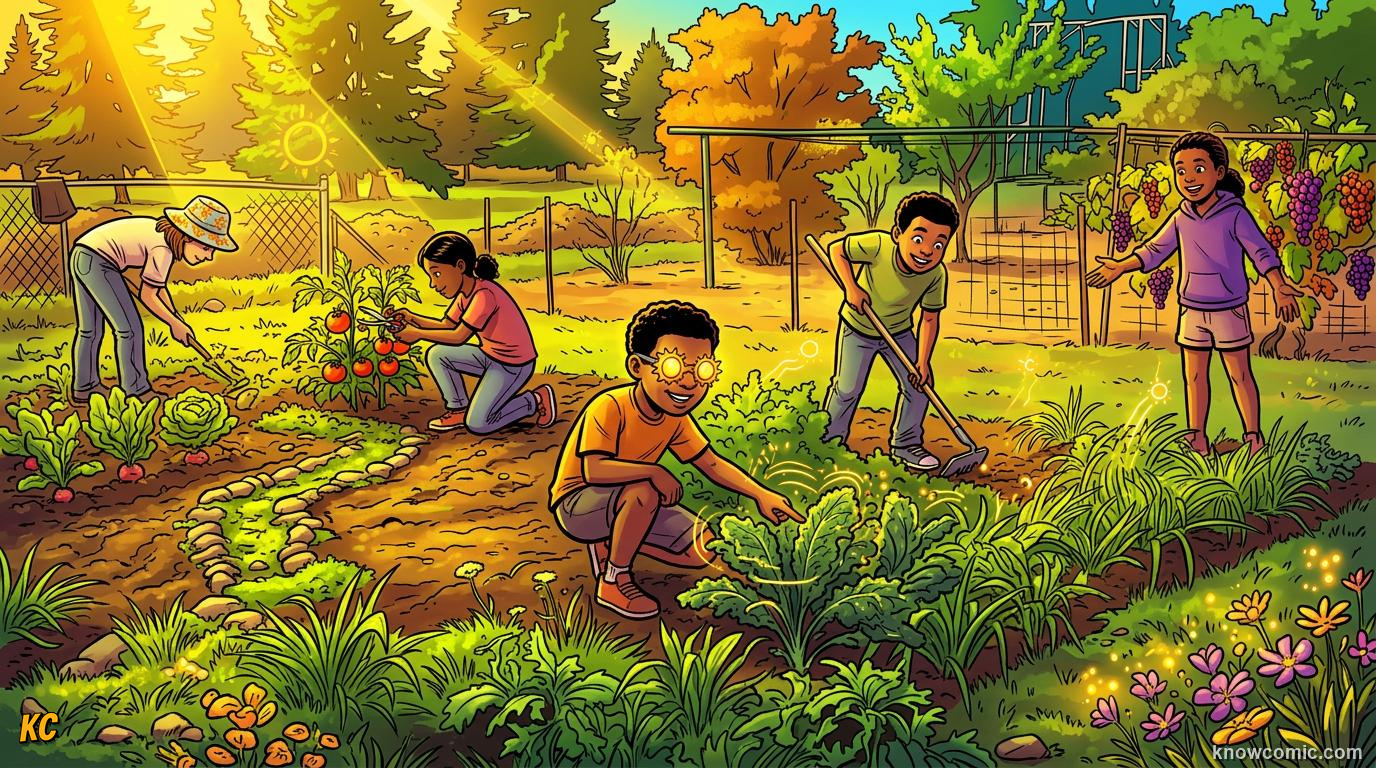
SUNLIGHT FEEDS YOUR GARDEN
Plants capture sunlight with green chlorophyll in their leaves and turn it into sugar through photosynthesis. That sugar fuels every root, stem, flower, and fruit. Without enough light, plants stretch tall and pale, searching for the sun like hungry explorers. Too much blazing heat on shade lovers can scorch leaves and dry soil fast. Smart gardeners do not guess where light falls: they map it first, then place each plant where it will thrive.
⚡ DID YOU KNOW?
A single square meter of leaf surface can absorb enough sunlight in one sunny hour to power the plant's growth for much of the day. Light is literally plant fuel.
POWER!
MORNING
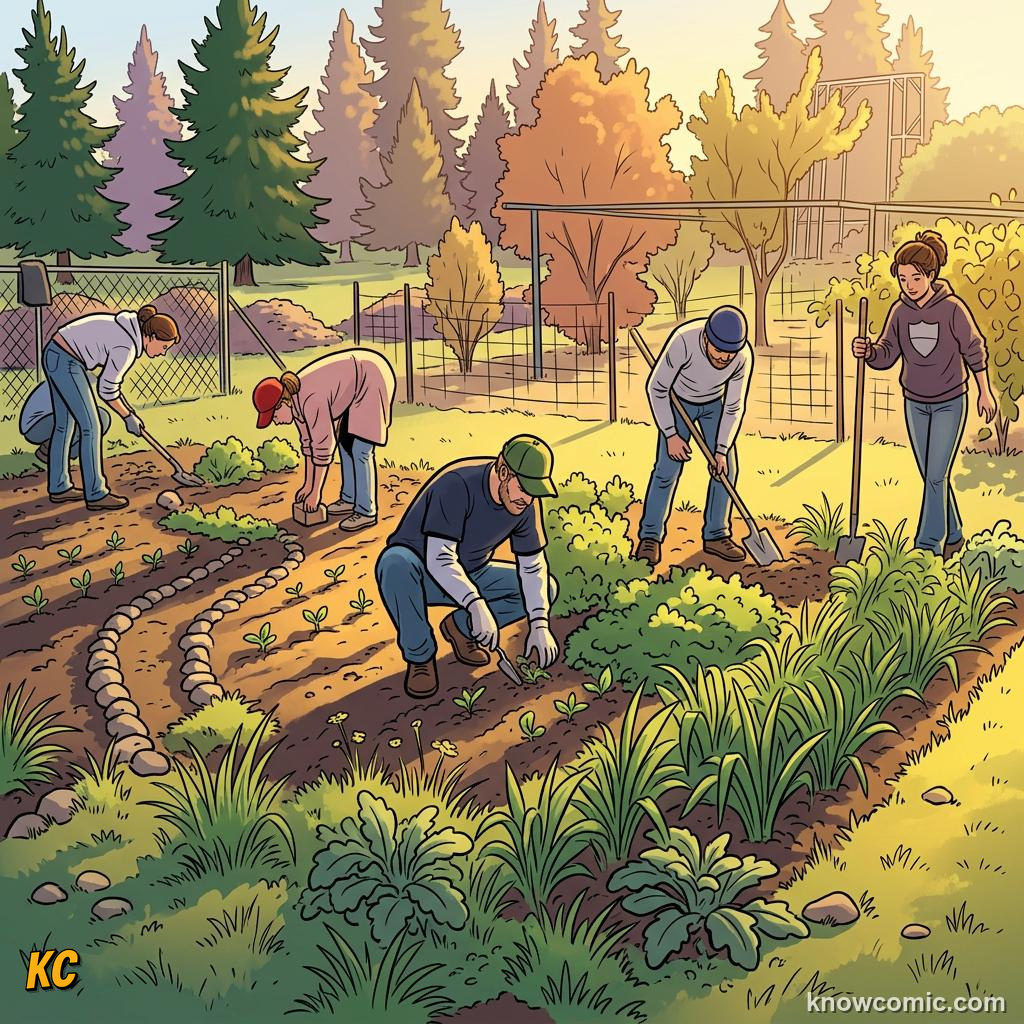
🌅 East-facing spots get gentle morning rays first.
🌱 Seedlings love this soft start before midday heat.
🌱 Seedlings love this soft start before midday heat.
MIDDAY
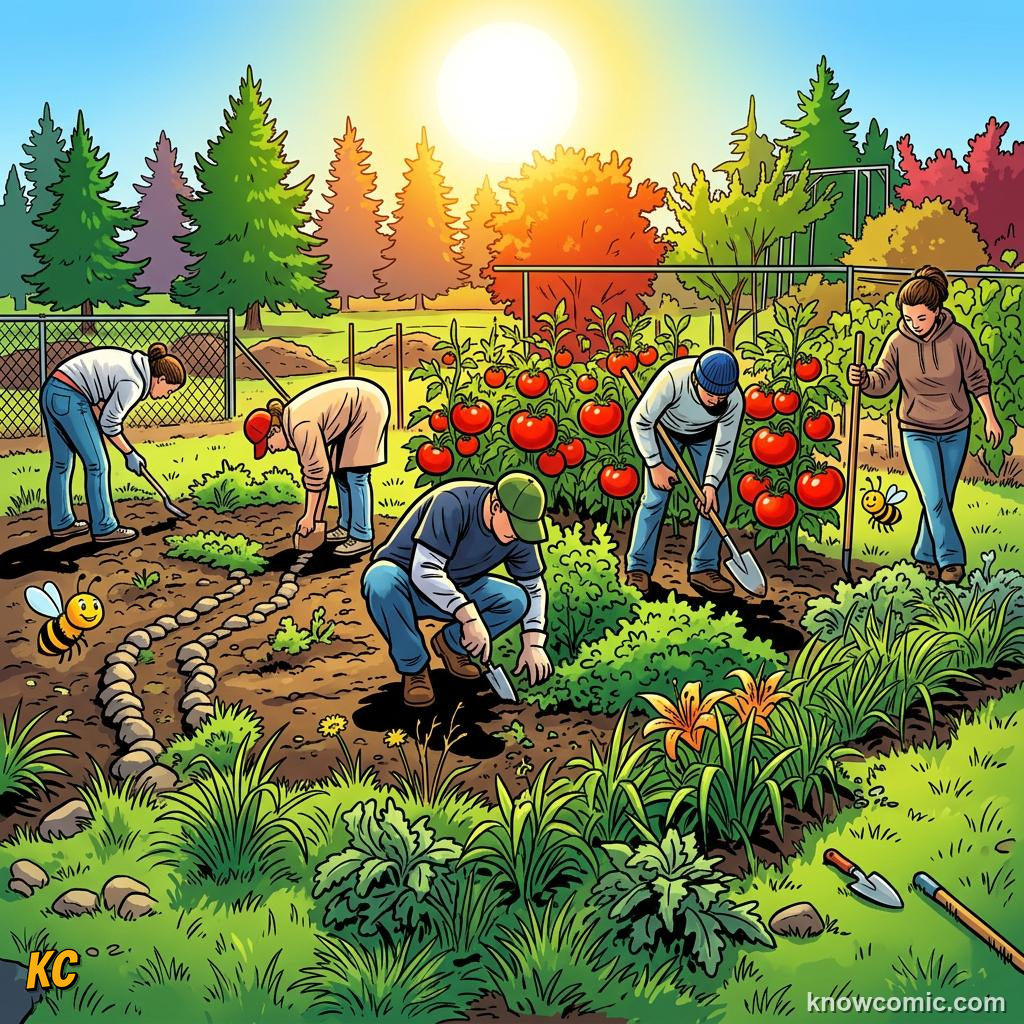
☀️ Shadows are shortest when the sun rides highest.
🍅 Tomatoes and peppers crave this brightest zone.
🍅 Tomatoes and peppers crave this brightest zone.
PAGE 2 OF 5, SUN LABELS EXPLAINED
READ THE TAG
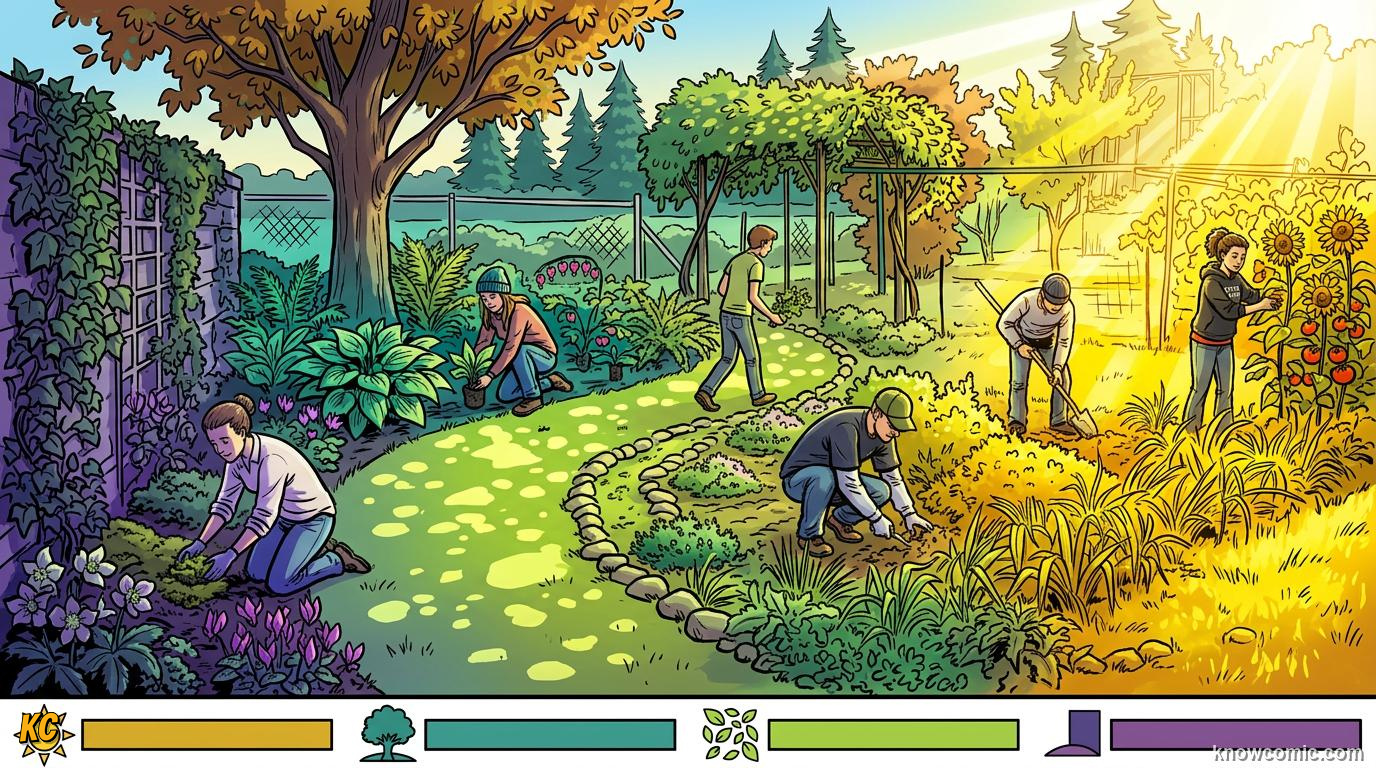
FOUR LIGHT ZONES
Seed packets and plant tags use special light words. Full sun means six or more hours of direct sunshine daily, perfect for tomatoes, peppers, and sunflowers. Partial sun gives four to six hours of direct light, great for peas and many herbs. Partial shade offers two to four hours of sun or dappled light filtered through leaves, ideal for lettuce and spinach. Full shade gets less than two hours of direct sun, suited to ferns and some mint varieties. Your sun map tells you which zone each corner of your garden really is.
⚡ DID YOU KNOW?
"Partial shade" and "partial sun" sound similar, but partial shade usually means the plant prefers protection from harsh midday rays while still getting morning or evening light.
ZONES!
FULL SUN
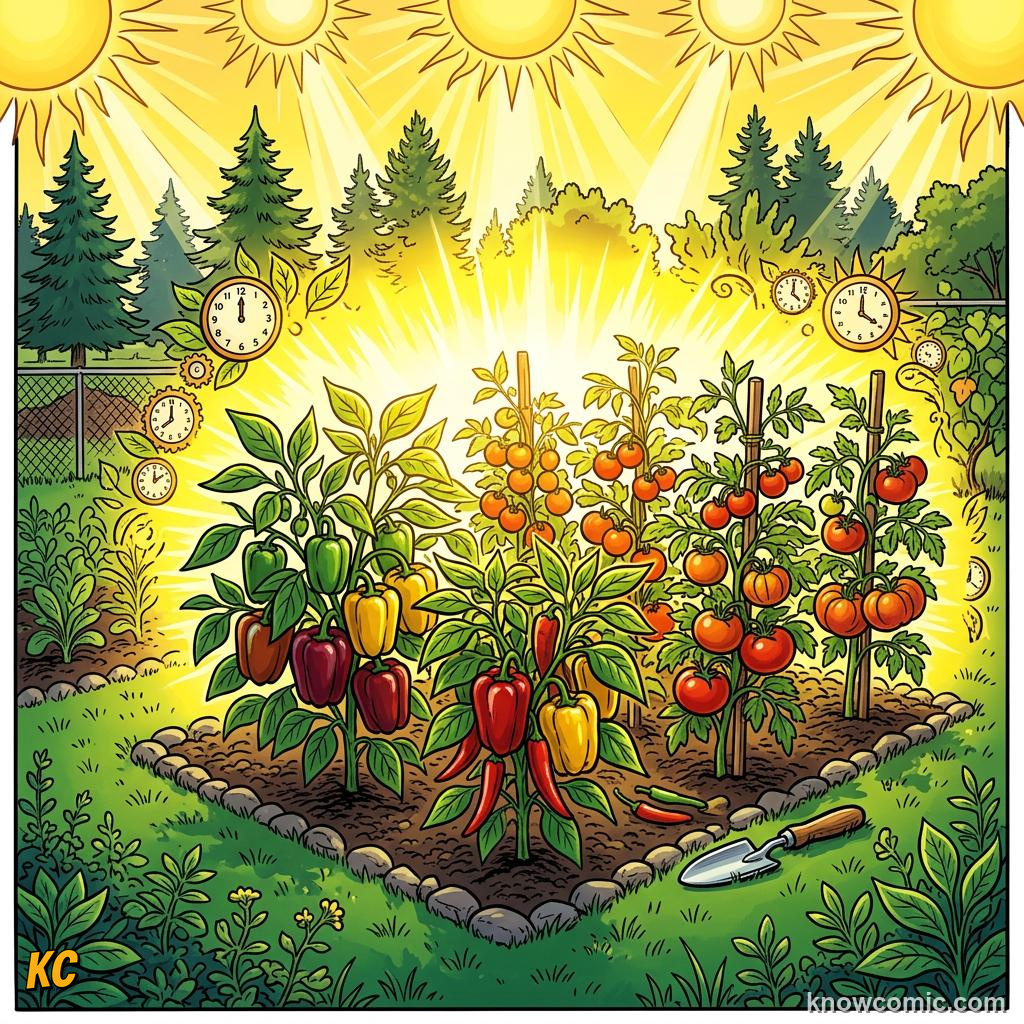
☀️ 6+ hours of direct sun.
🍅 Tomatoes, peppers, basil.
🍅 Tomatoes, peppers, basil.
PARTIAL
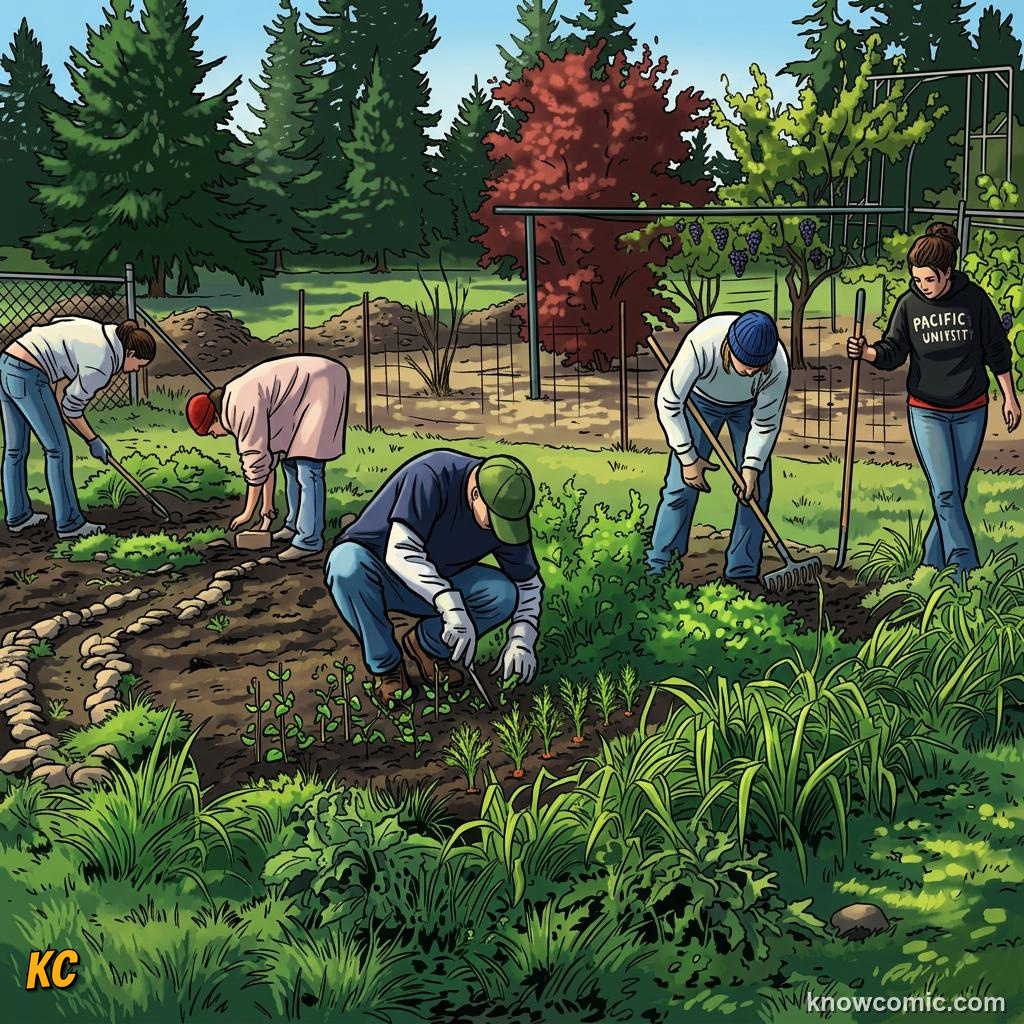
🌤️ 4 to 6 hours of direct light.
🫛 Peas, carrots, parsley.
🫛 Peas, carrots, parsley.
SHADE
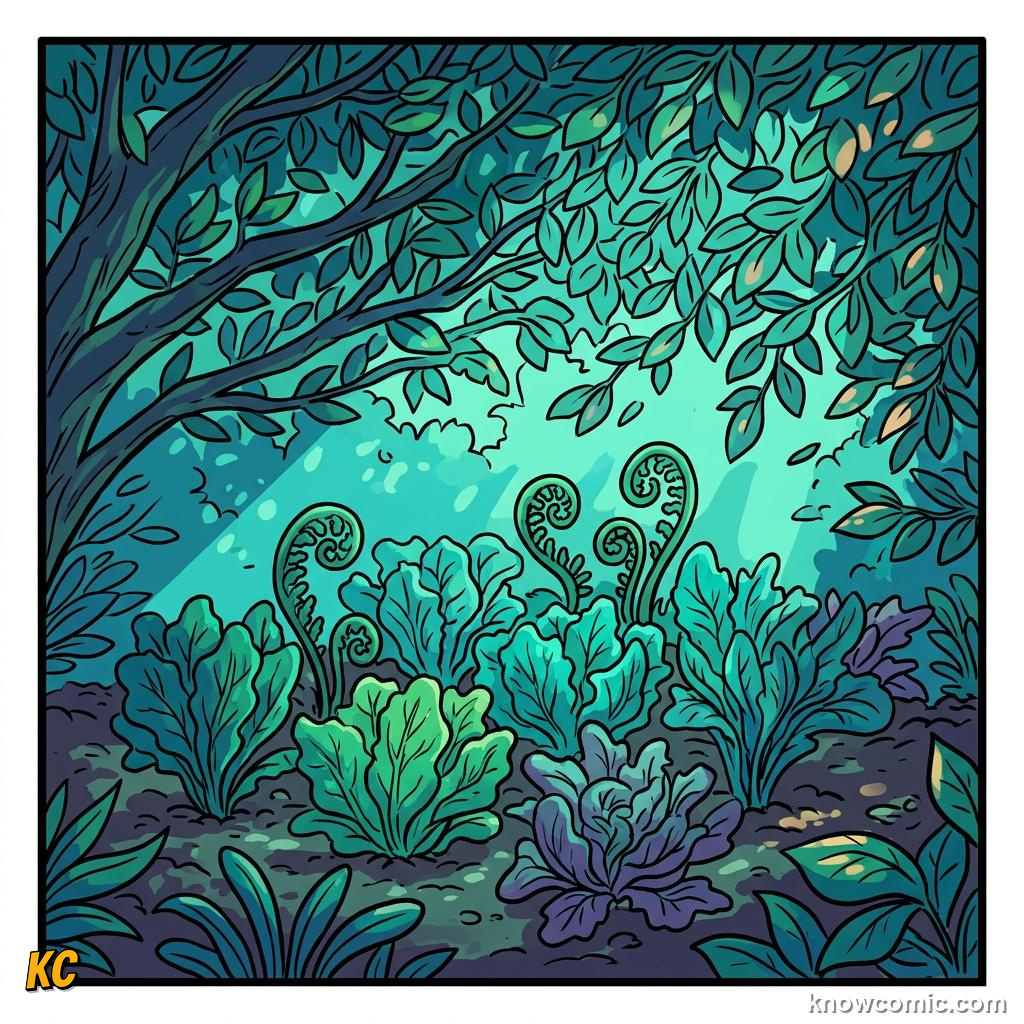
🌿 Under 2 hours direct sun.
🥬 Lettuce, mint, ferns.
🥬 Lettuce, mint, ferns.
PAGE 3 OF 5, HOW TO MAP YOUR SPACE
SKETCH
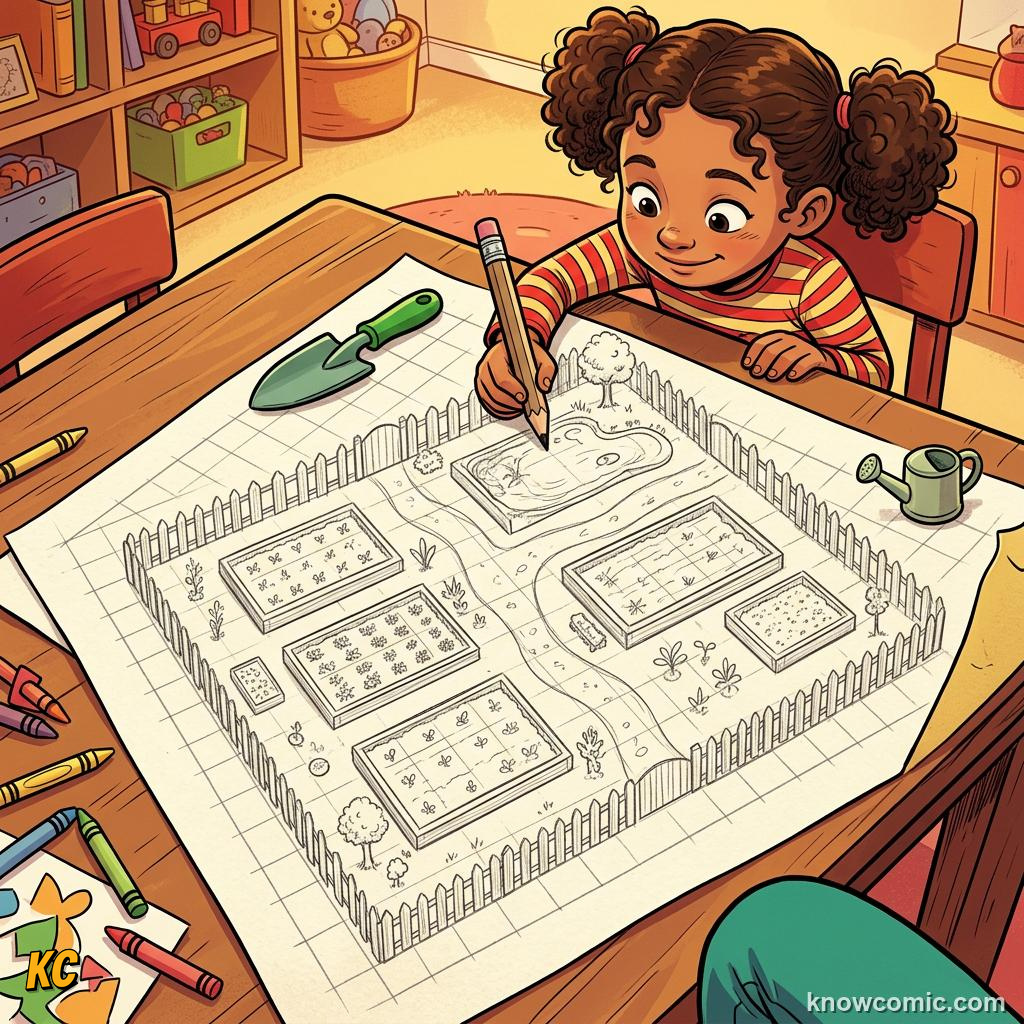
✏️ Draw beds, pots, fences, and tall trees from above.
🧭 Mark north so you know where shadows will sweep.
🧭 Mark north so you know where shadows will sweep.
TRACK
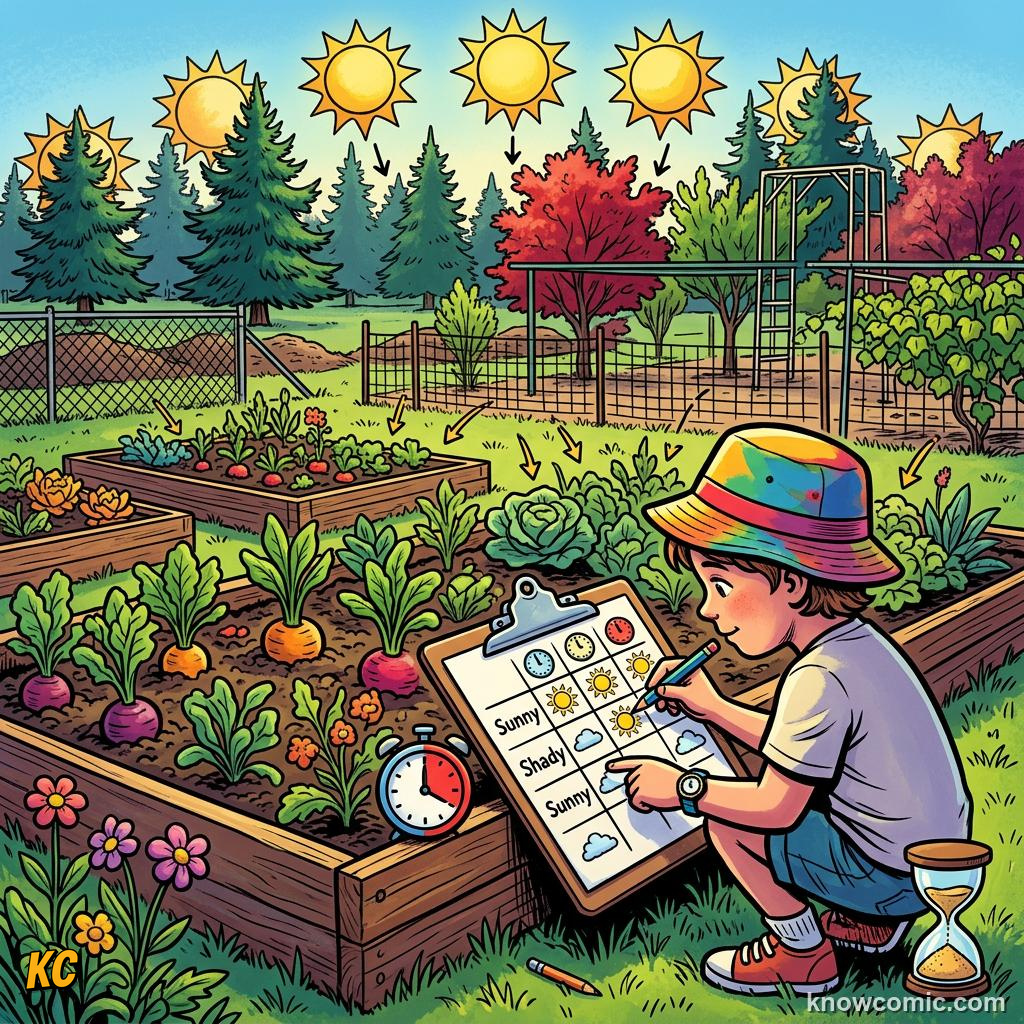
⏱️ Every hour, note sunny vs shady on your grid.
📊 Count total sunny hours per spot by sunset.
📊 Count total sunny hours per spot by sunset.
SHADOW SCIENCE
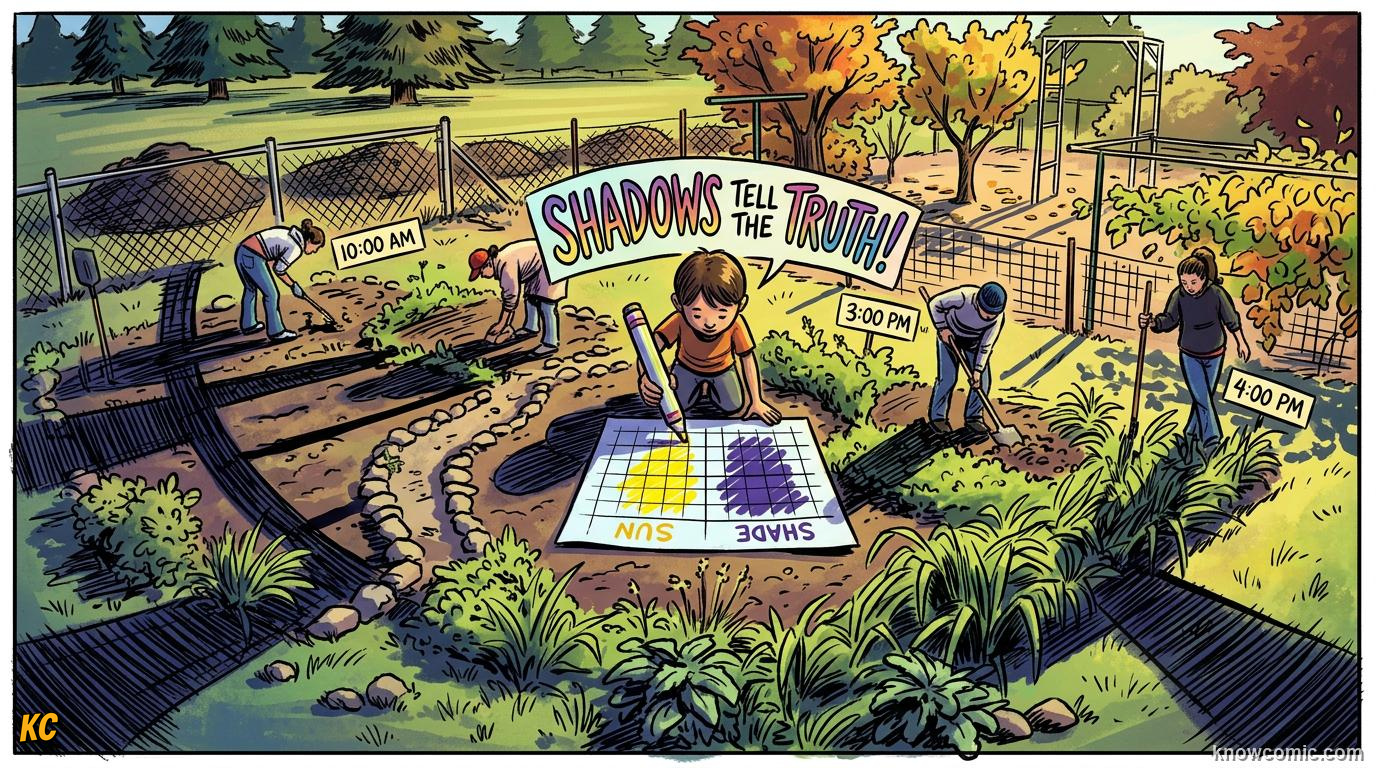
SHADOWS TELL THE TRUTH
Buildings, walls, and trees act like sundials, casting shadows that move as Earth spins. A spot sunny at breakfast may sit in deep shade by lunch if a fence blocks the high sun. Balcony railings create thin stripes of light that shift through the day. Walk your space at 8 a.m., 10 a.m., noon, 2 p.m., and 4 p.m., and tick each zone as sun or shade. Add up the sunny hours to label every patch full sun, partial, or shade. This one-day project saves months of weak, leggy plants in the wrong place.
⚡ DID YOU KNOW?
In summer the sun climbs higher, so shadows shrink. In winter the low sun casts longer shadows. Re-map your garden once each season for best results.
MAP!
PAGE 4 OF 5, MATCH PLANTS TO SPOTS
PLANT PUZZLE
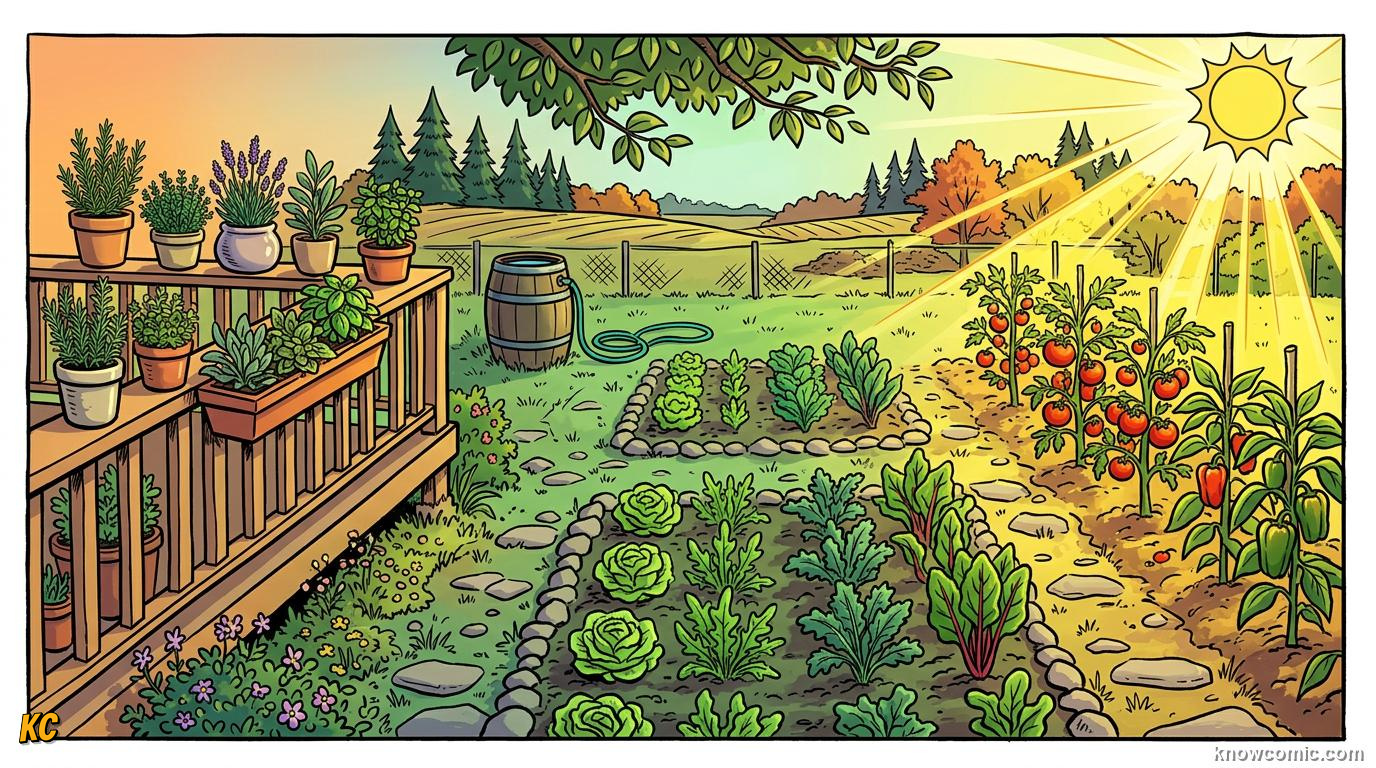
RIGHT PLANT, RIGHT LIGHT
Once your map is colored, treat it like a seating chart for plants. Put sun-hungry crops in the yellow full-sun zones: cherry tomatoes on a south-facing railing, chili peppers in the brightest bed. Slide lettuce and spinach into partial-shade corners where hot afternoon rays will not wilt tender leaves. Herbs like cilantro bolt to seed in blazing heat, so tuck them where they get morning sun and afternoon shade. Container pots can move, but in-ground beds are permanent, so your map matters even more there.
⚡ DID YOU KNOW?
Light-colored walls and pavements reflect extra sunlight onto nearby plants, boosting growth the way a mirror bounces a flashlight beam.
MATCH!
HOT SPOT
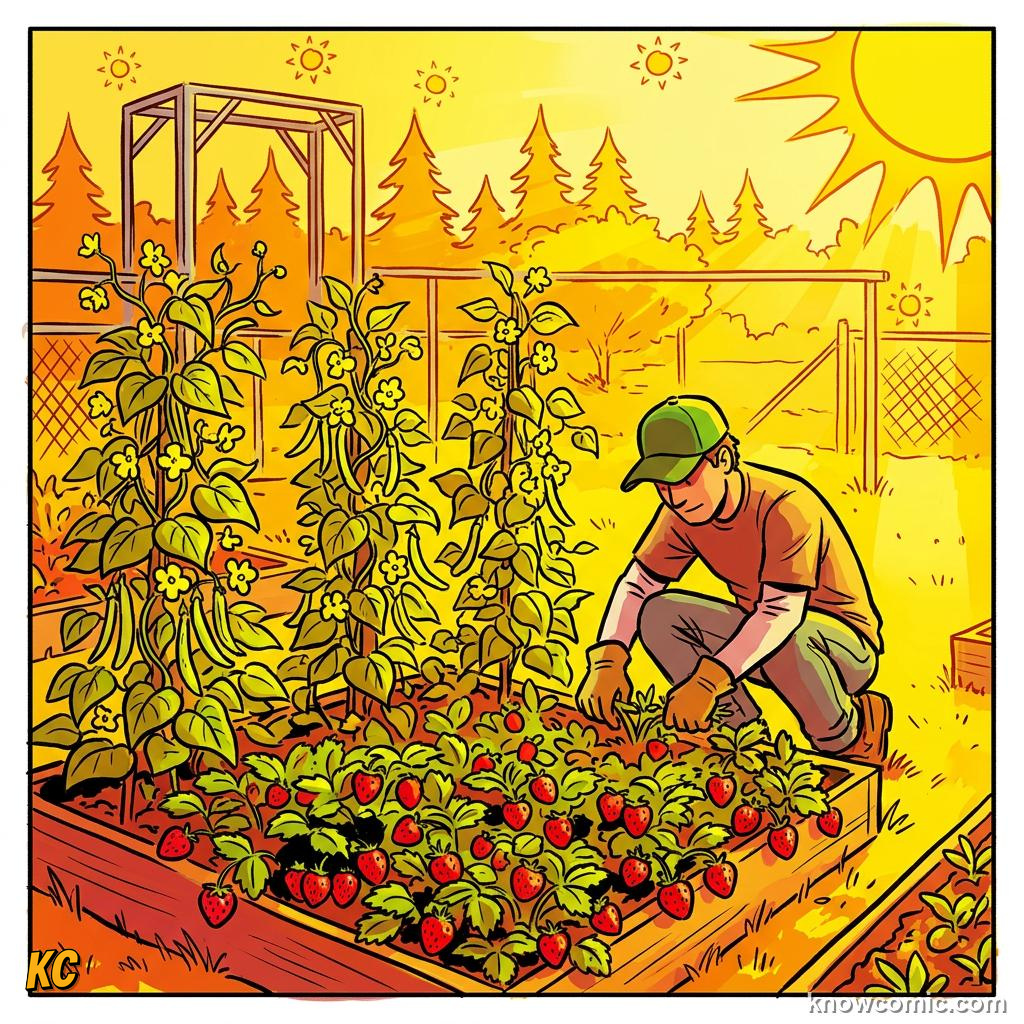
🍓 Strawberries and beans love all-day sun.
💧 Full-sun pots dry faster, water more often.
💧 Full-sun pots dry faster, water more often.
COOL CORNER
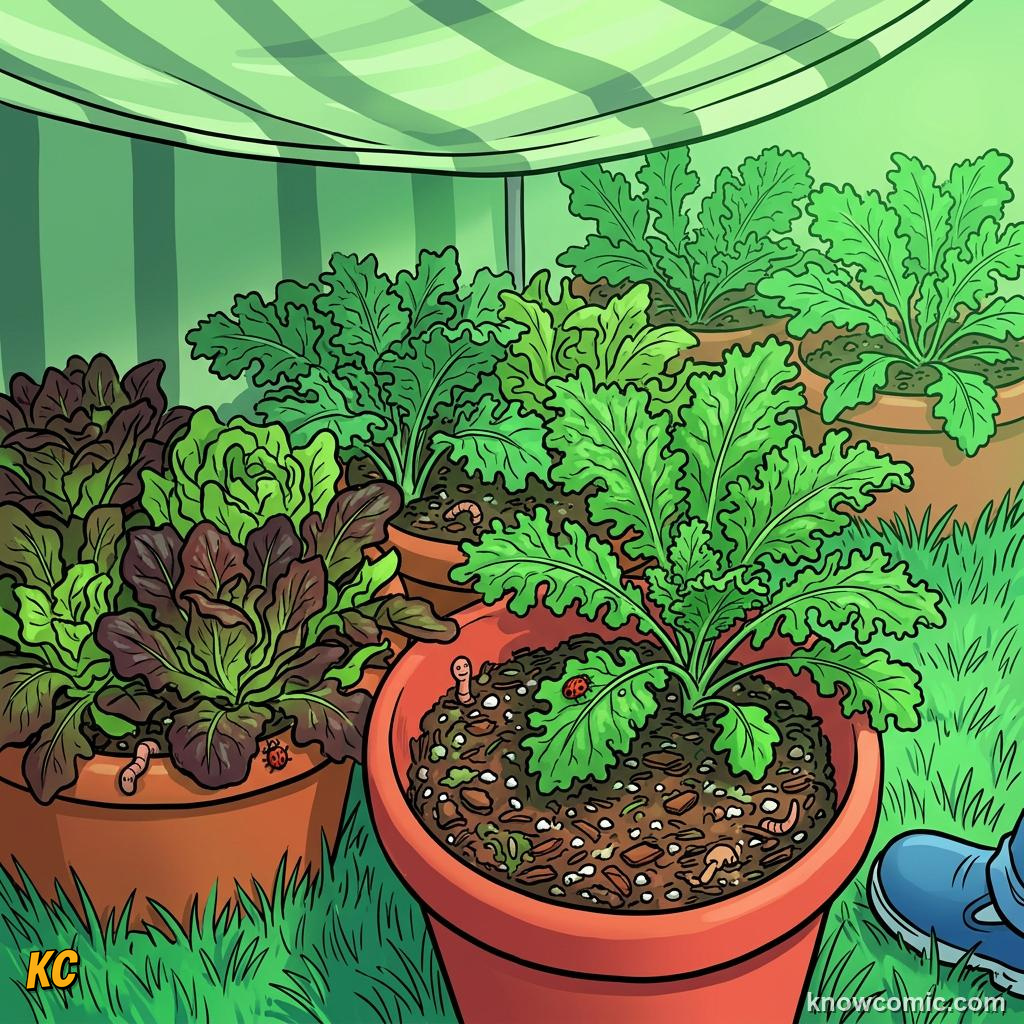
🥬 Greens stay sweet longer with less heat stress.
🌿 Arugula and kale tolerate light shade well.
🌿 Arugula and kale tolerate light shade well.
BALCONY
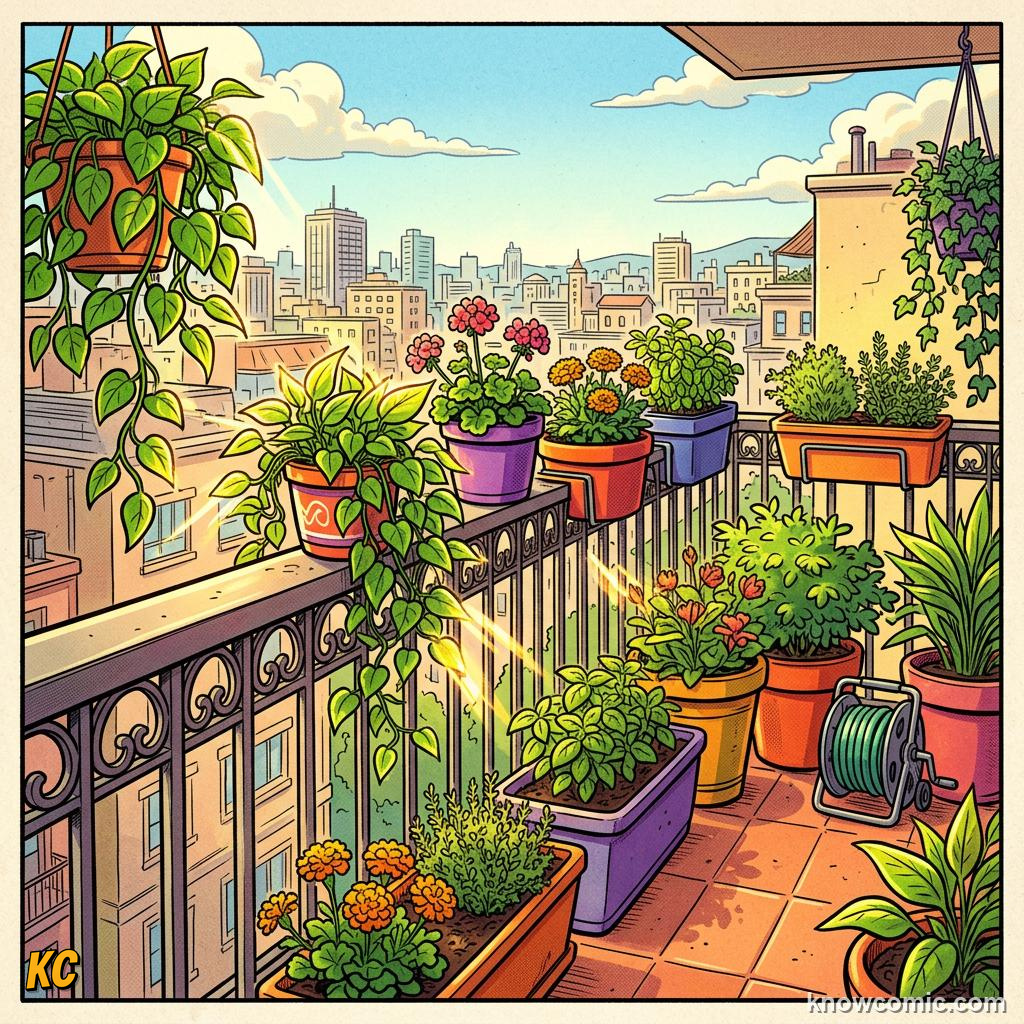
🏢 Upper floors often get more sun than ground level.
🪴 Move pots to follow the brightest railing section.
🪴 Move pots to follow the brightest railing section.
PAGE 5 OF 5, DRAW YOUR SUN MAP
YOUR TURN
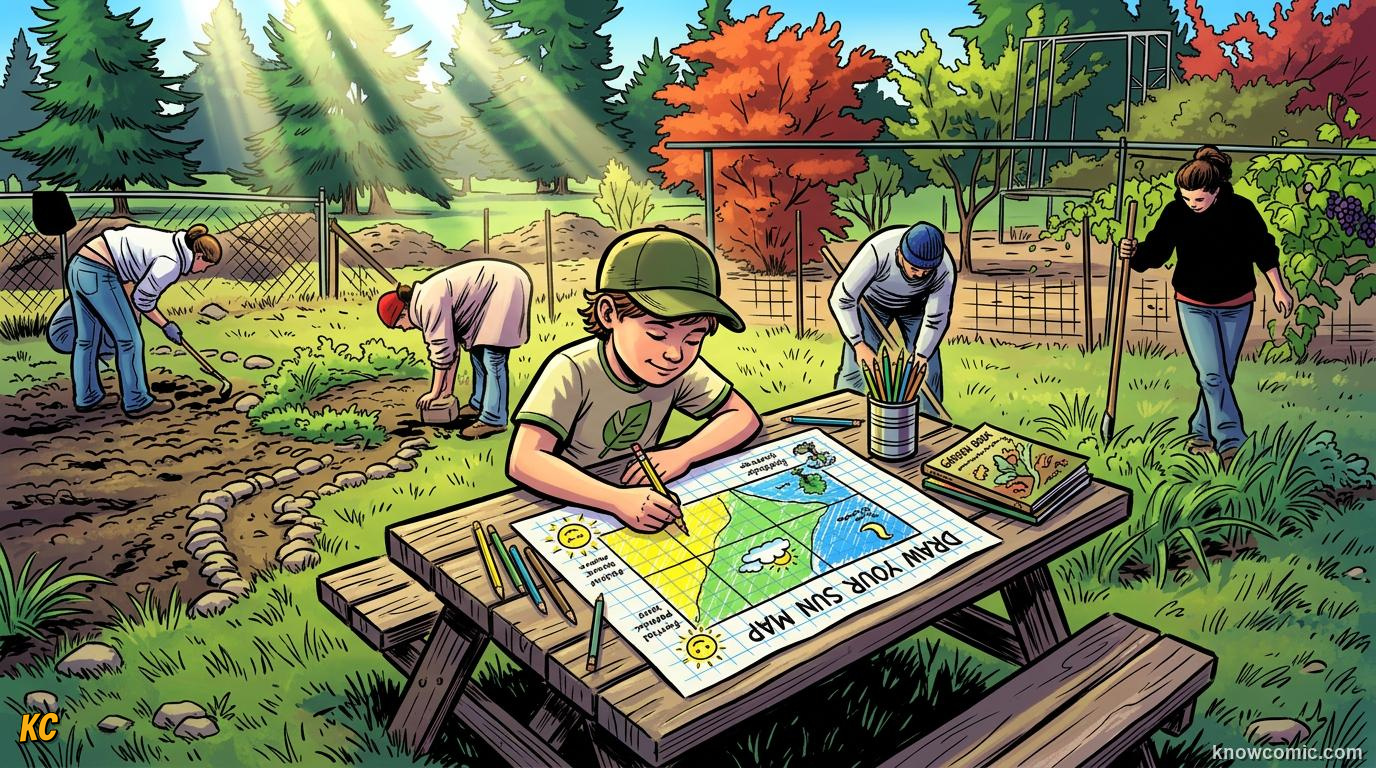
BUILD YOUR LIGHT LEGEND
On a clear day, grab your grid paper and sketch your balcony or yard from above. Set a phone alarm for every hour from morning to late afternoon. At each check, shade the areas in shadow with a light pencil mark. When the day ends, count sunny hours for each zone and color them: bright yellow for six or more hours, soft green for partial light, cool blue for shade. Tape the finished map near your garden door. Before buying seeds, read the light needs and pick the matching color zone. You just became the sunlight expert of your home.
SHINE!
SHARE
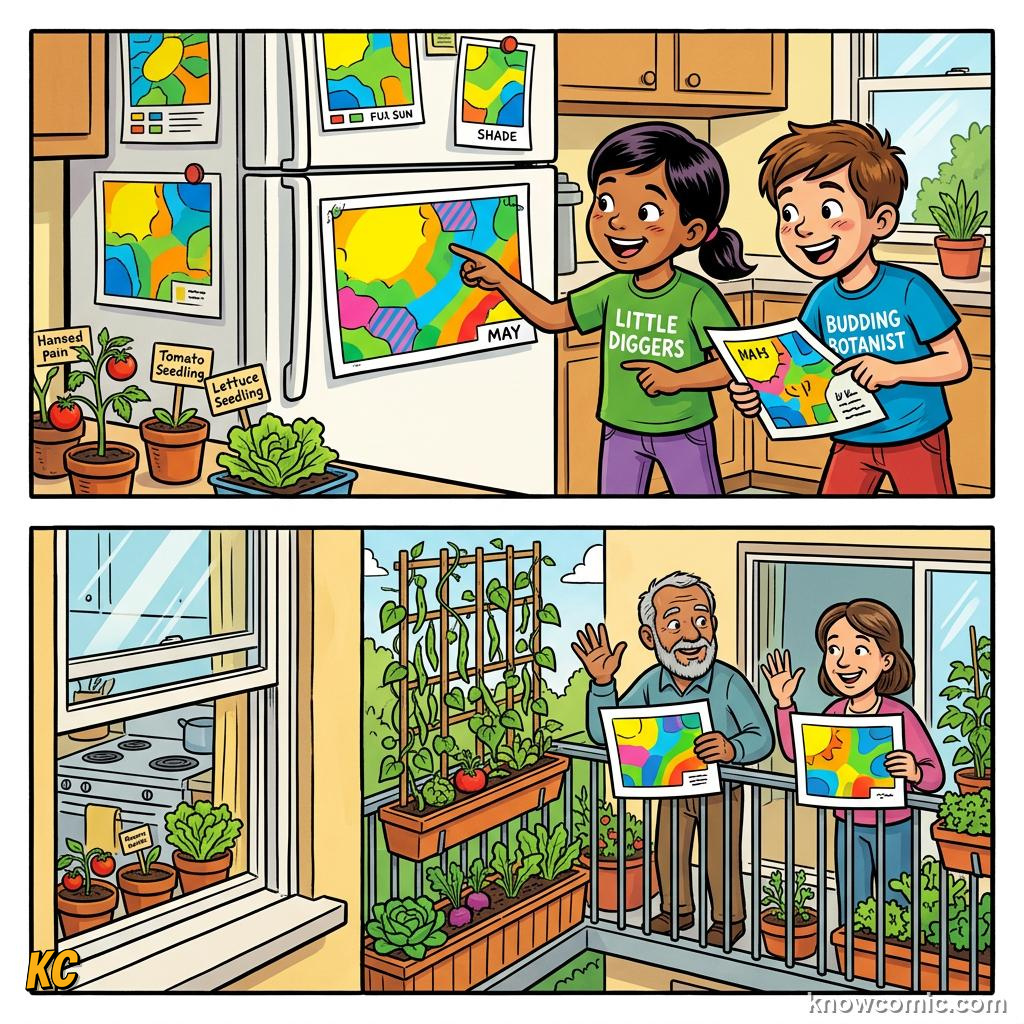
📸 Photograph your colored map and pin it on the fridge.
🤝 Compare maps with a neighbor who grows on a balcony.
🤝 Compare maps with a neighbor who grows on a balcony.
REMEMBER
☀️ KEY FACTS
Full sun means 6+ hours of direct light. Map hourly on a clear day because shadows move. Match plants to zones: tomatoes in sun, lettuce in partial shade. Re-check each season.
✅ Use yellow, green, and blue on your map legend.
✅ Count sunny hours before planting.
✅ Move containers to brighter spots if plants look leggy.
✅ Count sunny hours before planting.
✅ Move containers to brighter spots if plants look leggy.
🧠 QUIZ TIME!
SUNLIGHT MAPPING · 5 QUESTIONS
QUESTION 01
How many hours of direct sun does "full sun" usually mean?
QUESTION 02
Why should you check sunlight at different times on the same day?
QUESTION 03
Which plant usually prefers partial shade rather than all-day blazing sun?
QUESTION 04
What do plants use sunlight to make during photosynthesis?
QUESTION 05
When is the best time to re-check your sun map?
0/5
LOADING...