🏺
👁️
🌞
✦ ART & CULTURE ✦

ART &
CULTURE!

🎨 From Cave Walls to Masterpieces, Humanity's First Art!

📖 200 Topics ⏱️ 5 min per comic 🧠 Quiz included
🏺
3100 BCE
The Rules Begin
🛕
2500 BCE
Pyramid Age Tombs
🌞
1345 BCE
A King Breaks the Rules
👑
1922 CE
Tutankhamun Found
🏛️
TODAY
Still Glowing in Museums
🏺 EGYPTIAN WALL ART
TOPIC 02 · ART & CULTURE · ANCIENT EGYPT · 3100 BCE
PAGE 1 OF 5 — THE SEALED GALLERY
VALLEY OF THE KINGS · EGYPT
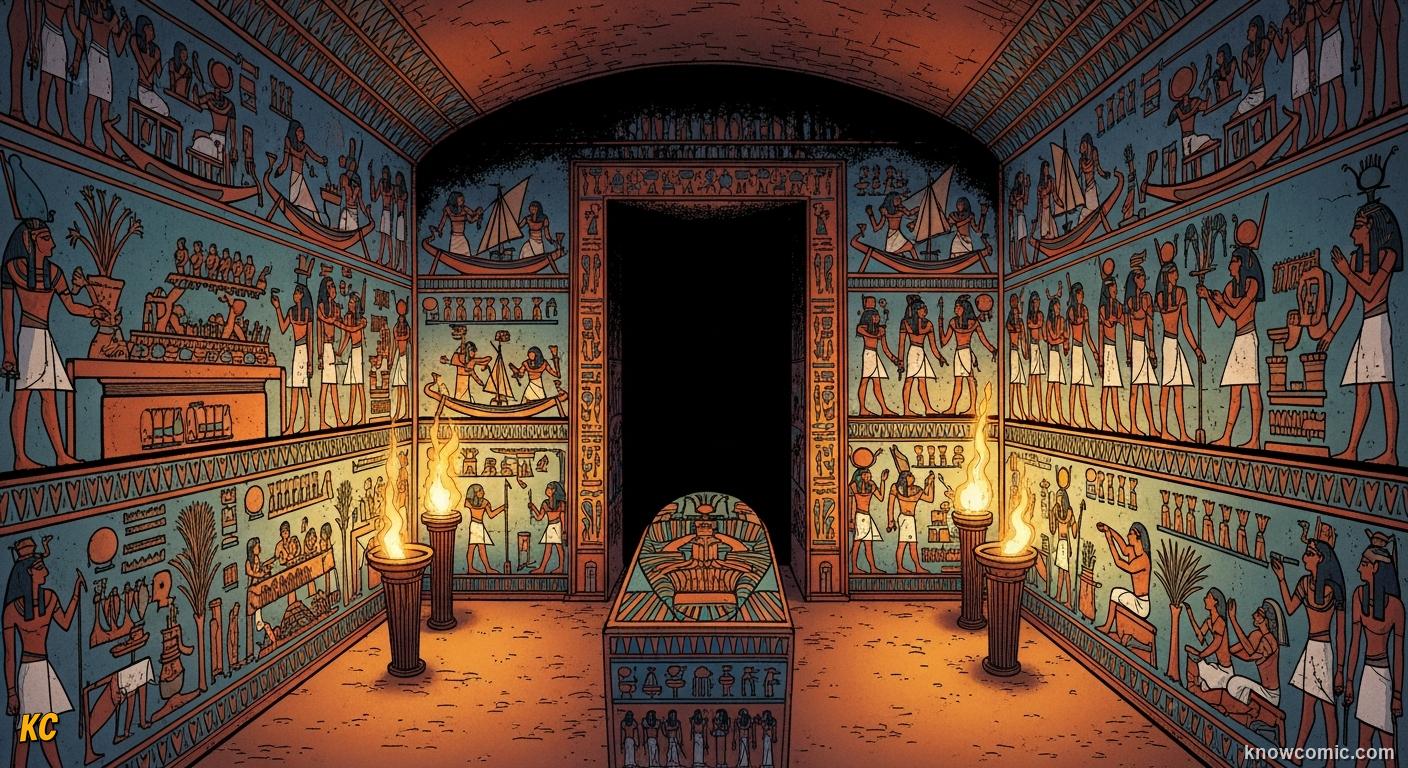
A torchlit ancient Egyptian tomb chamber with every wall covered in colourful painted figures and symbols
PAINTINGS NOBODY WAS MEANT TO SEE
Imagine painting a masterpiece, then locking it in the dark forever. That is exactly what Egyptian artists did. They covered tomb walls with glowing scenes of feasts, rivers, farms and gods, then the tomb was sealed shut. The art was not made for living visitors. It was made for the dead person's spirit, to give it everything it needed in the afterlife. To the Egyptians, these were not just pictures: they were magic that worked forever.
⚡ DID YOU KNOW?
Egyptians believed a painting of bread, beer or roast goose could magically feed the dead person's soul. A painted feast was a real feast, forever.
SEALED!
ART FOR ETERNITY
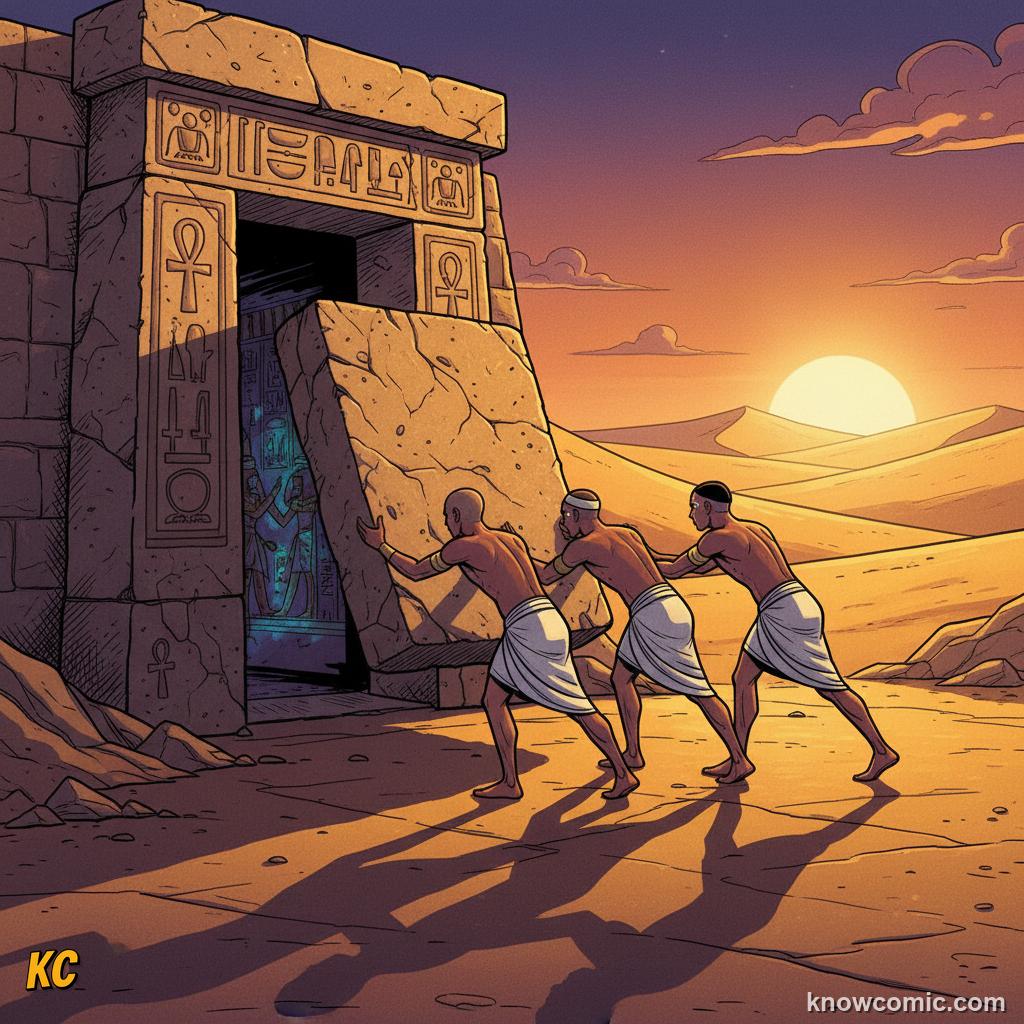
Ancient Egyptian workers sealing a stone tomb doorway in the desert at dusk
🚪 Tombs were painted, then sealed shut
🌑 The art sat in total darkness for ages
✨ Its job was magic, not decoration
THE FALSE DOOR
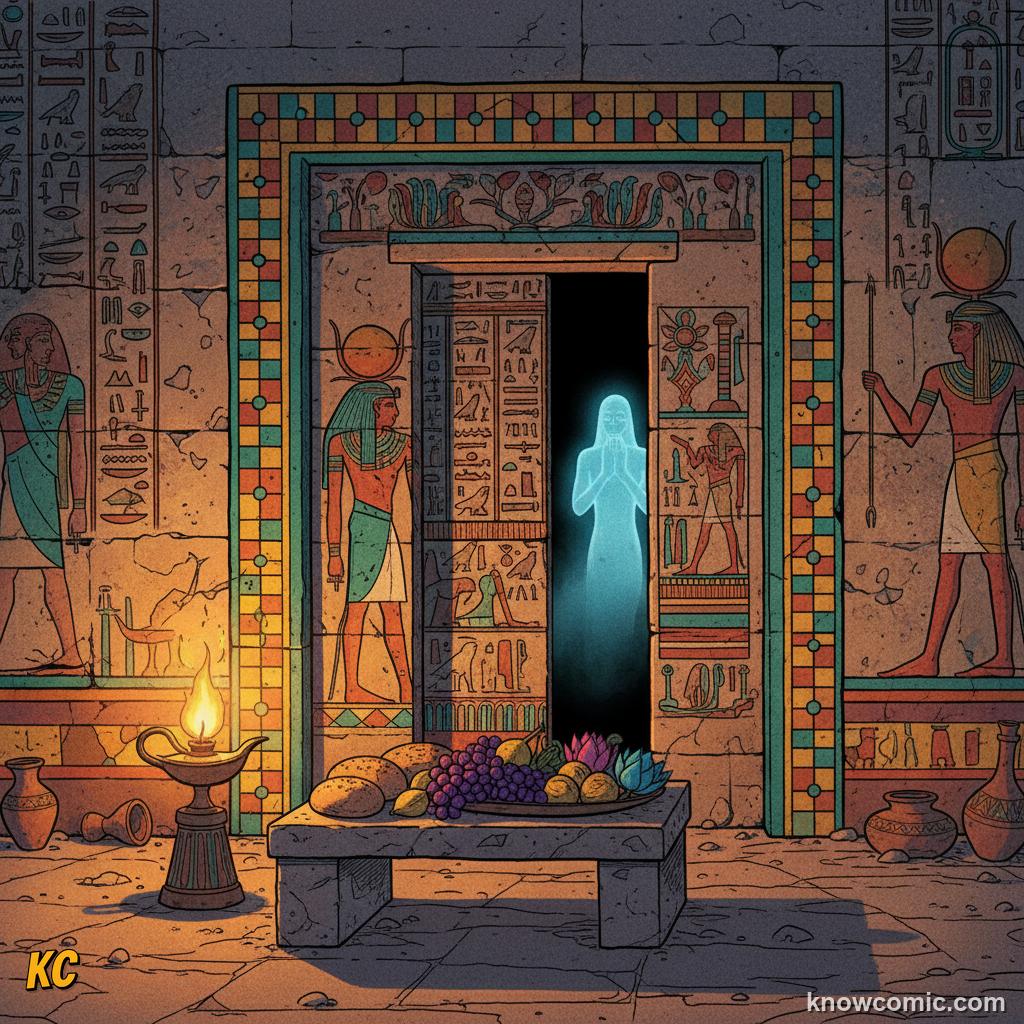
A carved and painted Egyptian false door in a tomb wall with offerings of bread and fruit placed before it
🚪 Many tombs had a painted "false door"
👻 The soul could pass through it like a gate
🍞 Families left real food offerings in front
PAGE 2 OF 5 — THE STRANGE SIDEWAYS POSE
THE RULES OF THE WALL
Classic Egyptian wall painting of figures with heads in profile, front-facing eyes and shoulders, and sideways legs
WHY IS EVERYONE WALKING SIDEWAYS?
Look at any Egyptian painting and you will spot the famous pose: head sideways, eye facing you, shoulders facing you, hips and legs sideways again. No real person can stand like that! Egyptian artists were not making a mistake. They drew each body part from its clearest angle, so that nothing was hidden. A complete picture meant a complete body for the spirit in the afterlife. If your arm was hidden in the painting, your spirit might miss it forever. So artists followed this rule for thousands of years.
SIDEWAYS!
THE POSE
Close-up of a single painted Egyptian figure showing the side profile head with a front-facing eye
👁️ Side head, but the eye looks straight at you
🚶 Legs sideways so both feet show clearly
SIZE = POWER
Egyptian wall painting of a giant pharaoh towering over much smaller painted servants
👑 The pharaoh was always painted biggest
🧍 Servants were tiny, size showed importance
NEAT ROWS
Egyptian tomb painting arranged in neat horizontal rows showing farming, fishing and boats
📏 Scenes sat in tidy rows called registers
🌾 Each row told its own part of the story
PAGE 3 OF 5 — GRIDS, TEAMS AND MAGIC BLUE
THE COLOURS
Ancient Egyptian painting materials: bowls of ground ochre, green malachite, blue pigment and reed brushes
🟥 Reds and yellows came from desert ochre
🟩 Green came from crushed malachite stone
THE GRID TRICK
A red grid of squares snapped onto a tomb wall with an outlined Egyptian figure drawn over it
📐 Strings dipped in red paint snapped neat grids
🧍 The same grid kept every figure in proportion
THE PAINTING TEAM
A team of ancient Egyptian artists painting a tomb wall by oil lamp light, one drawing outlines and others filling colours
AN ART FACTORY UNDERGROUND
Tomb painting was teamwork, like a comic studio today. First, workers smoothed the wall with plaster. Then outline scribes drew every figure in red, and a master corrected the lines in black. Finally, painters filled in the colours one by one. They worked deep underground by the light of oil lamps, with mirrors and shiny boards bouncing sunlight down the corridors. Their most amazing invention was Egyptian blue, the first paint colour ever made by humans, cooked from sand, copper and natron in a hot kiln.
🔬 THE FIRST FAKE COLOUR
Egyptian blue still glows under special infrared cameras today. Scientists use that secret glow to find traces of blue paint on statues that look plain white now.
TEAMWORK!
PAGE 4 OF 5 — WALLS FULL OF GODS AND MAGIC
THE JUDGEMENT SCENE
Egyptian wall painting of jackal-headed Anubis weighing a heart against a feather on golden scales
PICTURES AND WRITING WERE ONE MAGIC
Egyptian walls mix pictures with hieroglyphs, the picture-writing of Egypt, and to the Egyptians both were the same kind of magic. The most famous scene shows the jackal-headed god Anubis weighing a dead person's heart against the feather of truth. Pass the test, and you enter paradise. Walls and papyrus scrolls carried spells from the Book of the Dead to guide the soul past every danger. Gods appear with animal heads: Anubis the jackal, Horus the falcon, Thoth the ibis. Every image was a tool for surviving forever.
JUDGED!
GODS ON WALLS
Egyptian painting of falcon-headed Horus and ibis-headed Thoth standing with a pharaoh
🦅 Horus the falcon guarded the king
🐦 Thoth the ibis wrote down the verdict
COLOUR CODE
Egyptian painting of green-skinned Osiris beside a golden-skinned god showing colour symbolism
🟩 Green skin meant rebirth and new life
🟨 Gold was the unfading skin of the gods
THE REBEL KING
Amarna style Egyptian relief of Akhenaten and his family relaxing under sun rays ending in small hands
🌞 King Akhenaten briefly broke all the rules
👨‍👩‍👧 Art turned soft and real, then snapped back
PAGE 5 OF 5 — THREE THOUSAND YEARS OF STYLE
THE LEGACY
Children and families in a modern museum admiring a glowing ancient Egyptian painted wall
THE LONGEST ART STYLE EVER
Egyptian wall art kept its rules for about 3,000 years, the longest-running art style in human history. A painter from the first pharaohs could time-travel forward twenty centuries and still recognise the poses, the colours and the neat rows. When Tutankhamun's tomb was opened in 1922, its glowing walls and golden treasures amazed the whole world and started a craze for everything Egyptian. Today these paintings still shine in tombs and museums, teaching us how ancient Egyptians farmed, feasted, danced and dreamed of forever.
🏛️ STILL FRESH AFTER 3,000 YEARS
Because the sealed tombs were dark and dry, many paintings look freshly finished. The desert that hid them is the same desert that saved them.
ETERNAL!
VISIT TODAY
Tourists walking through the painted corridor of a royal tomb in the Valley of the Kings
🏜️ Real tombs still glow in the Valley of the Kings
🏛️ Museums worldwide show Egyptian walls
🎨 Designers still borrow the Egyptian look
REMEMBER THIS
📌 KEY FACTS
🚪 Tomb art was magic for the dead, then sealed away

👁️ Sideways pose showed every body part clearly

👑 The pharaoh was always painted biggest

🔬 Egyptian blue was the first man-made paint colour

⏳ The style barely changed for 3,000 years
🧠 QUIZ TIME!
EGYPTIAN WALL ART · 5 QUESTIONS
QUESTION 01
Who was Egyptian tomb art mainly made for?
QUESTION 02
Why did artists draw heads sideways but eyes and shoulders facing front?
QUESTION 03
How could you spot the pharaoh in a crowded wall painting?
QUESTION 04
What was special about the colour Egyptian blue?
QUESTION 05
About how long did the Egyptian art style stay nearly unchanged?
0/5
LOADING...
← TOPIC 01 📋 ALL TOPICS TOPIC 03 →