🗿 ROMAN REALISM
PAGE 1 OF 5 — WRINKLES, SCARS AND ALL
ROME · A NOBLE FAMILY'S HALL
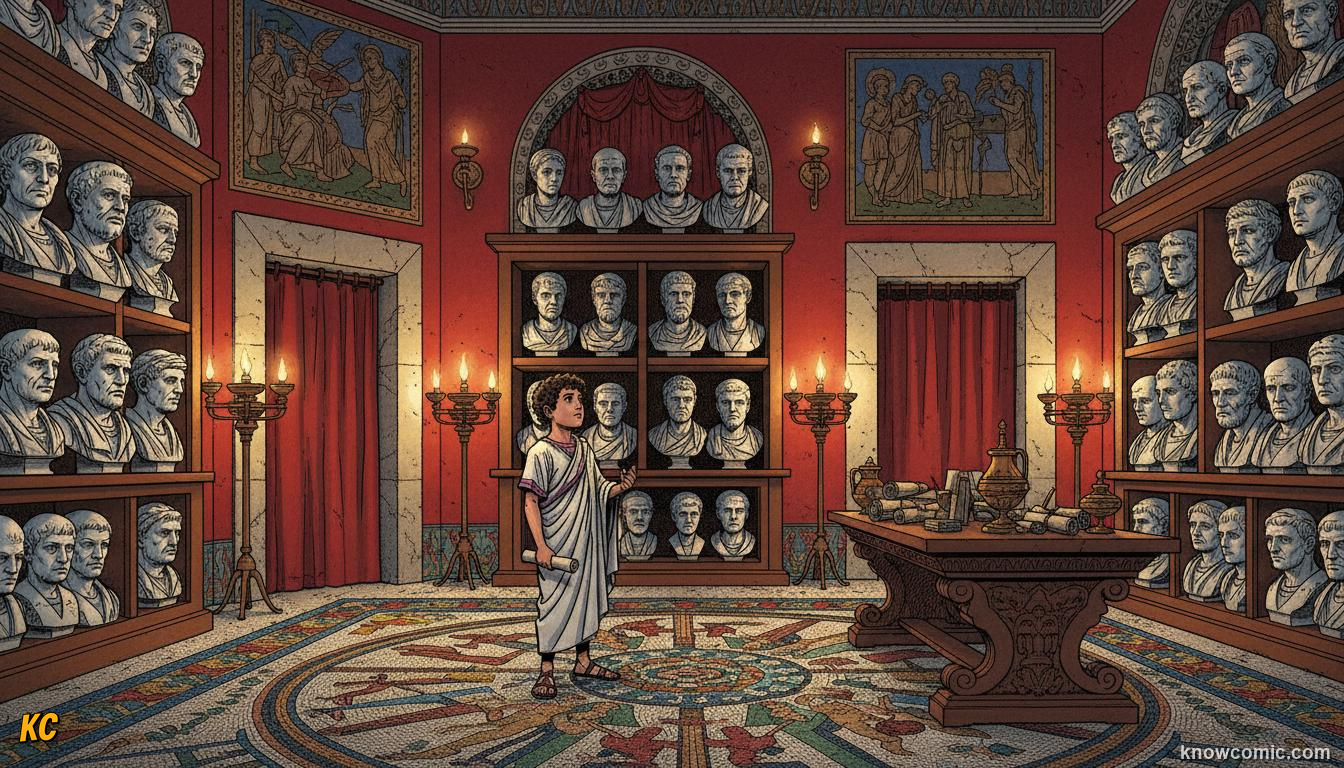
THE OPPOSITE OF PERFECT
Walk into a noble Roman home and rows of stone faces stare back at you: bald heads, hooked noses, sagging cheeks, deep wrinkles and battle scars. Nothing is hidden and nothing is prettied up. While Greek artists carved perfect imaginary bodies, Roman sculptors did the opposite: they copied real faces exactly as they were. This super-honest style is called verism, from the Latin word for true. To a Roman, every wrinkle was a trophy.
⚡ DID YOU KNOW?
Roman busts are so accurate that doctors today can sometimes spot illnesses, like skin growths and droopy eyelids, in faces carved 2,000 years ago.
REAL!
WAX ANCESTORS
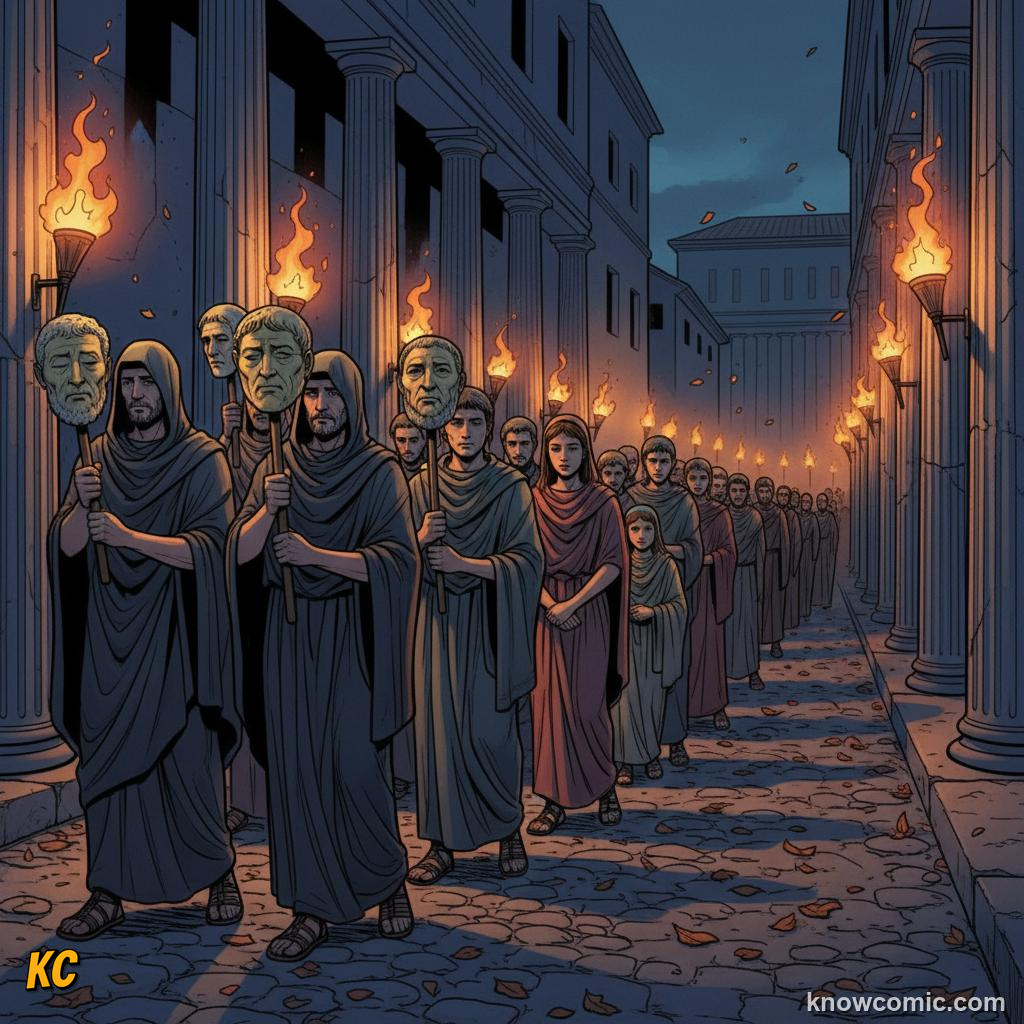
🕯️ Families kept wax masks of their ancestors
🚶 The masks were worn at family funerals
🗿 This mask tradition inspired stone busts
🚶 The masks were worn at family funerals
🗿 This mask tradition inspired stone busts
WRINKLES = WISDOM

👴 Age proved experience and hard service
🎖️ Scars showed bravery in battle
🏛️ A stern face meant a serious leader
🎖️ Scars showed bravery in battle
🏛️ A stern face meant a serious leader