⚡ DISCOVERING ELECTRONS
PAGE 1 OF 5, THE MYSTERY OF CATHODE RAYS
ELECTRICITY IN A VACUUM TUBE
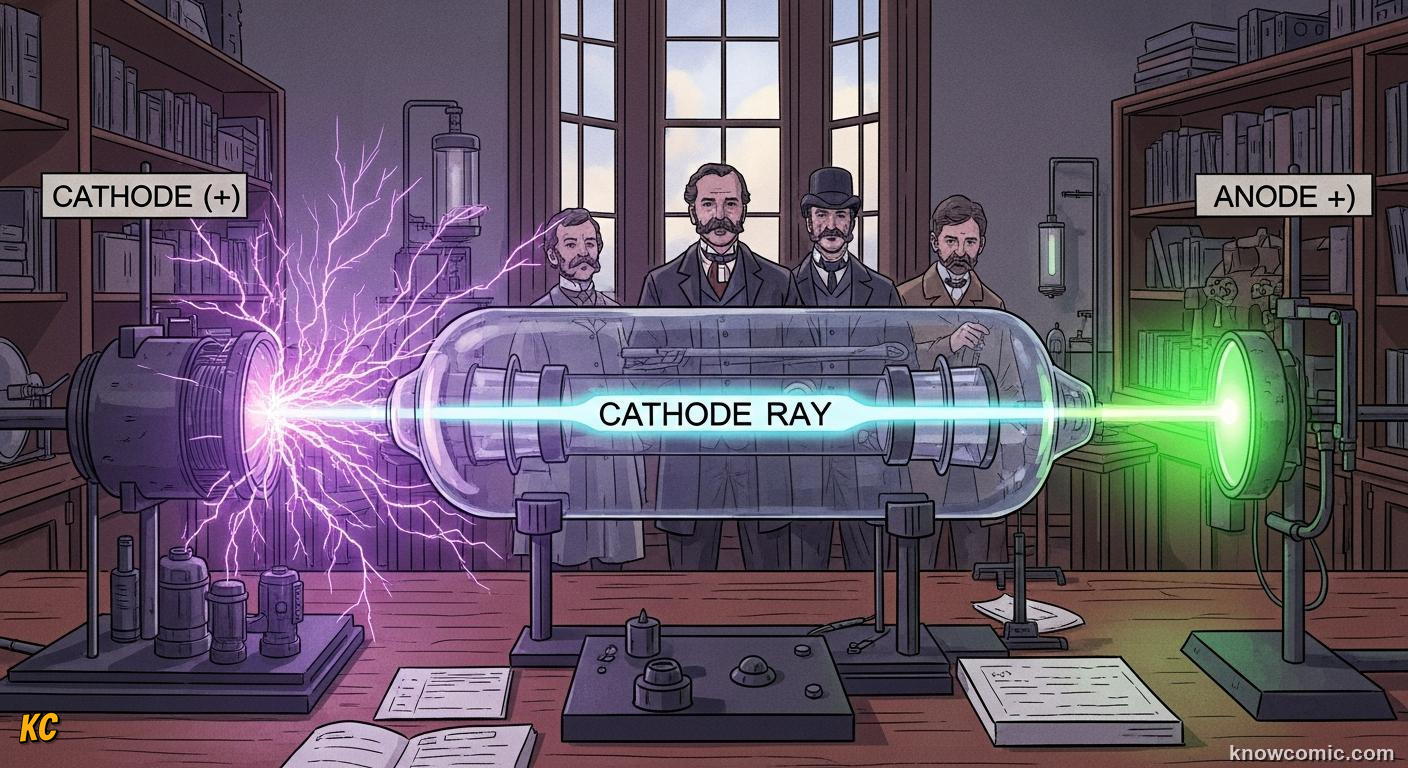
WHAT ARE CATHODE RAYS?
In the 1830s, scientists pumped almost all the air out of glass tubes and fired electricity through them. A mysterious glowing beam appeared, shooting from the negative end (cathode) to the positive end (anode). Nobody knew what this beam was made of. Was it a wave like light, or a stream of particles? The beam could be deflected by magnets and electric fields, which hinted it carried electric charge. This puzzling "cathode ray" stumped scientists for over fifty years, until one man cracked the mystery.
⚡ CATHODE RAY FACTS
Cathode rays always travel from negative (cathode) to positive (anode). They can spin a tiny paddle wheel placed in their path, proving they carry momentum.
MYSTERY!
THE CATHODE RAY TUBE
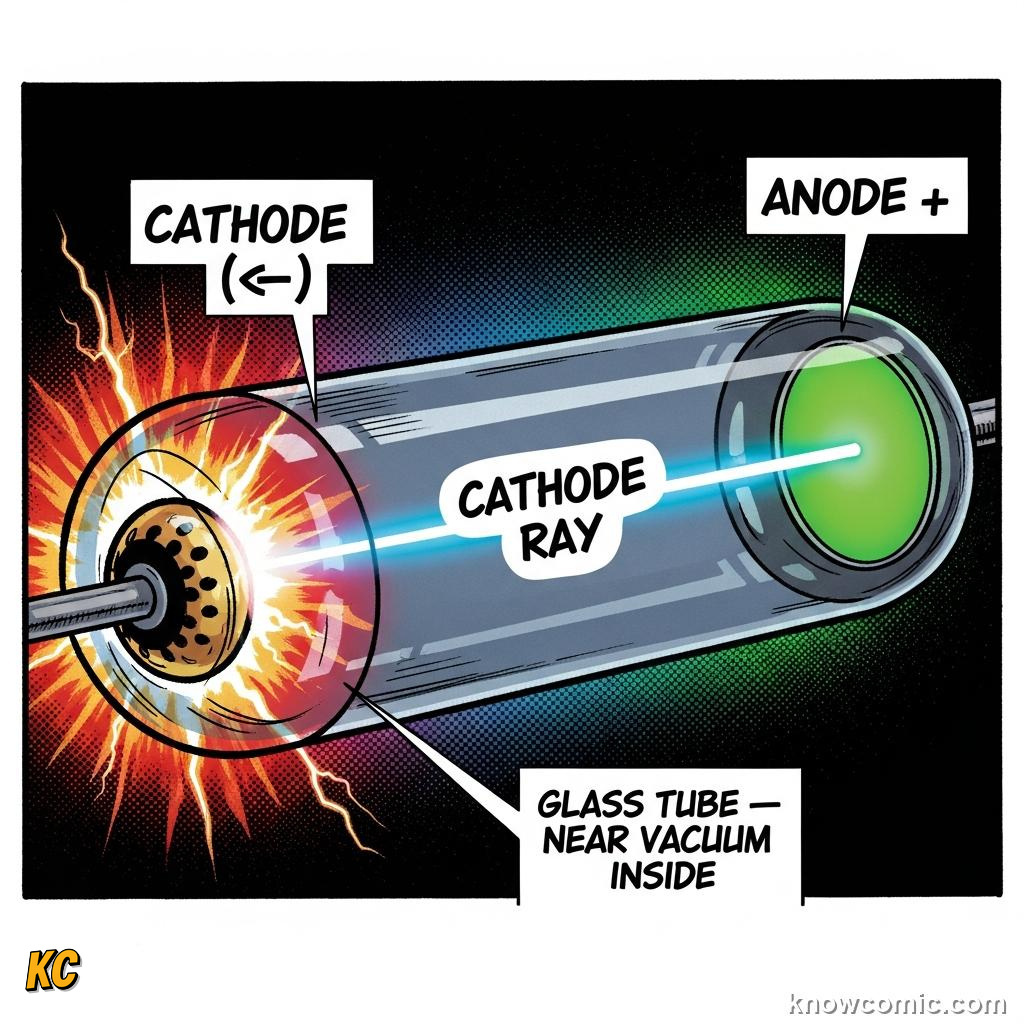
🔌 Glass tube with most air removed
⚡ Beam travels cathode → anode
🌟 Glows green on fluorescent screen
⚡ Beam travels cathode → anode
🌟 Glows green on fluorescent screen
TWO COMPETING THEORIES
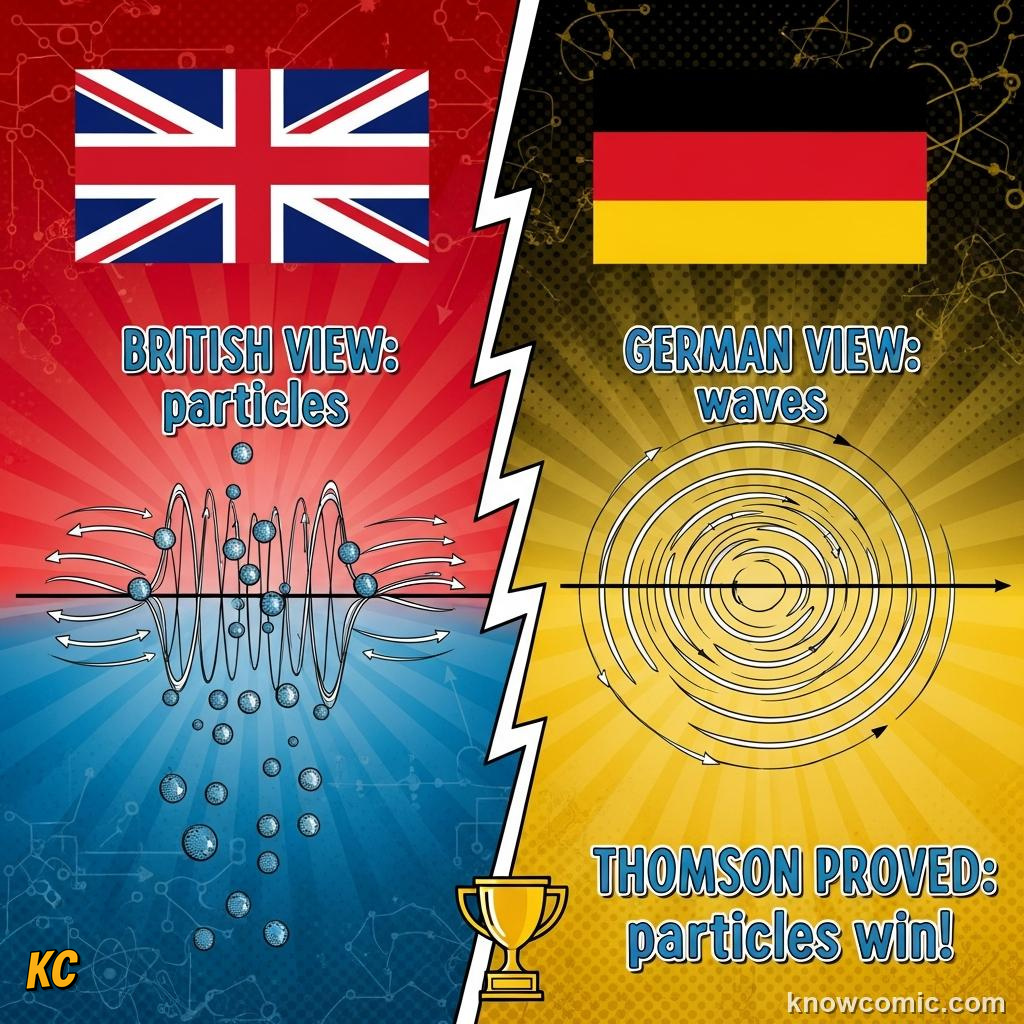
🌊 British view: rays are particles
💨 German view: rays are waves
🏆 Thomson proved: particles win!
💨 German view: rays are waves
🏆 Thomson proved: particles win!