⚛️ THE NUCLEAR ATOM
PAGE 1 OF 5, A PUZZLE THE PLUM PUDDING COULDN'T SOLVE
THE PROBLEM WITH THOMSON'S MODEL
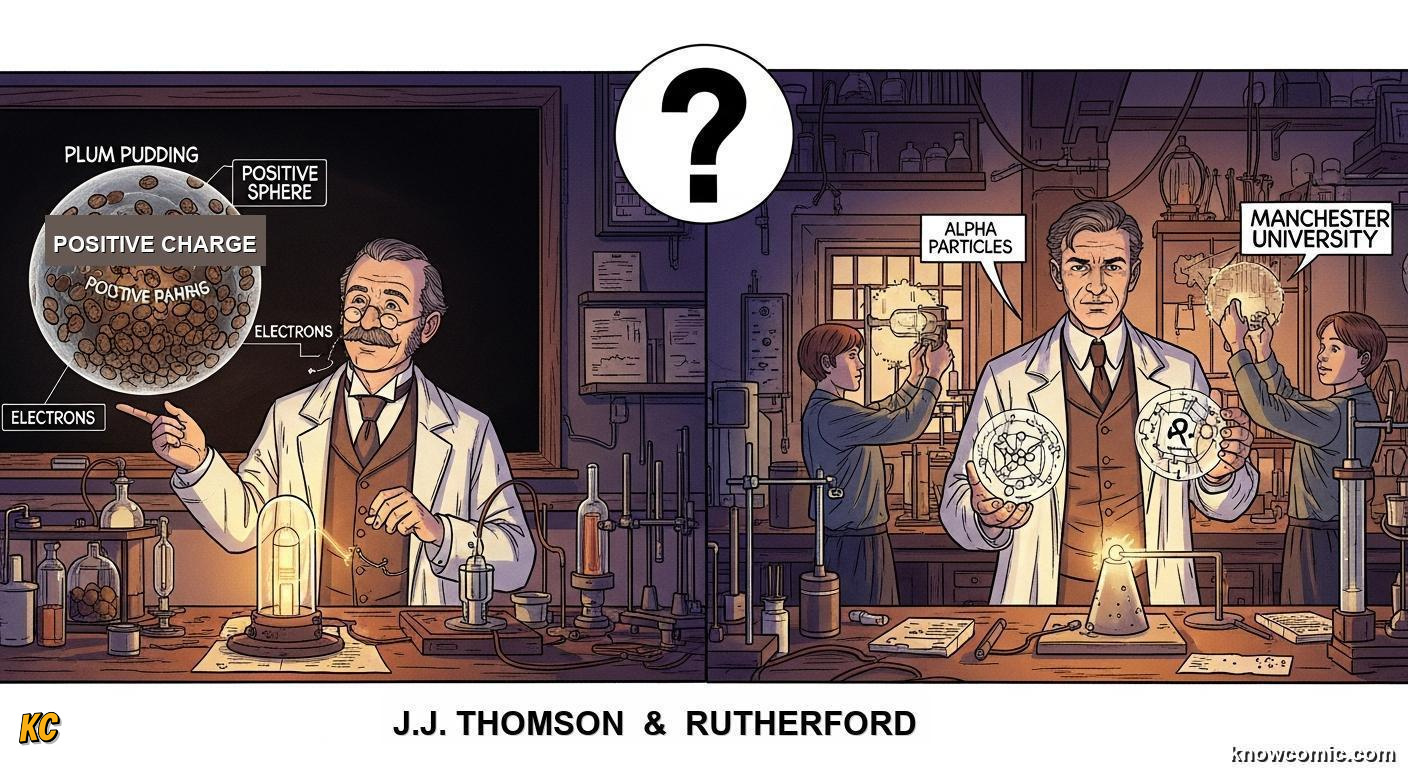
WHEN THE PUDDING MODEL WOBBLED
By 1909, Thomson's plum pudding model was the best science had, but it was about to face a devastating test. Ernest Rutherford, a New Zealand-born physicist working at Manchester University, decided to probe the atom directly. His weapon of choice: alpha particles, tiny, fast, positively charged particles fired from radioactive radium. If Thomson was right, the atom was a diffuse cloud of positive charge. Alpha particles should sail straight through it, barely deflecting at all. A simple test, with a shocking surprise. Nobody predicted what happened next.
⚛️ RUTHERFORD'S TEAM
Rutherford supervised the experiment, but the actual firing and counting was carried out by Hans Geiger (who later invented the Geiger counter) and an undergraduate student, Ernest Marsden, who was just 20 years old.
READY!
ALPHA PARTICLES
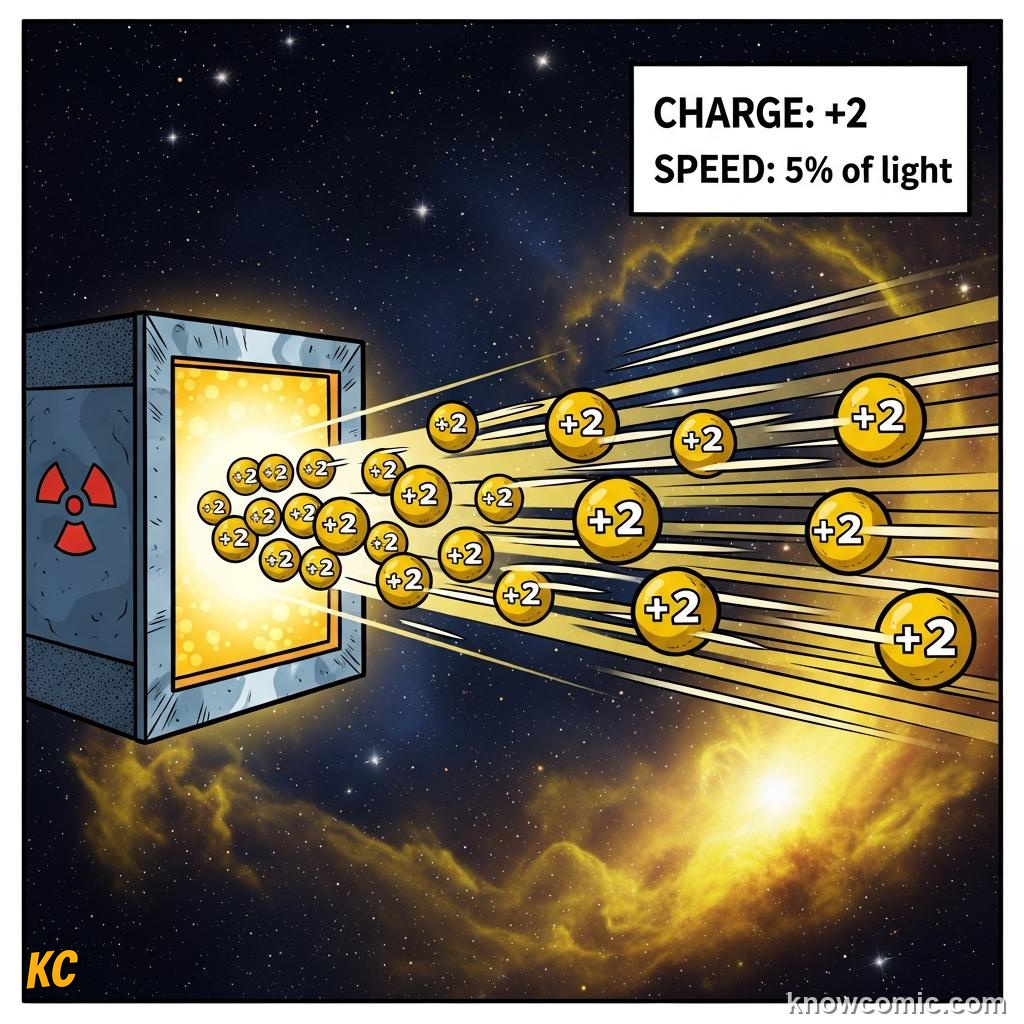
⚡ Positively charged (+2)
💨 Travel at 5% of the speed of light
🔋 Produced by radioactive radium
💨 Travel at 5% of the speed of light
🔋 Produced by radioactive radium
THE PREDICTION
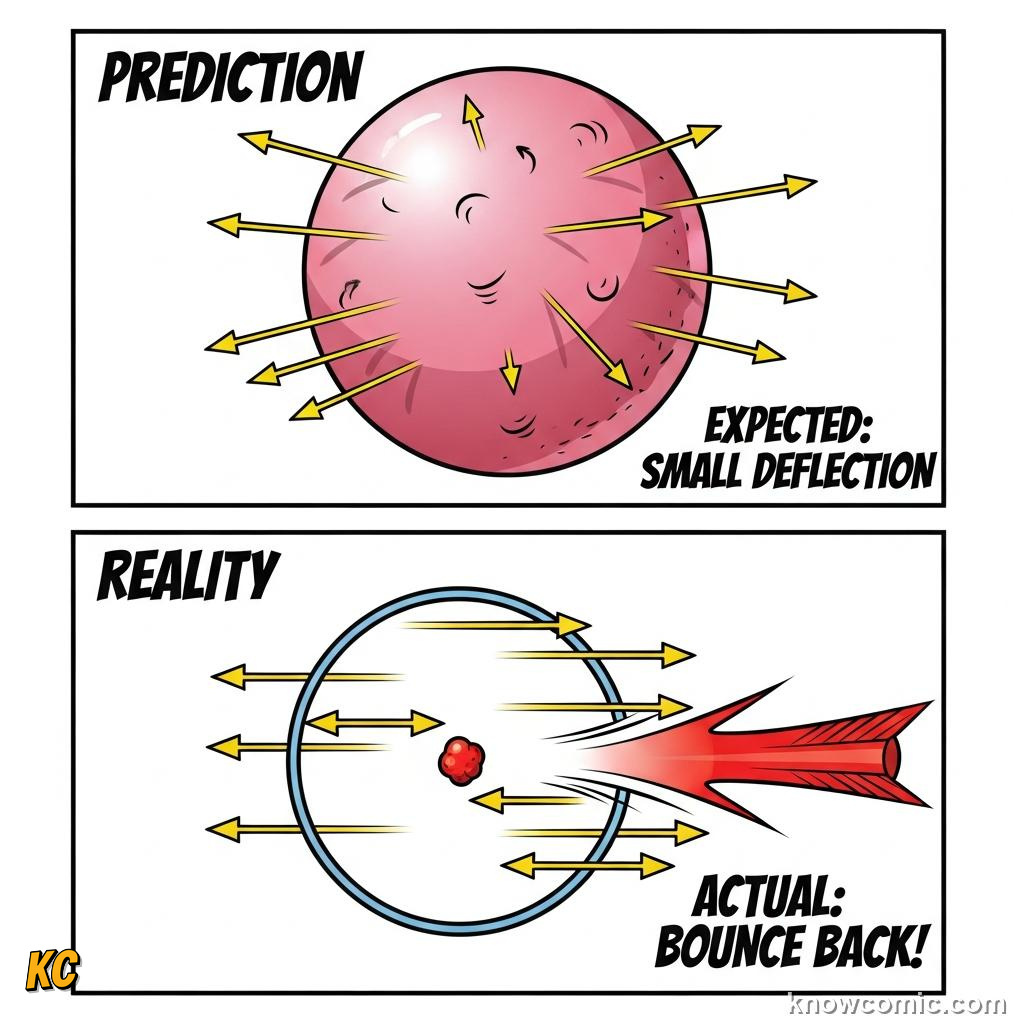
🍮 Plum pudding = soft, spread-out charge
➡️ Expected: particles pass straight through
❓ Small deflection possible, but nothing big
➡️ Expected: particles pass straight through
❓ Small deflection possible, but nothing big