➕ PROTONS & ATOMIC NUMBER
PAGE 1 OF 5, MEET THE PROTON
THE POSITIVE HEAVYWEIGHT OF THE NUCLEUS
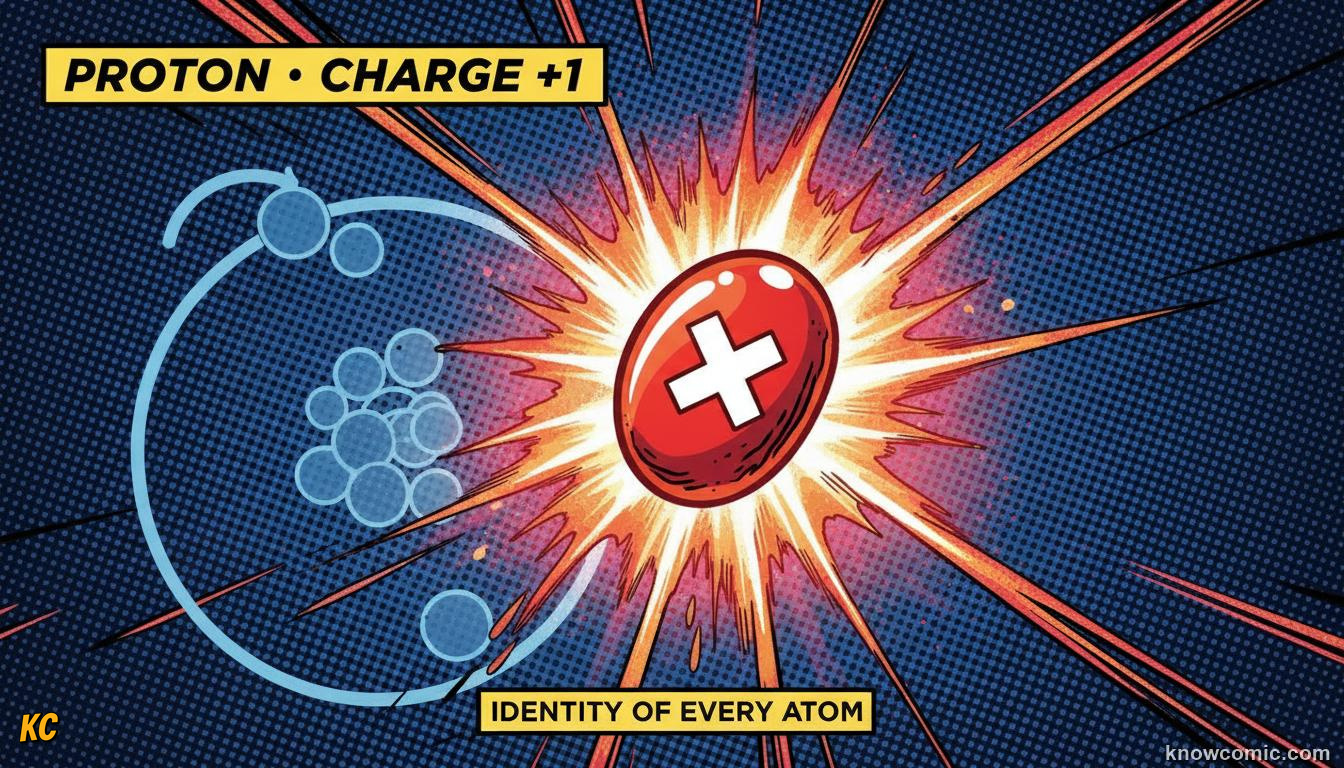
THE PROTON, AN ATOM'S ID BADGE
Deep inside every atom, packed tightly inside the nucleus, lives a particle that gives the atom its entire identity, the proton. A proton is a tiny positively charged particle with a charge of exactly +1, the opposite of an electron's −1 charge. It is almost 1,836 times heavier than an electron, which is why nearly all of an atom's mass lives in the nucleus. Change the number of protons and you change the element itself. Add one proton to a nitrogen atom and it literally becomes an oxygen atom. Protons are the most powerful numbers in all of chemistry, they define the identity of everything around you.
⚡ PROTON QUICK FACTS
Charge: +1. Mass: 1.673 × 10⁻²⁷ kg (about 1 atomic mass unit). Symbol: p or p⁺. Discovered: 1917 by Ernest Rutherford. Named: 1920, from the Greek "protos" meaning first.
PROTON!
INSIDE THE NUCLEUS
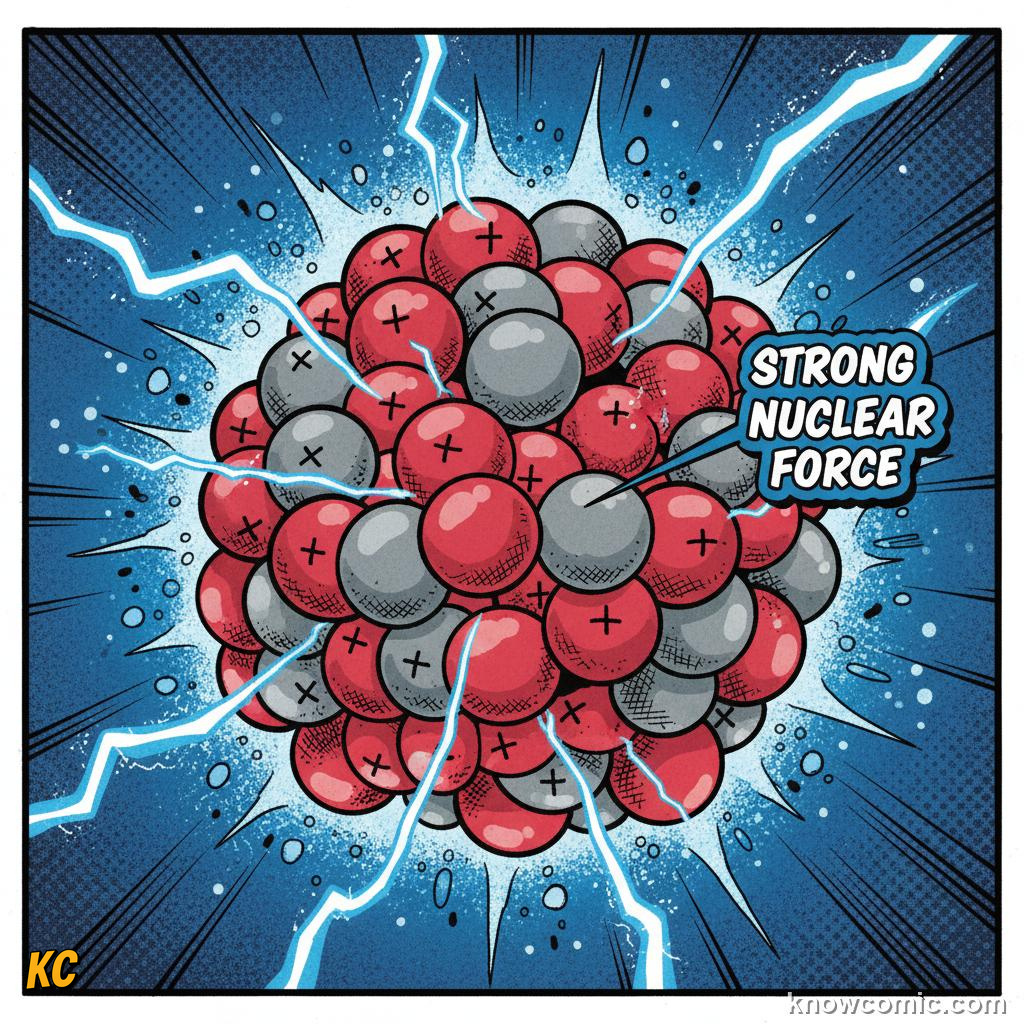
➕ Protons carry the +1 charge
⚪ Neutrons are neutral (0 charge)
🔒 Held by the strong nuclear force
⚪ Neutrons are neutral (0 charge)
🔒 Held by the strong nuclear force
SIZE & MASS
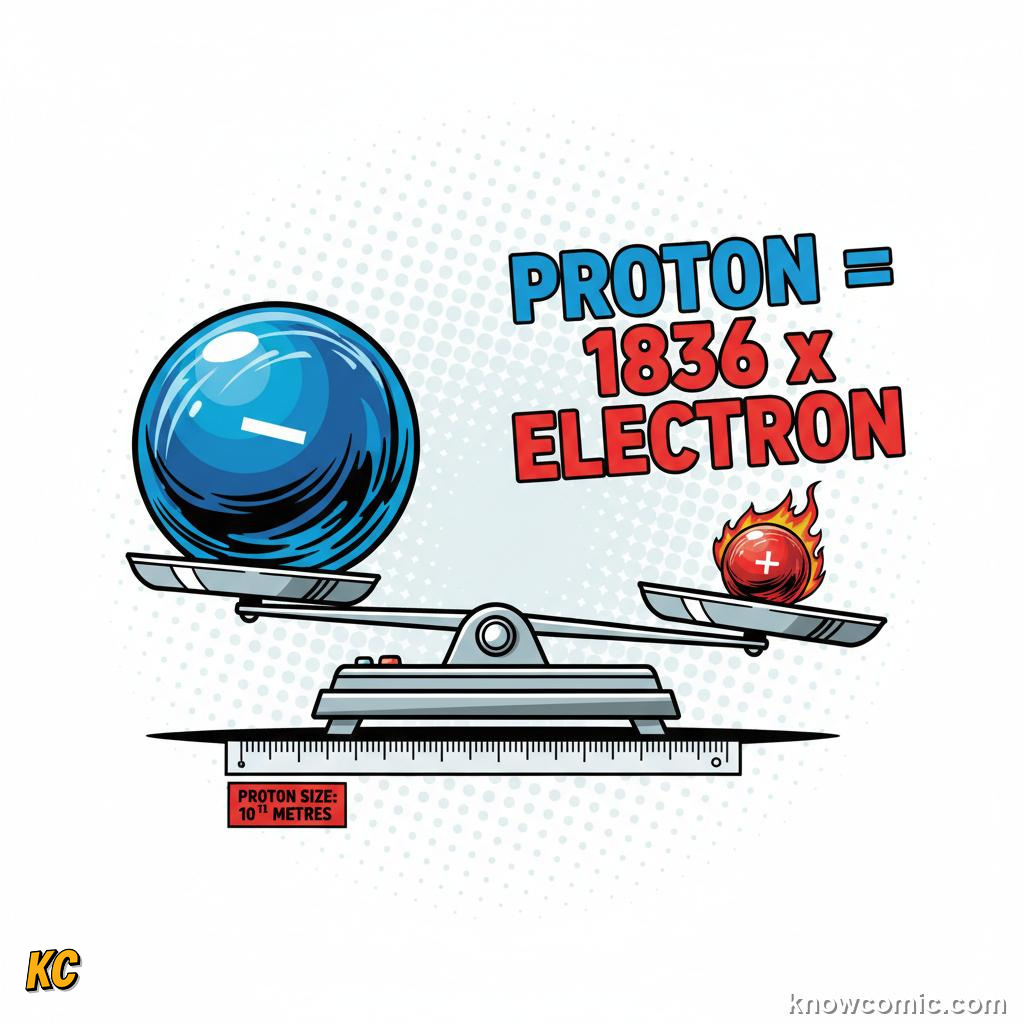
🪶 1,836 times heavier than an electron
📏 Only 10⁻¹⁵ metres across
💪 Nucleus holds 99.9% of atom's mass
📏 Only 10⁻¹⁵ metres across
💪 Nucleus holds 99.9% of atom's mass