🌡️
🌴
🌋
✦ DINOSAURS ✦

DINO
SAURS!

🦕 250 Million Years of the Most Epic Creatures Ever!

📖 200 Topics ⏱️ 5 min per comic 🧠 Quiz included
🌋
TRIASSIC
252–201 Mya
🦕
JURASSIC
201–145 Mya
🦖
CRETACEOUS
145–66 Mya
💥
EXTINCTION
66 Mya
🐦
TODAY
Birds = Dinos!
🌡️ MESOZOIC CLIMATE: A HOT, HOT WORLD
TOPIC 09 · CLIMATE SCIENCE · TRIASSIC–CRETACEOUS · 252–66 MA
PAGE 1 OF 5 — A WORLD WITHOUT ICE
252–66 MA
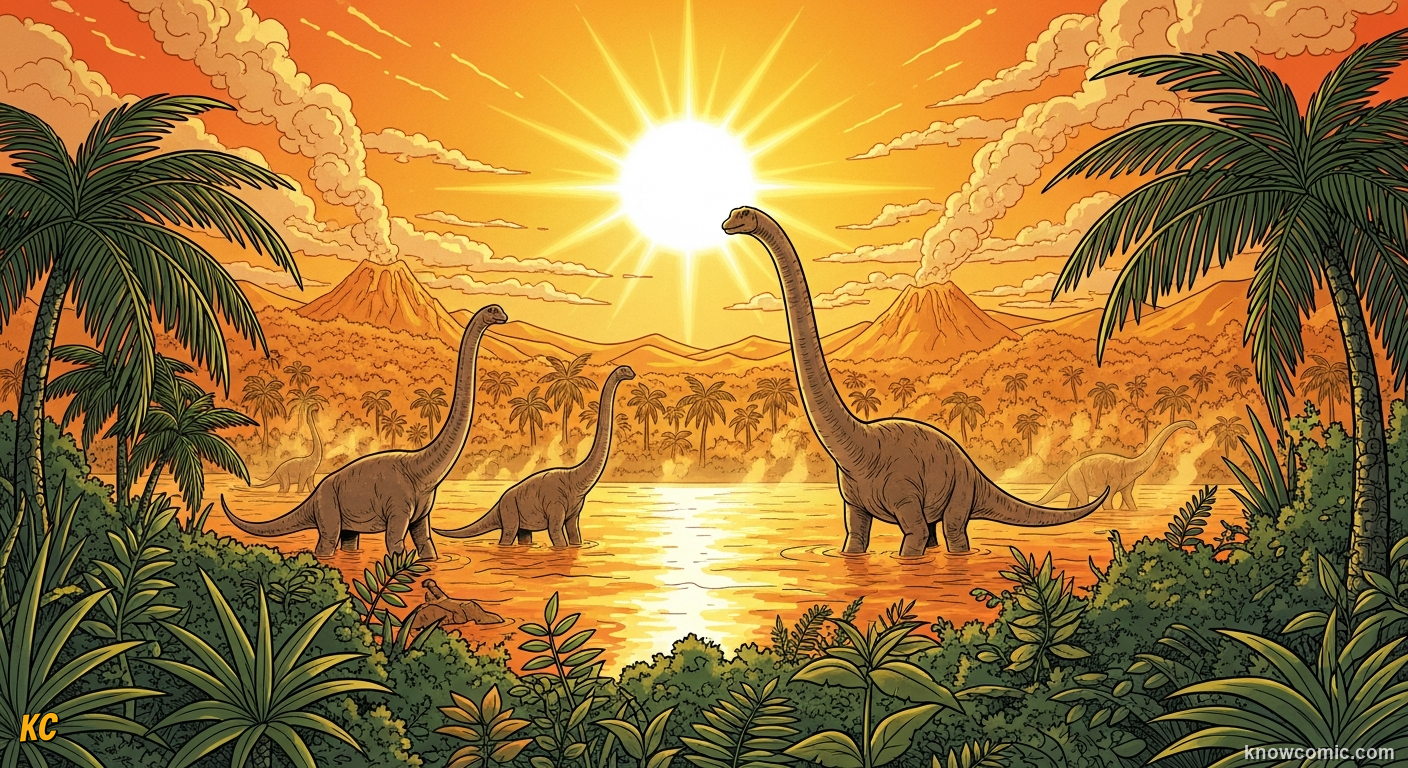
A Hot, Hot World: warm greenhouse Mesozoic landscape with dinosaurs
THE WORLD WAS A HOTHOUSE
For the entire 186 million years that dinosaurs ruled, Earth was a greenhouse world, on average about 10°C warmer than today. There were no permanent polar ice caps at all. Palm-like plants and ferns grew near both poles, and the difference in temperature between the equator and the poles was far gentler than it is now. A dinosaur could have walked from the tropics to the South Pole and never seen snow.
🌡️ HOW WARM WAS IT?
Global average temperatures reached roughly 25°C in parts of the Mesozoic, compared with about 15°C today. Even the deep oceans were warm, close to 12°C, instead of the near-freezing 2°C they are now.
"A whole world with no winter ice, just heat, jungle and giants."
HOT!
GREEN POLES
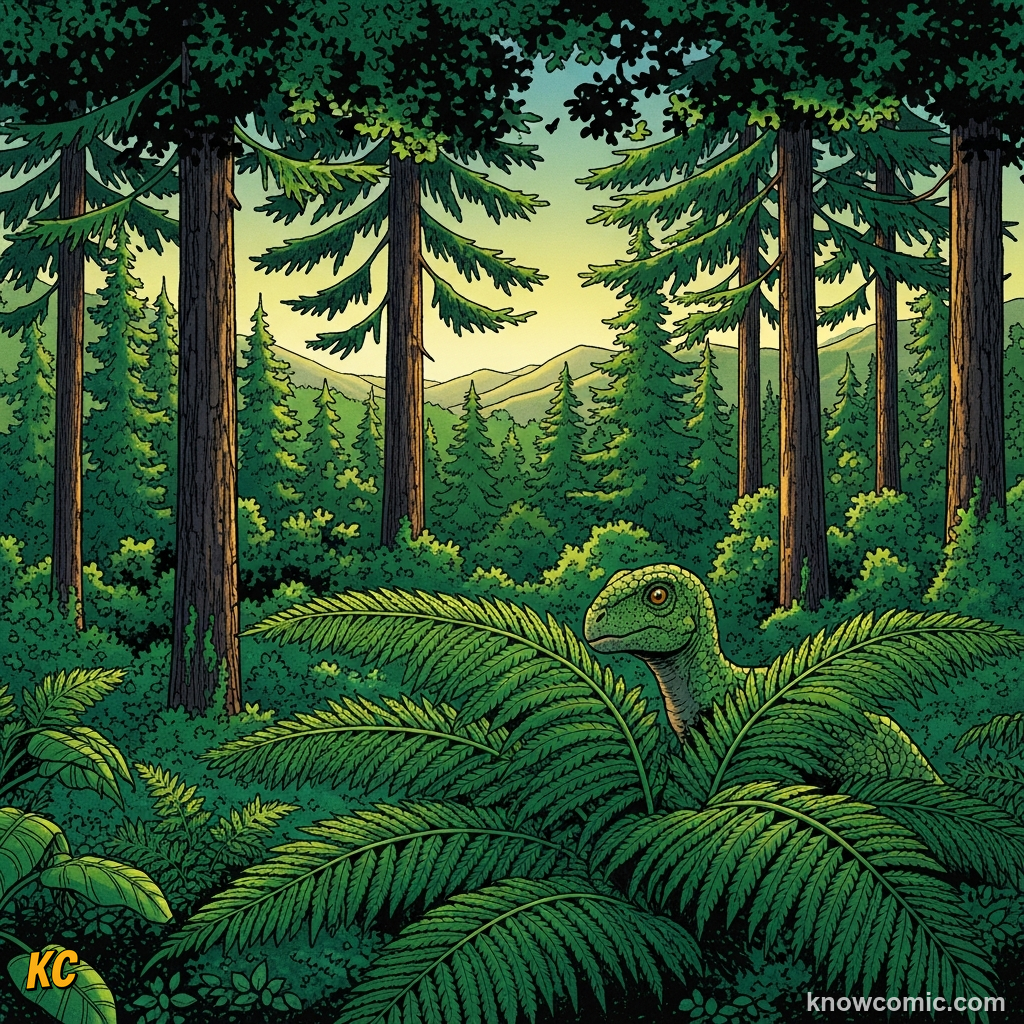
Green poles: lush polar forest where dinosaurs lived without ice
🌲 Forests grew at the poles
🦕 Dinosaurs lived in the far south
❄️ Almost no permanent ice
WARM RAIN
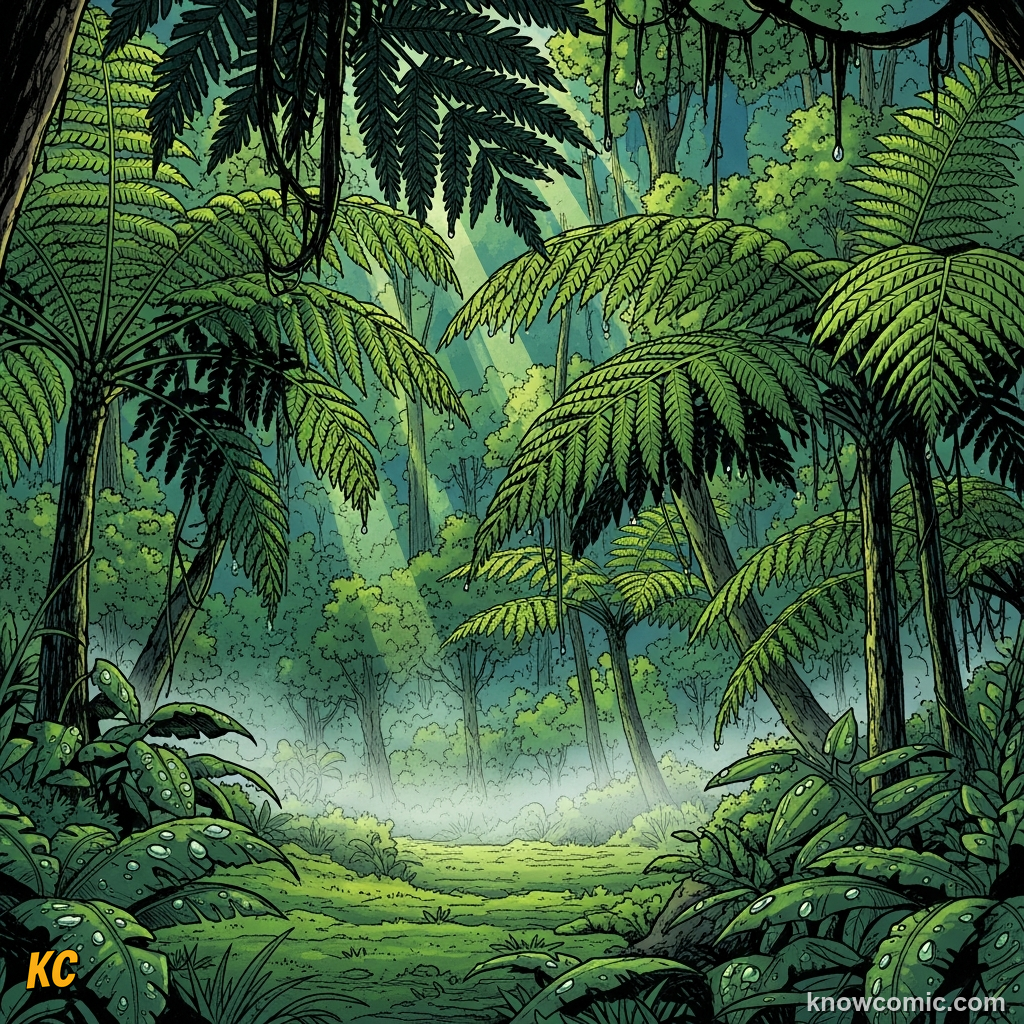
Warm rain: humid Mesozoic landscape full of ferns and tree ferns
🌧️ Warm, humid air everywhere
🌿 Giant ferns and conifers
🪴 Green stretched pole to pole
PAGE 2 OF 5 — WHY WAS IT SO HOT?
THE GREENHOUSE ENGINE
The greenhouse engine: erupting volcanoes pumping carbon dioxide into a warm sky
VOLCANOES + CARBON DIOXIDE
The Mesozoic heat had a simple cause: lots of carbon dioxide in the air. Carbon dioxide is a greenhouse gas, it traps the Sun's heat like a blanket. Back then, enormous volcanic systems erupted for thousands of years at a time, breathing huge amounts of CO₂ into the sky. Levels were often four to six times higher than today's. With that thick warm blanket, the whole planet heated up, and with no ice to reflect sunlight back to space, it stayed hot.
BOOM!
NO ICE CAPS
No ice caps: bare green polar coastline with no glaciers
❄️ No glaciers, no sea ice
🌍 Dark land soaked up heat
🔁 Warmth kept feeding itself
HIGH SEAS
High seas: shallow warm ocean flooding over low coastlines
🌊 Sea levels far higher
🏝️ Shallow seas split continents
🐚 Warm water teemed with life
THICK AIR
Thick air: sunlight trapped by a heavy carbon dioxide blanket
🟢 4–6× more CO₂ than today
☀️ Heat trapped like a blanket
🌫️ Steamy, humid atmosphere
PAGE 3 OF 5 — THE BAKING TRIASSIC
PANGAEA
Pangaea: vast red desert interior of the supercontinent
🗺️ One giant supercontinent
🏜️ Huge dry desert in the middle
🌡️ Scorching daytime heat
MEGA-MONSOON
Mega-monsoon: heavy seasonal storms hitting the Pangaean coast
🌧️ Giant seasonal monsoons
⛈️ Wet coasts, bone-dry centre
🌴 Life clung to the shores
252–201 MA
The baking Triassic: hot red desert where early dinosaurs lived
ONE GIANT, BAKING LAND
When dinosaurs first appeared in the Triassic, all the continents were joined into one supercontinent called Pangaea. It was so vast that the middle was thousands of kilometres from any sea. With no ocean breezes to cool it, the interior became a blistering desert with scorching days and cold nights. The coasts were lashed by violent "mega-monsoon" rains. Early dinosaurs were small and tough, perfectly built to survive this harsh, hot world.
BAKE!
PAGE 4 OF 5 — STEAMY JURASSIC & CRETACEOUS
201–66 MA
Steamy greenhouse: lush green Jurassic and Cretaceous world of giant dinosaurs
A GREEN, STEAMY PARADISE
As Pangaea slowly broke apart, oceans crept between the new continents and spread moisture everywhere. The harsh deserts gave way to warm, wet, jungle-like lands. This steamy "greenhouse paradise" grew endless food, towering conifers, ferns and cycads, exactly the fuel that let the long-necked sauropods balloon into the biggest animals that ever walked on land. A warm planet with year-round growing seasons was a giant buffet for plant-eating dinosaurs.
LUSH!
POLAR DINOS
Polar dinosaurs: dinosaurs living in cool forests near the poles
🦕 Dinosaurs lived near the poles
🌒 They coped with long dark winters
🌲 Cool forests, but no deep freeze
FIRST FLOWERS
First flowers: early flowering plants appearing in the warm Cretaceous
🌸 First flowers in the Cretaceous
🐝 New insects arrived to help
🌎 Warmth let plants spread fast
WARM SEAS
Warm seas: tropical Mesozoic ocean full of marine reptiles
🌊 Tropical seas, even up north
🦈 Marine reptiles everywhere
🐚 Reefs and shellfish boomed
PAGE 5 OF 5 — CLIMATE SHAPED THE GIANTS
THE BIG LESSON
Climate shaped the giants: dinosaurs thriving in a warm green Mesozoic world
WHY THE HEAT MATTERED
The Mesozoic greenhouse was not a disaster, it was the stage that let dinosaurs rule. Warmth meant plants grew all year, food never ran out, and cold-blooded helpers thrived. It shows how powerfully climate shapes life: change the temperature, and you change which creatures win. The same gas that warmed the dino world, carbon dioxide, is the one warming our planet today, which is exactly why scientists study these ancient hothouse times so closely.
LEGACY!
RECAP
Recap: warm ice-free Mesozoic Earth seen from above
🌡️ ~10°C warmer than today
❄️ No polar ice caps at all
REMEMBER
🦕 KEY FACTS
🌋 Volcanic CO₂ drove the heat
🌴 Jungle reached the poles
🦖 Mass extinction comes next
🧠 QUIZ TIME!
MESOZOIC CLIMATE: A HOT, HOT WORLD · 5 QUESTIONS
QUESTION 01
Compared with today, how warm was the dinosaur age on average?
QUESTION 02
What was found at the North and South Poles during the dinosaur age?
QUESTION 03
Which gas, pumped out by volcanoes, mainly kept the planet so hot?
QUESTION 04
Why was the middle of the supercontinent Pangaea such a harsh desert?
QUESTION 05
How did the warm climate help the giant plant-eating dinosaurs?
0/5
LOADING...
← TOPIC 08 📋 ALL TOPICS TOPIC 10 →