🧊 GLACIAL EROSION: LANDFORMS
PAGE 1 OF 5 — ICE SHAPES THE LAND
GLACIAL EROSION
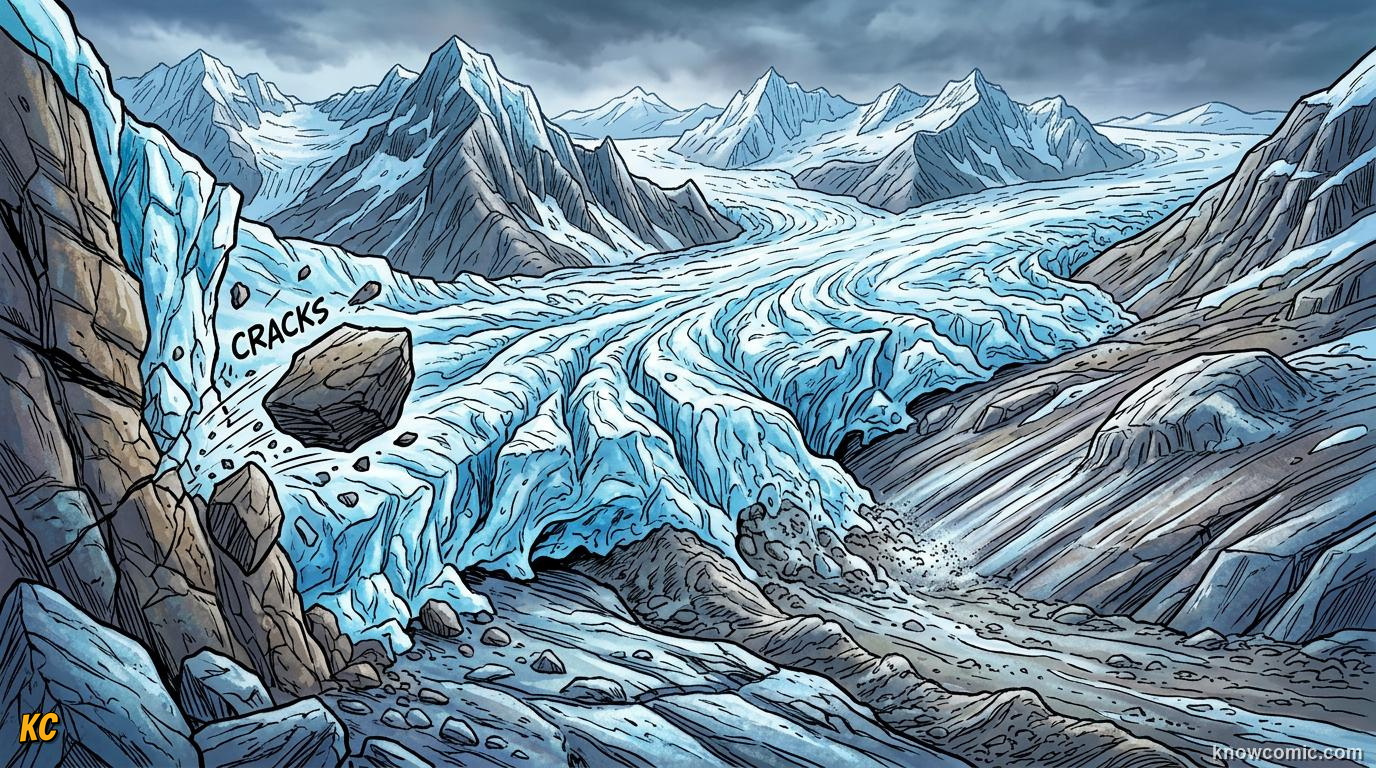
THE POWER OF MOVING ICE
Glacial erosion is the wearing away of rock by moving ice. During cold periods of the Quaternary ice ages, ice sheets and valley glaciers covered large parts of North America, Europe, and beyond. Glaciers are powerful agents of erosion because ice is heavy, moves slowly downhill under gravity, and carries huge amounts of rock debris frozen within and beneath it. Unlike rivers, which mainly cut downward in V-shaped channels, glaciers scrape and widen valleys into distinctive U-shaped forms. The two main erosional processes are plucking and abrasion. Plucking occurs when meltwater freezes into cracks, grips rock fragments, and pulls them away as the glacier moves. Abrasion is when embedded rocks grind against the bedrock like sandpaper, polishing and striating the surface. Together these processes sculpt some of the most dramatic landscapes on Earth.
🧊 ICE IS HEAVY
A glacier can be hundreds of metres thick. The immense weight creates pressure that helps melt ice at the base, allowing the glacier to slide and erode bedrock even in cold climates.
SCRAPE!
PLUCKING
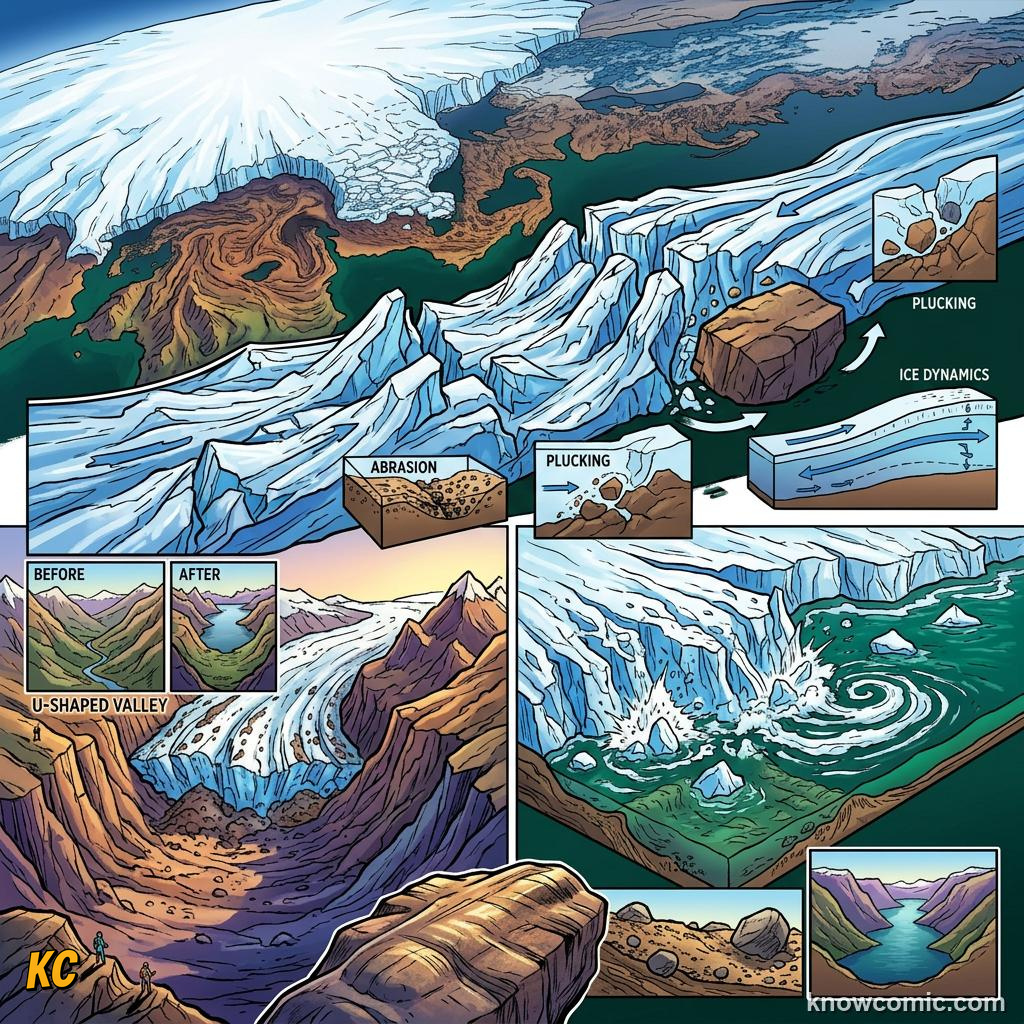
- Plucking (also called quarrying) happens when meltwater refreezes into joints and fractures in the bedrock beneath a glacier.
- As the ice moves downhill, frozen rock fragments are torn away and incorporated into the base of the glacier.
- Plucking is most effective on well-jointed rock that has been weakened by freeze-thaw weathering.
ABRASION
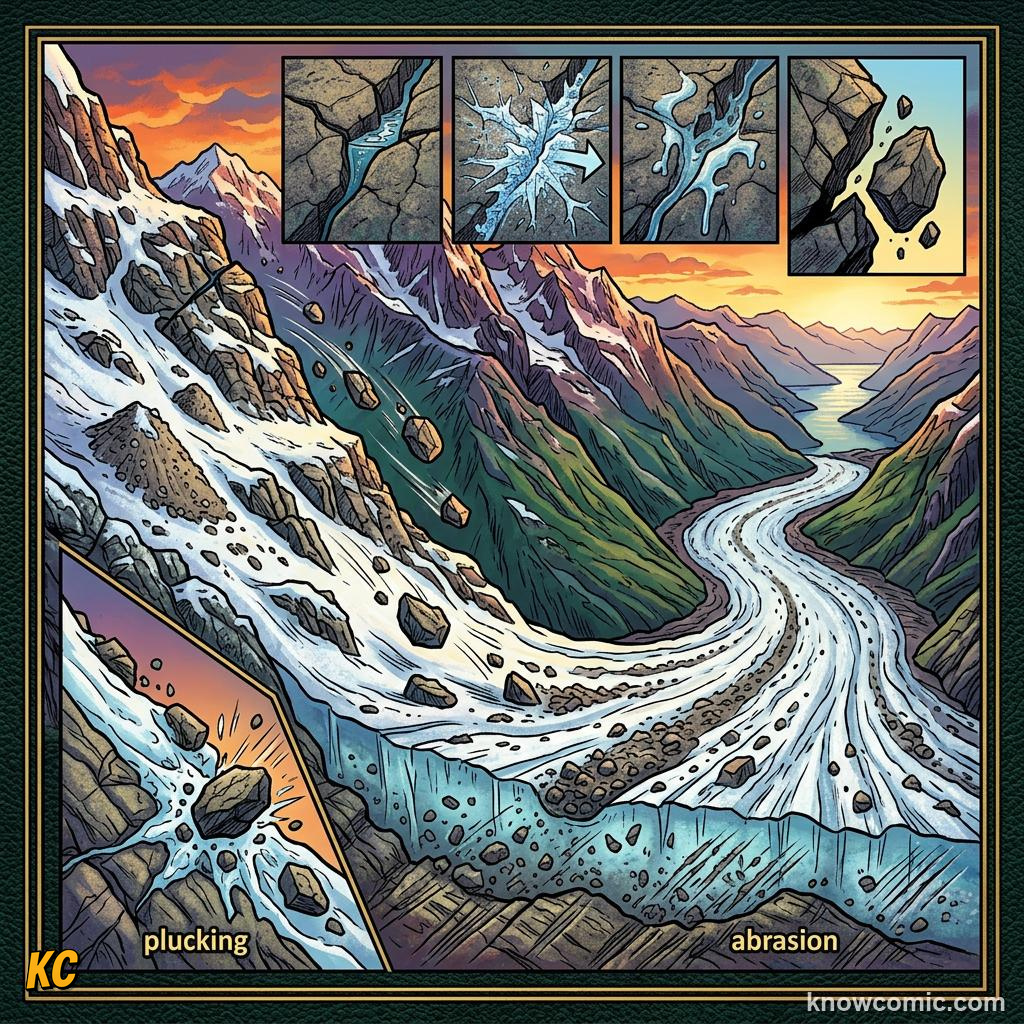
- Abrasion occurs when rocks frozen into the glacier base scrape against the bedrock, grinding it down over time.
- The result can be smooth, polished rock surfaces and parallel scratch marks called striations.
- Abrasion works like sandpaper: the harder the rock in the ice, the more effectively it erodes the valley floor and walls.