🌊 COASTAL EROSION: PROCESSES
PAGE 1 OF 5 — WAVE POWER AT THE COAST
COASTAL EROSION
HOW WAVES SHAPE COASTLINES
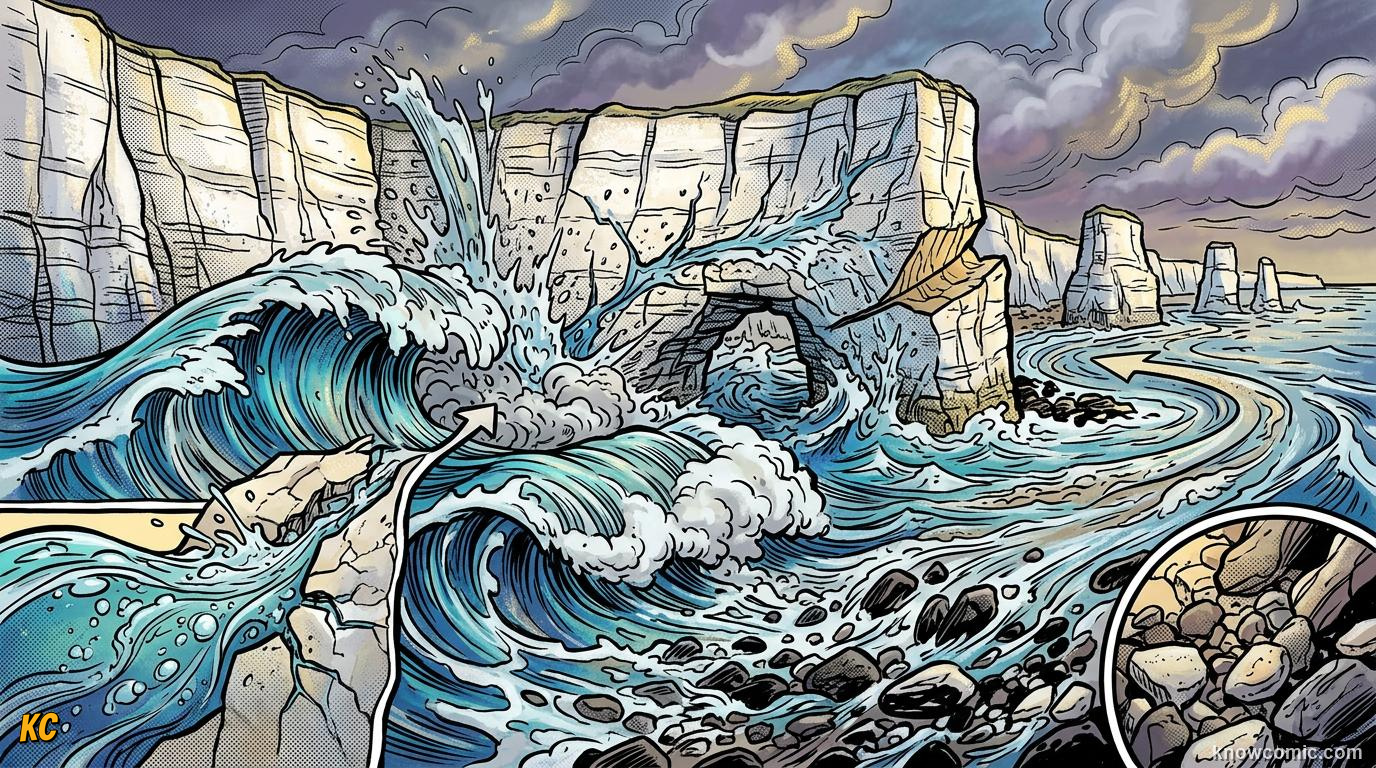
Coasts are among the most dynamic environments on Earth. Waves generated by wind over the ocean carry immense energy that erodes, transports, and deposits sediment. Coastal erosion is the wearing away of land by the sea. It is strongest where waves have a long fetch (distance over which wind blows), where rock is weak or fractured, and where human activity has removed protective vegetation. Four main processes operate: hydraulic action (water pressure and compressed air in cracks), abrasion (waves hurling sediment against rock like sandpaper), attrition (pebbles colliding and breaking into smaller, rounder pieces), and solution (chemical dissolving of soluble minerals such as chalk and limestone). Together these processes cut cliffs, hollow caves, and reshape headlands over thousands of years. Coastlines with alternating hard and soft rock often develop headlands and bays.
🌊 FOUR PROCESSES
Hydraulic action = water force in cracks. Abrasion = sediment grinding rock. Attrition = load colliding and rounding. Solution = chemical dissolving of soluble rock.
CRASH!
HEADLAND & BAY
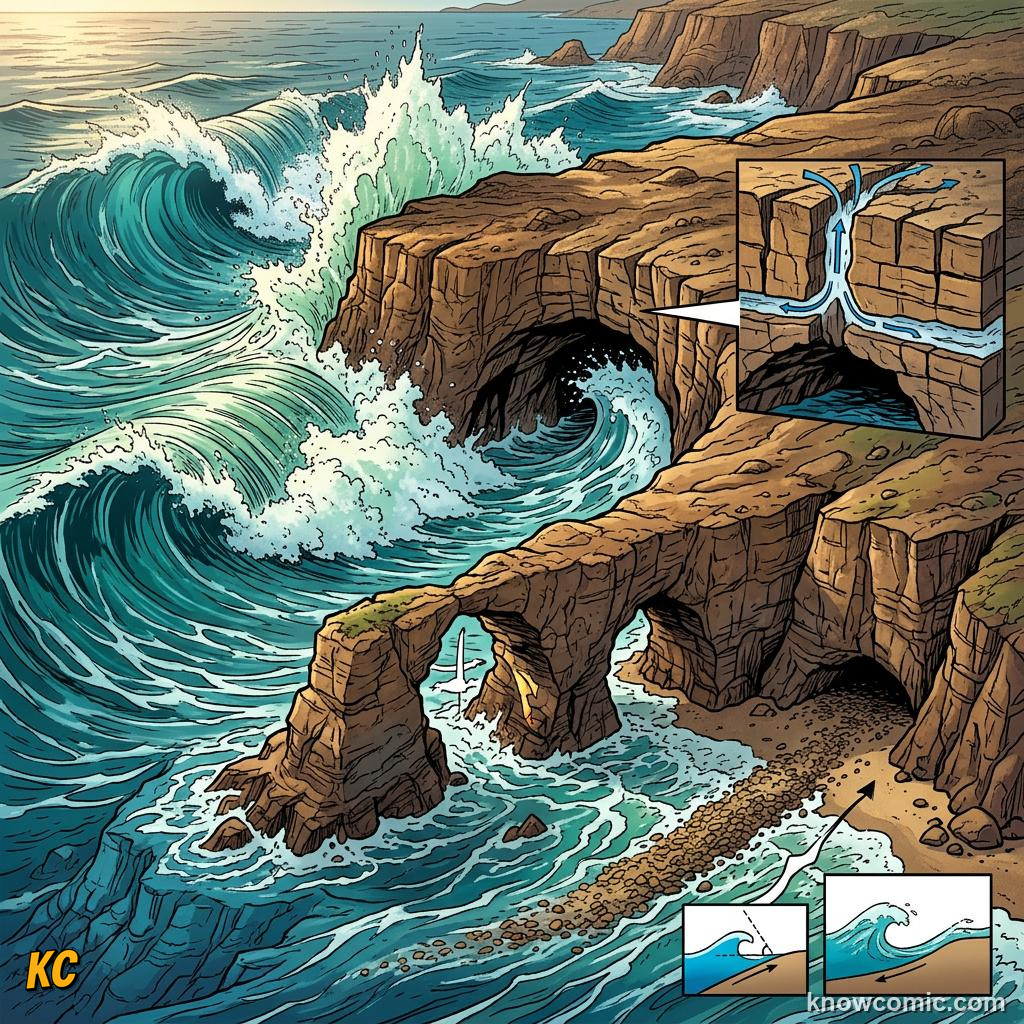
- A headland is a section of coast that juts out into the sea, usually made of resistant rock that erodes slowly.
- A bay is a sheltered inlet where softer rock has been eroded faster, creating a curved indentation.
- Alternating bands of hard and soft rock along a discordant coastline produce this classic headland-and-bay pattern.
WAVE REFRACTION
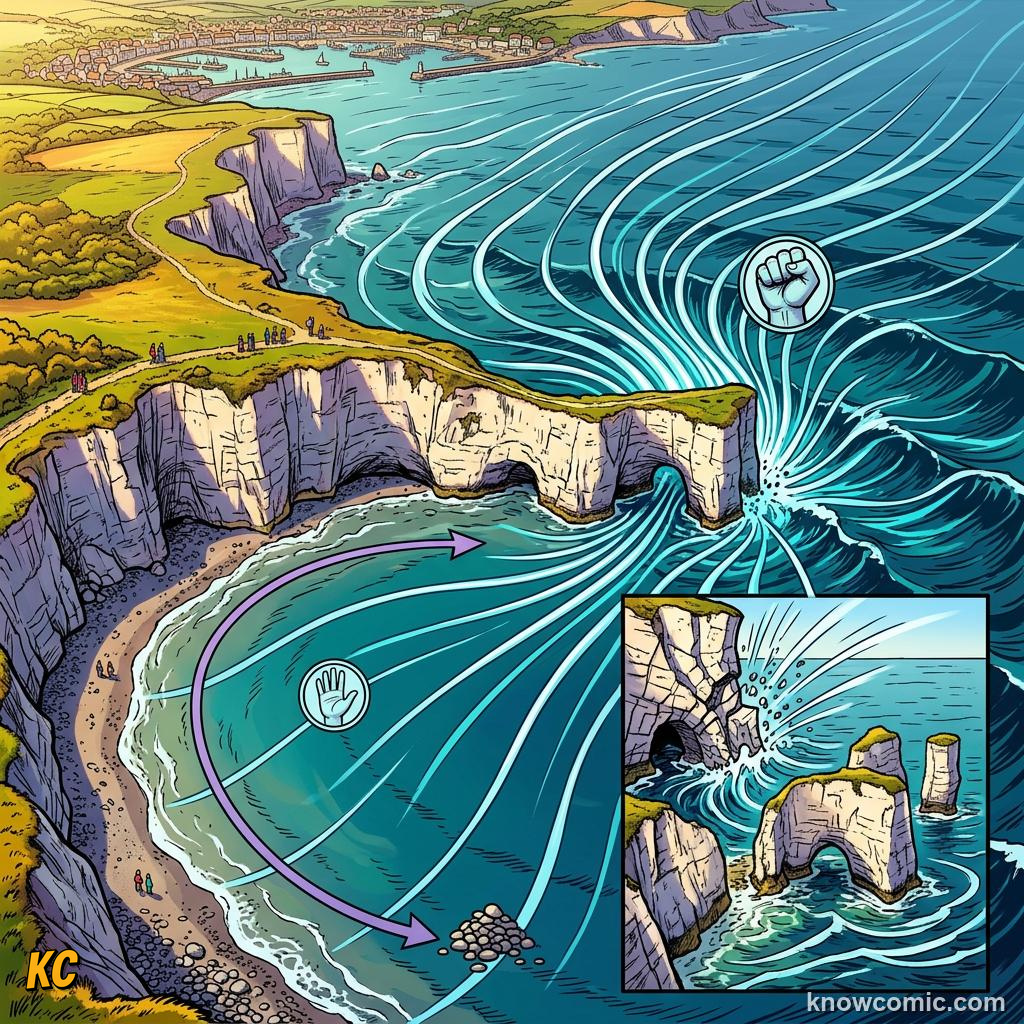
- Wave refraction occurs when waves bend as they enter shallow water, slowing near headlands and in bays.
- Wave energy concentrates on headland tips, making them erode faster than the sheltered bay sides.
- Refraction explains why headlands become prominent while bays deepen into sandy, sheltered beaches.