🗺️ THEORY OF PLATE TECTONICS
PAGE 1 OF 5 — WEGENER'S BOLD IDEA
THE MAN WHO MOVED CONTINENTS
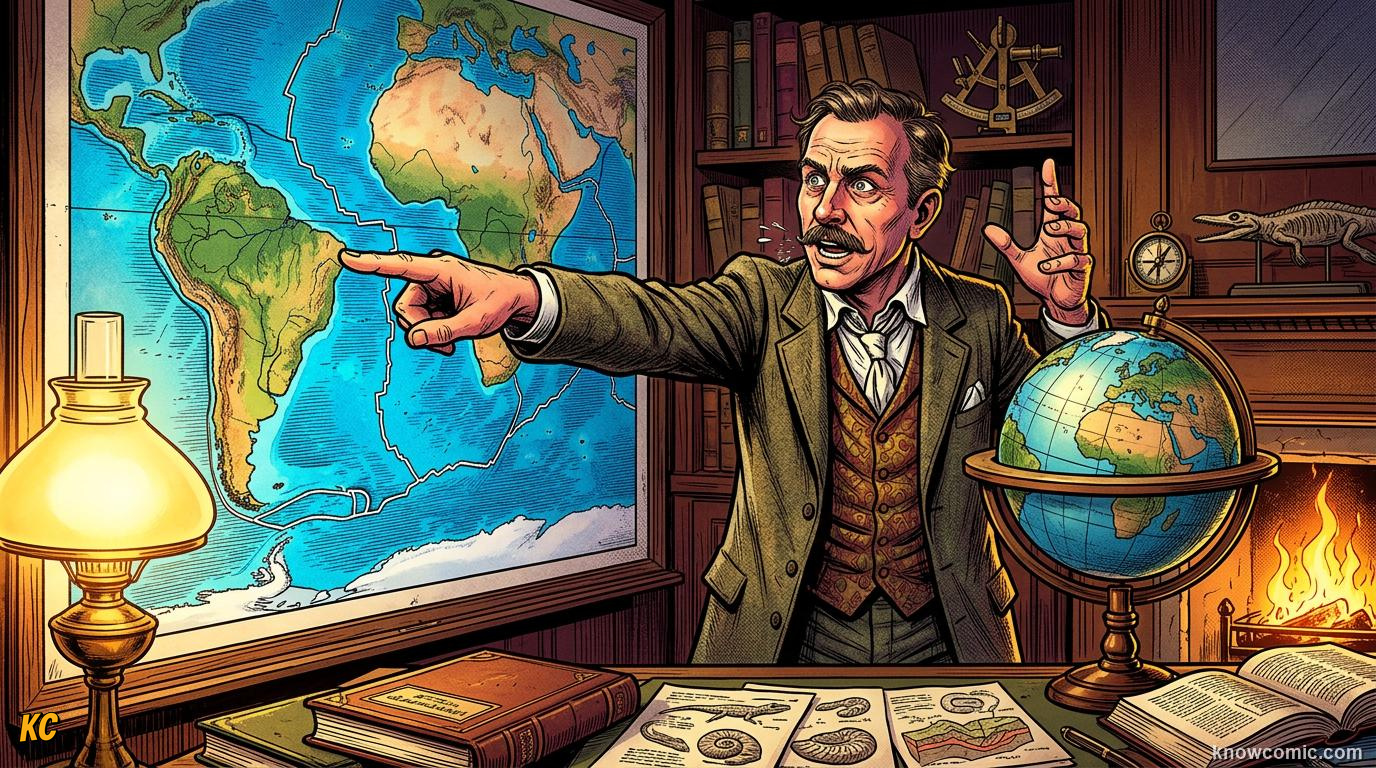
ALFRED WEGENER AND CONTINENTAL DRIFT
For centuries, mapmakers noticed that South America and Africa look like broken puzzle pieces. In 1912, German meteorologist Alfred Wegener went further. He argued that all continents were once joined in one supercontinent and had slowly drifted apart. He called the process continental drift. Wegener collected evidence from geology, fossils, and ancient climates on opposite sides of oceans. His book The Origin of Continents and Oceans appeared in 1915 and grew through later editions. Most geologists rejected the idea because Wegener could not explain a strong enough force to push continents through solid ocean crust. He died in 1930 on an Arctic expedition, still fighting for his theory. Decades later, new ocean data would prove he had been largely right about the big picture.
📅 KEY DATE
Wegener first presented continental drift on 6 January 1912 to the German Geological Society in Frankfurt.
DRIFT!
JIGSAW COASTS
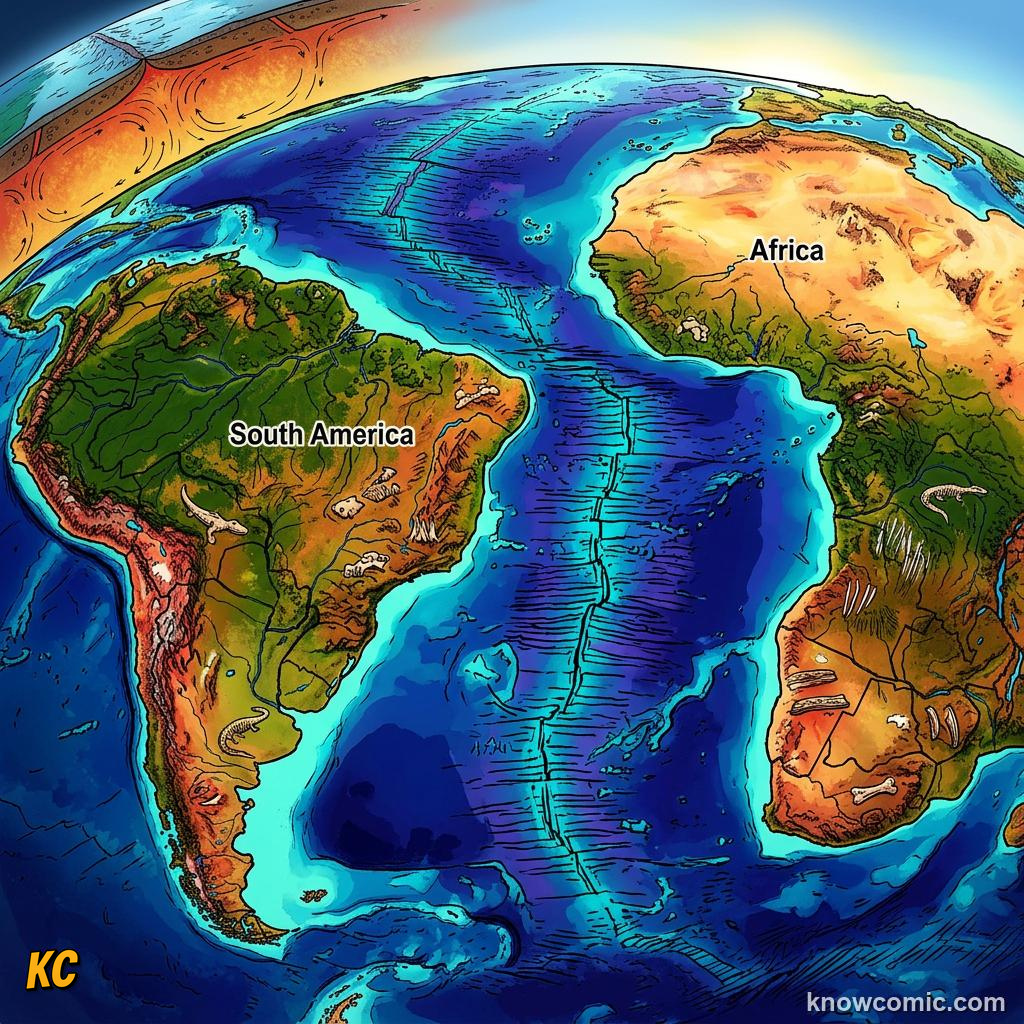
- The bulge of Brazil fits into the Gulf of Guinea on Africa's west coast with striking precision.
- Wegener also matched mountain belts and rock types across the Atlantic, such as the Appalachians and Caledonian ranges.
- Coastline fit alone is not proof, but it was the clue that launched decades of research.
WHY HE WAS DOUBTED

- Critics asked what engine could move huge continents through dense oceanic crust.
- Wegener suggested Earth's rotation or tidal forces, but calculations showed those were far too weak.
- The missing mechanism kept continental drift out of mainstream geology until the 1960s.