💥 PLATE BOUNDARIES: CONVERGENT
PAGE 1 OF 5 — WHEN PLATES COLLIDE
DESTRUCTIVE MARGINS
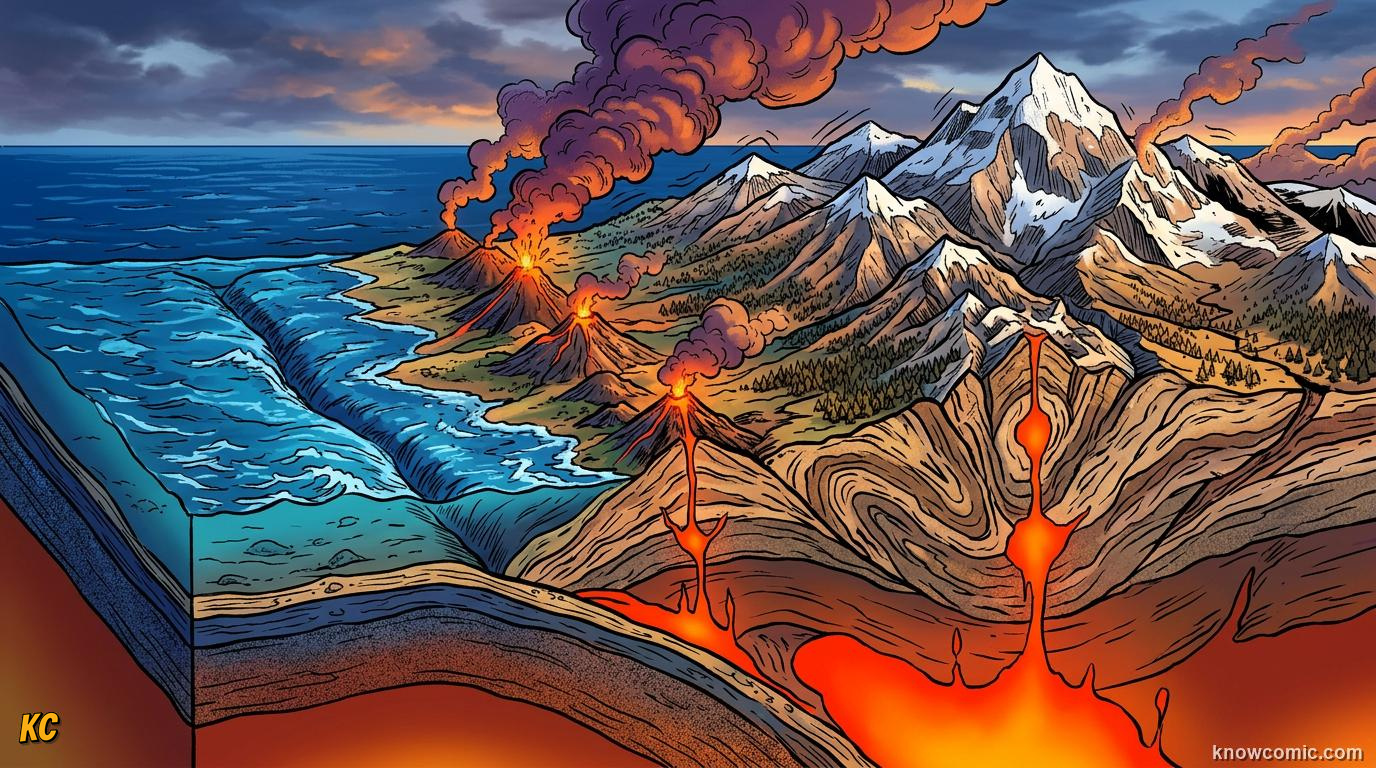
CONVERGENT PLATE BOUNDARIES
At a convergent plate boundary, two lithospheric plates move toward each other. Geologists also call this a destructive margin because crust is destroyed when dense oceanic lithosphere returns to the mantle. Convergence builds some of Earth's greatest landforms: deep ocean trenches, volcanic island arcs, and high mountain ranges. The exact outcome depends on whether oceanic crust meets continental crust, ocean meets ocean, or continent meets continent. When oceanic and continental plates collide, the denser oceanic plate almost always subducts. When two continents collide, neither plate sinks easily, so crust crumples upward instead. Convergent boundaries are among the most earthquake-prone and volcanically active zones on the planet. Understanding them explains events from Pacific tsunamis to Andean eruptions.
⚖️ DENSITY RULE
Oceanic crust (~3.0 g/cm³) is denser than continental crust (~2.7 g/cm³), so oceanic lithosphere usually subducts in a collision.
COLLIDE!
OCEAN VS CONTINENT
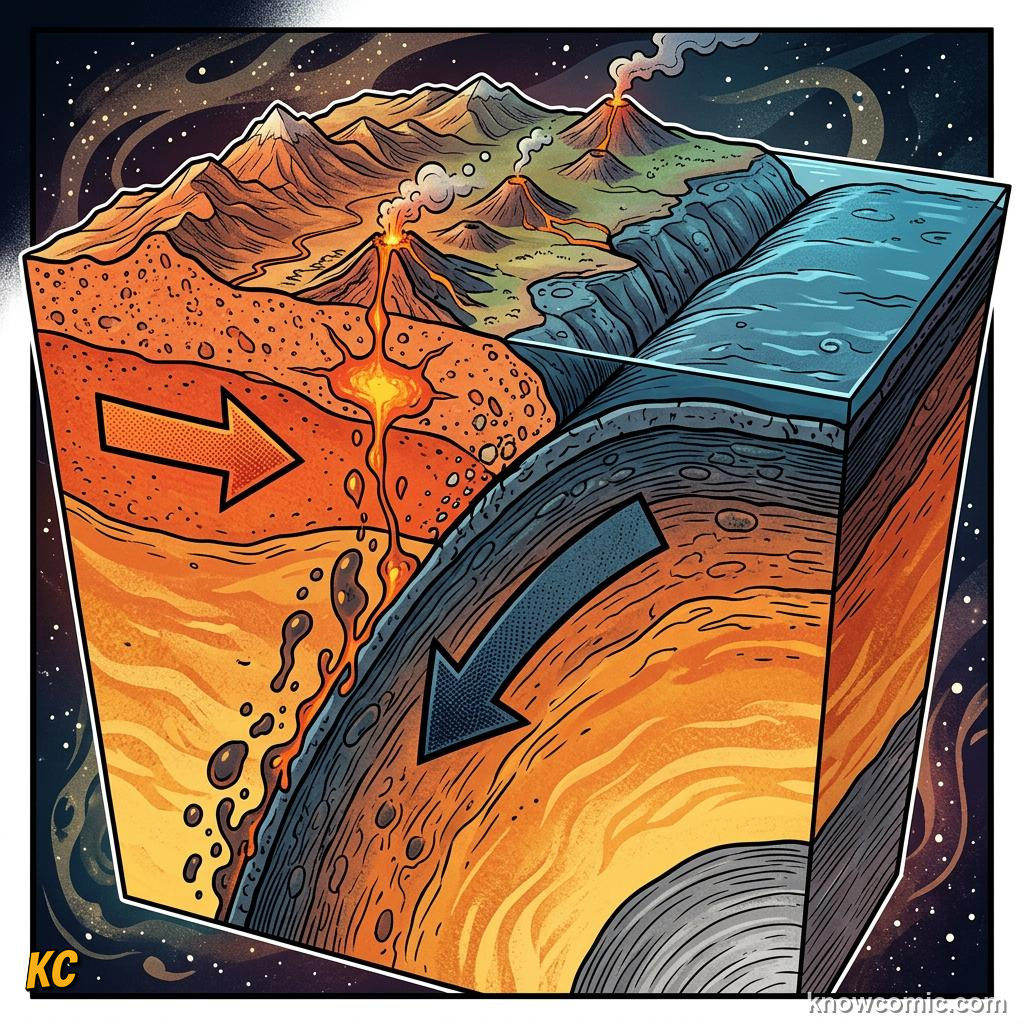
- When oceanic lithosphere meets continental lithosphere, the ocean plate bends downward into the mantle.
- The overriding continental plate is scraped, folded, and lifted along the margin.
- Examples include the west coast of South America and the Cascadia margin off North America.
COMPRESSION
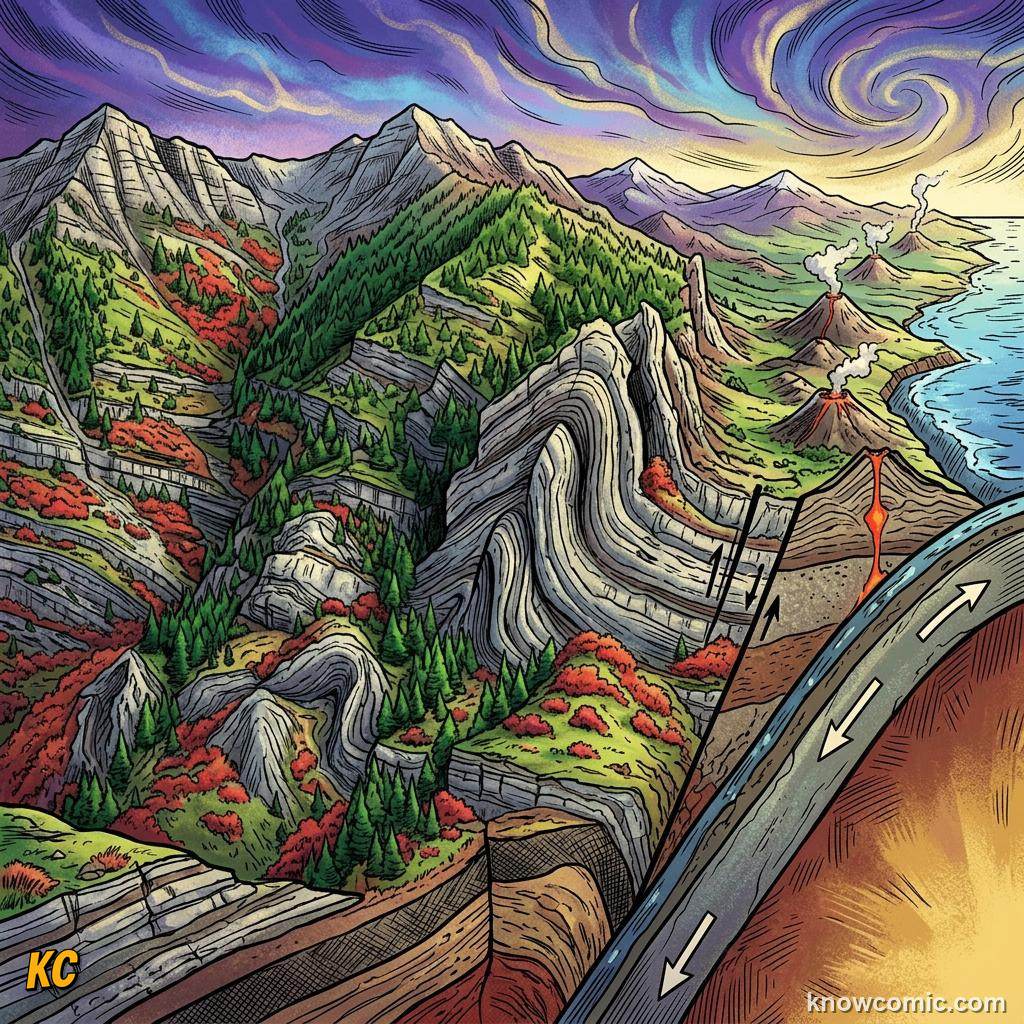
- Horizontal compression folds sedimentary rocks into anticlines and synclines.
- Reverse and thrust faults shorten the crust and push rocks over one another.
- Continental-continental convergence, such as India hitting Eurasia, builds huge ranges like the Himalaya without subduction.