↔️ PLATE BOUNDARIES: DIVERGENT
PAGE 1 OF 5 — PLATES PULL APART
CONSTRUCTIVE MARGINS
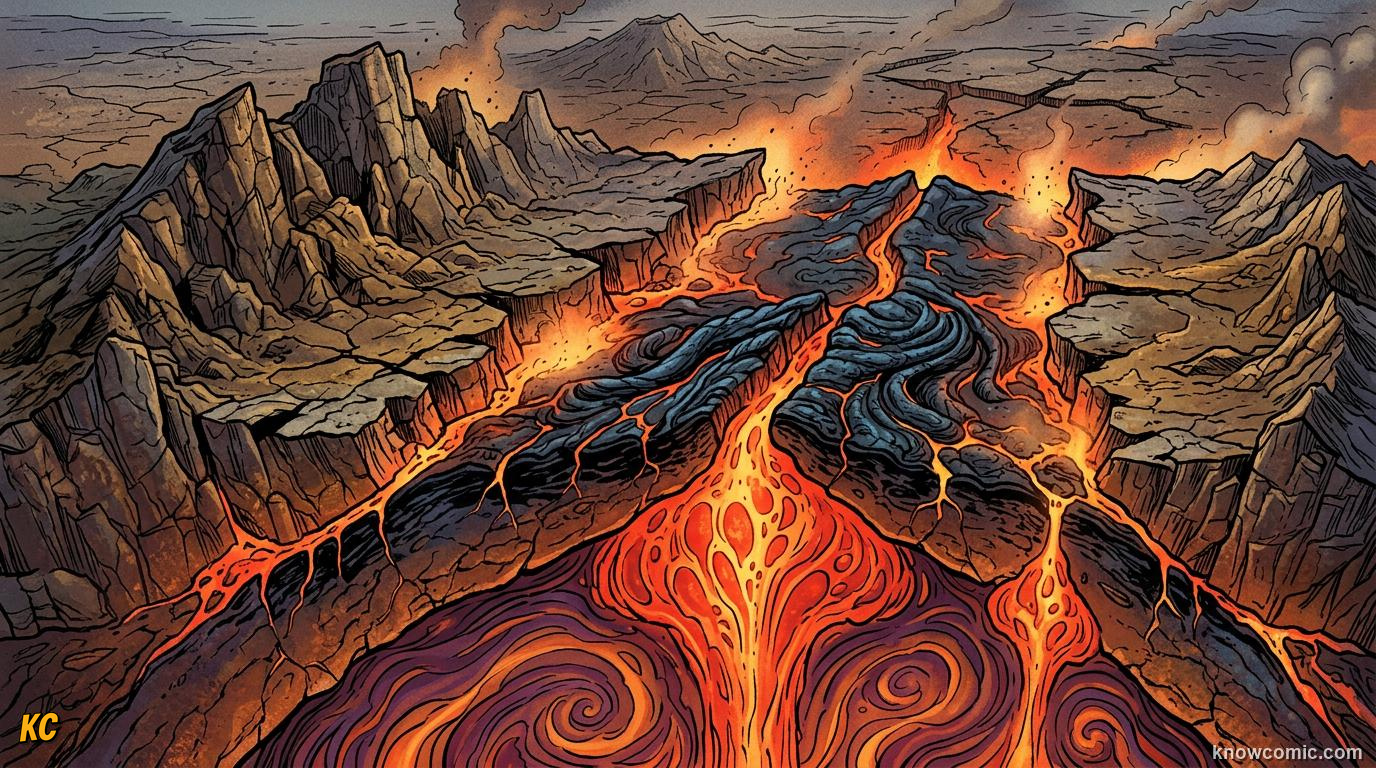
DIVERGENT PLATE BOUNDARIES
At a divergent plate boundary, two lithospheric plates move away from each other. Geologists call this a constructive margin because new crust is created as magma solidifies in the gap. Divergence happens mainly in two settings: on the ocean floor at mid-ocean ridges, and on continents at rift valleys. Rising hot material from the mantle reduces pressure on rock above and triggers decompression melting. The magma that reaches the surface is typically iron-rich basalt, forming thin, dense oceanic crust. Divergent boundaries therefore balance the destruction of crust at subduction zones. Without sea-floor spreading, Earth could not recycle oceanic lithosphere and would lack the conveyor-belt system that drives plate tectonics. Most divergent activity is hidden beneath oceans, but rifts on land offer a visible preview of how new oceans begin.
➕ CONSTRUCTIVE
Divergent margins create new lithosphere. Convergent margins destroy old oceanic lithosphere. Together they keep Earth's surface area roughly constant.
SPLIT!
NEW CRUST
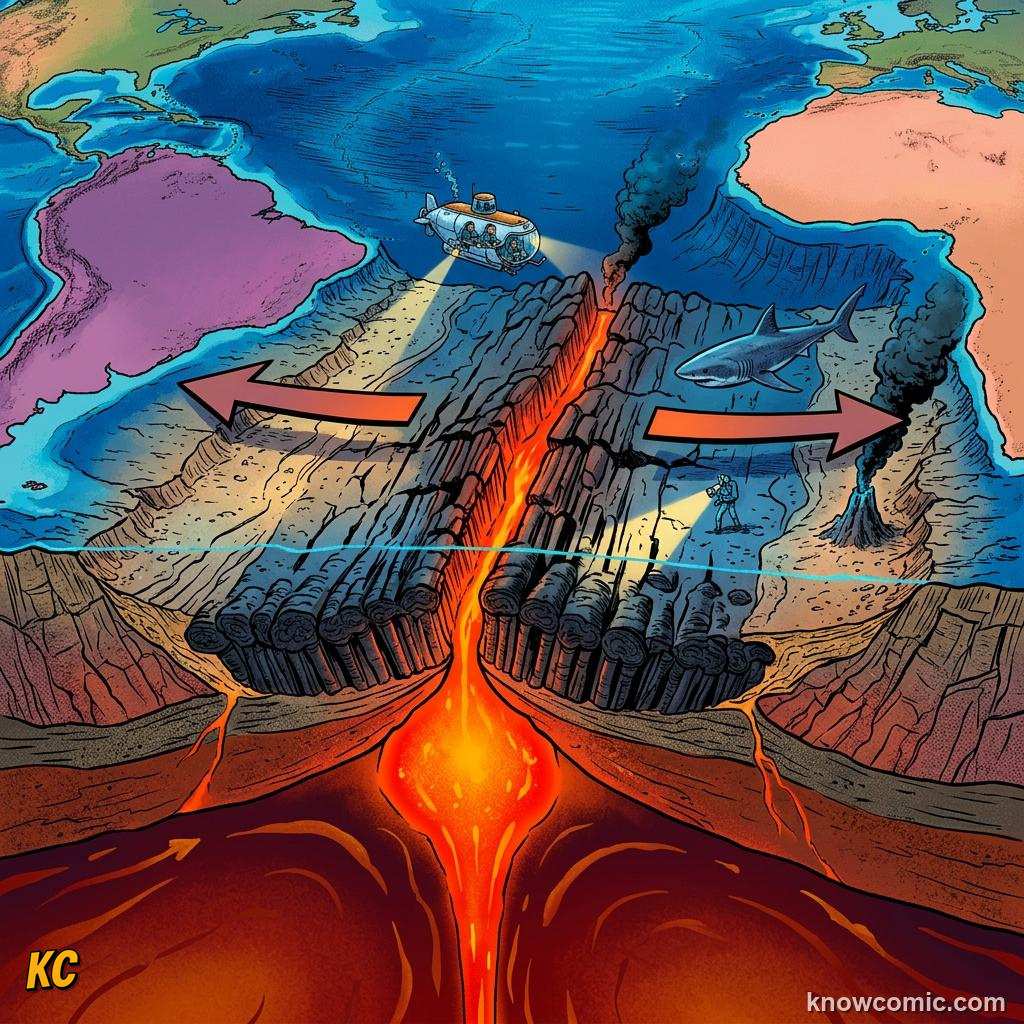
- As plates separate, magma fills the gap and freezes into solid rock.
- The youngest oceanic crust sits closest to the spreading centre.
- Older crust is carried away on both sides like a twin conveyor belt.
DECOMPRESSION
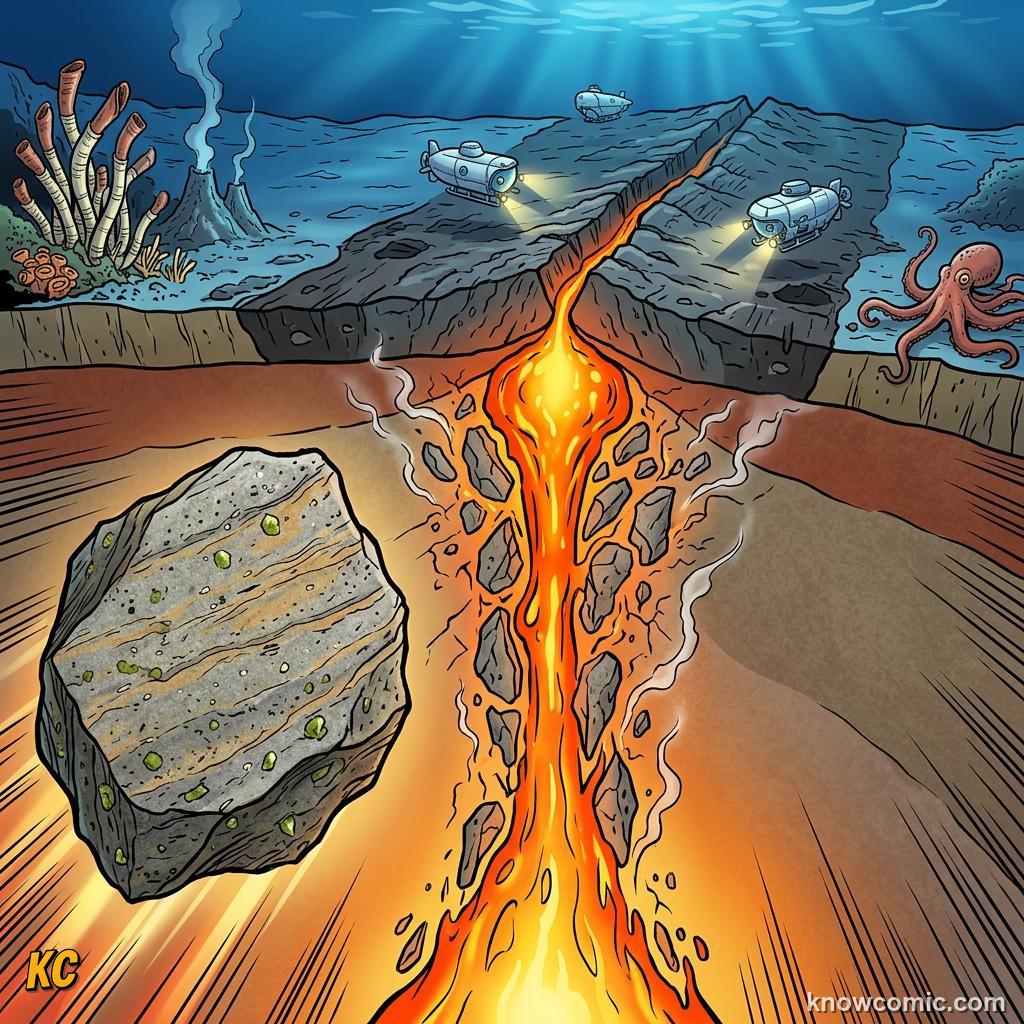
- Hot mantle rock melts when upward movement lowers pressure, even without added water.
- This process feeds basaltic eruptions at ridges and continental rifts.
- Decompression melting explains why divergence and volcanism go together.