↔️ PLATE BOUNDARIES: TRANSFORM
PAGE 1 OF 5 — SLIDING PAST EACH OTHER
CONSERVATIVE MARGINS
TRANSFORM PLATE BOUNDARIES
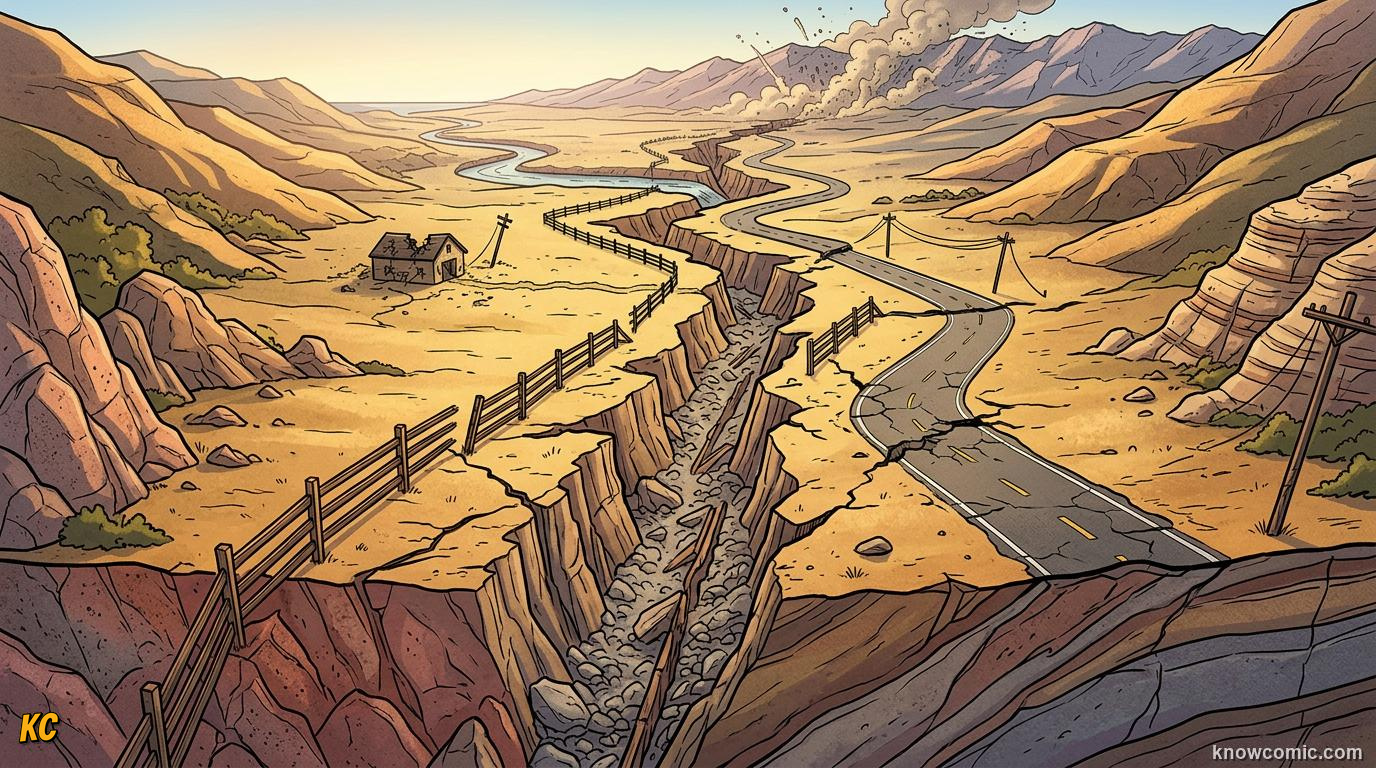
At a transform plate boundary, two lithospheric plates slide horizontally past each other. Unlike convergent or divergent margins, transforms are conservative: crust is neither created nor destroyed. Motion is parallel to the boundary along a nearly vertical fault plane. Most transform faults connect offset segments of mid-ocean ridges, allowing spreading centres to stay linked while plates slide sideways. On continents, famous faults such as the San Andreas in California show the same mechanics at human scale. Because rocks lock together between slips, stress builds for decades or centuries. When friction is overcome, the fault ruptures suddenly and releases energy as seismic waves. Transform boundaries therefore produce some of the most damaging shallow earthquakes on Earth, even without volcanoes or mountain building.
↔️ CONSERVATIVE
Transform margins conserve crust area. They move plate boundaries sideways to link ridges and trenches in a global jigsaw.
SLIDE!
STRIKE-SLIP
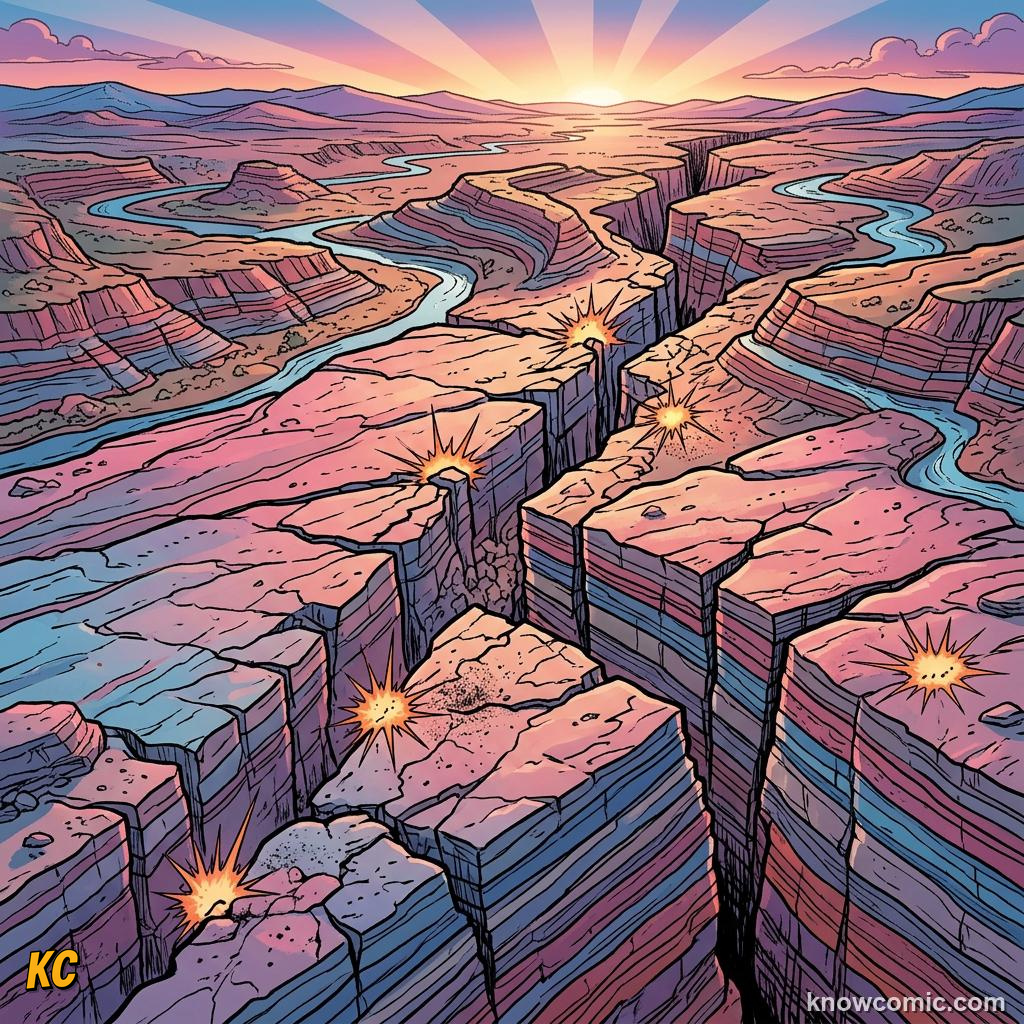
- Strike-slip faults move blocks sideways relative to the fault trace on the surface.
- Right-lateral motion means the far side moves to the right when you face the fault.
- Left-lateral motion moves the far side to the left; both types occur on different transforms.
OFFSET FEATURES
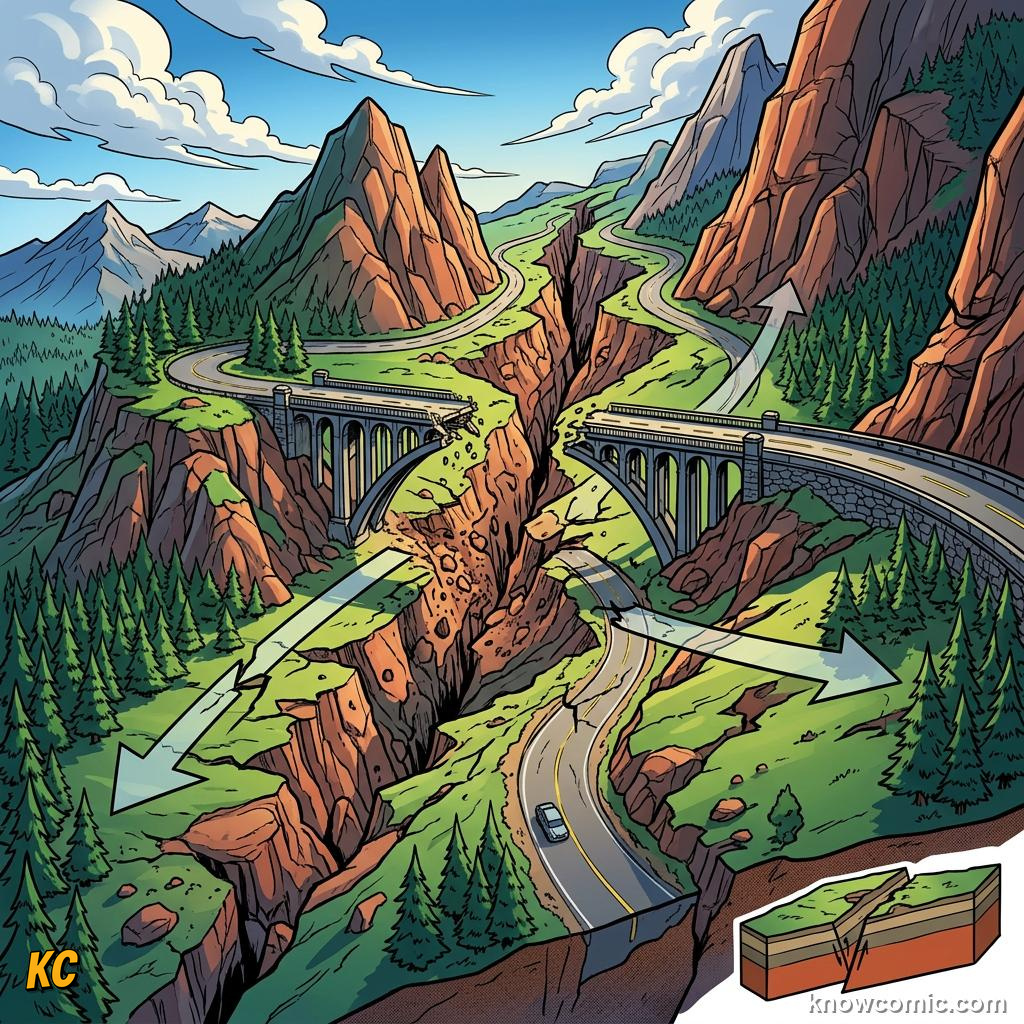
- Repeated slip offsets streams, fences, and roads by metres to kilometres over time.
- Geologists use these offsets to measure long-term fault slip rates.
- Some creeps slowly without big quakes; others stay locked until a large rupture.