🌴 MAYA: JUNGLE CITIES
PAGE 1 OF 5, RAINFOREST, LIMESTONE & STONE CITIES
MESOAMERICA
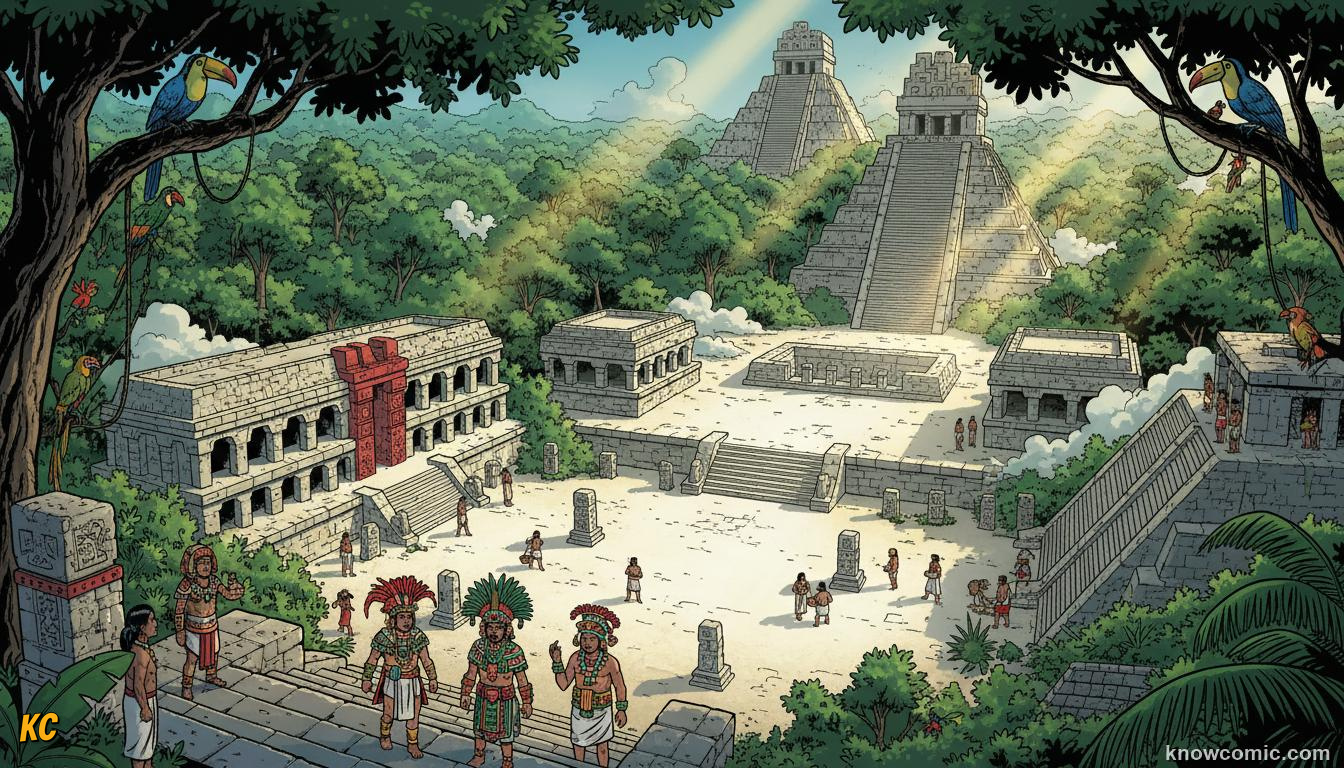
CITIES IN THE GREEN SEA
From southern Mexico through Guatemala and Belize to Honduras, the Maya built one of the New World's greatest civilisations, not one empire but dozens of rival kingdoms linked by trade, marriage and war. Limestone hills rose above steaming rainforest where scarlet macaws screamed overhead. Maya engineers flattened hilltops with terraces, paved plazas with white plaster, and raised steep pyramid-temples whose stairways climbed above the jungle canopy. Rulers carved their deeds on tall stone slabs called stelae and played the sacred ball game in long stone courts. Maize, beans and squash fed millions; cacao beans even served as money. For centuries the lowlands hummed with painters, astronomers, merchants and farmers, until the great cities fell quiet and vines swallowed the plazas again.
⚡ DID YOU KNOW?
Classic Maya civilisation (roughly 250–900 CE) built cities without metal tools, draft animals or the wheel, yet their stone architecture still stands after 1,200 years of jungle rain.
JUNGLE!
TIKAL
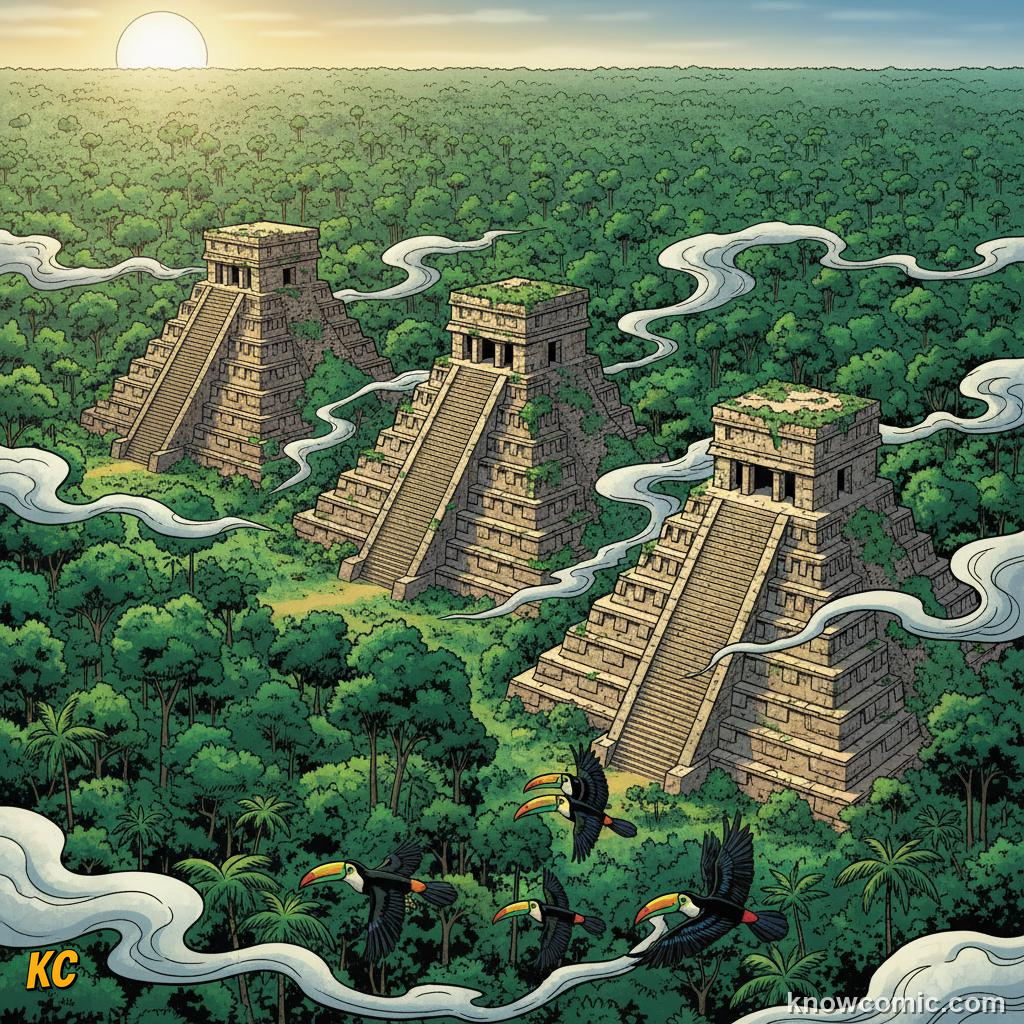
🏛️ Temple-pyramids above canopy
🌴 Guatemala rainforest
👑 Powerful city-state kings
🌴 Guatemala rainforest
👑 Powerful city-state kings
BALL COURT
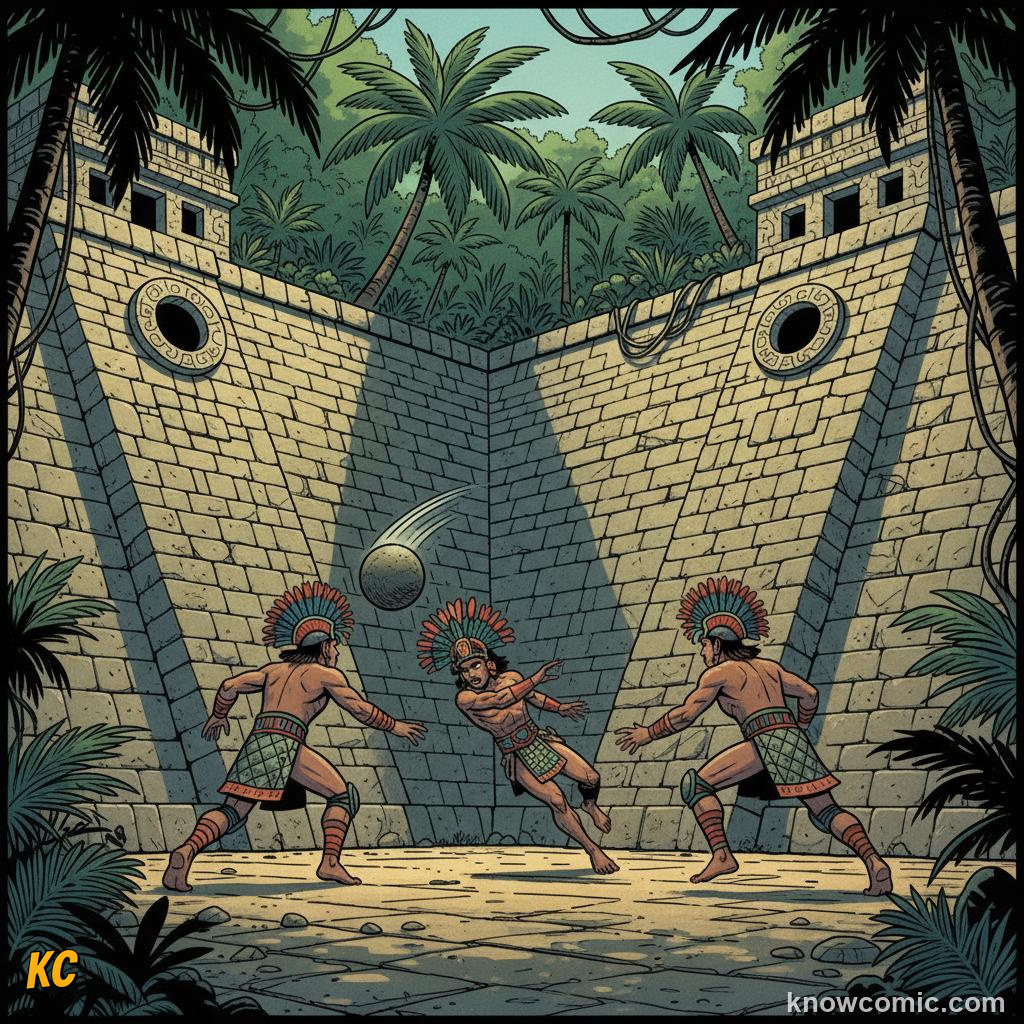
⚽ Rubber ball ritual game
🏟️ Sloping stone walls
🎭 Linked to myth & politics
🏟️ Sloping stone walls
🎭 Linked to myth & politics