🕉️ ANCIENT INDIA
PAGE 1 OF 5, INDUS CITIES & THE LAND OF RIVERS
C. 2600–1900 BCE
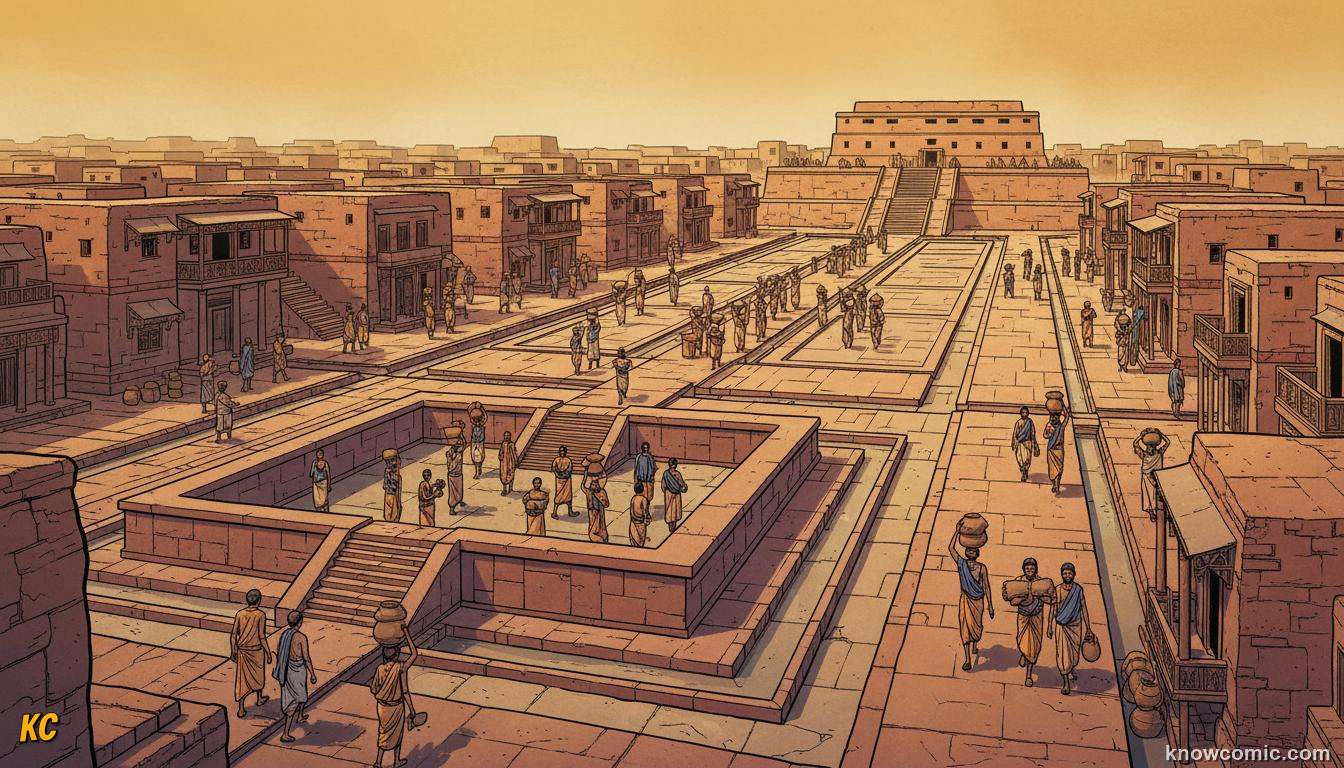
HARAPPA & MOHENJO-DARO, PLANNED CITIES
Long before the Buddha or the Taj Mahal, a brilliant urban culture flourished along the Indus River in what is now Pakistan and north-west India. Broad streets crossed at right angles like a modern grid. Houses had brick-lined bathrooms connected to covered drains under the streets, running water and rubbish chutes when much of the world still lived in huts. Granaries stored taxes of grain; seals carved with unicorn bulls and unknown script marked trade goods. We cannot yet read their writing, so many details stay mysterious, but weights and measures were standardised across hundreds of miles. Around 1900 BCE the big cities slowly emptied, perhaps rivers shifted or trade broke, yet village life and ideas flowed onward into later India.
⚡ DID YOU KNOW?
The Great Bath of Mohenjo-daro may be the world's earliest public water tank, carefully waterproofed with bitumen.
INDUS!
GREAT BATH
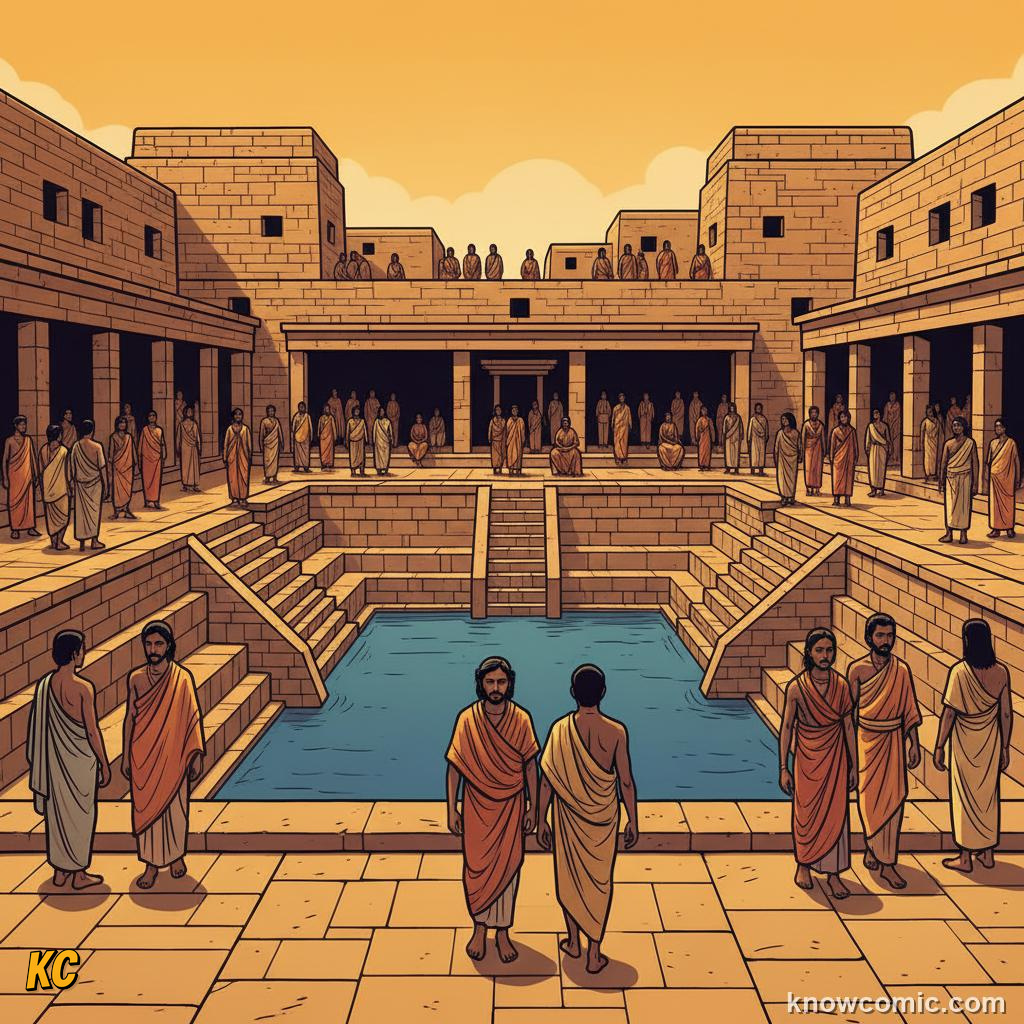
🏊 Brick tank & steps
🧱 Fired brick precision
🕯️ Maybe ritual bathing
🧱 Fired brick precision
🕯️ Maybe ritual bathing
SEALS
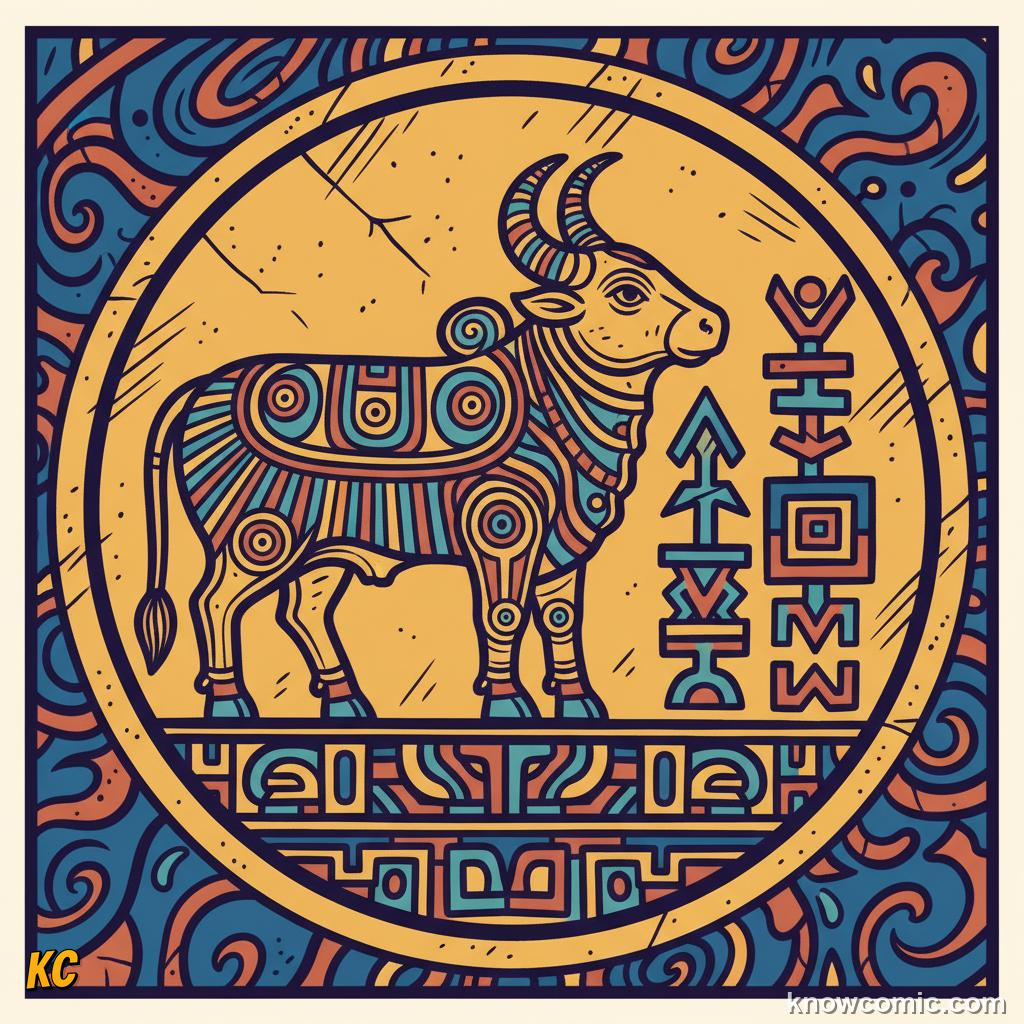
🐂 Unicorn motif
📦 Trade & ownership marks
❓ Script still undeciphered
📦 Trade & ownership marks
❓ Script still undeciphered