🫁
💨
🌬️
✦ HUMAN BODY ✦

BREATHE
IN!

Twenty thousand times a day — O₂ in, CO₂ out, no ticket required!

📖 Topic 06⏱️ 5 pages🧠 Quiz
👃
IN
Warm & filter
🌳
TUBE TREE
Trachea → bronchi
🍇
ALVEOLI
Micro sacs
🩸
SWAP
Gases in blood
⬆️
RIDE
Ribs & diaphragm
🫁 LUNGS: HOW WE BREATHE
TOPIC 06 · RESPIRATORY · OXYGEN · CO₂
PAGE 1 OF 5 · THE AIR HIGHWAY
INHALE PATH
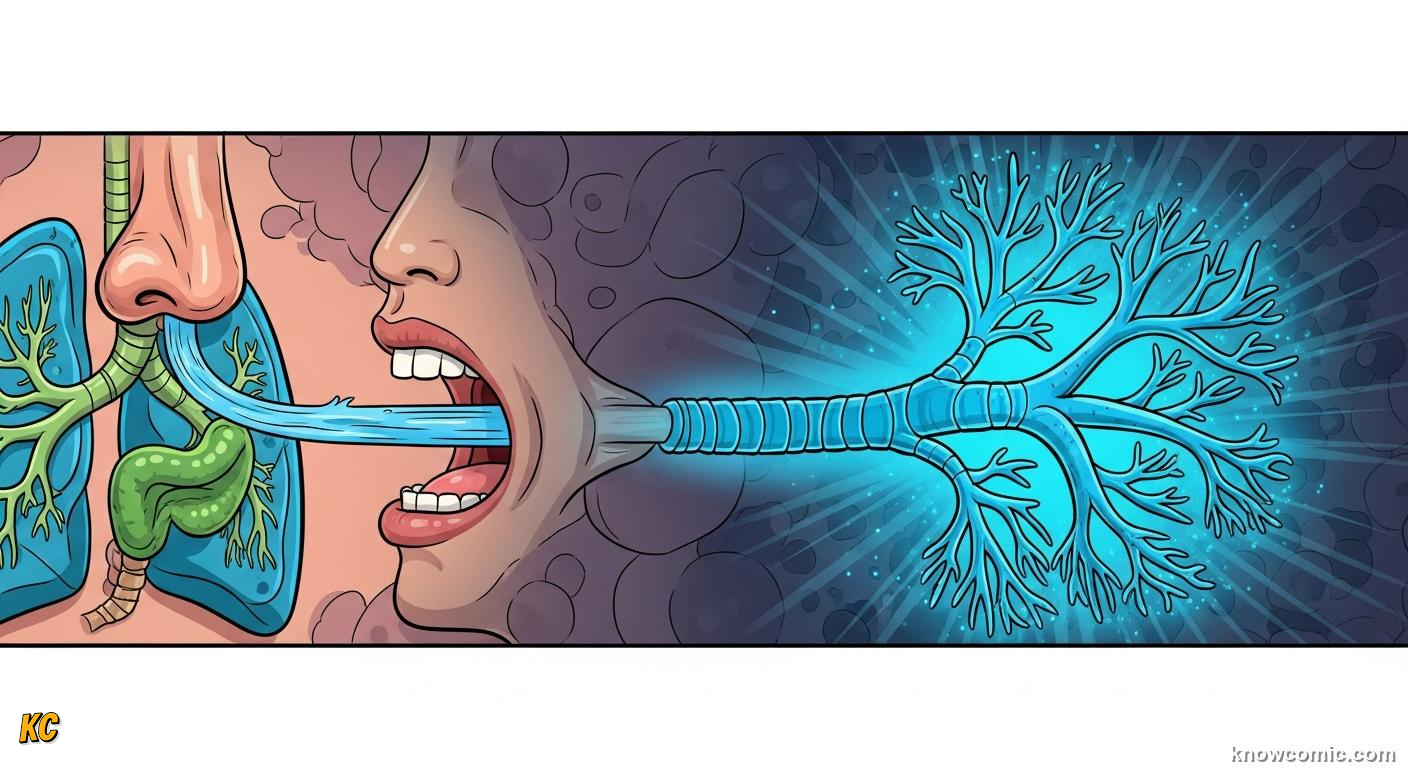
Respiratory system: nose, mouth, trachea, and branching bronchial tree leading air to the lungs
NOSE, MOUTH, TUBE, TREE
Each breath can enter through your nose or mouth. Inside the head, air warms, gains moisture, and gets a first clean from hairs and sticky mucus. It passes the voice box region, then dives down the trachea — a stiff, ringed tube that stays open. The trachea splits into two main bronchi, one for each lung, beginning a branching pattern like an upside-down tree.
⚡ AIR MATH
A resting teen might take roughly 20,000 breaths a day — a quiet rhythm that add up to a lifetime marathon.
FLOW!
GUARDS
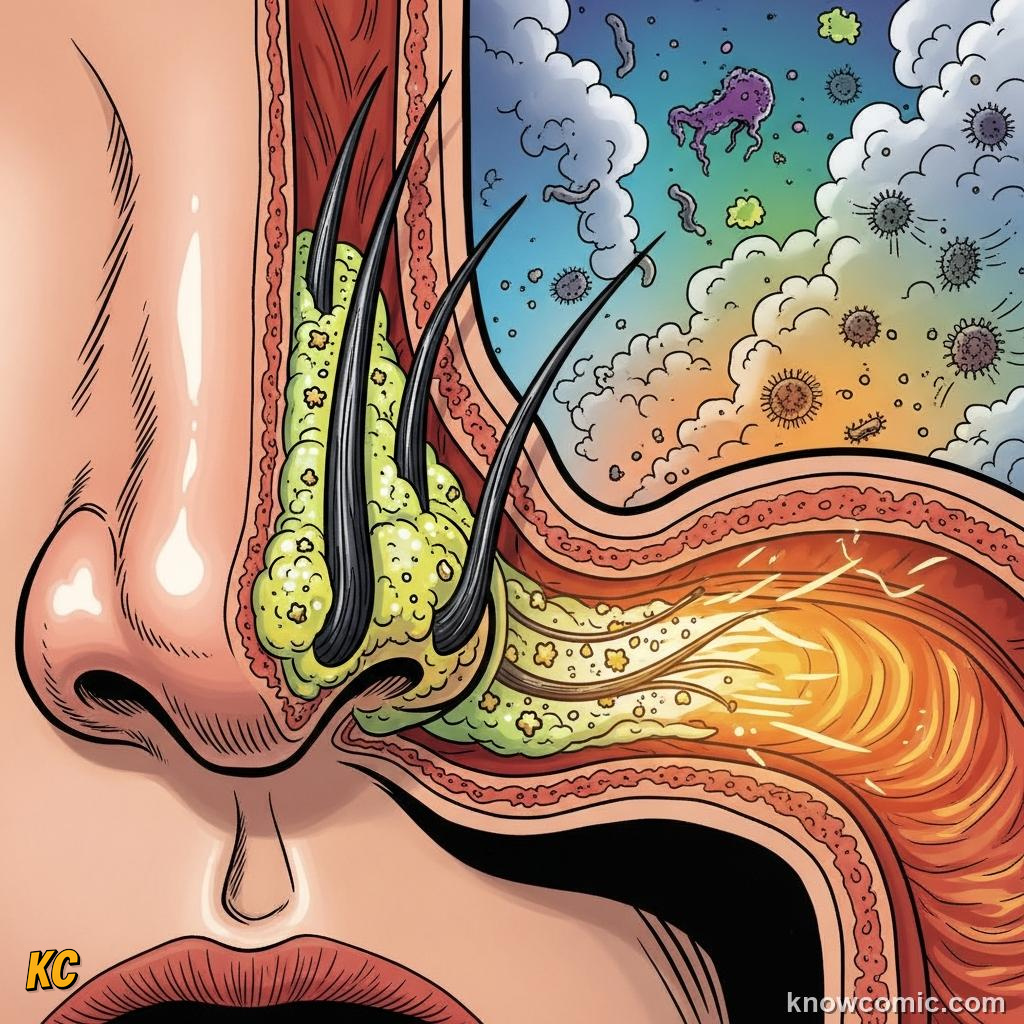
Nose hairs and mucus trapping dust, pollen, and pathogens before they enter the lungs
🛡️ Nose hairs trap dust.
🌡️ Blood-rich lining warms incoming air.
CLEAN SWEEP
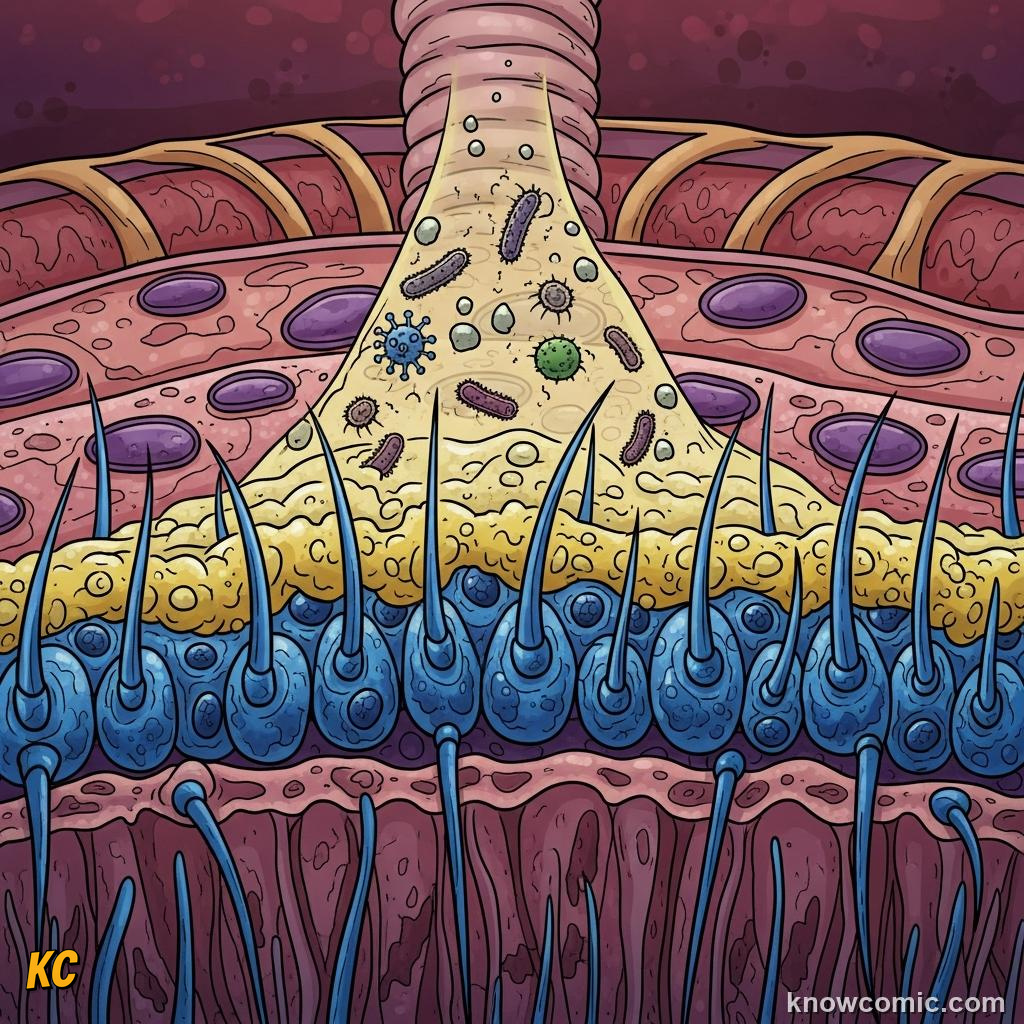
Cilia sweeping the airway clean with constant wave-like beating motions
👣 Microscopic cilia beat mucus up and out — escalator of gunk you cough or swallow.
PAGE 2 OF 5 · LUNG LANDSCAPE
LOBES & BRANCHES
Two pink spongy lungs with lobes and the full branching bronchial tree inside
TWO PINK SPONGES
Each lung is packed with bronchioles — ever-smaller airways that end in cluster sacs. The left lung is slightly smaller to leave room for the heart. Together the lungs are soft, squishy, and elastic, riding inside the rib basket with a thin wet lining called pleura to reduce friction when you run or laugh hard.
TREE!
CARTILAGE
Cartilage rings keeping the trachea open and rigid as air flows through
💍 Trachea rings: strong but flexible C-shapes.
SPLIT
Trachea splitting into left and right bronchi leading into each lung
🫁 L main bronchus to left lung, R to right — twin highways.
FINE TIPS
Bronchioles: the fine tips of the airway tree leading to alveoli sacs
🌿 Bronchiole ends open into alveolar fields.
PAGE 3 OF 5 · THE GAS SWAP
O₂
Oxygen crossing from alveoli into surrounding blood capillaries during inhalation
✨ O₂ diffuses into capillary blood when air has more than blood does.
CO₂
Carbon dioxide crossing from blood into alveoli to be exhaled out of the body
☁️ CO₂ diffuses out from blood to air in the alveoli.
ALVEOLI
Alveoli: 600 million tiny air sacs providing vast surface area for gas exchange
SURFACE FOR DAYS
About 600 million alveoli create a total gas-exchange area said to be huge — a classic classroom line compares the unfolded area to a tennis court for a rough feel. Alveolar walls and capillaries are paper-thin, so gas moves by diffusion, not by muscle pumps inside the sac. Red blood cells pick up O₂, drop off CO₂, and head back to the heart for another lap.
SWAP!
PAGE 4 OF 5 · RIBS & DIAPHRAGM
PUMP RIDE
Diaphragm pulling down and ribs expanding to pump air into the lungs
CLEAN QUIET BREATHS
When your diaphragm flattens and your rib cage rises slightly, chest volume grows and air is sucked in — lower pressure inside pulls atmosphere in. Exhale relaxed: elastic lungs recoil, diaphragm domes, pressure rises, air flows out. Strenuous exhales recruit extra abdominal and intercostal help. Hiccups? Your diaphragm spams — proof it is a muscle you usually forget is there.
PULL!
RUBS
Pleura: slippery double membrane allowing lungs to slide smoothly during breathing
🦴 Ribs = armour + lever arm for intercostal muscles.
BALLOON
Lungs expanding like balloons as the diaphragm contracts and pulls downward
🎈 Bigger chest volume = air rushes in to equalise.
GIGGLE
Laughter causing rapid involuntary contractions of the diaphragm
😆 Laugh and speak — you are air-sculpting on purpose.
PAGE 5 OF 5 · KEEP AIRWAYS HAPPY
HABITS
Clean air and aerobic exercise keeping the airways and lung tissue strong and healthy
BREATHE LIKE YOU MEAN IT
Aerobic play stretches lung tissue habits and keeps respiratory muscles strong. Avoid smoke and vape aerosols that inflame cilia. On high-pollution days, take it easier outdoors. Belly-breathing drills can calm stress and use the diaphragm fully. Your alveoli do not have feeling nerves — so treat them well before they quietly scar.
CARE!
CHECKLIST
Lung health habits: deep breathing, avoiding smoke, exercise, and clean air
🌳 Green spaces & windows
🏃 Cardio to challenge lungs
🚫 Skip smoke
🧼 Wash hands; fewer lung infections
RECAP
🫁 KEY FACTS
In → trachea → bronchi → bronchioles → alveoli. O₂ in blood, CO₂ out. Ribs + diaphragm change volume. ~20k breaths a day, huge hidden surface for gas swap.
✅ Alveoli = micro thin swap zones.
✅ Cilia + mucus = sticky defence.
✅ Breathe through sport, not smoke.
🧠 QUIZ TIME!
LUNGS: HOW WE BREATHE · 5 QUESTIONS
QUESTION 01
Where does most gas exchange between air and blood happen?
QUESTION 02
The main muscle that flattens to help draw air in during a calm inhale is the:
QUESTION 03
The windpipe in front of the oesophagus, kept open partly by C-shaped rings, is the:
QUESTION 04
In the alveoli, which gas moves from the blood into the air you exhale in higher amount?
QUESTION 05
About how many breaths per day is a common rough average for a healthy person at rest?
0/5
LOADING...
← Topic 05 📋 ALL TOPICS Topic 07 →