POLYNOMIAL LONG DIVISION
PAGE 1 OF 5, DIVIDING POLYNOMIALS: THE BIG PICTURE
DIVIDE & CONQUER
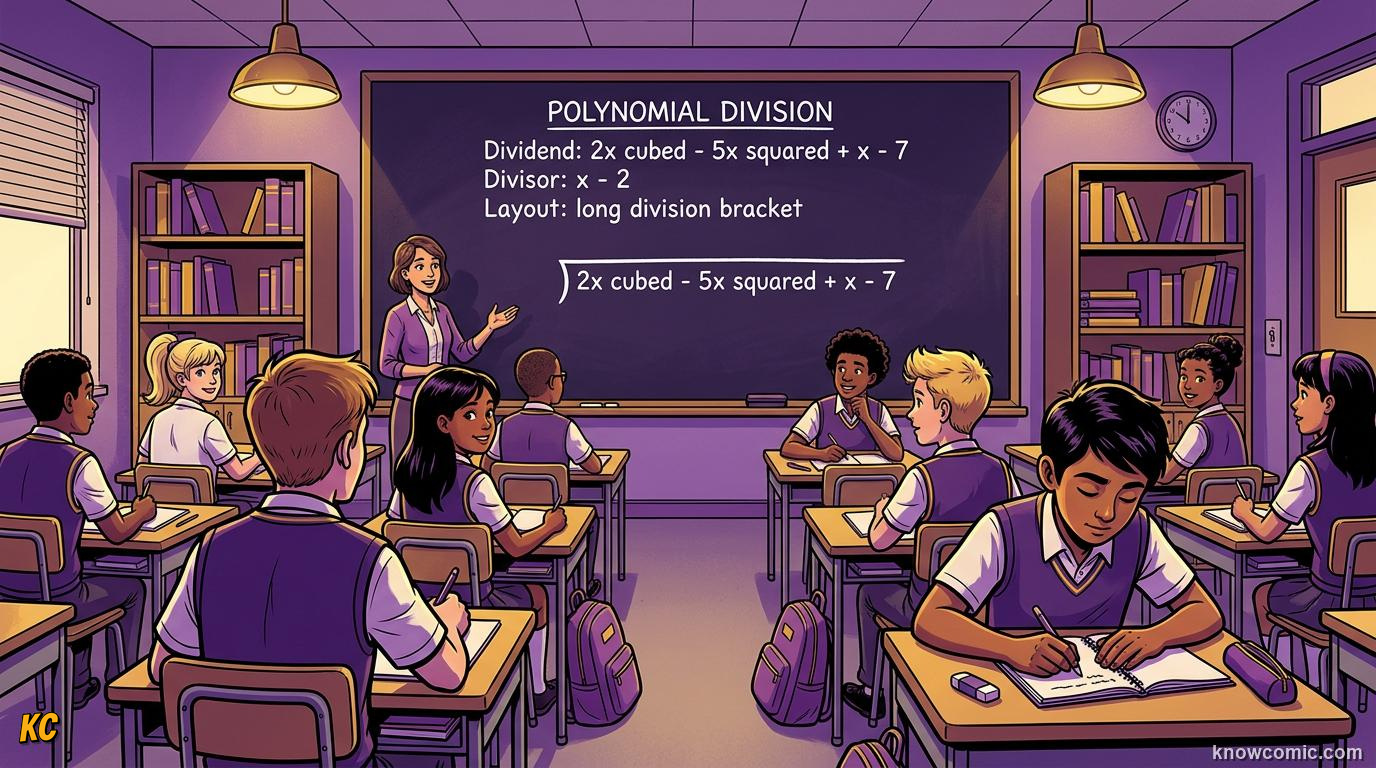
WHEN ONE POLYNOMIAL SPLITS ANOTHER
You already know how to divide numbers. Polynomial long division does the same job for expressions like 2x³ − 5x² + x − 7. You divide a large polynomial (the dividend) by a smaller one (the divisor) and produce a quotient plus a remainder. The key identity mirrors arithmetic: dividend = divisor × quotient + remainder. This is not just a trick for exams; it is how we factorise awkward cubics, simplify rational functions, and test whether a linear expression is a factor. Think of it as slicing a high-degree function into simpler, reusable pieces.
⚡ DID YOU KNOW?
The same long-division layout you use for 847 ÷ 13 works for (x³ + 2x² − x + 4) ÷ (x − 1). The algebra is longer, but the rhythm is identical: divide, multiply, subtract, bring down.
SLICE!
DIVIDEND

📜 The big polynomial
🔝 Highest degree first
✂️ Gets broken apart
🔝 Highest degree first
✂️ Gets broken apart
DIVISOR
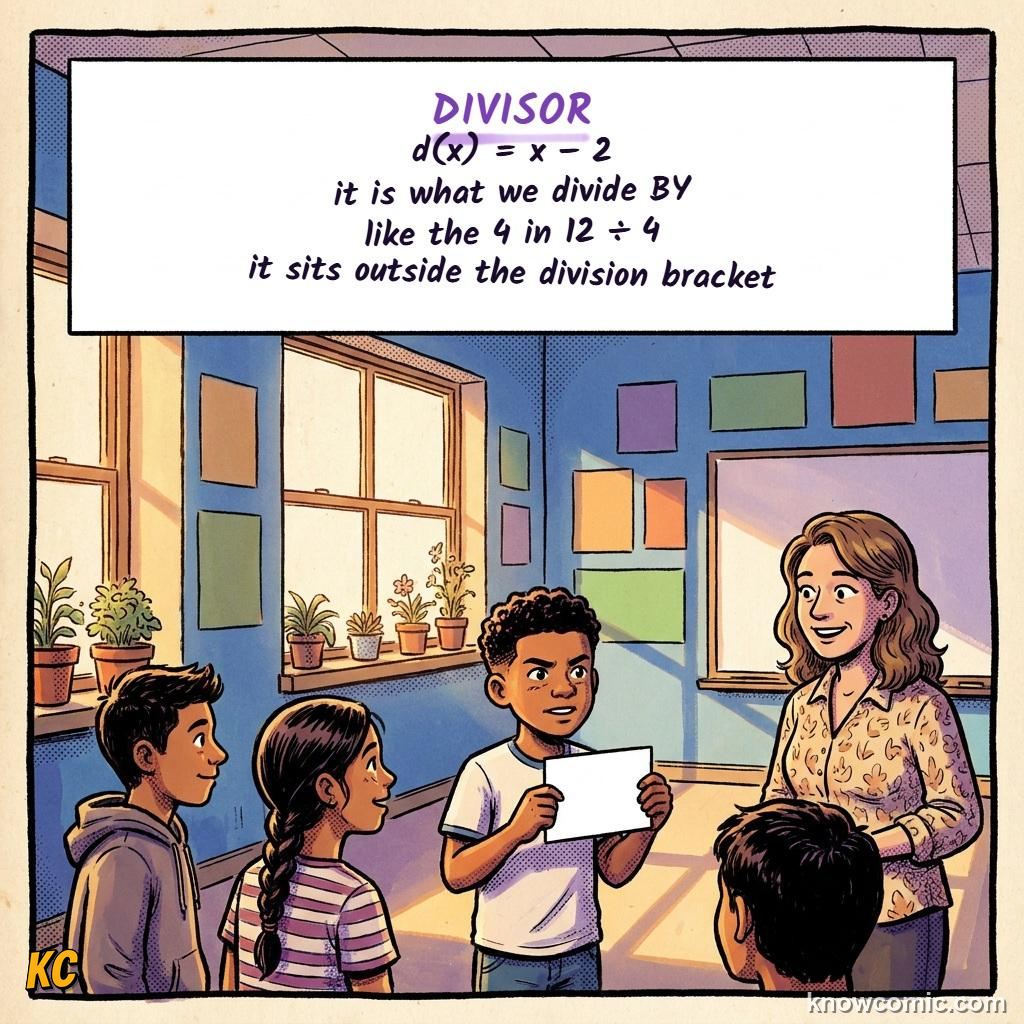
🔪 The cutter polynomial
📉 Degree not higher
⚠️ Cannot be zero polynomial
📉 Degree not higher
⚠️ Cannot be zero polynomial