THE MODULUS FUNCTION
PAGE 1 OF 5, WHAT IS |x|? SIZE WITHOUT THE SIGN
ABSOLUTE VALUE
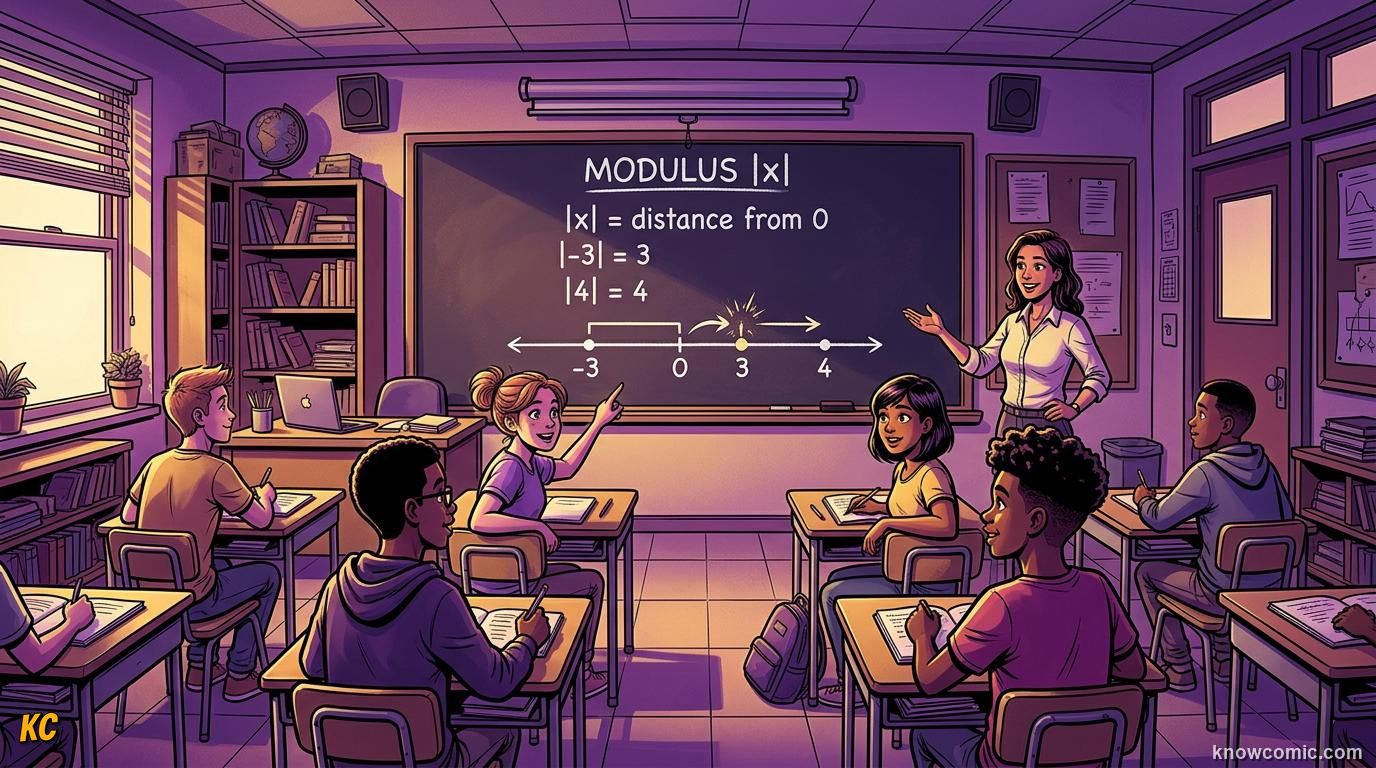
THE FUNCTION THAT STRIPS THE SIGN
The modulus (or absolute value) of a real number x, written |x|, is its size ignoring whether it is positive or negative. Think of it as "how far from zero" without caring which direction. We have |5| = 5 and |−5| = 5, because both numbers are five units from zero. By definition: |x| = x when x ≥ 0, and |x| = −x when x < 0. The second line flips a negative to make it positive. Zero is its own absolute value: |0| = 0. Modulus turns up in distance, error margins, physics magnitudes, and anywhere only size matters.
⚡ DEFINITION
|x| = x if x ≥ 0, and |x| = −x if x < 0. Examples: |7| = 7, |−4| = 4, |0| = 0.
|x|!
POSITIVE x

x ≥ 0 ⇒ |x| = x
📈 Stays the same
✅ e.g. |3| = 3
📈 Stays the same
✅ e.g. |3| = 3
NEGATIVE x
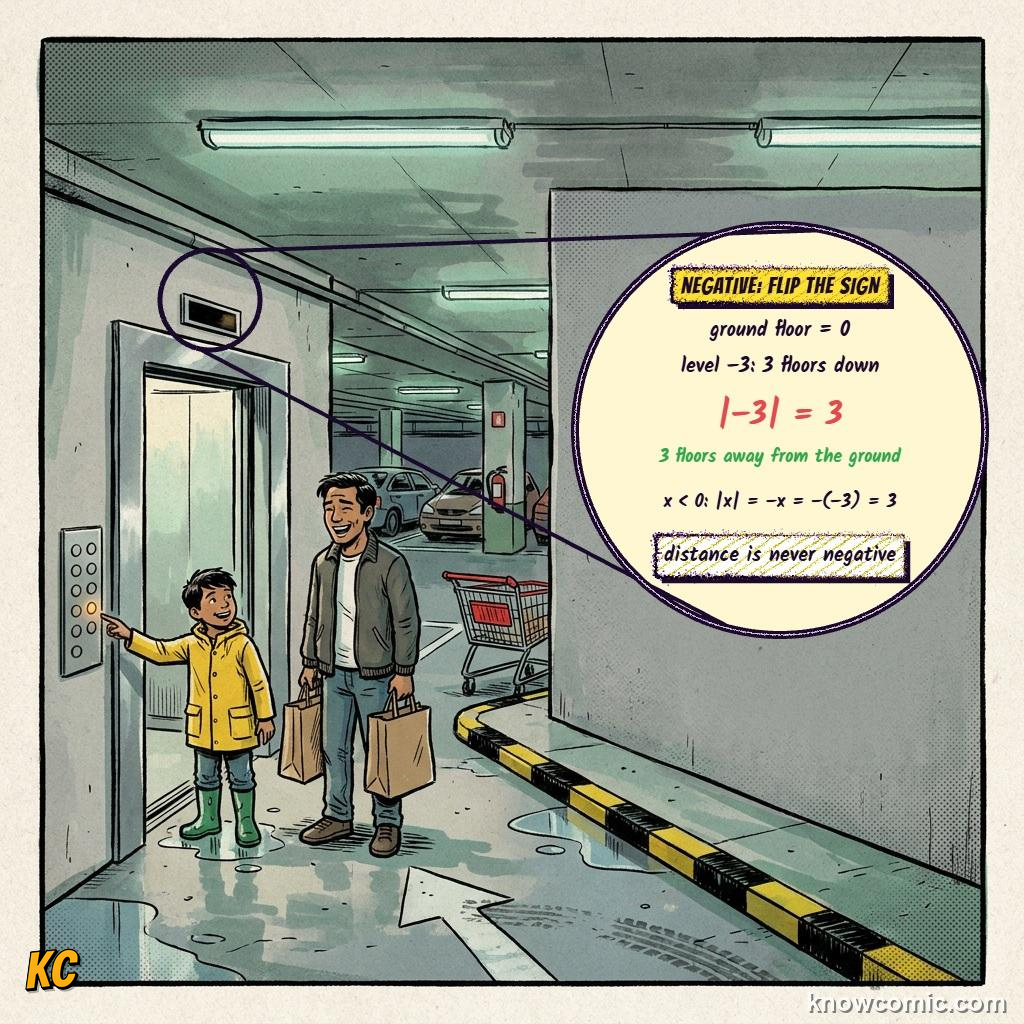
x < 0 ⇒ |x| = −x
🔄 Sign flipped
✅ e.g. |−3| = 3
🔄 Sign flipped
✅ e.g. |−3| = 3