🌀 FIBONACCI & THE GOLDEN RATIO
PAGE 1 OF 5, THE SEQUENCE THAT BUILDS ITSELF
PISA · 1202
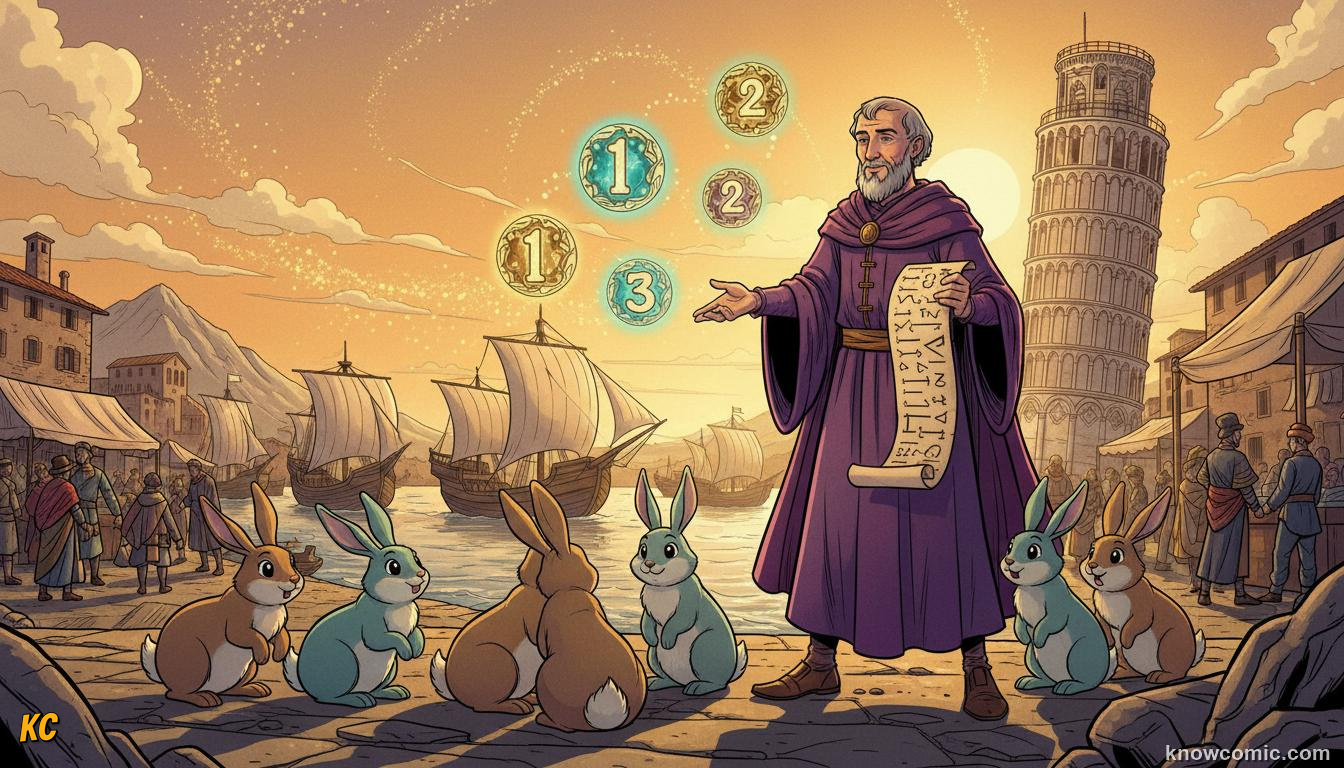
LEONARDO OF PISA, "FIBONACCI"
Italian merchant-scholar Leonardo of Pisa travelled with his father in North Africa and learned Hindu-Arabic numerals, the 0–9 system we still use. In his book Liber Abaci he posed a puzzle: if a pair of baby rabbits grows up and every adult pair produces one new pair each month, how many pairs exist month by month? The answer is 1, 1, 2, 3, 5, 8, 13…, each term is the sum of the two before it. He was not the first culture to notice this pattern (similar ideas appear in ancient Indian prosody), but his name stuck to the sequence forever.
⚡ DID YOU KNOW?
Fibonacci's real breakthrough for Europe was popularising decimal notation, the sequence was just one example in a whole book of practical maths!
ADD!
THE RULE
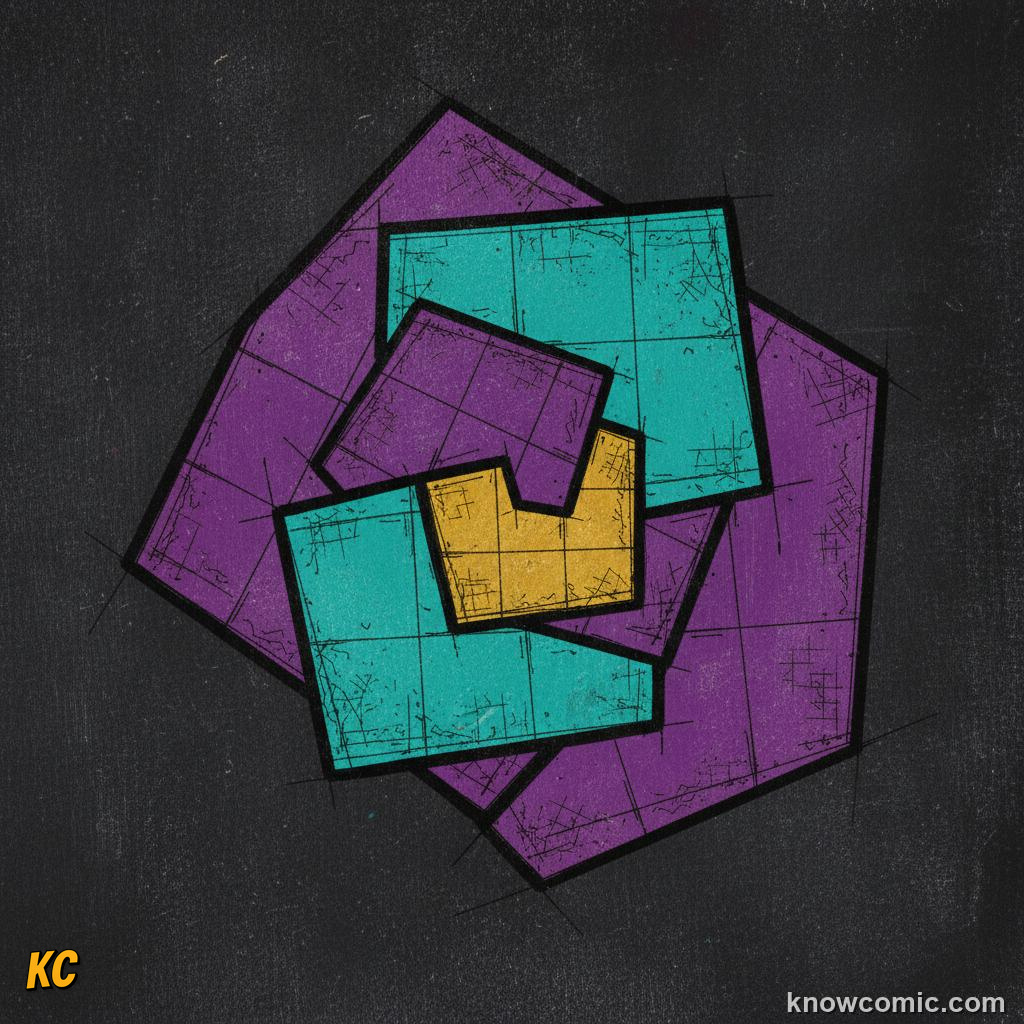
🔢 Start 1, 1 (or 0, 1)
➕ Next = previous two added
♾️ Never ends, grows forever
➕ Next = previous two added
♾️ Never ends, grows forever
ODD FACT
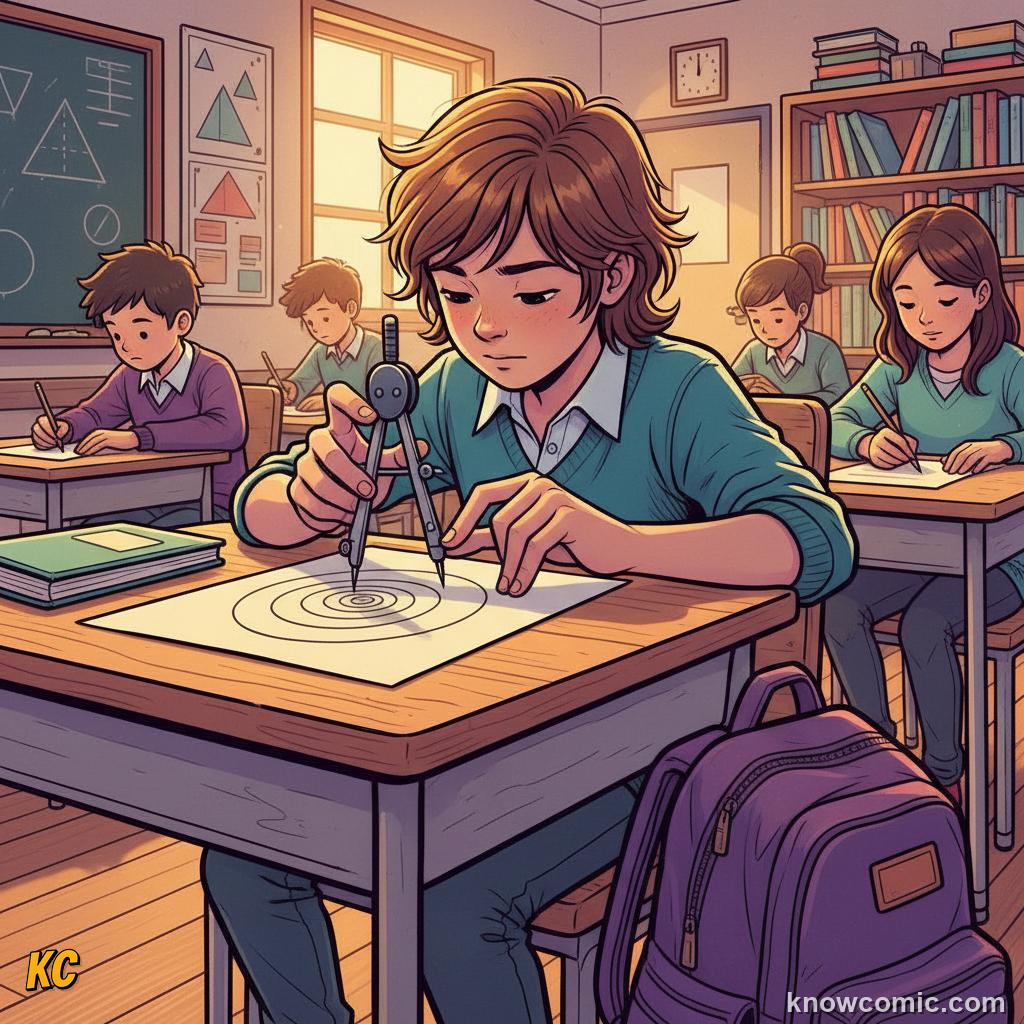
📐 Square 1,1,2,3 tiles
🧱 Tiling the plane
🎨 Artists love this spiral
🧱 Tiling the plane
🎨 Artists love this spiral
PAGE 2 OF 5, MEET φ (PHI), THE GOLDEN RATIO
GOLDEN RECTANGLE
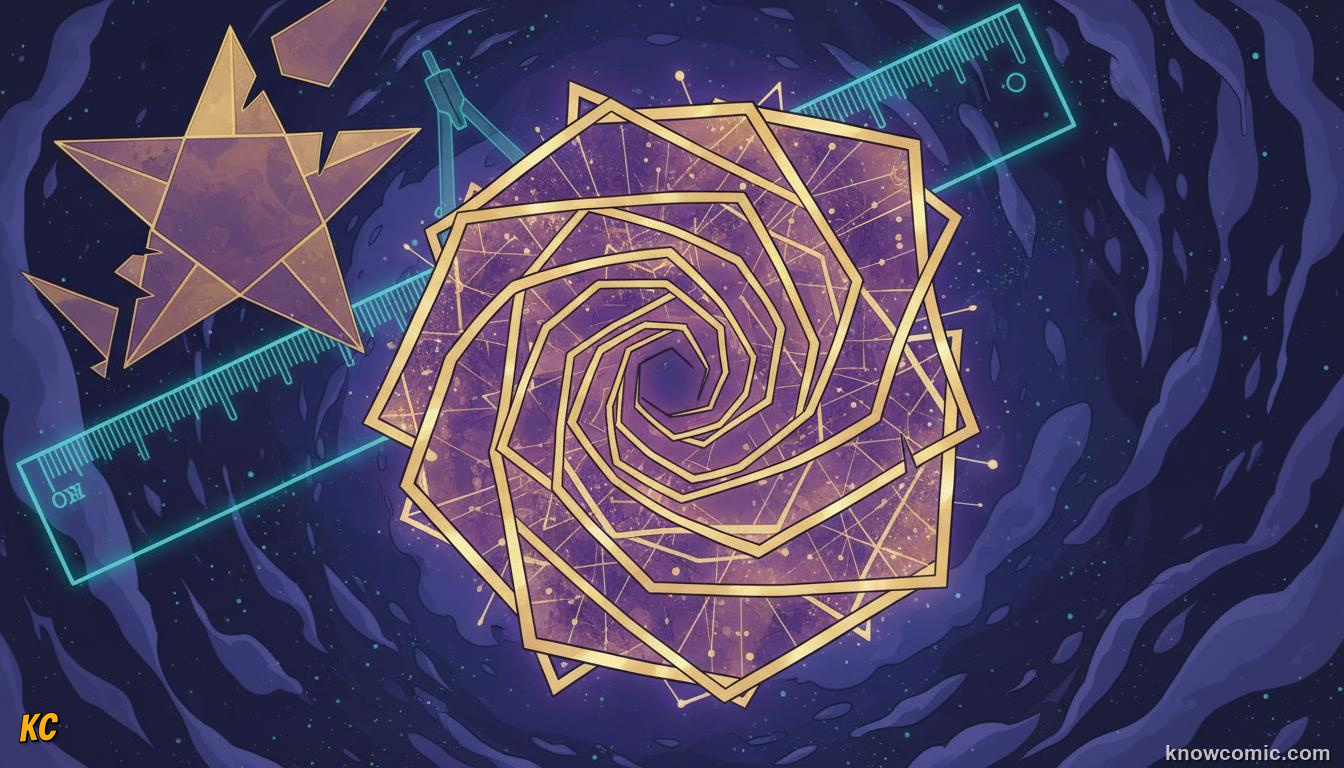
DIVIDE SO THE RATIO REPEATS
Imagine a rectangle whose long side divided by its short side equals the same number you get when you divide the whole long side plus the short side by the long side. That special number is φ (phi), about 1.6180339887…, an irrational number like pi, with decimals that never repeat. If you chop a golden rectangle into a square and a smaller rectangle, the smaller one is golden too, the pattern nests forever. Greek geometers knew this ratio from the pentagram; Renaissance artists studied it as the "divine proportion" for balanced composition, whether or not every ancient temple used φ on purpose, mathematicians agree it is one of the most elegant numbers in geometry.
🔗 LINK TO FIBONACCI
Divide consecutive Fibonacci numbers (8÷5, 13÷8, 21÷13…), the answers creep closer and closer to φ!
PHI!
PENTAGRAM
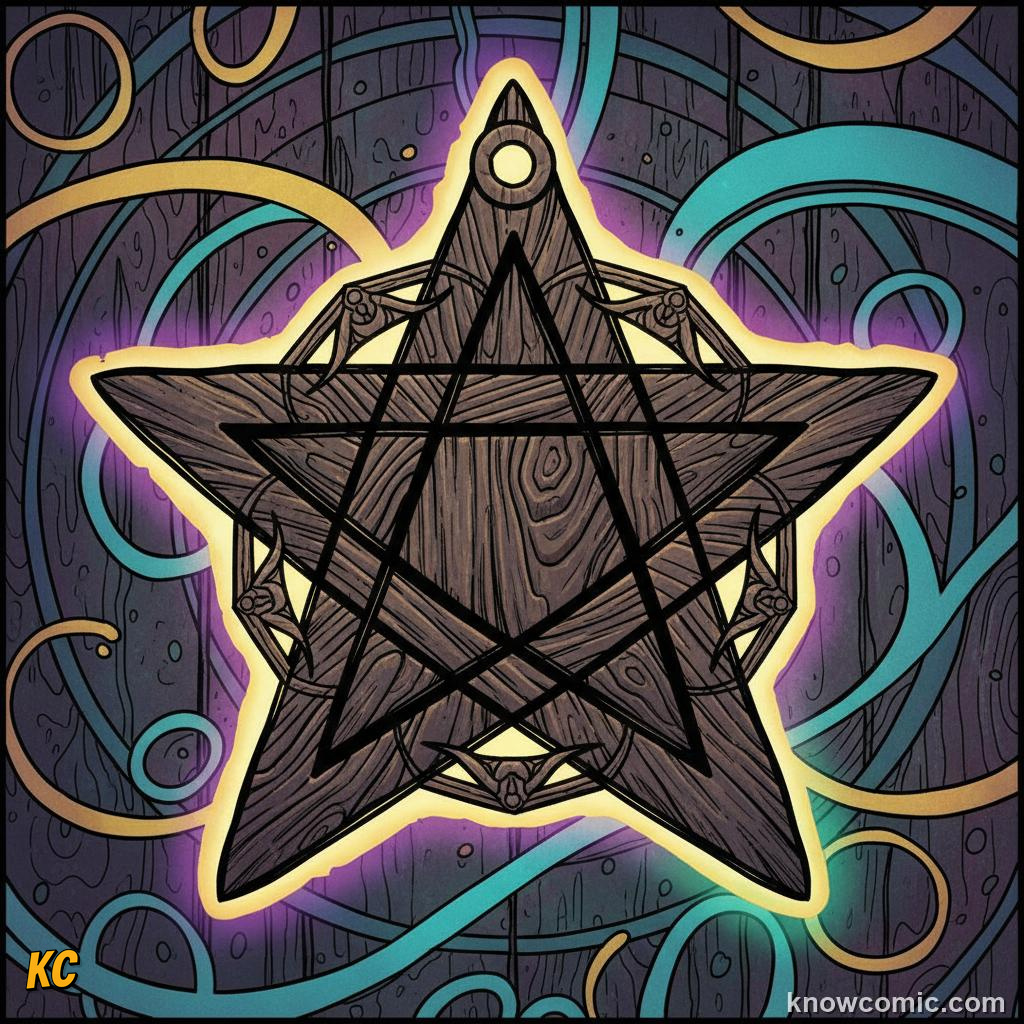
⭐ Star lines hide φ
📏 Classic Greek geometry
🔺 Related to dodecahedron
📏 Classic Greek geometry
🔺 Related to dodecahedron
1.618…
📈 Never repeats as a fraction
🧮 φ² = φ + 1 (self-similar!)
🎵 Shows up in five-fold symmetry
🧮 φ² = φ + 1 (self-similar!)
🎵 Shows up in five-fold symmetry
ART & DESIGN

🖼️ Golden frames feel "balanced"
📷 Rule of thirds is different
✏️ Tool, not a magic law
📷 Rule of thirds is different
✏️ Tool, not a magic law
PAGE 3 OF 5, PLANTS PACK SEEDS LIKE A MATHEMATICIAN
PHYLLOTAXIS
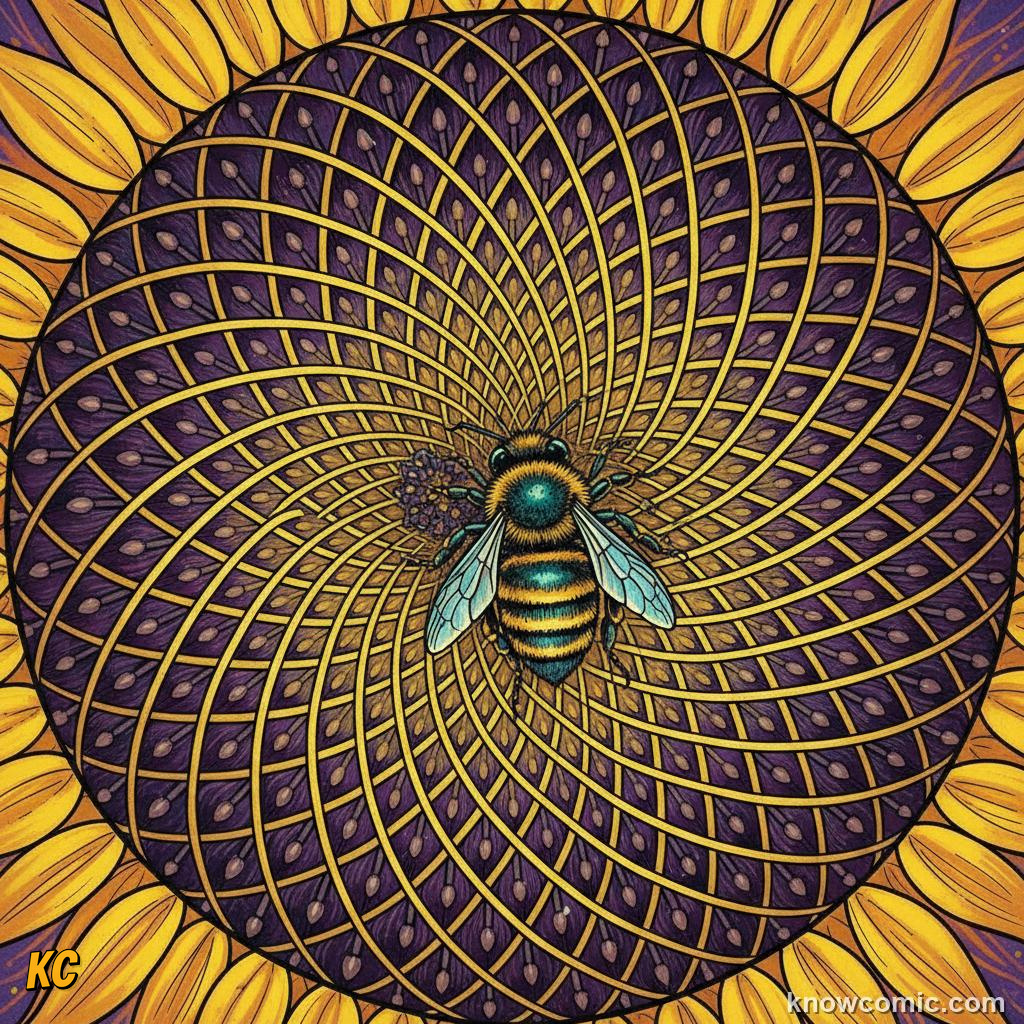
🌻 Opposing spirals on a head
🔢 Often 34 & 55 or 55 & 89
📊 Fibonacci neighbours show up
🔢 Often 34 & 55 or 55 & 89
📊 Fibonacci neighbours show up
PINE CONES

🌲 Scales spiral two ways
🧠 Growth hormones compete
🌍 Same maths, many species
🧠 Growth hormones compete
🌍 Same maths, many species
EFFICIENCY
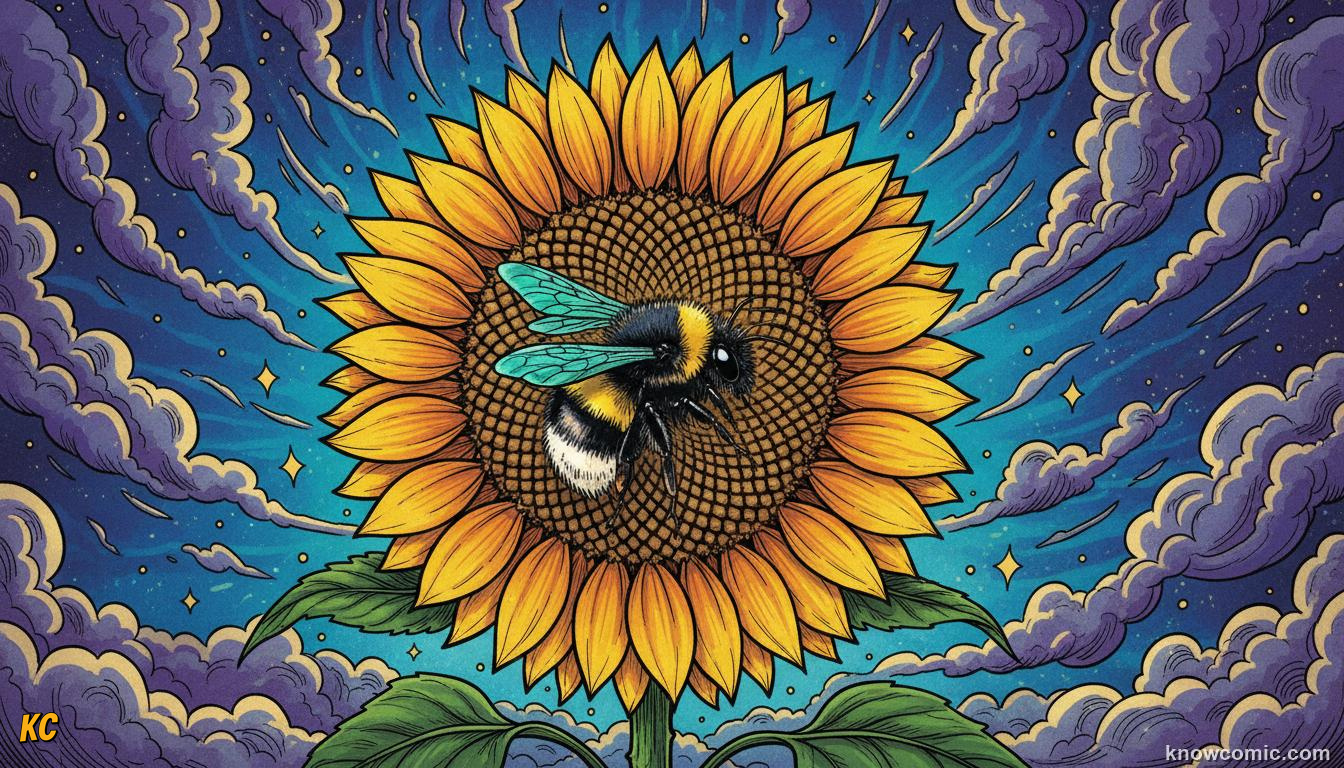
WHY NATURE "LIKES" THESE NUMBERS
Growing tips of plants push new seeds or leaves at an angle around a circle. If the angle were a simple fraction of 360°, seeds would line up in spokes and leave gaps, bad use of space. An irrational angle related to φ lets each new primordium sit in the least crowded gap, packing the most seeds in a circular head. That is why sunflower spirals so often use consecutive Fibonacci counts: the growth rule plus geometry selects efficient packing, not because plants "do long division", but the outcome is the same beautiful mathematics you can calculate on paper.
🌿 NOT EVERY PLANT
Some species use different Lucas numbers or other patterns, nature optimises many ways, but Fibonacci pairs are the famous default.
PACK!
PAGE 4 OF 5, SPIRALS FROM SEASHELLS TO GALAXIES
LOGARITHMIC SPIRAL
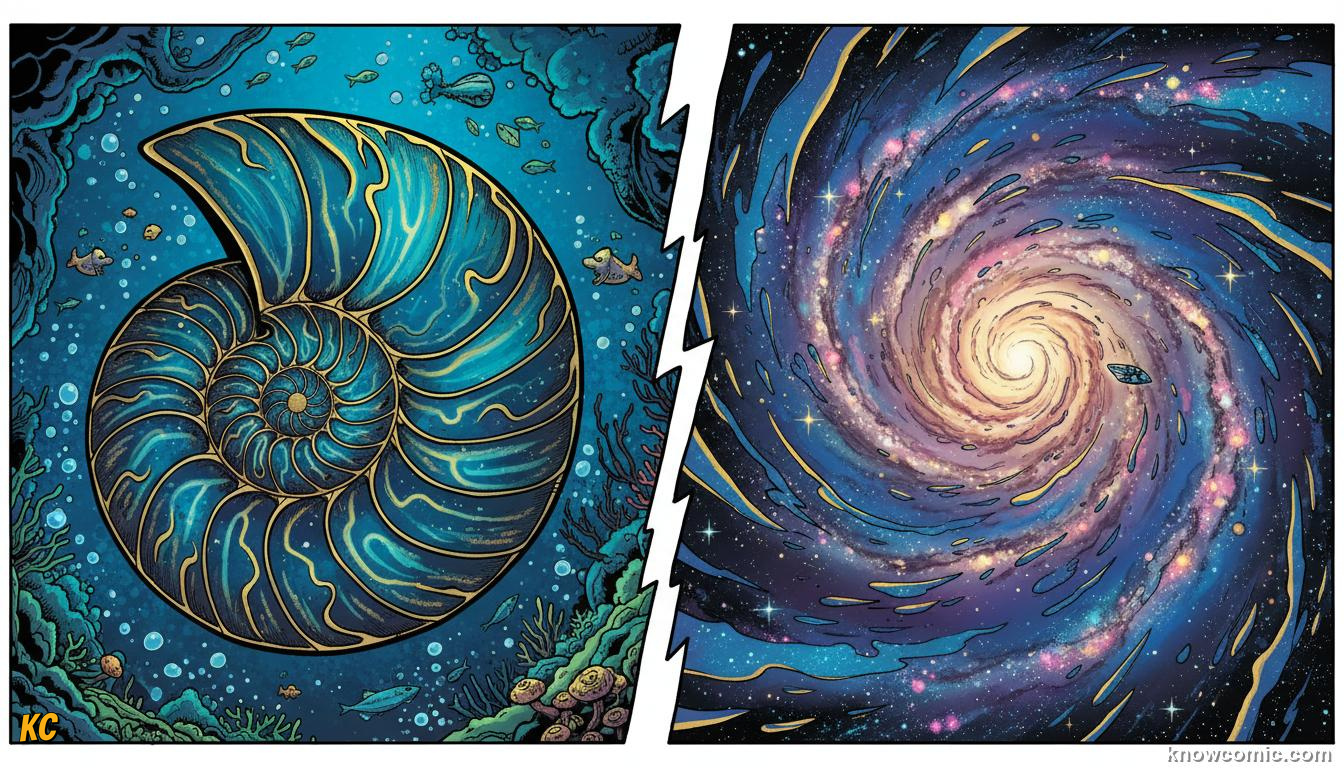
GROW BY A STEADY RATIO
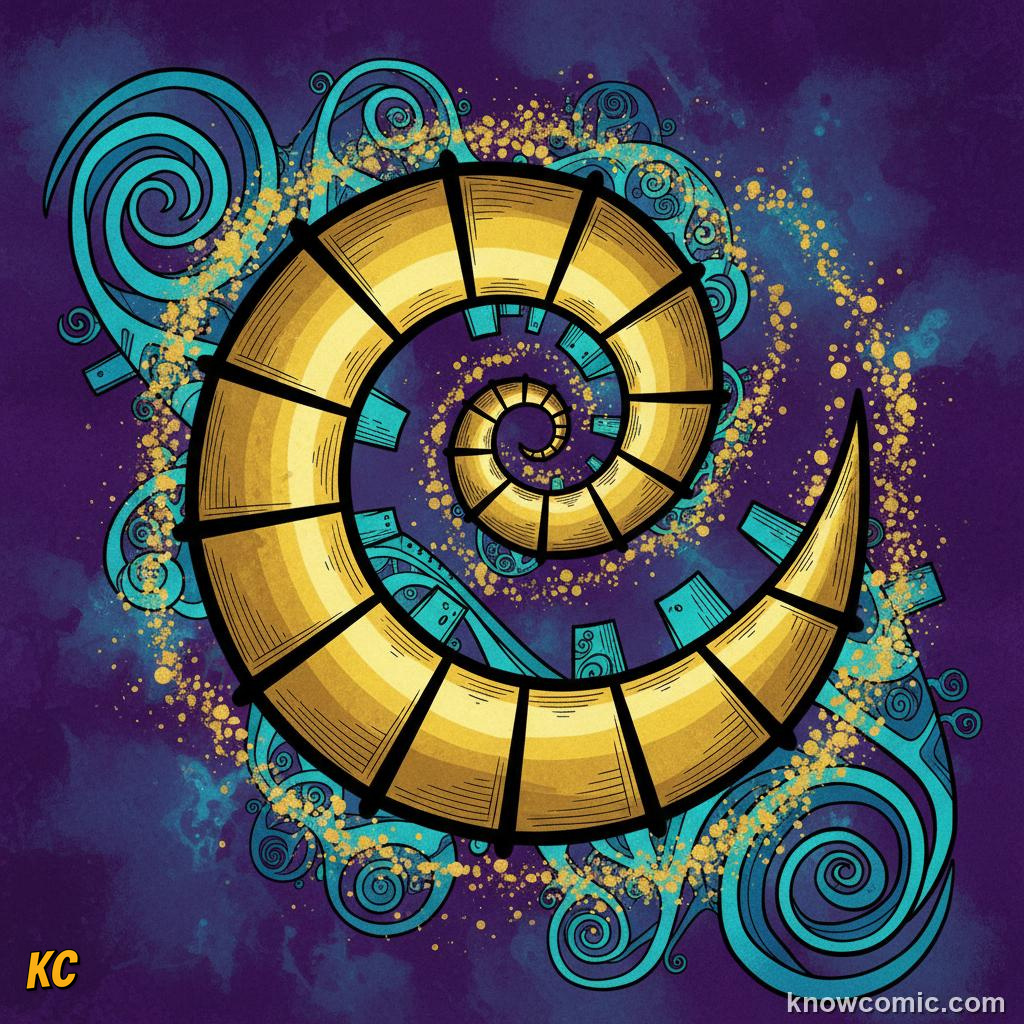
A logarithmic spiral keeps the same shape as it grows, each turn scales up by a constant factor. The nautilus shell is the textbook photo: chambers get wider in a smooth spiral (though real nautilus growth is a bit messier than pure φ). Hurricanes, galaxies and draining bathtubs borrow spiral geometry from fluid rotation and gravity. None of these are "perfect φ machines", physicists measure real spirals with a range of ratios, but the Fibonacci spiral you draw from nested golden rectangles is a close cousin and a powerful mental model for self-similar growth in the round.
🌀 SPIRAL VS SEQUENCE
The Fibonacci sequence is a list of integers; the golden spiral is a smooth curve built from quarter-circles in golden rectangles, related ideas, not identical objects.
SWIRL!
NAUTILUS
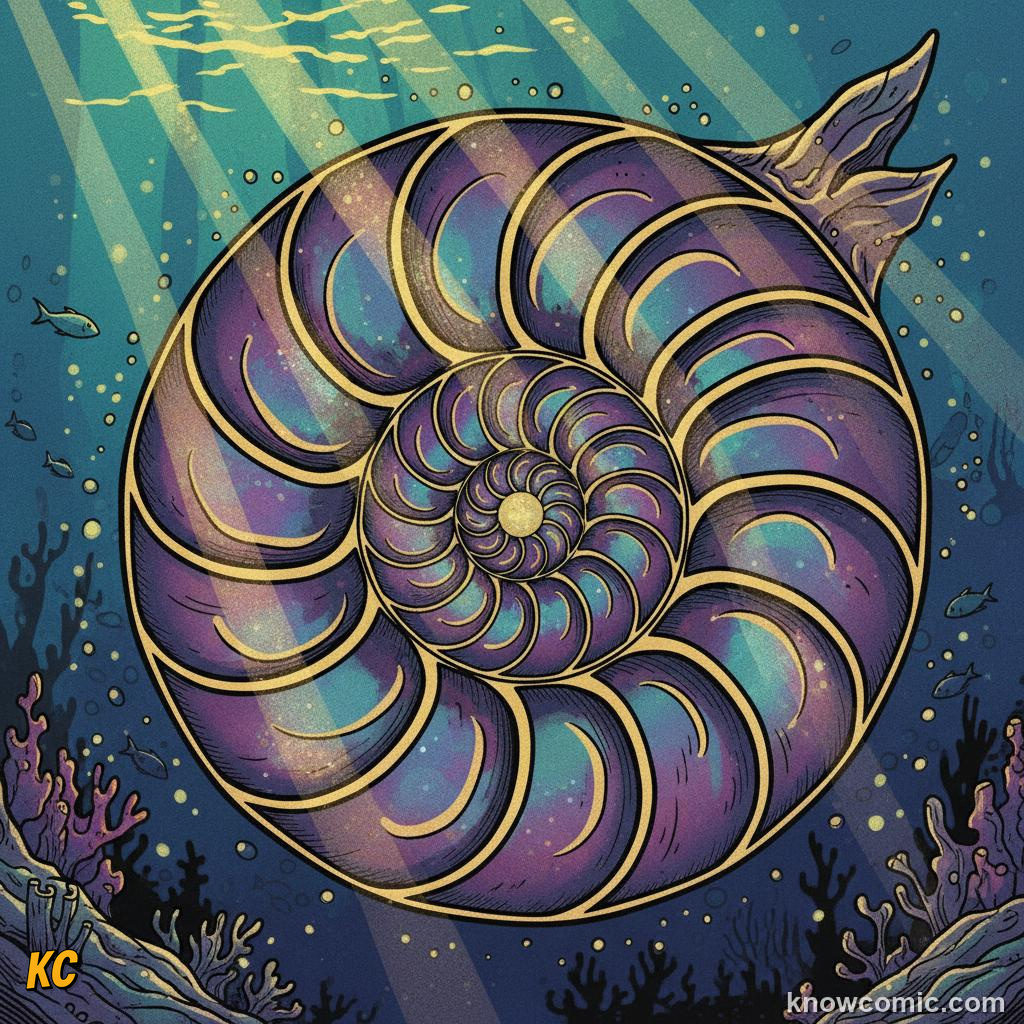
🐚 Chambered shell in cross-section
🌊 Classic textbook image
🔬 Real shells vary a bit
🌊 Classic textbook image
🔬 Real shells vary a bit
GALAXY ARMS
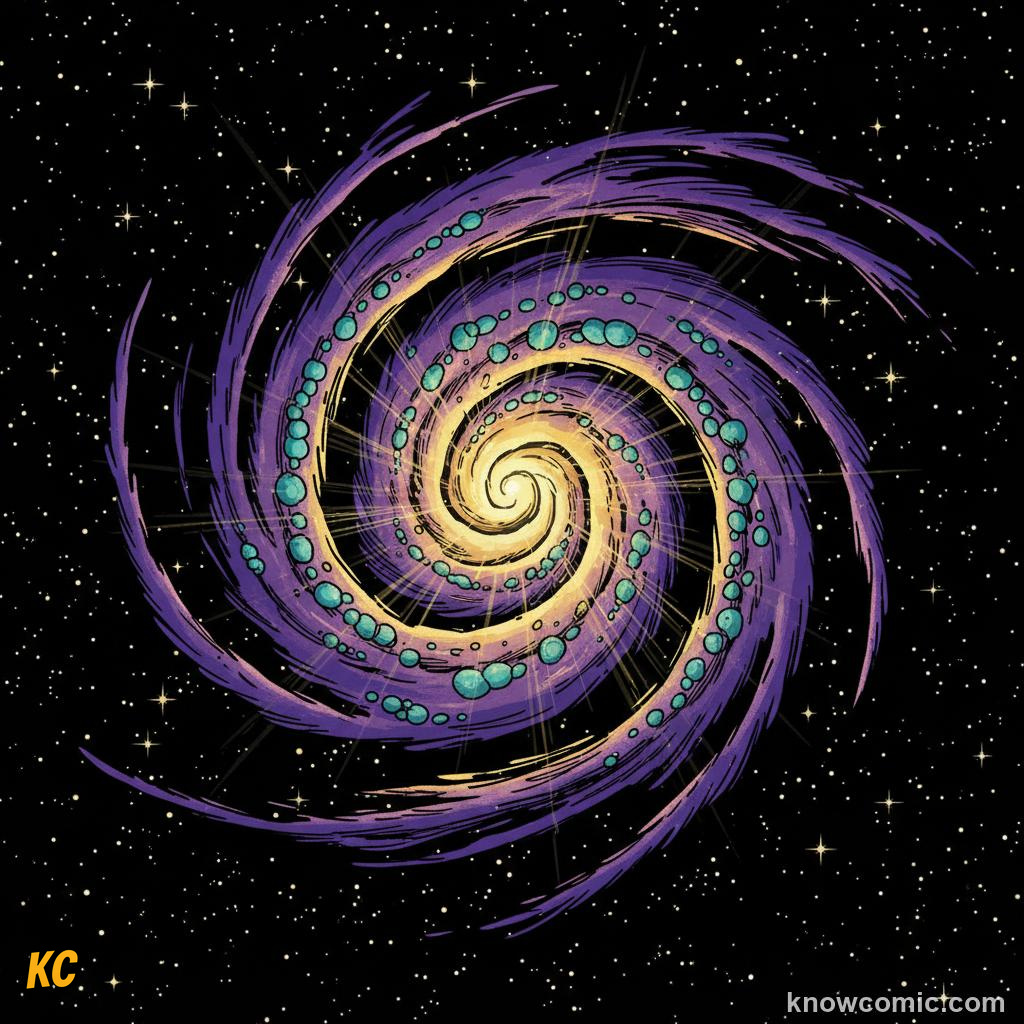
🌌 Density waves in stars
✨ Log-spiral arms common
🔭 Same maths, cosmic scale
✨ Log-spiral arms common
🔭 Same maths, cosmic scale
HUMAN FACE
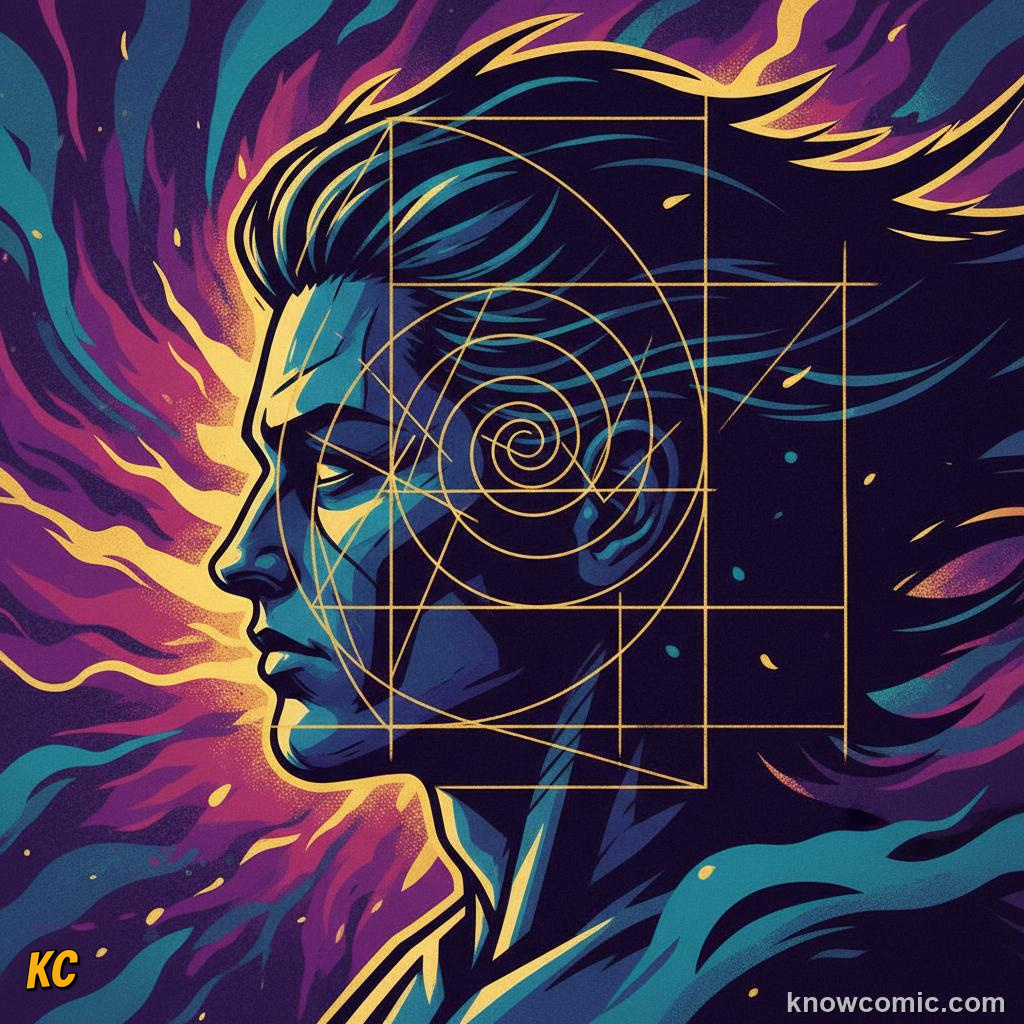
👤 Some ratios near φ
🎭 Beauty is cultural too
📷 Over-claims happen online
🎭 Beauty is cultural too
📷 Over-claims happen online
PAGE 5 OF 5, FROM ANCIENT INDIA TO YOUR PHONE
MODERN USES

FIBONACCI IN COMPUTER SCIENCE
Programmers use Fibonacci numbers for "gentle" retry timers (wait 1s, 2s, 3s, 5s…), for pseudo-random shuffles, and in algorithms that split problems into overlapping sub-problems. The mathematical study of Fibonacci properties connects to continued fractions, Lucas sequences and even proofs about primes. Whether you care about efficient seed packing, elegant spirals in art class, or the next term in a coding interview, you are touching the same deep thread: simple rules, repeated, can sculpt the world.
🧠 TAKEAWAY
Fibonacci starts with a baby rule, add the last two, yet links to φ, plant growth, spirals and modern algorithms. That is mathematics: tiny ideas, giant ripples.
PATTERN!
CODING

💻 Fibonacci heaps & retries
🔁 Recursion loves F(n)
📚 Still an active research area
🔁 Recursion loves F(n)
📚 Still an active research area
REMEMBER
🌀 KEY FACTS
Fibonacci: each term sums the two before · φ ≈ 1.618 from golden rectangles · Consecutive ratios approach φ · Sunflowers & cones often show Fibonacci spirals for packing · Log spirals model shells & galaxies · Used in art, nature and algorithms.
✅ 1, 1, 2, 3, 5, 8, 13, 21…
✅ φ² = φ + 1
✅ Nature optimises; maths describes
✅ φ² = φ + 1
✅ Nature optimises; maths describes
🧠 QUIZ TIME!
FIBONACCI & GOLDEN RATIO · 5 QUESTIONS
QUESTION 01
What is the next number after 1, 1, 2, 3, 5, 8, 13 in the Fibonacci sequence?
QUESTION 02
About what value is the Golden Ratio φ (phi)?
QUESTION 03
Which European mathematician popularised the Fibonacci sequence in his 1202 book Liber Abaci?
QUESTION 04
Sunflower seed spirals often use counts that are…
QUESTION 05
As you divide bigger consecutive Fibonacci numbers (like 89 ÷ 55), the ratio gets closer to…
0/5
LOADING...