🎶
📈
🎹
🎵 KNOW PRIMARY · AGES 6–11

MUSIC
UNIVERSE

🎶 High Notes, Low Notes, Discover the Science of Pitch!

📖 200 Topics 🆓 FREE + PRO ⏱️ 5 min per comic 🧠 Quiz included
🔊
VIBRATE
Source Shakes
FREQUENCY
Cycles Per Second
📊
HERTZ
Measure the Speed
🎵
PITCH
High or Low
👂
HEAR
Brain Listens
🎶 FREQUENCY AND PITCH
TOPIC 02 · MUSIC UNIVERSE · HERTZ · HIGH · LOW
PAGE 1 OF 5 — WHAT IS PITCH?
HIGH AND LOW
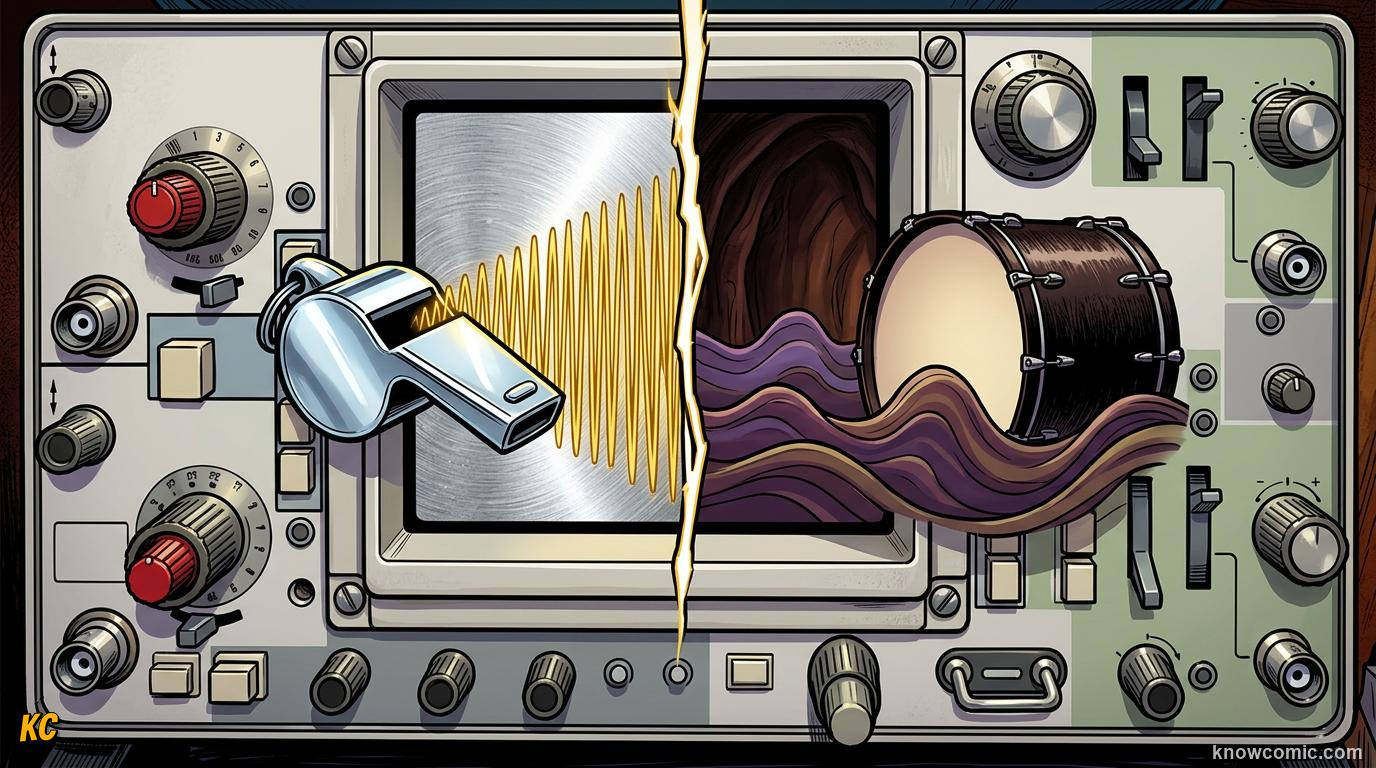
Comic illustration: high and low pitch sound waves compared side by side
PITCH IS HOW HIGH OR LOW!
Pitch depends on frequency, which is how fast a sound wave vibrates. Fast vibrations create high-pitched sounds like whistles, while slow vibrations produce low-pitched sounds like a deep, rumbling drum. When you hear a bird chirp and then a bass guitar, your brain instantly tells you one is higher than the other. That feeling of high or low is pitch!
⚡ DID YOU KNOW?
A hummingbird's wings beat so fast they make a buzzing sound around 80 hertz, while a big church bell might ring near 200 hertz. Both are real sounds, just at very different pitches!
PITCH!
HIGH PITCH
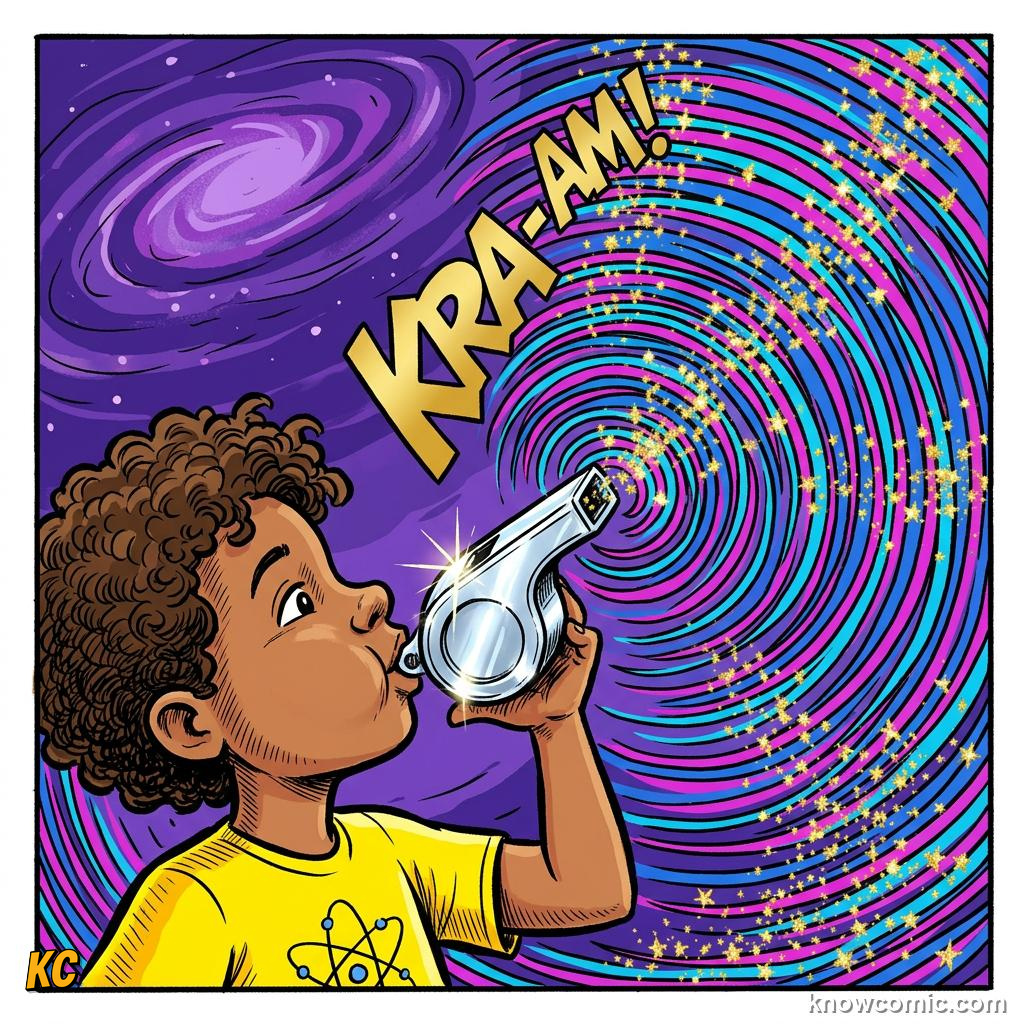
Comic illustration: fast vibrations creating a high-pitched whistle sound
🎵 Whistles, flutes, bird songs
⚡ Many vibrations per second
LOW PITCH
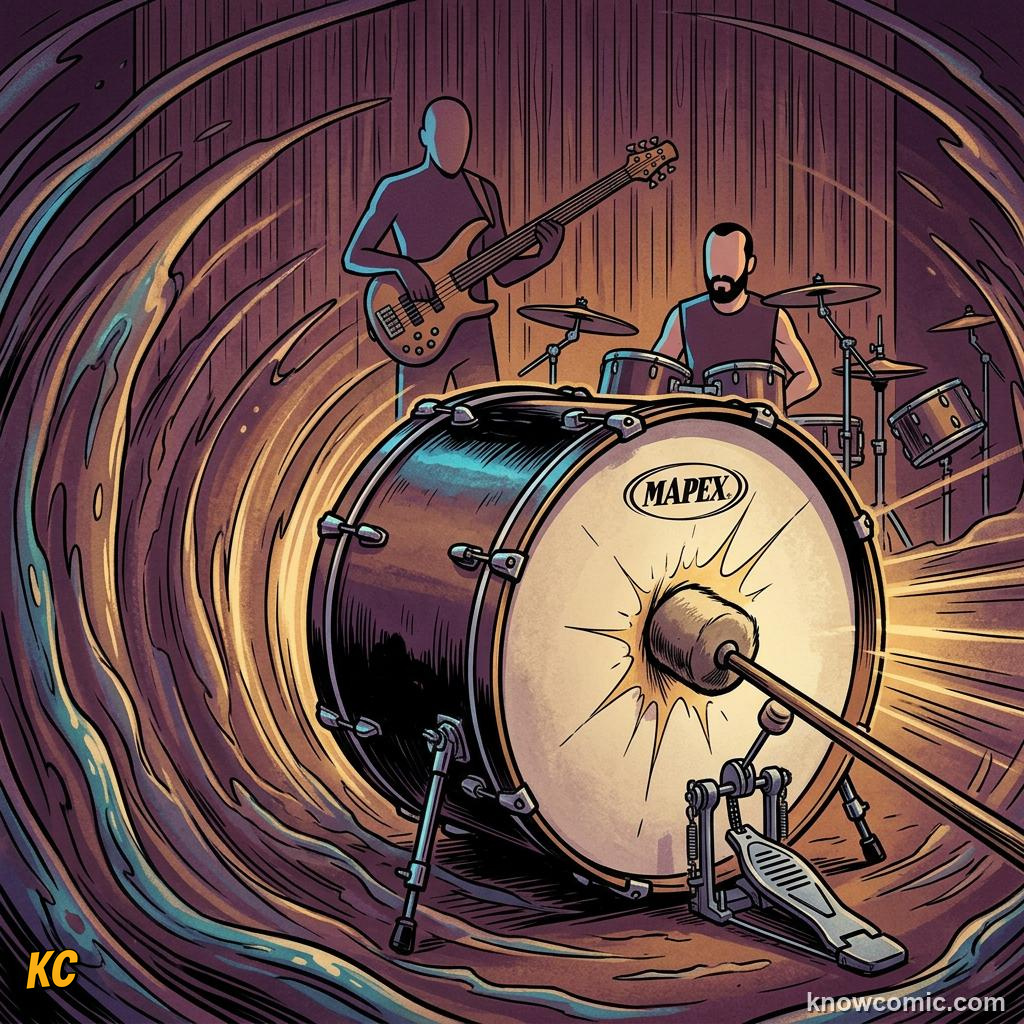
Comic illustration: slow vibrations creating a low-pitched drum rumble
🥁 Bass drums, thunder, foghorns
🐢 Fewer vibrations per second
PAGE 2 OF 5 — FREQUENCY EXPLAINED
COUNT THE CYCLES
Comic illustration: counting vibration cycles in a sound wave
HOW FAST DOES IT VIBRATE?
Frequency counts how many complete vibration cycles happen in one second. One cycle means the wave goes through one full squeeze-and-stretch pattern and returns to the start. If a tuning fork vibrates 440 times every second, its frequency is 440 cycles per second. More cycles per second means a higher pitch. Fewer cycles means a lower pitch. It is that simple!
🌊 WAVE FACT
Frequency and wavelength are linked. Faster vibrations mean shorter wavelengths. Slower vibrations mean longer wavelengths. That is why deep sounds have long, stretched-out waves!
CYCLES!
FAST WAVE
Comic illustration: tightly packed wave cycles showing high frequency
📈 Many bumps close together
🎶 Sounds sharp and high
SLOW WAVE
Comic illustration: widely spaced wave cycles showing low frequency
📉 Few bumps far apart
🥁 Sounds deep and low
ONE SECOND
Comic illustration: counting vibration cycles within one second
⏱️ Count cycles in one second
🔢 That number is frequency
PAGE 3 OF 5 — MEET THE HERTZ
440 Hz
Comic illustration: tuning fork vibrating at 440 hertz, the note A
🎻 Concert pitch note A
🎼 Orchestras tune to this
HUMAN RANGE
Comic illustration: range of human hearing from low to high hertz
👂 Roughly 20 Hz to 20,000 Hz
🐕 Dogs hear even higher!
UNIT OF MEASURE
Comic illustration: scientist measuring frequency in hertz with labeled examples
HERTZ MEASURES FREQUENCY!
Scientists measure frequency in hertz, written as Hz. One hertz equals one vibration cycle per second. A note at 256 Hz vibrates 256 times every second. A deep rumble at 50 Hz vibrates only 50 times per second. The abbreviation Hz is named after Heinrich Hertz, a scientist who studied radio waves. Musicians and engineers use hertz every day to describe pitch!
🎵 FUN FACT
Middle C on a piano is about 262 Hz. Each octave doubles the frequency, so the C one octave higher is about 524 Hz. That pattern repeats across the whole keyboard!
HERTZ!
PAGE 4 OF 5 — PITCH IN MUSIC
INSTRUMENTS
Comic illustration: piano, violin, and tuba showing different pitch ranges
EVERY INSTRUMENT HAS A RANGE!
A piano spans from deep bass notes below 30 Hz to bright treble notes above 4,000 Hz. A violin plays mostly in the mid-to-high range. A tuba stays low and rumbly. Musicians change pitch by making the vibrating part shorter (higher) or longer (lower). Guitarists press frets to shorten strings. Flute players cover holes to change the air column length. Same physics, different instruments!
🎹 MUSIC FACT
Singing also uses frequency! Your vocal cords vibrate faster for high notes and slower for low notes. A soprano can reach over 1,000 Hz, while a bass singer might sing near 80 Hz.
MELODY!
SHORT = HIGH
Comic illustration: short guitar string vibrating at high frequency
🎸 Short strings vibrate fast
🎵 Higher pitch, brighter tone
LONG = LOW
Comic illustration: long guitar string vibrating at low frequency
🎻 Long strings vibrate slow
🥁 Lower pitch, deeper tone
YOUR EARS
Comic illustration: inner ear detecting different sound frequencies
👂 Cochlea sorts frequencies
🧠 Brain reads high vs low
PAGE 5 OF 5 — FREQUENCY AND PITCH RECAP
PUT IT TOGETHER
Comic illustration: frequency and pitch recap with wave diagrams and musical notes
THE WHOLE STORY
Every sound starts with vibration. How many times that vibration repeats each second is the frequency, measured in hertz (Hz). Fast vibrations give you high pitch. Slow vibrations give you low pitch. Instruments and voices change frequency by adjusting the size or tension of whatever is vibrating. Your ears and brain turn those frequencies into the melodies and rhythms you love!
🎯 REMEMBER
Frequency = cycles per second (Hz). High frequency = high pitch. Low frequency = low pitch. Shorter or tighter vibrating parts = higher notes. Next up: amplitude controls how loud or soft a sound feels!
PITCH!
KEY IDEAS
Comic illustration: key facts about frequency, hertz, and pitch
⚡ Hz = vibrations per second
🎶 Fast = high, slow = low
NEXT UP
Comic illustration: preview of amplitude and volume topic
📏 Frequency = pitch (done!)
📢 Amplitude = volume (Topic 03!)
🧠 QUIZ TIME!
FREQUENCY AND PITCH · 5 QUESTIONS
QUESTION 01
What does pitch tell us about a sound?
QUESTION 02
What is frequency?
QUESTION 03
What unit is used to measure frequency?
QUESTION 04
Which sound has a higher frequency?
QUESTION 05
How do musicians make a guitar string play a higher note?
0/5
LOADING...
← TOPIC 01 📋 ALL TOPICS TOPIC 03 →