👂
🧠
🎵
🎵 KNOW PRIMARY · AGES 6–11

MUSIC
UNIVERSE

🔊 Vibrations, Waves & Rhythm, Hear the Physics of Sound!

📖 200 Topics 🆓 FREE + PRO ⏱️ 5 min per comic 🧠 Quiz included
🔊
VIBRATION
Something Moves
〰️
WAVE
Energy Travels
💨
MEDIUM
Air, Water, Solid
👂
EAR
Sound Arrives
🎵
HEAR
Brain Listens
👂 HOW EARS HEAR
TOPIC 05 · MUSIC UNIVERSE · BIOLOGY · COCHLEA · BRAIN
PAGE 1 OF 5 · COLLECTING SOUND
WAVES TO SIGNALS
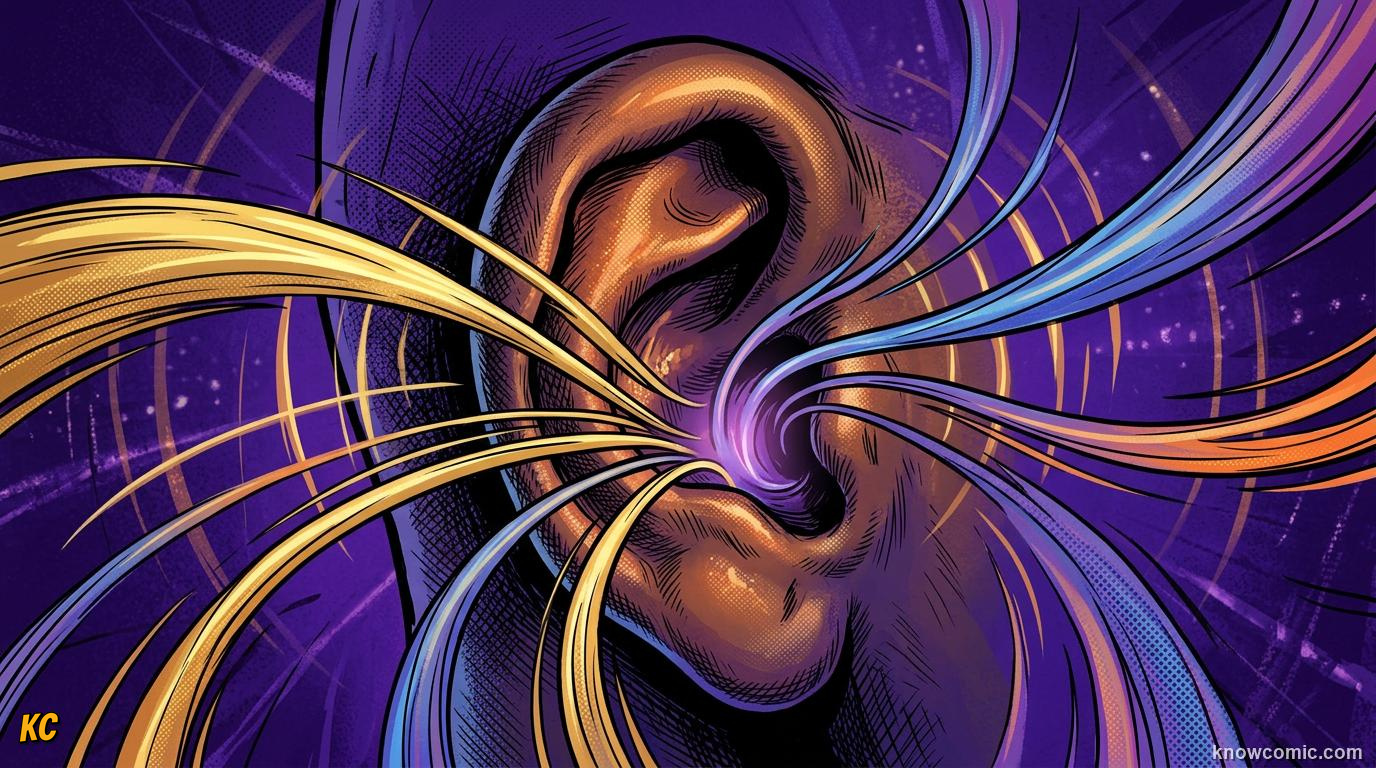
Comic illustration: sound waves entering the outer ear
YOUR EARS ARE RECEIVERS!
Our ears collect sound waves and turn them into electrical signals. These signals travel through the auditory nerve to the brain, which then interprets the vibrations as speech, music, or noise. Hearing is not just about catching air bumps. It is a full journey from the outside world into the busy control room inside your skull.
👂 DID YOU KNOW?
The curved outer part of your ear is called the pinna. Its shape helps funnel sound waves into the ear canal, like a satellite dish catching a signal from space!
LISTEN!
OUTER EAR
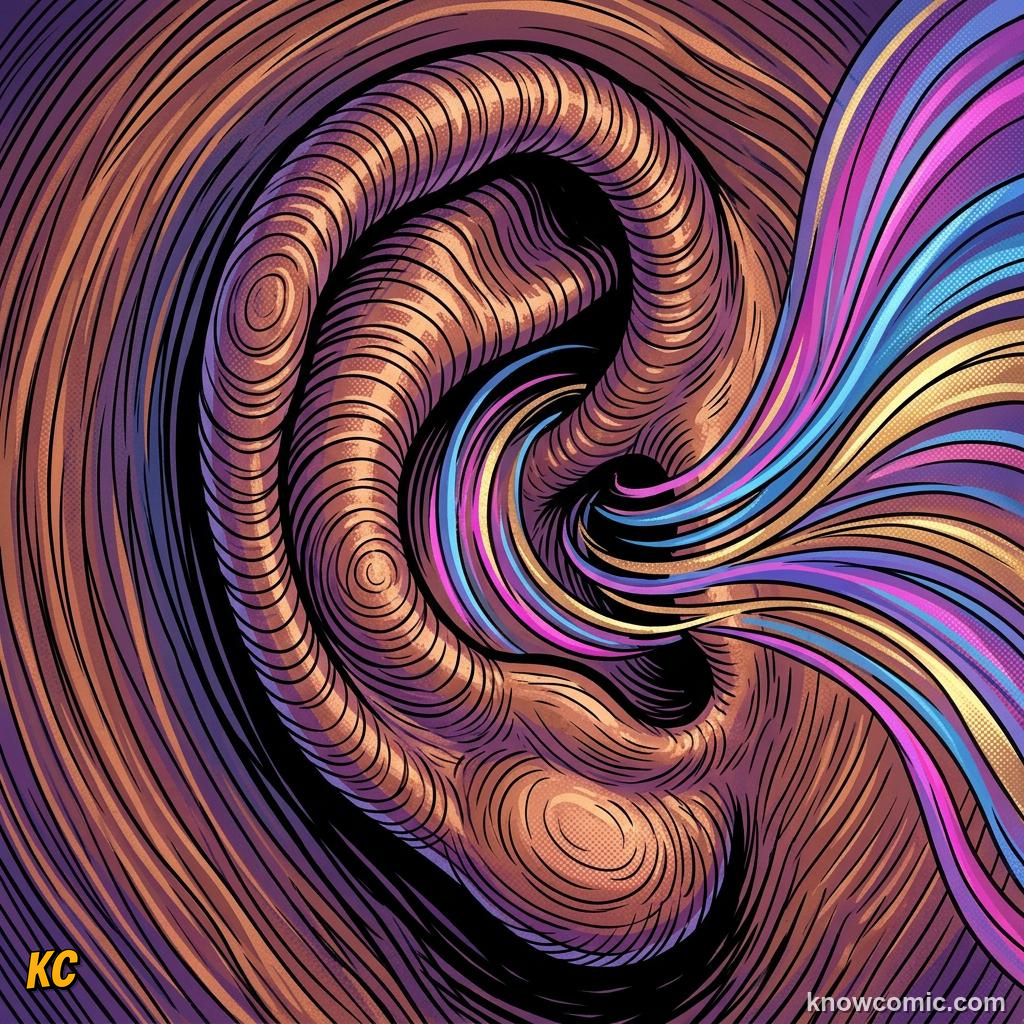
Comic illustration: the pinna and ear canal collecting sound
📡 Pinna catches the waves
🕳️ Canal guides them inward
THREE PARTS
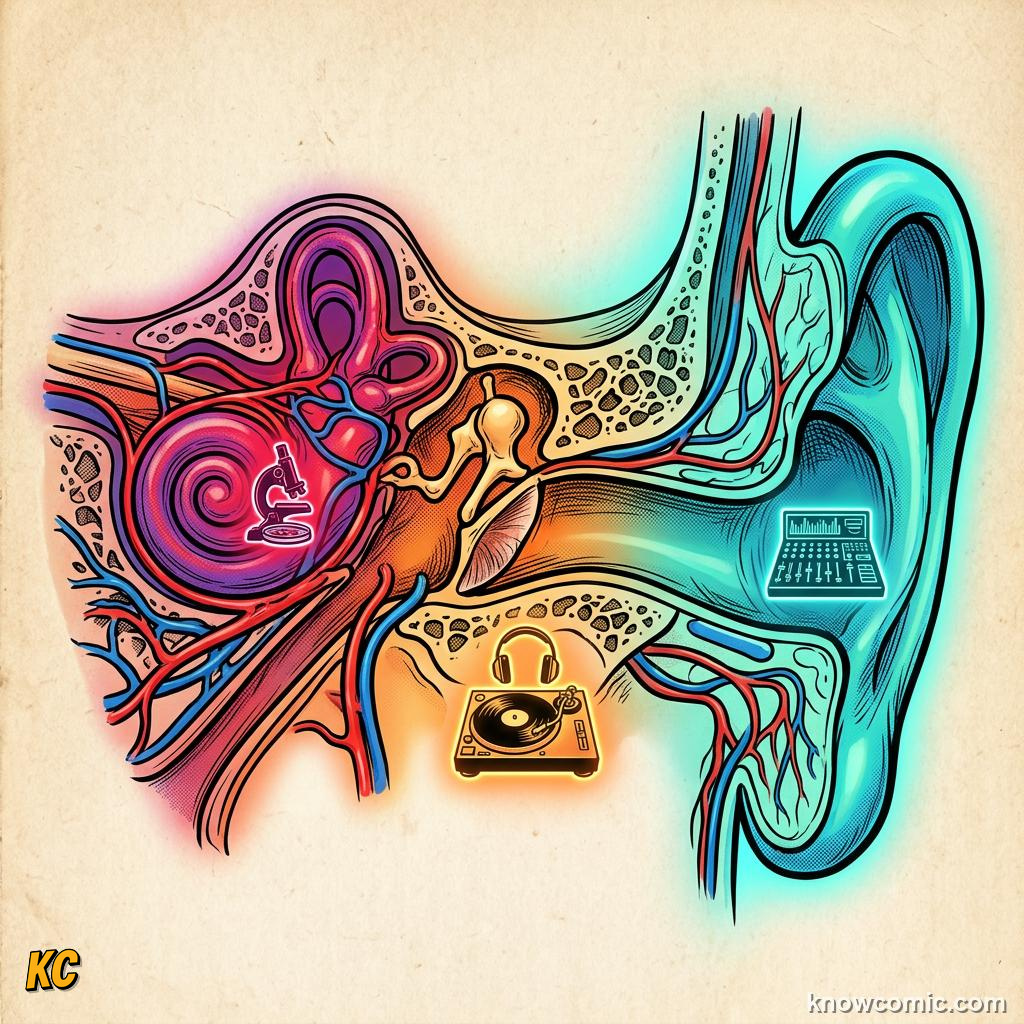
Comic illustration: outer, middle, and inner ear labeled
👂 Outer, middle, inner ear
🧠 Each part has a special job
PAGE 2 OF 5 · THE EARDRUM AND BONES
MIDDLE EAR
Comic illustration: eardrum vibrating and ossicle bones moving
THE DRUM BEATS!
Sound waves travel down the ear canal and hit the eardrum, a thin, tight membrane that vibrates like a real drum skin. Behind it sit three tiny bones called the ossicles: the hammer, anvil, and stirrup. They are the smallest bones in your whole body! Together they amplify the vibration and push it into the fluid-filled inner ear.
🔨 BONE FACT
The stirrup bone is only about 3 millimeters long, smaller than a grain of rice. Yet it plays a huge role in sending sound deeper into your ear.
THUMP!
EARDRUM
Comic illustration: the eardrum vibrating from sound pressure
🥁 Thin membrane shakes
〰️ Matches the sound wave
HAMMER
Comic illustration: the hammer ossicle bone attached to the eardrum
🔨 Hits the anvil next
🔗 Bones linked in a chain
STIRRUP
Comic illustration: the stirrup bone pushing on the inner ear window
🐎 Tiny but mighty
🚪 Knocks on the inner ear
PAGE 3 OF 5 · INSIDE THE COCHLEA
SNAIL SHAPE
Comic illustration: the cochlea spiral shaped like a snail shell
🐌 Cochlea means snail
🌀 Fluid swirls inside
HAIR CELLS
Comic illustration: tiny hair cells inside the cochlea detecting pitch
🌾 Rows of tiny sensors
🎵 High and low pitches mapped
INNER EAR
Comic illustration: fluid waves moving through the cochlea
THE COCHLEA DECODES!
The cochlea is a spiral, fluid-filled tube lined with thousands of hair cells. When the stirrup taps the cochlea window, fluid ripples through the spiral. High-pitched sounds stir up hair cells near the base. Low-pitched sounds reach deeper into the spiral. Each hair cell that bends sends a tiny electrical pulse, turning mechanical vibration into nerve language.
🎹 PITCH MAP
Your cochlea works like a piano keyboard rolled into a snail shell. Different spots respond to different pitches, from deep bass notes to high whistles!
PING!
PAGE 4 OF 5 · SIGNALS TO THE BRAIN
NERVE HIGHWAY
Comic illustration: auditory nerve carrying signals from ear to brain
THE BRAIN LISTENS!
Electrical signals zip along the auditory nerve to the brain. The auditory cortex, a special hearing zone, receives the messages and figures out what they mean. Is it your friend calling your name? A catchy song on the radio? Traffic noise outside? Your brain compares the pattern to memories and labels the sound. That labeling is what we experience as hearing.
🧠 BRAIN FACT
Both ears send signals to both sides of the brain. This helps you tell where a sound is coming from, like knowing a dog barked behind you instead of in front.
THINK!
NERVE
Comic illustration: the auditory nerve bundle leaving the inner ear
⚡ Electrical pulses travel
🛤️ Highway to the brain
SPEECH
Comic illustration: brain recognizing spoken words
🗣️ Words match memory patterns
💬 You understand language
MUSIC
Comic illustration: brain enjoying music and rhythm
🎵 Melody and beat decoded
💃 You feel like dancing!
PAGE 5 OF 5 · HOW EARS HEAR RECAP
PUT IT TOGETHER
Comic illustration: full journey of sound from ear to brain recap
THE WHOLE JOURNEY
Sound waves enter the outer ear and shake the eardrum. The ossicle bones amplify the vibration into the cochlea, where hair cells turn motion into electrical signals. The auditory nerve carries those signals to the brain, which labels them as speech, music, or noise. Your ear is a biological machine that converts air bumps into thoughts you can understand.
🎯 REMEMBER
Collect (outer ear) → vibrate (eardrum) → amplify (bones) → convert (cochlea) → send (nerve) → interpret (brain). Protect your ears from loud noise to keep those hair cells healthy!
HEAR!
KEY IDEAS
Comic illustration: key facts about how ears hear
👂 Three ear sections work as a team
🐌 Cochlea maps every pitch
NEXT UP
Comic illustration: preview of echoes and sound reflection
🔊 Sound bounces off walls
🏔️ Topic 06: Echoes and Reflection!
🧠 QUIZ TIME!
HOW EARS HEAR · 5 QUESTIONS
QUESTION 01
What is the job of the outer ear?
QUESTION 02
What vibrates when sound waves reach the middle ear?
QUESTION 03
Where are the hair cells that detect different pitches?
QUESTION 04
What carries electrical signals from the ear to the brain?
QUESTION 05
What does the brain do with signals from the ear?
0/5
LOADING...
← TOPIC 04 📋 ALL TOPICS TOPIC 06 →