🔊
🔁
🏔️
🎵 KNOW PRIMARY · AGES 6–11

MUSIC
UNIVERSE

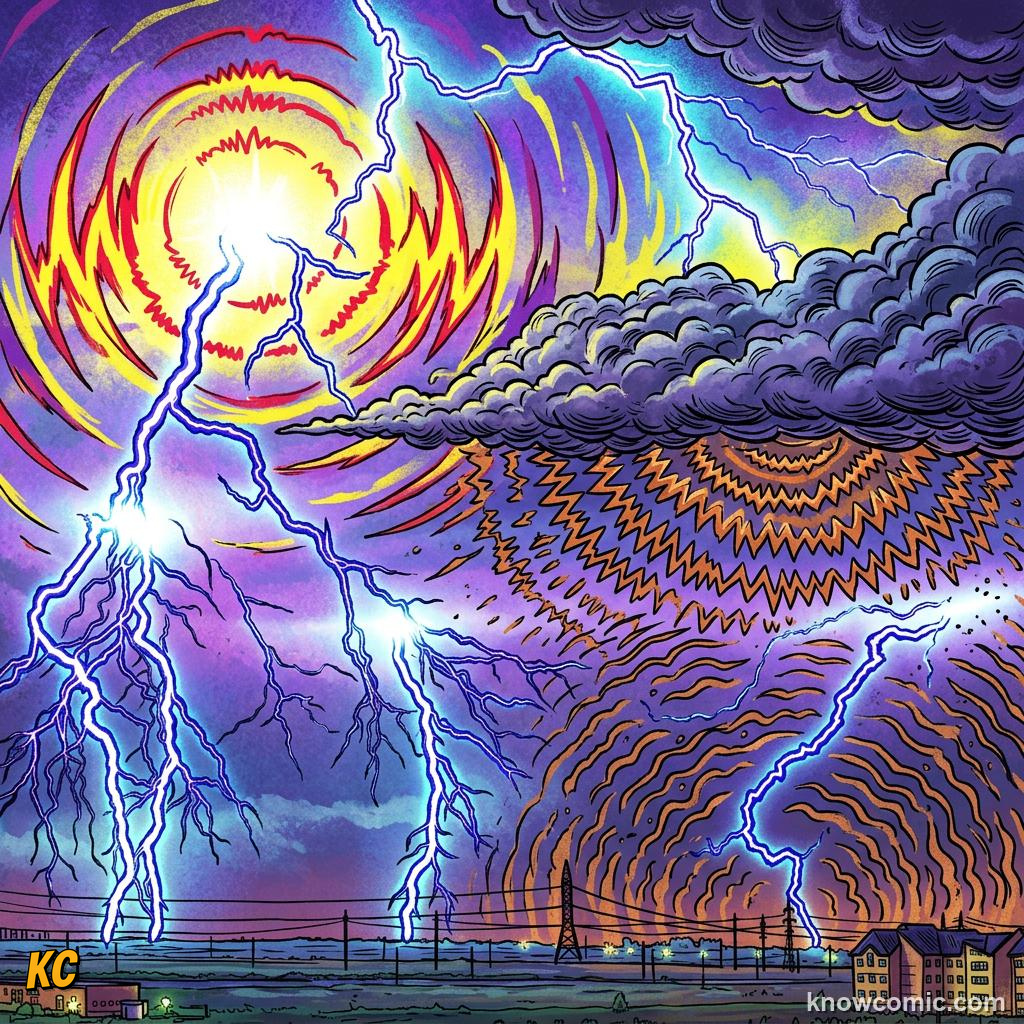
🔊 Vibrations, Waves & Rhythm, Hear the Physics of Sound!

📖 200 Topics 🆓 FREE + PRO ⏱️ 5 min per comic 🧠 Quiz included
📢
SHOUT
You Call Out
🧱
BOUNCE
Wave Hits Wall
⏱️
DELAY
Sound Travels Back
👂
HEAR
Echo Returns
🦇
USES
Bats, Sonar, More
🔁 ECHOES AND REFLECTION
TOPIC 06 · MUSIC UNIVERSE · PHYSICS OF SOUND · REFLECTION
PAGE 1 OF 5 · WHAT IS AN ECHO?
SOUND BOUNCES BACK
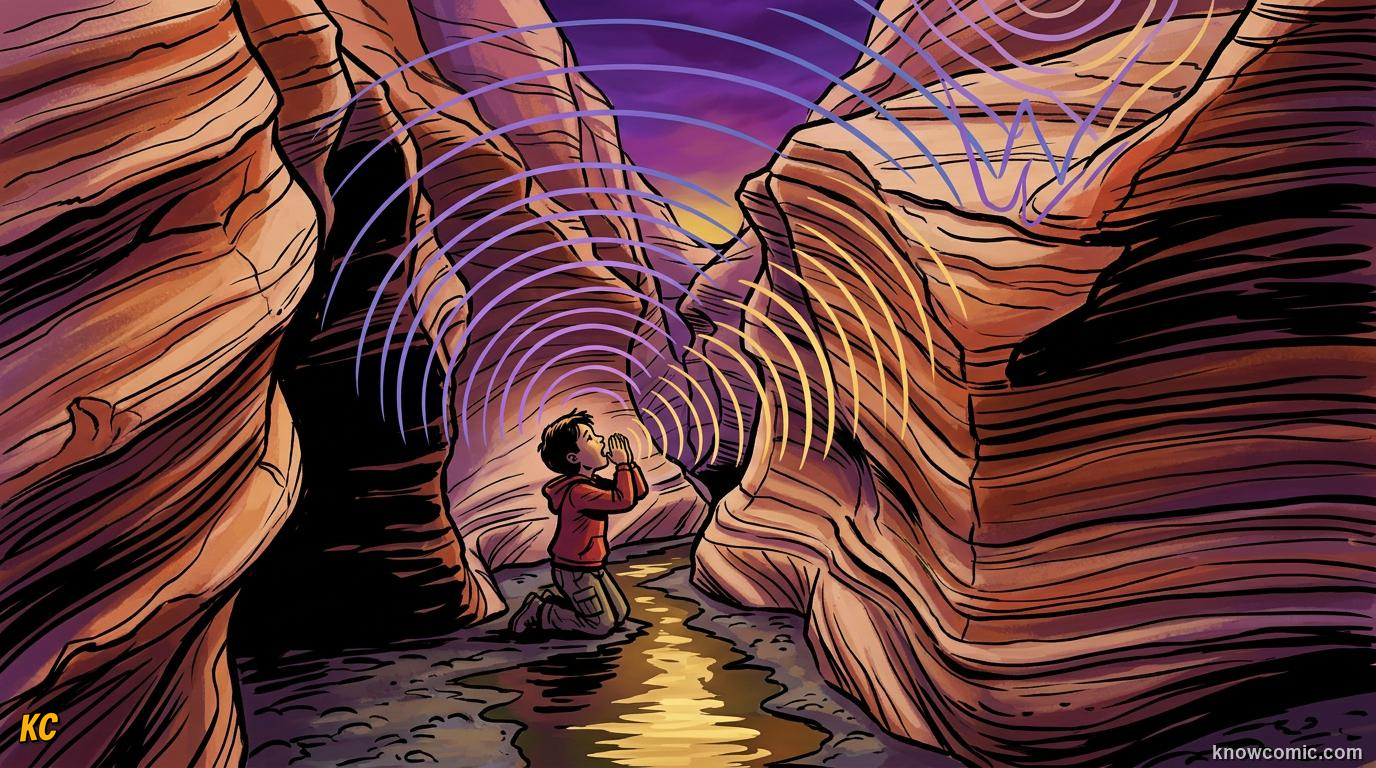
Comic illustration: a person shouting in a canyon and hearing their voice bounce back
SOUND CAN BOUNCE!
An echo occurs when a sound wave hits a hard surface and bounces back to you. If the surface is far away, the sound takes time to return, creates a distinct delay. You shout "Hello!" and a moment later you hear "Hello!" again. That returning copy is an echo. It happens because sound waves do not always stop when they hit something. Sometimes they reflect, like a ball bouncing off a wall.
🔁 DID YOU KNOW?
Light bounces off mirrors the same way sound bounces off cliffs. Both are waves that can reflect when they hit a smooth, hard surface!
ECHO!
BOUNCING
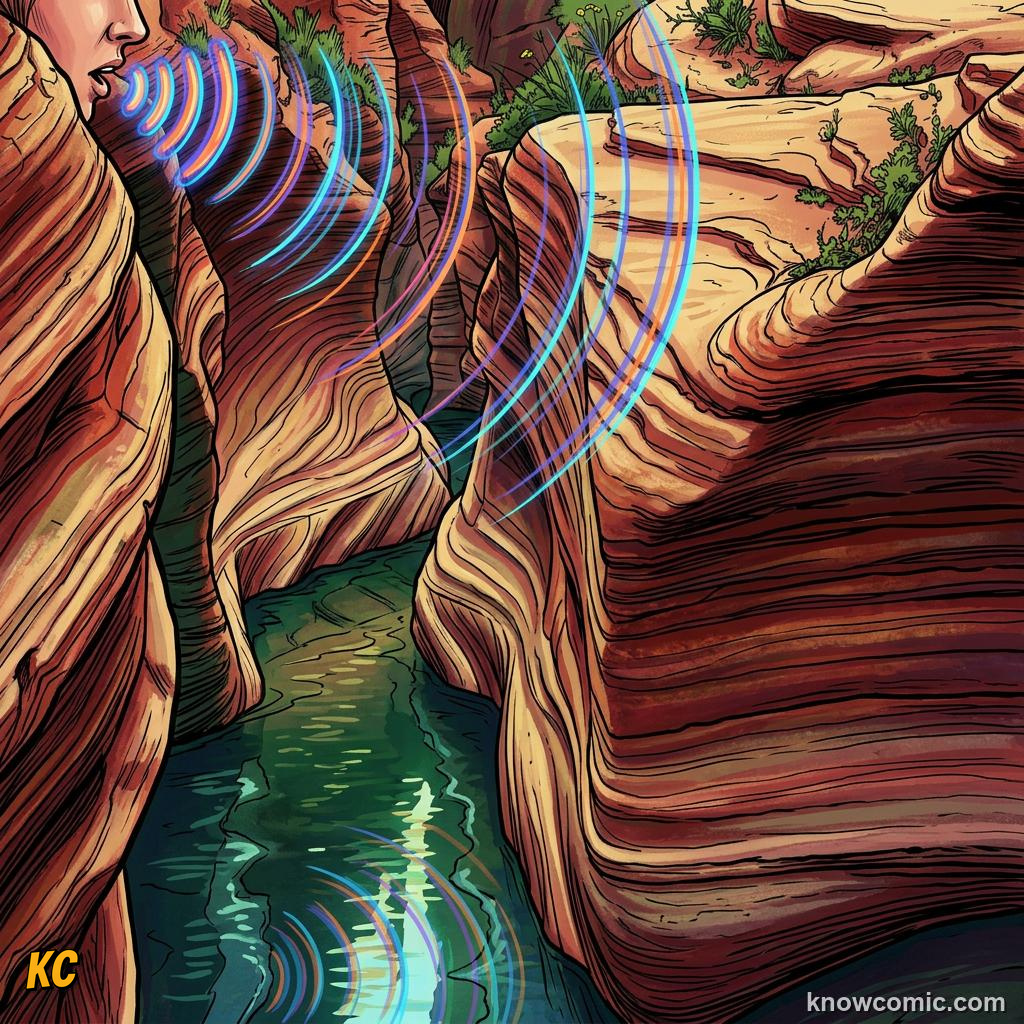
Comic illustration: a sound wave bouncing off a rock wall
🏀 Wave hits hard surface
↩️ Bounces back toward you
SPACE
Comic illustration: open space between speaker and reflecting wall
📏 Distance matters a lot
🏔️ Canyons make great echoes
PAGE 2 OF 5 · HOW REFLECTION WORKS
HARD SURFACES
Comic illustration: sound waves reflecting off a cliff face and a building wall
THE WALL SENDS IT BACK!
When a sound wave reaches a hard, smooth surface like rock, concrete, or a tiled bathroom wall, most of its energy bounces off instead of being absorbed. This is called reflection. Soft surfaces like curtains, carpet, and pillows soak up sound instead, which is why your bedroom rarely echoes but an empty gym often does. The angle the wave hits the wall is the same angle it bounces away, just like light on a mirror.
🧱 SURFACE FACT
Smooth stone cliffs and tall building walls are echo champions. Rough, soft surfaces scatter and swallow sound, so echoes fade away quickly.
BOING!
CLIFF
Comic illustration: sound reflecting off a mountain cliff
🏔️ Rock sends waves back
🔊 Loud, clear echoes
TILE
Comic illustration: bathroom tiles reflecting sound waves
🚿 Bathroom sounds bounce
🎤 Your singing gets louder!
SOFT
Comic illustration: soft carpet absorbing sound instead of reflecting it
🛋️ Soft stuff absorbs sound
🔇 No echo in a cozy room
PAGE 3 OF 5 · THE DELAY
OUTWARD
Comic illustration: sound traveling outward from a person shouting
📢 Your voice travels out
🏃 Speed of sound: ~343 m/s
RETURN TRIP
Comic illustration: reflected sound wave traveling back to the listener
↩️ Bounced wave heads home
⏱️ Round trip takes time
DELAY
Comic illustration: timeline showing shout, travel, bounce, and delayed echo arrival
WAIT FOR IT...
Sound is fast, but not instant. It travels about 343 meters per second through air. Your shout must reach the wall, bounce, and travel all the way back before you hear the echo. The farther the surface, the longer the round trip. Your brain needs at least about 0.1 seconds of delay to notice a separate echo instead of blending it with your original voice. That is why small rooms feel echo-free but wide canyons sing back to you.
⏱️ DELAY FACT
Stand about 17 meters from a wall and shout. The echo returns in roughly 0.1 seconds. Double the distance and the delay doubles too!
WAIT!
PAGE 4 OF 5 · HEARING THE ECHO
HEAR IT AGAIN
Comic illustration: a listener hearing their echoed voice return after a delay
YOUR VOICE COMES BACK!
When the reflected wave finally reaches your ears, your brain treats it as a second sound arriving after the first. That is the echo you hear. Multiple walls can create multiple echoes, each bouncing at different times. In a canyon you might hear one clear copy. In a cathedral you might hear a long, rolling tail of sound called reverberation, where hundreds of tiny reflections overlap and fade slowly.
👂 HEARING FACT
Echoes are quieter than the original shout because some energy gets lost each time the wave bounces. That is why a distant echo sounds softer and fainter.
AGAIN!
ORIGINAL
Comic illustration: the original shout reaching the listener's ears first
🔊 First: your own voice
👂 Arrives right away
ECHO
Comic illustration: the delayed echo arriving at the listener's ears
🔁 Second: the bounce-back
⏳ Noticeable delay
REVERB
Comic illustration: many overlapping reflections creating reverberation in a large hall
🏛️ Many bounces overlap
🎵 Music fills the hall
PAGE 5 OF 5 · USES OF ECHOES RECAP
PUT IT TOGETHER
Comic illustration: full echo journey from shout to bounce to delay to hearing again with real-world uses
ECHOES ARE USEFUL!
Nature and humans both use reflected sound. Bats send out high chirps and listen for echoes to map caves and catch insects in the dark. Ships and submarines use sonar to measure water depth and spot objects underwater. Doctors use ultrasound echoes to see inside the body. Even musicians use echo effects to make songs sound bigger and more exciting. Reflection is not just a canyon trick. It is a tool!
🎯 REMEMBER
Shout → travel → bounce → delay → hear again. Hard surfaces reflect, soft surfaces absorb. Distance creates delay. Bats, sonar, and ultrasound all rely on echoes!
BOOM!
KEY IDEAS
Comic illustration: key facts about echoes, reflection, and delay
🔁 Bouncing · Space · Delay
🧱 Hard walls reflect best
NEXT UP
Comic illustration: preview of the next music universe topic
🎵 Sound can be absorbed too
🔇 Topic 07: Sound Absorption!
🧠 QUIZ TIME!
ECHOES AND REFLECTION · 5 QUESTIONS
QUESTION 01
What is an echo?
QUESTION 02
Which surface is most likely to create a clear echo?
QUESTION 03
Why do you hear an echo after a delay?
QUESTION 04
What is sound reflection called when many bounces overlap in a big hall?
QUESTION 05
Who uses echoes to navigate and find food in the dark?
0/5
LOADING...
← TOPIC 05 📋 ALL TOPICS TOPIC 07 →