🪂
💨
🌧️
⚛️ KNOW SECONDARY · AGES 12–18

PHYSICS

⚛️ From Newton's Apple to Quantum Weirdness!

📖 350 Topics 🆓 FREE + PRO ⏱️ 5 min per comic 🧠 Quiz included
🍎
1600s
Galileo studies falling objects
🪂
1790s
First parachute jumps
🌧️
1800s
Raindrop speed measured
🚀
1971
Hammer and feather on Moon
🪂
TODAY
Skydivers reach ~200 km/h
🪂 TERMINAL VELOCITY
TOPIC 12 · PHYSICS · DRAG · AIR RESISTANCE · FALLING
PAGE 1 OF 5, FALLING THROUGH AIR
GRAVITY PULLS DOWN
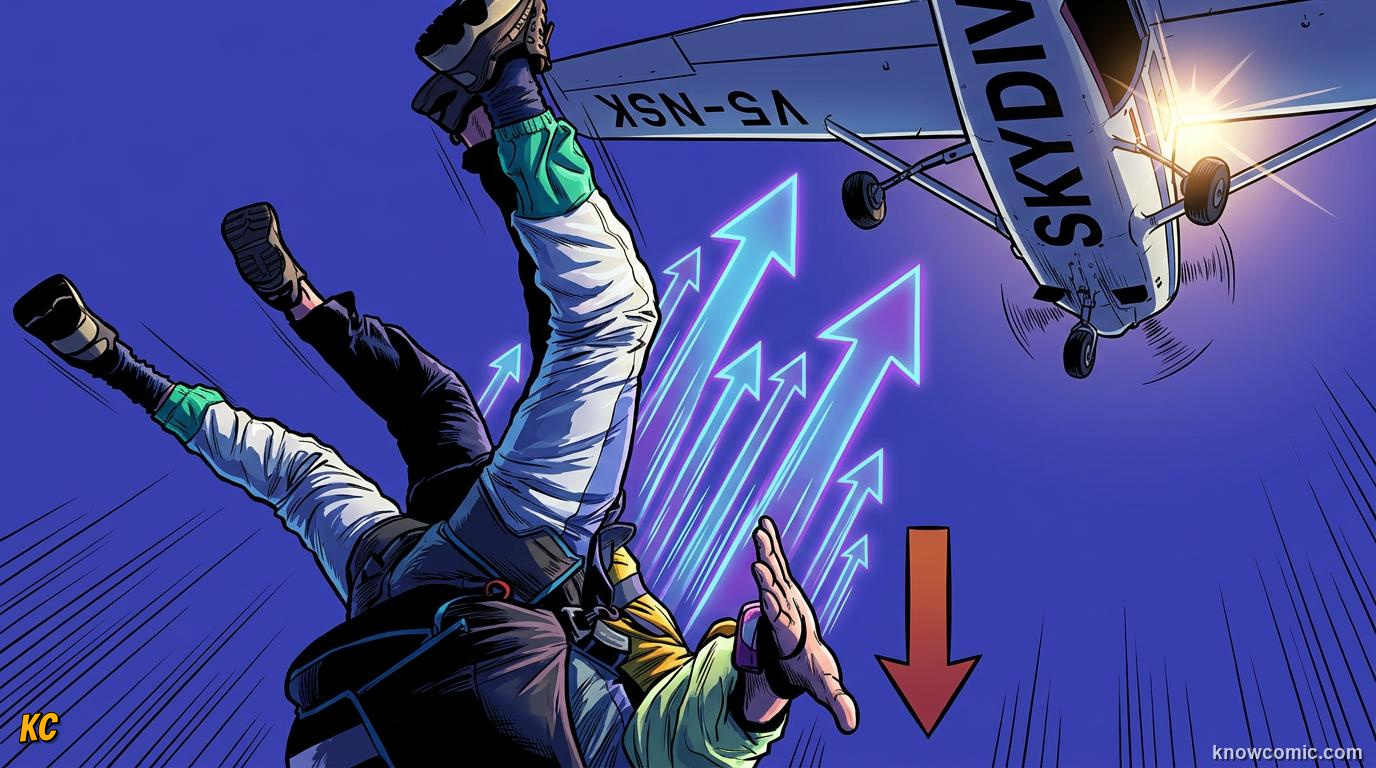
Comic illustration of an object falling through air with gravity pulling down
YOU DON'T SPEED UP FOREVER
When you jump from a plane, gravity pulls you downward and you accelerate. But you do not keep getting faster without limit. As your speed increases, air pushes back harder against you. This upward force is air resistance, also called drag. Drag grows with speed until it exactly balances your weight. At that point the net force on you is zero, acceleration stops, and you fall at a constant maximum speed called terminal velocity.
⚖️ BALANCE POINT
Terminal velocity is reached when drag force equals weight. Net force = 0, so acceleration = 0 and speed stays constant.
FALL!
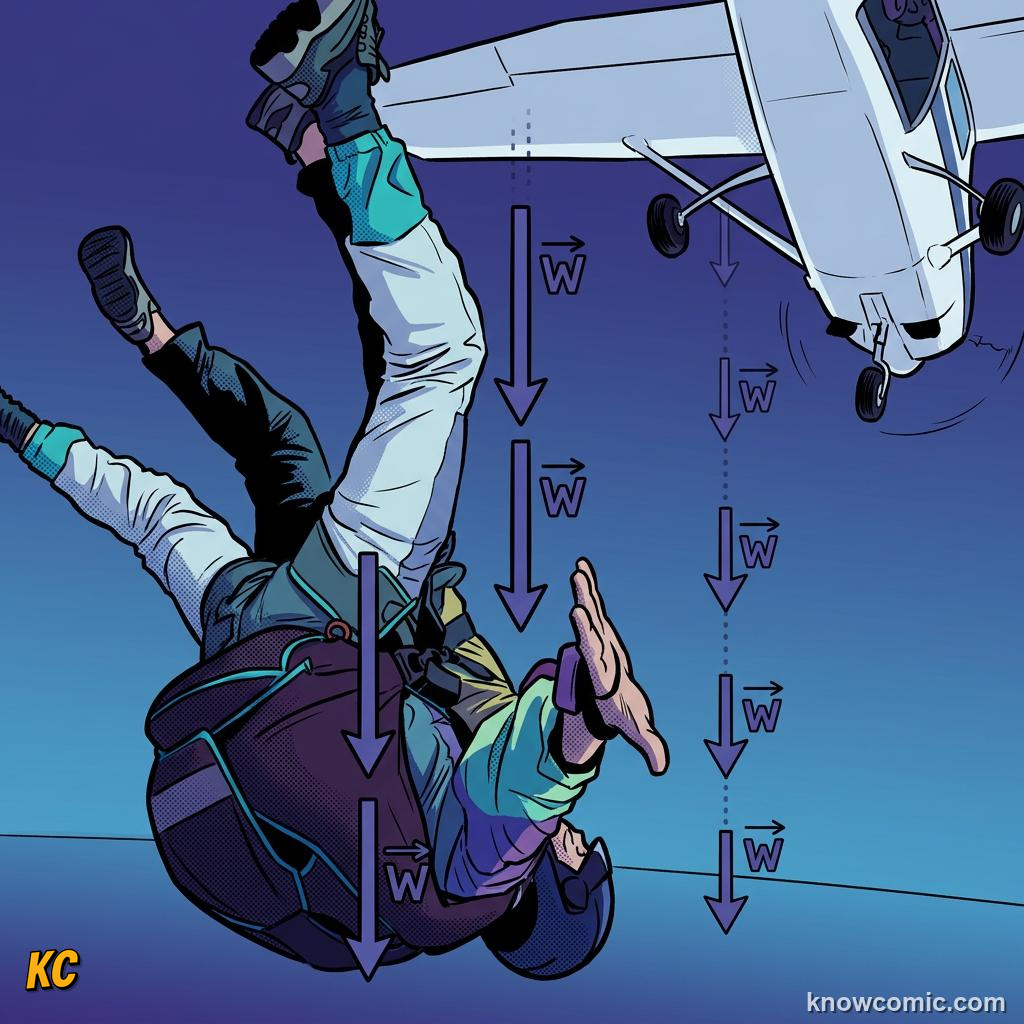
WEIGHT DOWN
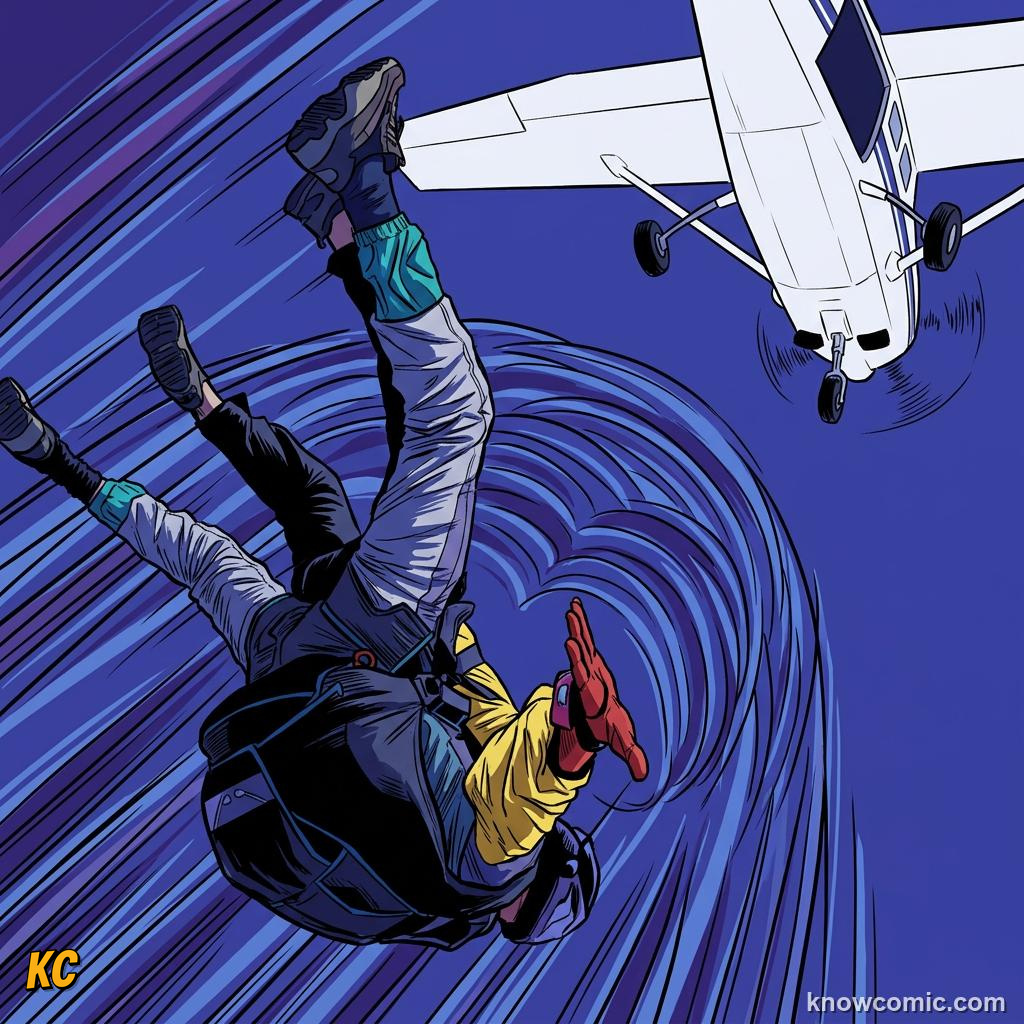
Comic illustration of weight force pulling a falling object down
⬇️ Weight = mg, always downward
→ Heavier object, stronger pull
🌍 g = 9.8 m/s² on Earth
DRAG UP
Comic illustration of air resistance pushing up on a falling object
⬆️ Drag opposes motion through air
💨 Faster fall = bigger drag force
⚖️ Drag grows until it matches weight
PAGE 2 OF 5, HOW DRAG WORKS
PUSHING THROUGH AIR
Comic illustration of air molecules creating drag on a moving object
AIR GETS IN THE WAY
Air is not empty space. It is made of nitrogen and oxygen molecules that a moving object must push aside. The faster you move, the more molecules you hit each second, and the harder the push-back becomes. Drag depends on speed, the object's cross-sectional area, shape, and air density. A wide, flat parachute creates enormous drag. A sleek bullet creates far less. Streamlined shapes cut through air more easily, which is why sports cars and falcons are shaped the way they are.
DRAG!
SHAPE
Comic illustration comparing drag on different object shapes
🪂 Parachute: huge area, high drag
🎯 Streamlined: low drag
📐 Shape changes terminal speed
SPEED
Comic illustration showing drag increasing with speed
🏃 Drag roughly grows with v²
⬆️ Double speed = about 4× drag
📈 Acceleration slows as drag rises
DENSITY
Comic illustration of air density affecting drag
🏔️ Thin air at high altitude
→ Less drag, higher terminal speed
🌊 Denser air = more resistance
PAGE 3 OF 5, REACHING TERMINAL SPEED
ACCELERATING
Comic illustration of a skydiver accelerating at the start of a fall
⬇️ Start: weight > drag
📈 Object accelerates downward
💨 Speed increases every second
CONSTANT SPEED
Comic illustration of terminal velocity with balanced forces
⚖️ Drag = weight: net force = 0
📊 Speed graph levels off
🪂 Steady fall at max speed
NEWTON'S SECOND LAW
Comic illustration of force balance at terminal velocity
F = ma EXPLAINS THE PLATEAU
Newton's second law says force equals mass times acceleration. At the start of a fall, weight is greater than drag, so there is a net downward force and you accelerate. As speed rises, drag increases until it equals weight exactly. Now net force is zero, so acceleration is zero and velocity stays fixed. This is terminal velocity. It is not a force itself, but the constant speed reached when forces balance. Open a parachute and drag suddenly jumps, dropping your terminal velocity to a safe landing speed.
📐 AT TERMINAL VELOCITY
Drag = Weight, so Fnet = 0 and a = 0. Speed no longer changes until something alters the balance.
LIMIT!
PAGE 4 OF 5, DIFFERENT OBJECTS, DIFFERENT LIMITS
NOT ALL FALLS ARE EQUAL
Comic illustration comparing terminal velocity of skydivers and raindrops
SIZE, SHAPE, AND MASS ALL MATTER
Every falling object has its own terminal velocity. A skydiver in a belly-down position reaches roughly 200 km/h because their large cross-section creates strong drag. Pull arms in and the terminal speed rises. A small raindrop reaches only about 9 m/s (roughly 32 km/h) because its tiny mass means little weight, yet it still presents surface area to the air. A hailstone falls faster than a raindrop because it is denser and heavier for its size. In a vacuum with no air, there is no terminal velocity and objects accelerate at g until they hit the ground.
SPEED!
🪂 SKYDIVER
Comic illustration of skydiver terminal velocity around 200 km/h
🪂 Belly-down: ~200 km/h
🎯 Head-down: much faster
🪂 Parachute: drops to ~20 km/h
🌧️ RAINDROPS
Comic illustration of raindrop terminal velocity
🌧️ Small drops: ~9 m/s terminal speed
💧 Light weight, moderate drag
☔ Large drops fall slightly faster
🌙 NO AIR
Comic illustration of hammer and feather falling on the Moon with no air resistance
🌙 Moon: no air, no terminal velocity
🔨 Feather and hammer fall together
📹 Proved by Apollo 15 in 1971
PAGE 5 OF 5, DRAG IN DAILY LIFE
ENGINEERING WITH DRAG
Comic illustration of drag engineering in parachutes and vehicles
SOMETIMES YOU WANT DRAG, SOMETIMES NOT
Parachutes are designed to maximise drag for a safe landing. Racing cyclists crouch low to minimise drag and go faster with the same effort. Car manufacturers wind-tunnel test shapes to reduce drag and save fuel. Feathered seeds and dandelion parachutes use high drag to float gently on the breeze. Understanding terminal velocity helps engineers design safer skydiving gear, predict hail damage, and even plan spacecraft re-entry, where air friction heats the heat shield to thousands of degrees while slowing the craft.
🪂 PARACHUTE PHYSICS
Opening a parachute increases drag dramatically, lowering terminal velocity from ~200 km/h to a safe ~20 km/h for landing.
FLOAT!
SPORTS
Comic illustration of drag in sports and cycling
🚴 Cyclists reduce drag with aerodynamic poses
⛷️ Ski jumpers use body shape to control fall
🏎️ F1 cars engineered for downforce and drag
REMEMBER
🪂 KEY FACTS
Terminal velocity occurs when drag equals weight. Net force is zero, acceleration stops, speed stays constant. Shape, mass, and air density all affect the limit. No air means no terminal velocity.
✅ Gravity pulls down, drag pushes up
✅ Speed increases until forces balance
✅ Drag = weight at terminal velocity
✅ Different objects have different limits
🧠 QUIZ TIME!
TERMINAL VELOCITY · 5 QUESTIONS
QUESTION 01
What is terminal velocity?
QUESTION 02
Why does a falling object stop accelerating at terminal velocity?
QUESTION 03
What happens to air resistance (drag) as a falling object speeds up?
QUESTION 04
Why does a skydiver with an open parachute fall much more slowly?
QUESTION 05
On the Moon, where there is no atmosphere, what happens when you drop a hammer and a feather?
0/5
LOADING...
← TOPIC 11 📋 ALL TOPICS ALL TOPICS →