📖 350 Topics🆓 FREE + PRO⏱️ 5 min per comic🧠 Quiz included
🏛️
~287 BCE
Archimedes born in Syracuse
→
🛁
~250 BCE
Floating bodies studied
→
📜
PRINCIPLE
Buoyant force = displaced fluid weight
→
🚢
1800s
Iron-hulled ships spread worldwide
→
🌊
TODAY
Submarines, life jackets, hot-air balloons
🚢 BUOYANCY & ARCHIMEDES
TOPIC 19 · PHYSICS · DENSITY · FLOATING · DISPLACED
PAGE 1 OF 5, SINK OR FLOAT?
THE PUZZLE

WHY DOES A TITANIC SHIP FLOAT?
Drop a small pebble into a pond and it vanishes in seconds. Launch a steel ship weighing thousands of tonnes and it rides on the surface. Both are made of dense material, yet one sinks and one floats. The secret is not the metal alone but how much water the object pushes aside. When anything enters a fluid, the fluid pushes back upward. That upward push is called buoyancy. If the upward buoyant force is strong enough to balance the object's weight, it floats. If not, it sinks. Understanding this puzzle takes us back to ancient Greece and one of history's most famous scientists.
🌊 BUOYANCY
Buoyancy is the upward force a fluid exerts on an object placed in it. Water always pushes back against whatever enters it.
FLOAT!
PEBBLE
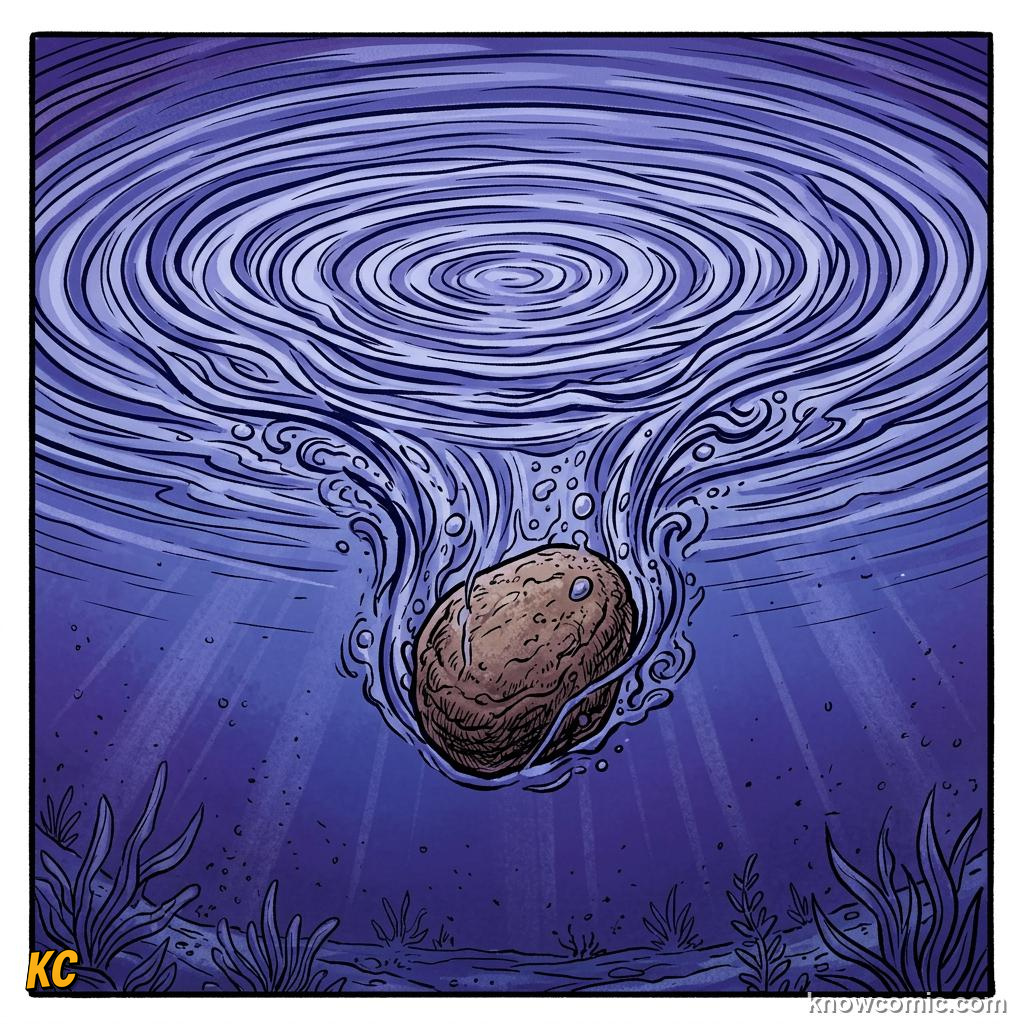
🪨 Small, solid, very dense
⬇️ Weight beats buoyant force
💧 Displaces little water
SHIP
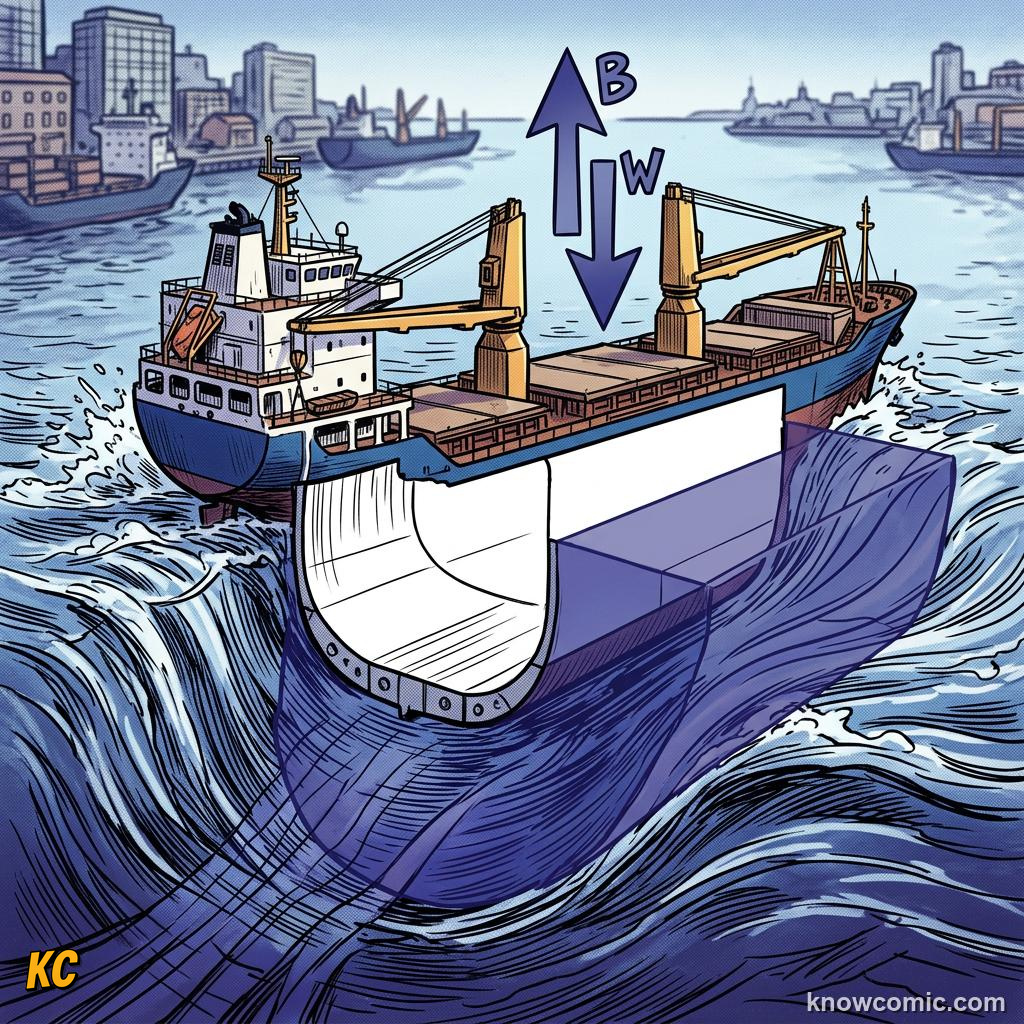
🚢 Hollow hull, mostly air inside
⬆️ Buoyant force matches weight
🌊 Pushes aside tonnes of water
PAGE 2 OF 5, ARCHIMEDES IN GREECE
ANCIENT GENIUS
THE MAN WHO MEASURED UPWARD PUSH
Archimedes lived in Syracuse on the island of Sicily around 287 to 212 BCE. He was a mathematician, inventor, and physicist who studied levers, spheres, and fluids. A famous story, told centuries later by the Roman writer Vitruvius, says King Hiero asked him to check whether a gold crown was pure. Legend claims Archimedes noticed bathwater rising as he climbed in, leaped out shouting "Eureka!" (I have found it), and ran through the streets. Historians doubt every detail of that dramatic scene, but the science behind it is real: a submerged object displaces water, and that displaced water relates directly to buoyancy.
EUREKA!
THE BATH
🛁 Water level rises when you enter
💦 Overflow equals displaced volume
📖 Story may be legend, idea is real
SYRACUSE
🏛️ Greek city on Sicily
🔬 Archimedes studied real problems
⚓ Ships and kings needed answers
HIS WRITINGS
📜 On Floating Bodies survives today
🧮 Math, not just stories
🌍 Ideas still taught in schools
PAGE 3 OF 5, ARCHIMEDES' PRINCIPLE
DISPLACED WATER
📦 Object takes up space in fluid
💧 Fluid moves out of the way
⚖️ Weight of moved fluid matters
UPWARD FORCE
⬆️ Buoyant force pushes up
⬇️ Weight pulls down
⚖️ Float when forces balance
THE PRINCIPLE
BUOYANT FORCE = WEIGHT OF DISPLACED FLUID
Archimedes' principle states that the buoyant force on an object equals the weight of the fluid it displaces. Push a block into water and the water level rises. The volume of risen water is the displaced volume. That water has mass, and gravity pulls it downward. The fluid pushes back upward on the block with an equal force. Submerge a larger volume and you displace more fluid, so buoyancy grows. This rule works for any fluid: fresh water, salt water, or even air (which is why hot-air balloons rise). It is one of the most useful ideas in all of physics and engineering.
⚓ ARCHIMEDES' PRINCIPLE
Buoyant force = weight of displaced fluid. More displacement means stronger upward push.
LIFT!
PAGE 4 OF 5, DENSITY DECIDES
DENSITY
MASS PACKED INTO VOLUME
Density measures how much mass is packed into each unit of volume: density = mass ÷ volume. Fresh water has a density of about 1,000 kilograms per cubic metre. Solid steel is roughly eight times denser. A solid steel block sinks because its average density is greater than water. A steel ship floats because its hull is a huge hollow shell filled mostly with air. The ship's total mass spread across its enormous volume gives an average density lower than water. Engineers design the hull shape so the vessel displaces enough water to create a buoyant force equal to the ship's weight. That is why aircraft carriers made of steel can cruise on the ocean surface.
DENSE!
SOLID STEEL
🔩 Steel ~7,850 kg per m³
⬇️ Denser than water, sinks
📦 Small volume, heavy mass
HOLLOW HULL
🚢 Hull + air lowers average density
🌊 Displaces huge water volume
⬆️ Buoyancy matches ship weight
WATER LINE
📏 Waterline shows displacement
📦 More cargo, hull sits lower
⚠️ Too much load risks sinking
PAGE 5 OF 5, BUOYANCY EVERYWHERE
REAL WORLD
FROM ANCIENT GREECE TO MODERN SEAS
Archimedes' insight still guides engineers today. Submarines fill ballast tanks with water to increase average density and dive, then blow air in to displace water and rise. Life jackets trap air to lower your average density so you float. Hot-air balloons displace cool, denser air with lighter hot air inside the envelope. Icebergs float because frozen water is slightly less dense than liquid water. Whether you are designing a cargo ship, testing a crown for purity, or simply wondering why your bath overflows, the same rule applies: fluids push back with a force equal to the weight of displaced fluid. Float or sink comes down to density and displacement.
🚢 WHY SHIPS FLOAT
A hollow steel hull plus air gives an average density less than water. The hull shape displaces enough fluid so buoyant force equals the ship's weight.
RISE!
APPLICATIONS
🦺 Life jackets trap air for buoyancy
🛳️ Submarines control displacement
🧊 Ice floats on its own meltwater
REMEMBER
🚢 KEY FACTS
Archimedes' principle: buoyant force equals weight of displaced fluid. Density = mass ÷ volume. Objects float when average density is less than the fluid. Steel ships float because hollow hulls displace enough water. The Eureka bath story is a legend, but the science is real.
✅ Buoyant force = weight of displaced fluid
✅ Density decides float or sink
✅ Hollow hulls lower average density
✅ More displacement means more buoyancy
🧠 QUIZ TIME!
BUOYANCY & ARCHIMEDES · 5 QUESTIONS
QUESTION 01
What does Archimedes' principle state?
QUESTION 02
Why does a steel ship float on water?
QUESTION 03
How is density defined?
QUESTION 04
Why does a small pebble sink in a pond?
QUESTION 05
When you climb into a full bath, why does water spill over the edge?