Look at any bridge, crane, or tent and you are seeing physics in action. Structures must carry weight without collapsing. Engineers study two especially important internal forces. Tension is a pulling force that tries to stretch a material, like a rope in a tug-of-war. Compression is a squeezing force that tries to shorten or crush a material, like pressing a sponge. Real buildings use both at once. Cables and steel wires are brilliant in tension because they resist being pulled apart. Stone, concrete, and thick steel columns handle compression well because they resist being squashed. Smart design puts each material where it works best.
🔗 TWO KEY FORCES
Tension pulls and stretches. Compression pushes and squeezes. Strong structures balance both forces safely.
PULL!
TENSION
🔗 Cable pulled from both ends
➡️⬅️ Force stretches the wire
💪 Steel ropes excel at tension
COMPRESSION
🏛️ Column pushed from above
⬇️ Force squeezes the material
🧱 Concrete and stone resist crush
PAGE 2 OF 5, MATERIALS MATTER
ENGINEERING CHOICES
USE THE RIGHT FORCE IN THE RIGHT PLACE
A rope can hold your weight when it hangs straight down because the rope is in tension. Try to stand on that same rope like a column and it buckles instantly because ropes are weak in compression. Concrete pillars on the other hand can support enormous weight pressing down, but concrete snaps if you try to pull it apart. Roman arch bridges relied almost entirely on compression: wedge-shaped stones pressed against each other so tightly that the load traveled through the curve. Modern suspension bridges flip the idea: long steel cables carry the deck in tension while towers soak up the downward compression from cable pull. Matching material to force is the heart of structural engineering.
MATCH!
ROPE
✅ Strong when pulled straight
❌ Buckles when pushed
🎪 Tents and cranes use ropes
STONE ARCH
🏛️ Stones squeeze together
⬇️ Weight flows through the arch
🌉 Old bridges, still standing
STEEL CABLE
🔗 Thousands of wires bundled
💪 Built for massive tension
🌉 Main cables on big bridges
PAGE 3 OF 5, SUSPENSION BRIDGES
MAIN CABLES
🌉 Cables sag in a curve
🔗 Entire cable stays in tension
⬇️ Deck hangs from vertical hangers
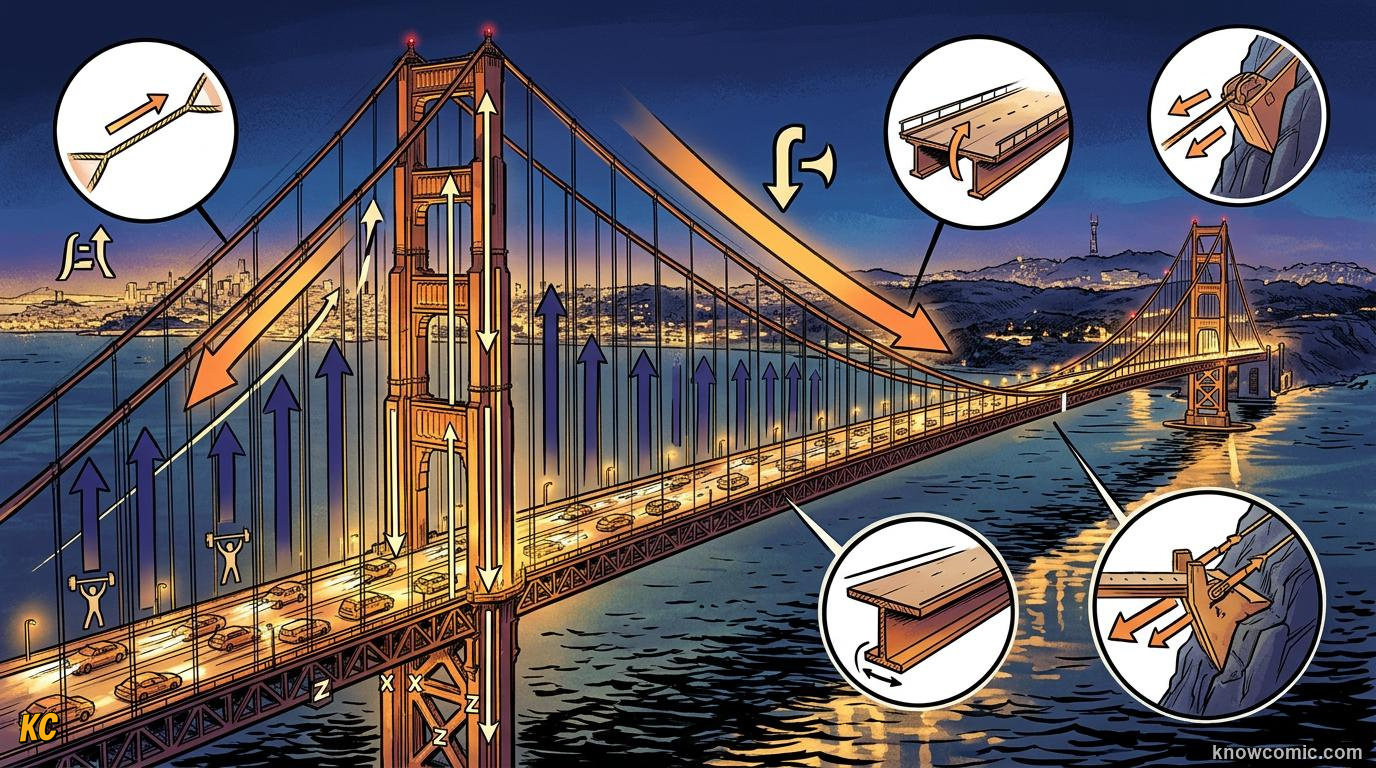
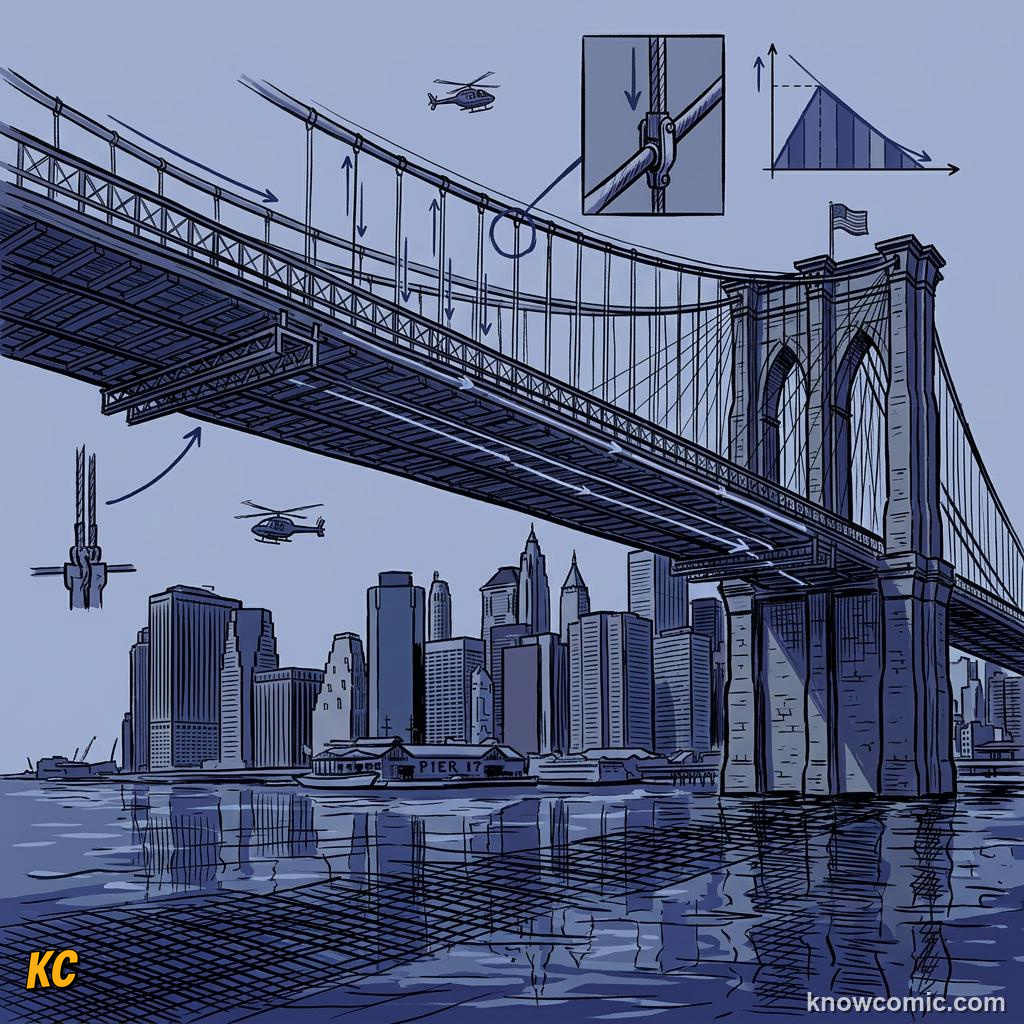
A suspension bridge spans long distances by hanging the roadway from steel cables. The main cables stretch between towers and dip in a curve under their own weight and the load of traffic. Those cables are always in tension: they pull upward on the deck through vertical hanger wires. The towers stand on solid foundations and carry the cable pull downward, so the towers experience compression. Anchorages at each end grip the cables and spread the enormous tension into the ground. This elegant split lets engineers bridge wide gaps that would be impossible with stone arches alone. The deck itself is often a stiff truss or box girder that spreads vehicle loads to the hangers.
🌉 SUSPENSION DESIGN
Main cables in tension carry the deck. Towers and foundations handle compression. Anchorages secure the cable ends.
SPAN!
PAGE 4 OF 5, GOLDEN GATE EXAMPLE
ICONIC BRIDGE
ENGINEERING ON A GRAND SCALE
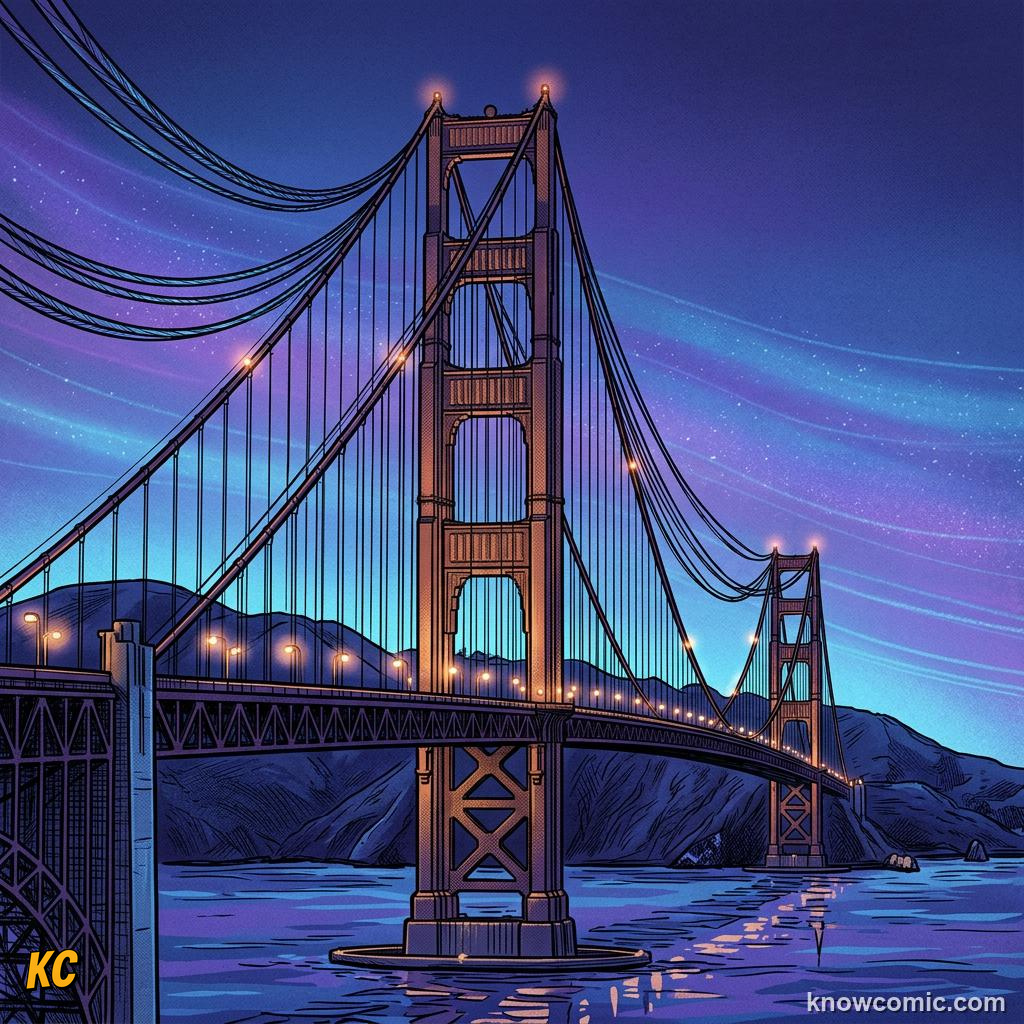
The Golden Gate Bridge in San Francisco, California, is a classic suspension bridge opened in 1937. Its two towers rise about 227 metres above the water and support a main span of roughly 1,280 metres across the Golden Gate strait. Two main cables, each made of thousands of steel wires, curve over the towers and hold the roadway on vertical suspenders. Those main cables are among the largest tension members on Earth: they must resist the combined weight of the bridge and traffic without snapping. The towers transfer cable tension into downward compression on their foundations. Engineers chose steel for the towers and cables because it is strong in both tension and compression when shaped correctly. Today the bridge still carries vehicle traffic daily, a living lesson in balanced forces.
STEEL!
MAIN SPAN
📏 Main span ~1,280 metres
🌊 Crosses a wide strait
🚗 Deck hangs from cables
TOWERS
🗼 Towers ~227 m above water
⬇️ Compression into foundations
🧱 Steel frames resist buckling
ANCHORS
⚓ Cable ends buried in rock
🔗 Spread tension into ground
🏔️ Must never pull free
PAGE 5 OF 5, STRUCTURES EVERYWHERE
BEYOND BRIDGES
TENSION AND COMPRESSION BUILD OUR WORLD
Suspension bridges are the star example, but the same physics appears everywhere. Construction cranes use steel cables in tension to lift heavy loads while their booms feel compression and bending. Stadium roofs and tent canopies hang from cable nets pulled tight in tension. Cable-stayed bridges use straight cables radiating from towers to support the deck, mixing tension in the cables with compression in the tower pylon. Even inside your skeleton, muscles pull in tension while bones handle compression. Engineers calculate every force so nothing is overloaded. Too much tension snaps a cable. Too much compression buckles a column. The art of structural design is routing forces safely from rooftops and roadways down into the solid Earth.
🏗️ STRUCTURAL RULE
Put materials where they are strongest. Cables and ropes in tension. Columns and arches in compression. Balance both and the structure stands.
BUILD!
MORE EXAMPLES
🏗️ Cranes lift with cable tension
🌉 Cable-stayed bridges use straight cables
🎢 Zip lines are pure tension rides
REMEMBER
🌉 KEY FACTS
Tension pulls and stretches (cables, ropes). Compression pushes and squeezes (columns, towers). Suspension bridges: main cables in tension, towers in compression. Golden Gate Bridge (1937): ~1,280 m main span, towers ~227 m tall. Match each material to the force it handles best.