🏔️
🔥
⚛️ KNOW SECONDARY · AGES 12–18

PHYSICS

⚛️ From Newton's Apple to Quantum Weirdness!

📖 350 Topics 🆓 FREE + PRO ⏱️ 5 min per comic 🧠 Quiz included
🔥
ANCIENT
Fire and motion observed
⚙️
1840s
Joule links heat and work
📜
1850s
First law of thermodynamics
1900s
E = mc² extends the idea
🌍
TODAY
Energy tracked in every engine
⚡ CONSERVATION OF ENERGY
TOPIC 21 · PHYSICS · POTENTIAL · KINETIC · THERMAL
PAGE 1 OF 5, ENERGY NEVER VANISHES
THE BIG RULE
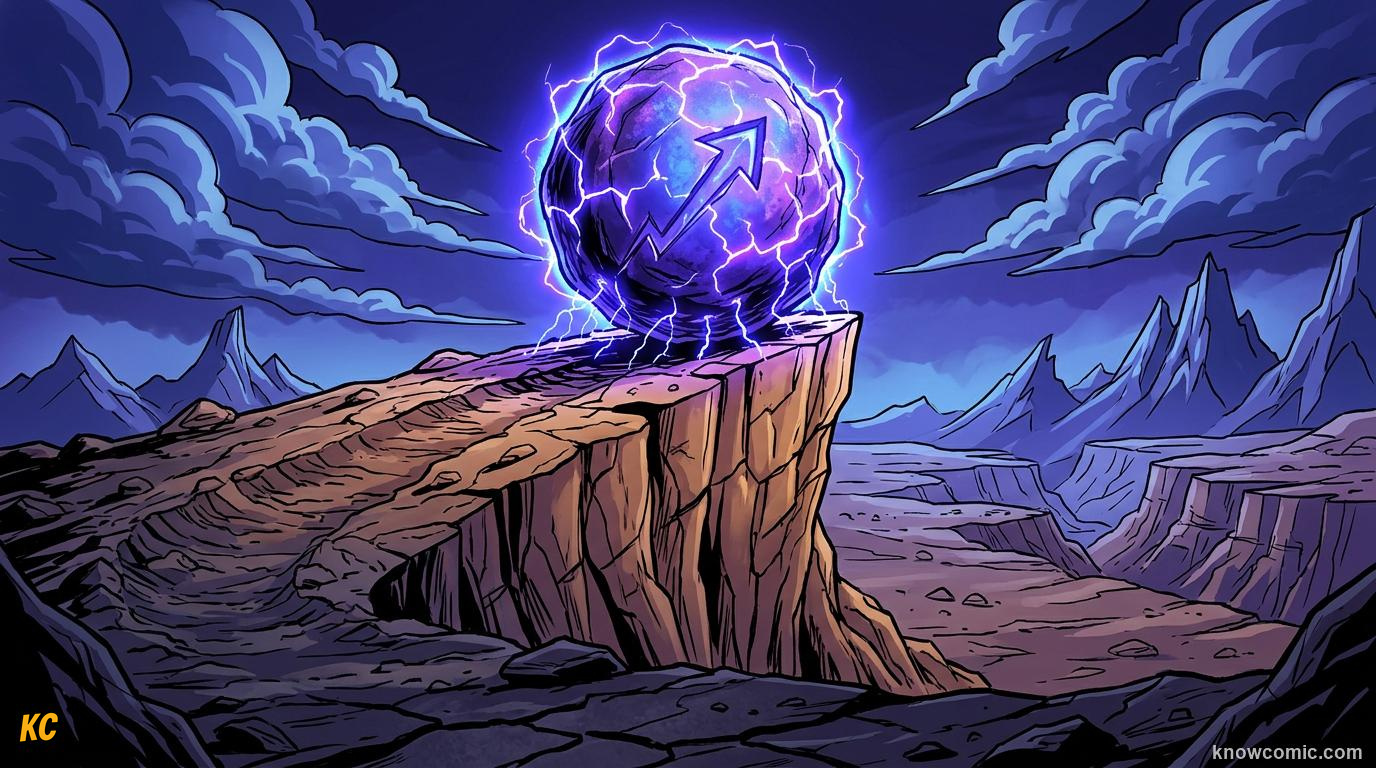
Comic illustration of energy transforming between forms in a rolling boulder scene
ENERGY CAN CHANGE FORM, NOT DISAPPEAR
Energy is the ability to do work or cause change. The law of conservation of energy, also called the first law of thermodynamics, states that energy cannot be created or destroyed. It only transforms from one type into another. A boulder resting on a hill holds gravitational potential energy because of its height. Push it and that stored energy becomes kinetic energy of motion. When it crashes and rubs against the ground, kinetic energy turns into thermal energy: heat that warms the rock and soil. The total energy stays the same; only the labels change.
⚡ FIRST LAW
Energy cannot be created or destroyed, only converted between forms. In a closed system, total energy stays constant.
CONSERVE!
STORED
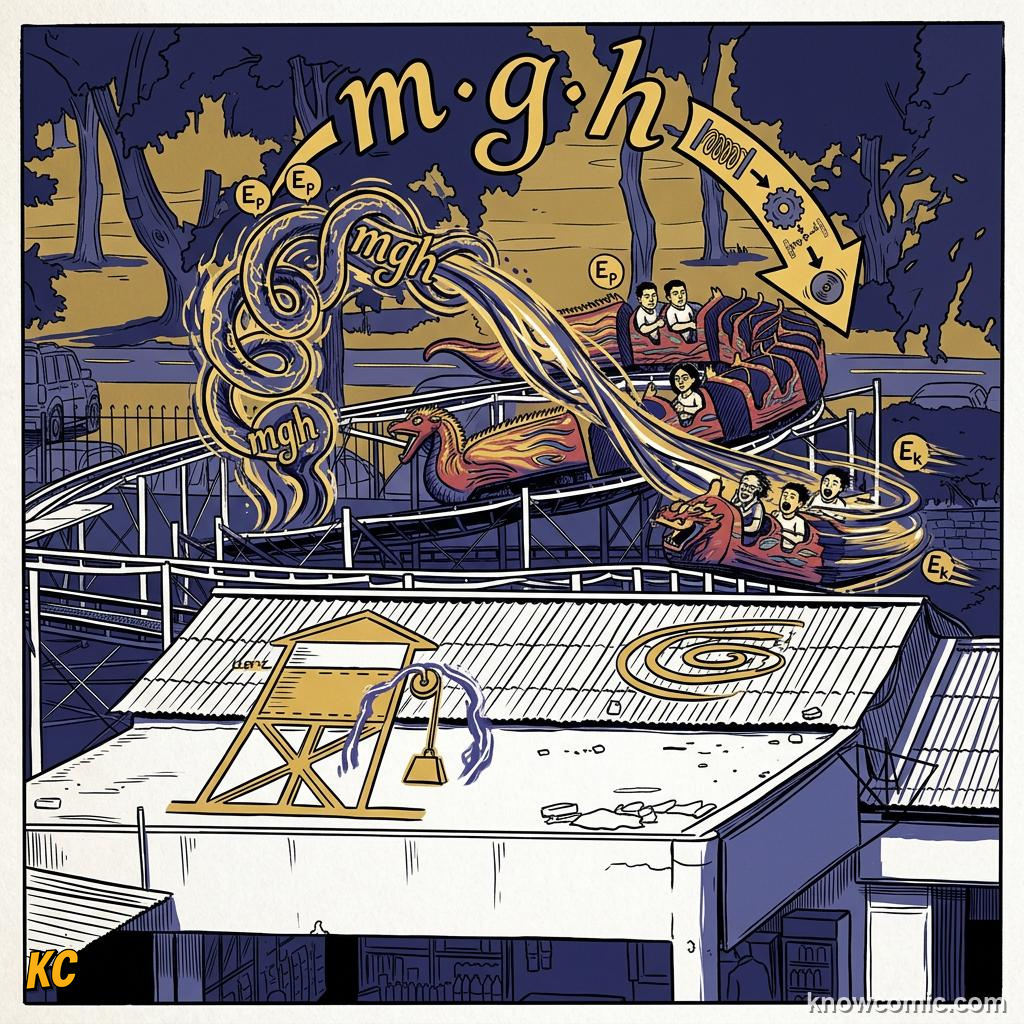
Comic illustration of a boulder on a hill showing gravitational potential energy
🏔️ Potential energy from height
📐 PE ≈ mgh (mass × gravity × height)
⏸️ Stored until something moves it
MOVING
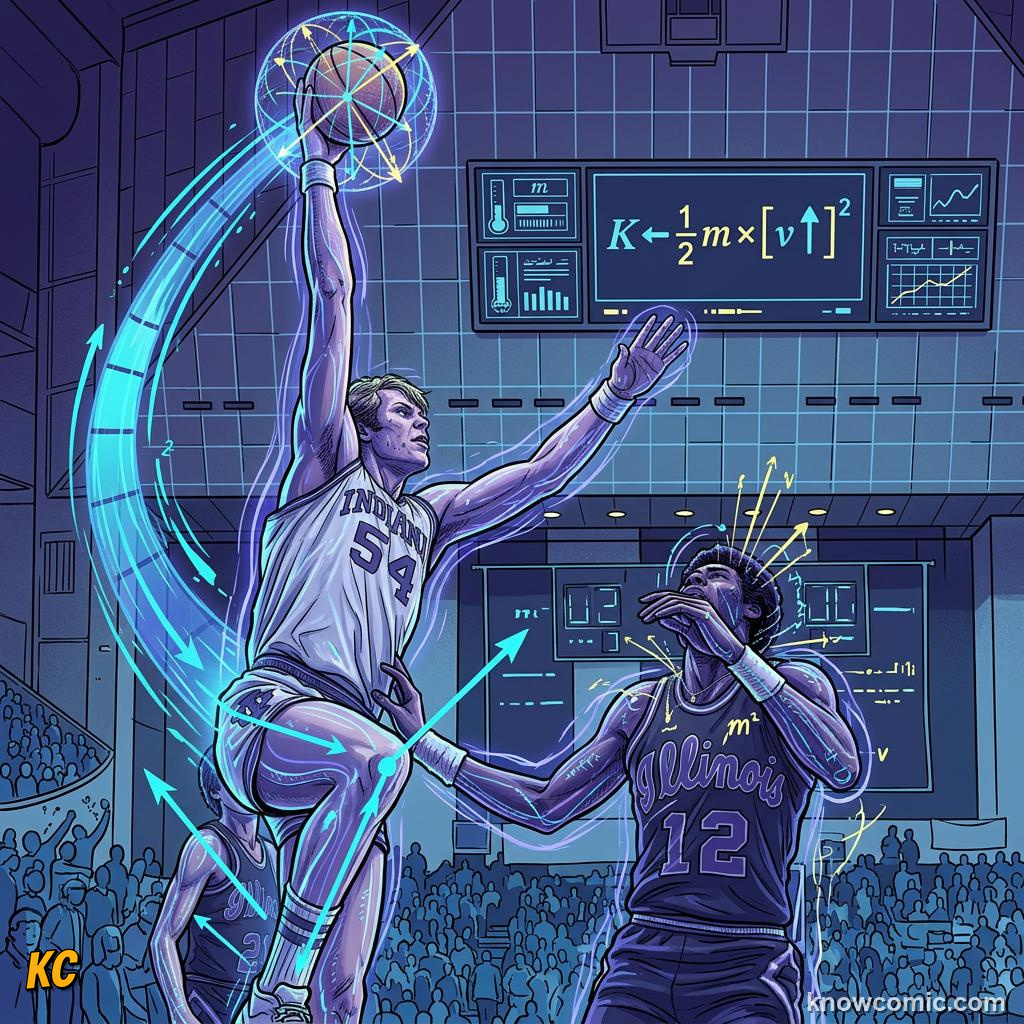
Comic illustration of a rolling boulder with kinetic energy of motion
🪨 Kinetic energy from speed
📐 KE = ½mv² (half mass × speed squared)
⬇️ Faster object, much more KE
PAGE 2 OF 5, POTENTIAL AND KINETIC
THE TRADE-OFF
Comic illustration showing potential energy converting to kinetic energy as an object falls
AS HEIGHT DROPS, SPEED RISES
Watch a boulder roll downhill and you see energy shapeshift in real time. At the top it has lots of gravitational potential energy and little kinetic energy because it is barely moving. As it descends, height decreases so potential energy falls. That lost potential energy does not vanish: it becomes kinetic energy, and the boulder speeds up. Near the bottom, potential energy is lowest and kinetic energy is highest. Roller coasters, waterfalls, and falling apples all follow the same swap. Friction and air resistance steal a little energy along the way, converting it to heat, but the total is still conserved.
TRANSFORM!
AT THE TOP
Comic illustration of object at maximum height with high potential energy
⬆️ Maximum height, max PE
🐢 Low speed, low KE
⚖️ Total mechanical energy high
HALFWAY DOWN
Comic illustration of object midway down a slope trading potential for kinetic energy
🔄 PE decreasing, KE rising
⚡ Energy swapping forms
📉 Height down, speed up
AT THE BOTTOM
Comic illustration of object at bottom of hill with maximum kinetic energy
⬇️ Minimum height, min PE
💨 Maximum speed, max KE
🎯 Ready to collide or keep rolling
PAGE 3 OF 5, THE CRASH AND THE HEAT
IMPACT
Comic illustration of a boulder crashing into the ground on impact
💥 Collision stops motion
🔨 KE transferred to ground
🪨 Rock and soil deform slightly
FRICTION
Comic illustration of friction generating heat during a sliding collision
🔥 Rubbing creates thermal energy
🌡️ Molecules vibrate faster
♨️ Ground feels slightly warmer
THERMAL ENERGY
Comic illustration of kinetic energy converting to heat after a boulder impact
MOTION BECOMES HEAT YOU CANNOT SEE
When the boulder slams into the ground, its kinetic energy does not disappear. It crushes soil, sends shock waves through rock, and heats the contact surface through friction. Thermal energy is the random jiggling of atoms and molecules. Faster jiggling means higher temperature. The boulder may look still after the crash, but its energy lives on as heat spread through the ground and air. Sound from the bang is another energy form: vibrations traveling through matter. Every form, from stored height to motion to heat, is still energy obeying the same conservation rule.
🔥 WHERE DID THE KE GO?
Into thermal energy, sound, and tiny deformations of the ground. None of it was destroyed; it changed form.
HEAT!
PAGE 4 OF 5, ENERGY EVERYWHERE
MANY FORMS
Comic illustration of multiple energy forms including electrical chemical and nuclear
ONE LAW, ENDLESS ENERGY TYPES
Potential and kinetic energy are only two players on a huge team. Chemical energy in food and fuel breaks apart and re-forms during reactions, releasing heat and motion. Electrical energy flows through wires to power lights and phones. Nuclear energy stored in atomic nuclei can be released in stars and reactors. Elastic energy stretches in a bow or trampoline. Light carries radiant energy from the Sun. In every case, energy converts rather than vanishes. James Prescott Joule showed in the 1840s that mechanical work and heat are interchangeable, helping scientists write the first law of thermodynamics as a precise accounting rule for all these transfers.
FORMS!
CHEMICAL
Comic illustration of chemical energy in food and batteries
🍎 Food fuels your muscles
🔋 Batteries store chemical PE
🔥 Burning releases heat and light
ELECTRICAL
Comic illustration of electrical energy flowing through a circuit
💡 Current powers devices
⚡ Generated from motion or fuel
🔄 Converts to light, heat, sound
NUCLEAR
Comic illustration of nuclear energy in the Sun and reactors
☀️ Sun fuses hydrogen nuclei
⚛️ Mass converts to energy (E = mc²)
🏭 Reactors tap nuclear bonds
PAGE 5 OF 5, THE ACCOUNTING RULE
CLOSED SYSTEM
Comic illustration of energy conservation in a closed system with no energy lost
TRACK EVERY JOULE
In a closed system with no energy entering or leaving, the total energy at the start equals the total at the end. A boulder on a hill, a spinning wheel, and a hot cup of tea all obey this rule. Real objects lose a little mechanical energy to friction and air drag, but that energy becomes thermal energy in the surroundings, not nothing. Engineers design roller coasters, dams, and engines by accounting for every conversion. The first law of thermodynamics is the universe's bookkeeping law: energy is always conserved, even when it hides as heat you cannot easily measure.
⚡ CONSERVATION OF ENERGY
Energy cannot be created or destroyed. PE, KE, thermal, chemical, electrical, and all other forms are the same total energy wearing different costumes.
BALANCE!
EVERYDAY
Comic illustration of everyday examples of energy conservation
🎢 Coasters trade height for speed
🛑 Brakes turn KE into heat
☀️ Solar panels capture radiant energy
REMEMBER
⚡ KEY FACTS
Energy cannot be created or destroyed (first law). PE ≈ mgh, KE = ½mv². Objects trade PE for KE as they move. Collisions and friction convert KE to thermal energy. Total energy in a closed system stays constant.
✅ Energy changes form, never vanishes
✅ PE at top becomes KE at bottom
✅ Crashes turn motion into heat
✅ First law = conservation of energy
🧠 QUIZ TIME!
CONSERVATION OF ENERGY · 5 QUESTIONS
QUESTION 01
What does the law of conservation of energy state?
QUESTION 02
A boulder rolls downhill. What happens to its potential and kinetic energy?
QUESTION 03
When a boulder crashes and stops, where does its kinetic energy go?
QUESTION 04
What is the formula for kinetic energy?
QUESTION 05
Gravitational potential energy depends on which three factors?
0/5
LOADING...
← TOPIC 20 📋 ALL TOPICS TOPIC 22 →