🍯
💧
🌊
⚛️ KNOW SECONDARY · AGES 12–18

PHYSICS

⚛️ From Newton's Apple to Quantum Weirdness!

📖 350 Topics 🆓 FREE + PRO ⏱️ 5 min per comic 🧠 Quiz included
🍯
ANCIENT
Honey and pitch pour slowly
📜
1687
Newton studies fluid resistance
🔬
1840s
Poiseuille measures flow in tubes
🛢️
1900s
Engine oils rated by viscosity
🌋
TODAY
Lava, medicine, and food science
🍯 VISCOSITY: FLOW RESISTANCE
TOPIC 23 · PHYSICS · HONEY · WATER · FRICTION
PAGE 1 OF 5, THICK VS THIN
THE POUR TEST
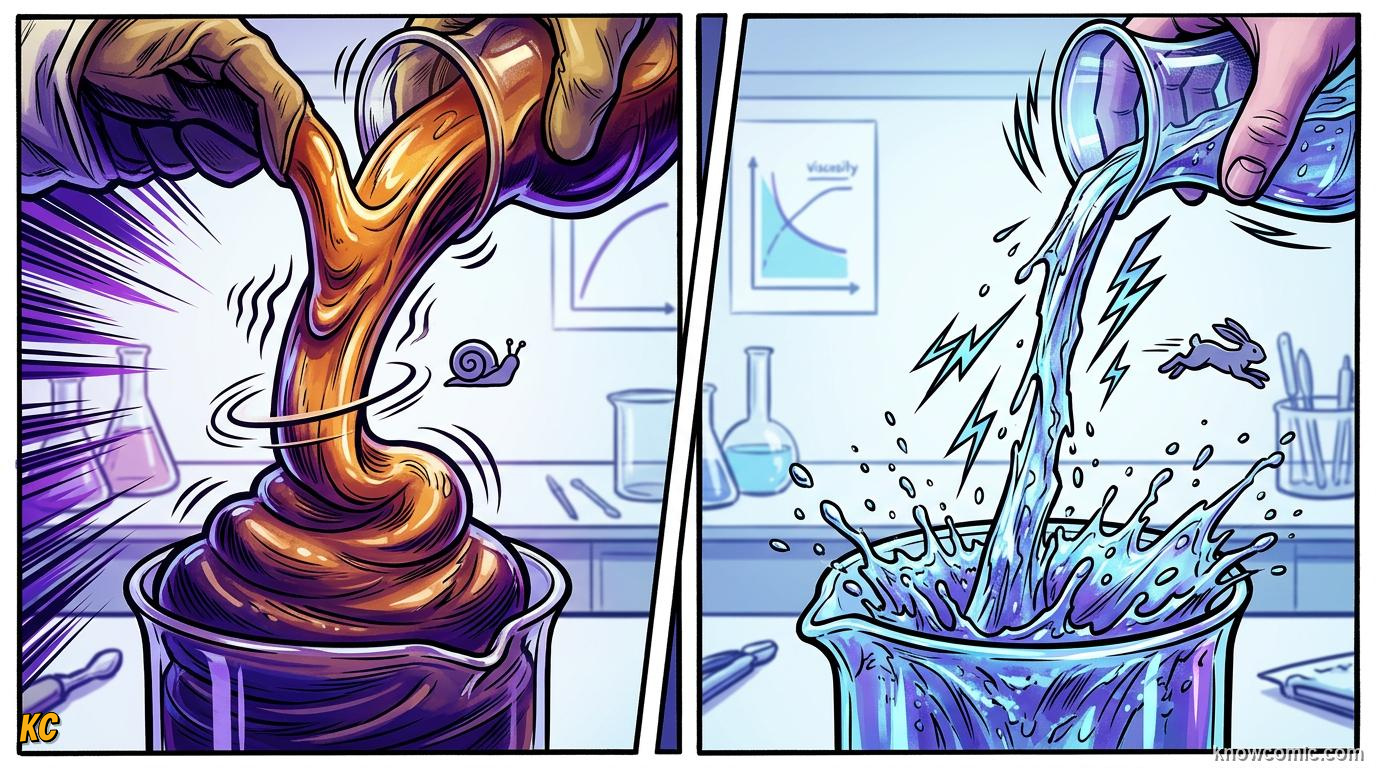
Comic illustration comparing honey pouring slowly next to water pouring quickly from jars
WHY DOES HONEY POUR SLOWER THAN WATER?
Tilt two jars and the difference is obvious. Water races out in a thin stream. Honey crawls down the side in a thick golden rope. Both are liquids, both obey gravity, yet one flows far faster. The reason is viscosity: a fluid's internal resistance to flow. Viscous fluids fight motion from the inside. Molecules and tiny layers rub against each other as they slide past, creating friction you cannot see but can definitely feel when you stir. Higher viscosity means a thicker, slower-pouring liquid. Lower viscosity means a runnier fluid that flows easily.
🍯 VISCOSITY
Viscosity measures how strongly a fluid resists flowing. Thick honey has high viscosity. Thin water has low viscosity.
POUR!
HONEY

Comic illustration of thick honey dripping slowly from a spoon
🍯 High viscosity, slow pour
🌀 Sticks and coils on itself
💪 Needs more force to stir
WATER
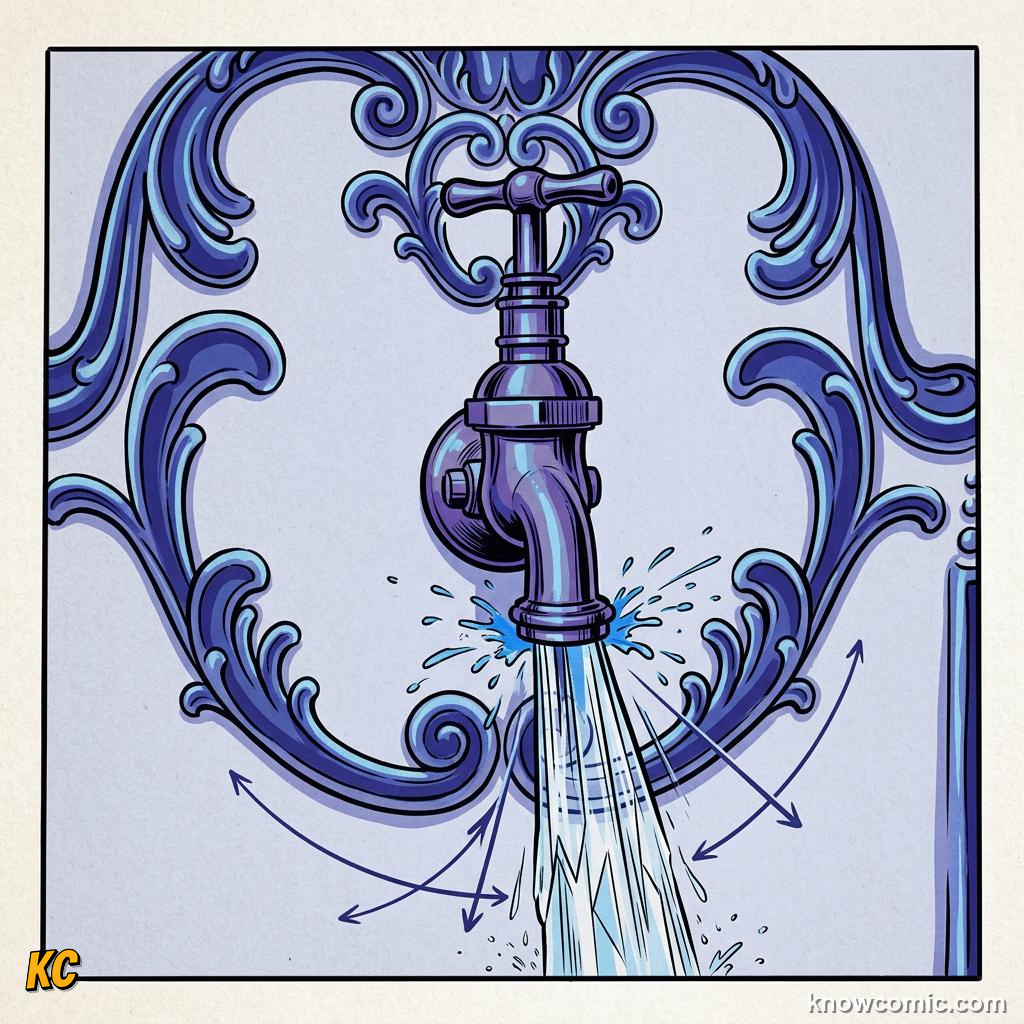
Comic illustration of water pouring quickly and freely from a glass
💧 Low viscosity, fast flow
🌊 Splashes and spreads easily
🏃 Runs downhill with little drag
PAGE 2 OF 5, FRICTION BETWEEN LAYERS
INTERNAL FRICTION
Comic illustration of fluid layers sliding past each other with friction between them
FLUIDS FLOW IN SLIDING SHEETS
Imagine a fluid as a stack of thin sheets sliding over one another. The top layer moves fastest. Layers deeper down move slower because they drag against the surface below. Viscosity is the friction between those neighboring layers. In water, layers slip past each other easily, so viscosity stays low. In honey, long sugar molecules tangle and grab each other, so layers resist sliding and viscosity shoots up. Sir Isaac Newton described this idea in 1687: the force needed to keep layers moving depends on how fast they slide and on the fluid's viscosity. That internal grip is why stirring thick paint takes effort but stirring tea takes almost none.
SLIDE!
TOP LAYER
Comic illustration of the fastest moving top layer of flowing fluid
⬆️ Fastest speed at the surface
🖐️ Pulled by gravity or a push
🌊 Sets the pace for layers below
MIDDLE LAYERS
Comic illustration of middle fluid layers dragging against each other
↔️ Layers slide at different speeds
🤝 Friction between neighbors
🍯 More friction = higher viscosity
BOTTOM LAYER
Comic illustration of fluid layer stuck against a pipe or jar wall
🛑 Nearly still at the wall
📏 Speed gradient through the fluid
🔧 Key to pipe and engine flow
PAGE 3 OF 5, MEASURING THICKNESS
WATER
Comic illustration showing water as a low viscosity fluid around 0.001 pascal seconds
💧 ~0.001 Pa·s at 20°C
🏃 Very low resistance to flow
🌍 Benchmark for thin liquids
HONEY
Comic illustration showing honey as a high viscosity fluid around 2 to 10 pascal seconds
🍯 ~2 to 10 Pa·s (typical room temp)
📈 Thousands of times thicker than water
🥄 Varies with type and moisture
PASCAL SECONDS
Comic illustration comparing viscosity values of water and honey on a measurement scale
SCIENTISTS MEASURE STICKINESS IN Pa·s
Viscosity has a unit: the pascal-second, written Pa·s. Clean water at about 20°C has a viscosity near 0.001 Pa·s, incredibly low. Room-temperature honey typically sits around 2 to 10 Pa·s, though exact values depend on moisture and flower type. That means honey can be thousands of times more viscous than water. The bigger the number, the thicker the fluid and the slower it pours. Engineers compare oils, syrups, and blood using these measurements. Jean Léonard Marie Poiseuille studied how viscosity controls flow through narrow tubes in the 1840s, helping doctors and plumbers predict how fast liquids travel through pipes.
📐 COMPARE VALUES
Water ≈ 0.001 Pa·s. Honey ≈ 2–10 Pa·s. Higher viscosity = slower flow and a thicker feel.
STICKY!
PAGE 4 OF 5, HEAT AND REAL WORLD
TEMPERATURE MATTERS
Comic illustration of warm honey flowing faster compared to cold thick honey
WARM HONEY FLOWS, COLD HONEY CLINGS
Heat changes viscosity in most everyday liquids. Warm a jar of stiff honey and it loosens up, pouring faster as molecules jiggle more and tangled chains slide apart. Cool it down and it thickens again, sometimes nearly solid in the fridge. Engine oil behaves the same way: cold oil is thick and sluggish, so cars need the right oil grade for winter and summer. Volcanic lava ranges from runny basalt to slow, sticky rhyolite depending on temperature and chemistry. Viscosity shapes how far lava travels and how dangerous an eruption becomes. From ketchup bottles to IV drips in hospitals, controlling flow resistance is part of daily life.
WARM!
ENGINE OIL
Comic illustration of motor oil lubricating engine parts with correct viscosity
🛢️ Oil must flow when cold
🛡️ Stays thick enough when hot
🔢 Rated 5W-30, 10W-40, and more
LAVA FLOWS
Comic illustration of slow sticky volcanic lava creeping down a mountainside
🌋 High-viscosity lava moves slowly
🔥 Heat lowers viscosity over time
🏘️ Flow speed affects evacuation plans
EVERYDAY
Comic illustration of ketchup chocolate sauce and paint as viscous everyday fluids
🍅 Ketchup thick until you shake it
🎨 Paint viscosity controls brush strokes
💉 Blood viscosity matters in medicine
PAGE 5 OF 5, FLOW RESISTANCE RULES
THE BIG PICTURE
Comic illustration summarizing viscosity from honey and water to lava and engine oil
INTERNAL FRICTION SHAPES HOW FLUIDS MOVE
Viscosity is a liquid's internal resistance to flow, caused by friction between sliding layers inside the fluid. Water at room temperature has very low viscosity near 0.001 Pa·s. Honey is thousands of times thicker, often around 2 to 10 Pa·s, which is why it pours so slowly. Raise the temperature and most liquids flow more easily. Lower it and they thicken. From Newton's early ideas to Poiseuille's pipe experiments and today's engine oils, scientists measure viscosity to predict and control flow. Next time you drizzle honey or watch a river race downhill, you are watching viscosity in action.
🍯 VISCOSITY RECAP
Internal friction between fluid layers. Higher viscosity = slower pour and thicker feel. Temperature changes how easily liquids flow.
FLOW!
COMPARE
Comic illustration side by side comparison of fluids with different viscosity levels
💧 Water: thin, fast, ~0.001 Pa·s
🍯 Honey: thick, slow, ~2–10 Pa·s
🌊 Oceans, pipes, and pumps depend on it
REMEMBER
🍯 KEY FACTS
Viscosity = internal resistance to flow from friction between fluid layers. Water ≈ 0.001 Pa·s at 20°C. Honey ≈ 2–10 Pa·s, thousands of times more viscous. Higher viscosity means slower pour and thicker fluid. Warming honey lowers viscosity so it flows faster.
✅ Viscosity = friction between layers
✅ Higher number = thicker, slower fluid
✅ Heat makes most liquids flow easier
✅ Used in engines, lava, and medicine
🧠 QUIZ TIME!
VISCOSITY · 5 QUESTIONS
QUESTION 01
What is viscosity?
QUESTION 02
Approximately what is the viscosity of water at 20°C?
QUESTION 03
How does honey's viscosity compare to water's?
QUESTION 04
What happens when a fluid has higher viscosity?
QUESTION 05
What effect does warming honey have on its viscosity?
0/5
LOADING...
← TOPIC 22 📋 ALL TOPICS ALL TOPICS →