🏗️
🔩
📏
⚛️ KNOW SECONDARY · AGES 12–18

PHYSICS

⚛️ From Newton's Apple to Quantum Weirdness!

📖 350 Topics 🆓 FREE + PRO ⏱️ 5 min per comic 🧠 Quiz included
🏛️
ANCIENT
Builders test stone and wood beams
📜
1678
Hooke links force to stretch
🔩
1800s
Iron and steel strength measured
🔬
1900s
Standard tensile tests in labs
🏙️
TODAY
Skyscrapers use precise stress limits
🔩 STRESS AND STRAIN
TOPIC 24 · PHYSICS · MODULUS · DEFORMATION · STRENGTH
PAGE 1 OF 5, FORCE PER AREA
THE LOAD TEST
Comic panel about stress and strain: The Load Test, educational kids illustration
WHAT IS STRESS?
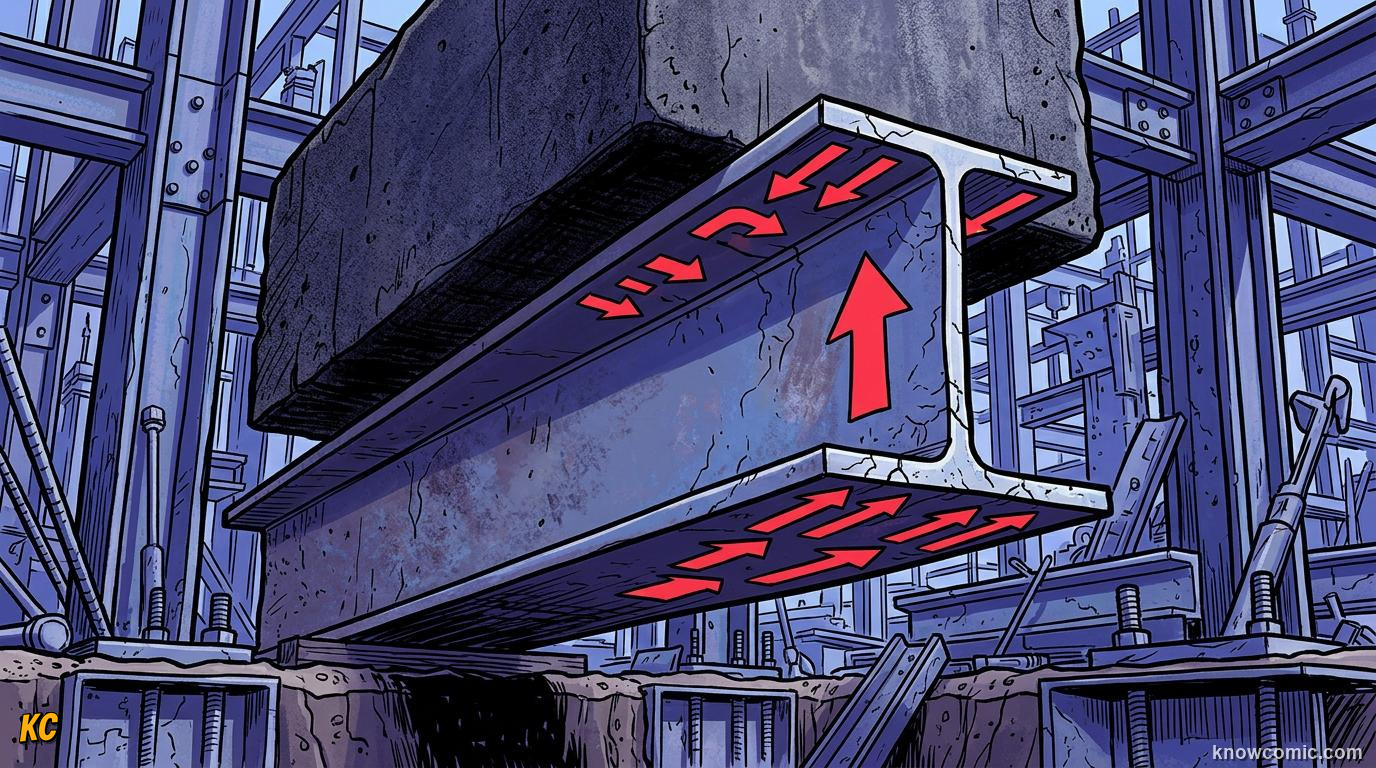
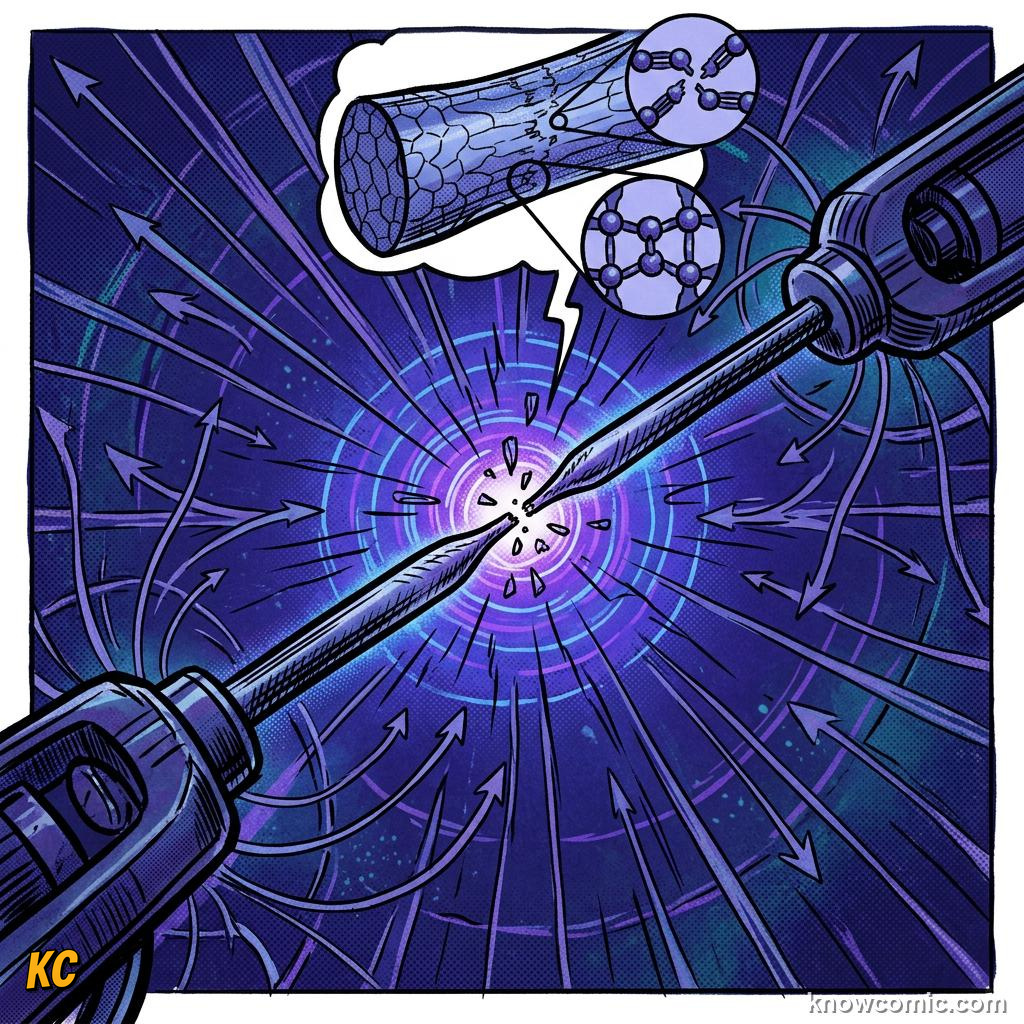
Hang a heavy crate from a steel rod and the rod feels squeezed and pulled from the inside. Stress is how engineers describe that internal push or pull spread across the material. It equals the force applied divided by the cross-sectional area carrying that force. A thin wire and a thick bar may carry the same weight, but the thin wire feels far more stress because the same force is packed into a smaller area. Stress is measured in pascals (Pa), or often megapascals (MPa) and gigapascals (GPa) for tough metals. Higher stress means the material is working harder to hold the load.
🔩 STRESS FORMULA
Stress (σ) = Force ÷ Area. Units: pascals (Pa), or N/m². Same total force on a smaller area means higher stress.
PUSH!
THIN VS THICK
Comic panel about stress and strain: What Is Stress?, Thin Vs Thick, educational kids illustration
📏 Thin wire: same force, tiny area
⚠️ Stress shoots up fast
💥 Easier to snap under load
SPREAD THE LOAD
Comic panel about stress and strain: Spread The Load, educational kids illustration
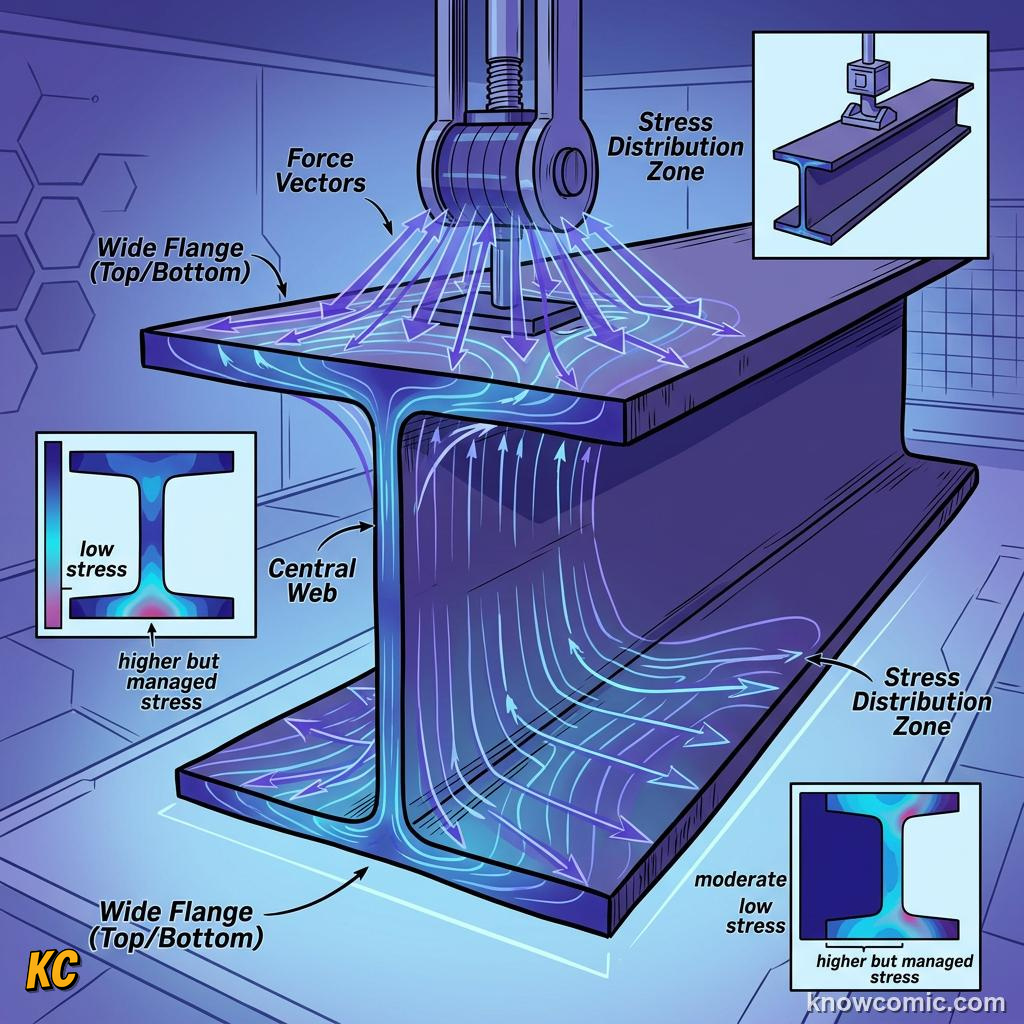
🏗️ Wide I-beam spreads force
✅ Lower stress for same weight
🌉 Why bridges use thick steel
PAGE 2 OF 5, HOW MUCH IT STRETCHES
THE STRETCH RULER
Comic panel about stress and strain: The Stretch Ruler, educational kids illustration
WHAT IS STRAIN?
Stress tells you how hard a material is being pushed. Strain tells you how much it actually changes shape. Strain is the fractional change in length: the extension (or compression) divided by the original length. It has no units because it is a ratio. Stretch a 1 metre rubber band by 1 centimetre and the strain is 0.01, or 1%. Engineers also use microstrain (millionths) for tiny changes in bridges and buildings. Strain links the visible deformation you can measure with a ruler to the invisible stress working inside the material.
📏 STRAIN FORMULA
Strain (ε) = Change in length ÷ Original length. Dimensionless ratio. A 1% stretch means strain = 0.01.
STRETCH!
TENSION
Comic panel about stress and strain: What Is Strain?, Tension, educational kids illustration
⬆️ Pulled longer: tensile strain
🔗 Cables and ropes stretch
📐 Measured as positive strain
COMPRESSION
Comic panel about stress and strain: Compression, educational kids illustration
⬇️ Squeezed shorter: compressive strain
🏛️ Columns and pillars shrink slightly
📐 Often written as negative strain
SHEAR
Comic panel about stress and strain: Shear, educational kids illustration
↔️ Layers slide past each other
✂️ Scissors and bolts feel shear
🌉 Decks twist on long bridges
PAGE 3 OF 5, THE STIFFNESS NUMBER
STIFF STEEL
Comic panel about stress and strain: Stiff Steel, educational kids illustration
🔩 Steel E ≈ 200 GPa
🏗️ Very stiff, barely bends
🌉 Ideal for skyscrapers
SOFTER RUBBER
Comic panel about stress and strain: Softer Rubber, educational kids illustration
🎈 Rubber E ≈ 0.01 GPa
🔄 Stretches easily under load
🛞 Great for absorbing bumps
YOUNG'S MODULUS
Comic panel about stress and strain: Young'S Modulus, educational kids illustration
STRESS ÷ STRAIN = STIFFNESS
In the elastic region, stress and strain rise together in a straight line. Young's modulus (E) is the slope of that line: stress divided by strain. A high modulus means the material is stiff and resists stretching. Structural steel has a Young's modulus of about 200 GPa, so it takes enormous stress to produce even a tiny strain. Rubber has a far lower modulus and stretches easily. Engineers pick materials by modulus when they need rigidity (steel beams) or flexibility (rubber seals). The formula E = σ ÷ ε is one of the most useful equations in materials science.
⚡ DID YOU KNOW?
Steel is about three times stiffer than aluminium. For the same stress, an aluminium bar stretches roughly three times as much as a steel bar of the same shape.
STIFF!
PAGE 4 OF 5, ELASTIC TO BREAKING
THE SNAP POINT
Comic panel about stress and strain: Stress ÷ Strain = Stiffness, The Snap Point, educational kids illustration
FROM SPRINGY TO SNAPPED
Pull gently on a steel sample and it stretches, then springs back when you release it. That is elastic deformation: the material returns to its original shape. Keep pulling harder and you pass the yield point, where atoms slip past each other and the shape changes permanently. This is plastic deformation. Pull even further and the sample necks down, then fractures at its ultimate tensile strength. Materials scientists plot all of this on a stress-strain curve. The elastic region is the safe zone for buildings. The plastic region warns that failure is coming. Smart engineers design so everyday loads stay well inside the elastic range.
⚠️ SAFETY MARGIN
Bridges and cranes use a safety factor, often 2 to 5 times the expected load, so stress stays far below the yield point even in storms or heavy traffic.
YIELD!
ELASTIC
Comic panel about stress and strain: From Springy To Snapped, Elastic, educational kids illustration
🔄 Springs back to original shape
📈 Linear stress-strain graph
✅ Safe everyday loading zone
PLASTIC
Comic panel about stress and strain: Plastic, educational kids illustration
🔨 Permanent bend or dent
⚠️ Past the yield point
🚗 Crumple zones use controlled plasticity
FRACTURE
Comic panel about stress and strain: Fracture, educational kids illustration
💥 Material snaps apart
📉 Ultimate tensile strength reached
🔬 Fracture surface tells the story
PAGE 5 OF 5, ENGINEERING STRENGTH
MATERIALS SCIENCE
Comic panel about stress and strain: Materials Science, educational kids illustration
MEASURING THE HIDDEN LIMITS
Every skyscraper, aircraft wing, and surgical implant depends on knowing exactly how materials respond to stress. In a tensile test, a sample is pulled in a machine while sensors record force and extension. The result is a stress-strain curve unique to that material. Carbon fibre, titanium, concrete, and bone each have their own modulus and breaking point. By speaking the language of stress and strain, engineers can predict failure before it happens and choose the right material for the job. That is how we build structures that are strong, light, and safe at the same time.
STRONG!
LAB TEST
Comic panel about stress and strain: Measuring The Hidden Limits, Lab Test, educational kids illustration
🔬 Tensile test machine pulls sample
📊 Records stress-strain curve
🏗️ Data guides real-world design
REMEMBER
🔩 KEY FACTS
Stress = Force ÷ Area (Pa). Strain = change in length ÷ original length (no units). Young's modulus E = stress ÷ strain measures stiffness. Steel E ≈ 200 GPa. Elastic deformation springs back; plastic deformation is permanent; fracture is total failure.
✅ Stress = force per unit area
✅ Strain = fractional length change
✅ Higher E = stiffer material
✅ Stay in elastic zone for safety
🧠 QUIZ TIME!
STRESS & STRAIN · 5 QUESTIONS
QUESTION 01
What is stress in materials science?
QUESTION 02
What is strain?
QUESTION 03
Approximately what is the Young's modulus of structural steel?
QUESTION 04
What happens during elastic deformation?
QUESTION 05
Young's modulus (E) is defined as:
0/5
LOADING...
← TOPIC 23 📋 ALL TOPICS TOPIC 25 →