🔔 DAMPING & RESONANCE
PAGE 1 OF 5, EVERYTHING VIBRATES
BACK AND FORTH
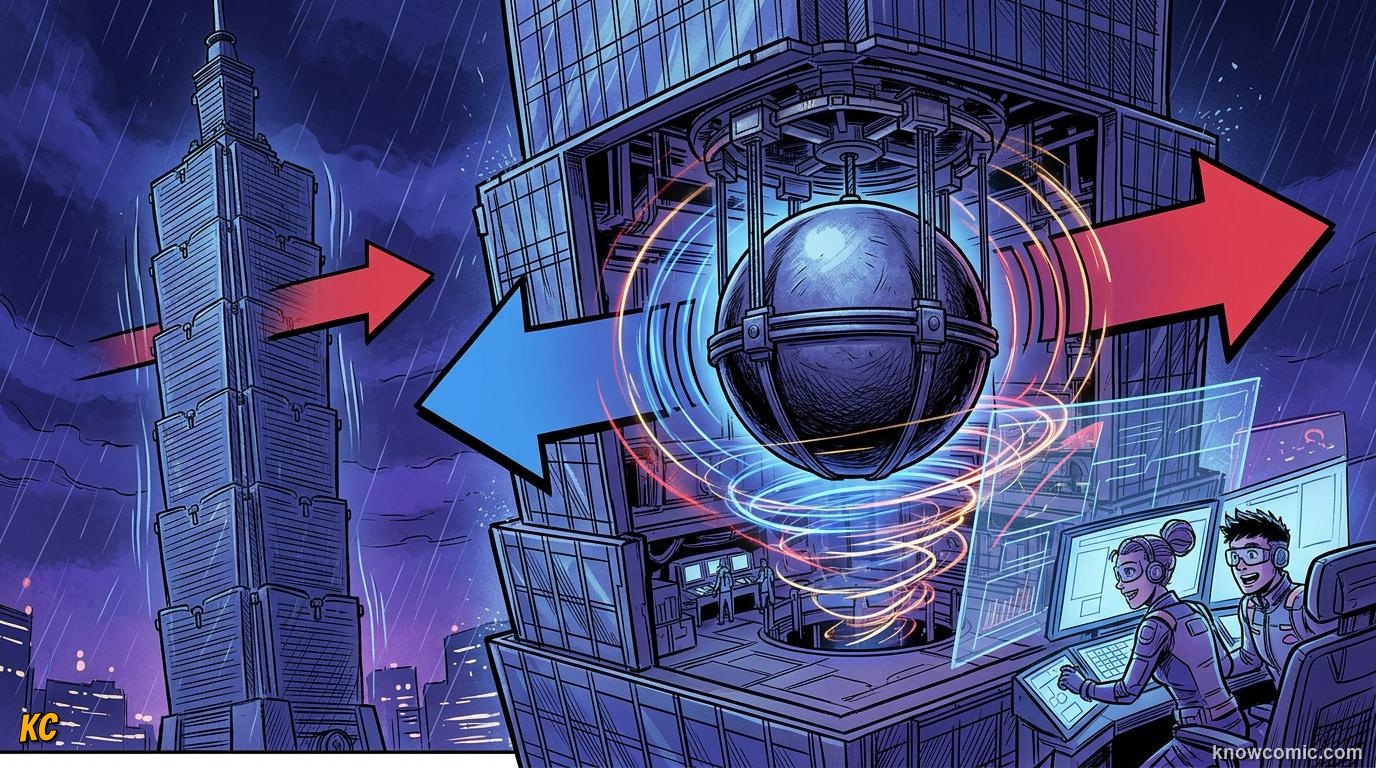
WHAT IS A VIBRATION?
Pluck a guitar string, tap a bell, or feel a car engine hum and you are watching vibration in action. A vibration is a repeating back-and-forth motion around a resting position. Every object that can bend, stretch, or swing has a natural frequency: the rate it prefers to oscillate when bumped and left alone. A stiff steel beam vibrates fast. A long suspension bridge sways slowly. The size of each swing is called the amplitude. Engineers must understand both frequency and amplitude because uncontrolled vibrations can crack metal, shake buildings, and make passengers feel sick.
🔔 VIBRATION BASICS
Natural frequency = how fast something wants to vibrate. Amplitude = how far it moves each swing. Both matter when designing safe structures.
SWING!
NATURAL FREQ
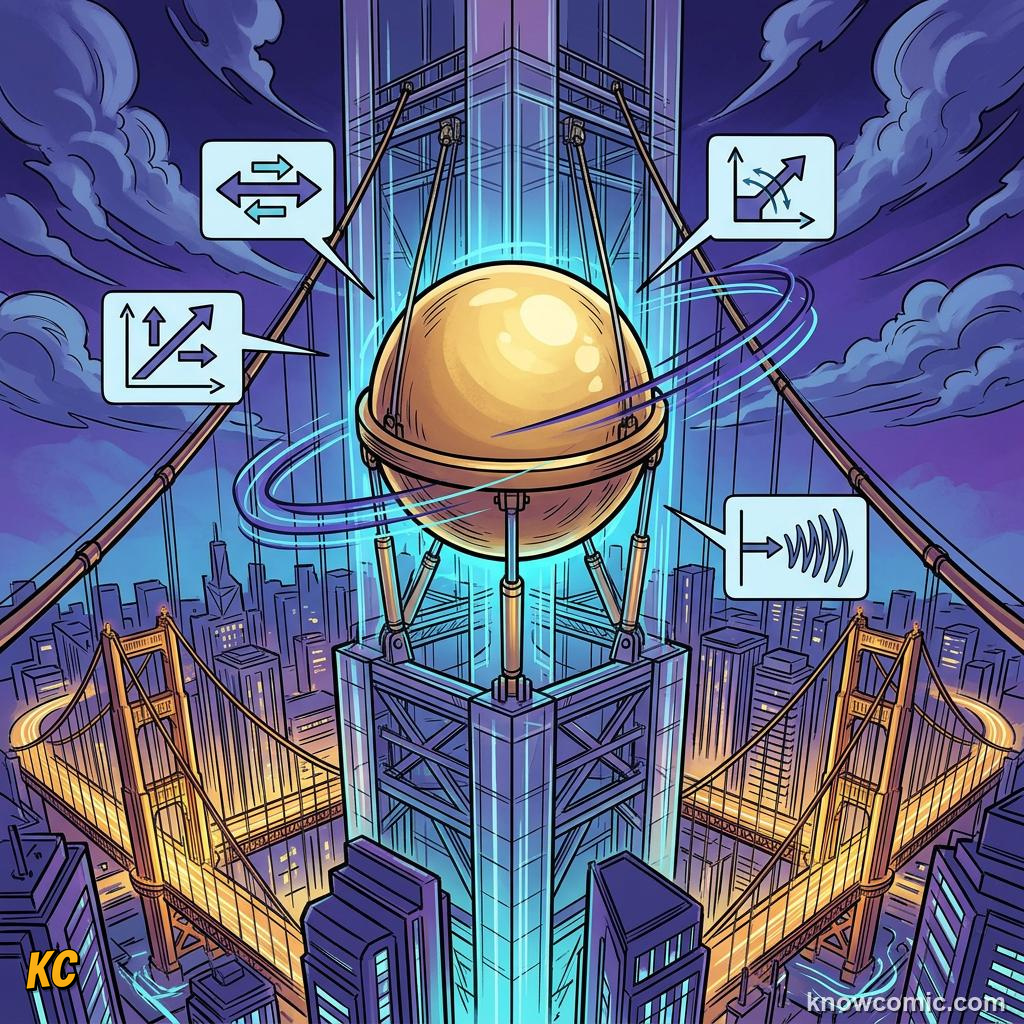
🔔 Short stiff object: high frequency
🌉 Long flexible beam: low frequency
📐 Set by mass and stiffness
🌉 Long flexible beam: low frequency
📐 Set by mass and stiffness
AMPLITUDE
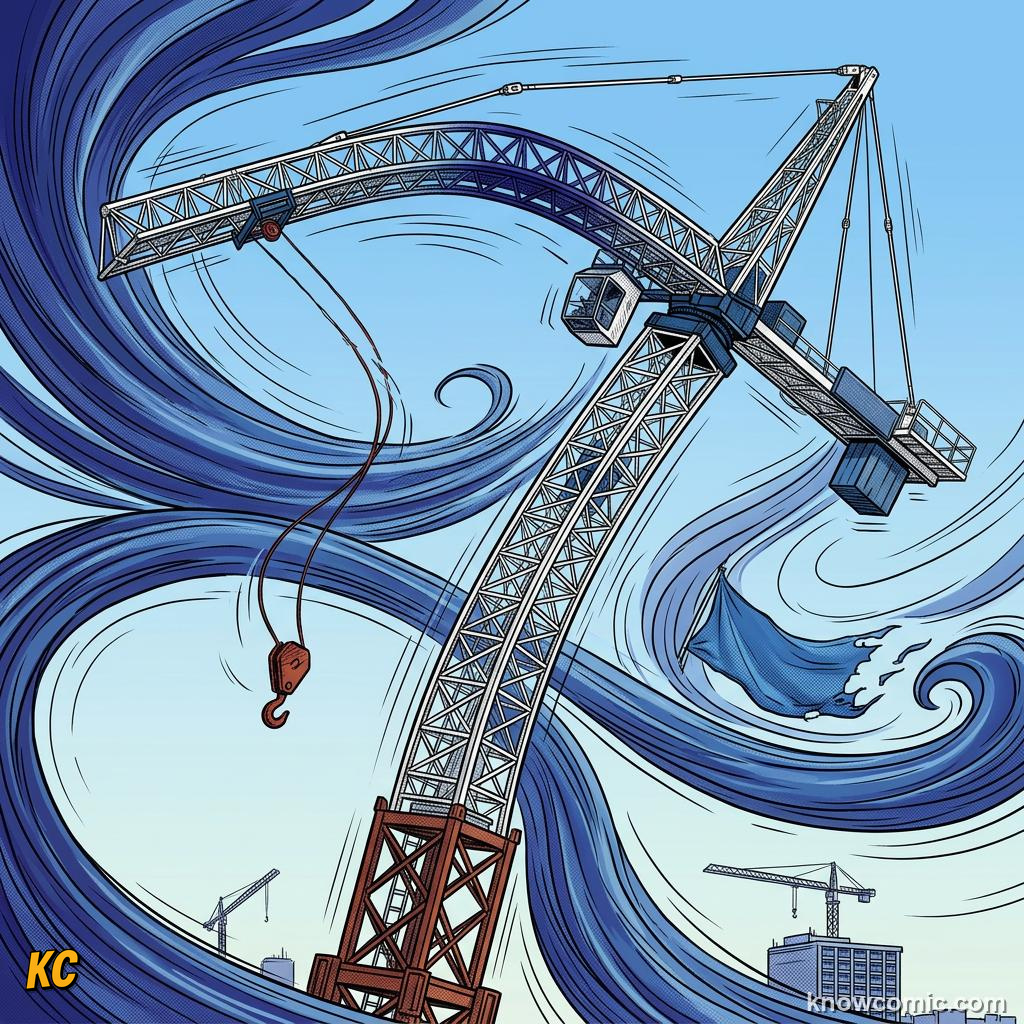
📏 Bigger swing = larger amplitude
⚠️ Large amplitude strains materials
🏙️ Wind and quakes can boost it
⚠️ Large amplitude strains materials
🏙️ Wind and quakes can boost it